

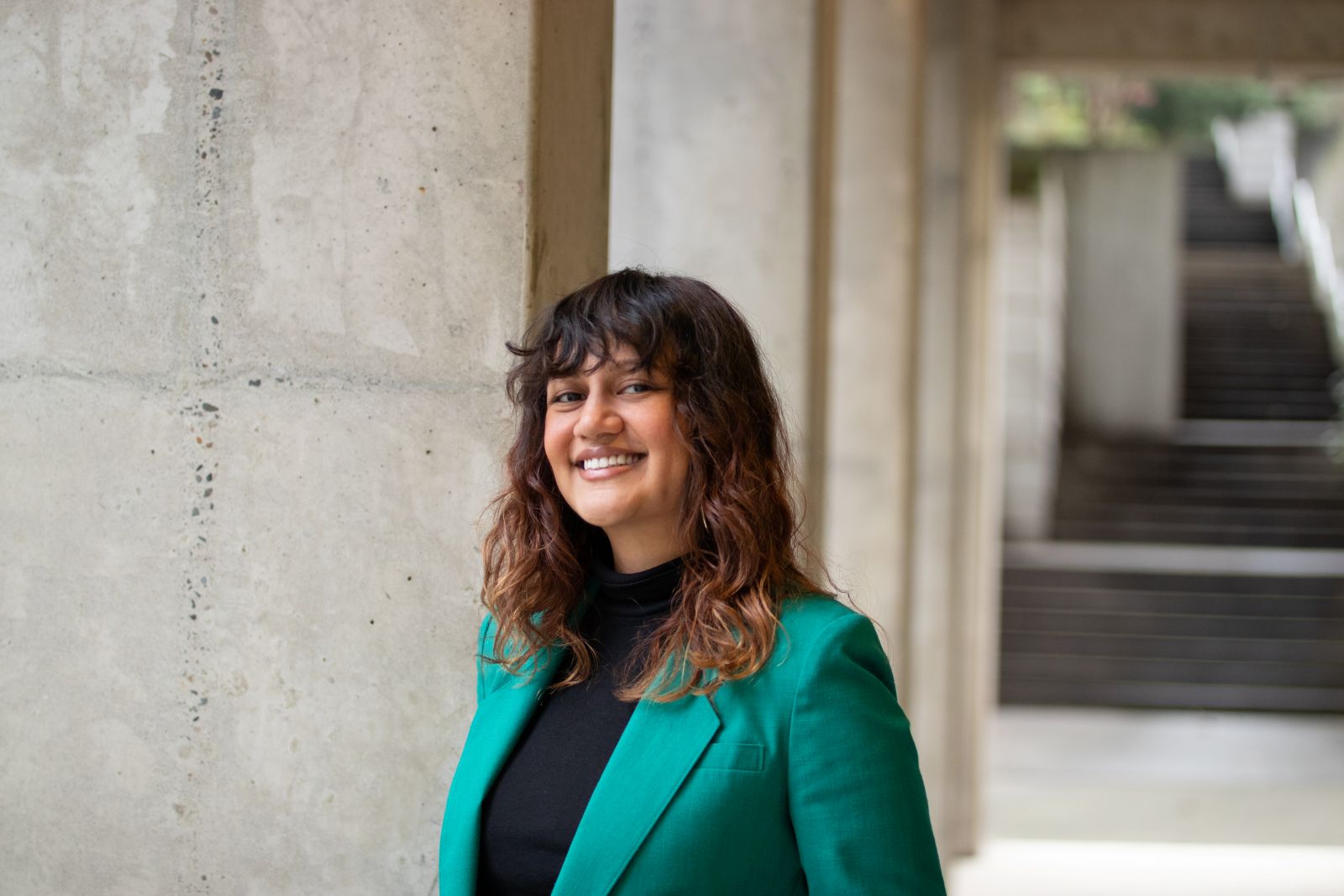
Today, progressive organizer Hannah Sabio-Howell announced her candidacy for the Washington State Senate in the 43rd Legislative District, aiming to unseat longtime incumbent Senator Jamie Pedersen. A renter and transit rider who has never before held elected office, Sabio-Howell is running on a platform with a laser focus on an affordability agenda, including in housing, health care, transit, child care, and education.
“I looked around and felt like Washington really could be the best place in the nation to build a good life if people can actually afford to do that,” Sabio-Howell told The Urbanist. “I think that we could be a state where housing is abundant and childcare is affordable, our education and healthcare systems are world class quality, and we tax the record-breakingly rich corporations that build their wealth here in Washington to make that happen.”
Sabio-Howell has spent the last three years as the communications director for Working Washington, a statewide labor advocacy nonprofit that fights to raise wages and improve labor standards. Working Washington was involved in the defense of gig workers’ minimum wage policy and flexibility protections when former Seattle Council President Sara Nelson tried to roll them back in 2024, a fight that Sabio-Howell said seemed impossible to win at the time due to lobbying from multi-million dollar companies.
“We won anyway,” Sabio-Howell said about that fight, “because we saw that working people and the vast majority of Seattle, and I would also say Washington, believes in fair pay and good workplaces and an economy that works for working people. […] I have gotten used to taking on big fights against big money, particularly fueled by big corporations, and winning alongside grassroots people power.”
Sabio-Howell’s mother’s side of the family are immigrants from the Phillipines, and her father’s side of the family has lived in eastern Washington for generations. Both of her parents were educators. As a Millennial/Gen Z edge case, Sabio-Howell would be the youngest senator serving in the Washington State Legislature, if elected, bringing a fresh perspective to a body that tends to skew older.
Sabio-Howell also has experience at the state legislature, having served as a legislative aide for Rep. Larry Springer (D-45th, Kirkland) and later as a communications specialist for the State Senate, working for five different state senators and the Senate Members of Color Caucus.
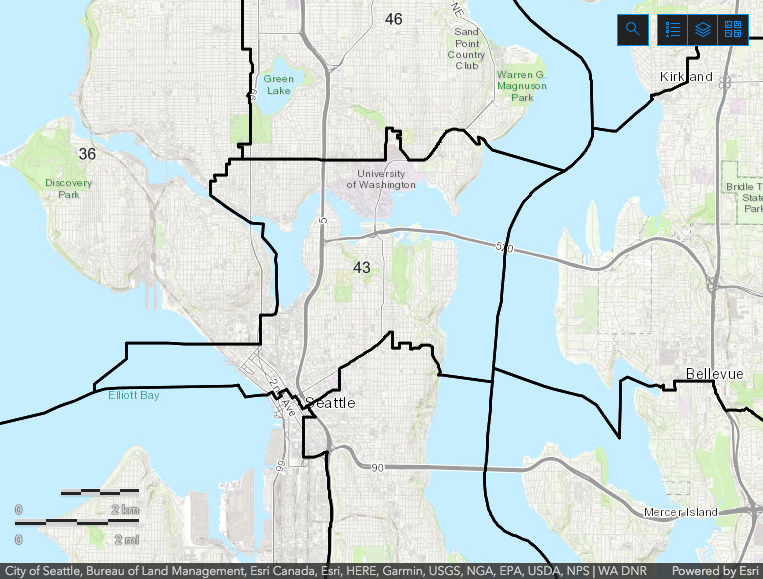
“I could hit the ground running and would be eager to, because I think we need fighters and we need effectiveness, and we need a commitment to our community’s values,” Sabio-Howell said.
(Disclosure: Sabio-Howell has also served on The Urbanist’s election committee from 2022 to 2025, along with our Publisher Doug Trumm and Contributing Editor Ryan Packer. She served as co-chair for her last two years. The reporter of this piece has never served on that body.)
A tough race
The incumbent, Pedersen, who is also the Senate Majority Leader, has served in the state legislature for almost 20 years. After a stint in the state House, he ran for the Senate seat in 2014. A gay man himself, Pedersen is known for championing LGBTQ+ rights, supporting the legalization of the sale of marijuana, and instituting more gun control measures at the state level.
Pedersen is also a Yale-educated lawyer who practiced corporate law at Preston Gates & Ellis (now K&L Gates) for 17 years. Since 2012, he has worked as general counsel and executive vice president at McKinstry, a Seattle-based construction and engineering firm.
Pedersen raised about $240,000 in donations during the last election cycle in 2022. Sabio-Howell contends that in this last legislative session, he has shown a willingness to cut deals with the largest corporations, citing the $550 million tax break buried in the “millionaires” income tax of which Pedersen is the lead sponsor. (This tax break has since been removed by the House.)
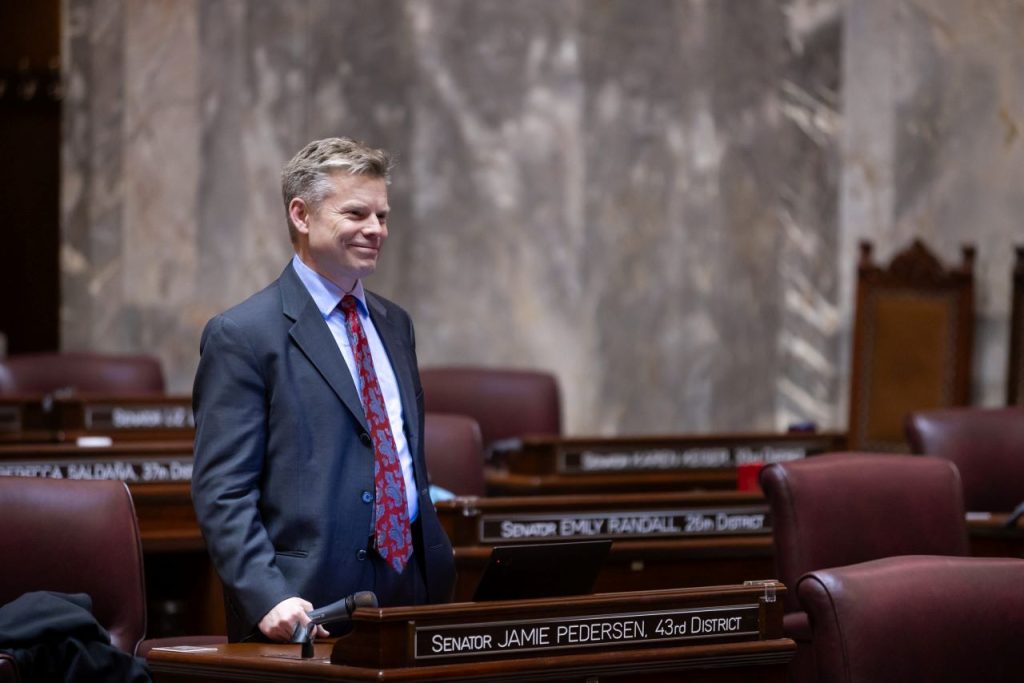
Pedersen has also expressed support of rolling back the estate tax increase passed last session. He told The Stranger he does not support his seatmate Rep. Shaun Scott’s new tax proposal, the Well Washington Fund, which would institute a payroll expense tax similar to Seattle’s JumpStart, because it is not politically feasible.
“I think that Senator Peterson’s alliance with corporations is fundamentally out of step with our district,” Sabio-Howell said.
Sabio-Howell referenced the historical outcomes of elections and ballot initiatives in the 43rd district.
“We have affirmed over and over again that we believe in taxing the rich, in a fair and safe community for all of us,” Sabio-Howell said. “That makes me really excited about what kind of visionary leadership could be coming out of the 43rd, and I want to offer that this is our first chance in 20 years to choose our fighter.”
An affordability platform
Rather than cutting, Sabio-Howell wants to expand state investments in child care, education, housing, transit, and health care, and she wants to pay for this by taxing the ultra-wealthy corporations in Washington.
“It doesn’t feel like enough to me to defend a system that isn’t working for us, or to just hold the line on already inadequately funded programs,” Sabio-Howell said. “We need to be reinvesting in those programs and building them out to make sure they actually can work for people, particularly working people.”
While Sabio-Howell supports Pedersen’s millionaires tax, she doesn’t think it is adequate, particularly because any funding from the new tax wouldn’t be available until 2029. Unlike Pedersen, she doesn’t support rolling back taxes on the wealthy, such as the aforementioned estate tax reduction, and she would like to see the legislature pass a wealth tax and Scott’s Well Washington Fund.
She doesn’t support the sales tax rollback in the millionaires tax that would have downstream revenue hit to Sound Transit.
Among Sabio-Howell’s priorities are making universal childcare a reality and better funding K-12 education.
“The paramount duty of the state legislature is to fund basic education, and that needs to be a critical priority, just based on everything we know about how that then sets young people and families up for success in Washington, and saves the state money in the long run,” Sabio-Howell said.
While Sabio-Howell supports a wide variety of means to make housing more affordable, she is particularly enthusiastic about the idea of a statewide social housing program, citing her district’s strong support for Seattle’s social housing initiatives. She said she was disappointed that last year’s rent stabilization bill was so watered down.
“I think for so many of us, having our rent go up by anything close to 10% is also totally unaffordable,” Sabio-Howell said.
In addition to her desire to see further rent stabilization, Sabio-Howell said she would support efforts to do more to incentivize upzoning and strengthen tenant protections. She’s a proponent of the failed neighborhood cafe and corner store bill, talking about the importance of community building and place making.
Sabio-Howell said she expects to be a renter herself for the foreseeable future.
“The dark joke of people who are young is that it’s almost a laughable idea that we would ever be able to buy a house here in Washington generally, but particularly in the 43rd, a place where it’s actually a big, exciting step to move out of a studio apartment into a one bedroom,” Sabio-Howell said.
When considering legislation to make housing more abundant and affordable, Sabio-Howell emphasized the importance of such laws having teeth and dedicated resources for enforcement to hold communities accountable.
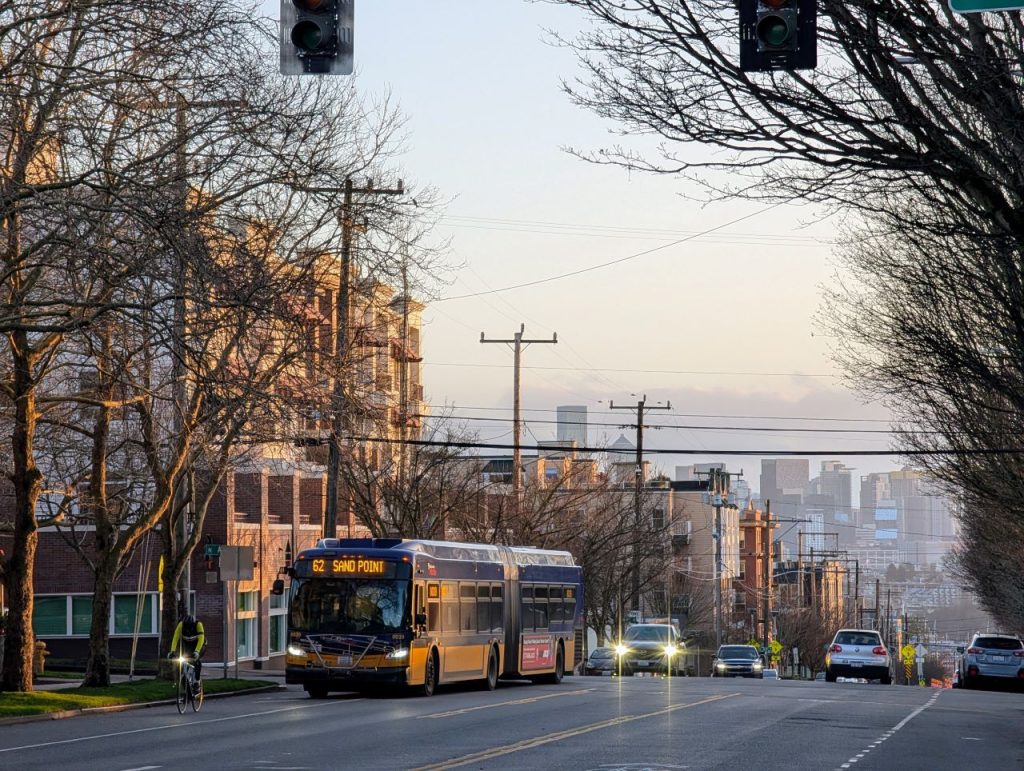
Sabio-Howell said it’s the state’s responsibility to provide resources for a robust transit system in the state. She’s interested not only in building out Sound Transit’s connections but also providing more frequent service, better pay for operators, and possibly even lowering fares. She mentioned the dearth of both renters and regular transit users in office at the state level and how that impacts policymaking.
Health care is another area that Sabio-Howell is interested in making more affordable, citing the increasing number of people who are losing coverage or having to forego it because of rising premiums.
“When it comes to protecting and reinvesting in health care, that’s a place where the state legislature is on the front line, is maybe both our first and our last defense against devastating federal cuts,” Sabio-Howell said.
In addition to using funds from the Well Washington fund to cover some of these gaps, should that legislation pass, Sabio-Howell said she thinks the state could eventually accomplish universal healthcare. During her time as a communications specialist at the senate, she worked with Senator Emily Randall on passing the Universal Health Care Commission, a first step towards that goal, and she spoke about taking additional serious steps in that direction.
Sabio-Howell expressed support for even-year elections for local offices and converting Washington’s very part-time legislature to a full-time year-round body, which she said would allow more working class people to serve in elected office.
On public safety and immigration
Sabio-Howell would like the state legislature to revisit some of the accountability issues related to policing that the public organized around in 2020, citing the legislature’s rollback of police use of force standards and high-speed pursuit standards in subsequent legislative sessions. She also spoke about the ineffectiveness of the $100 million police hiring incentive that Governor Bob Ferguson insisted on including in the budget last year, under threat of veto. Recent reporting from The Washington Standard revealed that no new police officers have yet been hired as a result of that program.

With U.S. Immigration and Customs Enforcement (ICE) both expanding its surveillance apparatus and tapping into local surveillance data, Sabio-Howell says it’s important to protect immigrants from surveillance, along with the entire community. She also noted the need to protect consumers from surveillance surge pricing, referencing a bill that died earlier this session.
“In general, government, and I mean this broadly, at the federal level, the state level, has really been so many years behind the ball when it comes to regulating big tech,” Sabio-Howell said.
Sabio-Howell comes from a mixed-status family, meaning a family with different immigration statuses. In the past, she has volunteered outside of the Northwest ICE Processing Center, helping people who had just been released without any money or means of communication, who often don’t speak English.
“It’s extremely cruel,” Sabio-Howell said. “It’s a blight on our state, and it’s the state’s responsibility to do something about that.”
In addition to adding more parameters to protect data from ICE, Sabio-Howell outlined several steps she’d like to see the state take in response to ICE’s ramp-up of immigration enforcement. She supports the ban on law enforcement covering their faces, which has now passed out of both chambers. She’d like to either ban or severely limit ICE’s ability to operate in sensitive locations like hospitals, child care centers, and courthouses. She is interested in looking into stripping incentives from companies that work with ICE, making it more expensive to do so. And she wants more pathways for people to be able to sue ICE for violating their constitutional rights.
A way forward
Rather than trying to maintain the status quo in our state, Sabio-Howell believes in dreaming bigger and revitalizing and expanding the services that could make living in Washington and the 43rd LD even better. And she’s looking forward to presenting that bold vision to voters who might be ready for a different approach in leadership after 20 years.
“It makes me really excited to think that we could opt into leadership that is moving in lockstep and shoulder to shoulder with our visionary values,” Sabio-Howell said. “Policy is something we build, not something that happens to us, and nowhere is that more possible or more true in our history.”

Amy Sundberg is the publisher of Notes from the Emerald City, a weekly newsletter on Seattle politics and policy with a particular focus on public safety, police accountability, and the criminal legal system. She also writes science fiction, fantasy, and horror novels. She is particularly fond of Seattle’s parks, where she can often be found walking her little dog.