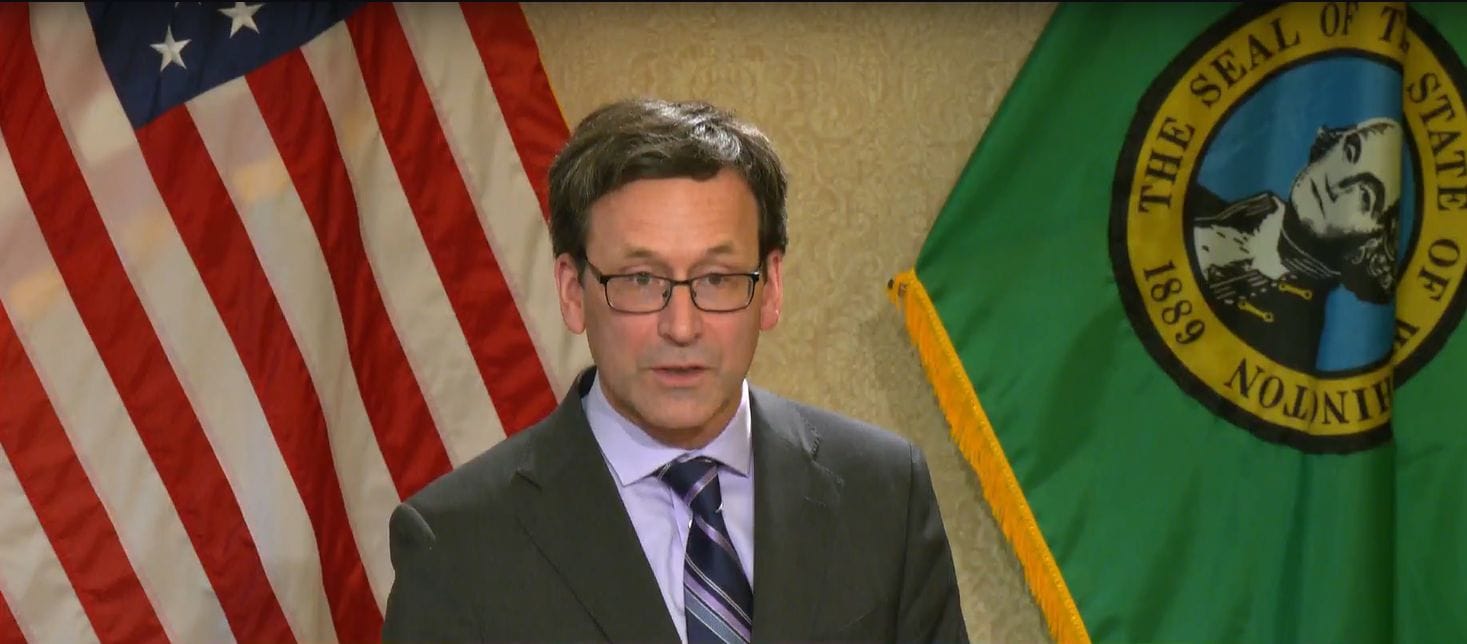
At the end of December, Governor Bob Ferguson announced his proposed 2026 supplemental state budget, which he balanced through a mixture of cuts, drawing down the state’s rainy day fund, and fund transfers, while largely avoiding raising new revenue.
Ferguson did signal support for instituting an income tax on millionaires, but his proposed tax would not go into effect until 2029. The governor said the delay was necessary to set up infrastructure to collect the tax and weather expected legal challenges to ensure the tax is collectible. However, some fellow Democrats have questioned whether such a long runway is necessary to get off the ground.
Ferguson had to bridge a new $2.3 billion budget deficit that developed since the end of 2025’s legislative session.
“We are facing falling revenue, rising costs, and budget cuts and chaos coming from the Trump administration,” Ferguson told the press.
State agencies made $2 billion in additional “urgent” budget requests for this period, of which Ferguson chose to include $700 million. In total, Ferguson’s budget proposal raises the state’s total expenditures by $1.2 billion.
Ferguson did choose to backfill some of the recent federal funding losses, including SNAP food benefits for people without legal immigration status, Planned Parenthood funding to continue providing Washingtonians with reproductive health care, and funding to help people who would have immediately lost their Medicaid (Apple Health) coverage upon passage of Trump-backed H.R. 1 earlier this year. The proposal also maintained a premium subsidy program that helps people afford Obamacare health plans, the cost of which are going up an average of 21% for 2026.
While the budget proposal does include funding for some H.R. 1 impacts on the state–namely, for implementing SNAP work requirements and paying for more of SNAP’s administrative costs – it doesn’t address the needs of people who will lose their SNAP and Medicaid benefits at the end of 2026. The state estimates that over 620,000 Washingtonians will be impacted by work requirements and changes to redeterminations for Medicaid, for example, while the Kaiser Family Foundation estimates H.R. 1 will lead to 430,000 additional Washingtonians becoming uninsured.
In order to balance the budget without adding new revenue, Ferguson greenlit around $800 million in cuts, including cuts to education and health care. While Ferguson didn’t reintroduce his proposal from earlier in 2025 to furlough state employees, cuts at state agencies are likely to result in layoffs.
Ferguson used $1 billion, or about half, of the state’s rainy day fund, which is meant to help bridge budget challenges during emergencies. This move leaves $1 billion remaining to deal with future emergencies, which could include more federal cuts and economic troubles.
To the dismay of environmental groups, Ferguson also used the bulk of the additional funds from the Climate Commitment Act – $569 million – to pay for the state’s Working Families Tax Credit, which had previously been paid for by the state’s general fund.
Ferguson did propose removing two tax exemptions for large corporations. He wants to end a preferential business and occupation (B&O) tax rate for prescription drug wholesalers, saving the state $26 million per year, and a sales tax exemption for data centers purchasing replacement equipment, saving $63 million in 2027.
Ferguson left the sales tax exemptions for new data center construction and the initial purchase of data server equipment in place.
The state’s November 2025 revenue forecast showed revenue collections up $105 million compared to September’s forecast, and Ferguson expressed optimism that February’s forecast might improve a bit further.
If any additional revenue materializes, the legislature will be able to work it into the final supplemental budget hammered out during next year’s session, which starts January 12 and lasts 60 days.
Cuts to education and health care
Ferguson’s budget proposal makes further cuts to education and health care in the state.
Earlier this year, the legislature agreed to postpone the eligibility expansion under the Fair Starts for Kids Act for subsidized child care and early learning programs until after 2029. The state budget passed earlier this year also imposed a 1.5% cut to public universities and decreased the state’s share of compensation for employees at public higher education institutions.
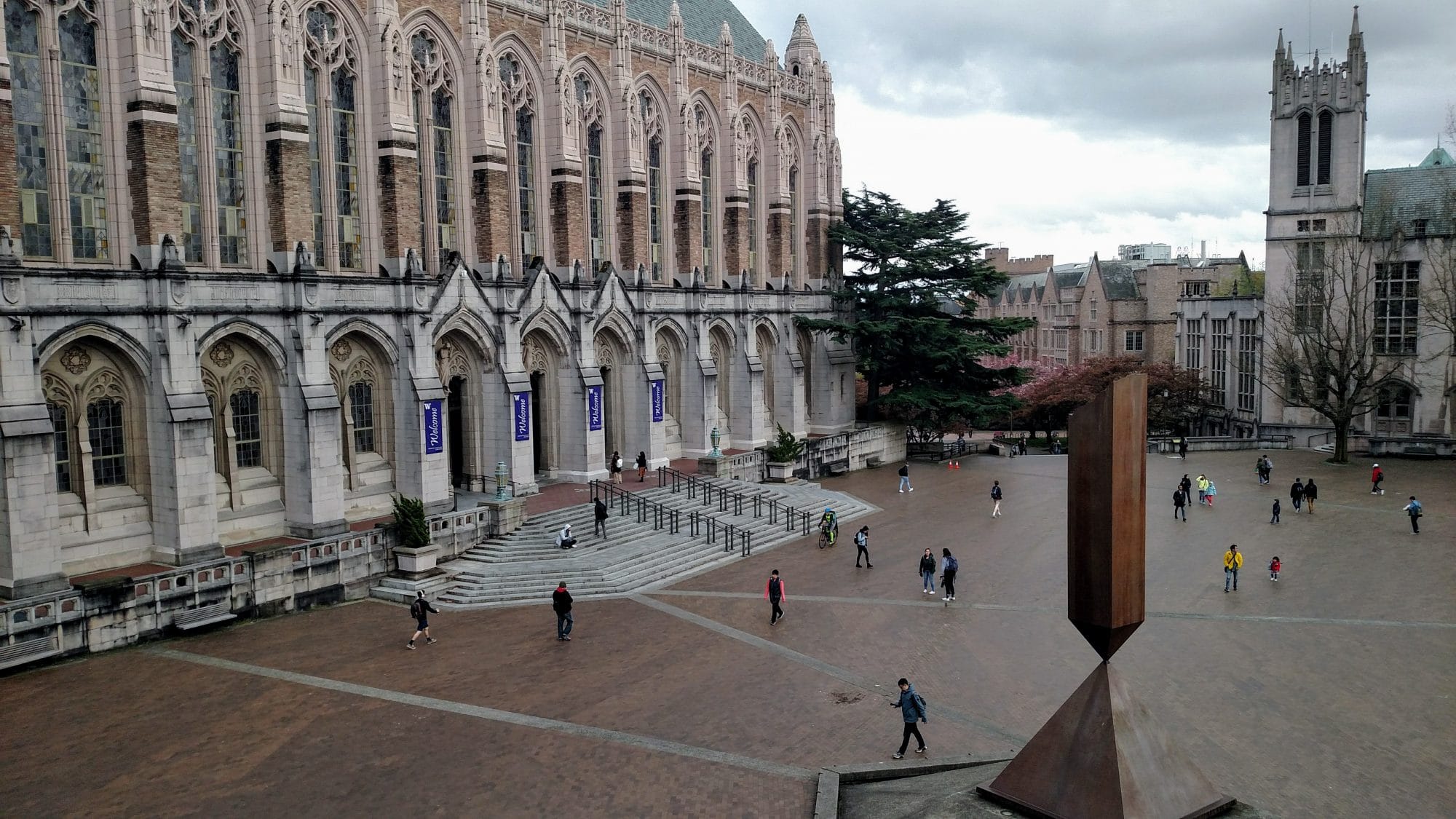
In addition, higher education has been subject to repeated attacks by the Trump administration this year.
In the new budget proposal, Ferguson calls for an additional 3% cut to the University of Washington and Washington State University, and a 1.5% cut to other regional universities and community and technical colleges.
A brief from the University of Washington says this proposal would cut $15.8 million from their budget per year, in addition to a $3.5 million cut for administrative services.
Under Ferguson’s proposal, higher education wouldn’t be the only target of education cuts. A planned increase in per-student funding for school districts with lower property values (who therefore can’t raise as many funds via property tax levies) wouldn’t go into effect. Signups in the Working Connections child care program would be capped, and 1,816 slots for the Transitions to Kindergarten program for four-year-olds would be eliminated.
The Early Childhood Education and Assistance Program, on the other hand, would expand, but only due to private funding provided by Ballmer Group Philanthropy, founded by former Microsoft chief executive Steve Ballmer and his wife, Connie. The group announced it would pledge up to $170 million annually to add more slots to the program, but for the 2026-2027 school year, only $34.5 million will be spent to add 2,000 additional slots.
“Unfortunately, this budget proposal takes an austerity approach,” State Superintendent Chris Reykdal wrote in a statement. “While that’s a common response to financial challenges, what’s troubling is that we know so much about income inequality and tax inequality in our state, and we can’t keep putting budget proposals forward that don’t take that inequality into account. This budget, like others before it, closes the holes in Washington’s budget on the backs of public services. This is a false narrative. The idea that we either need to cut from one direct service that our communities rely on in order to fund another public service is wrong.”
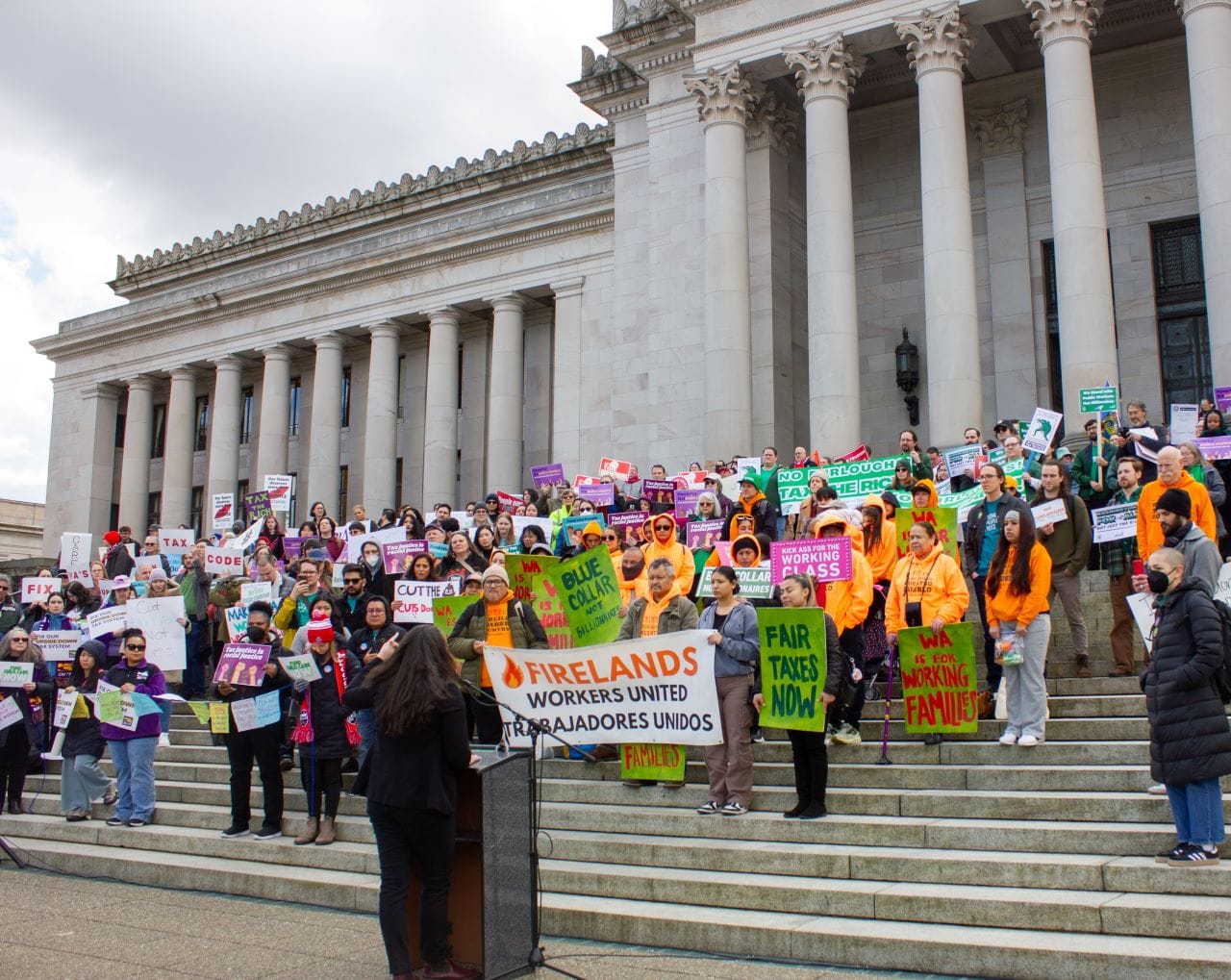
Reykdal said Washington state is ranked 40th in the country for the percentage of the gross domestic product (GDP) reinvested in K-12 public schools.
Meanwhile, The Seattle Times reported that Ferguson wants to shift reimbursement rates for assisted living facilities back to 2022 levels, which the Washington Health Care Association said could cost these facilities almost $148 million.
Ferguson’s proposal also makes changes to a Medicaid drug pricing program that the Washington Association for Community Health says will cost already straining health centers more than $100 million annually while only saving the state an estimated $7.5 million. These health centers expect demand to increase as more people lose their health insurance coverage.
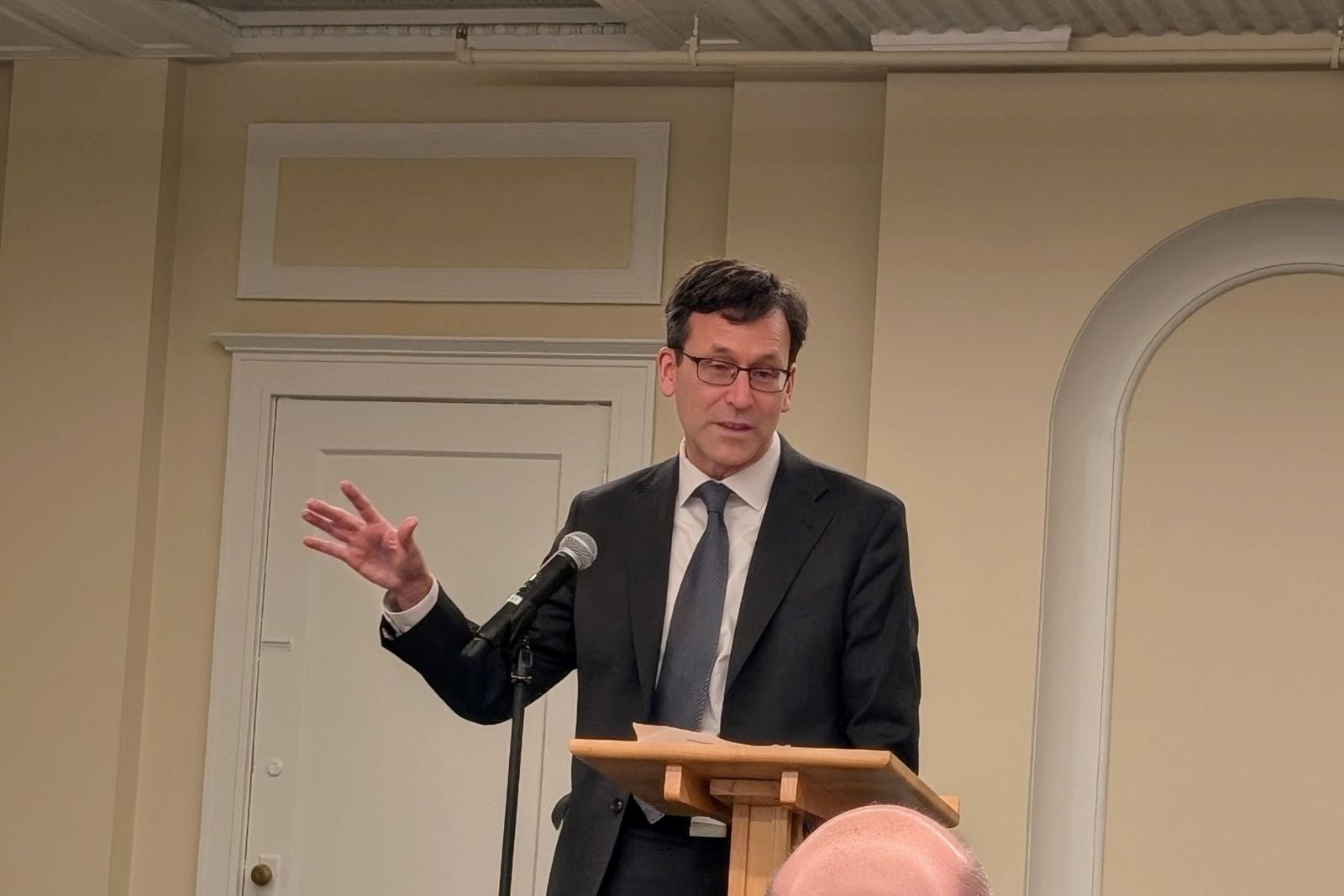
“I’m providing a road map to the legislature,” Ferguson told the press. “This is, of course, the first step in a conversation about how best to balance our budget. Legislators will, of course, have their own ideas.”
Ideas about new revenue
The new revenue idea that appears to be gaining the most momentum is an income tax on Washington residents who make more than $1 million in a year. Charging 9.9% on adjusted annual gross income over $1 million, the tax is expected to apply to fewer than 0.1% of Washingtonians. It is estimated to raise $3 billion per year.
Ferguson has come out in full-throated support of this idea — albeit on his own timeline. “We are facing an affordability crisis,” Ferguson said to the press. “It is time to change our state’s outdated upside down tax system to serve the needs of Washingtonians today, to make our tax system more fair, millionaires should contribute more towards our shared prosperity.”
Ferguson has been clear that no proceeds from his tax proposal would be collected until 2029, meaning that his 2026 supplemental budget proposal relies entirely on cuts and fund reallocation to balance. Indeed, this late collection date will mean no money would be collected from the so-called “millionaires” tax during Ferguson’s first term in office.
How the proceeds from the tax would be spent is up for debate. Ferguson would like to spend the money to expand the Working Families Tax Credit, give tax relief to small businesses, reduce the state’s sales tax on certain types of items, and give more funding to K-12 education.
Other lawmakers are interested in backfilling federal cuts to critical services like Medicaid, health insurance subsidies, and SNAP, as well as education.
Rep. Shaun Scott (D-43rd Legislative District, Seattle) has introduced a different tax proposal to help backfill federal cuts that would go into effect mid-year. Modeled after Seattle’s JumpStart payroll expense tax on companies with both large payrolls and highly paid employees, the tax could raise up to $3 billion a year. Scott intends the money to go into a Well Washington Fund that would invest in important programs from which the federal government is divesting, which could include cash assistance programs, higher education, health care, and housing.
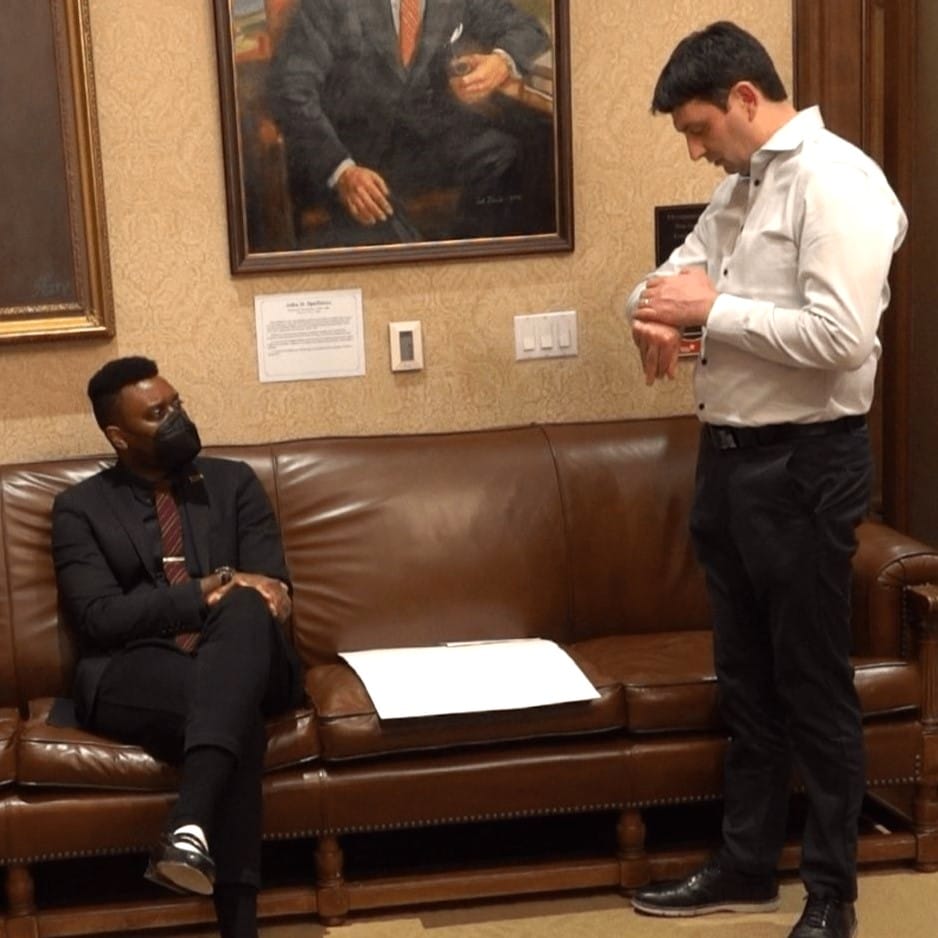
“The Well Washington Fund asks corporations to join in with their employees in contributing to the social safety net, and just as the federal additional Medicare tax helps to fund vital health services across our country, the Well Washington Fund will support those in poverty, the aged, and students in Washington State,” Scott said at a press conference.
Ferguson said he is “not a big fan” of a state-wide payroll expense tax.
Scott is also introducing a bill that would restore funding to the state’s wildfire response account by ending a tax break for big banks.
Other lawmakers are also eager to search for new revenue.
Rep. Julia Reed (D-36th Legislative District, Seattle) has introduced a bill that would remove a tax cap on big tech companies in order to “provide tuition free higher education to all working and middle class families in WA.”
Rep. Noel Frame (D-36th, Seattle) introduced a wealth tax in the 2025 session that received a last minute ‘yes’ vote in the Senate. This wealth tax would tax certain assets, like stocks and bonds, over $50 million in value.
The Northwest Progressive Institute, a local progressive think tank, has compiled an entire list of tax tweaks the legislature could pursue to increase state revenue.
Washington’s legislators will convene on Monday, January 12 to debate and pass the state’s 2026 supplemental budget, determining whether it will be balanced on cuts and emergency funds alone or whether new revenue will be a part of the picture.