

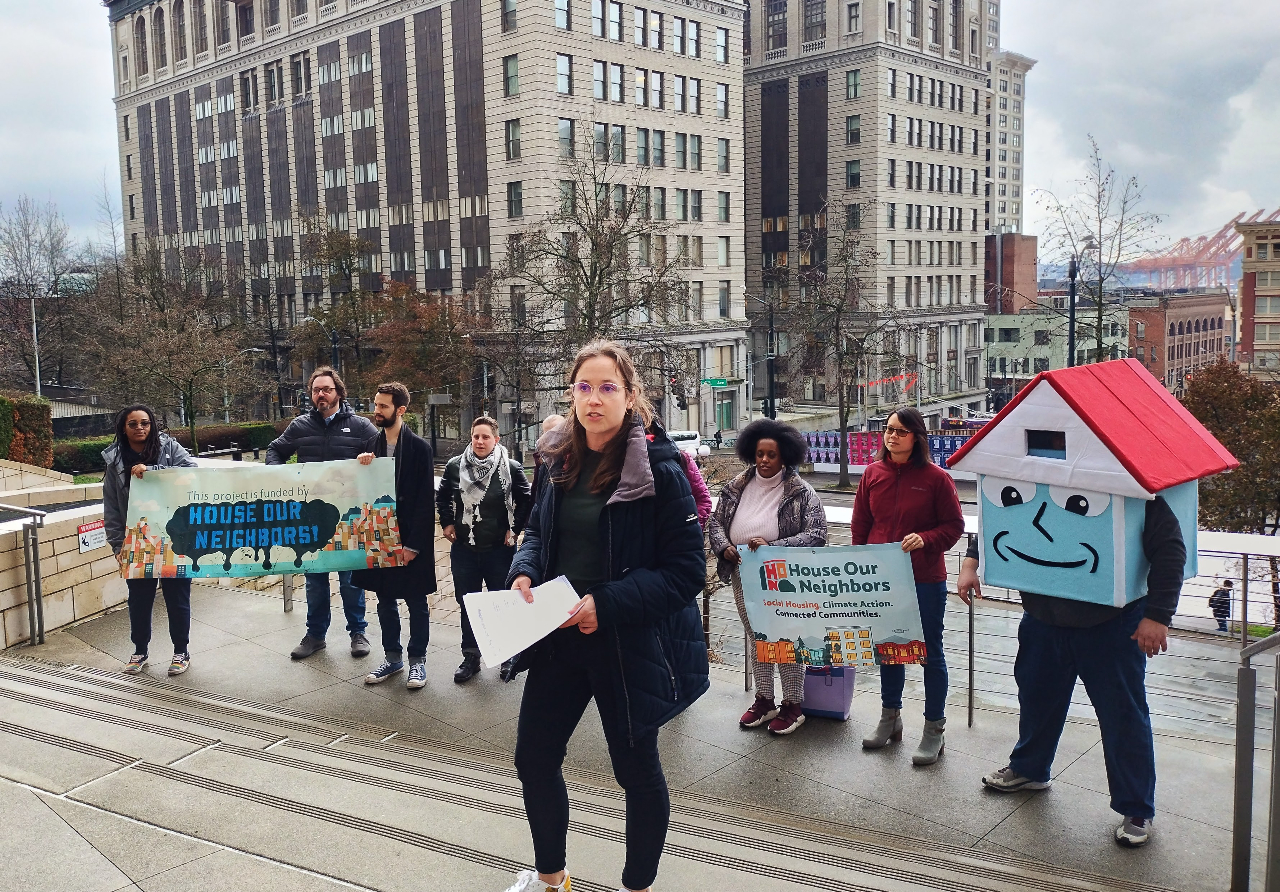
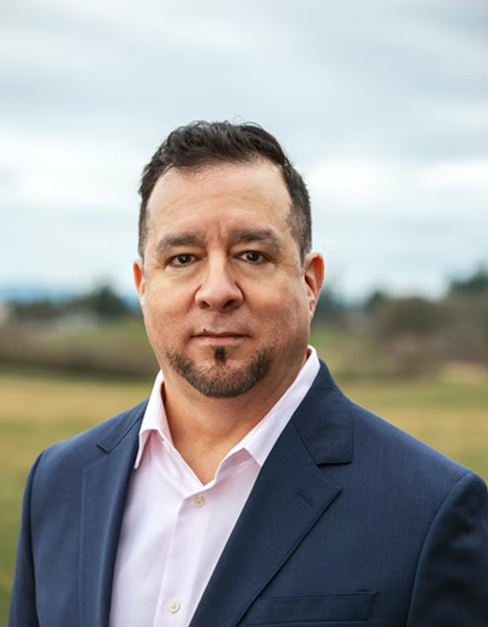
In a major shakeup, the board of the Seattle Social Housing Developer (SSHD) ousted its CEO, Roberto Jimenez, on Thursday night, and installed Tiffani McCoy as interim CEO of the agency. To take the position, McCoy has stepped down as co-executive director of House Our Neighbors, the advocacy group that ran the campaigns to establish and fund the social housing public development authority.
Jimenez had faced a wide range of criticisms since being hired in late 2024, leading a coalition of 19 nonprofits and advocacy groups to send a letter to the board on December 17. That letter questioned Jimenez’s leadership and urged course correction, but stopping short of directly calling for him to be fired. House Our Neighbors was among the groups to sign, along with the MLK County Labor Council and Puget Sound Sage.
“[T]he SSHD is set to begin receiving millions of dollars in payroll tax revenue entrusted to it by the voters of Seattle,” the letter stated. “To make the most of this generational opportunity to counter Seattle’s housing and homelessness crisis, the board must address ongoing concerns and seriously consider whether, after 16 months at the helm, the current CEO is the right leader for this historic moment.”
The letter questioned not just Jimenez’s demeanor and leadership style, but also his decision to not to move to Seattle after taking the job, despite reportedly receiving a sizable stipend to do so.
The Seattle Chapter of the Democratic Socialists of America (DSA) echoed this pointed and called Jimenez “incapable of achieving even ordinary tasks” in a sharply worded statement sent out ahead of the meeting. The Seattle DSA also questioned Jimenez’s commitment to the charter mission of establishing a social housing model, which focuses on mixed-income buildings with tenant leadership, as opposed to the traditional nonprofit model where low-income people are concentrated together and not given much, if any, power over building decisions.
The critical letters seemed to hit home. Most board members had concerns over Jimenez’s “governance, vision, leadership, ability to work across difference,” McCoy said. A few boardmembers, however, dissented and argued for Jimenez or against the process by which he was removed. Board secretary Katie LeBret resigned immediately following the vote, in protest.
“The majority said that it was time for new leadership, and the governance structure also decided that we’re not going to have any sort of gap in leadership, especially when we have all this money coming in,” McCoy told The Urbanist. “And we want to make sure that we’re up and running as quickly as possible.”
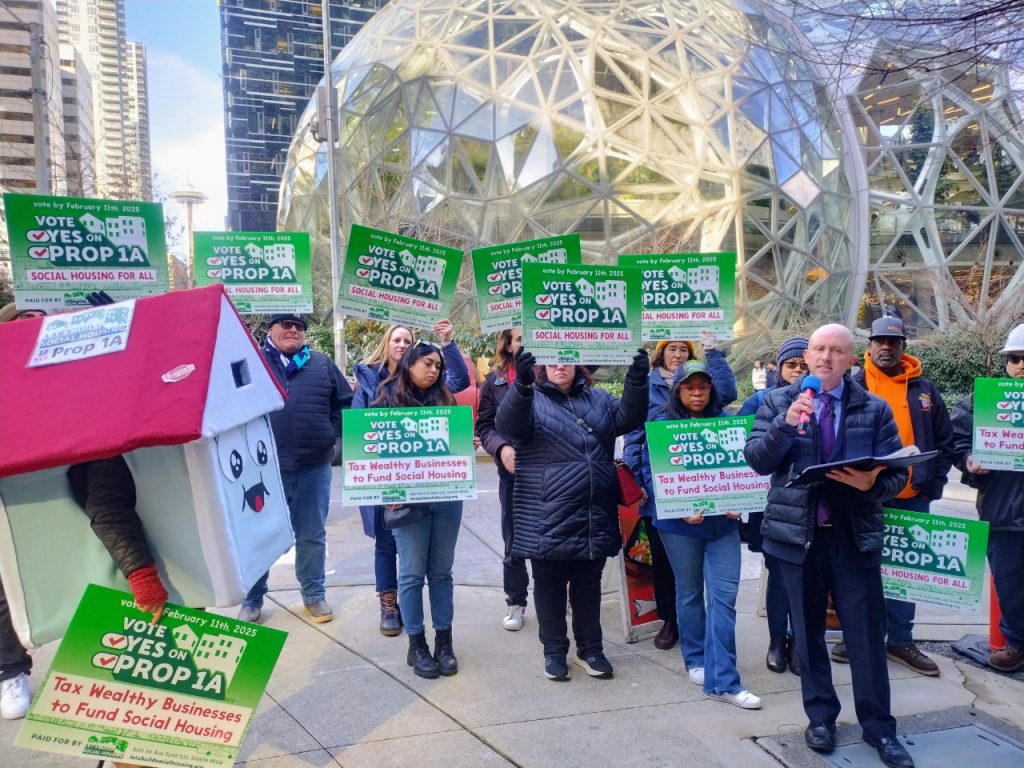
Seattle voters greenlit the Seattle Social Housing Developer in a 2023 vote and approved a dedicated funding source for the Seattle Social Housing Developer (SSHD) in February 2025. Despite opposition from former Mayor Bruce Harrell and from the Seattle Metropolitan Chamber of Commerce, that dedicated funding measure passed by a healthy 26-point margin. The result is an excess compensation tax on high earners that is projected to bring in more than $50 million annually.

Jimenez criticized his own ouster, calling the allegations “unsubstantiated” and telling the Seattle Times that the timing was “inopportune” since the organization had property acquisitions queued up and alleged they were on course to meet its targeted deadlines.
While Jimenez was hired away from Mutual Housing California where he managed a $500 million portfolio, McCoy has no housing development experience.
“She doesn’t have any real estate or finance experience and that, I would say, is high risk,” Jimenez told the Seattle Times.
Acknowledging that fact, McCoy said they would be hiring a chief development officer, to compliment the portfolio manager the Seattle Social Housing Developer (SSHD) already has on staff.
“[We’re] identifying and talking with an individual that would be joining me on staff really, really quickly in the C suite. We’re still working on the title, but they would be like the chief strategy and development officer, something like that,” McCoy said. “Because let’s be real, I don’t have finance/development [experience]. I’ve never built a building in my whole life.”
McCoy stressed the importance of maintaining the public trust and being good stewards of the public dime.
“So it’s making sure that while I’m taking on this interim role, we’re also bringing someone into a senior position that is able to look at and create our portfolio and make sure that we’re doing pre-development and acquisition and utilizing these dollars that the voters of Seattle voted on as quickly as we can, while setting up all of the other structures that are so necessary to get those dollars out the door and show public trust in our processes as a public agency.”
Despite the leadership upheaval, the SSHD is still intending to begin property acquisitions this year.
“I really want to have an acquisition done in the next six months, hopefully sooner, but I’m also not going to over promise,” McCoy told The Urbanist.
While some questioned the leadership change, McCoy has her backers in the building industry as well. Patience Malaba, executive director of the Housing Development Consortium, issued a statement backing the decision to hire McCoy, as did Nicole Grant, governmental affairs and political director of the International Brotherhood of Electrical Workers Local 46.
“This is a vision Tiffani nurtured and carried forward with determination and effectiveness,” Malaba said in statement. “Her leadership has been instrumental in getting (Seattle Social Housing Developer) to this point, and I’m excited to see how the organization continues to grow and take off under her leadership.”
Grant had been critical of Jimenez’s refusal to sign a labor agreement to hire local contractors, which is a cause MLK Labor also took up, the Seattle Times reported. Using union labor had been a promise during ballot campaigns, but it could lead to somewhat higher construction costs, which may have been why Jimenez resisted going down that path.
Naishin Fu, co-executive director of House Our Neighbors (HON), sent out a statement commending the board for making the difficult decision to change leadership: “There is no better person than Tiffani McCoy to step into the interim CEO role, to carry out the vision of social housing twice passed by voters. Having led two successful campaigns to establish and fund SSH, and creating HON as a sustainable nonprofit with a complex structure, we know that McCoy’s skill and integrity will drive a collaborative culture and build out the infrastructure needed for SSH to be successful.”
The SSHD board is still determining the process to find a permanent hire for CEO.
“There will not be a search that commences immediately,” McCoy said. “I am the interim CEO for the foreseeable future, and the board, at their next board meeting is going to start discussion of the timelines. I’m going to be here for a few months and actively working to build up this agency.”
Social housing has a major new ally at City Hall in Mayor Katie Wilson, who credited the success of the February measure in inspiring her to run for mayor in the first place. Wilson backed the ballot measure, and McCoy, in turn was an early endorser of Wilson and serves on her transition team.
“I mean, this is a beautiful moment,” McCoy said. “The past four years, the mayor has not been in support. The vast majority of the city council have not been for it. A lot of people in the housing development space were skeptical or quite opposed, and now we are living in a world where social housing was one of the key pillars of our mayor, one of the things that the city councilors ran on. You could not run for city council in this city without being asked about your position on social housing multiple times. We live in a fundamentally different world, and we’re about to start getting a lot of money to start making some real difference.”

Doug Trumm is publisher of The Urbanist. An Urbanist writer since 2015, he dreams of pedestrian streets, bus lanes, and a mass-timber building spree to end our housing crisis. He graduated from the Evans School of Public Policy and Governance at the University of Washington in 2019. He lives in Seattle's Fremont neighborhood and loves to explore the city by foot and by bike.