

Responding to a wave of reporting about data from automatic license plate readers (ALPRs) being shared with federal immigration and out-of-state law enforcement agencies, the Washington State Legislature is considering a bill regulating the use of this surveillance tool.
Sponsored by Senator Yasmin Trudeau (D-27th Legislative District, Tacoma) and Senator Jeff Holy (R-6th LD, Spokane), Senate Bill 6002 – titled the Driver Privacy Act – would add guardrails to the use of license plate cameras, including how long data is retained and how data is shared.
Should the bill pass, Washington would join 23 other states with laws on the books regulating the way ALPR data can be collected, accessed, and shared.
“These license plate cameras are powerful surveillance tools, and I think most people would agree there should be clear rules governing how the data collected on all of us is stored and accessed,” Trudeau said in a press statement. “We have a balancing act before us. We want law enforcement to have the tools they need to solve crime, but we also need to respect community surveillance concerns and ensure the use of this data aligns with our values as a state.”
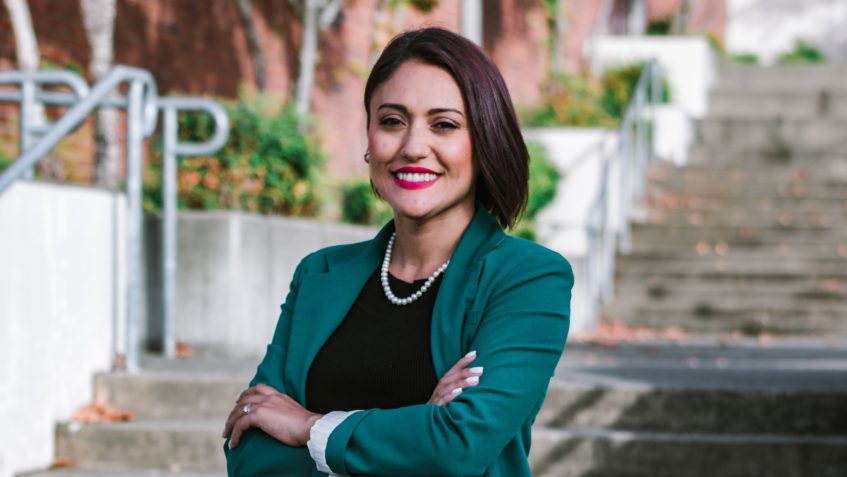
Trudeau told The Urbanist she’d been tracking the data use and misuse of ALPRs for some time, specifically citing a University of Washington (UW) report that came out in October that showed several Washington agencies had enabled either direct sharing with or back or side door access to the U.S. Border Patrol (USBP).
The chair of the Members of Color Caucus and the first Muslim American to serve in the state legislature, Trudeau also cited her experience at the Attorney General’s office, working on data privacy concerns and consumer protections, and her recent advocacy for immigrant issues.
“Overall, I think the bill puts forth a lot of protections that are really important in terms of disrupting the status quo right now in Washington State, which is that there are no regulations,” said Tee Sannon, the ACLU of Washington’s Technology Policy Program Director. “The bill does some important things around identifying agencies that can use ALPRs, prohibiting them from using the readers for things like tracking people for engaging in constitutionally protected activity, and also has some common sense data protections.”
Sannon said the bill puts into place a requirement for law enforcement to obtain a felony probable cause warrant before searching old ALPR data for a particular case.
While Californian law enforcement agencies have repeatedly broken their state law governing ALPR usage, Trudeau thinks the three paths of enforcement included in her bill might give the policy more teeth.
The bill contains criminal penalties (a gross misdemeanor) for any individual who violates the policy and a civil right of action so people who have been harmed by a breach of the policy can sue. Violations of the bill will also be subject to the consumer protection act, which would allow the state to get involved if specific vendors are behaving in a way that’s harming Washingtonians.

Sannon said Trudeau’s bill compares positively to the one in California.
“There’s this audit requirement that agencies need to conduct an internal audit once a year to review all of the access that’s been taking place to their LPR systems,” Sannon said. “And coupled with the enforcement mechanisms and the penalties […] I think that this actually makes it a strong provision, because then it basically means that agencies can’t claim that they weren’t aware that access was taking place.”
“I think that we have the strongest enforcement in this bill,” Trudeau said. “As far as every mechanism we have available to us to both deter and respond to misuse, that’s what we have in the bill.”
In addition to guardrails to guide agencies’ usage of ALPR technology and enforcement mechanisms, Trudeau’s bill states that data from ALPRs would no longer be subject to disclosure under the Public Records Act except in the case of “bona fide research.” This clause specifically addresses a recent court ruling in Skagit County Superior Court that found that videos captured by Flock ALPR cameras are public records and must be disclosed.
Several Washington cities paused or delayed their ALPR programs while waiting for the above verdict, which continues to raise privacy concerns.
While the bill doesn’t explicitly mention whether audit trail data from ALPRs would still be subject to public record requests, Trudeau said this data would still be available to researchers and journalists. According to Trudeau’s office, this information should include the user’s identity, date of access, search terms, and sharing details, and the audit trail is supposed to be preserved for two years.
Journalistic outlets such as 404 Media, independent privacy watchdogs, and UW researchers have been using public records requests of these audits over the past year to determine that local agencies have been sharing their ALPR data with federal immigration agencies, as well as a Texas agency searching for an abortion seeker. Language added to the bill to make more explicit this intention about the audits would strengthen the bill further.
Trudeau spoke about the importance of the bill for all Washingtonians.
“This is something that really, if I could just emphasize, we should all care,” Trudeau said. “This should not be a partisan thing. This should not be an immigrant issue. We have to do better by our personal information, and we’re watching in real time what happens when we have not been proactive.”
Data security in the age of ICE surveillance
License plate readers were first invented in the United Kingdom in 1976, but the systems didn’t enter into widespread use at that time because of high costs and accuracy issues. Even now, a recent report found that 1 in 10 ALPR readings contains an error, which can have disastrous consequences.
However, the cost of the cameras came down in the mid-2010s, allowing more, and smaller, law enforcement agencies to consider their use more seriously. A survey by the International Association of Chiefs of Police published in 2022 found that 40% of agencies reported using a license plate reader system.
In the last few years, Flock Safety – one of the biggest providers of license plate reader technology – began expanding its network of license plate readers in Washington State, with an estimated 80 cities, six counties, and three tribes using Flock ALPRs.
In May 2025, 404 Media reported that Flock’s data was being shared with federal agencies for immigration enforcement purposes. After The Urbanist reported that the King County Housing Authority’s (KCHA’s) Flock data appeared to have been shared for immigration enforcement as well, KCHA chose to discontinue their Flock pilot. And U.S. Senator Ron Wyden (D-Oregon) discovered that Flock had run a pilot (since discontinued) that shared its data with federal agencies like the Department of Homeland Security (DHS) and U.S. Immigration and Customs Enforcement (ICE) without properly informing its clients.
In October, the UW Center for Human Rights published its report finding that several law enforcement agencies in Washington State had been sharing their Flock data with federal agencies involved in immigration enforcement.
Under sustained criticism, Flock has been changing its policies in ways that appear to be circumventing increased transparency instead of improving it.
Experts have been warning the audit data might not always provide a necessary check on what has become a massive and nation-wide surveillance network. And when, earlier in January, several police departments accidentally leaked information about millions of their surveillance targets, Flock responded by limiting the information available in audit logs.
As 404 Media reported, “In recent weeks Flock severely limited the amount of information available on its audit logs, which are designed to be a transparency tool, raising questions about how much information journalists, regulators, and government agencies will be able to get about police use of Flock cameras in the future.”
In December, Flock CEO Garrett Langley claimed that criticism of Flock and its data privacy issues constituted an attack on law enforcement. In January, Flock told 404 Media that the concern over their data privacy policies amounted to “activists trying to let murderers go free.”
Seattle and Tacoma use license plate readers from Flock’s competitor Axon. While Flock’s data privacy issues have featured heavily in the media over the past several months, other license plate reader providers, including Axon, Genetec, and Motorola, have similar privacy concerns.
The ACLU of Washington puts the stakes of the surveillance net created by these companies in stark terms: “The risks from unregulated ALPRs are particularly significant in this current moment when the federal government seeks to silence dissent and go after political enemies. The Trump Administration is performing a retribution campaign that seeks to silence and punish critics who oppose the president’s agenda.”
Remaining issues
One of the most hotly contested provisions in Trudeau’s bill is how long agencies can retain the data collected by their license plate readers.
Across Washington state, 30 days has become a bit of a standard, although the Seattle Police Department (SPD) retains their license plate reader data for 90 days. Data privacy advocates have asked for a much shorter retention time, pointing to New Hampshire as an example, which only retains the data for three minutes.
In its current form, the bill allows agencies to retain the license plate data for 72 hours. Trudeau said the Institute for Justice, a nonpartisan group, suggested 24 hours, but law enforcement agencies are saying they need at least 30 hours.
Sannon said the ACLU of Washington has pushed for this number to be as low as possible. She also emphasized that the data being deleted after the time limit is not data associated with any crime, which would come under one of the many exceptions for retention outlined in the bill.
While there is language in the bill that says it takes effect immediately upon passage, it gives the attorney general until July 1, 2027 to develop model policies for license plate readers and sets a deadline of December 1, 2027 for agencies using the readers to adopt a consistent policy based on the model and start their annual reporting. Given the data sharing that has already been happening, this delay could be a cause for concern.
License plate readers would be banned from use around facilities providing protected healthcare or conducting an immigration matter, as well as around schools, places of worship, courts, and food banks. This requirement should be relatively easy to meet for fixed license plate cameras. However, for those cameras attached to vehicles, such as all of SPD’s ALPRS, figuring out how to stop recording at certain locations while an officer is driving around the city could be a challenge, begging the question as to whether mobile ALPRs can be used responsibly in a sanctuary city.
Sannon says her biggest concerns with the bill right now are the provisions allowing agencies within Washington direct access of each others’ license plate data and allowing direct data access to third party vendors, many (if not all) of whom aren’t located within the state.
“If this becomes a regional network [in Washington], then it’s also super charging law enforcement’s ability, even within the state, to tap into different local jurisdiction data and make it available at a much broader level than people, and I think councils, intended it to be accessed,” Sannon said.
Out-of state vendors could be directly subpoenaed by ICE or DHS for the data to which they have access. Sannon said this would allow agencies to bypass the Shield Law, which protects Washingtonians’ access to reproductive care, and the Keep Washington Working Act.
It’s possible some of these concerns could be addressed in future drafts of the bill.
Just the first step
Given Flock’s recent move to severely curtail information available in its audits, advocates view this bill as simply one step in addressing concerns around license plate readers and the broader data privacy landscape.
Another UW report released earlier this January showed that ICE and U.S. Border and Customs Patrol likely still have access to data from the Washington Department of Licensing. Advocates are calling for state agencies to start collecting less data in response.
As ICE continues to build out its nationwide, comprehensive surveillance apparatus, the overarching conversation around data privacy will be continuing in Olympia.
“I’ve watched what’s happened a lot on the privacy front, more broadly than this bill,” Trudeau said. “Right now we don’t have any data privacy law in Washington State. I think we should continue to have concerns that any efforts around data privacy legislation have predominantly been crafted and pushed by the very same tech companies that don’t want enforcement permissions. So I hope that this gets folks to pay attention to a larger conversation about how their information is being used and misused. But I think in this instance, where I have a chance to make a difference and protect people’s information as much as I can, that’s what I’m going to do here.”
But not everyone agrees that the bill goes far enough. Privacy advocates are concerned this bill would encourage cities that have put their license plate reader systems on hold to move forward with more surveillance.
“The bill would be an improvement on the current situation, but sanctioning bulk data collection regardless of suspicion risks further normalizing surveillance architecture, chipping away at our rights and freedoms,” local anti-surveillance group DeFlock Redmond told The Urbanist. “An outright ban on the use of ALPRs and other dragnet mass surveillance technologies by law enforcement would be preferable.”
The bill will have its first hearing in the Senate’s Law & Justice committee on Tuesday at 8am.

Amy Sundberg is the publisher of Notes from the Emerald City, a weekly newsletter on Seattle politics and policy with a particular focus on public safety, police accountability, and the criminal legal system. She also writes science fiction, fantasy, and horror novels. She is particularly fond of Seattle’s parks, where she can often be found walking her little dog.