One of this year’s highest-profile housing bills advanced forward in Olympia this week, after being scaled back in response to concerns around potential negative impacts to the urban fabric, particularly in Washington’s largest cities. Senate Bill 6026, put forward by Emily Alvarado (D-34th, West Seattle) at the request of Governor Bob Ferguson, has been attracting attention as a bill that could potentially pave the way for mixed-use development where stagnant strip malls and office developments currently stand, requiring local governments to fully open those areas up for residential development.
Modeled on a law approved in California in 2022, SB 6026 would require any Washington city with more than 30,000 residents to allow residential development by-right on all commercially zoned land, and in its initial form would have barred those cities from requiring ground-floor retail storefronts in those areas, even in areas where mixed-use development is already allowed.
The idea has been hyped by Microsoft president Brad Smith and advocacy groups with ties to former Governor Chris Gregoire. Both Smith and Gregoire are involved in the Cascadia Innovation Corridor, a thinktank promoting policy across the Pacific Northwest “mega-region” that regularly weighs in on housing issue. In 2020, the group released a proposal urging state leaders to consider siting four brand new cities up and down the I-5 corridor by replacing existing greenfield, an idea that was not received particularly well.
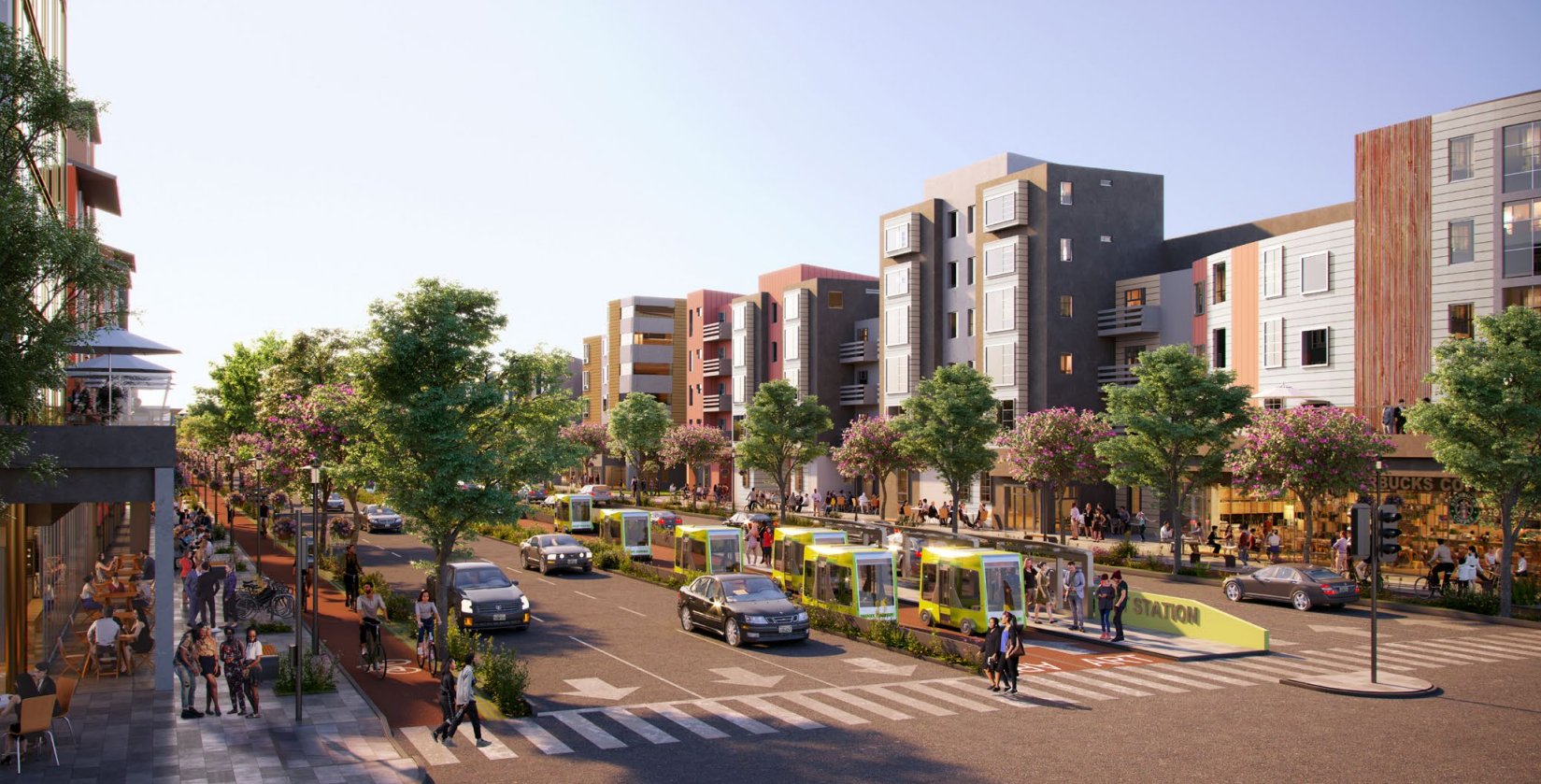
Now, Gregoire’s group has pivoted into the idea of “Grand Boulevards,” which focuses on increasing housing capacity along the region’s most highly-trafficked highway corridors, far from anywhere a CEO might want to plant a waterfront mansion.
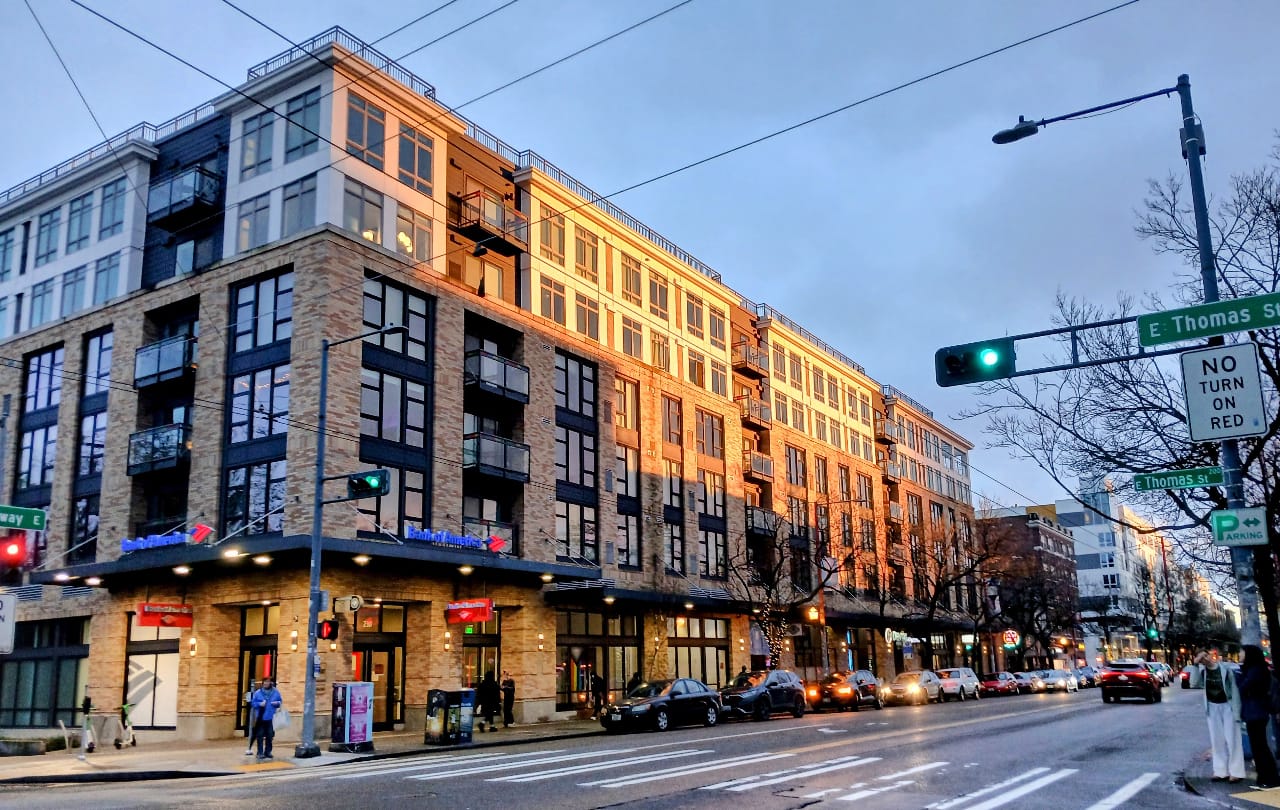
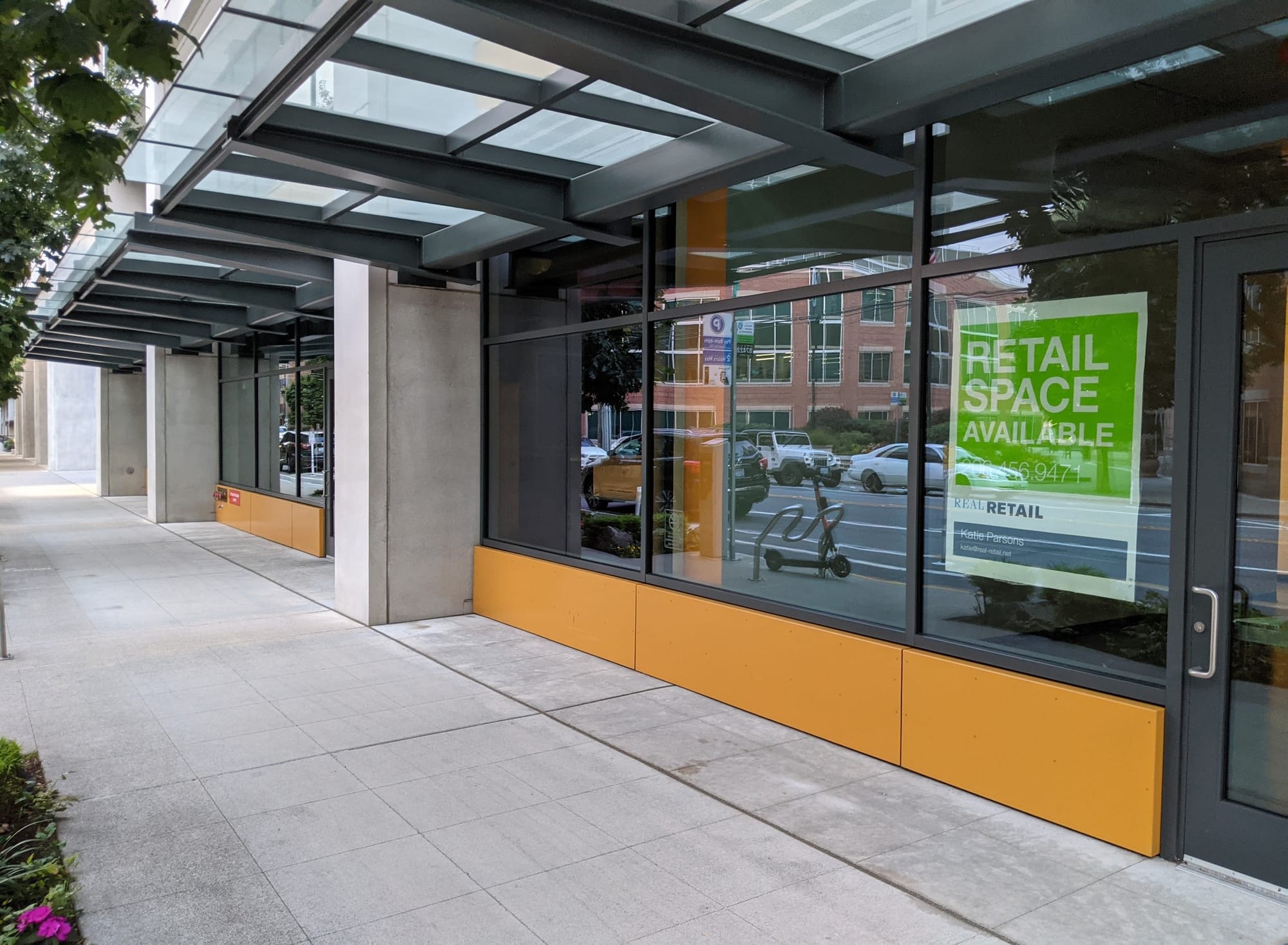
Despite the high-powered backers, idea of curtailing the ability to require ground-floor retail has been controversial at the municipal level, with local elected officials and planners across the state raising concerns around losing the walkability and street activation that comes from new storefronts. In some ways, that aspect of the bill pits housing affordability against urbanism, with many builders who are not required to add retail likely to opt out of doing so, turning opportunities for denser business districts into residential avenues with lower foot traffic.
In response to those concerns, the version of SB 6026 advanced out of the Senate’s housing committee Wednesday would drop those provisions in any areas that are impacted by the state’s 2025 transit-oriented development law — broad swaths around light rail and commuter rail stations and smaller distances around bus rapid transit stops — except in the case of 100% affordable housing projects. Business improvement areas (BIAs) created by local governments to activate local commercial districts would also be exempt, along with state or national historic places — but not areas covered by local preservation ordinances.
Outside of those transit-oriented districts (which may still be served by very frequent buses), cities could require up to 20% of a zoned area to include ground floor retail, with additional development capacity added to compensate. If retail is required, an additional 10 feet of height would be allowed, capacity that wouldn’t be allowed to be made up for elsewhere. While that extra flexibility might be enough to allow more units in some buildings, in many cases it likely won’t, because building heights are often limited by the type of building materials being used, with wood-frame buildings generally topping out at around six stories and going higher requiring concrete.
“This bill is fundamentally about creating more housing supply and about allowing for the development of the homes that our state needs in the areas where we’re already planning for growth, and it asks our cities to remove some of the barriers that make housing development infeasible,” Alvarado said ahead of the Housing committee vote. “I’ve heard from them and from community members who want to make sure that in some areas of cities there is the flexibility for local jurisdictions to mandate ground-floor commercial uses so that they can create walkable and pedestrian friendly and vibrant areas, and we’ve made significant amendments in the legislation to provide local communities with that flexibility, while making sure we can continue to remove regulatory burdens and get more housing built.”
Though the provisions around automatic conversion of commercial zoning into residential are taking center stage in discussions around SB 6026, a parcel-level analysis completed by the Puget Sound Regional Council (PSRC) showed that the bill’s real impact would come from the changes to ground-floor retail requirements. The PSRC study, which happened thanks to support from Amazon and Gregoire’s Challenge Seattle (a co-chair of the innovation corridor), showed that only 5% of the parcels that would be impacted currently restrict residential development, or around 3,500 statewide out of approximately 70,000. 51% of those parcels already allow residential use with conditional approval.
That analysis did find that some cities disproportionately lock residential development out of their commercial zones. For example, 38% of commercial zones in Kirkland don’t allow any form of residential use, and 25% of commercial zones in Mount Vernon. And it found that some mid-sized cities would see development potential unlocked at a disproportionate rate to large cities like Seattle or Spokane, with Bremerton and Auburn both expected to add around 12 acres in development potential for every 1,000 residents, compared to 0.3 acres in Seattle. But development in those cities isn’t necessarily being stymied by the existence of commercial zoning, with Bremerton’s growth plan already setting the stage for substantial housing growth.
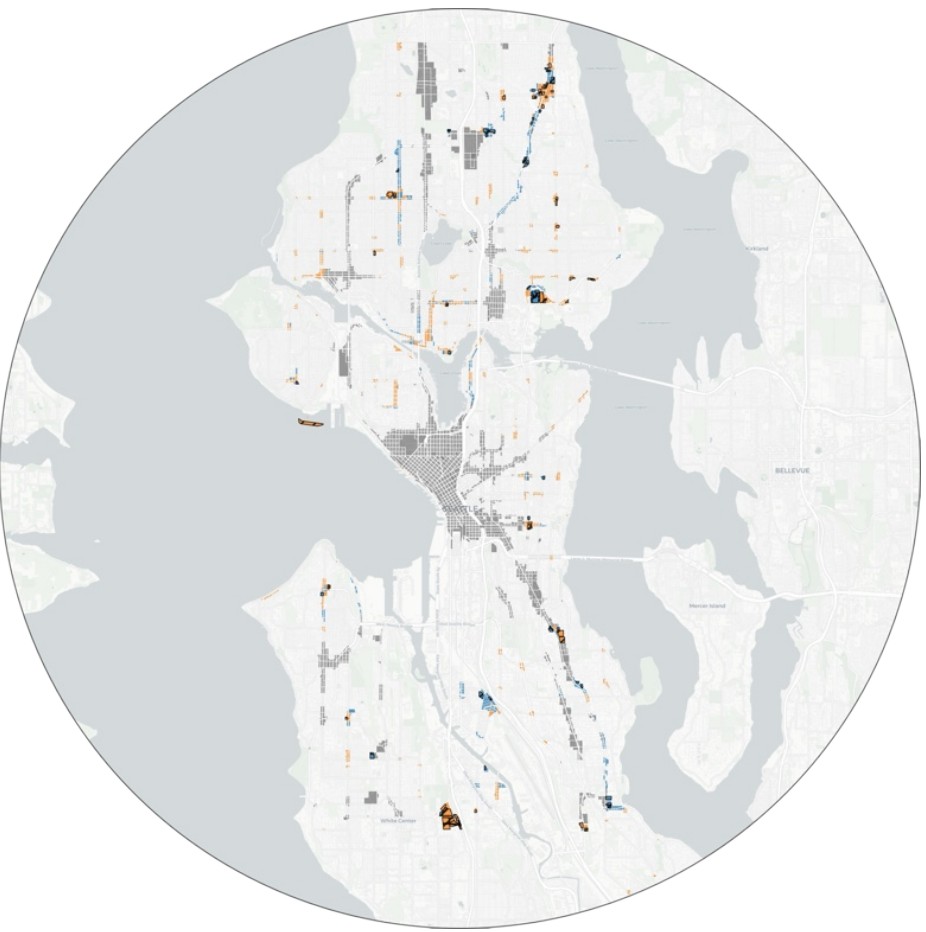
In Seattle, the areas impacted by the bill will be predictable to anyone familiar with the city’s current zoning framework, with commercial zoning largely clustered along the city’s most highly trafficked corridors, streets that also tend to be the most dangerous for people who walk or bike. With the City of Seattle recently trimming back areas where more density is set to be allowed along the city’s frequent bus routes, SB 6026 would mostly represent a doubling down on existing development patterns rather than being a sea change.
On top of the concern that a lack of retail requirements would create deadened facades that lack vibrancy and activation, another concern has come up around SB 6026: that it would further prevent existing business owners from relocating as their neighborhoods get developed. In cities that are actually adopting bold housing reforms, this issue is more acute due to the pace of redevelopment, with many new buildings built with retail spaces that don’t fit the previous occupants.
“In Redmond alone, we’re trying to relocate over 100 small local businesses who are or are in the pipeline of being displaced by redevelopment, but the space simply doesn’t exist,” Philly Marsh, Redmond’s Economic Development Director, told the Housing committee last month. “When we stopped and measured over the past 10 years of redevelopment, we cut our available retail square footage space in half. Recent real estate reports show a very limited 3.8% retail availability rate in King County at the end of 2025, even when ground floor retail is required. A new housing development where a strip mall was demolished doesn’t replace anywhere close to the space needed when it gets built. It’s either completely unaffordable for our local, diverse businesses or designed without any consideration for business viability.”
At the Housing committee vote, one Democrat joined the committee’s two Republicans in voting to advance the bill, but without a recommendation to approve it. Next, the bill will head to the Senate’s Ways and Means committee.
“This bill will move forward, and it should move forward,” Senator Jess Salomon (D-32nd, Shoreline) said ahead of his “without recommendation” vote. “It is also a challenging bill for a lot of cities, and I’ve been hearing some pretty consistent and intense feedback, so I think we need to continue to right-size it. In the city that I live, we have a neighborhood business district that is valuable and has been a part of the economic development plan and the enhancement of the neighborhood plan. And I want to make sure that we don’t end those kind of things.”