The former bank chair was the first to qualify for democracy vouchers in the race.
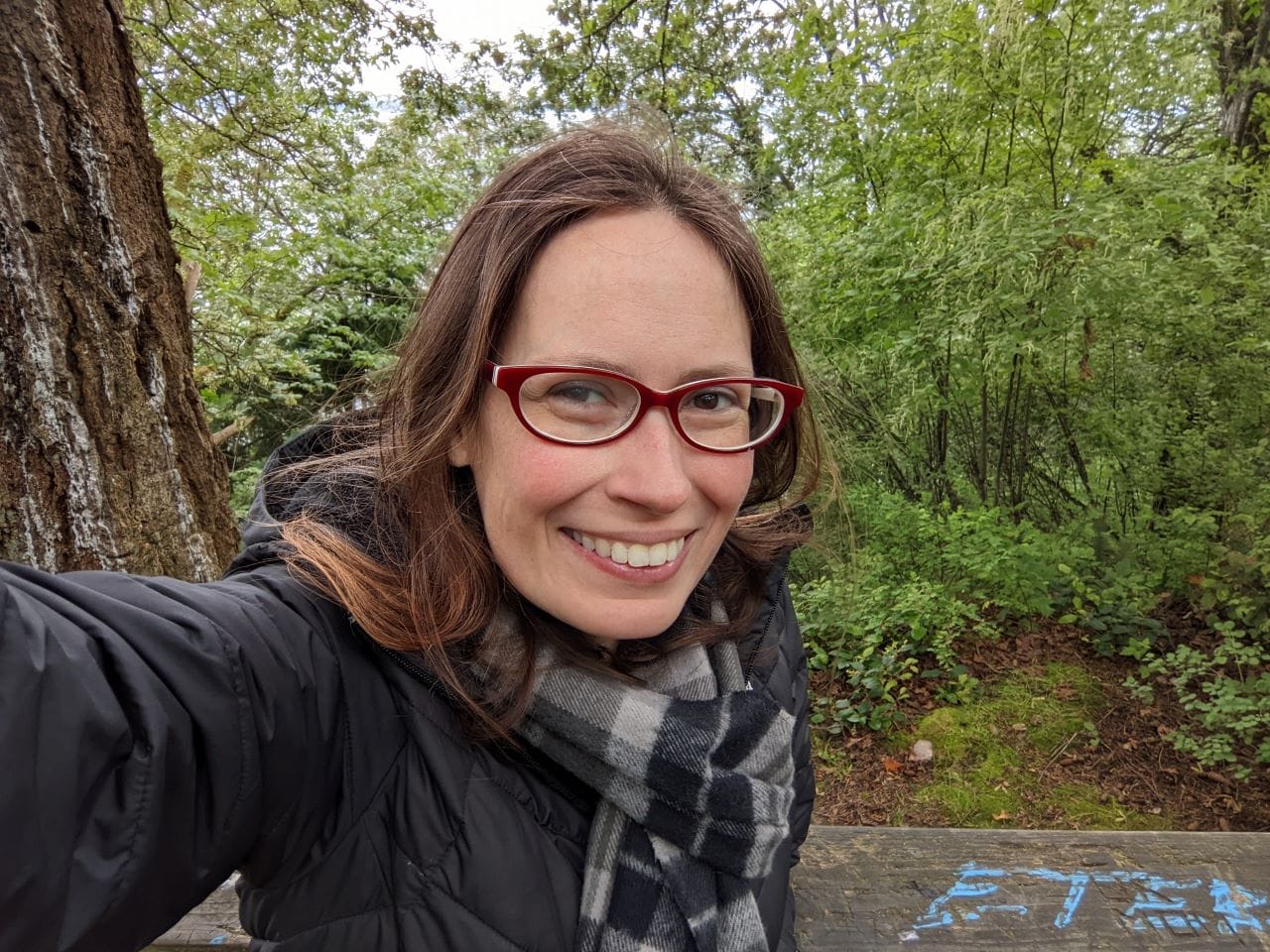
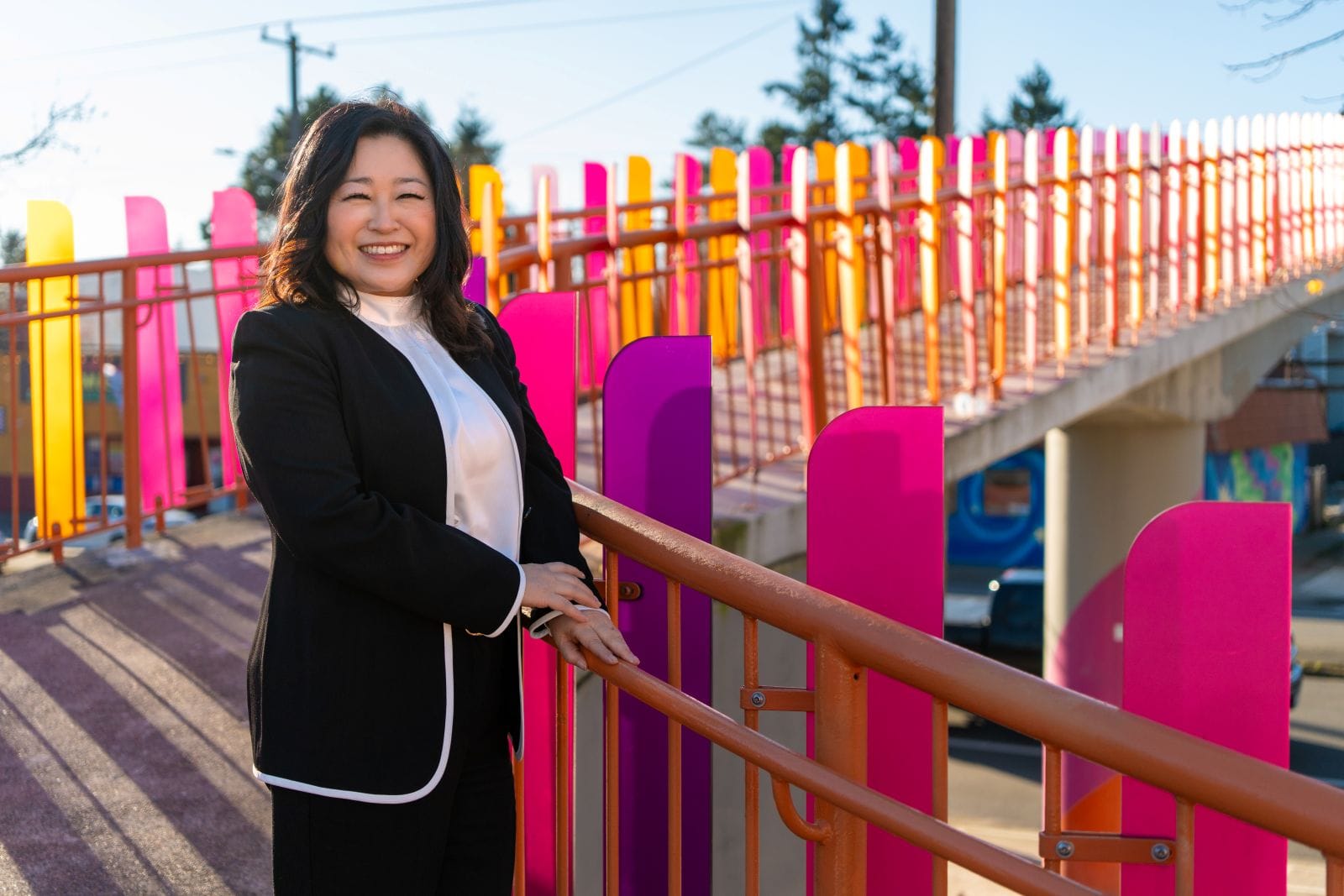
Julie Kang is running for the open seat in Seattle City Council’s District 5 this year, and is the first candidate in the race to qualify for democracy vouchers. She brings a successful career in banking, after co-founding Pacific International Bank, which focused on supporting Korean-American owned small businesses and grew to $200 million in assets before merging with Bank of Hope.
While Kang emphasized that item when applying for an appointment to the Sara Nelson-led City Council in 2025, a year later in pitching herself to D5 voters, she is emphasizing her experiences in immigrant rights, education, and nonprofit work.
An immigrant from Korea and lifelong educator, Kang has a long list of professional, civic engagement, and volunteer experience, from serving as co-chair on the King County Immigrant and Refugee Commission to volunteering at her local food bank. She has never held elected office.
A passionate educator, Kang has taught at the University of Washington and Seattle University, training teachers to work with students who are multilingual and have diverse needs.
“When we think about making decisions, policy decisions, I always say I put on my researcher hat, and I have to think about the whole continuum,” Kang told The Urbanist. “As a city council member, even though I am very active in my 32nd LD [legislative district] and the Democratic Party, we also have to think about all of the spectrum of political views and lived experiences, so I think that is a strength I bring as an individual.”
Kang is also a landlord, owning a single family rental property in District 5 that she told The Urbanist is her mother’s house. Public records show that Kang owns a third property in Lynnwood, in addition to the house in which she lives in District 5.
Kang vied for the temporary appointment of the District 5 seat last summer following the resignation of then-Councilmember Cathy Moore. Moore served as councilmember for a year and a half before leaving, citing “health and personal reasons”.
Moore was known for sponsoring the controversial Stay Out of Area Prostitution (SOAP) zone legislation, proposing a city-level capital gains tax, and supporting an update to the City’s Code of Ethics that would have weakened those rules: for example, by allowing councilmembers who are also landlords to vote on legislation that directly impacts landlords.

In an unusual move, after her resignation, PubliCola reported that Moore sent in several questions to former colleague Councilmember Maritza Rivera to ask the potential successors to her seat. Moore also continued editing legislation after her resignation, with a special interest in expanding tree retention rules in the City’s growth plan.
The council ultimately chose to appoint Debora Juarez to the seat. Juarez had previously served as the District 5 councilmember from 2016 to 2023 and is now serving on an interim basis until the election this November. Whoever wins this race will serve out the remainder of Moore’s four-year term and will have to run again in 2027.
Kang is facing off with climate advocate Nilu Jenks, who is running in the progressive lane.
The outcome of the race this year could shift the current power balance on the council. Right now the council is divided into three groups of three: Bob Kettle, Rivera, and Rob Saka constitute the centrist flank – along with the recently ousted Council President Sara Nelson – that ran hard on public safety; Alexis Mercedes Rinck, Dionne Foster, and Eddie Lin compose the solidly progressive wing; and Joy Hollingsworth, Dan Strauss, and Juarez sit somewhere in the middle.
Community building through council
Recently, Kang had been running a program that brought teachers from all over the country to the Wing Luke Museum in the Chinatown-International District to learn Asian Pacific Islander (API) history. But when Kang learned the program, formerly funded by a National Endowment for the Humanities grant, had been defunded by the Trump administration, she realized she needed to do more.
“I know as councilmembers, as elected officials, there’s so many squeaky wheels and so many things that the constituents are asking for, and we can’t get back to every single one of them, but we need to at least try, and we need to use our privilege and resources to get them to our constituents and our neighbors,” Kang said. “So for me, that’s why I want to run, because I am very fortunate to be in the space to have the knowledge, and I think I can be a bridge builder.”
Kang has been busy putting together whistle kits with ‘Know Your Rights’ information and distributing them to neighbors. Community members are disseminating whistle kits across the country in order for neighbors to alert those at risk of U.S. Immigration and Customs Enforcement (ICE) enforcement actions and allow for rapid community response.
“What I have realized is that when you’re at the table where these discussions are being made at the higher level, we have more opportunities to represent our neighbors,” Kang said.
Kang pointed to her experience in banking and managing budgets as an educator as being illustrative of her financial literacy, a skill much needed by councilmembers who must deal with Seattle’s structural budget deficit. The City faces an estimated budget deficit of at least $127 million in 2027, with no long-term fix in sight.
When The Urbanist asked about the ongoing budget hole, Kang first brought up Seattle’s sweetened beverage tax, questioning whether the proceeds of the tax are really going to provide healthy meals for Seattle’s students. The debate over the sweetened beverage tax has typically been between the harms of levying another regressive tax on Seattleites versus the health benefits of selling significantly fewer sweetened beverages in the city.
When pressed further about Seattle’s budget woes, Kang suggested a combination of cuts with the option of new taxes.
“We can’t just continue to tax, even though these are some opportunities to tax,” Kang said. “We have to look at what we are currently using, and are we making priorities based on the most needs of, for example, North Seattle? I think North Seattle has not always received our share of resources. Yet, I feel we’re getting more [than our] share of our challenges.”
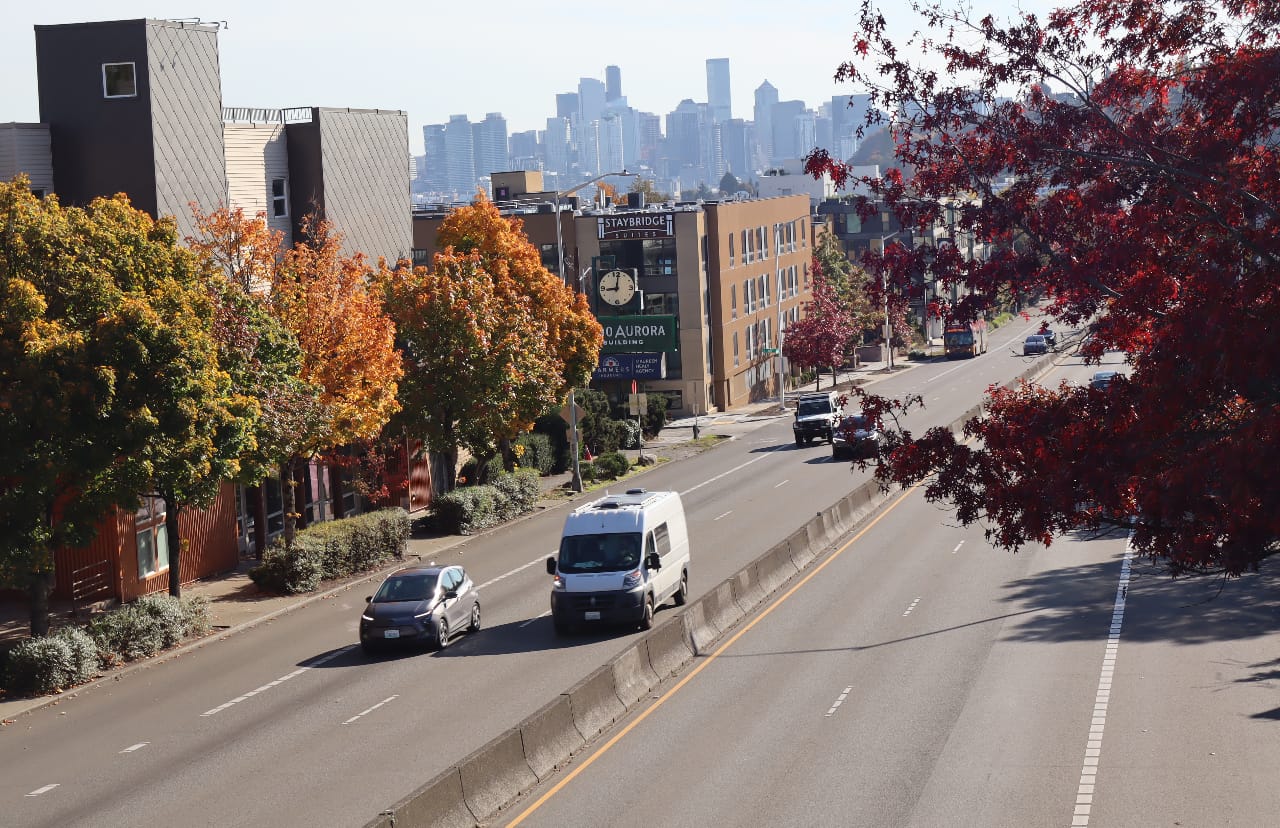
Regarding the food desert in Lake City and food access more generally, Kang said at the food bank where she volunteers, they’re seeing people they haven’t historically seen before. She also mentioned the recent loss of the Amazon Fresh on Aurora Avenue N. Kang said she’d want to work in coalition with state electeds on bills and efforts to encourage grocery stores to stay. She didn’t have specific examples of what the council could do directly to address these food access issues.
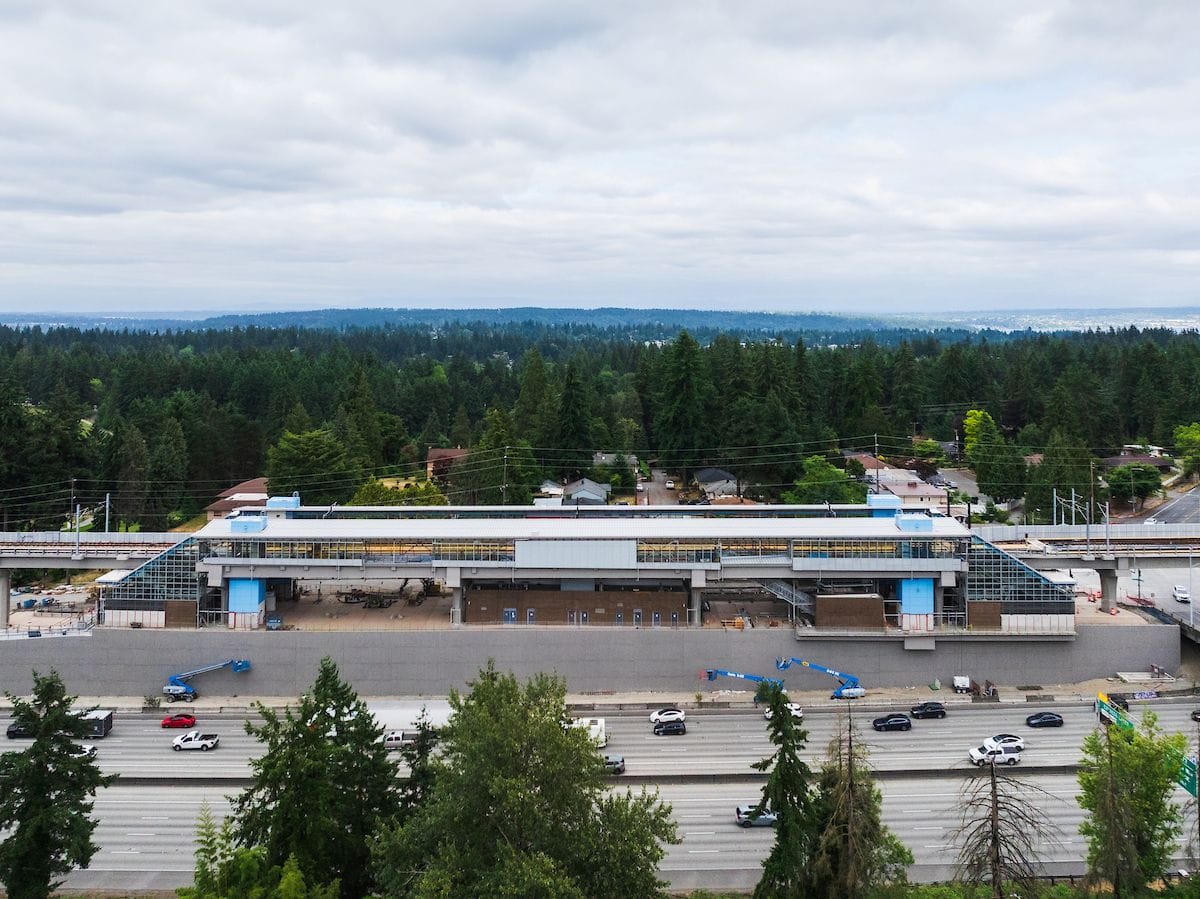
Meanwhile, District 5 is getting a new Pinehurst light rail station at NE 130th Street, which Kang said is exciting. However, she emphasized needing more infrastructure to make density work.
“Yes, we need the funding, but again, we cannot continue to fund to drive people out,” Kang said. “We need a city that works for working people. And we also have to prioritize how we’re going to think about all of our neighbors, starting with the young children who really need to get to school feeling safe to our elderly who want to stay in the neighborhood where they built a home for the last 30, 50 years.”
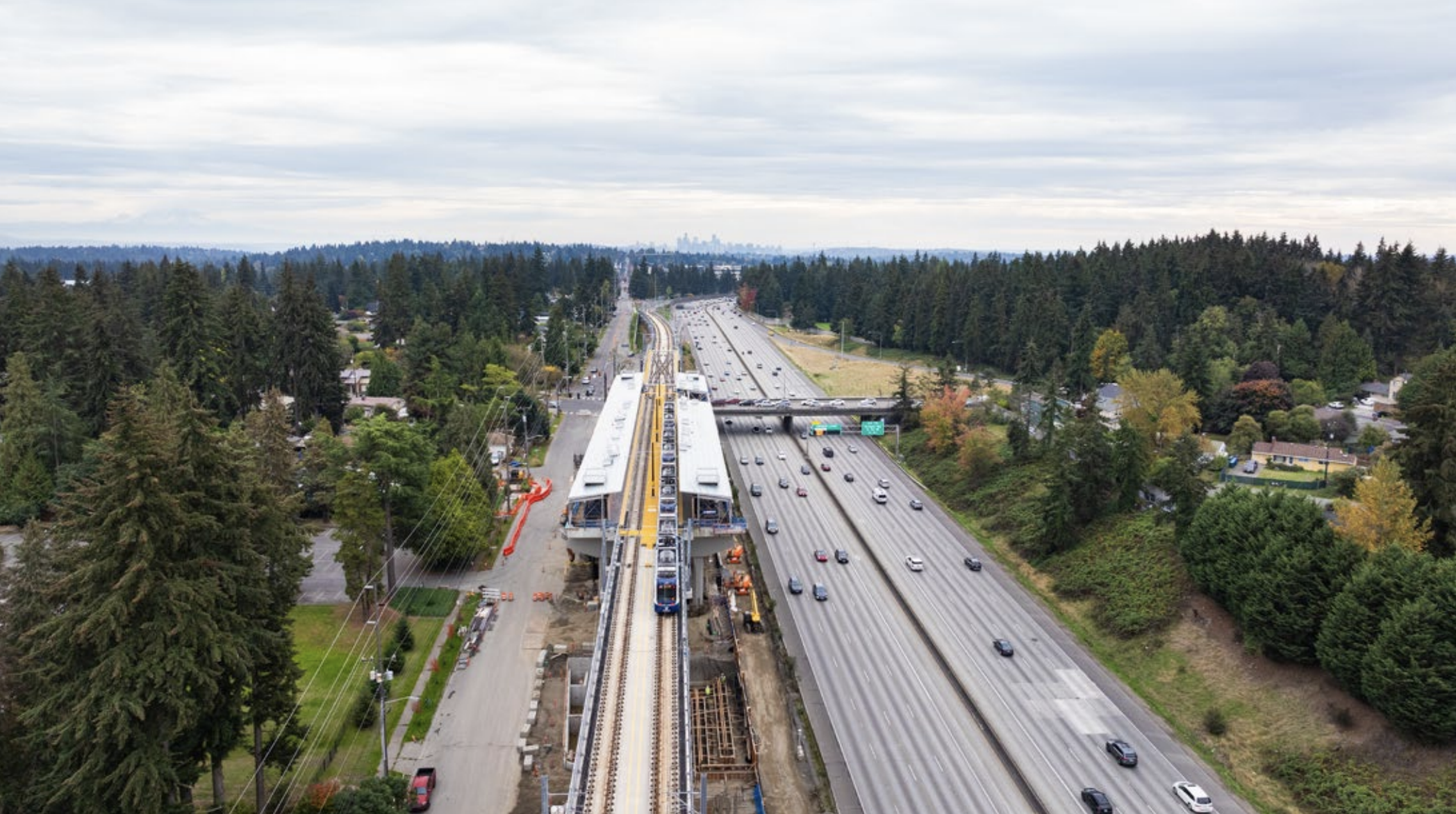
Kang spoke about the difficulty of traveling from east to west in District 5 and wants to see some kind of connector or bus line that would address the issue. Later in 2026 after Sound Transit opens Pinehurst Station, King County Metro will launch Route 77, a crosstown bus connecting Bitter Lake, Lake City, and the light rail station. It’s unclear if Kang was referring to Route 77, or an additional improvement to the network.
She said she’s aware of accessibility issues like difficulty using strollers in areas of D5 or uneven sidewalks making it challenging for some elderly people to walk safely, and she also wants to be mindful of small businesses.
Like her opponent Jenks, Kang would have supported Rinck’s Comprehensive Plan amendment last fall to add eight new neighborhood growth centers, calling it community building. The proposal was tabled but docketed to come back in “Phase 3” of the growth plan, following supplemental environmental work and community outreach process.
On public safety
With ICE detaining people off the streets throughout the country, Kang said she couldn’t currently support the use of surveillance in Seattle.
“Right now, surveillance cameras cannot work because even though we know, or we’ve heard, that the cameras function differently than the national ones and we are doing it the Seattle way, we should not collect data, because if we have it, if we’re ever subpoenaed, we don’t have control over it,” Kang said.
Kang said she’d rethink her stance on surveillance if the sociopolitical climate changes, but right now the thought of surveillance causes people to feel anxiety and fear.
Kang also disagreed with her predecessor on the SOAP and Stay Out of Drug (SODA) zones, saying she doesn’t support these policies. She cited the opposition of newly elected Seattle City Attorney Erika Evans to the SOAP and SODA zones, saying Evans is the expert.
The SOAP and SODA zones were strongly supported by prior City Attorney Ann Davison.
“I want to make sure my constituents are on the same page, and if not, I worry more about the people who have different perspectives,” Kang said.
As an alternative to supporting the SOAP legislation, Kang wants more resources to help with sex trafficking.
“I always say no mother wants to see their child go up and down [the street as a sex worker], but again, if their basic needs are not met today, do they know that they have options? Do we have enough resources?” Kang said.
Regarding gun violence, Kang thinks we need to educate and talk more about the consequences ahead of gun violence incidents. She spoke specifically about the danger to bus drivers who currently have to call King County to report incidents, with the county then reaching out to the City of Seattle, causing slower responses.
“I think it’s important for us to see who owns guns, how are they stored, and then all of those stolen and unmonitored, the guns that we can’t account for,” Kang said.
In her statement of intent to be appointed to the D5 seat last year, Kang expressed interest in exploring “the possibility of a North Precinct location.” When The Urbanist asked about this idea, Kang said she liked the idea of moving the North Precinct to a location that is more visible and accessible and that might speed up response times. However, after speaking to Juarez, who has long been interested in something similar, Kang said that with the city’s current financial challenges, a new North Precinct probably wouldn’t be possible.

Instead, Kang expressed the hope that between the expanded Community Assisted Response & Engagement (CARE) team and increased police officer hiring, response times to 911 calls will still improve.
Unfortunately, CARE Chief Amy Barden has said 911 response times won’t improve without dispatch independence, which has been prevented by the recent Seattle Police Officers Guild (SPOG) contract approved in December.
Kang says she knows she doesn’t have all the answers, but she wants to make sure to put the constituents of District 5 at the center of decision-making.
“With the current energy in the city, with leadership and the passionate and committed neighbors, I think we can build a district where people can live, work, belong, and thrive,” Kang said. “It just takes a leader who can voice that at the level where decisions are being made.”
Climate Advocate Nilu Jenks Announces D5 Seattle Council Campaign