

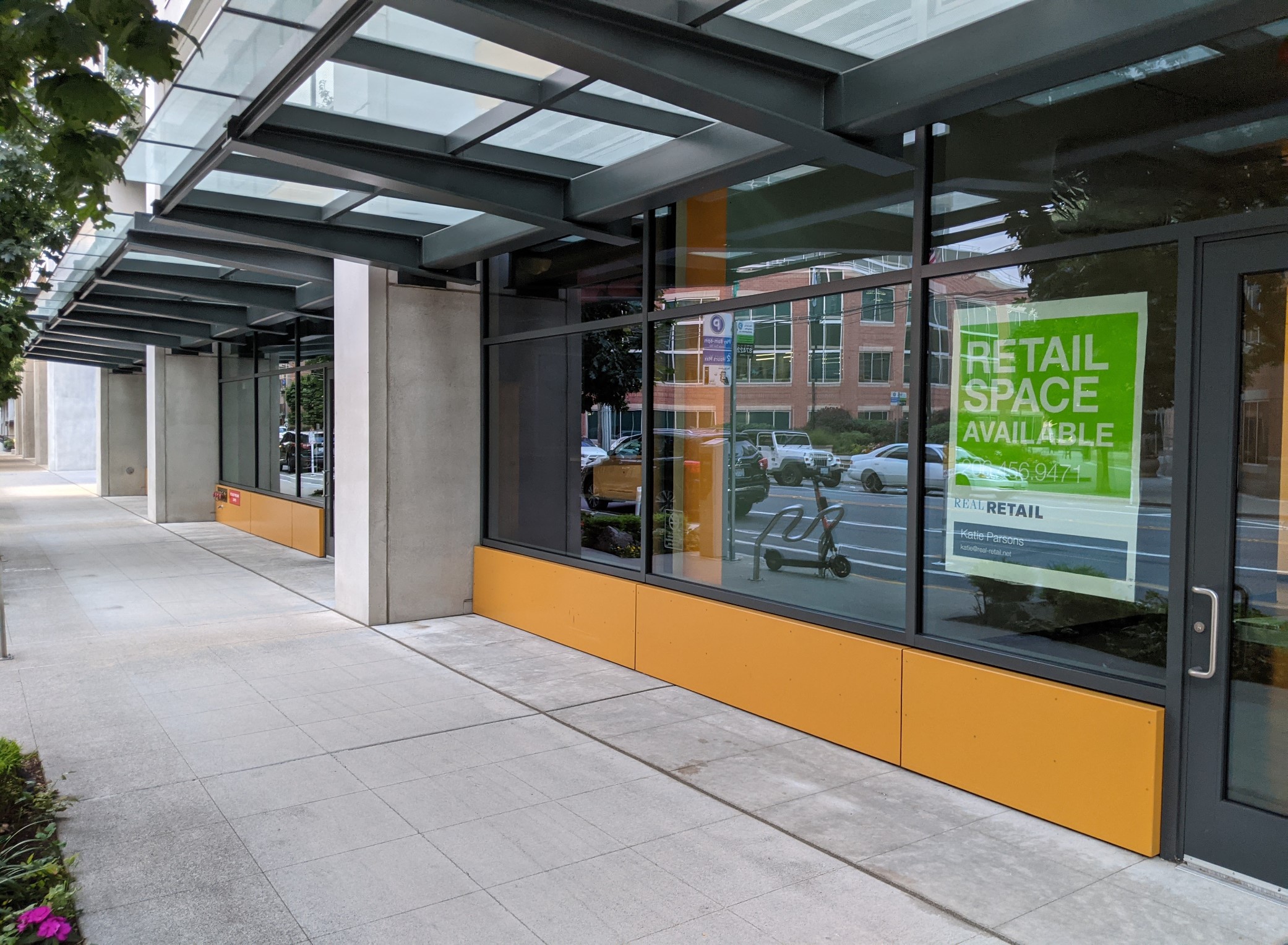
A contentious bill at the Washington State Legislature intended to reduce barriers for housing construction in commercial areas advanced out of a House committee Wednesday with substantial adjustments intended to address concerns raised by local elected officials.
SB 6026, introduced by Senator Emily Alvarado (D-34th, West Seattle) and requested by Governor Bob Ferguson, is geared toward jumpstarting redevelopment of underutilized commercial properties in cities across the state. In its original form, on top of requiring cities to allow residential uses in all commercial zones, it would have also banned those local governments from requiring housing projects in those areas to come with ground-floor storefronts or commercial spaces.
It’s the ban on requiring storefronts that likely would pack the biggest punch in the bill, with analysis conducted by the Puget Sound Regional Council earlier this year concluding that only 5% of the eligible parcels around the state currently prohibit residential uses outright. But concerns have been raised at the local level around potentially losing the opportunity to create more truly mixed-use districts in some of Washington’s fastest growing cities.
The officials making their voices heard Olympia seeking changes to SB 6026 have been from some of the most pro-housing jurisdictions in Puget Sound, including Bothell, Redmond, and Kirkland, and are asking legislators to not get in the way of their momentum when it comes to densifying.
A major fear is having blank facades where there could be active storefronts, giving pedestrians little reason to walk down a corridor. The upside? Allowing builders to make use of less expensive housing construction types, with ground floor retail requirements often forcing the same type of buildings that feature wood-frame upper stories over one or two stories of concrete.
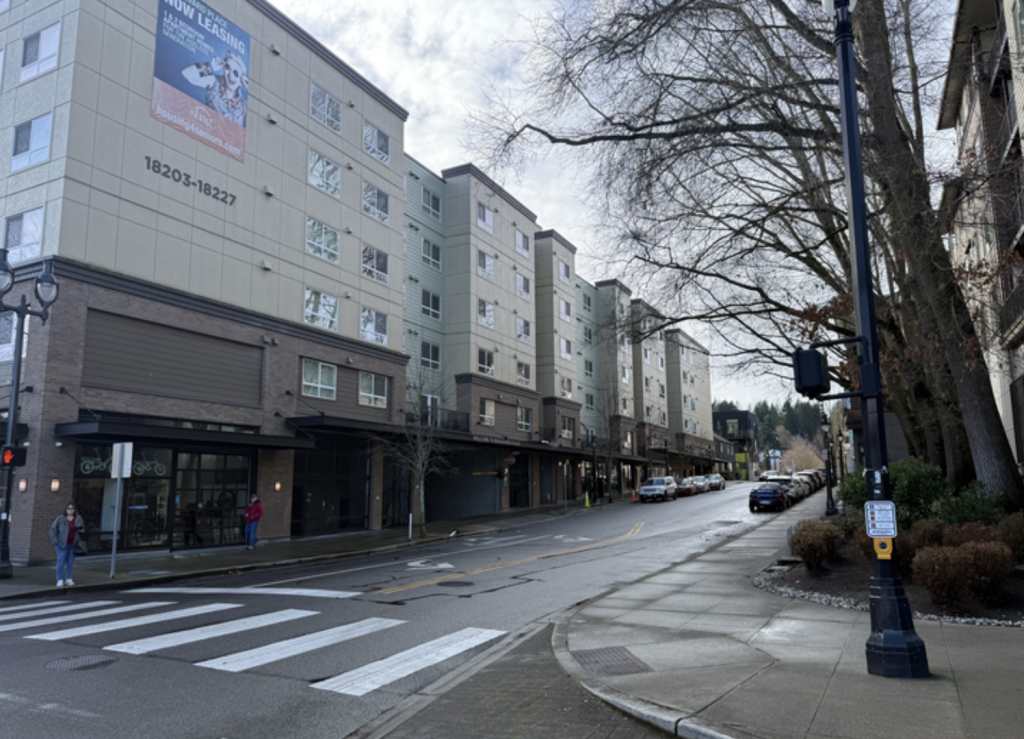
As SB 6026 advanced through the Senate, exemptions were added that would have retained the ability for cities to require ground-floor commercial in certain places. That list included all areas close to light rail and bus rapid transit stops as laid out in the 2025 transit-oriented development bill, within business improvement areas (BIAs), and along designated “Main Streets” as administered by the state Department of Archaeology and Historic Preservation. Essentially, that provided a top-down designation of which areas of the state were more important to maintain walkability and areas where that is seen as less of a priority.
Instead, the version approved by the House’s local government committee will cap the number of areas covered by the bill where local cities can require ground-floor retail at 40%. Fully subsidized affordable housing projects would continue to be exempt from any retail requirements at all.
“The bill as it came over to the Senate seemed to me overly complicated, and there were a lot of exemptions in it,” Representative Davina Duerr (D-1st, Bothell), the local government committee’s chair, said in introducing the revamped version of the bill. Duerr, a former Bothell Councilmember, described trying to find a way to placate local officials while still maintaining the bill’s intent.
“I felt like [King] Solomon, in a way, because I really believe that we need more housing, and I completely understand the need to have more flexibility and more area available for housing,” Duerr continued. “But also, with my city background, I understand the need and the wanting to create walkable communities, the ability to raise sales tax — given the 1% property tax cap — and so what I’ve tried to do with this amendment is get rid of the exemptions and provide more flexibility by changing it to a 40% number that cities can mandate the ground floor retail. So it doesn’t make everyone happy, but I feel like it provides more flexibility for cities.”
The same committee did reject an amendment reducing the number of cities where the bill would apply, keeping the floor at 30,000 residents.
SB 6026 is one of this year’s highest profile housing bills, in the wake of major zoning reforms adopted by the legislature in recent years including the Middle Housing Law, parking reform and the transit-oriented development bill. Its inspiration seems to be California’s AB 2011, and its backers include former Governor Chris Gregoire, who is close with Governor Ferguson, and Microsoft President Brad Smith. Both figures are active in the Cascadia Innovation Corridor, a thinktank that regularly weighs in on housing policy and has been promoting the idea of creating “Grand Boulevards” along the state’s busiest roadways.
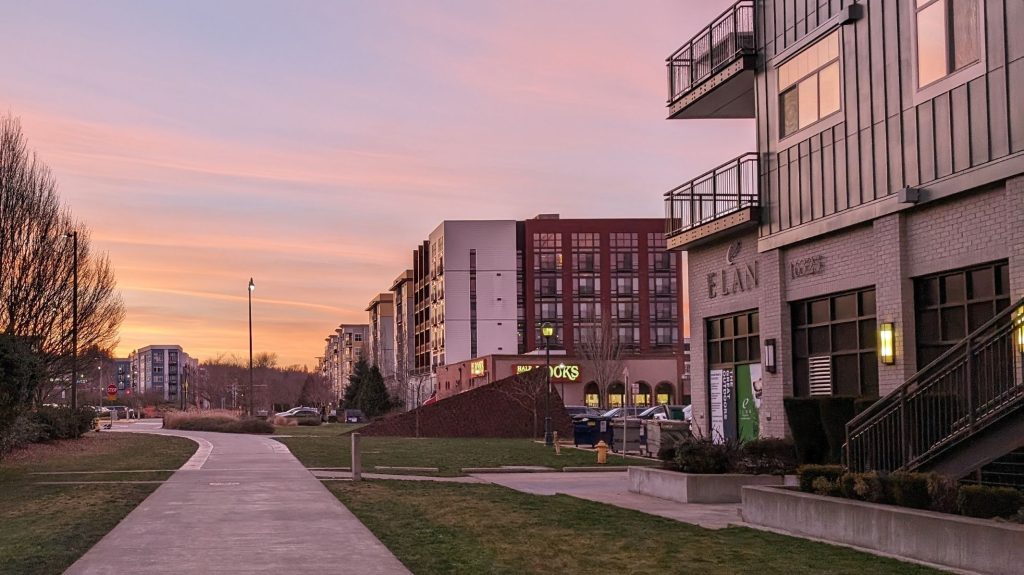
In Microsoft’s hometown of Redmond, one of the fastest growing cities on the Eastside, local officials have been pushing back vociferously on the bill, arguing that it would make it harder for the city to make room for small businesses that are getting displaced as properties redevelop. Earlier this month, Carol Hellend, Redmond’s Planning & Community Development Director pushed for significant changes in the bill to allow their city to continue to build out walkable neighborhoods near its popular light rail stations.
“Cities like Redmond have proactively upzoned and exceeded housing targets. However, redevelopment is already displacing small, locally owned businesses at a rate that available commercial space cannot absorb. Limiting a city’s ability to require ground floor retail outside of station areas will make it even harder to retain these small businesses,” Hellend said. “Ground floor retail requirements are not about restricting housing. They’re about creating complete walkable community and small business can coexist. The legislature has encouraged this type of planning through recent mandates, requiring a climate change element, mandating density around transit development areas and increasing residential capacity in neighborhoods. Redmond has been an early adopter of all of these requirements, and this bill will undercut much of our work.”
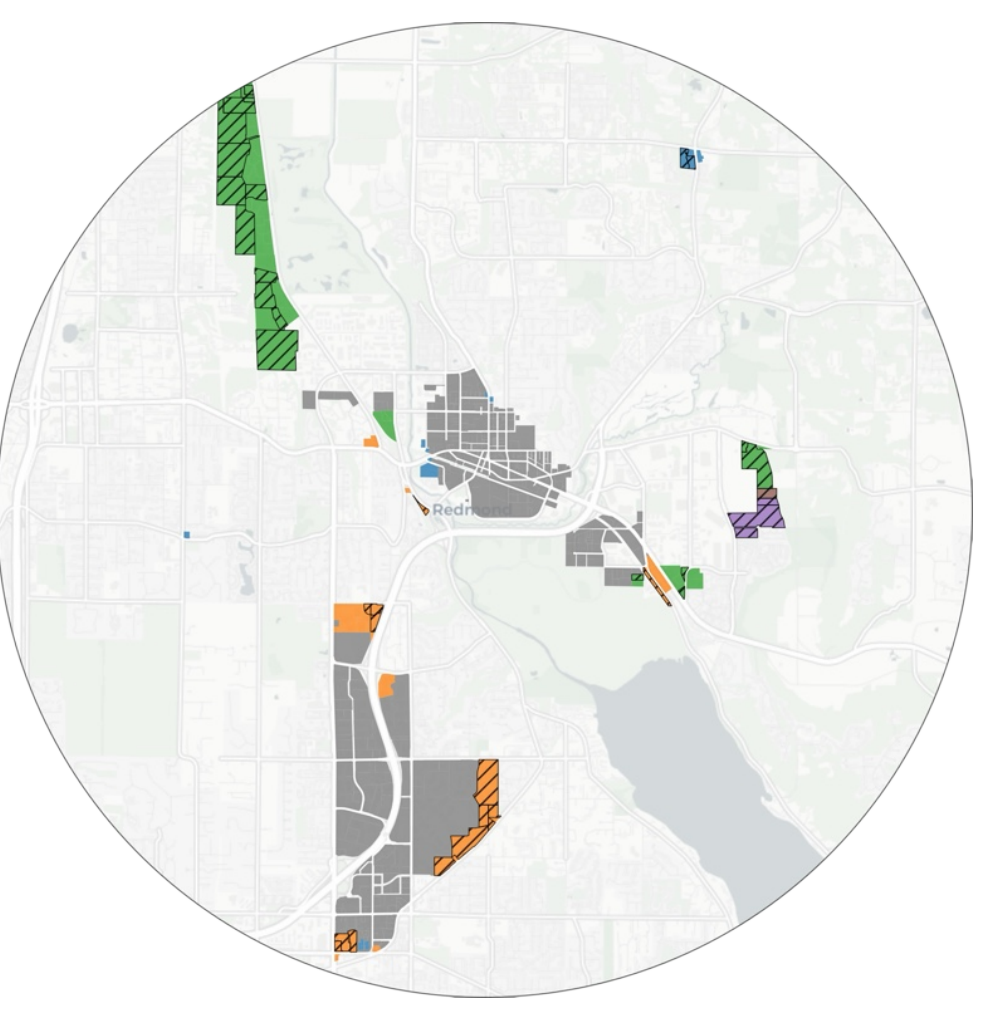
While the new 40% cap is likely going to placate some city leaders around the region, it may not actually go far enough for a city like Redmond, where so many of the areas impacted by SB 6026 are close to transit stations that would previously have been fully exempted under the Senate’s version.
Housing advocates were hopeful some of the reduced requirements for ground-floor retail could be balanced out by the passage of statewide neighborhood cafe and corner store legalization bill, but that policy stalled out for a third year in a row, once again dying in the Senate’s local government committee.
Ultimately, SB 6026 is trying to lower barriers that stand in the way of housing production, though it mostly maintains the status quo of zoning in Washington, encouraging development in areas that are already mostly zoned for apartment buildings and leaving the state’s residential areas off-limits.
“As a city councilmember for Olympia, I have seen what happens to this commercial land that has big open spaces,” Representative Lisa Parshley (D-22) said ahead of the committee vote. “For example, our mall has at peak occupancy, more than three-quarters of the parking lot empty, and we are running out of buildable land. We need to be able to do this, and some cities are working towards it, and unfortunately, some are not, and we have a housing crisis.”
SB 6026 has to clear the House appropriations committee, the House floor, and then have the changes made in the House signed off by the full Senate before the end of the legislative session on March 12.

Ryan Packer has been writing for The Urbanist since 2015, and currently reports full-time as Contributing Editor. Their beats are transportation, land use, public space, traffic safety, and obscure community meetings. Packer has also reported for other regional outlets including BikePortland, Seattle Met, and PubliCola. They live in the Capitol Hill neighborhood of Seattle.