

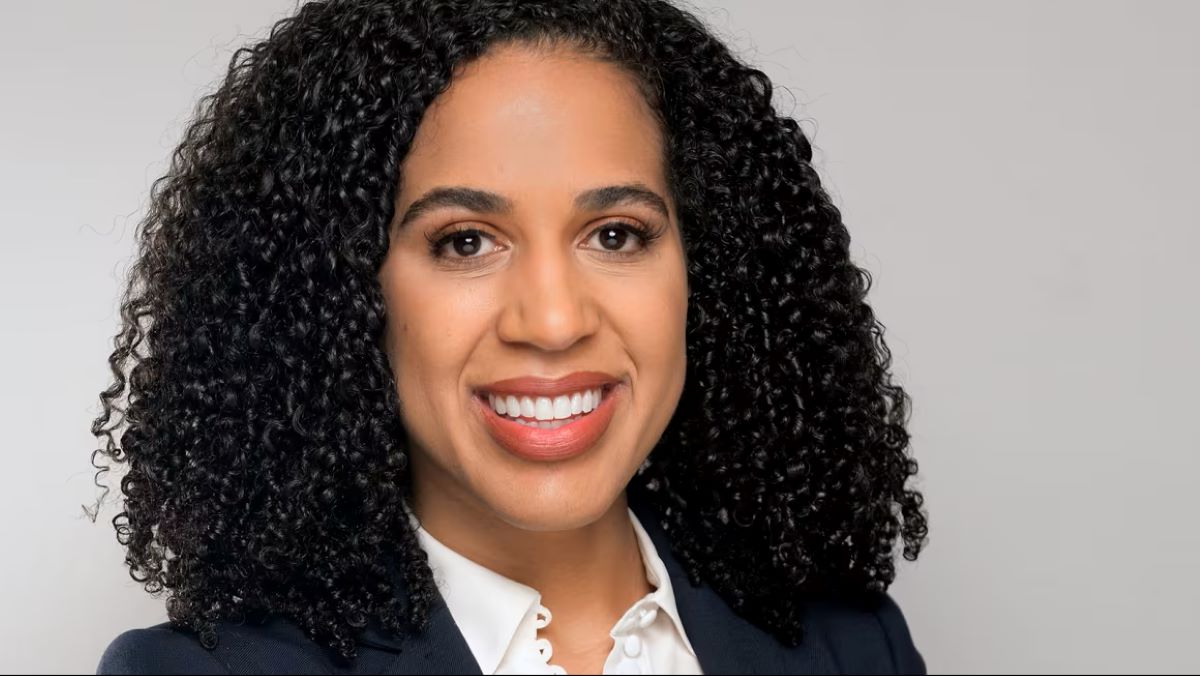
The Seattle City Attorney’s Office has recently learned they’ve inherited a backlog of more than 5,000 misdemeanor cases from the previous administration under former City Attorney Ann Davison.
In a similar fashion, when Davison assumed office in 2022, she reported having a backlog of close to 5,000 misdemeanor cases from her predecessor, Pete Holmes. At the time, the problem was shrugged off as being mostly due to the chaos caused by the Covid-19 pandemic in 2020 and 2021. However, the recurrence of this issue now that newly elected City Attorney Erika Evans has taken office could suggest a deeper issue.
Among the over 5,000 cases in this new backlog, at least 1,700 are domestic violence cases, which are among the most serious cases handled by the City Attorney’s Office. There are also at least 1,210 backlog cases categorized as criminal traffic cases, which include Driving Under the Influence (DUI) cases. Davison’s challengers criticized her alleged mishandling of DUI cases as part of their campaign pitches.
In its capacity to handle criminal matters, the Seattle City Attorney’s Office only handles misdemeanor cases, while more serious felony cases go to the King County Prosecuting Attorney’s Office.
Evans said the oldest case in the backlog is from 2022, which was the first year of Davison’s term.
Further confusing matters is the installation of a new data management system within the City Attorney’s Office, transitioning from the previous system that had been in use since 1999, according to Jenna Robert, the criminal division chief. About 1,000 of the backlog cases don’t currently have a crime category assigned to them, meaning the numbers above represent the confirmed cases but could grow over time.
Robert told The Urbanist that because of the new system’s migration issues, it has taken the last two months for the office to try to determine the magnitude of the backlog.
A spokesperson for the City Attorney’s Office told The Urbanist that the methods by which the Evans administration determines the size of the case backlog are different from the methods used by previous administrations. The Evans administration is counting a backlogged case as one where a prosecutor has not-yet filed or declined the case, whereas Davison’s administration removed some of these cases from the backlog, such as DUI cases waiting for a toxicology analysis. Due to this discrepancy, the Davison administration reported a much lower backlog than that discovered by the Evans administration.
The existence of this backlog creates a dilemma for the Evans administration. They must balance dealing with these old cases, including determining which are past their statutes of limitations, with handling new cases coming in the door. However, changing the method by which the backlog is counted does muddy the waters in terms of how systemic a problem the office is actually facing.
Evans and Robert believe the main reason for this backlog is insufficient resources for the office.
“We have been an under-resourced office the whole time I’ve been here,” said Robert.
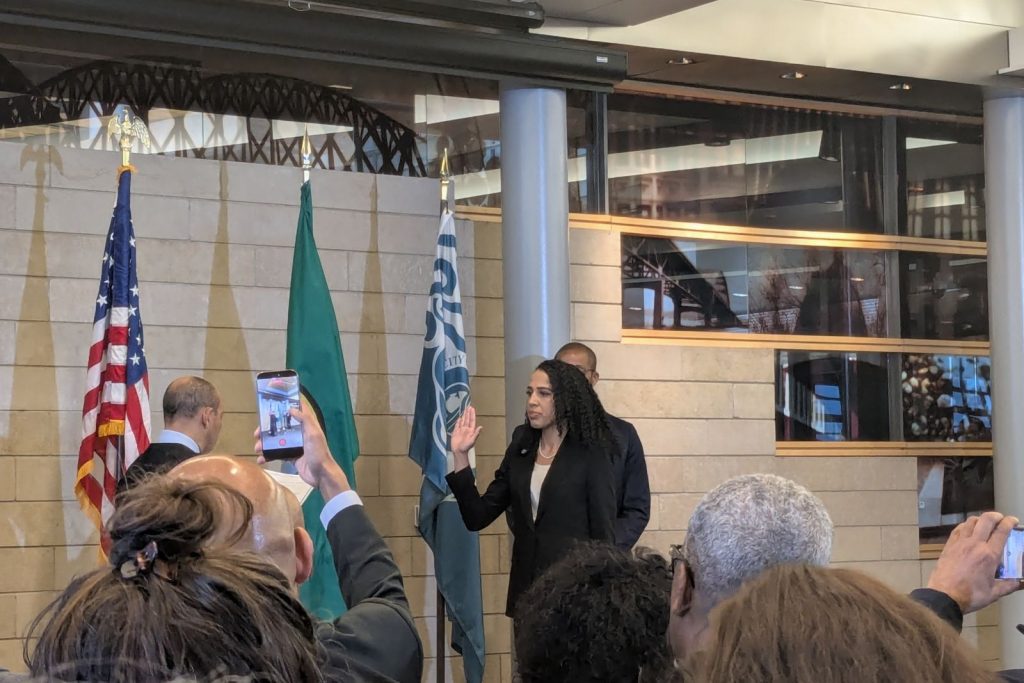
Robert began as an attorney in the City Attorney’s Office in 2009 and stayed until 2021, right before Davison’s term. She left to work at the Attorney General’s office and returned to the City Attorney’s Office this year. She referenced how technology has changed the way cases are dealt with due to the large amount of video footage that needs to be processed. A case can require video footage review from body-worn cameras, in-car cameras, footage taken inside precincts, and surveillance video from both public and private cameras.
“Our juries expect all of this evidence. It’s so much more complicated to try a case, to prepare a case, to gather all of the evidence: magnitudes more difficult than it was when I first came into this office,” Robert said. “Yet, when you look around, we have not resourced up for that. So we just are always struggling with the resources that we have to actually be able to handle 10 to 12,000 reports that were referred by the police department every year.”
Public defenders experience similar issues. Increasing attrition rates for public defenders, who are likewise contending with mounting piles of digital evidence, have raised the possibility of a public defense crisis. In response, in September 2023 the Washington Supreme Court asked the Washington State Bar Association to analyze a landmark study on public defense and make recommendations for workload standards at the state’s criminal courts. This recommendation ultimately led to the state Supreme Court significantly reducing public defense caseloads last summer, although municipalities have up to 10 years to implement the new rules.
The Seattle Municipal Court has also been struggling with reduced capacity due to updating its digital filing system and operating without one of its elected judges. In March 2024, Davison announced the office would file a blanket affidavit of prejudice against Judge Pooja Vaddadi, which left Vaddadi unable to hear her usual docket of cases.
Changes being made
In one of her first acts of office, Evans banned all blanket affidavits of prejudice, meaning Judge Vaddadi is now able to resume a normal caseload.
Another issue plaguing the City Attorney’s Office has been a growing backlog at the state toxicology lab that processes DUI blood tests, thereby slowing the office’s ability to file cases. In this legislative session, Evans has been a strong supporter of SB 5880, which would allow private labs to perform these DUI blood tests.
“We know that justice delayed is justice denied,” Evans testified during a January public hearing. “You asked Senator Salomon about what it takes right now for the current delays. Right now, if someone has a drug and alcohol DUI, it takes 22 months for the toxicology lab to get that report back to us, which means that if someone commits a DUI today in Seattle, it won’t be until the end of the summer of 2027 that we can actually file charges in that case.”
The bill passed out of the House on Friday with very little time to spare before the cut-off and now returns to the Senate to concur with changes. Being able to utilize private labs should speed up the office’s ability to prosecute DUI cases.
Evans wants to see the number of case dismissals drop, saying that more than half of the cases filed under Davison were ultimately dismissed, which she says represents a waste of taxpayer dollars. She pointed to her and Robert’s experience as prosecutors, which differs from both Davison’s and Holmes’s backgrounds. She thinks that experience will allow them to better evaluate which cases to file.
“I think because we have the experience we have as prosecutors, some of the things that happened under the last administration will not be happening under this administration,” Robert said.
The office’s priority for filing will be violent misdemeanor crimes, including domestic violence, DUI, and assault.
Meanwhile, the office will determine certain non-violent cases, such as public drug use and drug possession, to send to diversion, which will help avoid clogging the court system. Evans previously criticized Davison’s administration for its approach to the City’s new drug ordinance, which did not appear to prioritize the diversion services the ordinance identified as the preferred course of action.
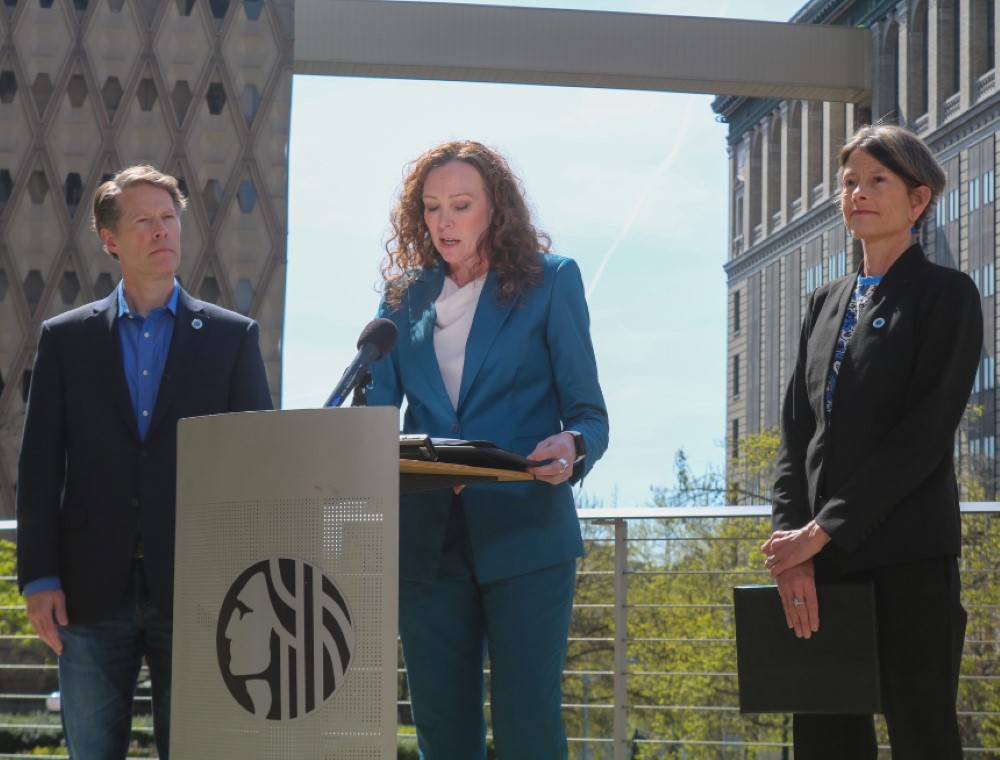
To this end, Evans still plans to collaborate with the Seattle Municipal Court and the Department of Public Defense to design a “reimagined community court.”
In contrast, Davison slowly ramped up the drug possession misdemeanor cases filed since the drug ordinance passed in 2023, with a more extreme escalation in her last months in office. PubliCola reported an increase from an average of four per week from mid-June to mid-September 2025 to 16.4 per week from mid-September to mid-December.
Davison also disbanded the former community court a year and a half into her term.
The criminal division of the City Attorney’s Office will be converting to a vertical prosecution model from a horizontal model, starting with the domestic violence unit. A vertical model means that the same prosecutor handles a case from its initial filing all the way through to sentencing. This model can be more time efficient, and it also allows an attorney to take ownership and accountability over their cases, which Evans said could lead to fewer dismissals.
The office will be forming a DUI team similar to their domestic violence team to give extra focus to filing those cases.
One of the strategies Davison said she’d use to deal with her inherited backlog of cases in 2022 was to shorten filing times. Robert said the existence of this new 5,000 case backlog illustrates the failure of this approach. She explained that quick filing times can lead to poor filing decisions and a higher rate of dismissal.
“A bunch of cases that should have never been filed go into the system,” Robert said. “They do harm to the people that are subjects of those–all those defendants now have a crime that should have never been on their record as charged–and then the taxpayers and the clogging the court and all of the cascade of issues that happen.”
What’s next
Even with the approach outlined above, Evans believes the office needs to hire more attorneys.
The timing could be challenging, given the City faces a $140 million deficit next year. At the end of February, Seattle Mayor Katie Wilson asked all city departments for plans of cutting 5-10% of their budgets. Wilson will also likely be searching for funds for her own mayoral priorities, which are almost certain to include standing up more emergency housing.
That being said, WIlson has been a big proponent of new progressive revenue sources and may propose one or more new revenue streams during the City’s budget process this fall. The most likely candidate remains a city-level capital gains tax. While this might assist in future budgets, most new revenue sources do take some time to implement, meaning the new funds wouldn’t be collected immediately in 2027.
Evans said being able to hire more attorneys sooner would be ideal, signalling the possibility of a mid-year supplemental budget request from the City Attorney’s Office. The office would have another chance to advocate for more funding during the regular fall budget season.
On the other hand, city councilmembers might wish to wait to see the effect of the procedural changes within the City Attorney’s Office before attempting to find more money in an already strapped budget.
As for the new data management system, right now the City Attorney’s Office’s system is unable to interface with the Seattle Municipal Court’s system, the integration of which is part of the next phase with the vendor. Robert estimates it could take up to six months to gain this functionality.
More long-term, Robert said the administration is going to be faced with ongoing challenges adapting to the new system and getting it working smoothly, potentially for a year or more.

Amy Sundberg is the publisher of Notes from the Emerald City, a weekly newsletter on Seattle politics and policy with a particular focus on public safety, police accountability, and the criminal legal system. She also writes science fiction, fantasy, and horror novels. She is particularly fond of Seattle’s parks, where she can often be found walking her little dog.