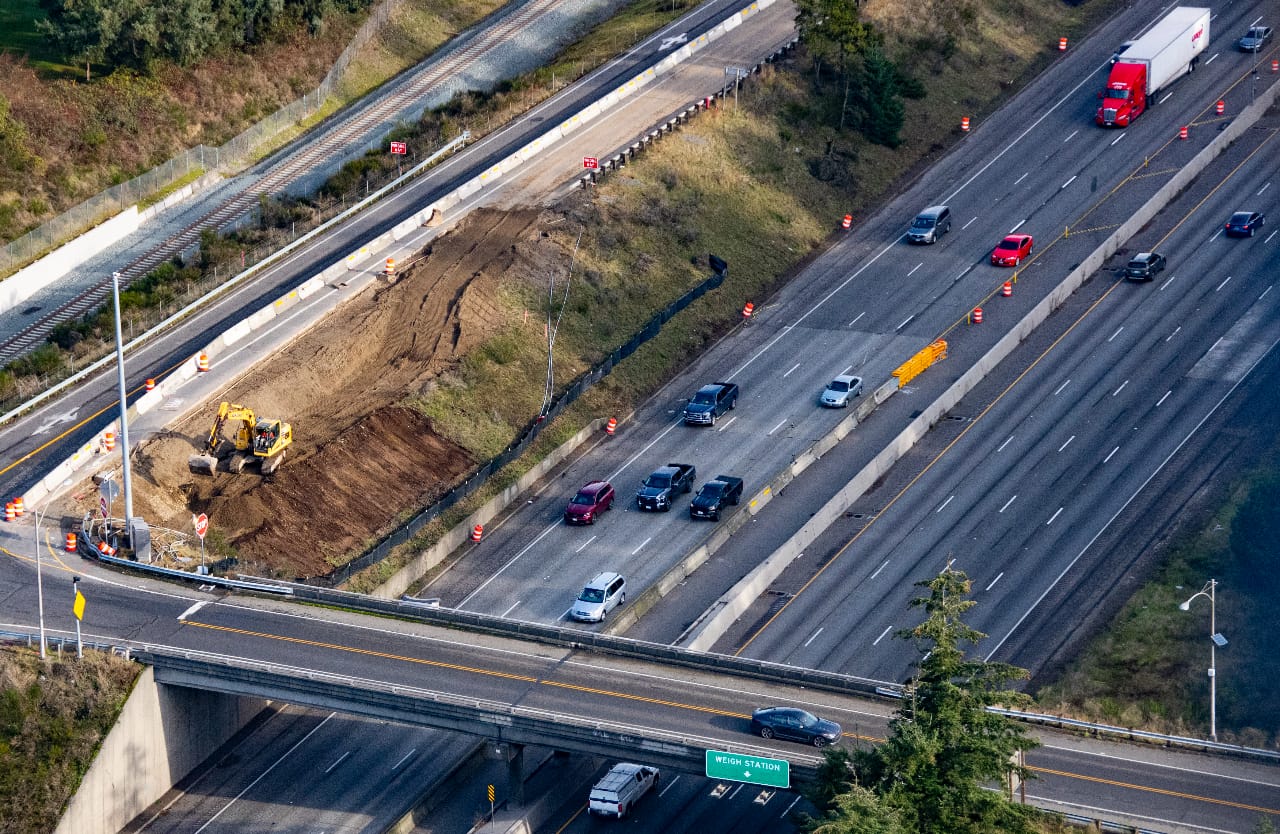
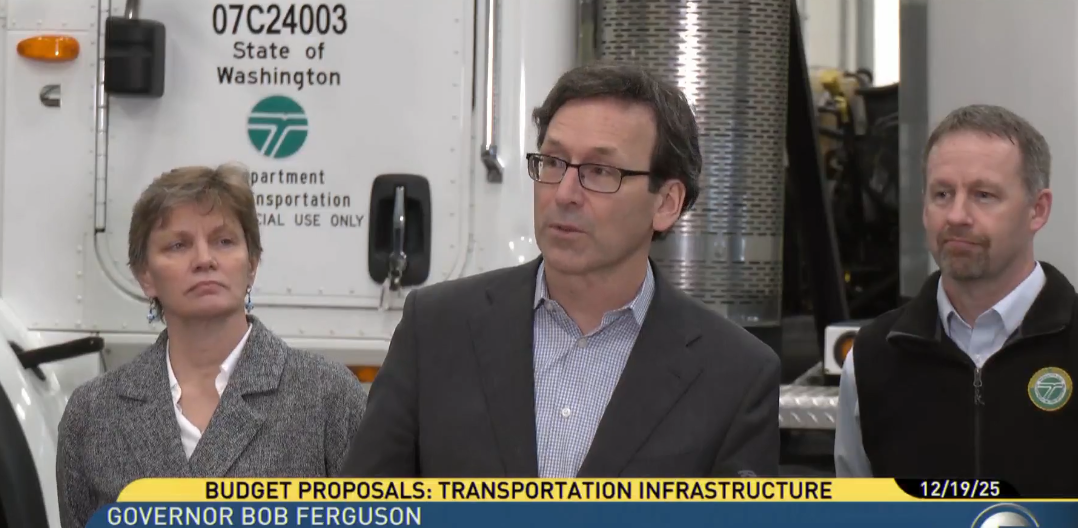
In his first chance to influence Washington’s transportation budget, Governor Bob Ferguson is asking the legislature to issue billions of dollars of additional debt to pay for basic maintenance of the state highway network and ferry system. In a press conference Friday, Ferguson rolled out a proposal to expedite transportation spending by issuing bonds, with $1.1 billion eyed to aid maintenance and preservation work on the state’s bridges, more than $900 million to spruce up hundreds of miles of state highways, and another $1 billion to purchase three new ferries to keep the state’s marine highway system in good repair.
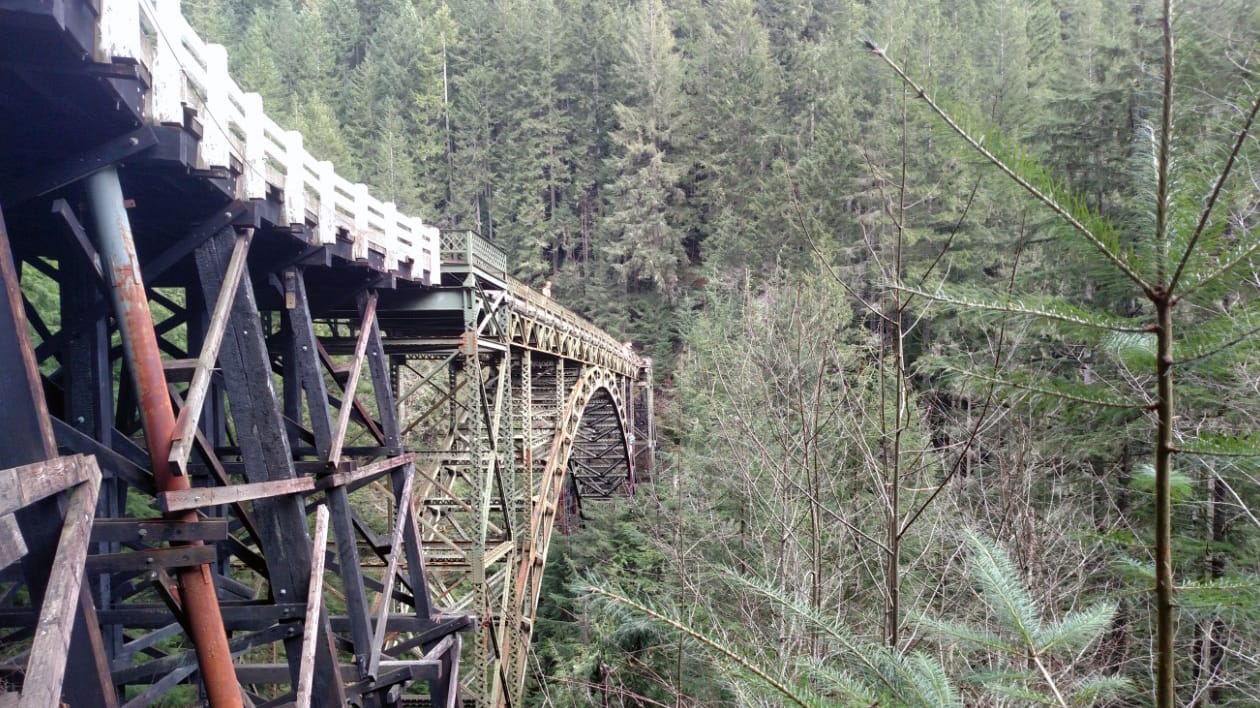
Washington has been neglecting basic transportation maintenance work for decades, a fact that is starting to become more and more apparent: nearly 350 bridges in the state highway network are more than 80 years old and overdue for replacement. But rather than rely on a new source of revenue to pay for that necessary upkeep, Ferguson’s budget taps into funding sources that the legislature already approved earlier this year, including a 6-cent increase in the state’s gas tax, and leverages them for the new bonds.
Those new gas tax revenues had allowed legislators to fill a sizable budget gap, brought on by rising infrastructure costs and declining gas tax revenue, and keep a handful of high-profile highway expansion projects moving forward. Those include the extensions of State Route 167 and 509 between the Port of Tacoma and the Port of Seattle, known as the Puget Sound Gateway, the North Spokane Corridor, expansions of I-405 and I-90, and the sprawling Interstate Bridge Replacement.
Ferguson’s budget keeps those projects on track and instead sets the state up for additional debt service payments in future years, at a time when gas tax revenues are predicted to continue to decline. Just before he announced his transportation plan, the governor announced his housing plan, which similarly leaned on bonding to raise $225 million backed by the state’s Housing Trust Fund.
The idea of taking the transportation budget further into debt is likely to face considerable skepticism at the legislature, where 60% of lawmakers in both the House and Senate will need to sign off on any bill authorizing additional bonds. Three years ago, Governor Jay Inslee proposed that the state issue $4 billion in bonds to accelerate the production of affordable housing, an idea that met tepid reception at the legislature and ultimately failed to advance.
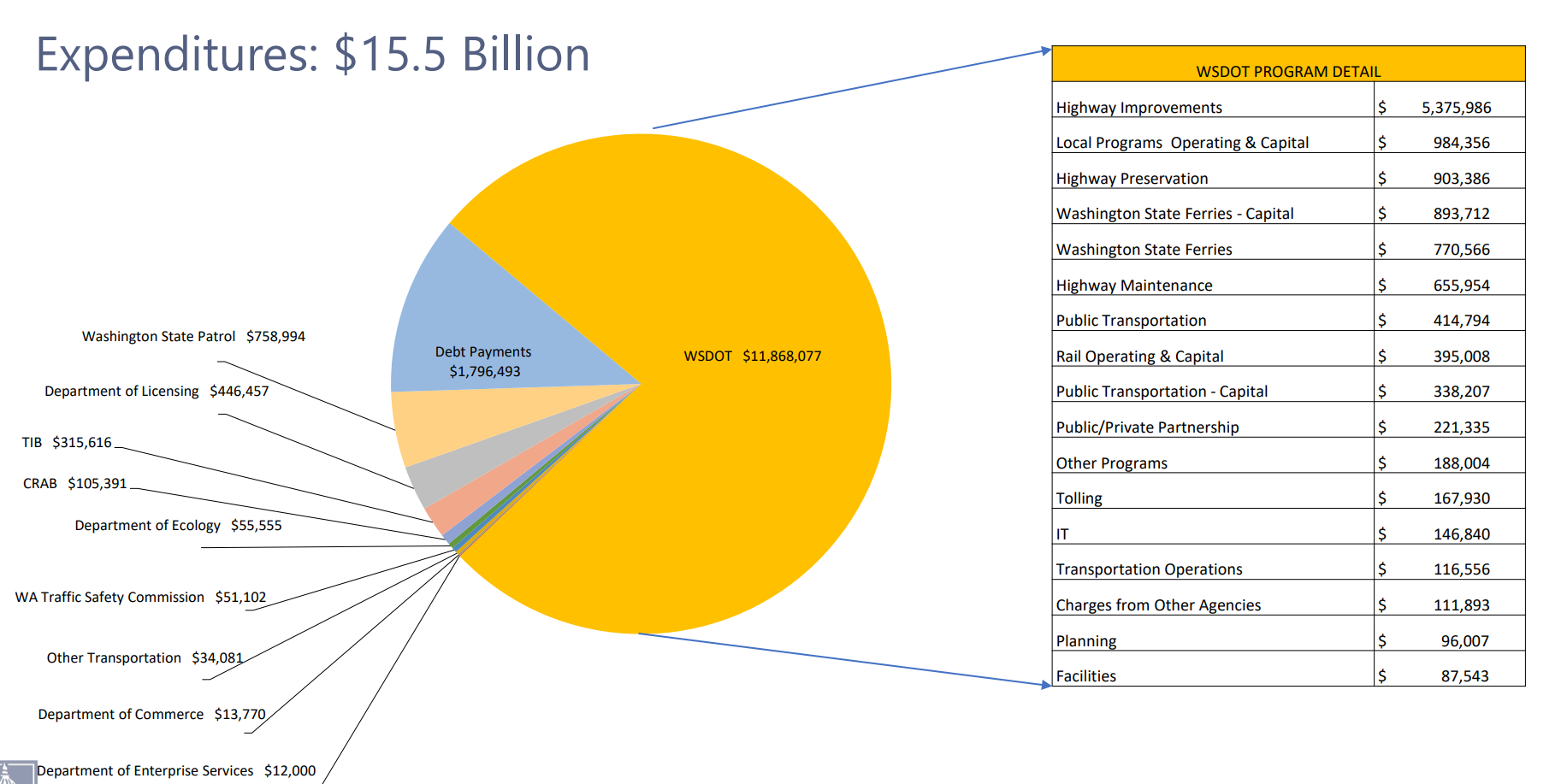
Debt service payments already eat up nearly 12% of the state transportation budget, thanks to past transportation packages approved by the legislature that relied on bonding. That’s more than the entire Washington State Ferries budget, and more than double the amount currently spent on state support for public transportation.
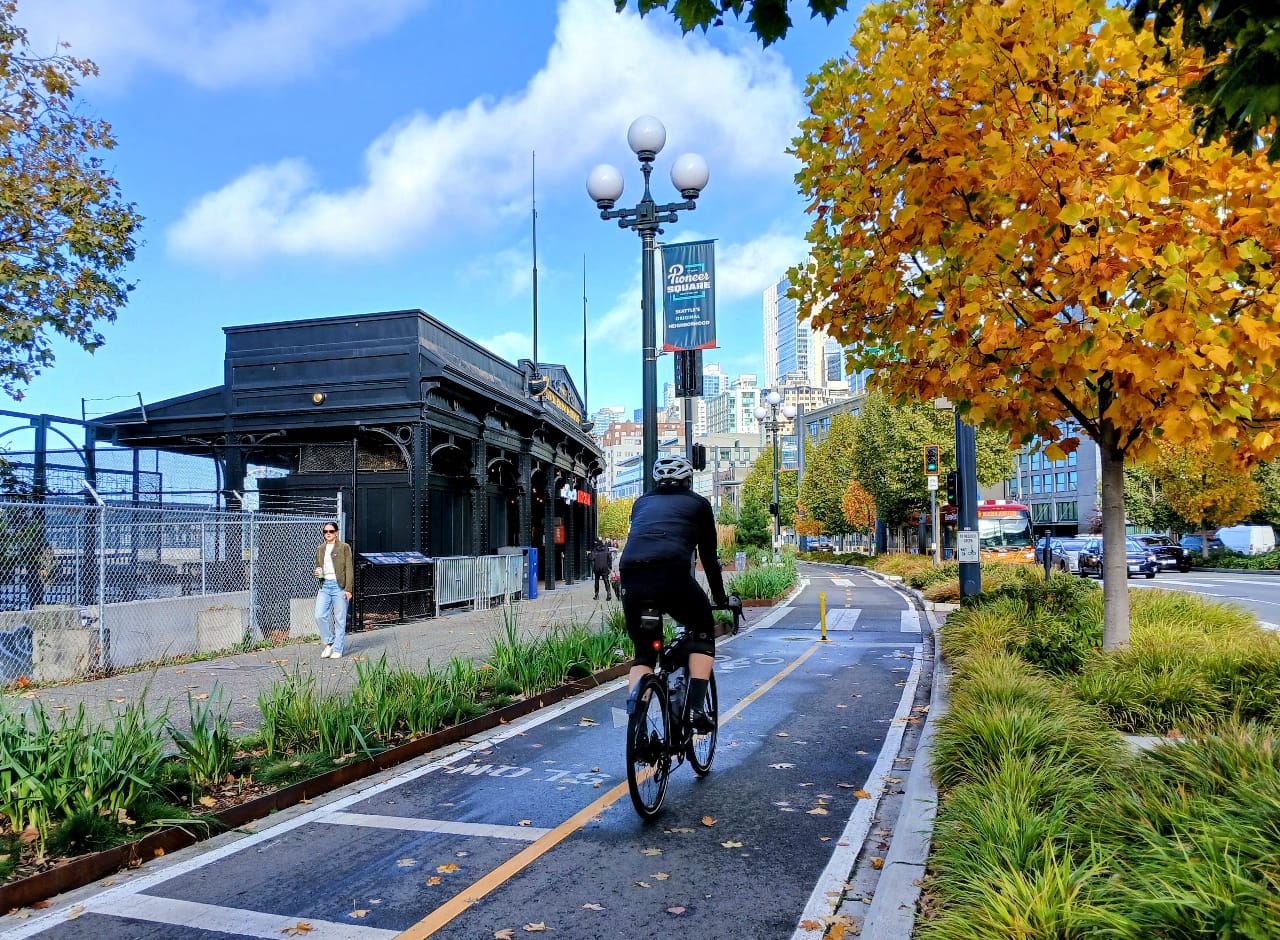
Ferguson touted an additional $164 million in highway spending tabbed for next year as enabling the Washington State Department of Transportation (WSDOT) to boost the number of lane miles that get repaved by more than 600 miles, or a two-thirds increase. Thanks to a Complete Streets mandate approved by the legislature approved in 2022, any sizable preservation and maintenance project in the state needs to include potential pedestrian and bicycle upgrades that can be added at the same time, so that additional roads spending will be poised to provide more dividends than it would have in the past, but at a cost to future transportation budget writers.
Bridge and highway maintenance issues have been front-and-center during Ferguson’s first year on the job, starting with the closure of the SR 516 Carbon River Bridge near Mount Rainier this April. The 103-year-old structure’s steel supports had deteriorated to the point where it could no longer safely support traffic, cutting off an entire access point to Mount Rainier and leaving towns that had depended on tourist revenue from those visitors in the lurch. Following that bridge closure, two more state bridges had to close abruptly due to collisions that caused structural damage, impacting communities for months.
December’s atmospheric river put highway maintenance directly in the spotlight, with high-profile road closures caused by flooding likely to keep entire regions of the state cut off for months. Emergency repairs to US Highway 2, a heavily used corridor providing access to areas including tourist-dependent Leavenworth, began this weekend with no estimated date yet available for the road to reopen.
“Preservation and maintenance work isn’t the sexiest thing, I get that. You know, everybody likes a ribbon cutting for a brand new structure. I like that as much as the next person does, but we have neglected this core mission of our government for too long, and we need to reprioritize and focus on the needs that we have,” Ferguson said. “Painting a bridge or sealing a road may not seem very exciting, but it’s like changing the oil in your car or replacing the timing belt. If you skip that basic maintenance, you could have a catastrophic failure and pay more down the line.”
When it comes to the state ferry system, Ferguson is endorsing the current plan to purchase new hybrid-electric vessels as replacements for the aging fleet, but those boats can’t arrive fast enough. The 58-year-old MV Kaleetan, which had been in service on the Anacortes-San Juan Island route, is currently benched due to a “catastrophic engine failure” that occurred earlier this month. As a result, service on the Fauntleroy-Vashon Island-Southworth route has been reduced during the busy holiday season, illustrating the cascading impacts that result when one boat is out-of-commission.
The first hybrid-electric retrofit to be completed, the MV Wenatchee, has seen a bumpy roll out after first being put back into service on the Seattle-Bainbridge Island run earlier this year. Mechanical issues have led to prolonged service outages, including one for nearly a month. Additional retrofits of existing ferries are officially on hold until after the 2026 FIFA Men’s World Cup, which was one of Ferguson’s first major transportation decisions. Advancing future retrofit work before one of the new ferries arrives in 2029 will almost certainly mean reducing service elsewhere in the system.
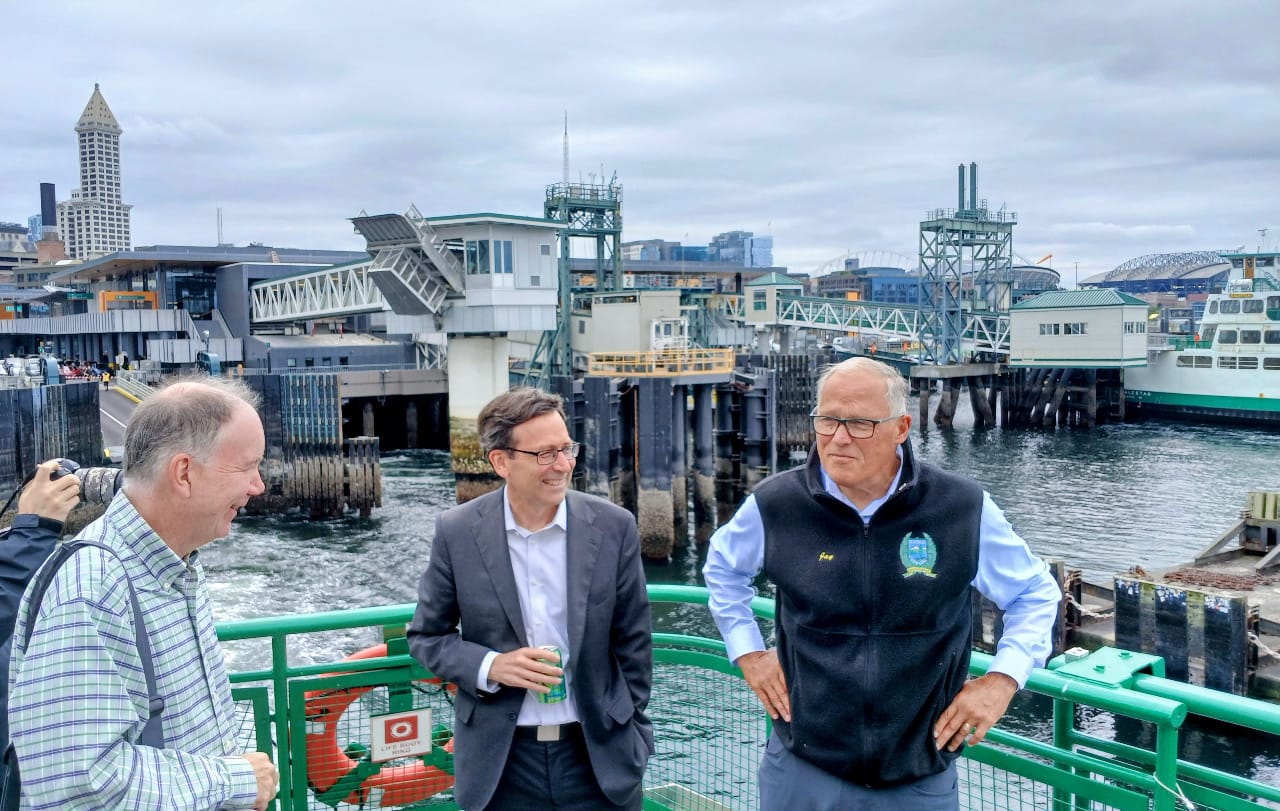
Ferguson’s $1 billion bond would enable the state to increase the number of boats on order to six, with seven more still in need of replacement before 2040. But calm sailing is far from guaranteed, as more and more legislators start to question the cost premium attached to hybrid-electric boats, and the state’s labor community continues to question the choice to select a Florida-based shipyard as the first company tabbed to produce the next generation of state ferries — instead of a local shipyard in Washington state.
As someone who came into office without a background in transportation policy, Ferguson’s focus has remained on the ferry system, and he’s devoted little attention to other issues like the state’s commitment to eliminate fatal crashes by 2030 as part of the Target Zero initiative. Just this past week, five separate Washington State troopers were involved in traffic crashes while on duty, with one of those crashes resulting in the death of 29-year-old Trooper Tara-Marysa Guting on SR 509 in Tacoma.
While the choice to issue bonds to make inroads on the state’s transportation needs is more politically appealing than turning to a tax increase, the ultimate question will be the long-term impact on the ability to make progress on state goals. Rather than presenting a forward-looking vision for the future of transportation in Washington, Ferguson’s proposal is ultimately focused on maintaining the status quo, when it comes to both the highway system and the ferry system.
Marko Liias (D-21st LD, Edmonds), chair of the state Senate’s transportation committee, praised the proposal in a statement. Despite the fact that Democrats hold a considerable majority over Republicans in the upper chamber, Liias has remained focused on securing GOP support for transportation budget proposals, even going so far as to include a proposed e-bike tax in an initial draft of the 2025-2027 budget at the request of the committee’s ranking member, Curtis King (R-14th LD, Yakima).
“I’m excited the governor is proposing the Preserve Washington fund, providing $3 Billion over 10 years dedicated to preservation and maintenance for our entire transportation system. Funding for preservation and maintenance must be a long-term budget commitment, not a one-time decision,” Liias wrote Friday. “I look forward to reviewing the governor’s priorities in detail with our transportation budget team. When we wrote the biennial transportation budget last session, I committed to delivering a bipartisan plan for Washingtonians, and I intend to stay on that same bipartisan path as we write the supplemental budget next year.”
The 2026 legislative session starts on January 12 and lasts 60 days.