Cities should overhaul their approach to plazas to create places where people can really belong and linger.
In the early 1960s, the protagonist of Choi In-hoon’s The Square, Lee Myung-jun, wanders in the chasm between South Korea’s capitalism and North Korea’s totalitarianism, unable to fully set foot in either, staring into the void of existence. He lingers on the threshold between land and sea, between two worlds. Can we honestly say that we enjoy genuine communication in the city to which we belong, in the square upon which we set our feet?
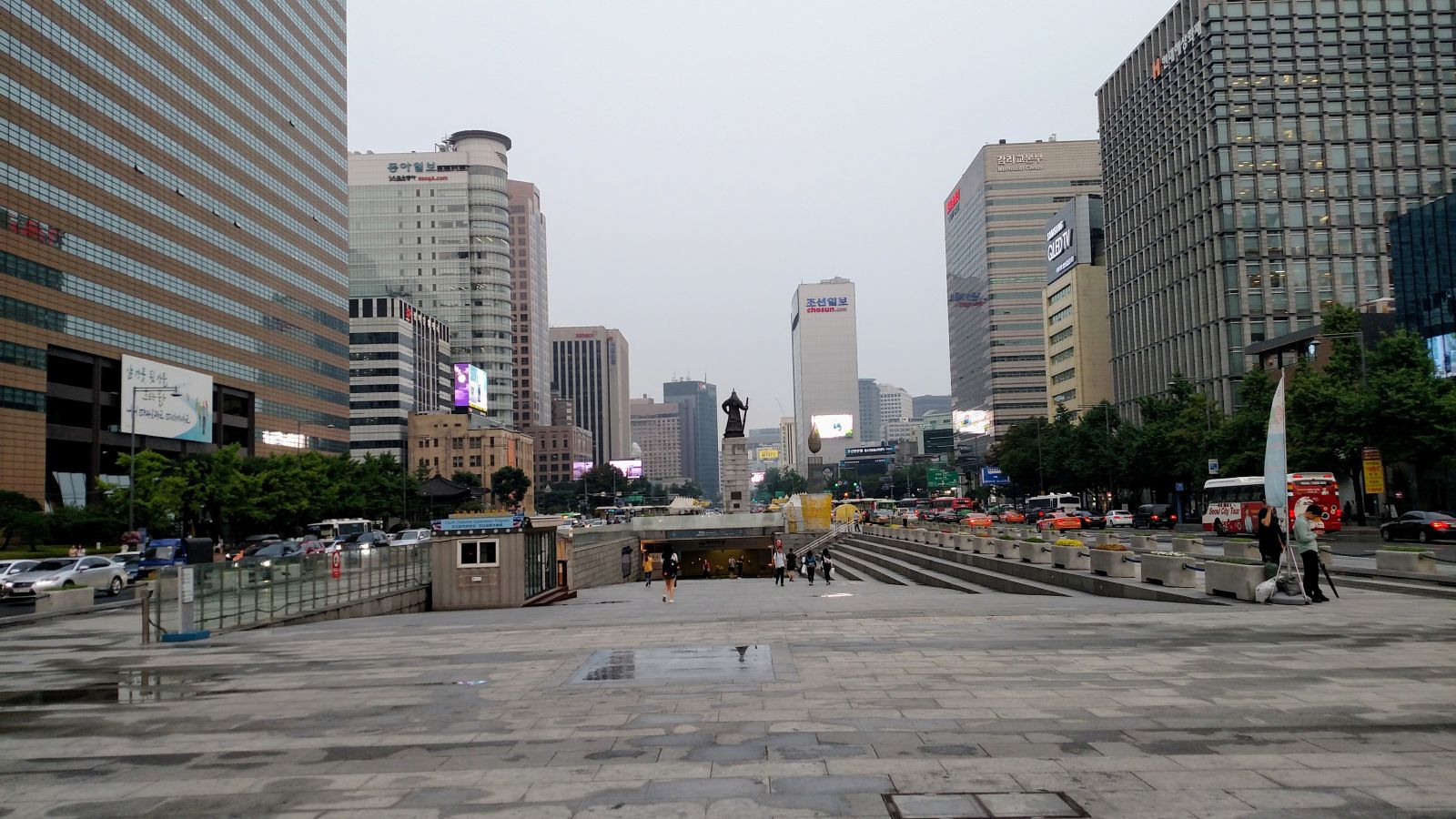
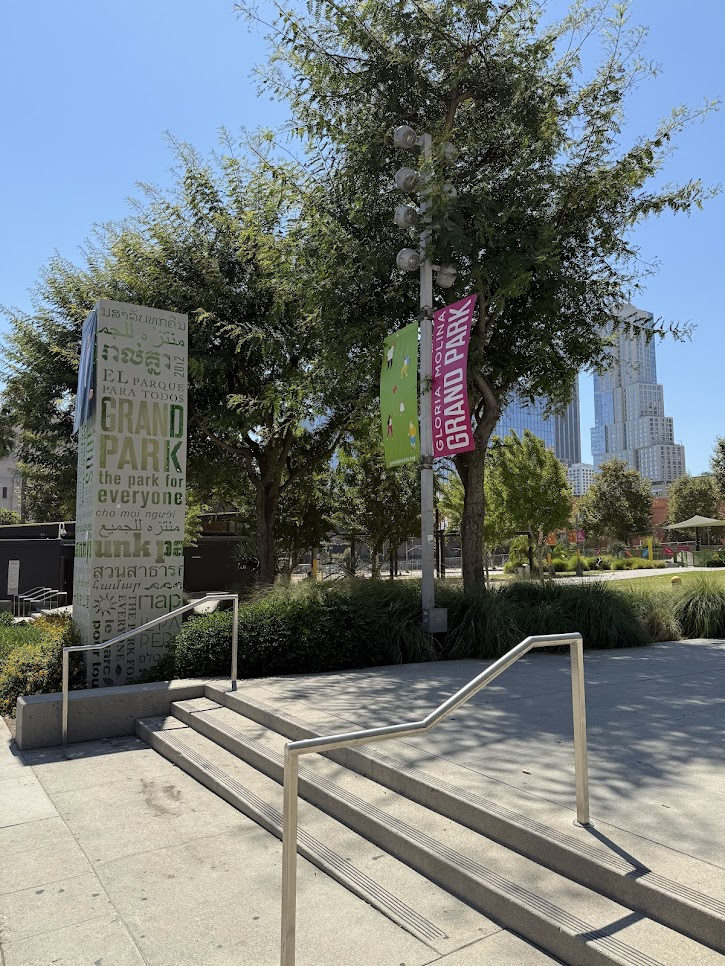
I have walked Seoul’s Gwanghwamun Plaza and Los Angeles’ Grand Park, traveling back and forth between the two cities. The squares were open and expansive, yet there was no sense of dwelling. Hundreds of footsteps brushed past one another, yet rarely did eyes hold each other’s gaze. In these places, I felt, with even sharper clarity, that the question posed in The Square remains as painfully relevant today.
Gwanghwamun Plaza is considered the symbolic center of Seoul. Statues of King Sejong and Admiral Yi Sun-sin stand tall, flanking the boulevard, while tourists and citizens stream between them. Yet a strange silence hovers when one stops to take in the space. The benches are there, but few sit. The fountains flow, but their sounds are drowned out by traffic. On weekends, protest chants echo briefly — and then the crowds dissipate, leaving behind only commemorative photos.
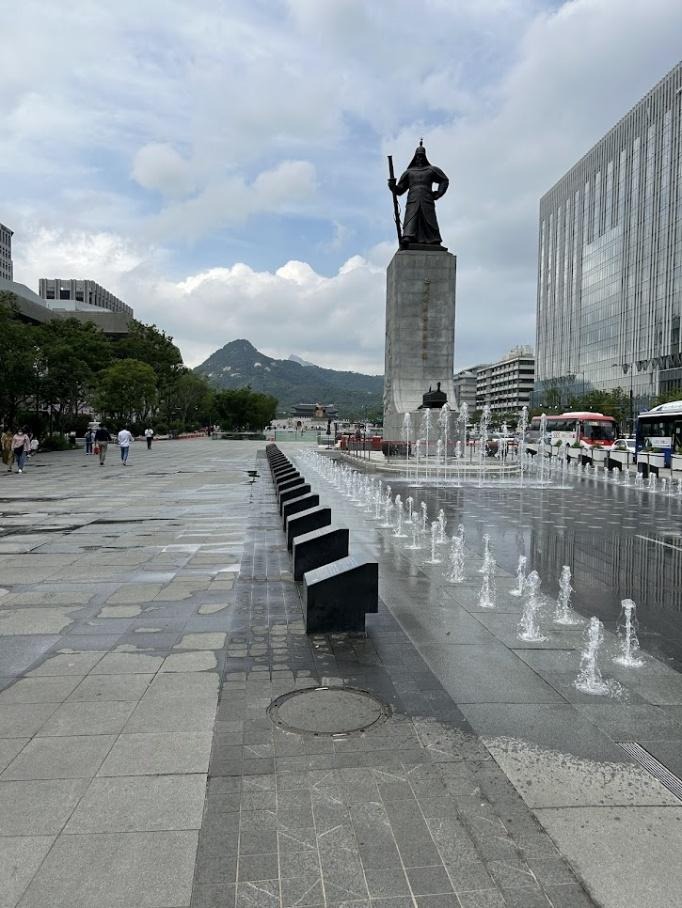
Though meant to honor 600 years of Joseon history, the plaza feels distant from the rhythms of daily life. The scene is grand, but the sensation of a living city is absent.
In contrast, Grand Park in Los Angeles is bursting with organized vitality. Yoga sessions, food trucks, and concerts keep the plaza busy. It appears open and engaging, but its energy is strictly scheduled. There is no space for unplanned lingering. On days without events, fences cut off access, and the plaza becomes disconnected from the city’s daily tempo. We cannot experience the plaza on our terms. It is, paradoxically, both open and closed — bustling, yet vacant.
What these two plazas reveal is a shared void in contemporary urban life. We no longer possess “meeting places” in the city. Instead, we internalize the plaza — imagining it within churches, cafés, gyms, digital spaces, or the cities of our memories. Lacking true communal spaces, we fabricate them inside ourselves.
In that sense, Siena’s Piazza del Campo in Italy evokes something magical. Medieval red-brick buildings encircle the shell-shaped plaza’s sloping terrain. There are no stages or monuments — just people using the space freely. Lovers recline under the sun, sharing beer. Children throw crumbs to pigeons as older women look on. This plaza commemorates nothing; it simply allows life to unfold. Form does not dictate life — life gives shape to space.
A few years ago, I saw a Korean student burst into tears upon entering the Campo. When asked why, she replied, “I was overwhelmed by the form of the space.” At that moment, I too felt as if an old lover long gone was quietly watching me from across the plaza.
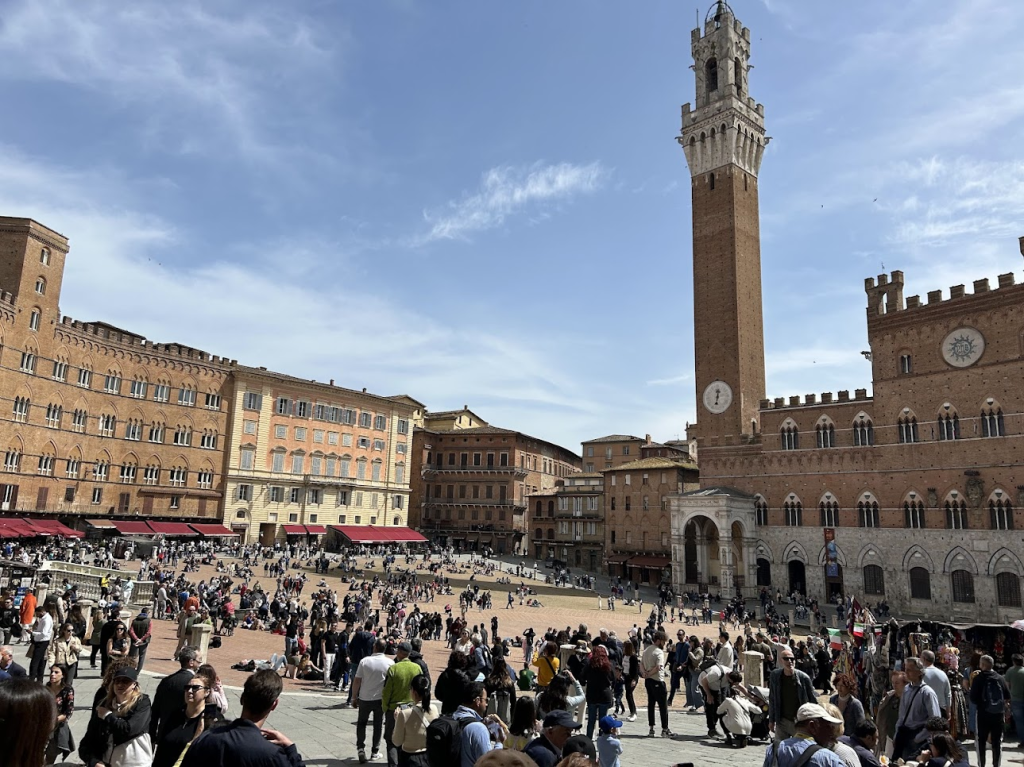
Though the architecture was ancient, the emotion was startlingly new. That space no longer felt like an object — it felt alive, like a sacred being. Not a designed structure, but a place where life breathes.

Such moments raise essential questions: Who are we? And what kind of beings are we in the cities we inhabit? In Seoul and LA, where speed and efficiency dominate, we are losing the ability to walk without purpose or to sit without obligation. A true plaza should not be a venue for events alone — it should be a space where doing nothing is enough. A space where you can sit silently beside a friend, or share presence with a stranger. In such seemingly useless space, real life finally opens.
Gwanghwamun and Grand Park are less expressions of urban vitality than manifestations of what I call ‘urban vacancy’-spaces that exist for state, capital, or cultural branding, but leave little room for unstructured life. Within them, we grow more isolated, brushing past one another. These cities now prefer segmentation to connection and control over encounter.

We must reimagine the plaza. Not as a site of spectacle, but as a space of staying. Not a place of design, but of unpredictability. The recovery of the plaza is the recovery of society — and the rediscovery of our collective identity. To find the lost plaza is to begin sketching the kind of city where we can truly live together. This is a call to action for all of us to contribute to the transformation of our urban spaces.

Jae Seong Cho
Jae Seong Cho is a Ph.D. in Urban Planning and the Director of the 21st Century Global City Research Center, Los Angeles. His research and work in urban development provide a wealth of experience with urban plazas and an unique perspective.