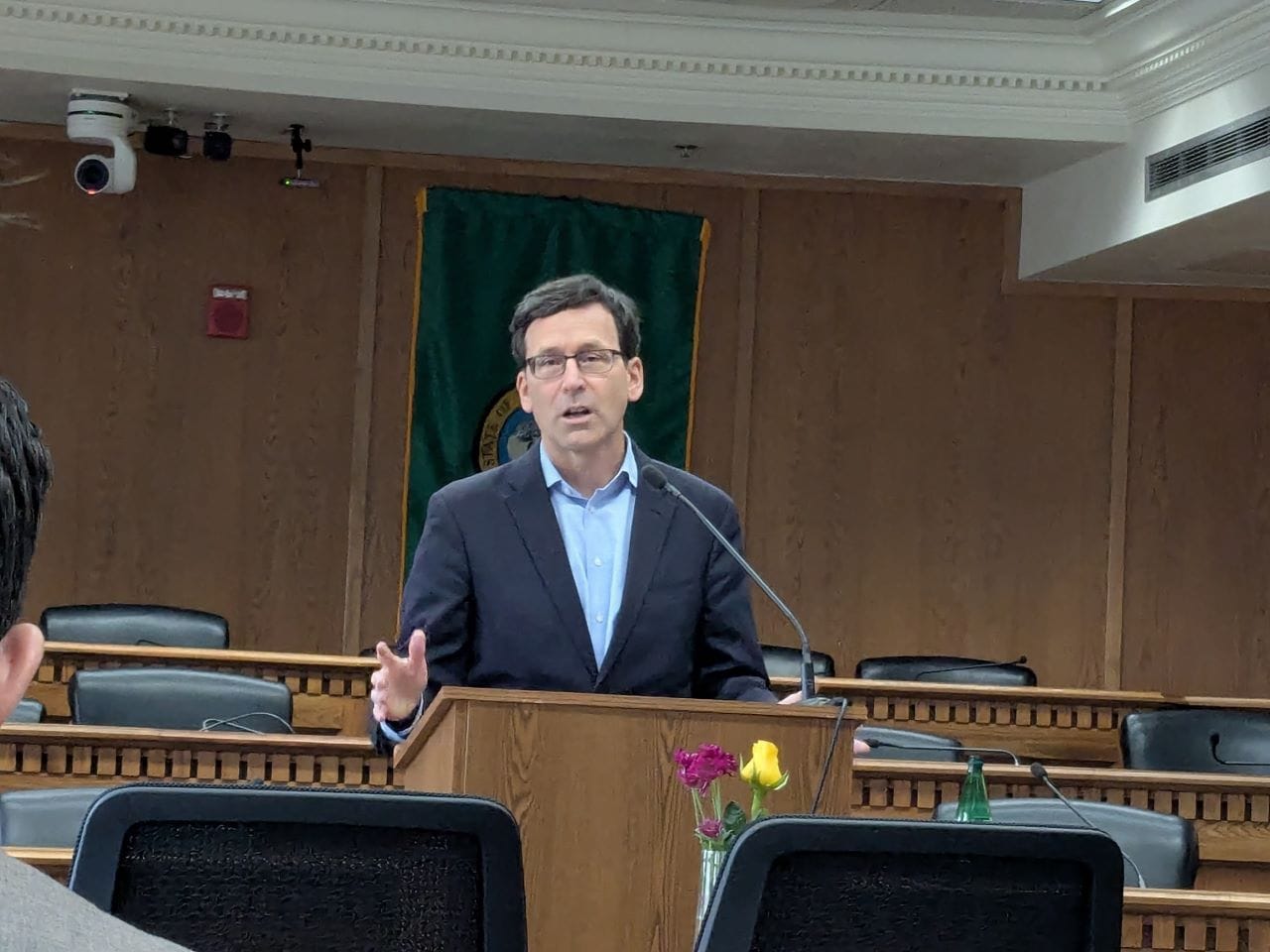
Governor Bob Ferguson’s proposed route to fill a sizable state budget gap would see over $500 million in climate funding diverted to backfill an existing tax credit, a move being called an “unprecedented sweep” of dollars intended to reduce greenhouse gas emissions. As part of a larger budget package that doesn’t include any new revenue sources or tax increases, the budget swap would be paired with significant cuts to state-supported services and a large transfer from the state’s rainy day fund.
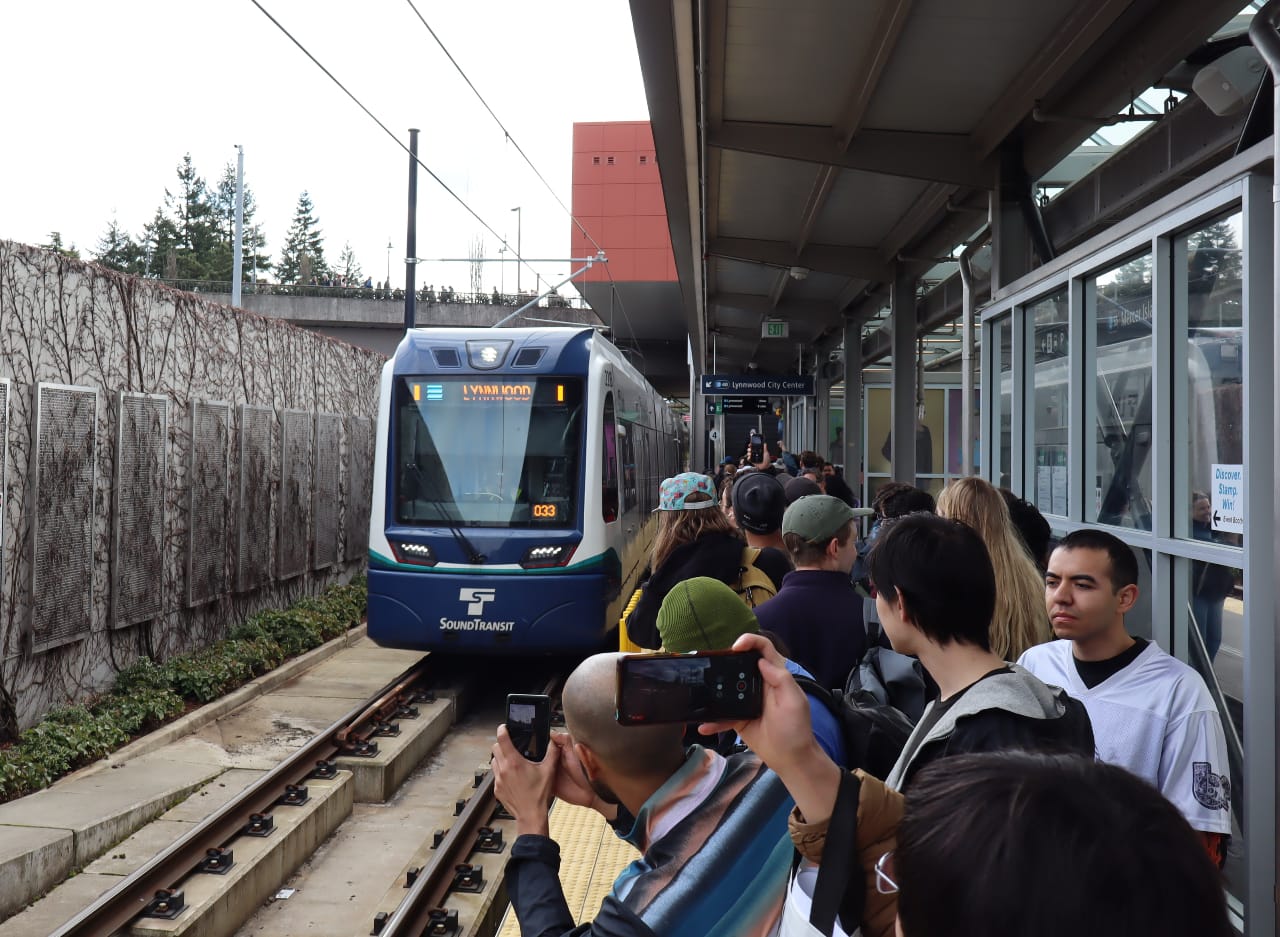
Carbon auctions under the Climate Commitment Act (CCA), Washington’s 2021 landmark climate law, have brought in $760 million more than legislators expected when they adopted the two-year budget, which extends to mid-2027. Ferguson’s proposal allocates the lion’s share of those dollars — $569 million — to funding the state’s Working Families Tax Credit, a program that is currently paid for via the state general fund. That’s over a half billion dollars that won’t be available for public transit, flood resistance, active transportation, or clean energy projects and will instead bolster existing programs elsewhere in the state budget.
The proposal comes less than two years after voters defeated Initiative 2117, a ballot measure repealing the cap-and-invest program at the heart of the CCA, by more than 23 points. After a campaign in which opponents of the measure put planned investments in walking, biking, and transit infrastructure front-and-center, I-2117 lost in 24 of Washington’s 39 counties and bolstered the legacy of Ferguson’s predecessor, Jay Inslee, who had been a major champion of the program.
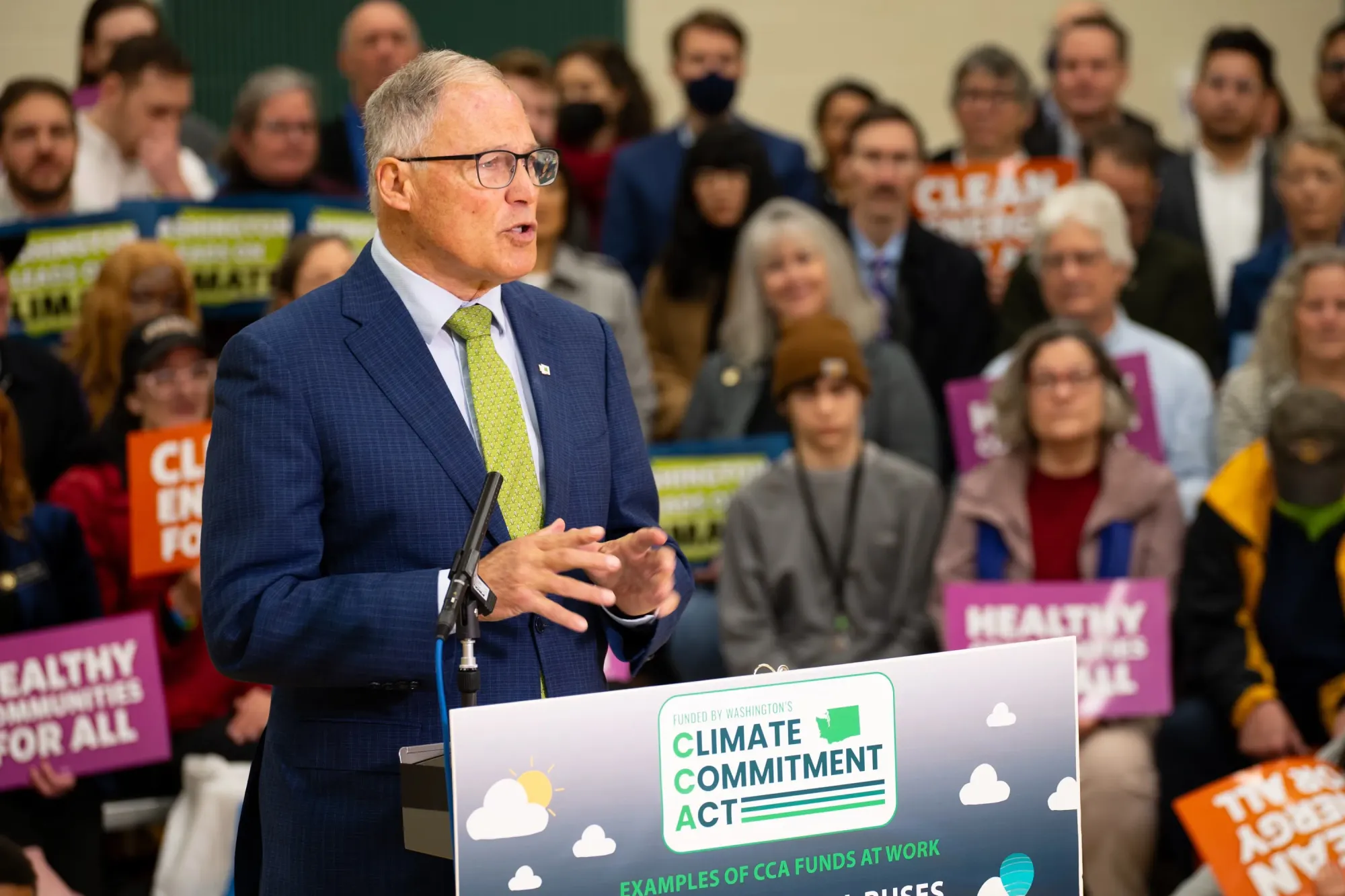
The Working Families Tax Credit provides lower-income households in Washington with a refund of state sales taxes that scales up to $1,290 annually, with the exact amount dependent on income level and the number of children in a household. Also approved by the legislature in 2021, it was explicitly included in the list of potential programs that could be funded with cap-and-invest proceeds along with a broad number of uses aimed at reducing greenhouse gases, increasing energy efficiency, and ramping up climate resilience, but lawmakers ultimately utilized other dollars to get the program up and running.
Ferguson’s budget announcement has mostly been garnering headlines for another reason: the fact that he is throwing his support behind a high-earner’s income tax, expected to be set at 9.9% on all gross income over $1 million per year. If approved, that tax would not start collecting revenue until 2029, a long runway provided to account for potential legal challenges and a likely referendum campaign. But it’s that revenue source that Ferguson is eyeing for the Working Families Tax Credit long-term, including a potential expansion of the program’s eligibility criteria.
In speaking with reporters last week, Ferguson said the idea to divert such a significant amount of CCA dollars came late in the process of assembling his budget, which will still need to be approved by the House and Senate.
“It’s specifically called out as being an appropriate use for the CCA — that said, it wasn’t my first choice, or second choice, or third choice for those funds,” Ferguson said after being asked about the guardrails placed on the funding. “At some point, it became clear I needed other options to balance this budget in a way that I felt was responsible and minimize harms.”
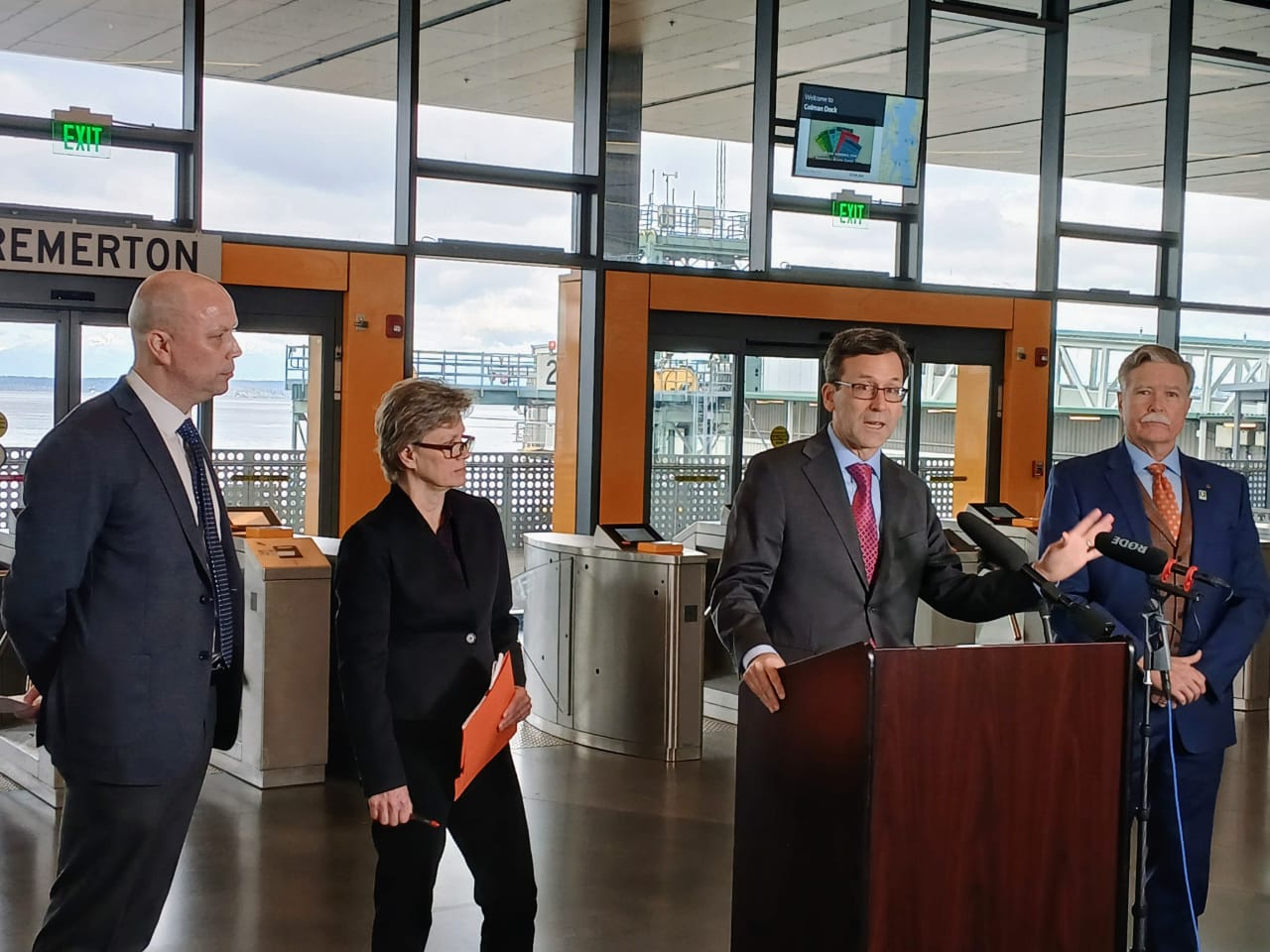
But the diversion is not sitting well with environmental groups, who are also losing ground at the federal level when it comes to resources intended to make progress on Washington’s ambitious climate goals. Climate Solutions, a nonprofit advocacy group focused on the clean energy transition, issued a statement blasting the Governor’s budget.
“Climate Commitment Act funds should go to the purposes that — lawmakers agreed, and voters confirmed — the program was created for: reducing climate pollution, expanding affordable clean energy and energy efficiency, and strengthening communities in the face of rising climate impacts,” the statement read. “With disappearing federal support for clean energy and environmental justice programs, Washington State provides continuity and stability in climate policy and investments that also provide people with enduring energy savings through revenue raised through charging major polluters for carbon emissions.”
This fall, Ferguson condemned the Trump Administration after more than $1.1 billion in clean energy projects were abruptly terminated, including $1 billion that had been set to go toward the Pacific Northwest Hydrogen Hub. But those programs now appear to take a back seat to other priorities in his own budget.
“We need new investments that both cut climate pollution and make energy affordable for the long run. Sweeping Climate Commitment Act funds shortchanges energy efficiency, clean energy, and other cost-saving programs, setting back our goal of affordable, clean energy for Washington.” Climate Solutions Washington Legislative Director Leah Missik said. “Voters overwhelmingly support our state’s popular climate investments. The Governor’s budget proposal misses the mark by directing less than 10% of climate funds to actually growing clean energy programs that both cut pollution and boost affordability.”
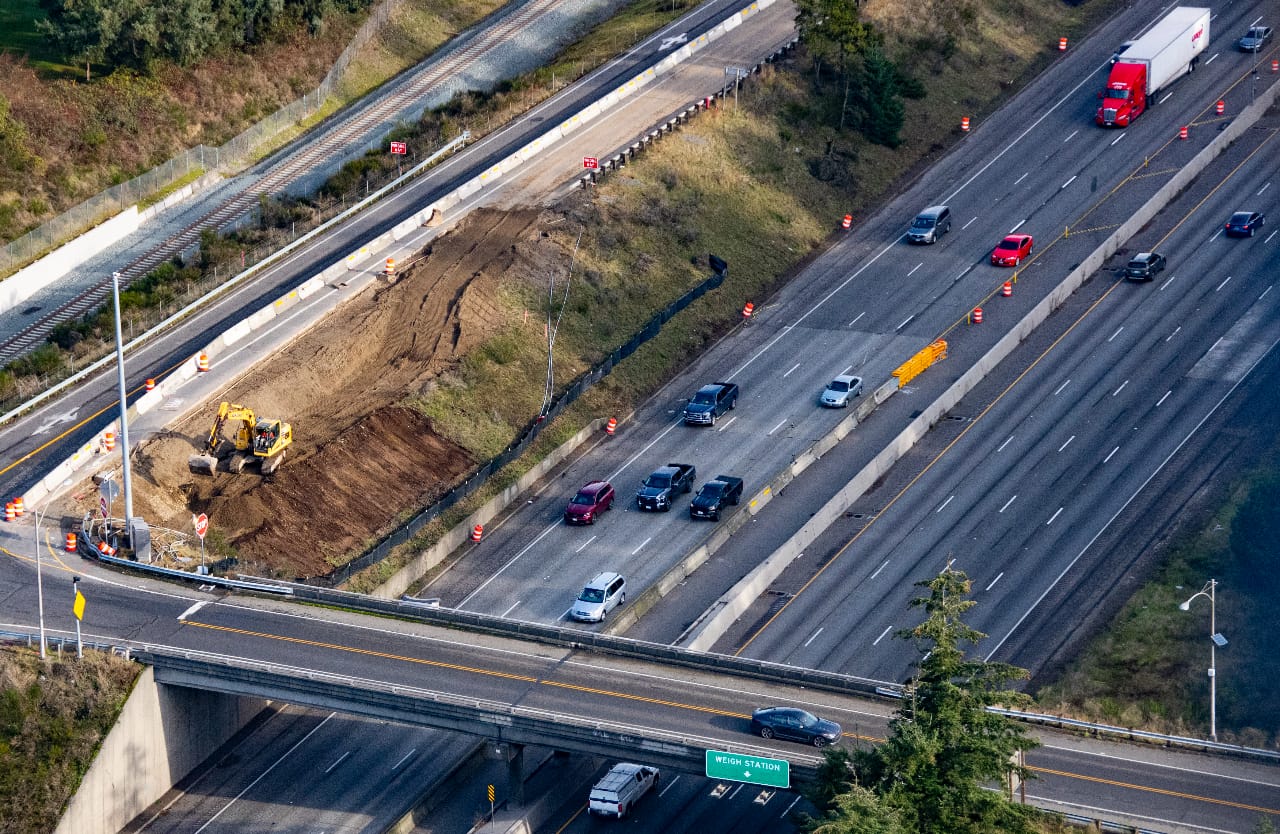
Earlier in the month, Ferguson had presented his proposed transportation budget, where many of the dollars diverted away from walking, biking, and transit infrastructure projects would have been allocated if they hadn’t been diverted away. Instead, those programs would be kept stable, while Ferguson proposes issuing $3 billion in new bonds to pay for basic transportation maintenance and preservation projects.
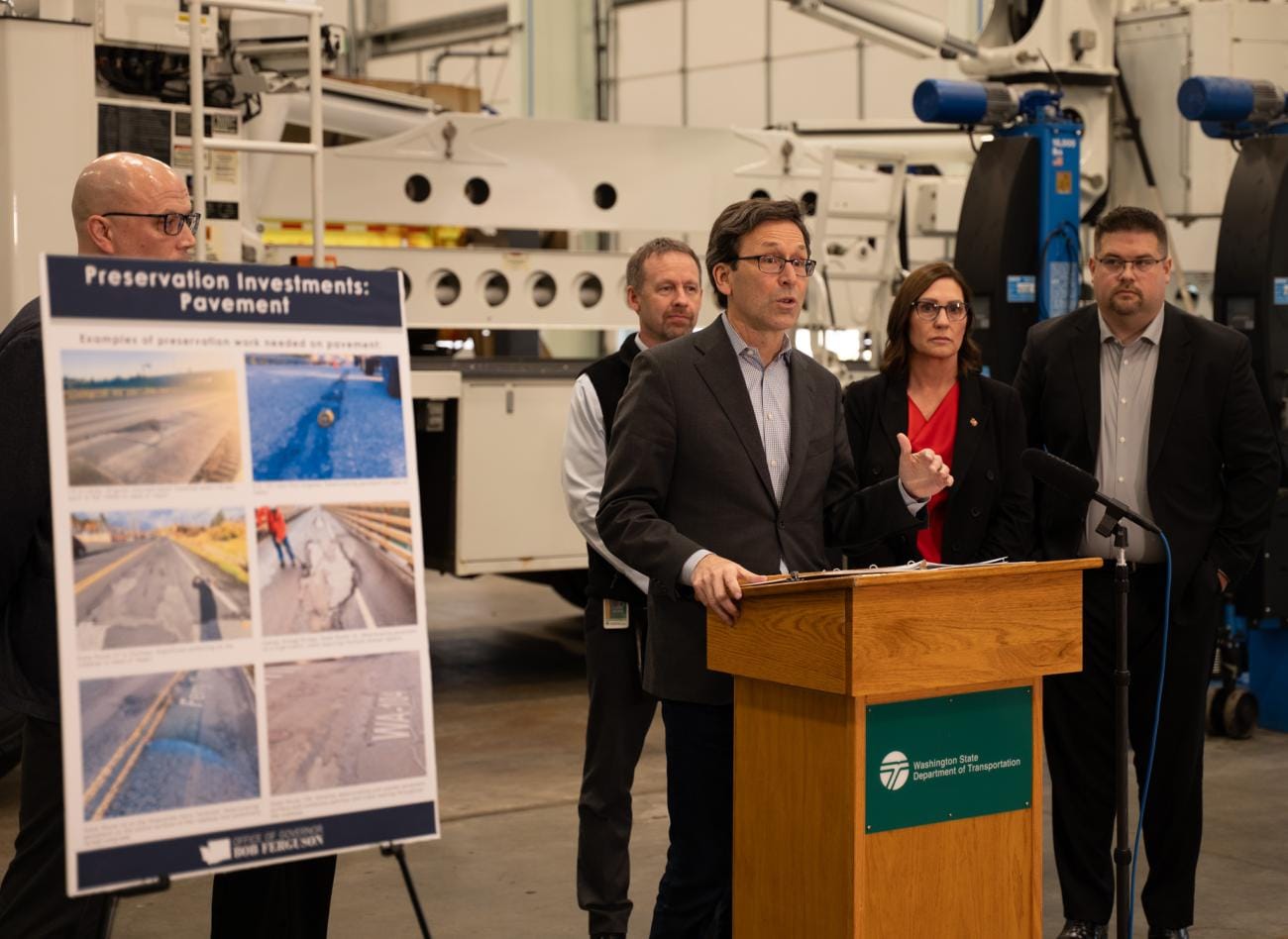
Leveraged against new funding sources approved by the legislature earlier this year — including a 6-cent gas tax increase — in order to keep the state’s highway megaprojects on track, the proposal likely faces a tough road at the legislature where a 60% vote is needed to approve the issuance of new state debt. But if approved, the move would constrict future state leaders by adding more debt service payments onto a state transportation budget that already allocates nearly 12% to paying back prior bonds: an amount that is more than the entire state ferry system budget.
When the state legislature convenes for its 60-day legislative session on January 12, budget issues are set to dominate the agenda. Ferguson’s proposals are likely to be put under the microscope, especially when it comes to areas where it would represent a step back from previous state commitments in the areas of sustainable transportation and clean energy.