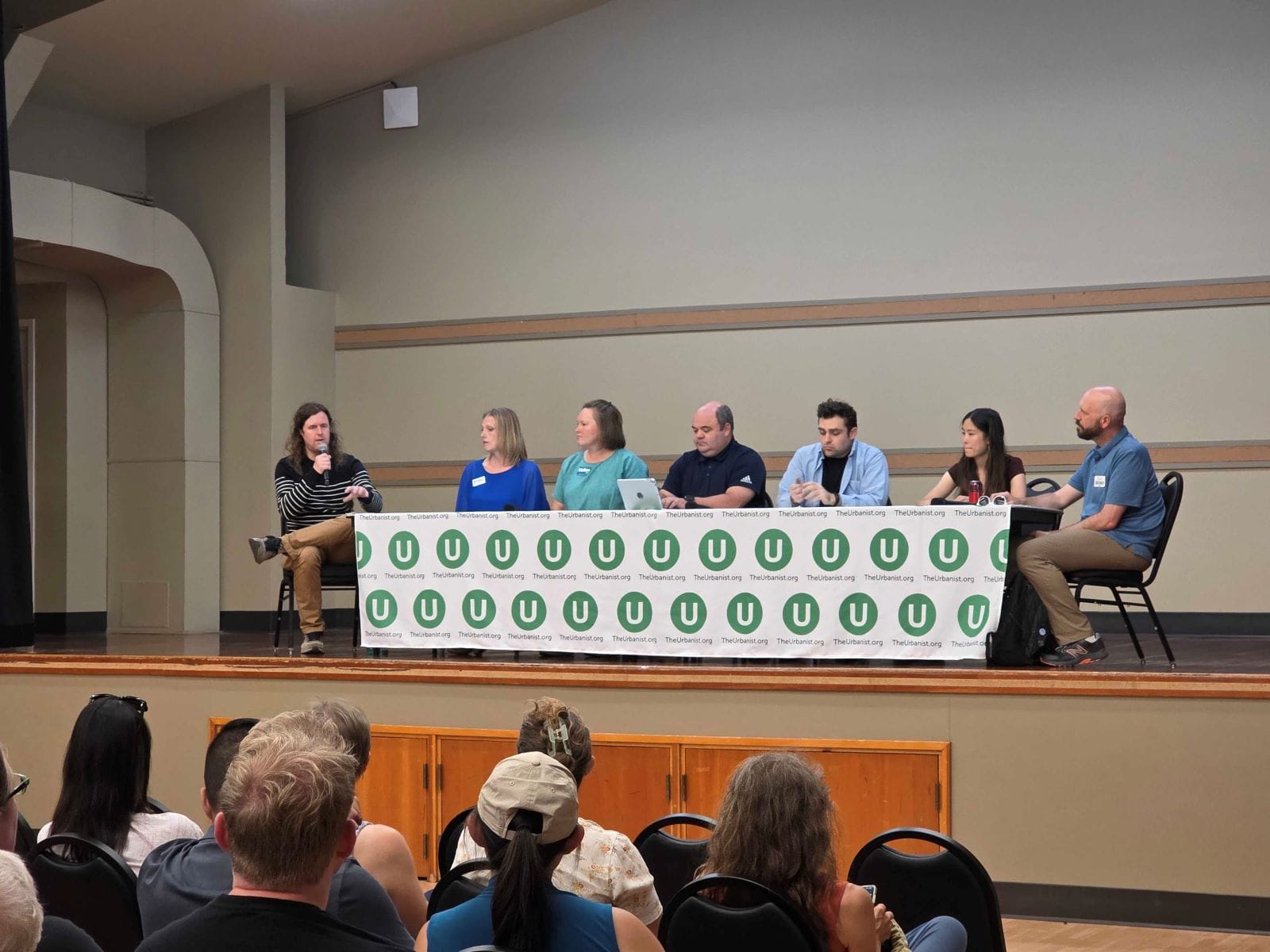
New programs for heat pumps, induction stoves, and plug-in solar would let renters reap the rewards of the clean energy revolution.
Takeaways:
- Seattle renters are largely locked out of the cost-saving and comfort-improving clean energy appliances, like heat pumps, induction stoves, and solar panels.
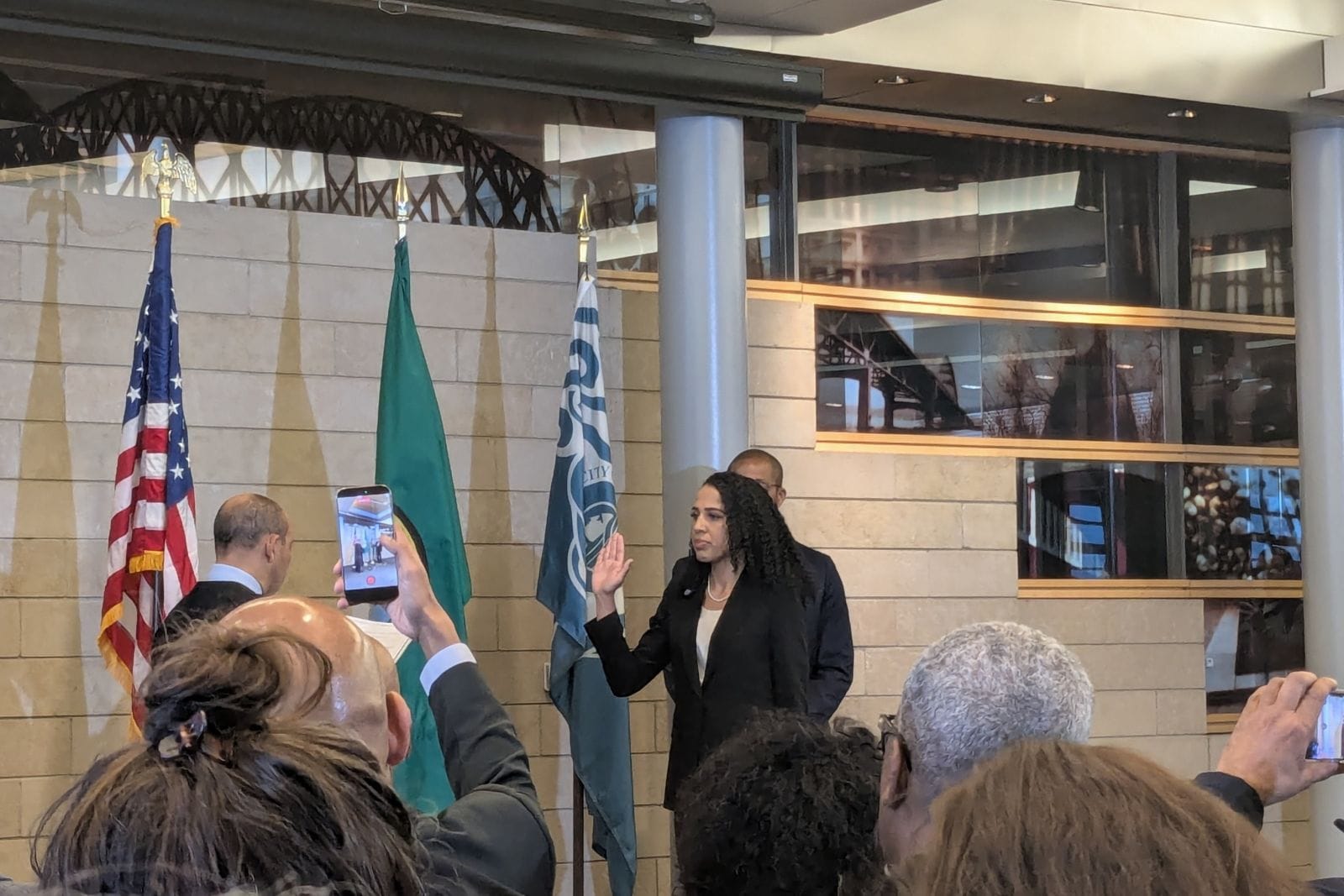
- Newly inaugurated Seattle Mayor Katie Wilson, a renter herself, could help change that, in part because the City she runs owns its electric utility, Seattle City Light.
- New city programs could front the cost of heat pumps and explore new apartment-friendly versions; spread the word and benefits of induction cooktops; and legalize plug-in solar for balconies and patios.
- These measures could allow renters to enjoy affordable, healthier, more efficient homes and would establish Seattle as a leader in welcoming more renters into the climate solutions fold.
Seattle’s new mayor, Katie Wilson and I share more than a few things in common. We’re both parents to toddlers. Scandalously, our children’s grandmothers help cover a portion of sky-high Seattle daycare costs (though my daughter’s 2026 daycare cost hike just swallowed my in-laws’ contribution). We’re also among the roughly 50% of city residents who rent.
Seattle renters contribute less to climate-warming pollution, on average, than homeowners. Renters in the city are nearly twice as likely to heat their homes with clean electricity as homeowners, more than half of whom burn natural gas for warmth. Seattle renters occupy smaller homes than residents who own where they live, fitting more people in less space. Renters are six times more likely than homeowners to get around Seattle without a car.
(These data points are from the Census Bureau American Community Survey, 2024 estimates. I feel optimistic that Katie Wilson, with her transit background, will do everything she can to make the city safer and easier to navigate for bikers and walkers. This is one of the best climate bets she can make.)
Ironically, though, Seattleites who rent are excluded from enjoying many of the upsides of the clean energy revolution.
Renters cannot lessen our rising electricity bills by adding solar panels to our rooftops. We cannot rip out our gas stoves in favor of healthier, better performing induction cooktops and ranges. We’d be laughed at, at best, if we asked our landlords to remove our baseboard heaters or gas furnaces and shell out tens of thousands of dollars for more efficient heat pumps.
At least, we can’t cash in yet. Mayor Wilson could change that.
Mayor Wilson enjoys an unusual opportunity among her peers: the City she runs owns its electric utility. One of the largest municipal utilities in the United States, Seattle City Light could make or break the city’s climate goals. It could also create new ways for renters to participate in the clean energy economy.
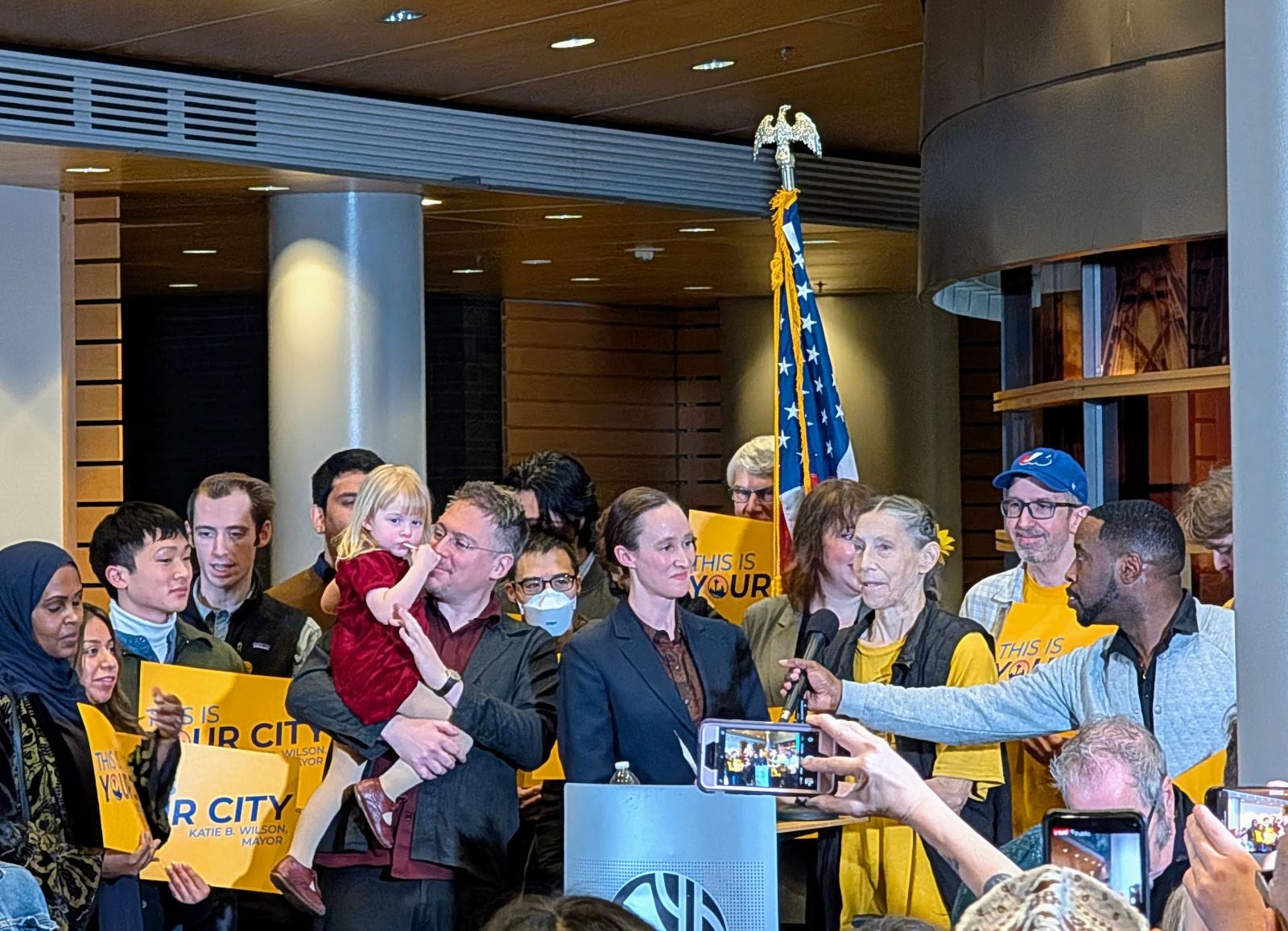
With Katie Wilson installed in City Hall, City Light could launch nation-leading heat pump, induction stove, and plug-in solar programs. For those of us forking over hefty rent checks every month, the mayor could let us in on cost-saving — and emissions-lowing — clean energy action.
Get City Light to front heat pump costs for renters
Converting homes from low-efficiency electric furnaces or baseboards (the most common heating sources for Seattle’s renters) to high-efficiency heat pumps would lower monthly heating bills by reducing electricity use by up to 75%. More efficient electric rentals would also free up space on City Light’s grid to connect the thousands of homes and businesses in Seattle currently burning fossil fuels, thereby reducing the likelihood that the utility will have to buy expensive, dirty energy in the event of an energy supply crunch.
Most of the United States’ electricity comes from burning fossil fuels, whereas roughly 90% of City Light’s power sources are carbon-free.
For the minority of renters who burn gas for heat (including your truly), upgrading to heat pumps would loosen our yoke to the fossil fuel price rollercoaster. Plus, heat pumps are cool; half of Seattle renters lack air conditioning, compared to just a quarter of the city’s homeowners, a figure with potentially deadly consequences as the region’s summers grow hotter.
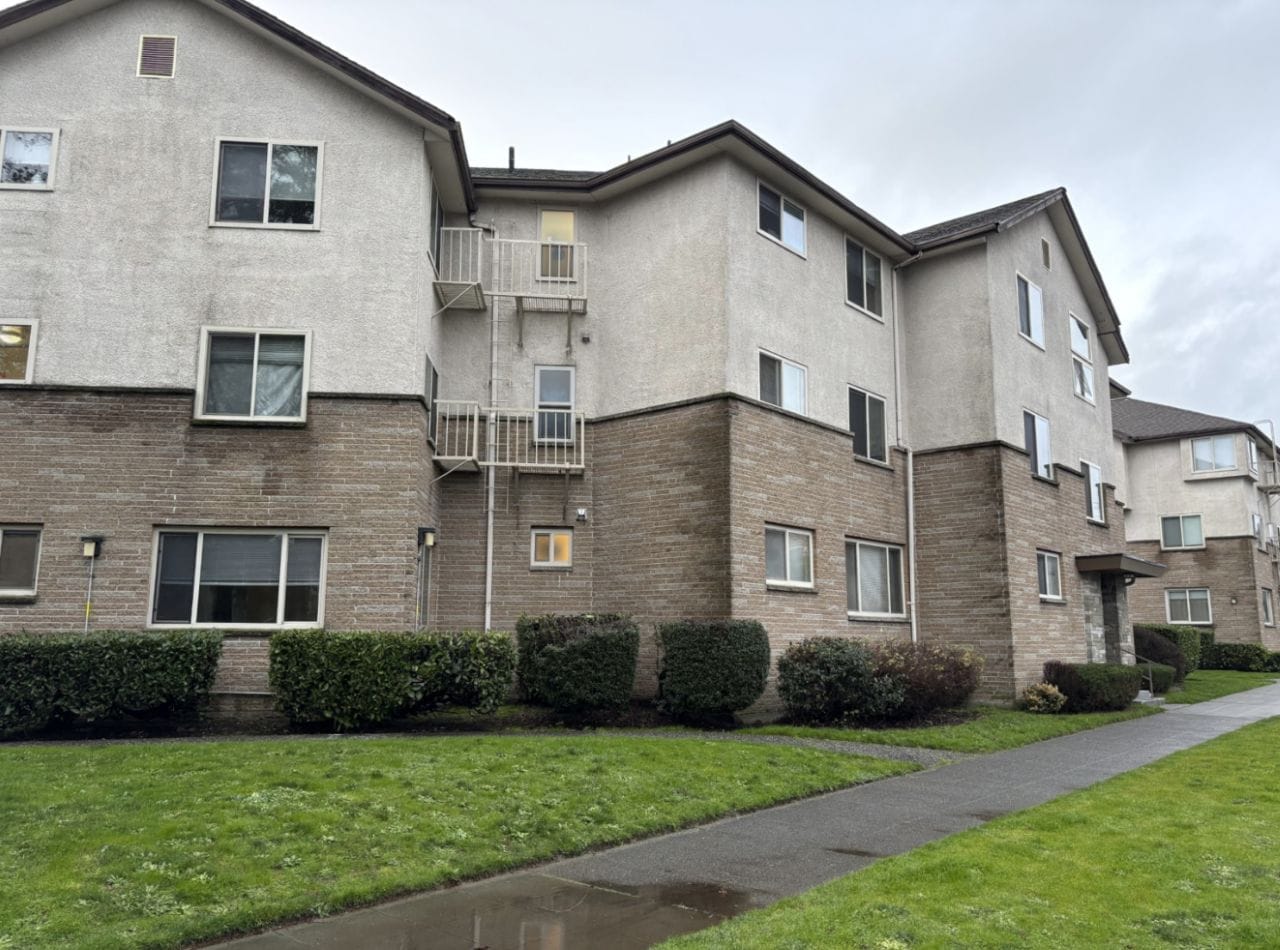
Heat pumps are, however, basically impossible for Seattle’s renters to access. No renter will succeed in convincing their landlords to shell out the $15,000 to $20,000 the appliances cost. And renters are unlikely to afford the systems themselves even if a landlord consented to associated renovations. Seattle’s renting households earned less than half the median income of homeowning households in 2024.
Under Wilson’s leadership, Seattle City Light could launch an ambitious program to front the cost of heat pumps for renters. Renters would pay a monthly service fee to enjoy the equipment, but the electricity savings from the upgrade would offset the fee. In other words, electricity bills would go down while comfort would go up.
In these types of programs, known as “inclusive utility investment” or “pay as you save®,” participants don’t assume debt or need a credit check, unlike typical on-bill financing programs. The utility owns the heat pump until the renter pays their last service charge, at which point system ownership switches to the landlord. If the first renter moves, the next renter enjoys the savings on their monthly bill. Though the programs needn’t be limited to renters, the model resolves the so-called split incentive problem, in which landlords resist investing in energy efficiency upgrades because they do not pay the energy bills.
Since the idea was developed in 1999, 20 utilities across 10 U.S. states, including Missouri, Kansas, and California, have active inclusive utility investment programs. If these places can do it, so can Seattle.
Launch a window heat pump initiative for Seattle apartments
Even if Seattle City Light fronts the bill, heat pumps are likely to remain out of reach to most renters at current prices. Plus, the dominant heat pump models, such as mini-splits, can be a poor fit for large apartment buildings and require a trained contractor and electrical panel upgrades to install. Nearly three-quarters of Seattle renters live in apartment buildings with 10 or more units, compared to just 13% of homeowners.
Window heat pumps (also known as saddle heat pumps or micro heat pumps) could solve that problem. These innovations plug into a standard 120-volt outlet, don’t require professional installation or renovation, and can cost 40% less than conventional heat pumps. Also a design challenge and successful pilot, the New York City Housing Authority plans to install 30,000 window heat pumps in public housing apartments. Boston recently announced it will follow suit.
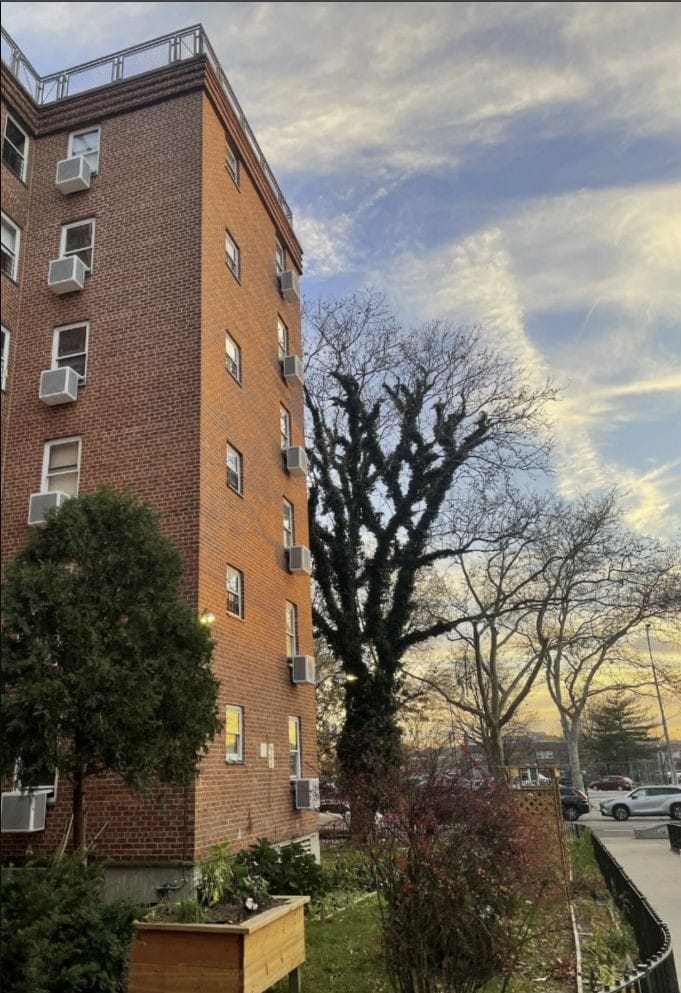
But at more than $3,000 apiece, window heat pumps are still out of reach for most renters. Nor are they widely available for purchase. (I asked a representative from Gradient, one of the two window heat pump companies selling in the United States, if I could buy one as a renter. He said yes, but only because I am an “influencer.” News to me!)
Plus, the models rolling out on the East Coast are designed for cold climates and therefore may be unnecessarily expensive for Seattle’s milder winters. Finally, they only fit in windows that slide open vertically, a more common window type on the East Coast than the West Coast.
Wilson could make Seattle the West Coast leader in apartment heat pumps. She could launch an initiative, co-led by Seattle City Light and the Mayor’s Office of Sustainability, to develop Seattle-specific window heat pumps, at a price point renters could afford. The city might provide grant funding or guarantee bulk procurement to help bring down initial prices. The initiative could also ensure Seattle benefits from parallel efforts, such as California’s new market transformation plan for window heat pumps or future pilots led by the Northwest Energy Efficiency Alliance (of which City Light is a member).
If successful, the initiative could open the door… er, window to Seattle apartment renters owning and controlling their heating and cooling.
Spread the induction stove gospel
Induction stoves are now the best products on the market for performance, safety, ease of cleaning, health, and efficiency (just ask known climate radical, Wirecutter). But once again, they’re out of reach for most renters due to cost, wiring requirements, and that perennial difficulty of asking your landlord to upgrade anything.
I have a gas stove, but I now almost exclusively use a $114 plug-in induction cooktop to protect my daughter’s lungs. Gas stoves emit a “cloud of chemicals” including cancer-causing benzene, asthma-causing nitrogen dioxide, and climate-warming methane and carbon dioxide. (Plus, it boils water twice as fast as my gas stove, helpful when I’m trying to outrun a macaroni-and-cheese-related tantrum.)

Wilson’s Seattle could give away these induction cooktops to low-income renters with children. The Mayor could also push Seattle City Light to educate its customers about the downsides of gas stoves and upsides of single-burner induction cooktops. Recent Seattle City Light newsletters offered ways for Seattle residents to stay cool during heat waves and lower their energy usage. Tips for healthier, safer cooking would be just another flavor of this kind of consumer guidance.
At the same time, under Wilson’s leadership, Seattle could participate in California’s new effort to bring more affordable, plug-in induction ranges to market, pushing so that the outcomes of that effort will benefit Seattle renters, too.
And, Mayor Wilson is now a board member of the Puget Sound Clean Air Agency, the region’s air quality regulator. There, she could drive the adoption of clean air appliance standards to benefit all Seattleites.
Legalize plug-in solar
In Germany, renters can go to a big-box store, buy a small solar panel for around $200, plug the system into their home outlet, and start harnessing the power of the sun later that same day — all without needing to hire a professional installer. Millions of these “plug-and-play” or balcony solar systems are now connected to homes in Germany, making it possible for renters to offset a portion of their energy use.
In Seattle, plug-in solar systems are illegal. A City Light representative told Sightline that balcony or patio solar products are not eligible for the utility’s interconnection process that rooftop solar systems use and that they introduce potential safety concerns, such as accidentally energizing a downed power line by sending electricity back onto the grid. (Germany has not experienced any safety issues with its millions of systems.) The only way to get in on the solar action in Seattle is by owning a roof or by signing up for a community solar program, which City Light does not currently offer.
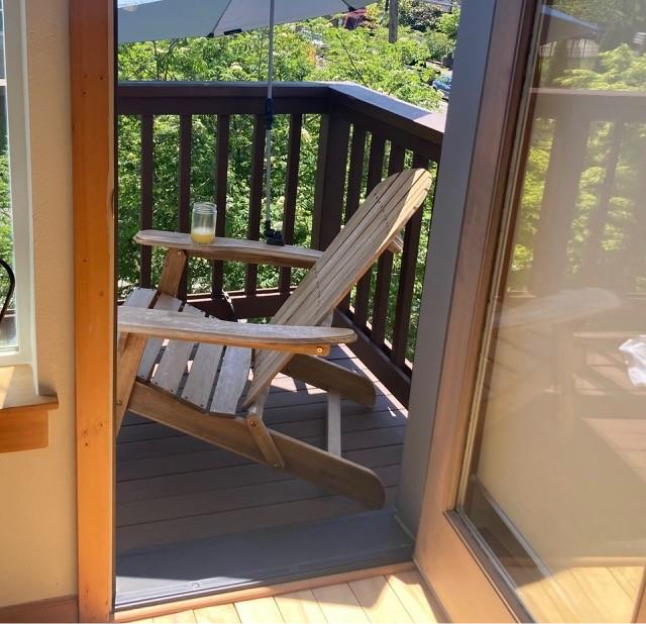
Mayor Wilson’s Seattle City Light could legalize balcony solar, taking a page out of Utah’s playbook. That state’s legislature unanimously legalized the systems in 2025 by creating a new class of portable solar generation devices (maximum power output of 1.2 kilovolts) exempt from utility interconnection processes and fees, and introducing safety requirements. At least one company, EcoFlow, now sells a plug-and-play solar product in Utah that boasts “anti-islanding” safety features to turn off the system in case of a power outage.
Seattle’s summer sun is one of the city’s best-kept secrets. With a free, simple, and safe City Light program for balcony solar, renters could start to enjoy it in more ways than one.
Wilson can make Seattle a green city for renters
In Katie Wilson, Seattle elected a renter Mayor for the first time in at least 15 years, and perhaps ever (I gave up searching for one). While the city has boasted about its green bona fides for decades, renters have been mostly worker bees for this green credential, not recipients of its benefits.
By creating new ways for Seattle renters to enjoy efficient heating and cooling with heat pumps, easy and safe cooking with induction stoves, and cheaper electric bills with plug-in solar, Mayor Wilson can make Seattle the model for pro-renter clean energy policies. And she may even reap some of those rewards herself.