Despite safeguards, data from Washington state agencies is aiding Trump’s mass deportation campaign.
A new report released last Thursday by the University of Washington (UW) Center for Human Rights shows that driver information from Washington state’s Department of Licensing had been used by U.S. Immigration and Customs Enforcement (ICE) for federal immigration enforcement through at least mid-November.
While state officials said two separate times last year that improper driver data was no longer being shared with federal immigration officials, it appears there is still a simple way for agents to obtain Washingtonians’ data.
Researchers identified nine cases between September and November of last year where federal immigration enforcement occurred to Washingtonians while they were driving, following a search of their license plate numbers in the Washington Department of Licensing (DOL) database. Federal access to this data required the cooperation of both the DOL and the Washington State Patrol through Nlets and ACCESS, which are switchboard-type systems that allow users to query data held in a variety of institutions’ systems, including federal and state databases and records from undisclosed private companies.
At least seven of these cases are confirmed as civil immigration enforcement, in spite of this kind of state cooperation being against both agency policy and state law, including the Keep Washington Working Act. Several of the cases took place in King County, with traffic stops leading to immigration detentions in Renton, Auburn, Tukwila, Burien, and Puyallup.
In the first 11 months of 2025, federal agencies used ACCESS/Nlets to query WA DOL data a total of 2,671,776 times, according to data provided by DOL. While many of these queries had nothing to do with civil immigration enforcement, the large number illustrates the possible scope of the problem.
Through the ACCESS/Nlets data connection, immigration officers are able to access information such as date of birth, height, hair color, home address, and often most useful to agents, identifying photos.
“We know [this number of confirmed cases] likely represent the tip of the iceberg,” Professor Angelina Snodgrass Godoy, the director of the UW Center for Human Rights, said at a press conference. “In fact, later today, we expect another batch of records about other arrests that have been reported to us, so it’s likely that the number of confirmed cases and affected Washingtonians will only continue to climb with time.”
Department of Licensing’s history of security issues
The Seattle Times first discovered the DOL was sharing driver data to assist federal agents in civil immigration enforcement back in 2018, when ICE and Customs and Border Patrol (CBP) would directly email the department and receive records. ICE and CBP were also able to search the DOL’s Driver and Plate Search (DAPS) database.
At that time, the DOL changed its policy to stop emailing data except in the case of a judicial warrant. It also canceled several DAPS contracts with federal offices to protect its data. The next year, the legislature passed the Keep Washington Working Act.
However, in July of last year, King 5 discovered that the DOL was once more sharing driver information with ICE through the DAPS database, leading to multiple immigration arrests. The DOL initially denied the allegations but then said that ICE had lied about how they were using the data. By the end of August, the DOL had terminated the two ICE DAPS accounts that had been used to obtain the data.
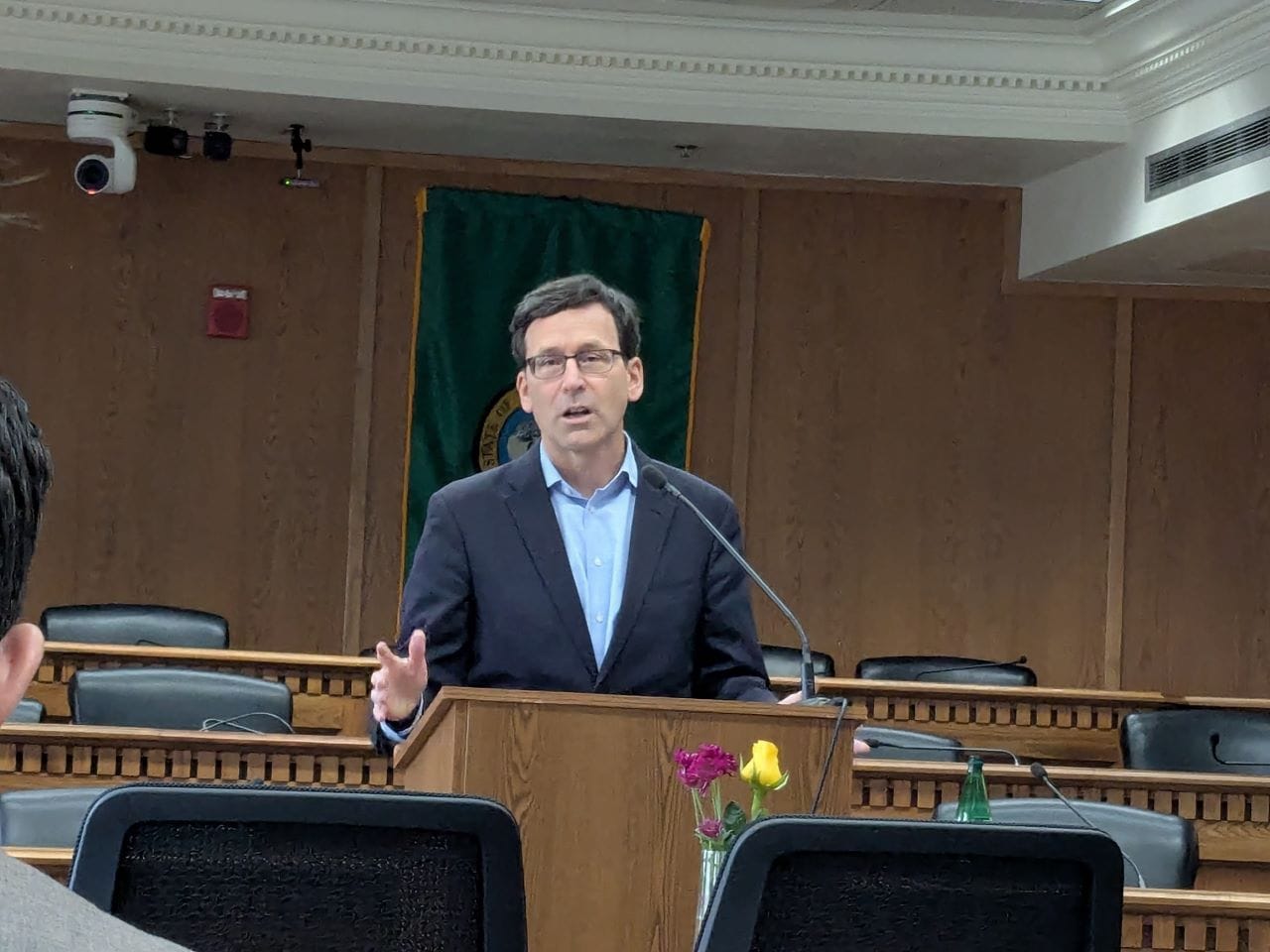
In November, a group of lawmakers revealed that immigration authorities had another way to access driver data through the Nlets system. At that time, Governor Bob Ferguson quickly moved to block ICE’s Enforcement and Removal Operations’ (ERO) access to the data via this new pathway.
However, eight of the nine cases identified by UW researchers showed that the Nlets system had been accessed by CBP, not by ICE ERO. CBP was never blocked from accessing the Nlets system. “We know the Border Patrol is engaging in civil immigration arrests and therefore failing to block their access, there’s no reason to believe that this would have stopped,” Godoy said.
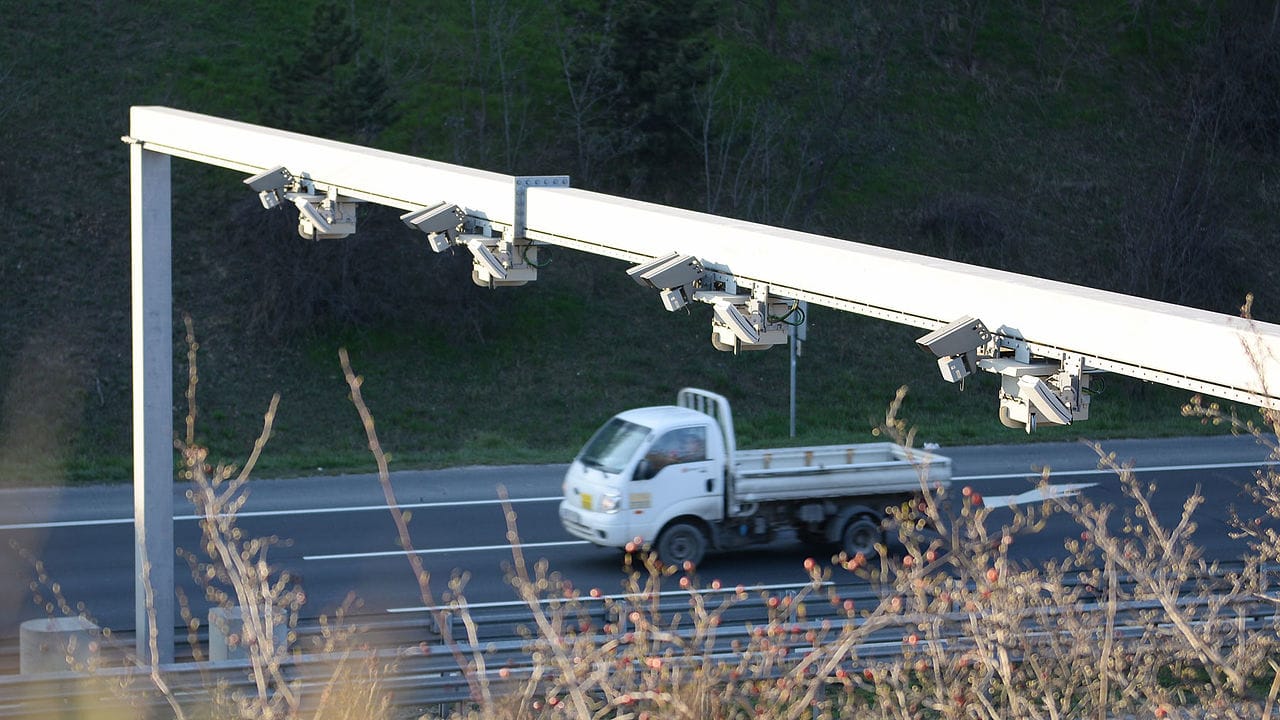
The report referenced recent sworn testimony from federal officers in Portland, Oregon, explaining that they traveled to locations they considered to be promising for finding immigrants and then randomly ran license plates. Once they had the name associated with a vehicle, they could run the name in other databases, and if that information suggested the owner of the vehicle may have immigration issues, they would either arrest them during a traffic stop or visit their registered address to arrest them later.
The report said, “Records reviewed by UWCHR researchers, including ICE documents and records of Nlets queries using ACCESS, show that similar tactics appear to be being deployed by immigration agents in Washington.”
Maria Abando, representing Whose Streets? Our Streets!, a BIPOC-led workgroup that formed as an offshoot of Seattle Neighborhood Greenways, spoke about the fear and anger caused by ICE’s assault on civil liberties and the state’s failure to protect sensitive data.
“We are infuriated that we have been misled to believe that state institutions like the Department of Licensing were keeping us safe,” Abando said. “We are disgusted that our leadership is not taking action to eliminate institutional surveillance of the people, knowing that they’re putting us in harm’s way. There should be no negotiation, no compromise, no prioritizing of business partnerships with tech companies when it comes to our lives – for all data, not just with the Department of Licensing.”
ICE’s attack on civil liberties
The timing of this report’s release highlights the dangers presented by Washington state’s lack of data security when it comes to protecting immigrants.
On Wednesday in Minneapolis, an ICE agent shot and killed a woman, Renee Nicole Good. Good had been participating in a protest against an ICE raid in the neighborhood and appeared to be attempting to drive away when she was shot.
The Department of Homeland Security claimed Good was trying to run over an agent who feared for his life. However, Minneapolis Mayor Jacob Frey called the claim “spin” and “bullsh*t.”
An analysis from The New York Times shows Good’s vehicle appears to be turning away from the agent at the time he shot her.
“We’ve dreaded this moment since the early stages of this ICE presence in Minneapolis,” said Frey in a statement. “This was a federal agent recklessly using power that resulted in somebody dying.”
The New York Times said this shooting is the ninth ICE shooting since September.
“ICE is tearing families apart, detaining people regardless of immigration status, often targeting people based on race and language. District 2, Seattle’s most racially diverse district, has already seen an uptick of activity by ICE and other federal officers,” Seattle Councilmember Eddie Lin wrote in a statement. “Let me be clear — ICE is not welcome in Seattle.”
Also on Wednesday, masked ICE agents reportedly arrested three men in Seattle at Evergreen Washelli Cemetery.
“I am furious at the federal government’s abuse of power. It is unacceptable to kidnap people who are simply going about their lives. There is no place for it in Seattle,” Wilson wrote in a statement.
I joined today’s ICE Out vigil to grieve for Renee Nicole Good & the many others who have lost their lives to ICE. To mourn. And to organize too. To everyone who makes Seattle home: this is your city, and you belong here. You deserve to be safe here. And together, we’ll fight to make it so.
— Mayor Katie B. Wilson (@mayorofseattle.bsky.social) January 11, 2026 at 3:59 PM
[image or embed]
On Thursday, federal agents from the CBP shot two people in Portland, Oregon. Oregon’s attorney general is opening a formal investigation into the shooting.
ICE also continues to ramp up its nationwide surveillance apparatus.
“With a budget for 2025 that is 10 times the size of the agency’s total surveillance spending over the last 13 years, ICE is going on a shopping spree, creating one of the largest, most comprehensive domestic surveillance machines in history,” wrote Cooper Quintin, the senior staff technologist at Electronic Frontier Foundation.
Multiple instances over the last year have illustrated how data collected by Washington State can be incorporated into this surveillance system.
Politico reported at the end of the year that ICE has new data-sharing agreements with several federal agencies, including the Social Security Administration, the Internal Revenue Service, and the Department of Health and Human Services. These agreements appear to enable bulk data-sharing in spite of the 1974 Privacy Act, which ostensibly barred such arrangements.
President Donald Trump also went on a firing spree of inspector generals and government watchdogs when he took office last January.
Meanwhile, in October, Radley Balko interviewed former immigration judge George Pappas, who was fired by the Trump administration in July.
“I can tell you that today, the immigration courts are substantively dead,” Pappas said. “They are completely absent of due process. Of fair hearings. They exist only for show, and in name only. Period. The courts are dead.”
Locally, the state democratic congressional delegation has grave concerns about the conditions at the Northwest ICE Processing Center in Tacoma. A December letter cites insufficient medical staff, two suicide attempts in April, and pregnant women not receiving appropriate pre-natal care. The detainees have also not been receiving enough food and face barriers to receiving necessary legal counsel.

State officials have the options of rescinding the business license of GEO, the operator of the ICE center, and taxing the facility per detainee per day in an effort to make its operation financially untenable. Rescinding the business license would be a job for Washington Attorney General Nick Brown, while a detention tax could be instituted by the state legislature during this session.
The behavior of ICE and status of immigration courts and detention facilities raises the stakes for protecting Washingtonians, and their data, ever higher.
Next steps for Washington State and Seattle
In an interview with The Urbanist, Wilson reiterated her concern for the threats surveillance data poses to vulnerable people in Seattle.
“We’re going to be reviewing all the surveillance policies and programs that are in place, and talking to the folks who have written in with concerns and others, and coming up with a plan,” Wilson said. “I don’t have the details of exactly what that looks like, but it’s very important to me that we’re protecting people’s privacy and not unnecessarily handing tools to the federal government that could be used to target people.”
In a statement reported on by The Washington Standard, Governor Bob Ferguson said “he stands prepared to take further action.”
The statement goes on to say he’ll do so “with reason and care.”
The UW report contains three recommendations for next steps regarding the DOL data:
- Immediately block Nlets searches by any agency associated with ICE and federal immigration, including CPB and Homeland Security Investigations.
- Institute a process of accountability for the harm that has been caused to people through the improper data sharing that has taken place.
- Commit to transparency of data-sharing by state agencies, including providing various logs to independent researchers.
However, reporting from the Seattle Times indicates the state might be reluctant to cut CBP’s access to Nlets, with Brionna Aho, a spokesperson from the Governor’s Office, saying it’s not a straightforward issue. “Misleading reports like this do more harm than good,” Aho said.
According to the report, one of the reasons the state hasn’t yet blocked CPB from Nlets is because of the need for agents to check enhanced drivers’ licenses at the border. However, there is a technical fix that would alleviate the problem should the state choose to invest in it.
Regardless, both Godoy and Nina Martinez, executive director of Latino Civic Alliance, agreed that even if CBP’s access is revoked, they are concerned ICE will simply find other agencies and avenues that aren’t blocked to get to the state’s data. Godoy suggested that if the state was either conducting audits itself or allowing audits by independent auditors, the migration of which agency was sharing data with ICE could be more easily tracked.
However, if the data sharing with ICE is happening on a more informal basis, as it does with law enforcement officers performing casual look-ups of license plate reader data on behalf of ICE, audits might not be enough.
Abando and BJ Last from Stop Surveillance City referred to this as a game of Whac-a-Mole and asked for more action from the state, including state agencies deliberately trying to scale back their collection of data. An example of this would be the DOL no longer sharing photos with Nlets or ceasing to permanently store photos at all.
“Whose Streets? Our Streets! would like to say to our Washington State leadership, do something,” Abando said. “We urge you to stop playing this game of Whac-a-Mole when ICE shows its ugly head on our streets, and be accountable. We paid into this system, registering our licenses, not expecting our information to be treated so carelessly. We call on you to reduce data being collected to only what is absolutely essential to providing the services, and store that data for as little time as possible, and delete all non-essential data about us to help prevent us from getting targeted, harassed and snatched up on the streets.”