

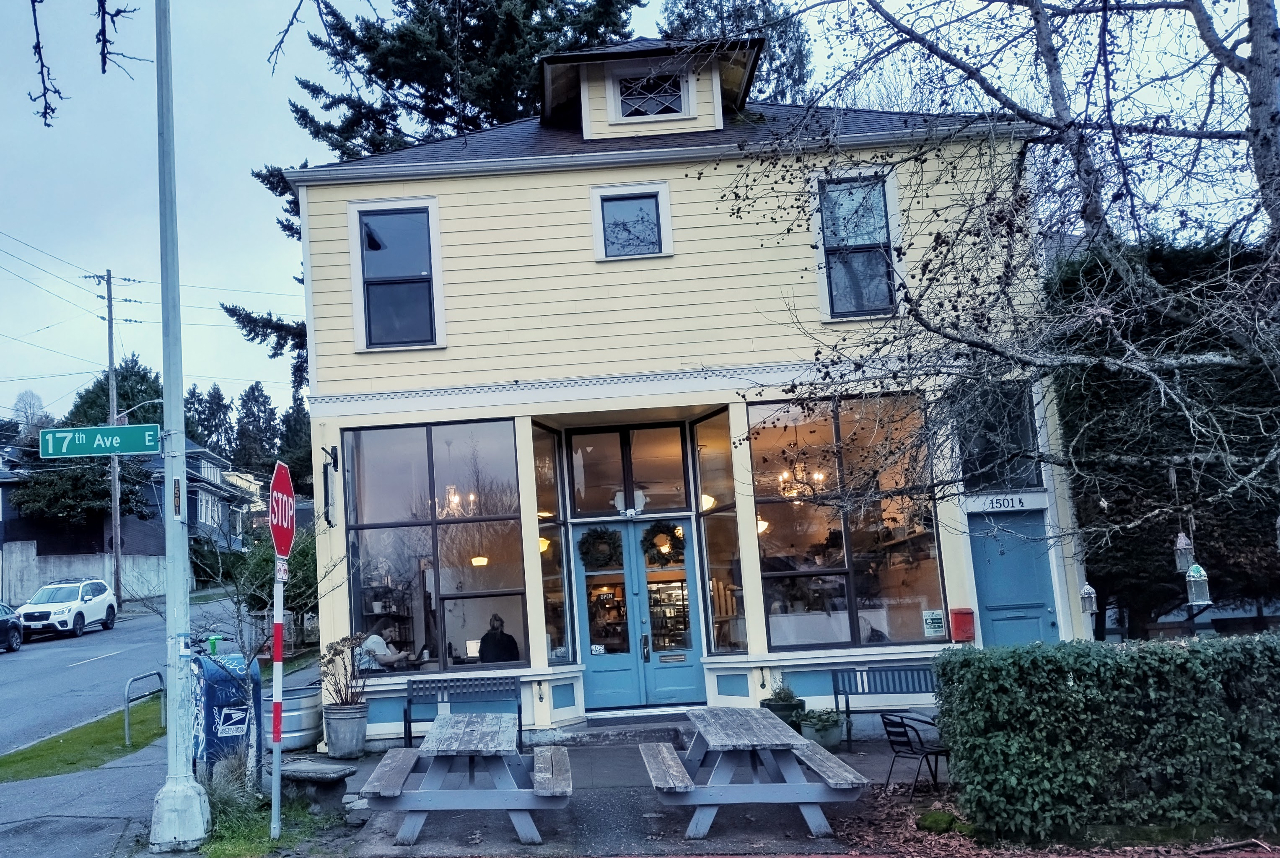
By a vote of 94-2 Thursday, the Washington House approved a bill legalizing neighborhood cafes and corner stores on residential lots throughout the state, sending it over to the state Senate. The second time the House has approved legislation tackling this topic, the nearly unanimous vote on the fourth day of this year’s 60-day session signals strong support for the idea and bodes well for the bill’s chances in 2026.
While targeted at fostering cafes and bodegas, House Bill 1175, sponsored by Representative Mark Klicker (R-16th LD, Walla Walla), requires most cities and towns in Washington to allow a fairly broad set of commercial uses in residential areas. A cafe is defined as an establishment with at least 500 square feet of gross floor area that must serve food along with any alcoholic beverages, and the goods a “neighborhood store” sells are “not limited to” food, beverages, and household items.
A floor amendment put forward by Rep. Amy Walen (D-48th, Kirkland) and adopted ahead of the floor vote exempts cities and towns in major urban areas with fewer than 5,000 residents, impacting places like Medina, Clyde Hill, and Yarrow Point — jurisdictions where neighborhood zoning is considered sacrosanct and local elected officials have been increasingly vocal about not wanting to see additional land use mandates handed down to them from Olympia.
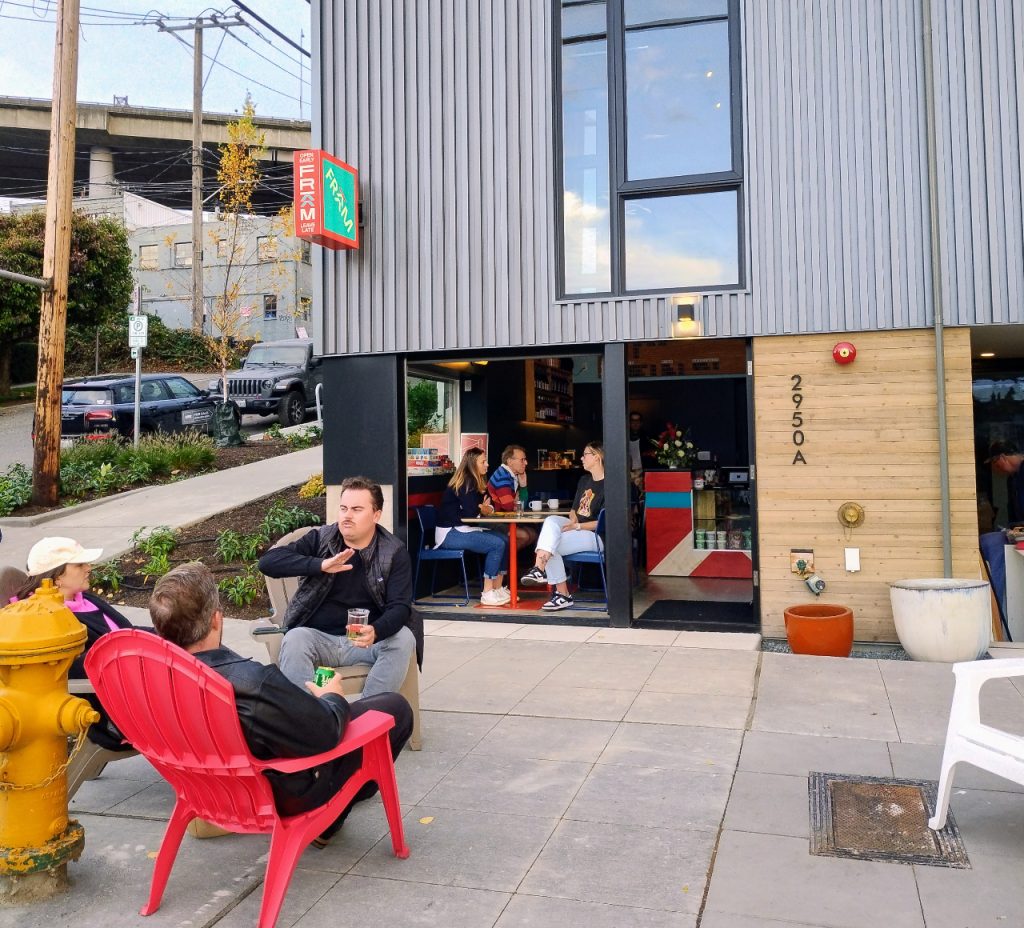
Klicker revamped this bill to be less prescriptive after the failure of his previous attempt (HB 2252) in the Senate in 2024. That bill required local governments to allow cafes and corner stores by right, if certain conditions are met, including a cap on the total size of the store and limited hours of operation from 7am to 8pm. HB 2252 ran into opposition from local elected officials, who raised concerns around the aesthetic impact of signage, noise, and traffic. The Association of Washington Cities, a local government advocacy group that lobbies in Olympia, warned that the proposal could lead to “heavily parked residential streets” and that its broad language raises “real concerns beyond preemption.”
After a Senate committee gutted the bill by making it fully optional — and potentially banning existing neighborhood cafes that serve alcohol at the same time — the bill never came up for a Senate floor vote and quietly died before the end of the 2024 session.
Urbanists have embraced neighborhood cafes and corner stores because they increase walkability within neighborhoods, reducing the amount of driving that becomes necessary to make daily trips while at the same time increasing foot traffic and vibrancy. Klicker framed his bill as a boon for community cohesiveness, in cities and towns large and small.
“What’s really neat about this bill is that it is not only a bill that opens opportunity in neighborhoods, but it opens opportunity of cohesiveness. It opens the opportunity for community. It brings people together,” Klicker said of his bill’s approval this week. “People go to those coffee shops and markets, and in some cases, little pubs, like what we see in Europe… and you might run into somebody. You see them every day that you’re going in there, and you see him. Next day you see him, you say hi. The next day, you make a comment about the weather. Next thing you know, within that year, you are sitting down, having conversation, getting to know each other. It’s a place of unity. It’s a place of community.”
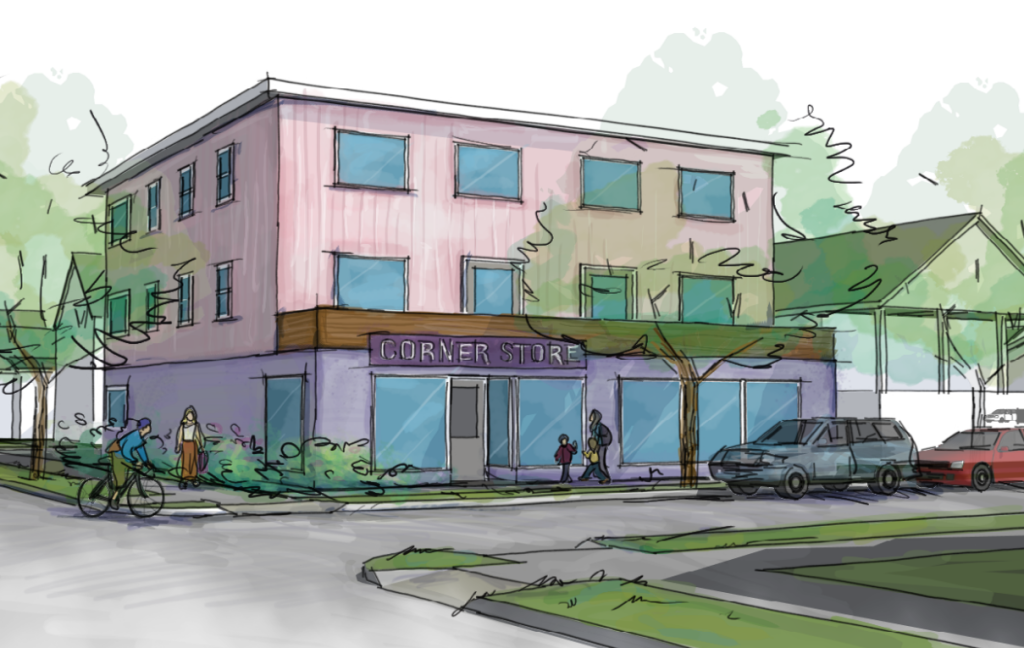
While the uses allowed under HB 1175 are broad, so are the tools that local governments would have to regulate them. Cities can still require parking, a frequent subject of concern around how neighborhood cafes operate, as long as the “regulations are not infeasible” — which is sure to be heavily debated. Hours of operation could be limited, as long as businesses are able to be open for at least 12 hours consecutively, and square footage requirements can be freely imposed. All together, this could lead some jurisdictions to essentially allow cafes and corner stores in name only.
Even without state action, cities across the state have been getting out ahead of this policy and legalizing cafes on their own. Everett and Burien both advanced the policy as part of updating their long-range growth plans, and a council committee in Renton just this week considered a policy that would allow neighborhood commercial uses on corner lots in most neighborhoods or within a quarter-mile of frequent transit lines.
In Seattle, a similar proposal to only allow cafes and bodegas on corner lots put forward by former Mayor Bruce Harrell was eagerly expanded to cover all residential lots by the Seattle City Council late last year, setting up a potential boom in neighborhood eateries. The council resisted the idea of explicitly allowing bars in low-density residential areas.
HB 1175 now heads to the Senate, where it will need to receive a majority committee vote by February 25 in order to advance any further this year.

Ryan Packer has been writing for The Urbanist since 2015, and currently reports full-time as Contributing Editor. Their beats are transportation, land use, public space, traffic safety, and obscure community meetings. Packer has also reported for other regional outlets including BikePortland, Seattle Met, and PubliCola. They live in the Capitol Hill neighborhood of Seattle.