

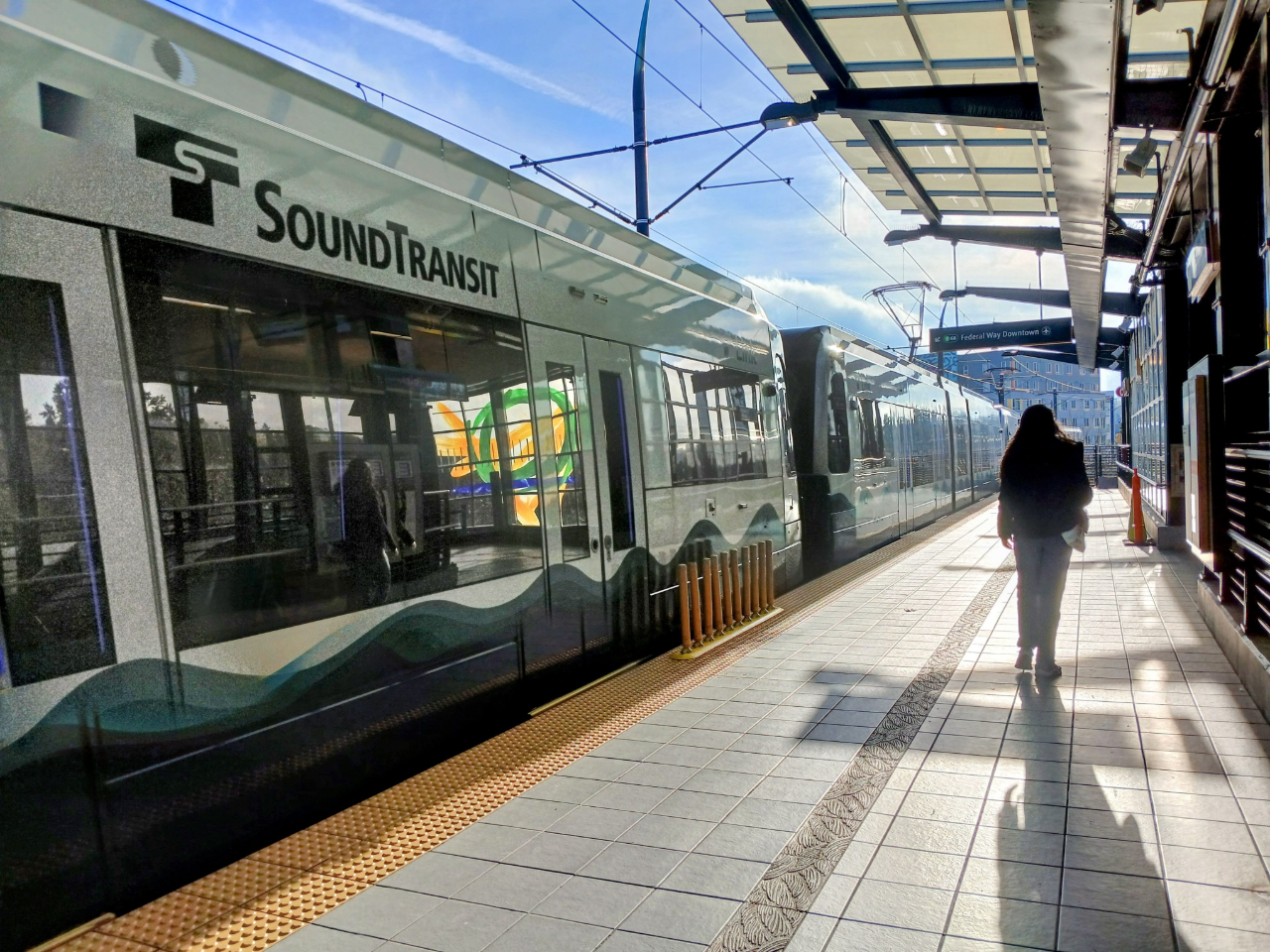
Sound Transit leaders were in Olympia this week, pushing for a tweak to state law that could allow the agency to restructure its financial plan in a way that keeps more light rail projects on track. Senate Bill 6148, sponsored by Marko Liias (D-21st, Mukilteo), would allow Sound Transit to issue bonds with a 75-year lifespan — much longer than the 30-year bonds that it has traditionally relied on.
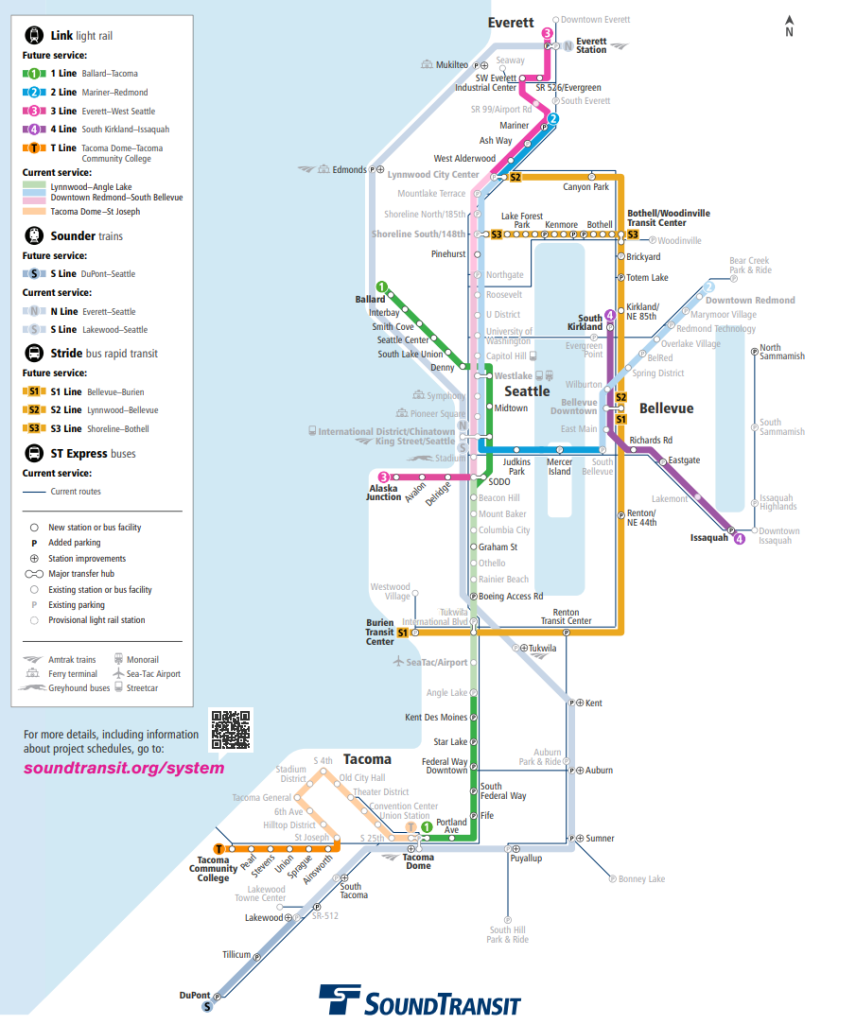
Allowing Sound Transit to extend some of its biggest debt payments over a much longer timeframe could be one move that allows the agency to get its long-range financial plan — facing an approximately $34 billion shortfall through the mid-2040s — back on track. Without creative moves, the full build out of Sound Transit 3 (ST3), including light rail extensions to Everett, Tacoma, Ballard, and Issaquah could be in jeopardy.
However, letting Sound Transit shift the burden of building out one of the largest transit expansions in the U.S. onto future generations, with debt not fully repaid until the next century, isn’t a necessarily a slam dunk among state legislators. The idea was first put forward last year as part of the larger statewide transportation budget, but was stripped out as that bill moved through the House.
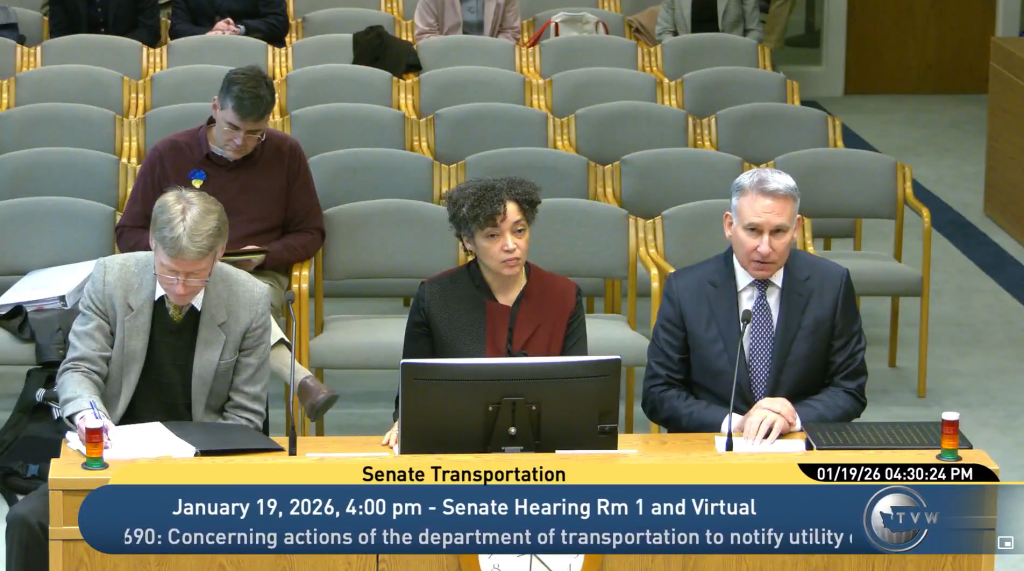
“The authority granted in this bill helps deliver multi-decade public assets that will serve Washingtonians for generations,” Sound Transit CEO Dow Constantine told the Senate’s transportation committee Monday. “Major transit infrastructure projects — bridges, tunnels, rail systems — often have useful lives exceeding 75 or even 100 years. An extended term will allow Sound Transit to reduce debt below our ceiling during the highest demand years when construction is at its peak, in order to deliver the benefit of the infrastructure as soon as possible.”
Federal authority to issue 75-year bonds comes from the Infrastructure Investment and Jobs Act (IIJA), signed by President Joe Biden in 2021, but state law continues to limit the maximum term for infrastructure bonds to 40 years. In order to utilize the new tool, Sound Transit would only be able to issue bonds with a term of less than 75% of the useful life of a planned asset, a major restriction that means only the agency’s most durable assets would qualify.
Constantine pointed to the rail tunnel under Downtown Seattle, planned as part of the Ballard Link Extension project, as just such a piece of infrastructure. One of the most expensive elements of the planned $22 billion line between SoDo and NW Market Street, the new tunnel will run alongside the existing light rail tunnel through most of downtown, providing redundancy through the network’s highest ridership areas.
Recently, the Sound Transit board took a closer look at what it would take to make the system work without such a tunnel, with most board members concluding that the impacts to the existing system are not likely worth the savings.
“That tunnel is an expensive asset,” Constantine said. “It provides capacity for the entire system through the bottleneck of downtown Seattle, and it is a very long lasting asset. And so that would be one example: tunnels, bridges, other major infrastructure of that sort can last a very long time, and would be a good subject for this kind of financing.”

Transportation Choices Coalition, one of Washington’s largest transit advocacy groups and the driving force behind the “Build the Damn Trains” campaign, looks to be in full alignment with Sound Transit when it comes to unlocking the ability to use 75-year bonds.
“75-year bonding authority will protect taxpayers by allowing Sound Transit to keep construction moving and lock in lower construction costs,” Transportation Choices Coalition Executive Director Kirk Hovenkotter said. “Like transportation projects across the country, costs continue to rise and outpace current revenues. We know that the longer we wait to build light rail projects, the more expensive they get. This bill allows our region to start on these projects now and lock in lower costs and pay it off over a longer amount of time. This bill does not create new taxes, transfer state funds or expand Sound Transit’s mission. It simply provides the financial flexibility needed to build and finish projects as soon as possible.”
While voices pushing back on the bill Monday came from the anti-transit, anti-tax side of the political spectrum, including Charles Prestrud of the Washington Policy Center and Jeff Pack of “Washington Citizens Against Unfair Taxes”, the idea doesn’t have unanimous support among transit advocates. The advocacy group Seattle Subway did not weigh in on the proposal, and in a statement urged Sound Transit to keep its focus on the realignment of its capital plan.
“While 75-year-long bonds can help at the margins, they don’t replace the need for sustainable revenue and a focus on designing for riders and building for further system expansion,” Seattle Subway Board President David Scott told The Urbanist. “Sound Transit must prioritize expansion of the network first, and use cost-effective construction methods, including cut-and-cover and elevated alignments. Sound Transit must find alignments where those construction methods make sense, and Sound Transit must build to allow future expansion while minimizing impact to existing riders.”
Former Seattle Department of Transportation director Scott Kubly is another skeptic, criticizing the idea in an op-ed in The Urbanist arguing for deeper reforms. He noted 75-year bonds mean far greater interest payments — potentially tripling the cost to taxpayers over a standard 35-year loan.
“The current notion of a 75-year bond should be a last resort,” Kubly wrote in the op-ed. “First, it is bad financial policy – particularly with current interest rates – the loan term exceeds the useful life of the asset its financing. Money that should be used to rehab the system in the future will instead be used to finance the initial investment. Second, the cost of the additional capacity is exorbitant. Over the life of the loan, Sound Transit will pay 2.5 to 3 times more interest (depending on rates) on a 75-year loan than it would on a 35-year loan (the standard TIFIA loan term). This is VERY expensive debt.”
If Sound Transit were to ultimately take the step of issuing bonds with such a lengthy term, that would mean disqualifying itself from competing with other state transit agencies for regional mobility grants, thanks to a provision in state law. Sound Transit is set to receive a total of $8.5 million in state funding for construction of its three Stride bus rapid transit lines, with those dollars specifically funding Transit Signal Priority and walking and biking infrastructure along the three state highway corridors where buses will operate. Given the agency’s support for the bill, Sound Transit seems to think the trade off is worth it.
SB 6148 will have to survive Washington’s short legislative session in 2026, and must by approved by both the Senate and House by early March in order to become law.

Ryan Packer has been writing for The Urbanist since 2015, and currently reports full-time as Contributing Editor. Their beats are transportation, land use, public space, traffic safety, and obscure community meetings. Packer has also reported for other regional outlets including BikePortland, Seattle Met, and PubliCola. They live in the Capitol Hill neighborhood of Seattle.