

Eight cities and towns across Puget Sound will have their long-term growth plans and development regulations scrutinized by Washington’s Commerce Department, the first set of targeted reviews to take place under a 2025 law intended to spur housing production. The cities Commerce selected are Bainbridge Island, Beaux Arts Village, Brier, Carnation, Darrington, DuPont, Gold Bar, and Woodway.
The goal of the reviews is to ensure compliance with state laws pushing cities to accommodate future housing growth across all income levels, and they represent an early step in a process that could lead to potential consequences, including the never-before-used “builder’s remedy” — which would supersede local zoning restrictions.
The Housing Accountability Act, signed by Governor Bob Ferguson last spring, is intended to even the playing field between cities that have been welcoming to housing growth and those that have added barriers, in the form of restrictive zoning and onerous restrictions. Prior to its adoption, a direct appeal to the state’s Growth Management Hearings Board was the only way to force a recalcitrant city to come into compliance with existing laws on the books, a lengthy process that relied on concerted outside advocacy by nonprofit groups or involved citizens.
Now Commerce, the state department tasked with overseeing housing issues, will be asked to determine whether a jurisdiction is up to snuff.
Commerce selected these eight cities using criteria that were fully fleshed out last year, prioritizing those that are late in completing updates to their 20-year growth plan — missing a state-imposed deadline at the end of 2024 — or those whose plans and associated development regulations the department believes are “inconsistent” with state law. Cities with active appeals at the state hearings board, including Mercer Island, Clyde Hill, and Duvall, were passed over during this round of review.
A major yardstick these jurisdictions will be measured against will be House Bill 1220, a 2021 law that requires cities to break out planned housing growth by expected income level and specifically create plans for how to accommodate those future residents. In the past, cities have relied on new capacity for single-family homes to meet their growth targets on paper, despite the fact that lower-income households are unlikely to be able to afford such homes. As implemented by the state, HB 1220 requires local governments to allow additional density, a requirement that has been met with considerable resistance in many cities.

Even jurisdictions with very low housing growth targets could be determined to be out of compliance with HB 1220 if they’ve taken no action to accommodate any future low-income residents. The tiny enclave of Beaux Arts Village (population 310), for example, only needs to accommodate the addition of one new household through 2044, but a review of that town’s growth plan by the King County Affordable Housing Committe concluded that no action had been taken to do so.
“All of Beaux Arts Village’s residential land is zoned single family and requires a minimum lot size of 10,000 square feet,” the committee’s review, completed in late 2024, noted. “The town also has no units of income-restricted housing. The draft plan has no land capacity analysis, no policies explicitly stating an intent to plan for and accommodate its housing needs, and no specific strategies to accommodate housing affordable to low-income households.”
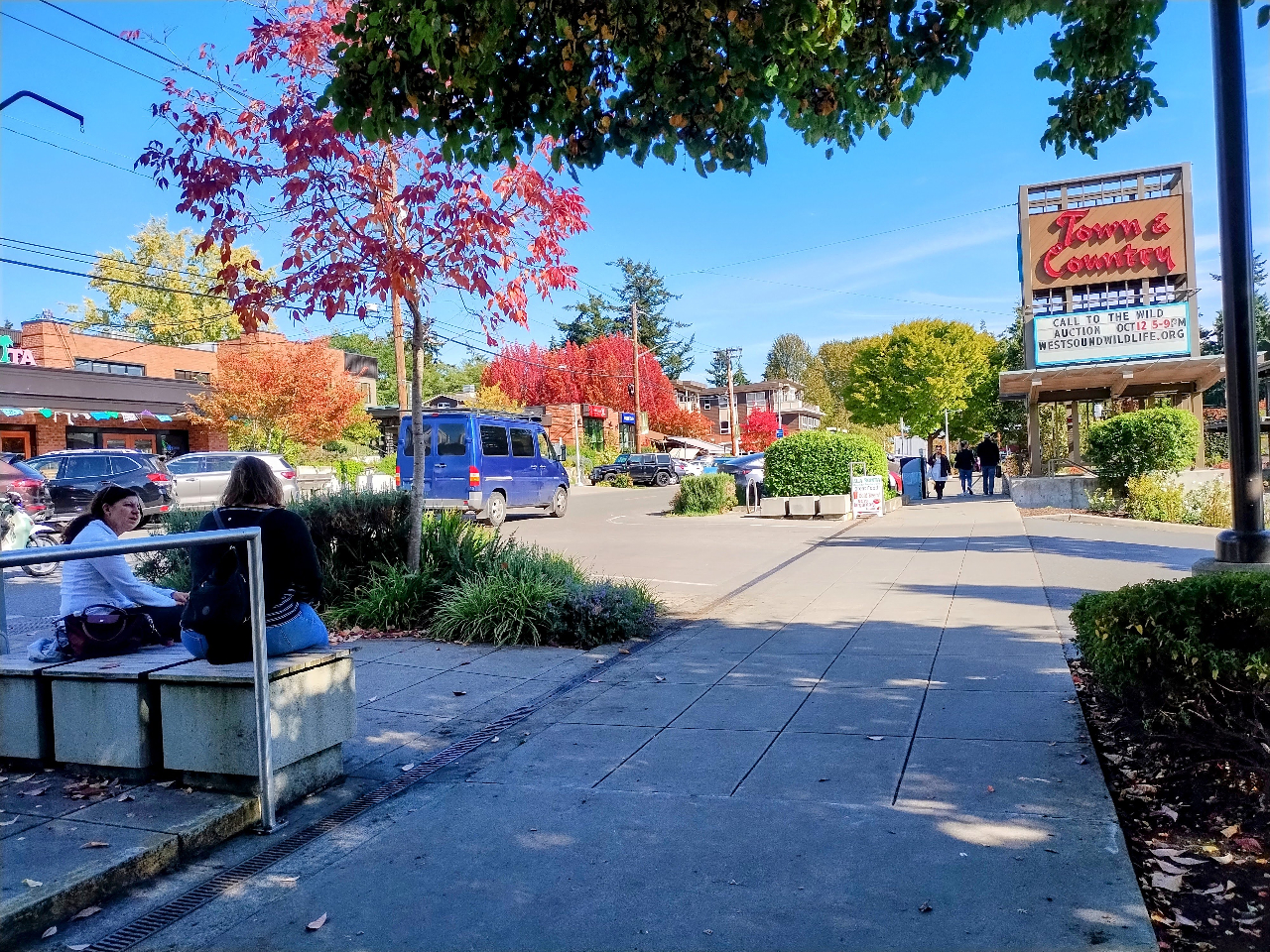
In Bainbridge Island, the largest city on the list, the city is months behind schedule on adopting a growth plan that will comply with HB 1220, with the election of two growth-skeptical councilmembers last year likely to complicate things even further. Out of the nearly 2,000 new housing units Bainbridge is required to plan for over the next two decades, more than half need to be affordable to households making 80% of Kitsap County’s area median income or below, with most of the density to make room for those new residents expected in Winslow, Bainbridge’s downtown district near the state ferry terminal.
But building affordable housing in Bainbridge Island may be easier said than done, with the Low Income Housing Institute (LIHI) currently running into significant obstacles trying to build around 90 units of workforce housing at Winslow’s front door, on a publicly-owned site that was once home to a city police station. One former city council candidate, supported by a group calling itself Responsible Bainbridge, has been appealing the zoning change needed to advance the project under the state environmental policy act (SEPA). LIHI was recently passed over for state funding, at least in part because that updated zoning isn’t in place.

The saga of LIHI’s Bainbridge project explicitly spells out the need behind one of the Housing Accountability Act’s biggest provisions: the builder’s remedy.
If the Commerce Department ultimately finds any of these eight jurisdictions to be out of compliance with state law, local elected officials will have a relatively quick turnaround time — just 120 days — to make corrections. If those edits aren’t sufficient, that’s when the builder’s remedy kicks in: mandatory approval of any affordable or moderate income housing development, with a ban on “conditions or restrictions that have a substantial adverse impact on the viability of the development or the degree of affordability of the development.”
Builders wouldn’t be able to get their projects approved in critical areas, or in industrial areas, but otherwise a jurisdiction couldn’t deny a permit for an affordable housing project until they get back into compliance with state law, a major incentive for cities to get their houses in order that hadn’t previously been in place. To date, the builder’s remedy has not yet been used in Washington, though it is in place in California.
Local governments can also appeal Commerce’s decisions to the state hearings board, a move that could prolong the amount of time that it takes to actually get to the point of a builder’s remedy. While it still remains unclear exactly how this new accountability framework will play out in practice, implementing the Housing Accountability Act is a major step forward in ensuring local governments aren’t standing in the way of housing construction.

Ryan Packer has been writing for The Urbanist since 2015, and currently reports full-time as Contributing Editor. Their beats are transportation, land use, public space, traffic safety, and obscure community meetings. Packer has also reported for other regional outlets including BikePortland, Seattle Met, and PubliCola. They live in the Capitol Hill neighborhood of Seattle.