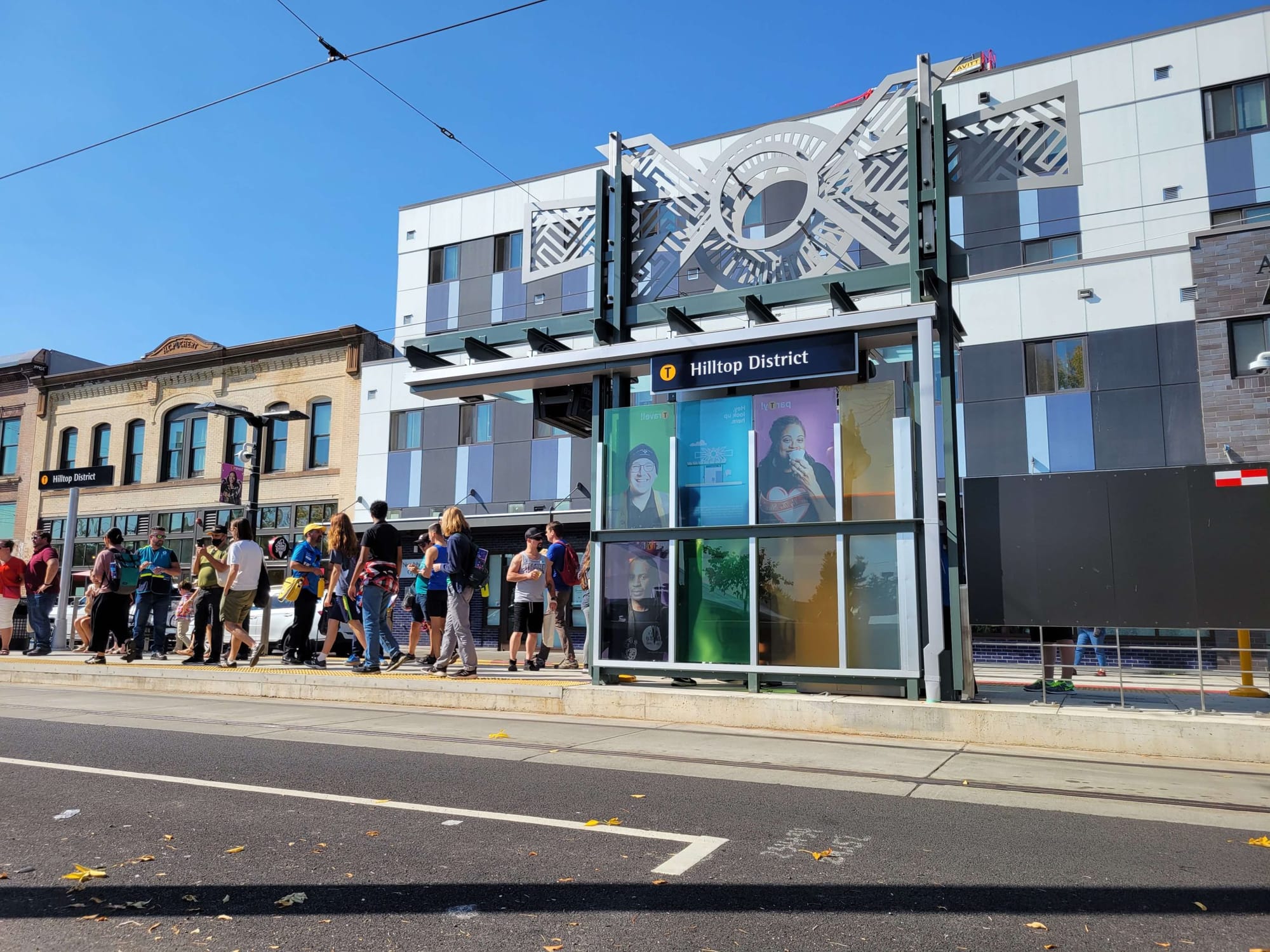
Sunny opening day of the T-Line with people waiting for a streetcar to arrive.
A crowd of people standing at the Hilltop T Line station, which features geometric art and colorful images of Tacoma people. (Kevin Le)

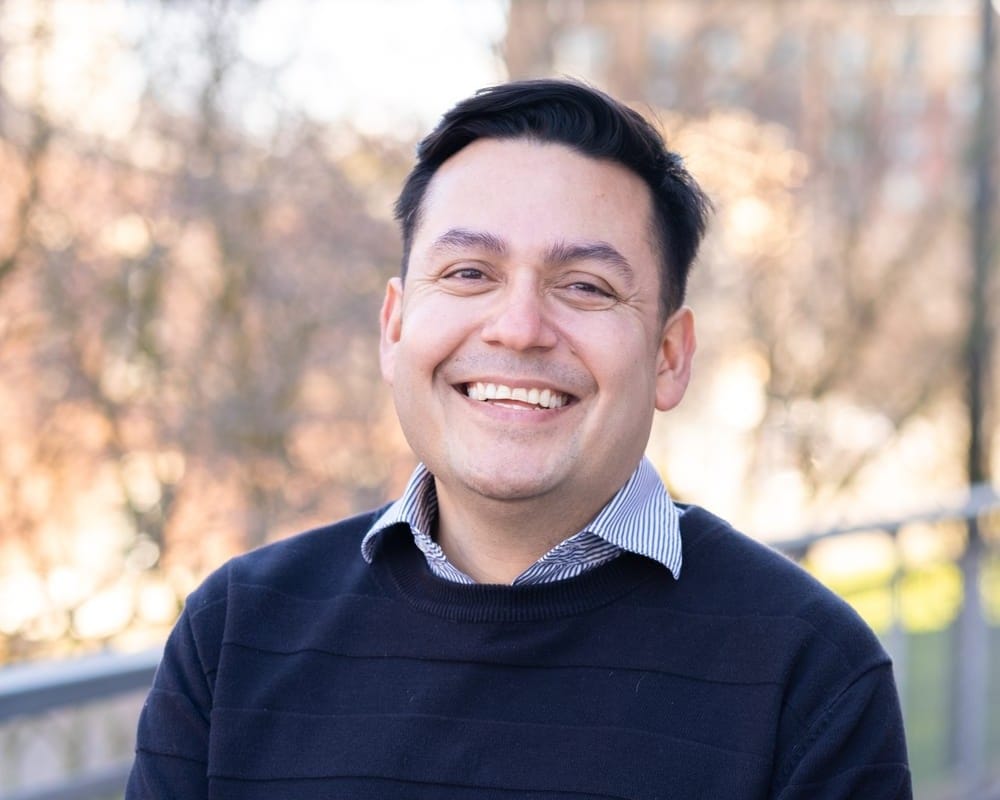
Rubén Casas believes that the lack of connected, walkable neighborhoods may be helping to spur the “epidemic of loneliness.”

Speaking at a January 30 forum hosted by transit advocacy organization Tacoma On the Go, Casas, who is an associate professor at the University of Washington Tacoma and serves on the Tacoma Transportation Commission, referenced outgoing Surgeon General Vivek H. Murthy’s letter discussing the negative health effects of social isolation, and said that he and others “live in cities by name only.”

“Really, we live in suburbs that have certain sections or islands that are true cities. […] Between them, there’s a lot of gaps, and those gaps are created because we have designed places where you need to bring a one-ton, very big piece of property with you to be anywhere you want to go,” Casas continued. “This matters because if we want to remake our society, we have to start by creating more proximity between you and the people you care about.”

That’s where the concept of a 15-minute city or neighborhood comes in. In a 15-minute neighborhood, people don’t need a car to access their basic needs — things like groceries, health care, school, or being able to meet up with a friend. Instead, all of these activities and amenities should be within a 15-minute walk or bike ride of home. 
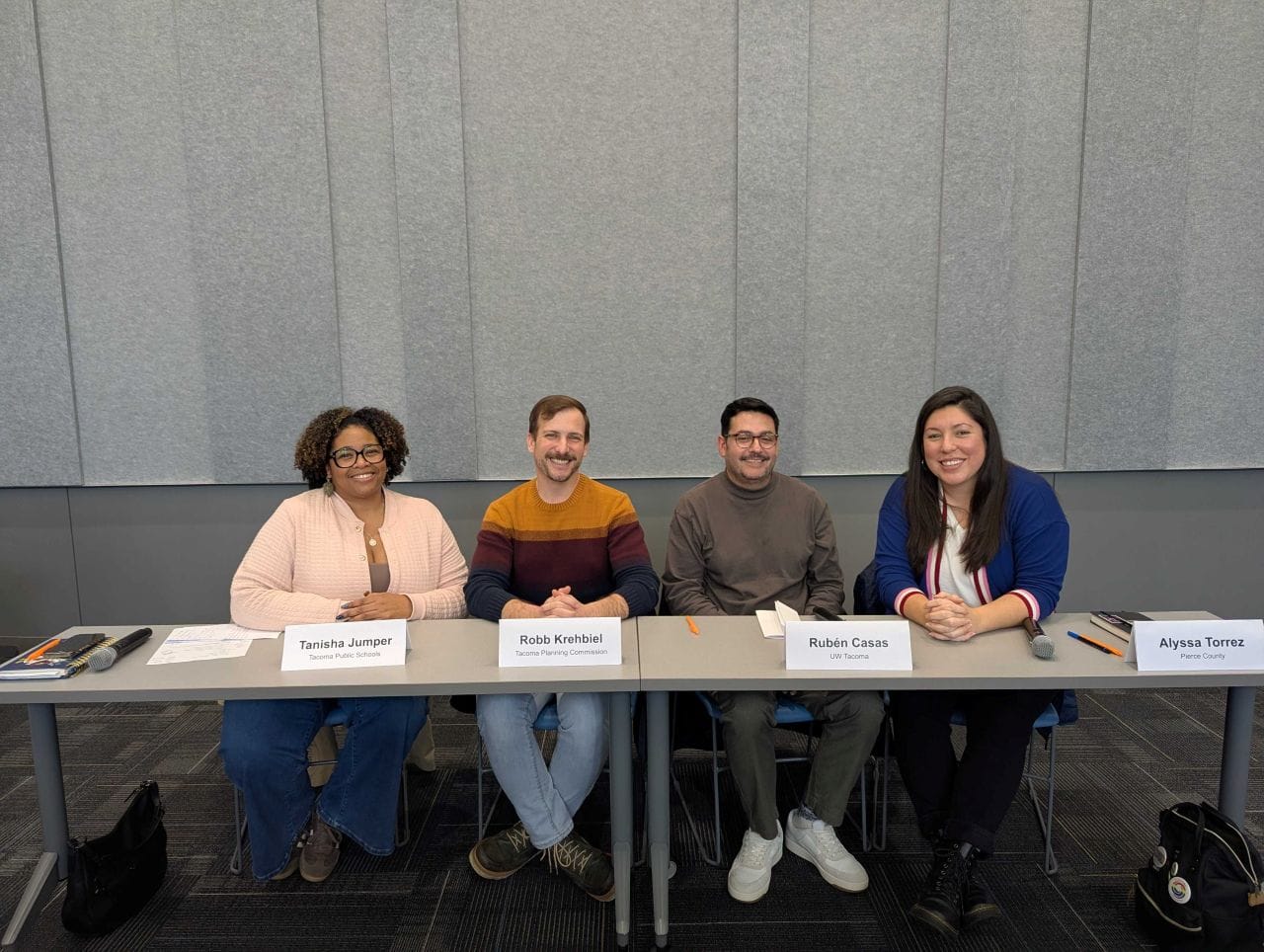
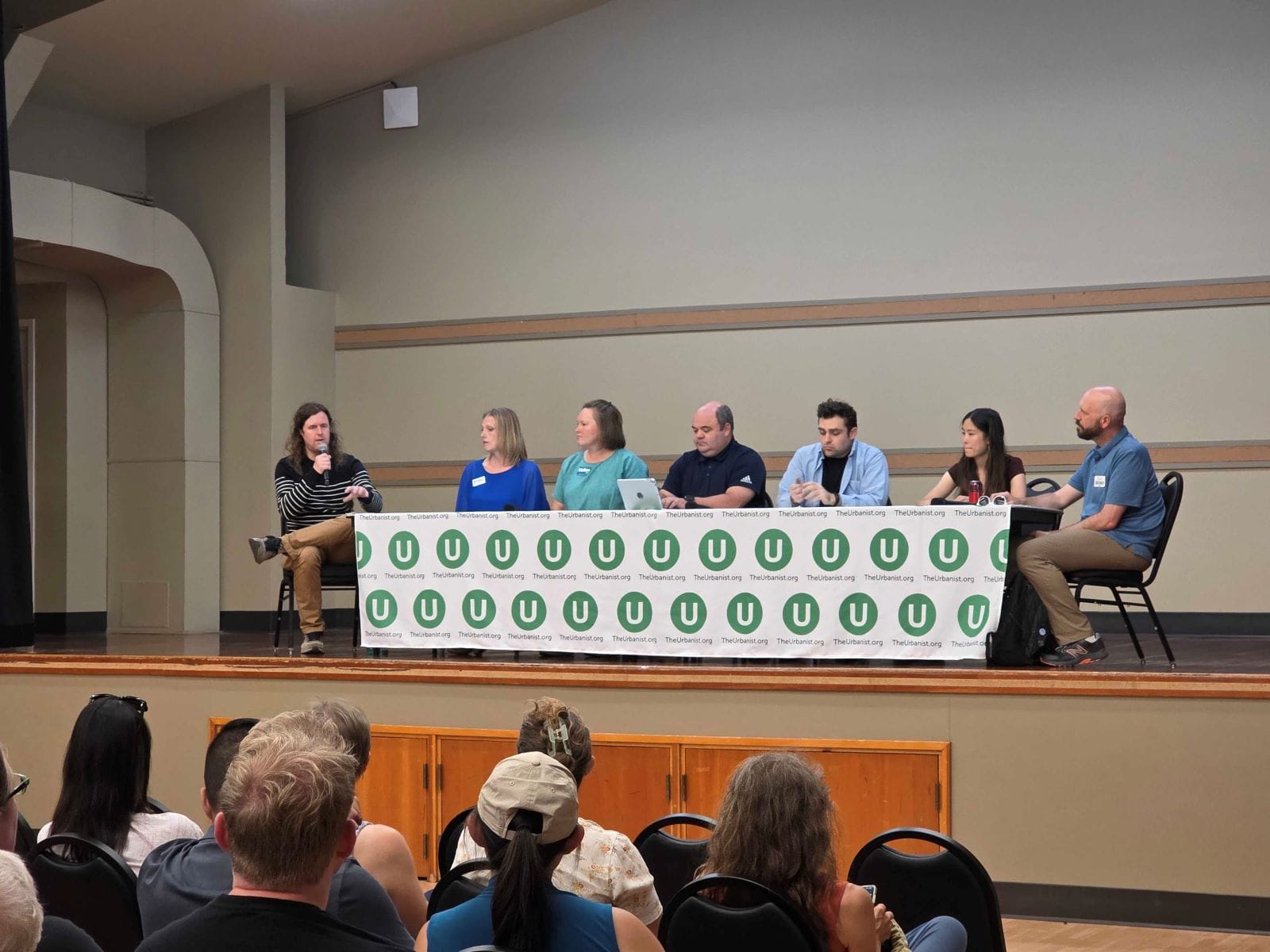
Tanisha Jumper, who is chief communications officer for Tacoma Public Schools, moderated the 15-minute city panel, which included Robb Krehbiel, Rubén Casas, and Alyssa Torrez. (Tacoma On The Go)

Casas, South Sound Housing Affordability Partners program specialist Alyssa Torrez, Pierce County Planning Commission Chair Robb Krehbiel, and moderator Tanisha Jumper discussed this kind of urban layout during the forum, as Tacoma works to create its own 15-minute neighborhoods. (Note: Casas is a member of The Urbanist’s nonprofit board of directors, and has contributed articles as a freelancer.)

Carlos Moreno, a French Colombian professor, researcher, and scientist, coined the term “15-minute city” in 2016; but, Casas said, the concept is “an organic and very historical way that human settlements have been set up,” where “the neighborhood becomes the organizing principle for everyday life.”

With the rise of car culture and car-centric city planning throughout the past century, this isn’t the case for most American cities today, and certainly isn’t the case for Tacoma. But it’s where the city wants to go, with an eye towards mitigating environmental impacts in the face of rising density and population.

City-level actions

Part of this vision lies with Home in Tacoma, a housing reform vehicle the City has used to work towards its vision of 15-minute neighborhoods. Krehbiel said he thinks it’s “one of the biggest things” that’s allowed the City to progress in this direction.

“I joke with our former chair that we essentially rezoned the entire city in that update and made it so that it was easier to do more dense development in our residential areas,” Krehbiel said. “There are still areas that are low density, but along, especially, our public transit areas, we have a lot higher density in those areas to encourage more folks to live along bus routes, train routes, to reduce their dependency on [private] vehicles.”
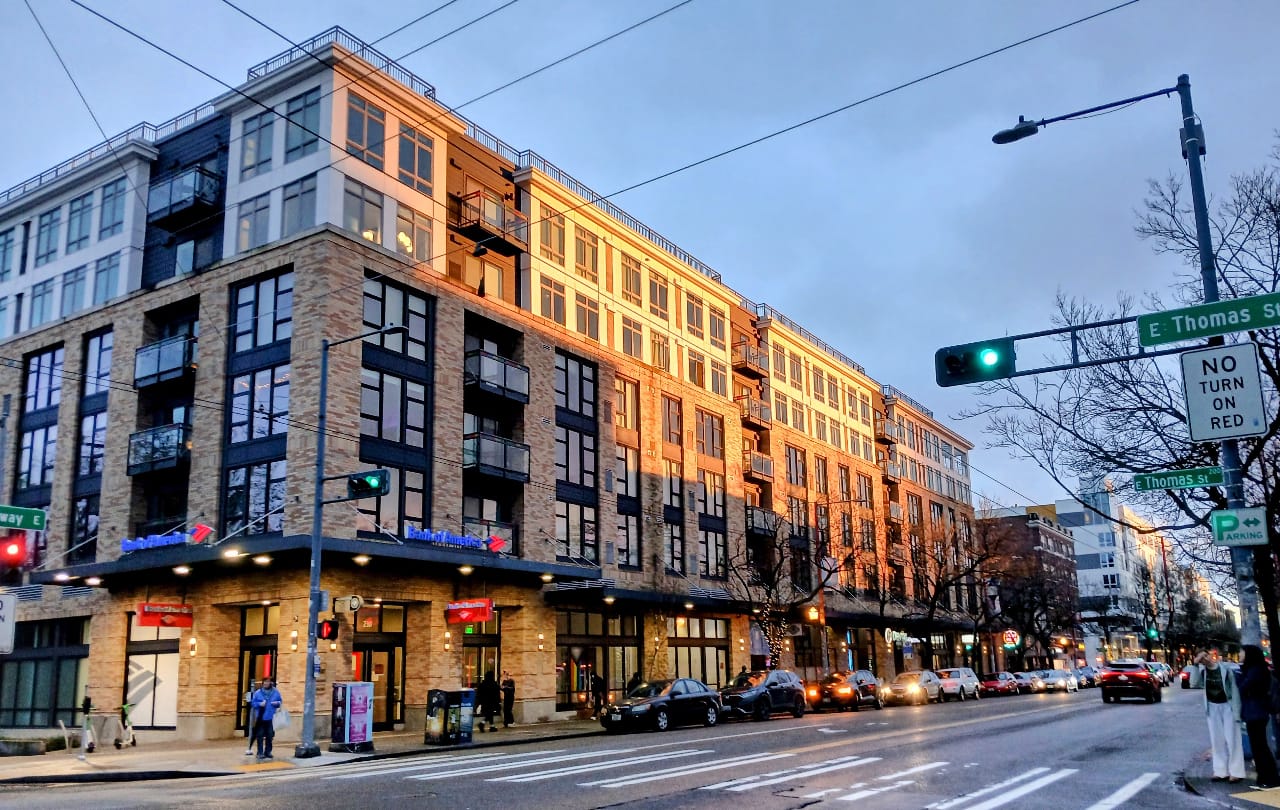
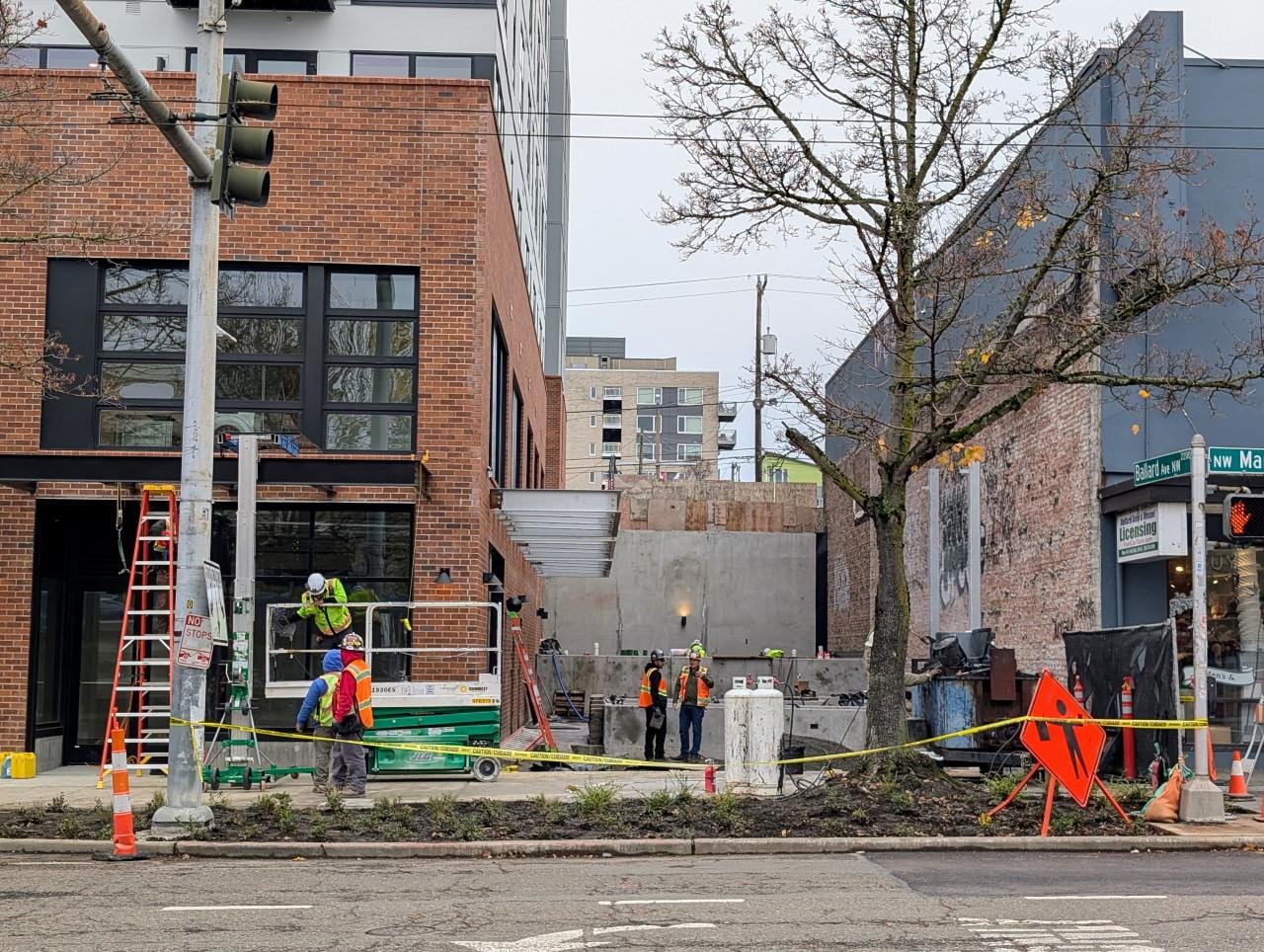
Home in Tacoma also created designations for neighborhood centers and mixed-use centers, which allows small businesses to be located within neighborhoods. Krehbiel also noted that this year, the Tacoma Planning Commission will be discussing removing parking requirements for new developments. He explained that building off-street parking infrastructure is “a major cost,” and “that’s a lot of extra material for a space that isn’t always used.”

Removing parking mandates, he continued, encourages more development that isn’t quite so car-centric, and instead attracts people who want to use public transportation to get to those places.

Torrez said that Tacoma has already started to implement 15-minute city principles by including them in the most recent update to its Comprehensive Plan. The updated plan went into effect last year.

“Different cities throughout Pierce County […] adopted it in different ways, or might not be using the terminology ‘15-Minute Cities,’” she said, “but are still putting into effect some of the policies that are supporting that, like increasing density, increasing modes of transportation, and looking at some sub-area plans. There’s lots of different things that folks are doing throughout Pierce County that are supporting this kind of effort.”

In the Complete Neighborhoods section of its Comprehensive Plan, the City outlined Tacoma’s conditions, such as street layouts, existing development patterns, and its different business districts. Because each neighborhood in Tacoma is unique and has been shaped both by a variety of cultures and geographic features, the City intends to implement 15-minute city tenets in a neighborhood-specific way.

The City listed several goals and set out a number of policies intended to bring its 15-minute city vision a step closer to reality. These policies include creating community gathering places, prioritizing walkability, and enhancing cultural and historical visibility and expression, through things like architecture and access to culturally relevant food.

Funding needs

It’s hard to meet those goals without the financial means to do so — and the City can’t count on federal funding help in the near-term. Krehbiel noted that the current administration has all but stated that federal funds aren’t going to be available for the 15-minute cities investments Tacoma has envisioned.

“There were some federal dollars that were pulled from projects that Pierce Transit was depending on to increase public transit along Pacific Avenue,” Krehbiel continued. “The general funding situation in the state and in the city is pretty tight, and it’s unclear to me what new revenue or sources might be on the horizon outside of the city of Tacoma.”

While the City of Tacoma is not banking on federal funding for its plans, advocates want the City to get started, using funds it can raise locally.

The transportation factor

Accessible public transit is, of course, an important aspect of 15-minute cities. Pierce Transit has long struggled to meet transportation needs, primarily due to funding hurdles. One of the major ways it could address this issue is by raising the tax it collects from local sales, which makes up three-quarters of the agency’s budget. Currently, that tax sits at 0.6%. It’s the lowest amount of sales tax collected among Pierce Transit’s peer agencies, and has not changed for more than two decades. Ultimately, it would be up to voters to approve or reject any attempt to raise that tax, and the agency has not committed to bringing a measure to voters.

A Pierce Transit Route 2 bus operates on Commerce Street in downtown Tacoma. (Stephen Fesler)

Jumper asked Casas whether he believes that Tacoma can still pursue its vision for 15-minute neighborhoods, even if voters reject this sales tax increase.

“Yes. Pierce Transit and what it does or doesn’t do — it’s one piece of the puzzle, but one thing I’ve learned […] volunteering as a transportation commissioner is that long-term visioning and planning for transportation requires people to envision how it could be,” he replied.

Casas considers transit “movable public space,” and for it to be successful, people have to use it, in order to create the grounds to advocate for further investment in transit — such as hiring more bus drivers and train operators.

“The more we use the public spaces we have as we envision using them in the future as ideal public spaces, including transit, the more our agency partners will realize, ‘Yes, there is a reason to make these investments,’” he explained. “And then our own neighbors over time will realize […] there is a reason to make these investments through levies and bonds, etc.”

Jumper asked Casas how the Tacoma Streets Initiative plays into all of this, and what happens if the City fails to pass the second phase of the initiative again. The initiative would have used a property tax levy and utility tax hike to fund the much-needed repair of Tacoma’s unsafe street conditions, like aged arterials and corridors too dangerous for pedestrians and bikers to safely use. While voters approved the first phase of the initiative in 2015, they narrowly rejected the second phase last spring.

Casas believes that if the City sells the measure better to voters, who complain about things like potholes — which the second phase of the initiative would address — the measure will succeed. That said, he emphasized that the City needs to highlight in its pitch to voters that streets aren’t “just a monoculture” for cars, and that they are meant for people, too.

One way to do this is called a road diet, which is when municipalities narrow or remove traffic lanes in order to reduce collision rates and make the street more pedestrian friendly. Typically, a municipality can use the space it reclaims from cars to widen sidewalks, add bike lanes, and/or add trees.

Krehbiel pointed out that trees are an important part of a city’s infrastructure. It’s much more pleasant, he said, to walk under trees along the side of a busy road, so that traffic noise isn’t so intense.

“And you also get a little bit of a canopy to protect you from the rain that’s falling on days like today,” he continued. “So we’re looking at ways to encourage more trees to be planted in areas where it’s not [well-treed], to protect the trees that we have, and make sure that we are dispersing that tree canopy in an equitable way across the city.”

Krehbiel encouraged members of the public who want more tree cover to advocate for them at different committees and meetings, and that they join organizations like the Tacoma Tree Foundation, which puts trees in right-of-ways, particularly in areas where there are few.

Tacoma’s real cost of living

Torrez reminded audience members that the City’s updated Comprehensive Plan looks out 20 years into the future, and that the City also wanted to design Tacoma’s neighborhoods with youth in mind, since they will ultimately inherit the city from older generations.

Affordability — specifically, the cost to live and commute in Tacoma — is another important metric, Casas noted. When people talk about how much more affordable Tacoma is, he said, that’s only because many folks live in Tacoma and still work in Seattle. How would that affordability view change, he posited, if the cost to commute to a job or school were factored in? Such an analysis would reveal, he surmised, that neighborhoods are set up to subsidize cars, rather than human wellbeing. 

“I think sometimes people are resistant to that because we’ve become acculturated to the idea that we need a car to get everywhere,” he continued. “But another way that I invite you to think about it is, it’s a tax, right? […] You are subsidizing your own participation in everyday life and our economy. A lot of people in the world are not asked to do that, but we are, and you should at the end of the year account for how much you are paying for your own right to work.”

Article Author
Carolyn Bick is a journalist whose accountability work has appeared in multiple Seattle publications. She also covers the environment, politics, and the arts on the Key Peninsula.