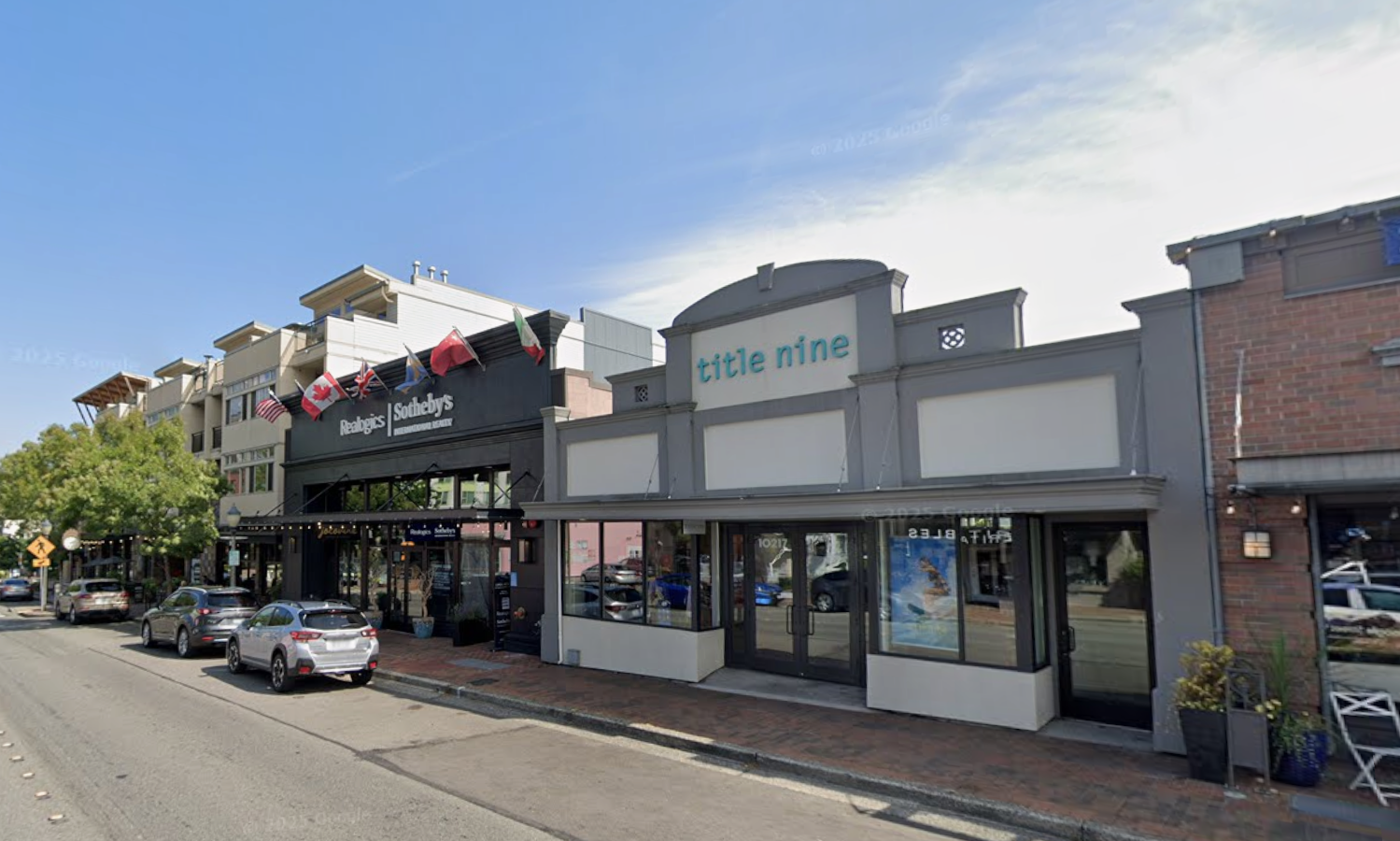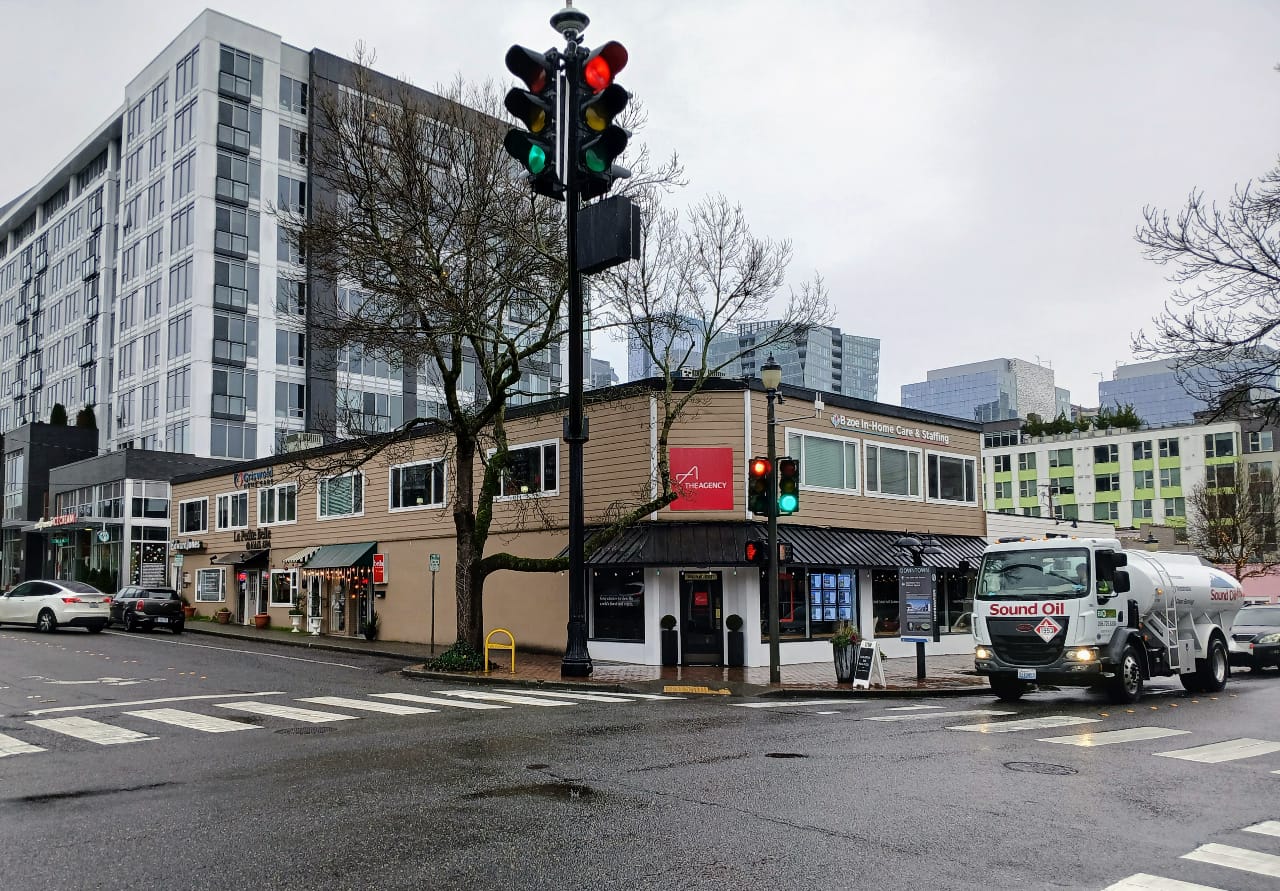
By a 4-3 vote Tuesday night, the Bellevue City Council imposed interim controls along a downtown stretch of Main Street, restrictions intended to maintain the area’s “historical and cultural qualities.” Targeting the heart of Old Bellevue home to the city’s oldest storefronts, the emergency regulations would require facade preservation or reconstruction for any redevelopment projects between 100th Avenue NE and Bellevue Way, despite a lack of historically listed structures within the stretch.
An idea advanced by then-Mayor Lynne Robinson late last year before being fleshed out by City staff, the Interim Official Controls (IOC) will be in place for at least six months, with the council set to consider a longer-term framework for redevelopment in Old Bellevue during that time.
Under the new regulations, redevelopment can still move forward along Main Street, but a property owner must establish that the façade of existing building is less than 50 years old or has “no historic or cultural value” before it can be demolished. Even if it meets one of those two criteria, the new code requires new buildings that are “between or among” older buildings to have reconstructed façades that match those nearby structures, not just in scale but in features and composition.
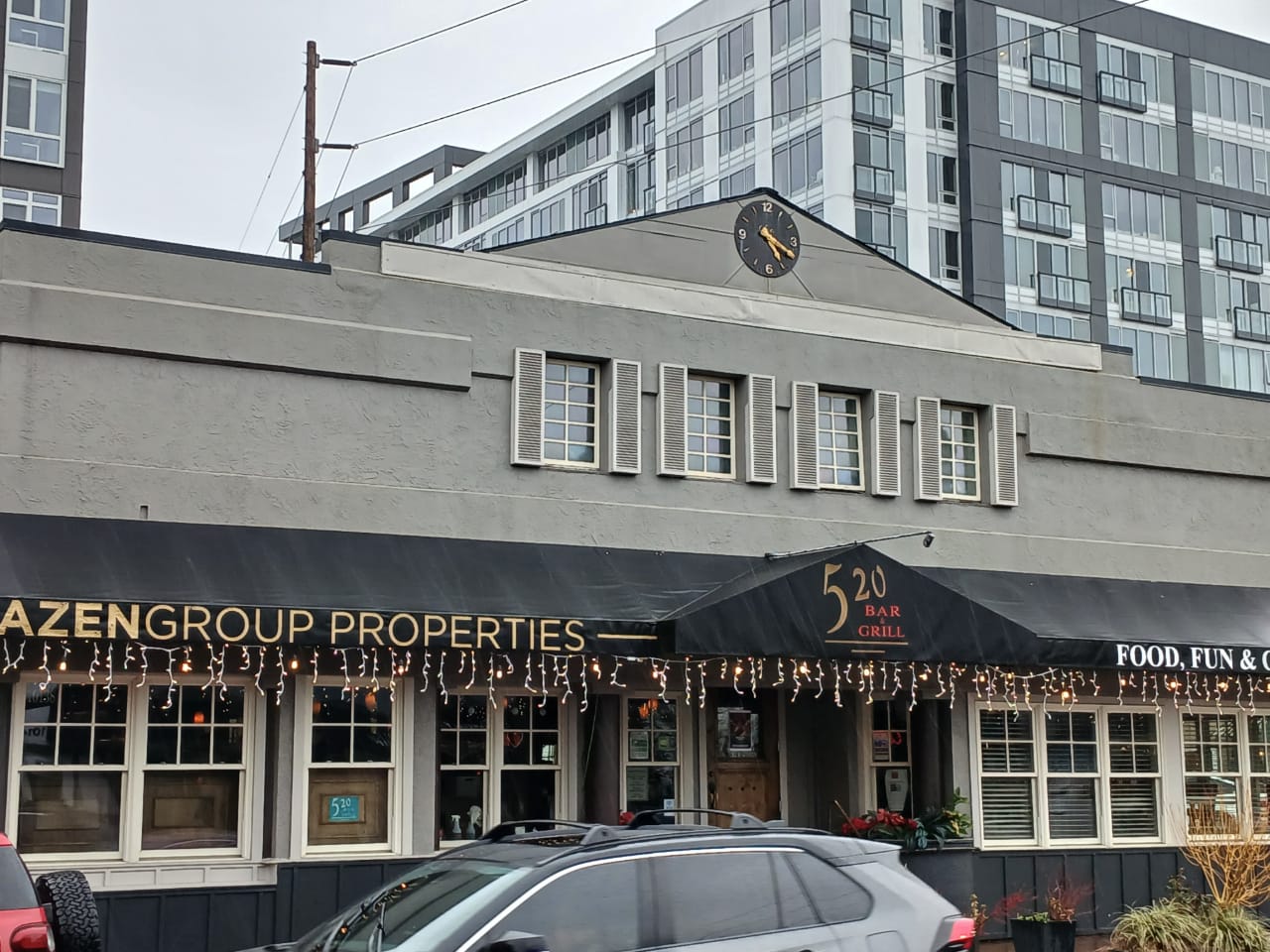
“New façades built between or among existing structures that are 50 years old or older are required to design the rebuilt façade, up to the second floor, to align with adjacent façades and cornices, storefront entrances, and windows to be compatible with the unique design features of the built environment facing Main Street,” the approved ordinance states. “From the street level up to the second floor of the project, façade building materials, construction methods, building proportions and architectural devices must incorporate and reflect the design of façades in the IOC area that are 50 years old or older.
These two blocks of Main Street just south of Downtown Bellevue Park are already a hodgepodge of low-rise commercial structures next to newer mixed-use developments. Around 10 of the parcels directly fronting two-lane Main Street are home to buildings over 50 years old, though some of those buildings may have newer façades.
Last year, the Vander Hoek Corporation submitted preliminary plans for an eight-story mixed use building on one of the largest parcels left to be developed, currently home to several small businesses including Matcha Magic, Glassybaby, and Araya’s Place Vegan Thai. That permit submittal appears to be a major driving force behind these interim controls; the building moving forward now won’t be required to adhere to any of these new standards since it’s already in the pipeline, vesting to previous regulations.
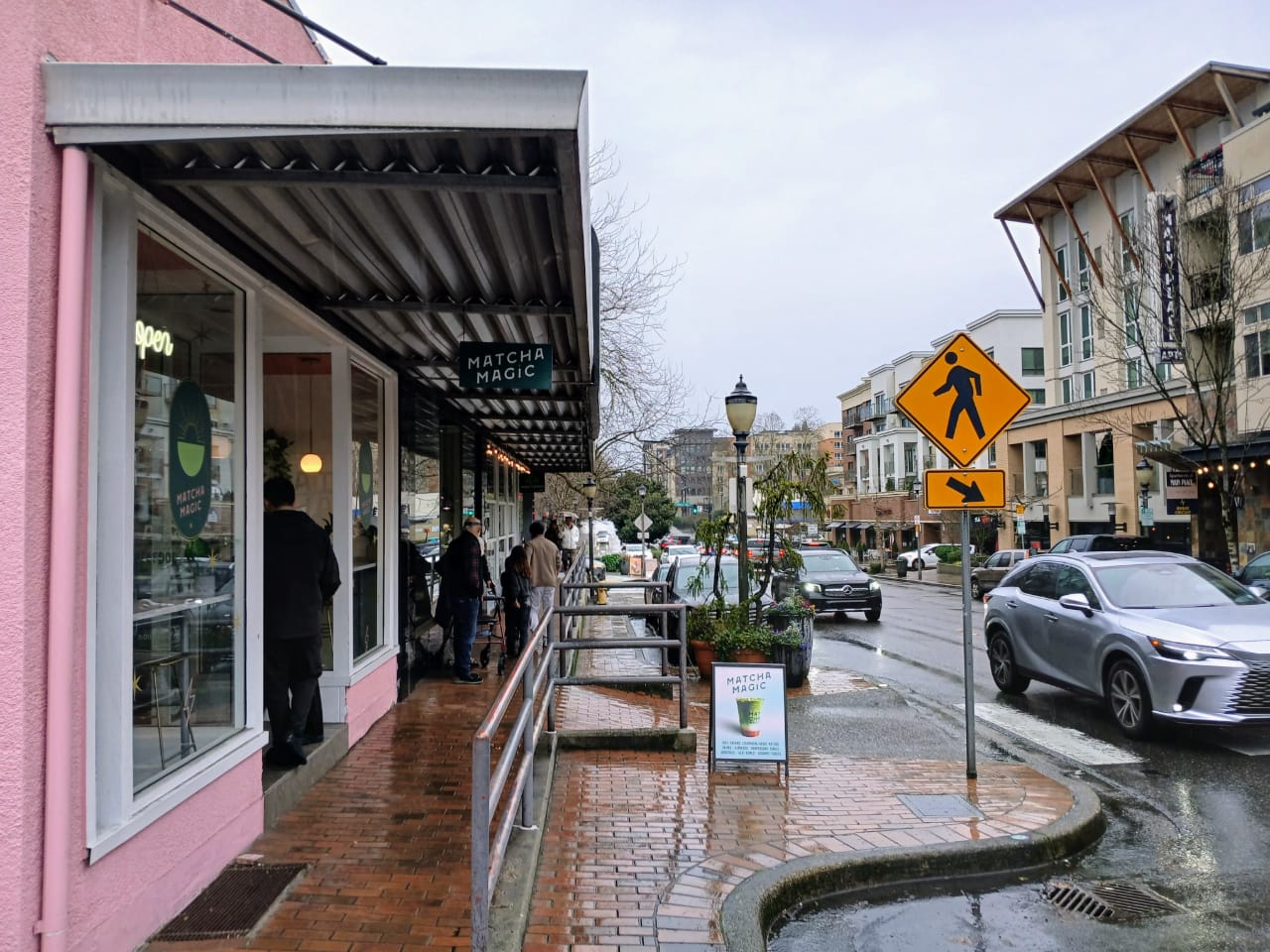
Of course, any requirements for façade preservation don’t ensure the aim of maintaining the elements of Main Street that most contribute to its character: the small businesses. While the control aims to maintain the area’s pedestrian-oriented configuration, any new commercial storefronts will likely be more expensive than the existing rents in the older buildings, and there are no requirements for storefront size, a major factor behind rent.
With an interim control in place, any property owners still eyeing redevelopment would be likely to hold off on submitting potential redevelopment plans until they know whether any permanent regulations are more favorable toward a future project. At Tuesday’s meeting, staff confirmed that the City of Bellevue was aware of no active projects on deck in the affected area — beyond the unaffected Vander Hoek proposal.
“We know from annual surveys that Old Bellevue is one of the most popular areas in Bellevue, and it’s a strong economic tool for our city. And as a council, we unanimously voted to retain the character of Old Bellevue at, I think, our last retreat, or the one before that,” Robinson said Tuesday. “My reason for wanting the IOC is so that we don’t get a rush to permitting before any decision is made. I don’t want to see people submitting permits really quickly just to get out from under any recommendation, or any legislation that we do. I’m not interested — I don’t think anyone’s interested — in restricting development.”
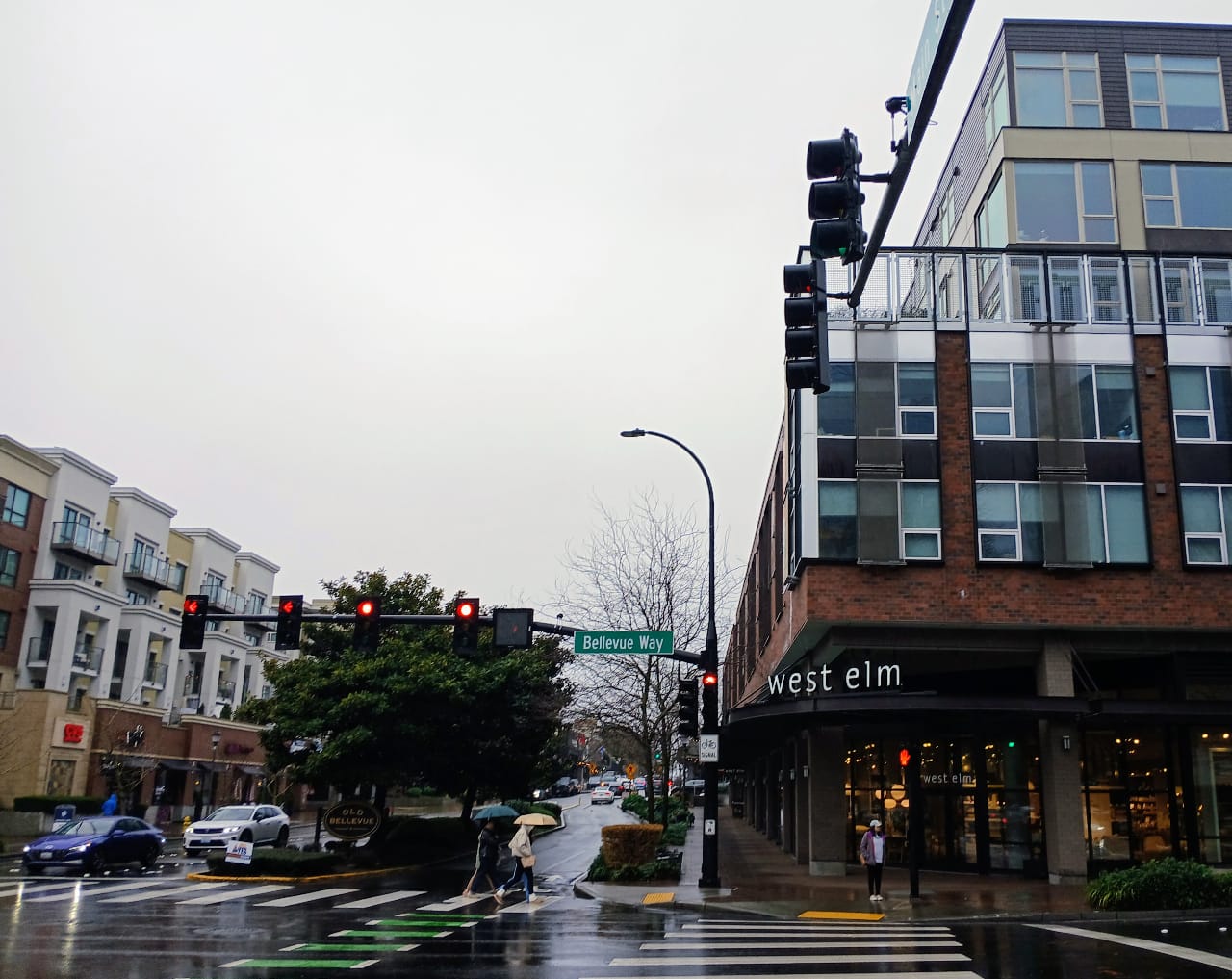
On the other side of the argument, Councilmember Jared Nieuwenhuis argued that the city shouldn’t be singling out one specific area, and made it clear that he doesn’t see the need for such swift action when it comes to Old Main.
“Old Bellevue is a treasure and certainly worth protecting. We’re all, I think, all on the same page there. However, I do not see an emergency here. And that’s why I’m not in favor of an IOC. I don’t think it’s been clearly articulated why we need one,” Councilmember Jared Nieuwenhuis, who voted no along with Dave Hamilton and Claire Sumadiwirya. “This council has, time and time again, put a strong emphasis and priority on affordable housing. To carve out Old Bellevue, to say, ‘anywhere in the city, except for here,’ just to me kind of smacks of elitism, and I think we should stick to our goal of trying to find as many affordable units as possible in our city.”
Agreeing with Nieuwenhuis, Hamilton also raised the potential issue of other neighborhoods in Bellevue clamoring for interim controls after these regulations are put into place. Sumadiwirya, who owns a small business elsewhere in Downtown Bellevue, cited unpredictability for business owners along Main Street as her rationale for opposing the move.
But for the four councilmembers who voted to adopt the control, the short-term nature of the restriction appeared to make the pros vastly outweigh any of the cons.
“I think Old Bellevue is one of the few places in our city that still feels like a very traditional, old Bellevue,” Mayor Mo Malakoutian said. “If you ask 10 people who live in Seattle, if they come here for the Container Store or for Old Bellevue, it is the only place, one of the only places that we have [that] is a human scale, is walkable, is rooted in the city’s early history. And I understand why there is a concern about maybe losing that feeling, losing that vibe.”
The Council was unanimous in wanting to consider the future of Main Street as part of the upcoming “Downtown Livability 2.0” program that was already on its workplan. That effort, which seeks to coordinate regulations intended to enhance Downtown Bellevue in alignment with the city’s massive Grand Connection project, is expected to launch this spring but not wrap for another year. That means these six-month regulations are likely going to be up for renewal later this year.