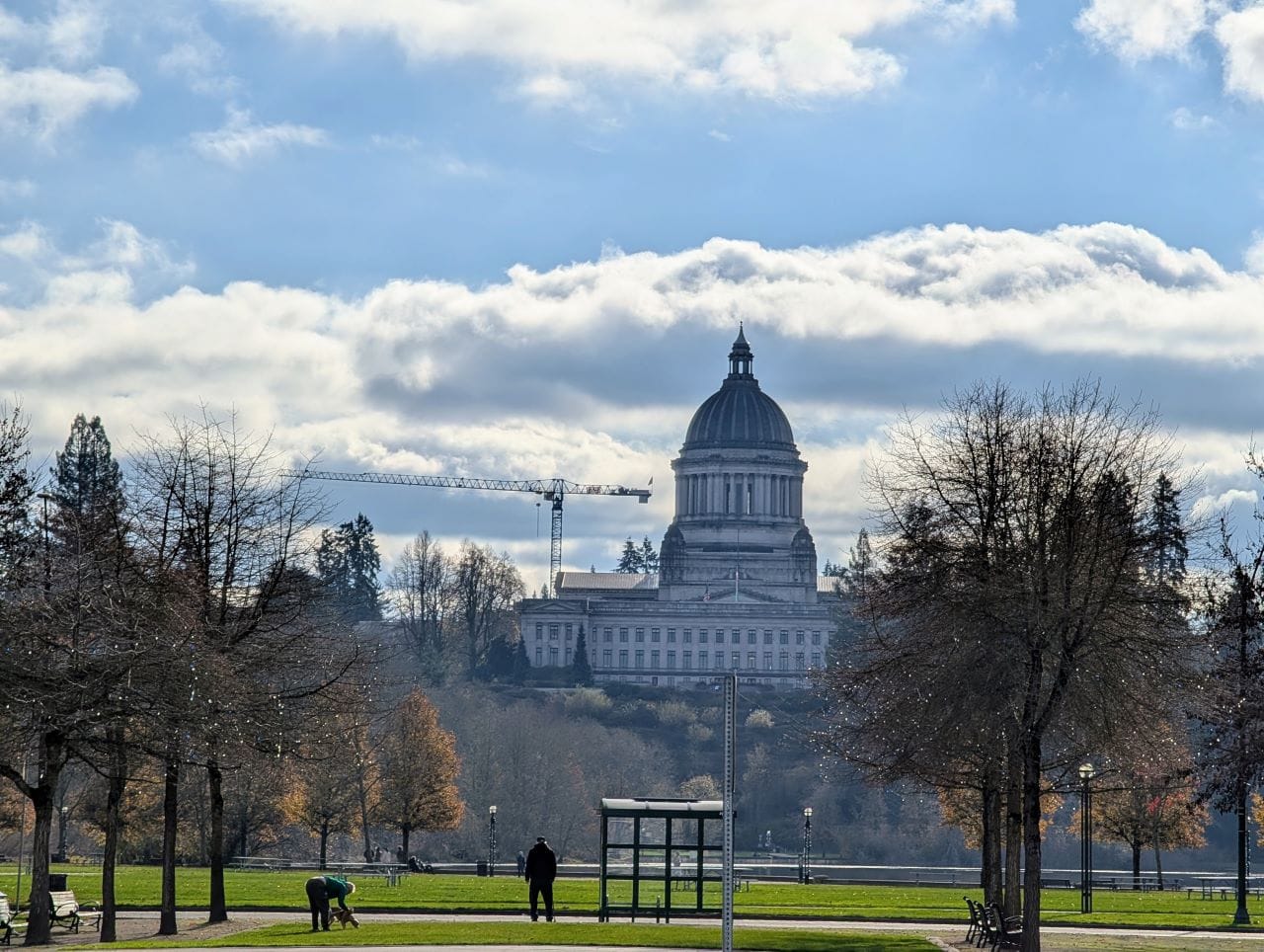
Representative Lisa Callan (D-5th LD, Issaquah) is taking aim at social media companies like Facebook, TikTok, Snapchat, and Google who market addictive social media feeds to kids and young adults. House Bill 1834 could get a vote on the Washington House floor any day now, and faces a good chance of passing the Senate as well, after Callan’s companion bill was approved there last year.
But civil rights, privacy, and LGBTQ+ advocates say the bill doesn’t take the right approach to protecting minors’ mental health and keeping them safe. In encouraging companies to implement age verification systems to gatekeep their platforms, the bill opens a can of worms about the increased risk and difficulty these systems will cause to many marginalized people, as well as raising the more fundamental question of who is allowed to access the internet at all.
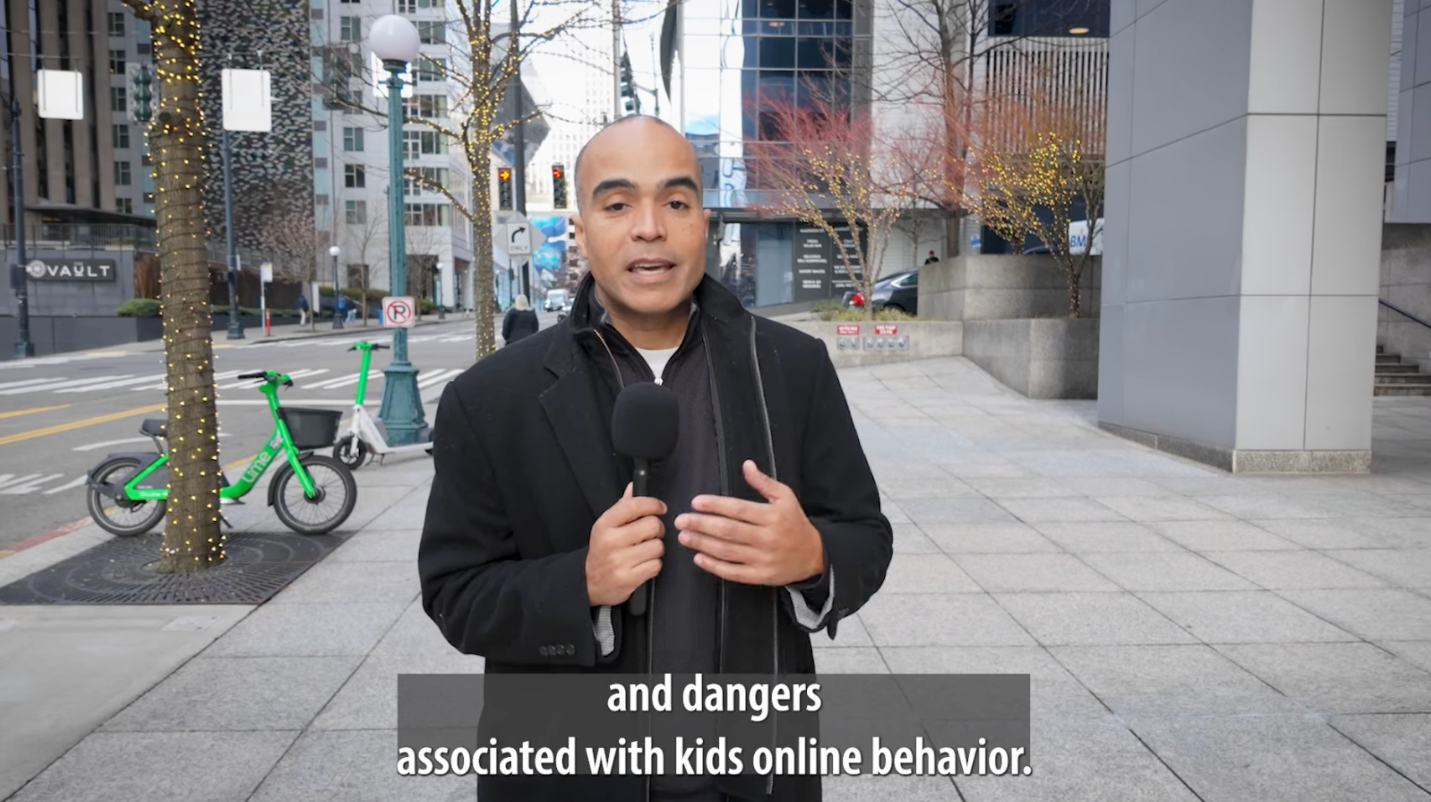
“First, it will ban addictive algorithms for minors so they don’t get so easily hooked. And second, it will prohibit push notifications during school hours and late at night,” Washington State Attorney General Nick Brown said in an Instagram video explaining the bill. “And I know as a parent of two kids that those are the most susceptible times to some of the online behavior.”
Brown’s office specifically requested that the legislature advance HB 1834, which has been dubbed “Protecting Washington Children Online.”
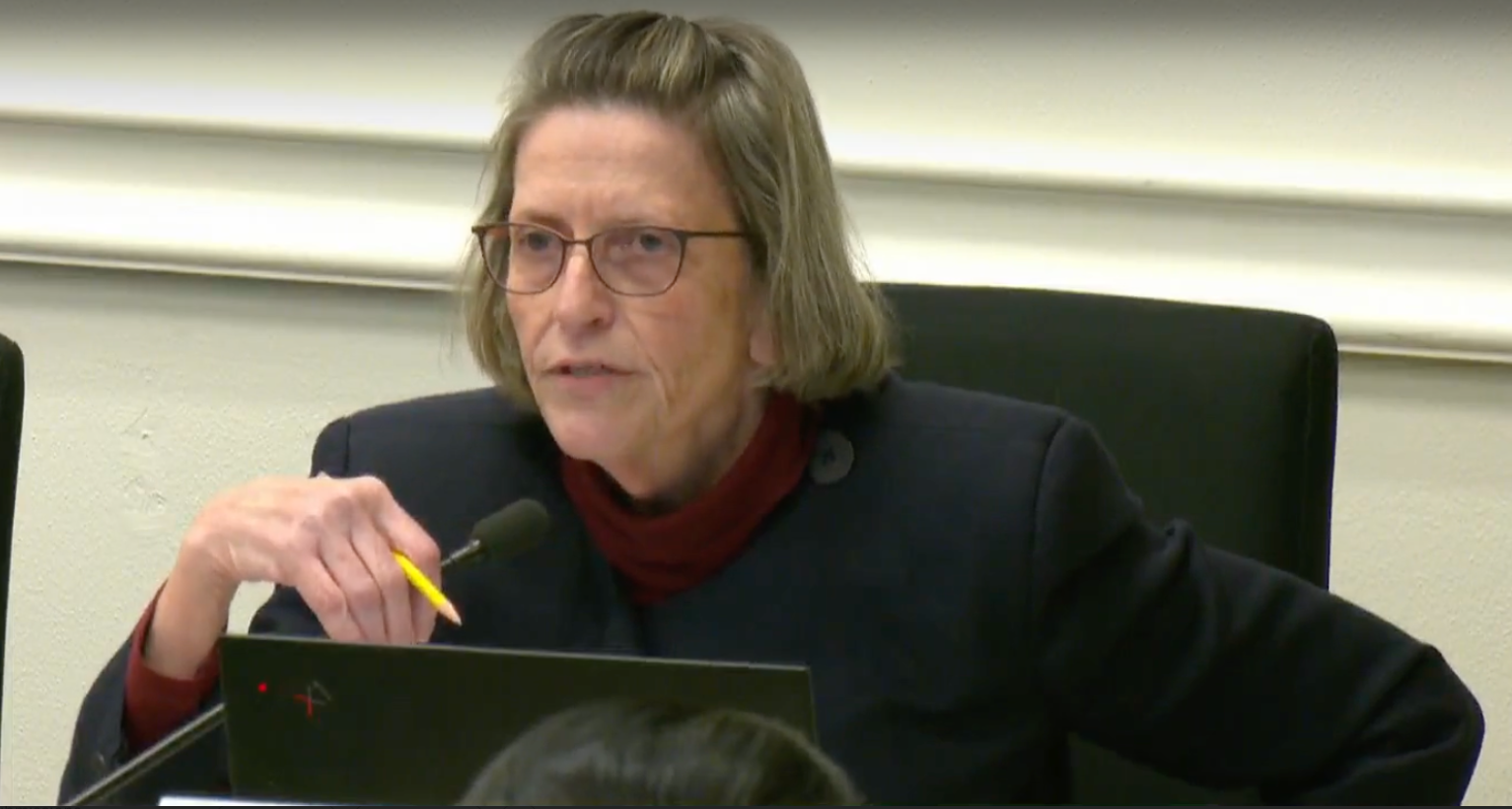
“We have a plethora of documents that have been surfaced from our online services that are engaging with constant feeds and constant scrolling opportunities, including ads and other content, including ones that talk about causing reward deficit disorder, dopamine hits in teens that are undeniable, biological and psychological and the top down directives that drive all towards making sure people are coming back for more,” Callan said.
Maya Morales, founder of Washington People’s Privacy, said laws like these are extremely troubling for democracy.
“The stated intention of these laws when they were originally pushed federally and across states was to remove the last bastions and shreds of the massive democratizing effect a free and open internet has had on our world,” Washington People’s Privacy wrote in a statement. “It’s undeniable that access to a free and open internet has empowered people’s movements, people’s speech rights, climate justice, LGBTQ+ visibility and rights, people’s education efforts, people’s ability to connect and communicate privately and securely, and even the ability of people to orchestrate uprisings and protest under authoritarian rule.”
In addition to civil rights advocates, tech lobbyists oppose the bill, as do some parental rights advocates and smaller tech companies who might not be able to afford to implement an age verification system sufficient to avoid litigation.
Opponents of the bill agree that children should be protected while online, but not through requiring age verification, or even incentivizing age verification. This distinction is crucial for understanding the arguments for and against HB 1834.
Advocates also have concerns that disallowing an algorithmic feed for minors, as HB 1834 does, will impede young people’s ability to discover relevant content on social media platforms.
The concerns around age verification for internet usage
Advocates have many concerns around the possible implementation of age verification requirements for using the internet.
The Electronic Frontier Foundation (EFF) wrote that age-verification systems are “at their core, surveillance systems.” Among the myriad of problems and risks of age verification systems, the EFF lists:
- Loss of anonymity, ranging from journalistic sources to whistleblowers to domestic violence survivors.
- Loss of access to the internet for anyone without a legal ID, credit cards, or mortgage information, which disproportionately affects people of color, immigrants, unhoused people, and poor people.
- Higher error rates for age inference facial recognition for people of color, people with disabilities, and transgender people.
- Young people’s, and especially young LGBTQ+ young people’s, loss of access to vital information and affinity communities.
- Increased privacy risks around sensitive data such as ID photos and biometric data that could be obtained through data breaches or sold to data brokers and marketers.
- Loss of access to, and the chilling of, freedom of speech.
There is a particularly increased risk to transgender people being forced to engage with these systems in order to use the internet. An estimated 43% of voting-eligible transgender Americans don’t possess IDs that correctly reflect their name and gender.
The Greater Seattle Business Association (GBSA) wrote a letter opposing HB 1834 because it “would have unintended consequences for LGBTQ+ and other vulnerable young people who rely on social media for critical community support, a sense of belonging, and lifesaving educational resources.”
Proponents of HB 1834 argue that the bill won’t cause these harms because it doesn’t legally require age verification. The legislation states that tech companies must “reasonably determine” a user isn’t a minor instead of having the “actual knowledge” that would mandate measures like ID or biometric checks.
“Our bill does not require age verification,” said Mike Faulk, the deputy communications officer at the Washington State Attorney General’s Office. “These companies can ‘reasonably determine’ age using the copious amounts of data they already collect from people. The bill does not ask, nor do we want, the companies to collect any additional data. We are bringing an amendment to strengthen data protection elements in the bill and are open to more.”
However, the EFF wrote a letter to the Federal Trade Commission about a federal bill with similar language, stating their fear that this language would nevertheless lead to age verification gates.
“Litigation-averse companies are likely to implement some kind of age-verification process to avoid running afoul of the law,” the EFF wrote.
Tee Sannon, the ACLU of Washington’s Technology Policy Program Director, said that HB 1834 would lead to the implementation of age-verification systems.
“We all share the goal of protecting minors online, but age verification online is not the right solution,” Sannon told The Urbanist. “By requiring platforms to ‘reasonably determine’ whether users are minors, HB1834 will drive increased data collection and create new privacy risks for everyone.”
Sannon also warned that age-verification systems often involve third-party vendors that add another layer of vulnerability when considering data security risks.
Gabriel Neuman, director of policy & advocacy at GBSA, also warned that not all requirements stipulated in bills are actually verified or enforced. One example is mandating that tech companies not retain any age verification data they collect.
“Many pieces of legislation contain requirements that corporations not hold onto verification data, but there is no way to ensure they actually do that, and they have been caught keeping that data in the past,” Neuman told The Urbanist.
The legislature was considering another bill this session – HB 2112 – that explicitly required age verification. Brought forward by Rep. Mari Leavitt (D-28, Tacoma), the bill was meant to protect minors from sexual material that is harmful to them.
Aside from the clear data privacy risks, a bill like HB 2112 would allow lawmakers to define exactly what material is deemed “harmful,” which could be so broad as to include all LGTBQ+ content, sexual education content, and information about reproductive care. A similar power of determination has led to the recent escalation in book banning across the country.
“LGBTQ youth already face high rates of depression and isolation for many, especially in rural areas and in unsupportive homes,” Danielle Skeany, the executive director of Gender Justice League said during testimony. “Online communities are their lifeline, and this bill would cut off that lifeline.”
HB 2112 didn’t make it through the policy committee cut-off date, meaning it’s dead for the session. But the fact that it was brought forward at all, and might be revived during a future year, troubles some advocates.
“We talked to national experts doing this work, and they were surprised that 2112 was even put forward and given a hearing in Washington state,” said Oliver Miska, the government relations specialist for Lavender Rights Project. “They were even more surprised that it was supported by Democrats.”
Adding further grist to the mill is the possibility that age verification systems might not even work as designed. Although more research is needed, a March 2025 pre-print suggests that when faced with these systems, many users pivot, either by using a virtual private network (VPN) to mask their location in order to bypass relevant laws or by using websites that aren’t compliant with the laws.
Recent trends in age verification
The last few years have seen a push towards age verification on the internet, not only in the United States but also in Europe and Australia. That being said, it is difficult to compare age verification laws in other countries to those in the U.S. since many countries have much stricter privacy laws.
Similar age verification laws in other states have faced legal challenges. HB 1834 is modeled after a California law that survived the U.S. 9th Circuit Court of Appeals but is still facing legal action from big tech companies Meta, Google, and TikTok.
This week, popular online communications app Discord announced a default teen-friendly space rolling out in March, with an age verification process for users who want to retain full site functionality. Some adults will have their age automatically estimated through Discord’s age inference model, while other users will be asked to submit either a video or a form of identification.
One of Discord’s third-party customer service providers suffered a data breach just last fall that compromised age verification data, including images of government-issued IDs.
Age verification laws in Ohio, South Dakota, Texas, and Wyoming restrict social media service Blueksky users from accessing their direct messages unless they engage in an age verification process that could involve official ID, credit card verification, or social security number checks. A similar law in Mississippi caused Bluesky to cease operations entirely in the state for several months last year before reopening at the end of the year.
On Tuesday, the State of New Mexico brought Meta to trial for allegedly failing to protect children on its platform from sexual exploitation. New Mexico’s Attorney General wrote that he wants Meta to start using age verification.
Some privacy and LGBTQ+ advocates see this recent push for age verification as an example of a moral panic.
“Personally, I think this is an extension of the purity culture that is gaining popularity in the United States – age verification requirements are a way for legislators to keep kids away from content they deem inappropriate. It can also be a way for them to implement their version of morality,” Gabriel Neuman, director of policy & advocacy at GBSA, told The Urbanist. “‘Protecting kids’ is a dog whistle that has been used against the LGBTQ+ community for generations.”
During the hearing for HB 2112, Miska drew a direct parallel between laws requiring age verification and the MAGA agenda.
“We don’t have a clear and safe way to do age verification software. We just don’t,” Miska testified. “Unfortunately, this bill is a page from Project 2025. It’s reminiscent of 19th century obscenity laws that would use vague definitions to target LGBT community and culture.”
Project 2025 implies that all LGBTQ+ content, and specifically any transgender content, should be classified as pornography, which should be outlawed, including imprisonment for its creators and distributors.
Washington People’s Privacy links these age verification laws to the movement to undermine democracy.
“The Heritage Foundation and other ultra-to-moderate right wing groups realized that the key to seizing authoritarian power and tight global control of all our earth’s resources was to begin by decimating any possibility of anonymity and privacy online,” Washington People’s Privacy wrote in their statement.
The timing of the introduction of HB 1834 and other age verification-related bills in the state legislature cannot be divorced from the concurrent attacks on LGBTQ+ and immigrant rights, the media, higher education, and the U.S. Constitution.
The larger political context may encourage lawmakers to think creatively while developing other options for keeping kids, as well as adults, safe from the addictive algorithms used in social media.
“There are better approaches, such as extending strong privacy and safety protections to all users without forcing age determination,” Sannon said. “We can protect minors online without expanding surveillance or undermining anonymity.”
Washington People’s Privacy offered several ideas for legislation they said would be more effective, including “a people-first universal data privacy law,” bans on the collection of sensitive personal data, data minimization regulations, a law that would prohibit state and local law enforcement from buying sensitive data from data brokers without a warrant (modeled after the federal Fourth Amendment is Not for Sale Act), and tech education classes for kids and their families.
Legislators have recently added two amendments to HB 1834 for consideration, but advocates say neither sufficiently addresses their concerns.
HB 1834 could be pulled for a House floor vote at any time. Should that vote succeed, the legislation would go to the Senate to reconcile any differences between HB 1834 and the bill the Senate passed last year.
Correction: this story has been updated with a statement from the Washington Attorney General’s Office that was not included in its initial version due to an editing error.
Washington Legislature Grapples with Slew of Bills Regulating AI
State Lawmakers Move to Regulate License Plate Readers, Fearing ICE Misuse