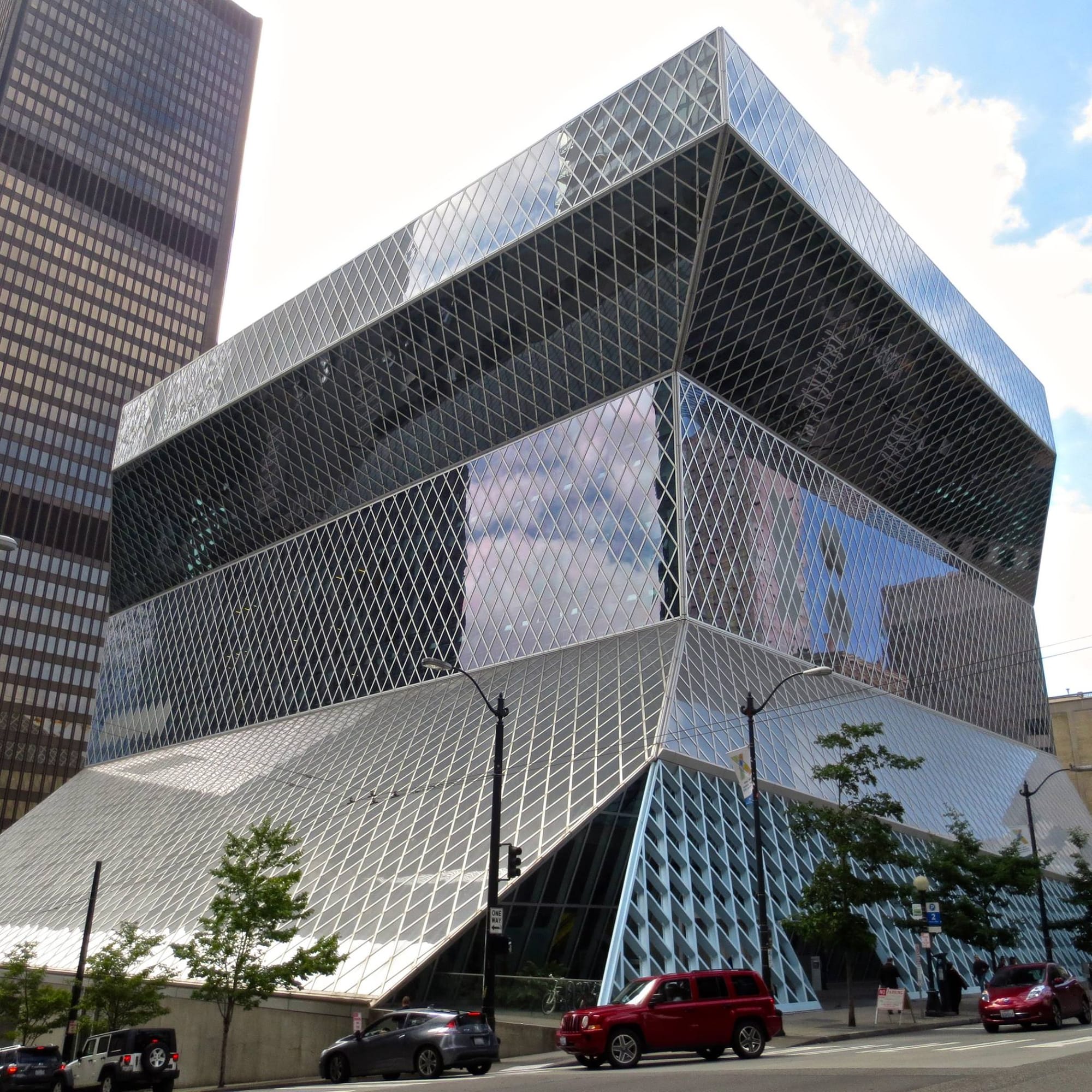
Some library staff say that a new enforcement crackdown led by the Seattle Public Library’s new head of security is turning librarians into part-time cops, and they’re not happy about it. For the past six years, SPL has been revising its code of conduct to make it more equitable and less punitive. The policy went into effect last August, and newly hired security chief Andrea Walton, who started the same month, immediately began moving things in the opposite direction, library staff say.
*Editor’s note: Seattle Public Library leadership have published a rebuttal to this article on their blog, disputing several of the claims. Some of the disputes of fact that leadership had with the three library workers and one security officer interviewed boiled down to differences of interpretation, but in other cases staff accounts conveyed factual errors or incomplete information we have since sought to rectify with corrections and clarifications now contained in the piece and noted at the bottom.
The revisions are the culmination of a long journey that began in 2018, when an article in the South Seattle Emerald revealed that the library imposed an unusually high number of bans, or “exclusions,” on its patrons, disproportionately Black and brown youth as well as the homeless and mentally ill. Well before the rollout, rank-and-file library staff were softening the enforcement of existing rules and working to change the culture in anticipation of the new codes, now called the Community Use Agreement, or “CUA.”
Some library workers were shocked when Walton, a former Port Orchard police officer, took over and began issuing guidance that felt to them eerily similar to the old rules of conduct the library spent the better part of a decade overhauling.
“We were thinking everything should be nicer with this new policy,” said a library worker, who requested anonymity. “I feel like we’re actually excluding people more.”
One of Walton’s first acts on the job was to retrain library security. Library staff had been working with security to develop a more compassionate approach to homeless people sleeping in or outside of branches. Security was encouraged to do wellness checks instead of asking them to leave.
When Walton came on, she had security start sweeping the areas around the Central Library nightly, staff say. Library spokesperson Laura Gentry said the homeless encampment removals were not initiated by Walton.
“Ms. Walton never directed Security Officers to conduct nightly sweeps around the Central Library,” Gentry wrote. “In response to documented incidents of damage to Library property after hours and complaints by nearby residents that there was illegal and dangerous activity occurring around the Central Library after hours, Administrative Services director Rob Gannon asked Library Security Officers to conduct emphasis patrols at night for a few weeks in September 2025 to observe and gather data. They did not observe any dangerous activities. Security Officers stopped those patrols in late September 2025.”
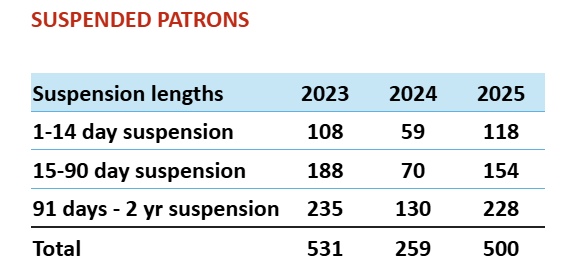
Walton reportedly proposed adding floodlights and hostile architecture to prevent homeless people from sleeping outside the branch — though this proposal never came to fruition. Library staff also contend that Walton is pushing security officers to document minor infractions to justify longer suspensions, riling some librarians, who have generally shifted to imposing shorter bans. Gentry disputed that claim.
In one case, a suspended patron used a library computer under a fake name and left without incident. The man was originally suspended for rolling over a security guard’s foot with his wheelchair after being told not to smoke near a library entrance. Walton logged it in the system as “other crime: identity theft” and extended his suspension by a month. Library workers say that using an alias to skirt a ban isn’t serious, much less criminal, and that they originally logged it under an existing violation category called “Return under active suspension,” but Walton escalated it.
After publication of this article, Gentry said that this patron has repeatedly assaulted two security staff and injured one, earning them a two-year suspension, and that violating the suspension was a serious safety concern in this case.
Library staff says Walton is imposing suspensions of several months on people who act out nonviolently while in a behavioral crisis. They’re calling these bans unnecessarily harsh, arguing that long suspensions exclude people living on the streets from one of the few public spaces available to them.
“For some of our patrons, a month or two or three is a very long time,” a library worker said. “Most of these people don’t mean us harm. They are ill and may not know what they are saying. There has to be another way.”
Some library staff say they also feel pressured to call 911 more often. In a January Q&A about updates to the library’s 911 guidelines, a staff member said that the new guidelines seemed to be a reversal of course. When the staffer started, they were told that the library was moving away from calling the police, and emphasized their concerns, particularly for communities in South Seattle who have had negative experiences with the police.
Walton likened library staffers’ reluctance to call the police to a “domestic violence mentality,” where library workers “feel responsible to protect [their] perpetrator because they had a bad childhood.” During the Q&A, library staff said she told them that security and other staff did not call 911 because their coworkers “didn’t like police.”
Another library worker, who also requested anonymity, said their reticence stemmed from real-world experience, citing an incident a few years ago where security called the police about a man who threw a metal can. Officers arrived and tackled him in the middle of the library.
“The minute we call, we surrender any sense of control and de-escalation,” the library worker said. “They didn’t listen to anyone.”
Moreover, calling 911 can mean a steep penalty for the patron: a one-year suspension. A security guard said that Walton added a new category to the library’s incident-reporting system titled “Police called for assistance.” If library staff call 911 on a patron, they can be barred from all Seattle libraries for a year if police for a year, with the decision out of library staff’s hands at that point.
Gentry explained that a one-year suspension occurs automatically if police apply trespass charges, but in other cases the library team would have the discretion to log the incident as they deem appropriate in accordance with the CUA.
“When Library staff call 911 for SPD assistance to resolve an incident with a patron, SPD typically issues the patron a one-year trespass and it then becomes a crime for the patron to return to the Library during that one-year period,” library leadership wrote on their blog, following publication of this article. “When SPD issues a one-year trespass, the Library issues a corresponding one-year suspension. This was a recent adjustment made to reduce confusion between trespass vs. suspension lengths, which were previously out of alignment.”
The security guard gave an hypothetical example where a situation with a patron is escalated and they are asked to leave for the day, but they refuse, so the library staff call 911. Ultimately, the person leaves before police arrive, the call is canceled, and the incident is resolved peacefully. That person could still be banned for a full year, the guard said.
In a written statement, Rob Gannon, the library’s director of administrative services, denied that the new guidelines would result in more 911 calls, pointing out that the criteria for calling the police are stricter than in the 2023 update. He also cited language added to the document less than two weeks after the call, giving staff discretion to call 911. It now states: “The Library trusts staff to determine when calling 911 is appropriate. The vast majority of Community Use Agreement violations can be appropriately handled by Library staff and Security Officers without calling 911.”
But library staff say it’s not so much what’s in the CUA or the 911 guidelines, but rather that they’re being made to feel like calling 911 is their best or only option in many cases. They contend that the CUA wasn’t rolled out with adequate training. One library worker said they were given an online training lasting 30 minutes, while managers were trained for three to four hours on the new policies.
“We also don’t get routine de-escalation training, so we aren’t investing in any strategies that would help prevent having to call the cops,” they said, adding that de-escalation training is only available on request and not mandatory.
While the freshly updated 911 guidelines state that the library “trusts” staff to make the call, library workers are hearing mixed messages. The language in the guidelines was also updated to say that staff are “required to” call in specific circumstances and to “err on the side of caution.” Library staff said they couldn’t get a straight answer from Walton on whether this would mean they would face discipline if they didn’t.
A SPL spokesperson said the department overhauled its incident reporting system shortly after hiring Walton, noting a 2024 ransomware attack that shut down the system, leading to skewed 911 call data for 2024 and early 2025. In 2023, SPL logged 215 calls, compared to 127 for 2025. However, the number of calls recorded from August to December was greater in 2025 than in 2023, which seems to indicate an upward trend after the enforcement surge that coincided with the Walton hire — or at least a more concerted effort to document the calls.
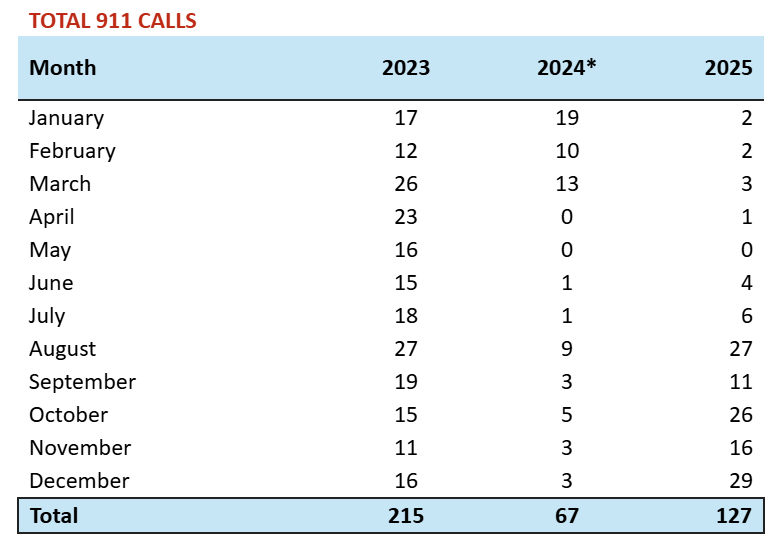
Library spokesperson Laura Gentry said the uptick in calls in late 2025 stemmed from a change in reporting procedures that logs patron calls, not just staff calls: “We did a deep dive analysis of the Q4 2025 incident reports involving 911, and the uptick appears to be related to additional data gathering of 911 calls made by patrons themselves for various reasons, something we did not capture in 2023.”
Some library staff question the selection of Walton, an outside hire and former police officer, over the other finalist, who has worked at the library for nearly two decades and supports the direction that the CUA represents. They wonder if she’s the right fit for the library’s culture. Despite transitioning to civilian life, Walton appears to have had a hard time shedding her identity as a cop. Library workers bristle at her use of words like “perp” to describe patrons in behavioral crisis. Once, when referring to police responses, she reportedly said: “We’re on the call. We’re here to win.”
Gannon declined to comment on why Walton was chosen, but wrote that she is a “compassionate, diligent, conscientious, human-centered leader, with a deep commitment to the values that are the foundation of the Community Use Agreement and of the Library’s mission.”
Similarly, a library spokesperson defended Walton’s conduct and said she was acting in accordance with policy and with the full confidence of departmental leaders.
Another potential red flag is Walton’s presence on the Kitsap County Brady List, a list of officers who have potential credibility issues that must be disclosed to defense attorneys during a trial if they give testimony. Gannon called these allegations “unsubstantiated,” but the Kitsap County prosecutor’s office provided The Urbanist with a 2019 disciplinary report, showing that Walton was found to have lied to her supervisor.
“[Walton] is the 100% wrong person to be at any position [in the library],” a library worker said. “It just shows how privatized, bureaucratic, and undemocratic the organization has become.”
Corrections and clarifications: The original version incorrectly stated that all 911 calls would result in a one-year suspension. This is only true in cases where the Seattle Police Department applies a “trespass” charge, which library spokespeople say is only applied in certain circumstances, such as when patrons are causing safety issues or violating suspensions. Additionally, we clarified that Seattle Public Libraries applied new reporting procedures in late 2025 that may have been responsible for the spike in the 911 calls in the data and emphasized that the ransomware outage appears to be responsible for the low baseline for suspensions in 2024. We also clarified that Gentry said Walton did not initiate encampment sweeps outside Central Library and that the identity theft suspension case had involved a patron who the library says injured a security officer in an assault. We regret the errors and omissions.