

Ron Davis, the former candidate for Seattle City Council who lost to Maritza Rivera in 2023 by just 235 votes, is setting his sights on Olympia. Davis wants to take out Representative Gerry Pollet, who has represented Seattle’s 46th legislative district in the House since 2011. He’s the latest candidate to announce a challenge against a longtime incumbent during this year’s high-turnout midterm election.
Pollet has earned a reputation of siding with the existing homeowners in his district over the new residents trying to move there, and became infamous for watering down housing reforms during his time as chair of the House’s Local Government Committee. In 2022, a striking amendment Pollet put forward significantly weakened a bill legalizing middle housing across Washington’s major cities, blunting its momentum and demoralizing housing advocates from Bellingham to Spokane.
In 2023, Pollet railed against HB 1110, that bill’s successor that was ultimately able to make it across the finish line. He did ultimately vote for it after securing an amendment allowing cities to hold off on zoning changes in specific areas, but has often been a “no” on the idea of reducing red tape for housing construction more broadly.
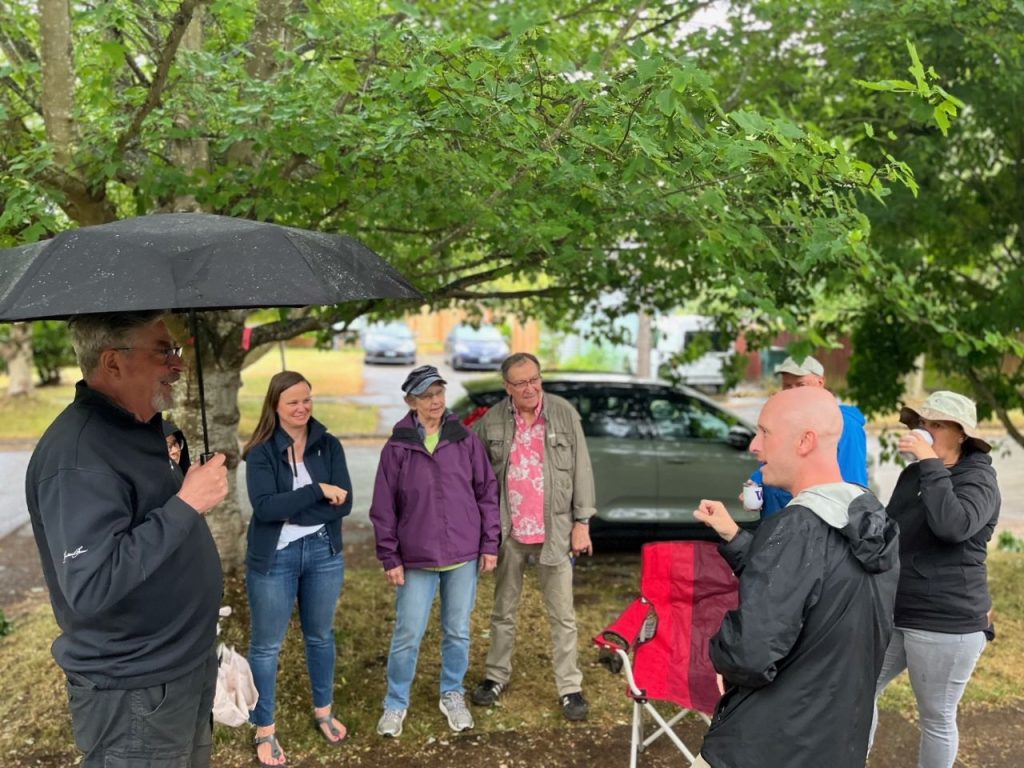
“Those years were low interest-rate years. We could have tens of thousands, maybe 50,000 or 100,000 more modestly-priced homes in the region right now, and they would be bidding over us, instead of us bidding over what’s left. And that’s a really huge and ugly, frustrating dynamic,” Davis told The Urbanist in an interview near his Roosevelt home.
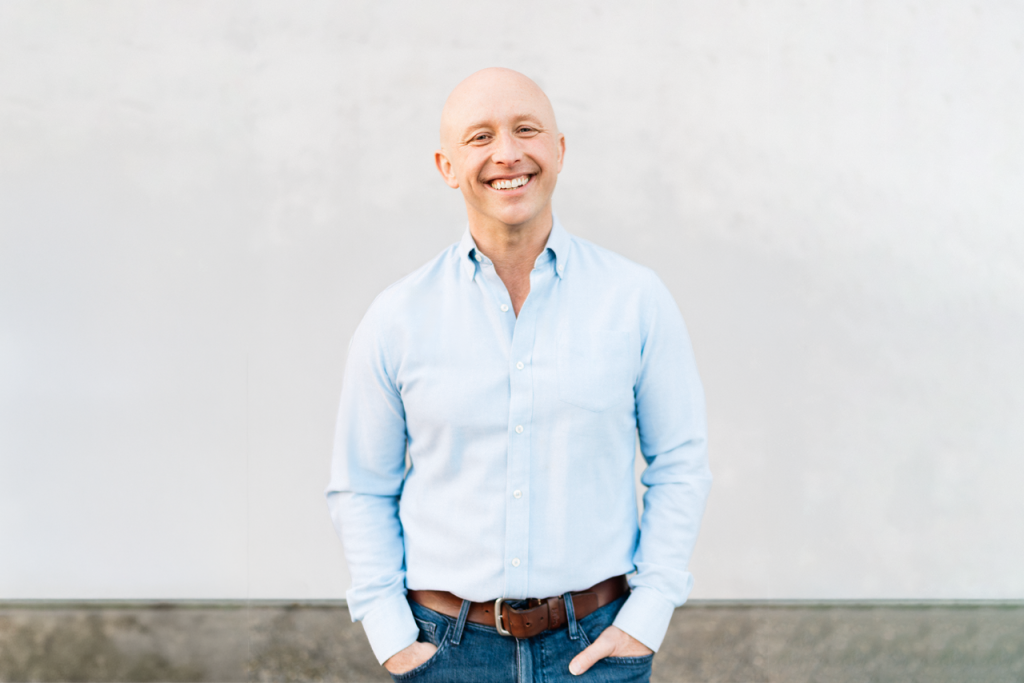
A tech entrepreneur who has worked in enterprise sales after getting a doctorate degree from Harvard Law, Davis diverted his career after losing his city council race three years ago. He started a newsletter, which he dubbed Rondezvous, and got involved in some of the city’s biggest civic fights.
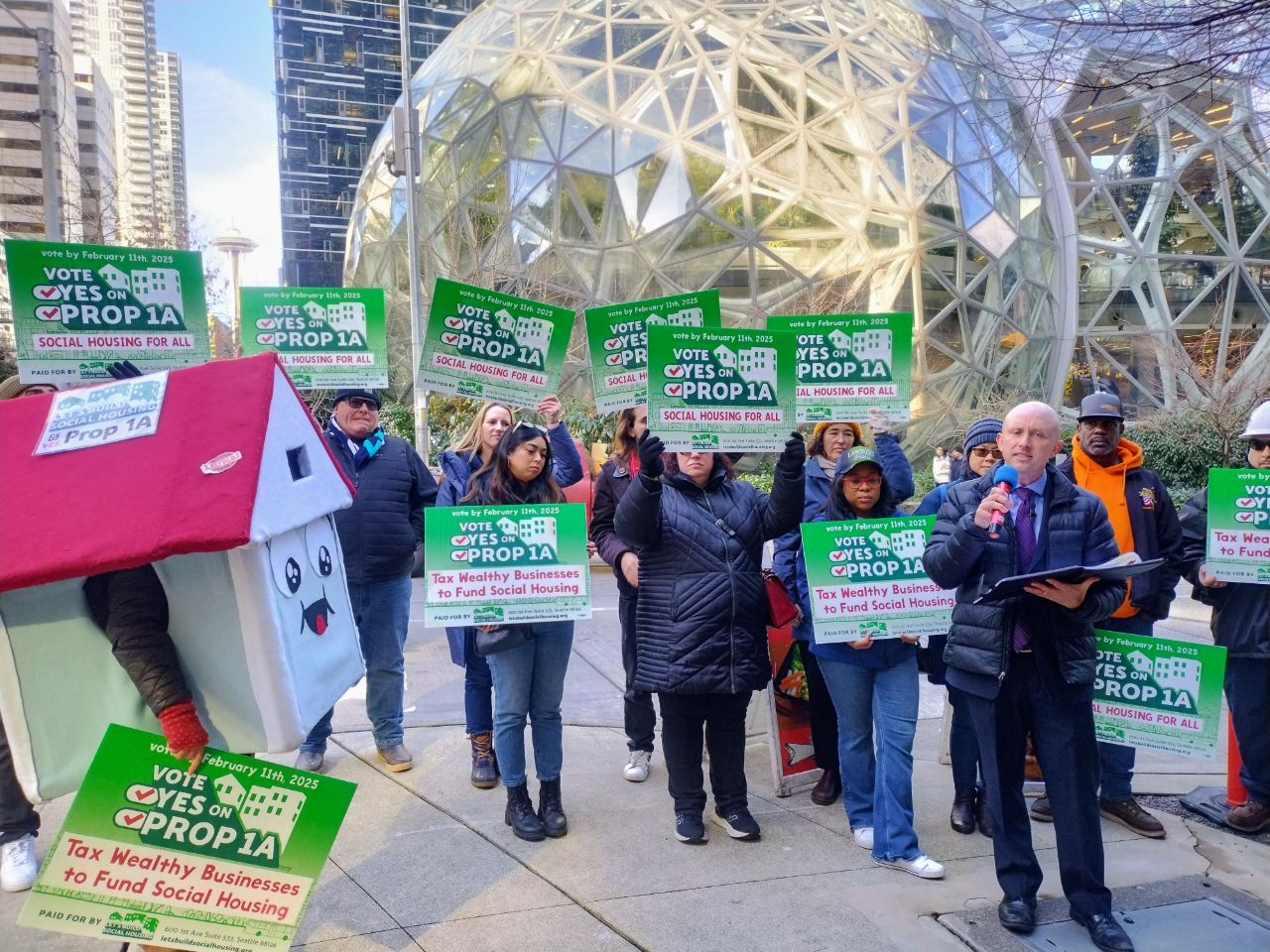
In 2025, Davis had a very busy year. He stepped up against a wave of cash that rolled in to promote the corporate-backed alternative to Prop 1A, the dedicated fund for Seattle’s Social Housing Developer. At a press conference in front of the Amazon spheres last February, he called out the city’s biggest corporations for trying to railroad a new source of progressive revenue.
As a consultant, he spent weeks bartering with legislators in Olympia in support of statewide parking reform, a bill that many seasoned housing advocates saw as a quixotic attempt. A slog that likely would have made Davis tear his hair out — if he had any — that work ultimately helped to get SB 5184 across the finish line, reducing housing costs and making redevelopment projects more feasible in every corner of the state. Then Davis turned his attention back to Seattle, setting up a progressive political action committee (PAC) to counter big-business spending in support of Katie Wilson’s successful mayoral bid.
Now Olympia is calling to Davis once again in a bigger way.
“I don’t think we can really move the needle on our core issues unless we take a regional and statewide and broader approach,” Davis said. “There’s so much more opportunity there.”
Davis has already lined up the endorsements of a number of prominent urbanists and housing advocates, including Transit Riders Union, Tech4Housing, Bothell Mayor Mason Thompson, former Seattle mayoral candidate Cary Moon, Patience Malaba, former Seattle City Councilmember Mike O’Brien, Seattle Social Housing Developer executive director Tiffani McCoy, House Our Neighbors executive director Naishin Fu, 43rd District Democrats Chair Ryan Driscoll, and safe streets leaders Gordon Padelford and Kelli Refer.
The affordability agenda
When Davis lists his priorities, the idea of making life more affordable for Washingtonians of all stripes comes through most clearly — though a sales tax holiday doesn’t make it onto the list. Davis wants to finally get the legislature to fully fund education, its paramount duty under the state constitution. And to make a major investment in child care, touting the goal of capping child care costs at 7% a household’s income that was a central plan in Kamala Harris’s presidential campaign. He celebrated expected increased investments in summer camp programs in Seattle under Mayor Wilson, but was clear that the legislature is going to need to step up to provide more funding.
“The year-round problem is something that we need really serious taxing power to address,” Davis said, pivoting the discussion to tax reform. As Davis announces his campaign, the Senate-advanced tax on incomes over $1 million has stalled out in the House. While some holdout Democrats undoubtedly would be happy to see no changes to the state’s tax code move forward, others are frustrated with the way the millionaires tax has advanced without explicit commitments to fund education or reduce the tax burden in other areas.
“I’m a big fan of the millionaires tax, per se. I’m all in for a 10% tax on incomes over a million bucks,” Davis said. “At the same time, it feels a little bit like a head fake. Cool, let’s do that. But in the meantime, we have an existing budget gap. We’re talking about cutting funding for toddlers with disabilities and 14,000 families who are supposed to get childcare, and sweeping hundreds and hundreds of millions of dollars of climate investments out of the Climate Commitment Act.”
Davis wants to see broader tax reforms put on the table.
“If we if our tax rate was about like Minnesota, we would literally have enough money to fully fund education, have universal childcare, cover the deficit, end homelessness, and probably put another $500 million a year into transportation — sustainable transportation — with some leftover funds,” Davis said. “It’s stupid. We are choosing this scarcity and we’ve got a set of leaders that appear just completely beholden to a class of folks who have a big stake in keeping that scarcity in place.”
And then there’s housing. Davis wants to see the legislature fully fund housing choice vouchers to subsidize rents for existing tenants, keeping them from falling into homelessness. But housing supply will be a clear priority for him as well. He supports the elevator reform bill advancing through the House right now, and would focus on additional issues where the legislature could get out of the way of the construction of badly needed units.
“There’s just such a thick package of things that need to be done to really get us to a standard where stuff moves quickly. I don’t think we need to compromise on core safety or climate constraints around housing, just a lot of the stupid rules. There’s still so many stupid rules to fix,” Davis said.
Bus lanes over new highways
When it comes to transportation, Davis wants to help steer the ship away from the highway megaprojects that the legislature continues to be focused on, as the state’s existing infrastructure continues to fall into disrepair. He also wants the state to get off the sidelines when it comes to public transit.
“I don’t think we should be expanding highways,” Davis said. “We should paint one thousand miles of bus lanes in the busiest corridors in the region, and we should add 50% frequency to the top 100 bus routes. And then you take hundreds of thousands of people a day, and you make their lives easier and more convenient, and they get places fast, and you also end up attracting a lot more people to those routes, and you’re solving a transportation cost and convenience problem for hundreds of thousands of people.”
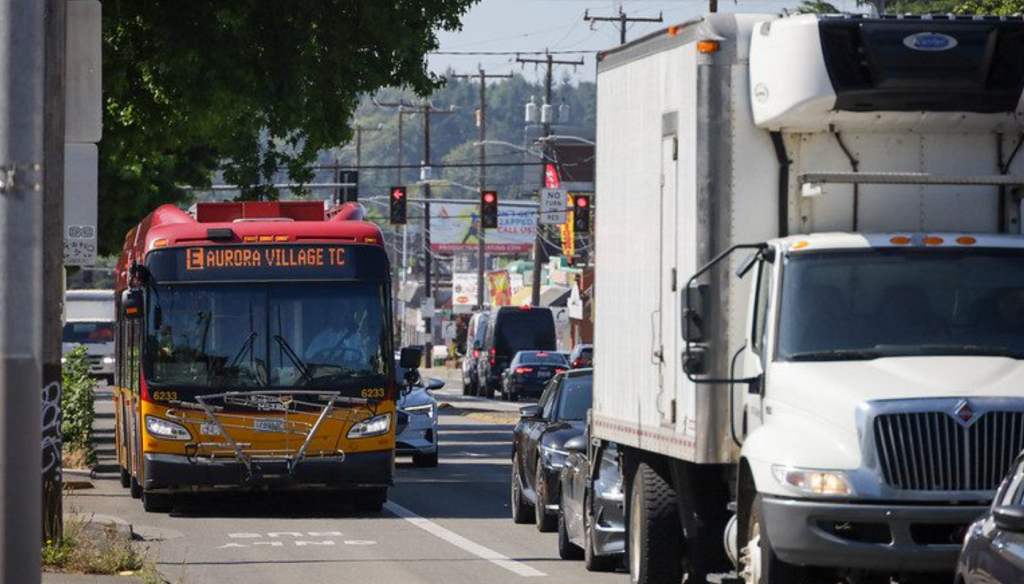
The state only directly controls a limited number of transit corridors around the state, but he would pair bus lanes on those streets with incentives to create dedicated space for transit. That would mirror the Free Youth Fare program, where the state offered operational grants to transit agencies that made travel fare-free for kids, and every agency in the state took the deal.
“The busiest corridors often do end up converging on the state roads,” Davis said. “If it’s a city’s arterial [road], you’d have to pair it with some sort of funding mechanism for the busses. It would just be a matching fund: if it’s a top 100 route, you get an extra four busses per hour in each direction, or something.”
Standing up to Trump
Davis also wants to see the state legislature significantly ramp up its work countering a rogue federal administration.
“I think the legislature is not doing a great job. So, here we have leaders saying we have an emergency, ‘fascism is coming out of the federal government’ — which it is. I’m like: Okay, what do we have this year, a mask bill where you could maybe sue somebody if they violate,” Davis said.
He wants to see a real mask ban for law enforcement with criminal penalties, and praised Senator Manka Dhingra’s bill that would sequester state funds that had been set to go to the feds if any of Washington’s federal funding is withheld. He also thinks the state should explore standing up a civilian response team focused on logistics and potential interruption of federal activities.
“We want the federal government to look at us and think like, not worth it,” David said. “I believe the rhetoric that we are in real, serious danger, and I do not see my representatives, many of them anyway, acting like it, and it’s pretty damn frustrating.”
Visit Ron Davis’s campaign website for more information.
Ryan Packer has been writing for The Urbanist since 2015, and currently reports full-time as Contributing Editor. Their beats are transportation, land use, public space, traffic safety, and obscure community meetings. Packer has also reported for other regional outlets including BikePortland, Seattle Met, and PubliCola. They live in the Capitol Hill neighborhood of Seattle.