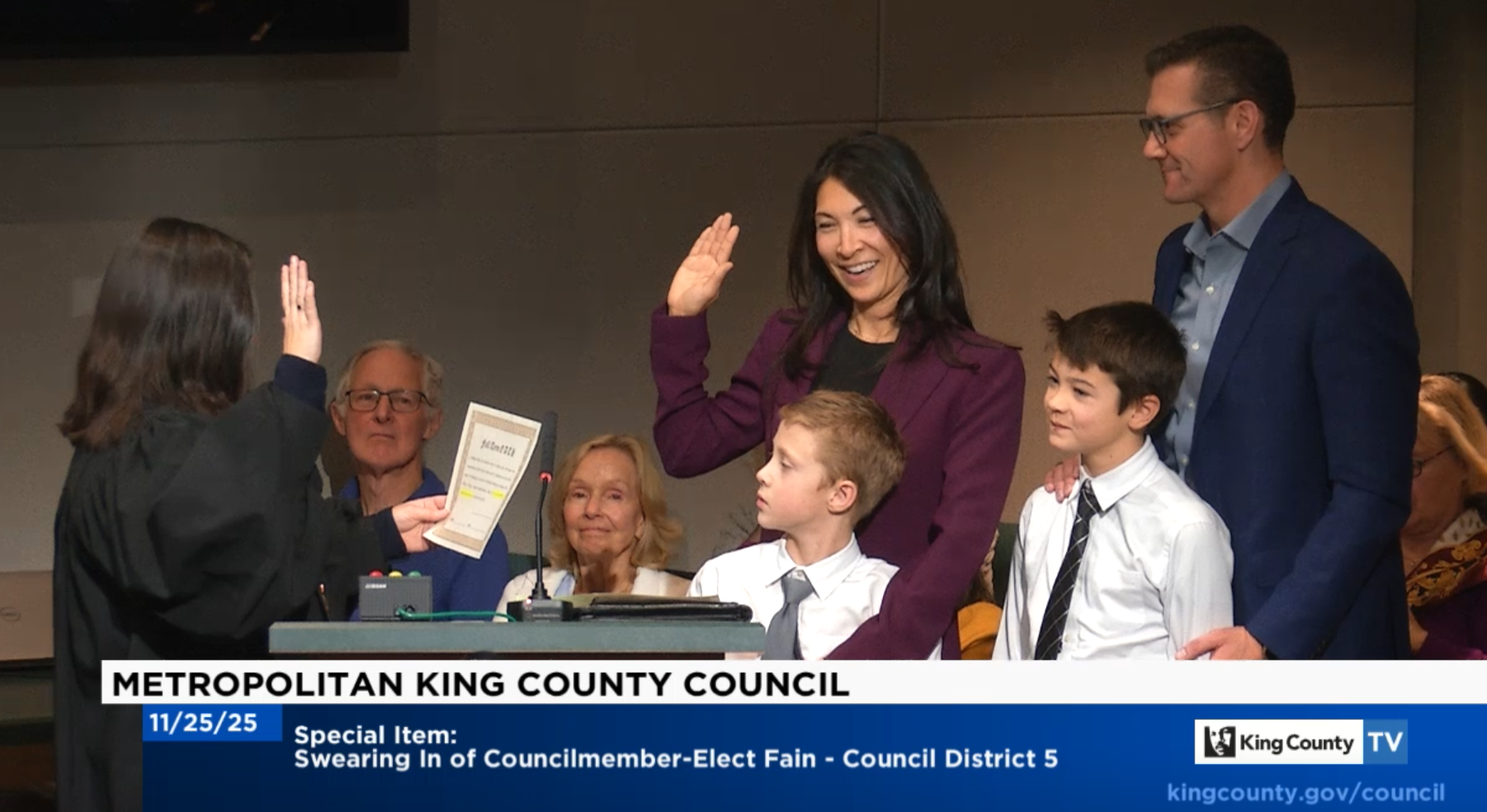
King County Executive Girmay Zahilay has announced his first slate of proposed appointments to the Sound Transit Board of Directors Thursday — a group who will be tasked with major votes charting the future of the region’s transit system in 2026. Seattle Mayor-Elect Katie Wilson, Tukwila Mayor Thomas McLeod, and King County Councilmembers Steffanie Fain and Teresa Mosqueda will become the board’s freshman class in January, filling a number of vacancies opening up in the wake of last month’s election.
In addition to those four new members, Zahilay will make several reappointments, including King County Councilmember Pete von Reichbauer and Redmond Mayor Angela Birney. Auburn Mayor Nancy Backus, whose term on the board is expiring at the end of this year, will not be returning.
At least one board seat in Snohomish County remains up in the air, after Lynnwood Mayor Christine Frizzell lost her bid for reelection. Snohomish County Executive (and current board chair) Dave Somers will be tasked with making that appointment.
Staying on the board will be familiar faces including King County Councilmember Claudia Balducci, Seattle Councilmember Dan Strauss, and Renton Councilmember Ed Prince. All told, the 18 seats on the Sound Transit board are distributed proportionally across King, Pierce, and Snohomish County by population in the taxing district. Zahilay will be tasked with making decisions around the remaining board seats in King County in two years.
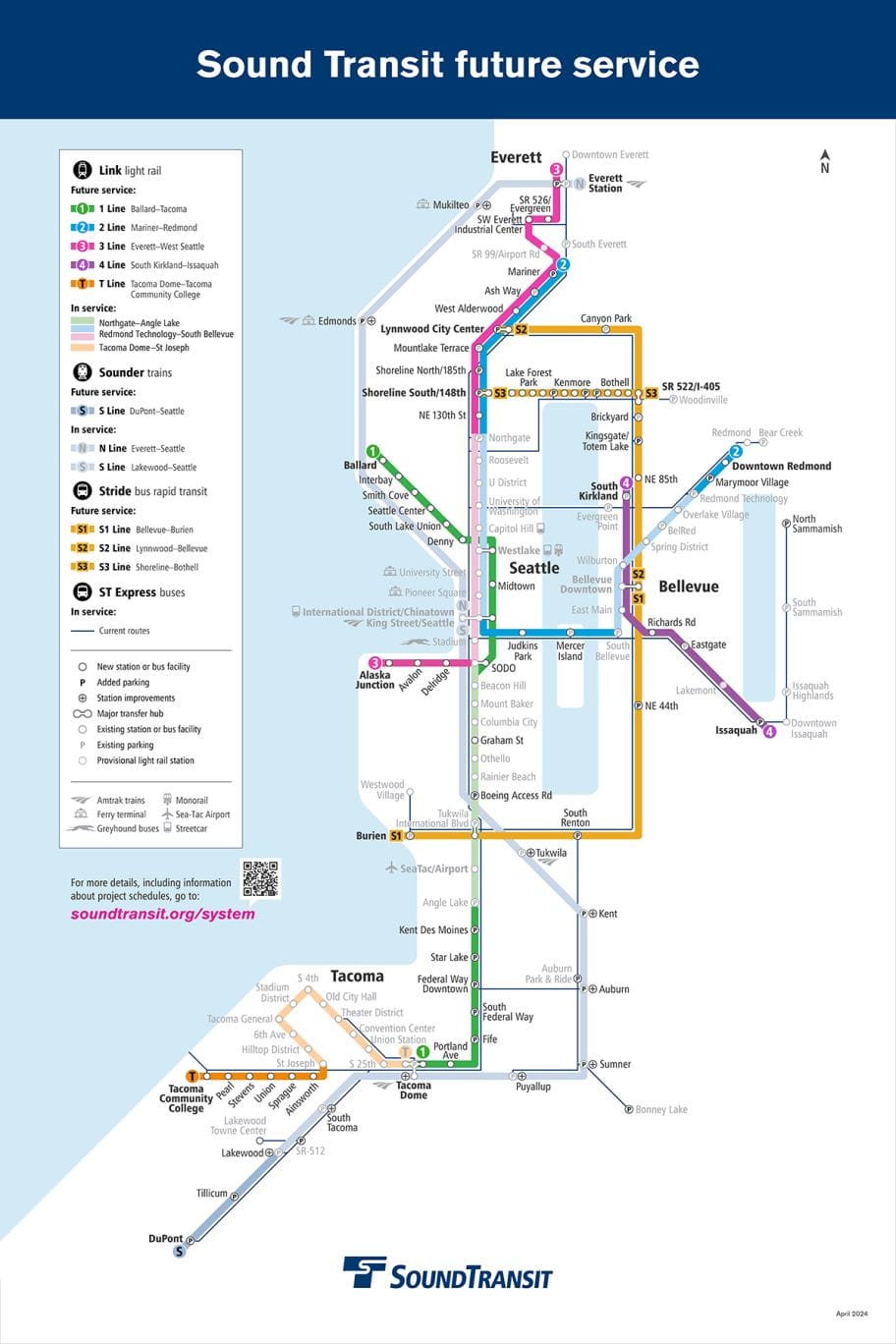
The decisions set to come in front of the new board are among the most pivotal faced in decades, as Sound Transit recalibrates its entire system expansion plan to account for a more than $30 billion shortfall that its financial plan faces through 2046.
By spring, the board will start to consider scenarios that give the agency a more sustainable path forward, in conjunction with cost savings measures that Sound Transit’s capital team have been developed that could save billions of dollars. By July, the board is set to adopt the first new update to the Sound Transit 3 (ST3) system plan since it was adopted in 2016.
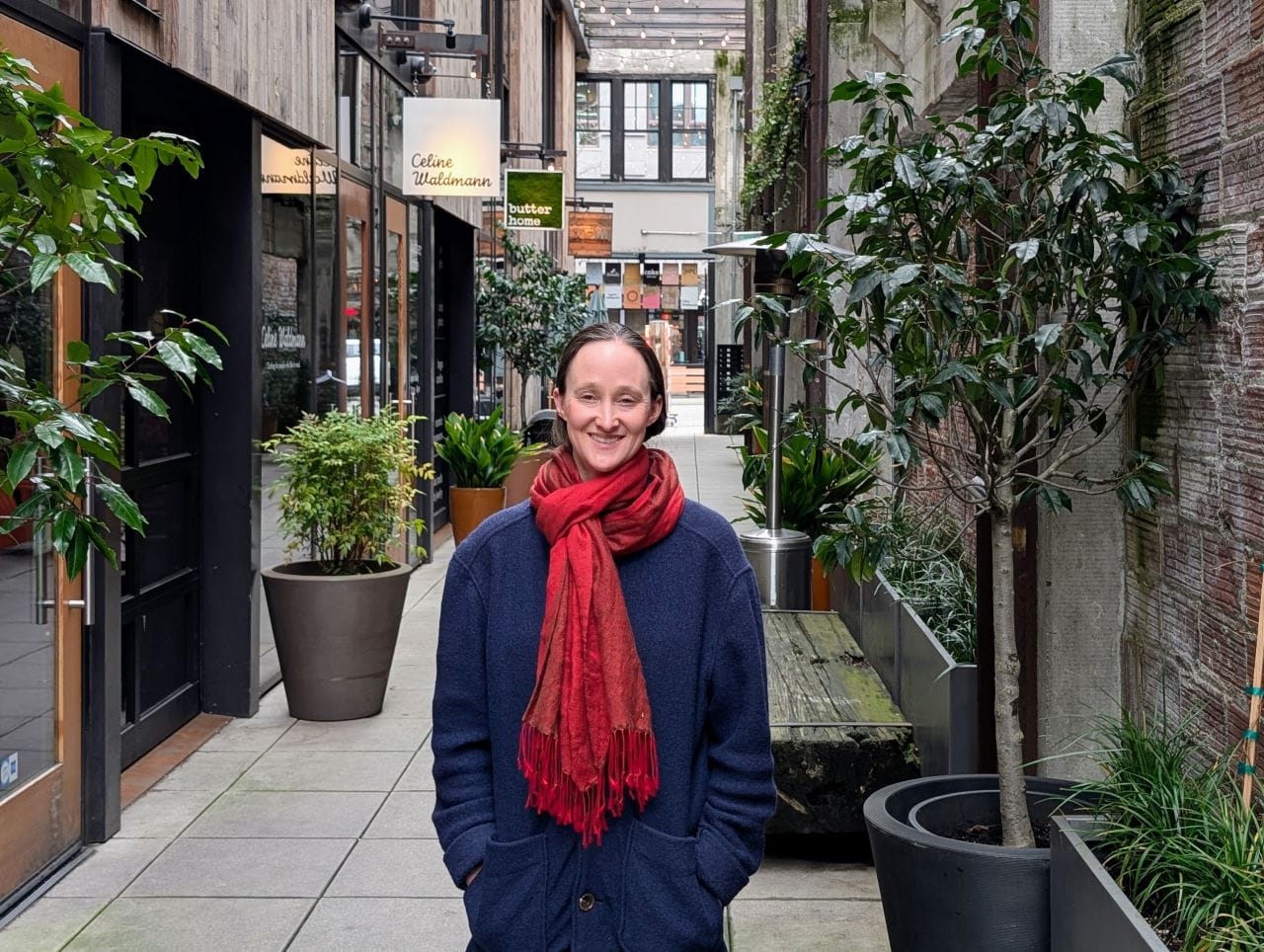
Some of these appointments were expected. While not codified in law, the idea that the Seattle Mayor is automatically granted a seat on the Sound Transit board is a norm that goes back to the agency’s infancy. Katie Wilson is set to bring a unique perspective to the Sound Transit board room, as a transit rider who doesn’t own a car and as an organizer who has been involved in some of the region’s biggest transit funding discussions over the past few decades.
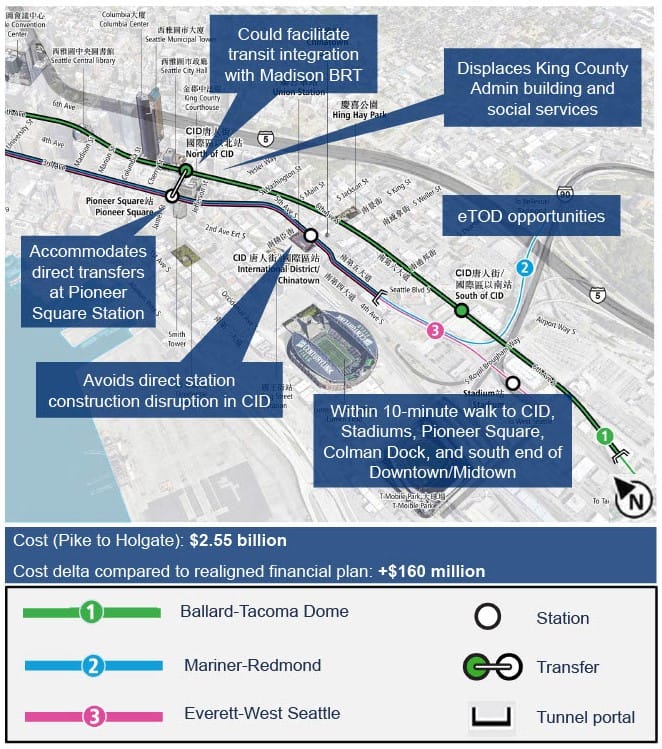
One of the biggest decisions that Wilson will face is whether to hold firm to the agency’s preferred alignment for the Ballard Link Extension project, which would bypass the centrally located Jackson Street transit hub in the Chinatown-International District (CID) and nix a Midtown station near the Seattle Central Library. Instead the proposal, which was revised from the original plan presented to voters following neighborhood pushback, puts stations instead near Pioneer Square Station and near the Uwajimaya parking lot.
Beyond the preferred alternative, the other CID station options still in the mix include a station at 4th Avenue S, which an agency study deemed “technically infeasible,” and a refined station close to 5th Avenue S designed to minimize impact on the surrounding area but which has nonetheless received significant pushback from neighborhood residents and CID advocates.
The last-minute decision to skip Jackson Street was a proposal put forward by Wilson’s predecessor Bruce Harrell, in coordination with current Sound Transit CEO Dow Constantine. While changing course at this point is feasible, it could come with a steep price tag by adding months of additional delay to the megaproject’s timeline.
“I think from a transit rider connectivity standpoint, [that station is] not my ideal solution,” Wilson told the International Examiner this month about the Uwajimaya-adjacent station proposal. “But if that ends up being the direction that things go… my goal would be to make that as great as possible, and to be working with organizations, nonprofits, businesses in the neighborhood, to realize the full potential of that site and the ways that It can help to anchor communities in the CID.”
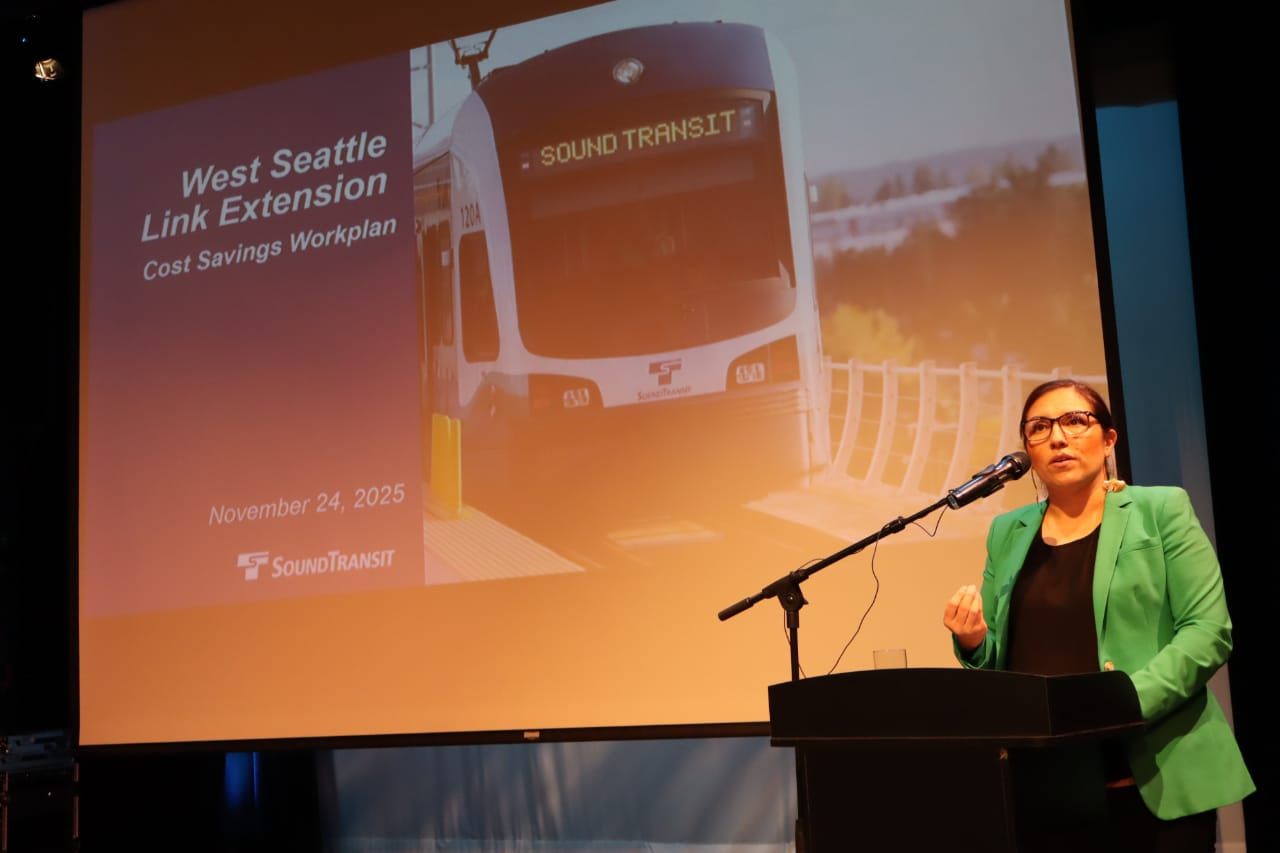
Meanwhile Teresa Mosqueda, a West Seattle resident taking over the seat that Zahilay previously held on the board, has positioned herself as a champion of the West Seattle Link Extension. As a lower ridership segment that is somewhat disconnected from the rest of the system — at least until 2039 when Ballard Link opens — West Seattle Link is going to be a likely target for board members in other areas of the region seeking to prioritize their own projects.
At a “visioning forum” held last week that many took as a prelude for more engagement on the issue on the board, Mosqueda clearly signaled a willingness to study the idea of abandoning the station planned at Avalon Way in order to unlock both significant cost savings and reduce community impacts, like potential demolition of the West Seattle Health Club. While that move alone isn’t enough to solve the project’s affordability gap, that type of dealmaking is clearly going to be needed to maintain course toward a ribbon-cutting on the line.
As a councilmember who represents a district that includes Burien and parts of Tukwila, Mosqueda will also be charged with representing the South King subarea within the Sound Transit taxing district, along with new board members Thomas McLeod and Steffanie Fain, whose council district includes Tukwila along with Renton, Kent, Des Moines, SeaTac, and Normandy Park.
Fain doesn’t have a deep transit background and has never served in elected office before. During the campaign, she touted the endorsement of the county’s transit operator’s union, ATU 587, with a strong focus on transit safety investments, but did not make regional transit investments a major part of her campaign. Now she’ll become a pivotal vote to secure when it comes time to ensure that all of King County’s delegation is aligned.
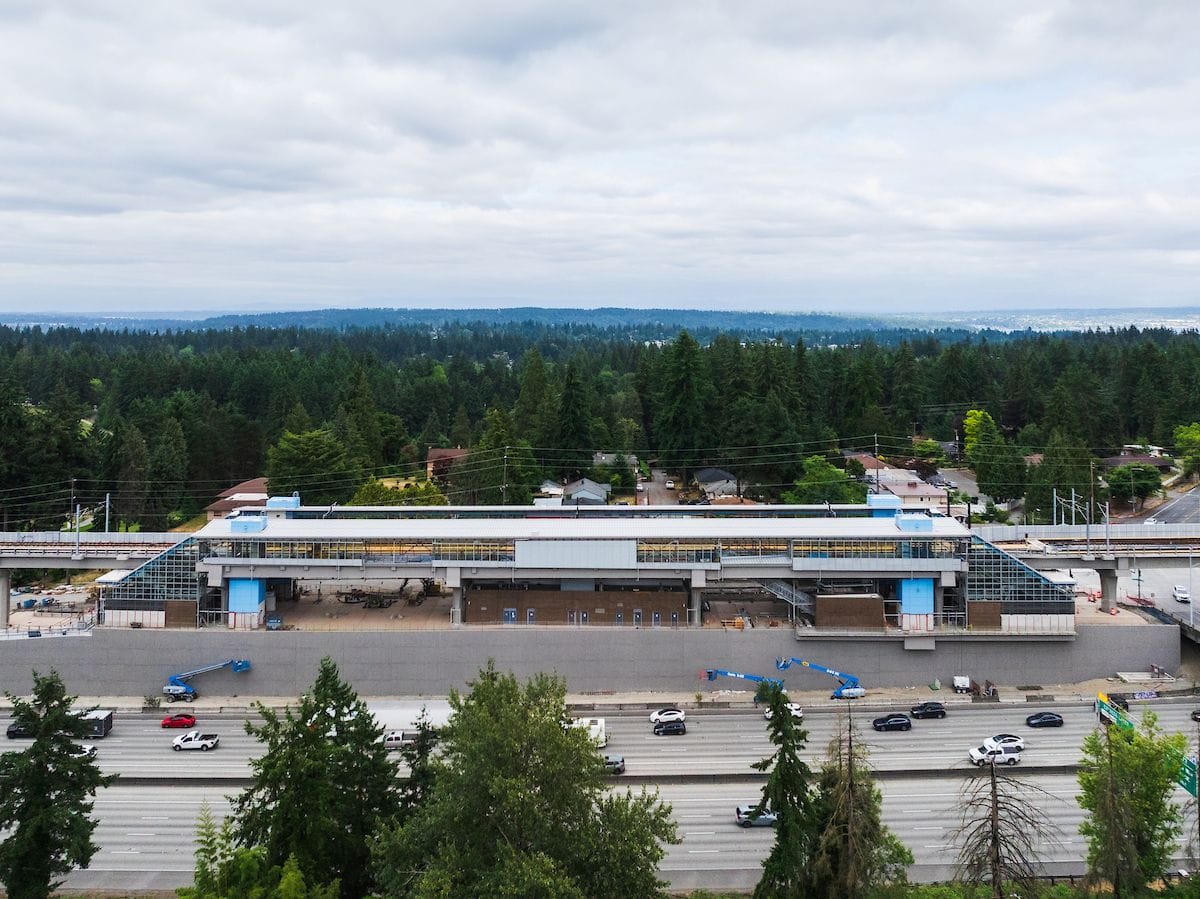
McLeod, who has been serving as Tukwila Mayor since 2024 after being a member of the Tukwila City Council, has been a strong advocate for the completion of a 1 Line infill station near Boeing Access Road, close to Allentown. Included in plans since the line’s inception and specifically promised to voters in 2016, the project’s costs have ballooned to nearly $500 million — an incredibly high price tag for a single infill station.
Located in a sparsely populated industrial area, the station will generate only around 2,000 daily riders, according to agency modeling. Given the high cost and lower ridership projections, the pressure to once again delay the station will likely intensify next year. But now Tukwila has a direct advocate on the Sound Transit board to push for that station’s completion.

When the new board members get officially confirmed by the King County Council and seated, they’ll have little time to get acclimated before being faced with major decisions around the future of the transit system. By the end of 2026, Sound Transit expects to have an updated ST3 system plan, service guidelines network plan, regional transit long-range plan, and long- range financial plan all approved.
First Look at South King County’s Three New Light Rail Stations
‘Build the Damn Trains’ Campaign Pushes Sound Transit Toward Creative Solutions