

Now that the electoral dust has settled, Seattle’s entire political media focus is on Mayor-elect Katie Wilson. This spotlight leaves a lot of context, history, and contributors in the shadows. To determine the progressive pathway to power, we must look back years and decades to a series of progressive victories that paved the way for the most significant mayoral victory in Seattle over the past 100 years.
Democracy vouchers
One starting point was the Democracy Vouchers initiative which Seattle voters overwhelmingly approved in 2015. Sightline Institute and its CEO, Alan Durning, deserve much of the credit for crafting the initiative language and gathering the signatures. Thanks to Democracy Vouchers, whereby Seattle residents can contribute up to four vouchers, or $100 in a campaign cycle, candidates who gather popular support can focus their campaigns on the voters rather than affluent funders.
In Katie Wilson’s race for Mayor, she garnered almost 32,000 vouchers and $800,000 in total voucher contributions. Bruce Harrell gained 19,500 vouchers and almost $500,000 in vouchers. Wilson (and Harrell, to a certain extent) were freed from spending hours and days on the phone and emailing for dollars from affluent people.
Transit Riders Union campaigns
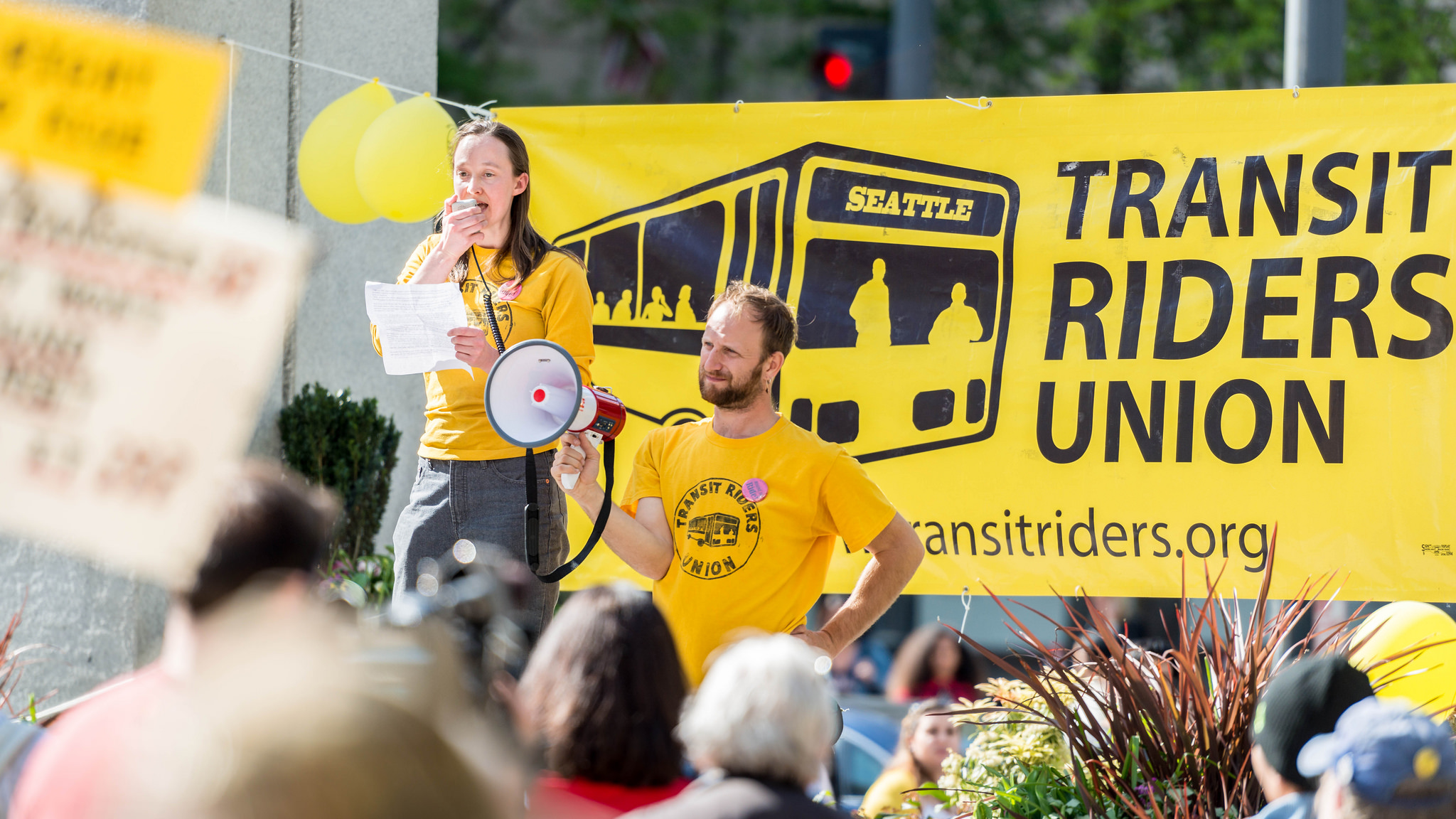
Another starting point was the founding of the Transit Riders Union (TRU), primarily through the initiative and sweat equity of Katie Wilson and Scott Myers. TRU succeeded in becoming a voice and a crowbar for preserving transit and gaining economic security in Seattle, including free transit for middle and high school students, discounted fares for low income people, and 100% employer-paid transit passes for thousands of University of Washington workers.
When Trump was first elected in 2016, the Transit Riders Union and the Economic Opportunity Institute co-led the Trump-Proof Seattle campaign, getting the city council to unanimously pass an income tax on the affluent. While this was later ruled unconstitutional, that ruling opened the doors for other forms of progressive taxation.
In 2020, Wilson dreamed up and successfully lobbied for the JumpStart Tax, which has been a gamechanger, raising revenue for the City in a progressive fashion. JumpStart also saved Seattle from painfully deep service cuts in the midst of the pandemic.
Going beyond taxes and transit, to the basic economic security of working people, Wilson spearheaded the efforts for raising the minimum wage in several Seattle suburbs and unincorporated areas of King County. She won stronger renter protections, including longer notice for rent increases, and caps on move-in fees and late fees, in Seattle and Kenmore, Kirkland, Redmond, Burien, SeaTac, and Shoreline.
Electing Rinck to turn momentum back to progressives
These building blocks created the context enabling Seattle voters to respond to the return of Donald Trump and the Seattle City Council’s own rightward drift. Council was so confident that they appointed a centrist, business-oriented candidate to the city council who had just lost her election resoundingly.
In 2023, Councilmember Tammy Morales, a progressive Democrat, won re-election by 1.5%. With the resignation of Teresa Mosqueda from the city council to take her newly elected position on the King County Council, the Seattle City Council turned around and appointed Tanya Woo, who had lost to Morales, to the open seat.
For a few months, progressives complained about this appointment and Woo’s support for conservative policies, but no one immediately put themselves forward to run against her in the upcoming special election. In late March, Alexis Mercedes Rinck, who was 28 years old at the time, stepped up to the challenge Woo.
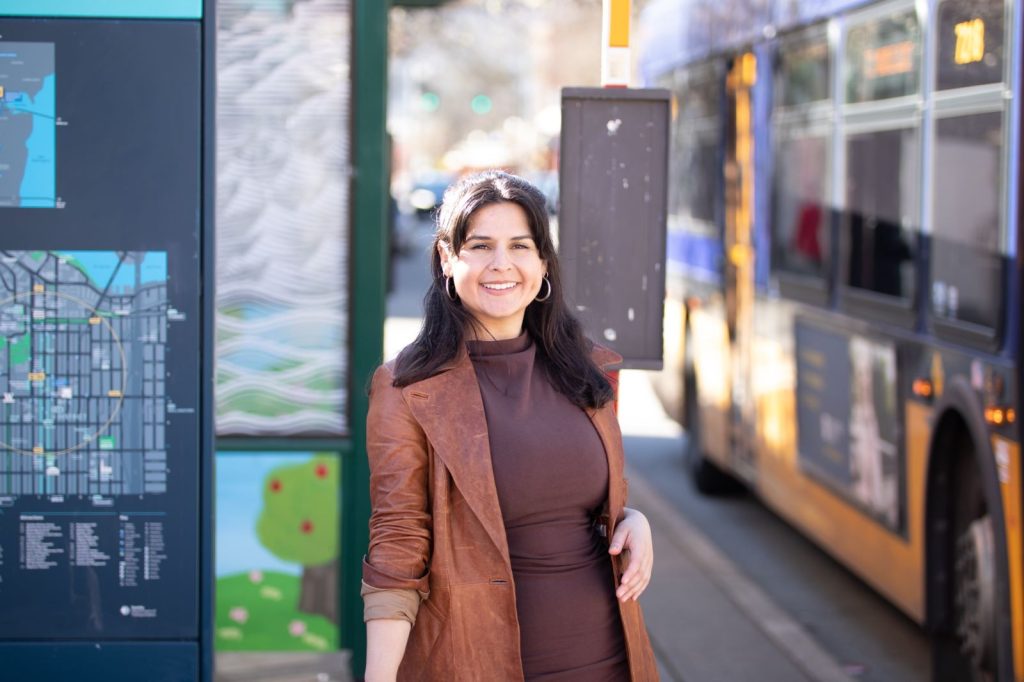
Rinck is a progressive policy wonk, a renter, a transit rider, as well as the progeny of two teenage parents who met in a gang. With her dad incarcerated and her mom dealing with addiction, Rinck went to live with her grandparents — certainly a “lived experience” lacking on Council. Now progressives had a candidate around whom to rally, and they did. Democracy vouchers made up three quarters of Rinck’s total contributions. She could focus her campaign and her appeal to the voters, not funders. Rinck won overwhelmingly, with a 17% margin of victory in 2024.
In this same election, Trump received less than one quarter of the vote in King County. Voters were becoming restless and progressive. The corporate business community might have noticed that their power era was fizzling out. But they did not seem to get this.
Social housing win exposes Harrell
Instead, they, in the messenger agent of Tim Ceis, persuaded the city council to stall a vote on Initiative 137, the excess compensation tax to fund social housing brought forward by a grassroots campaign led by House Our Neighbors. In its place they suggested a competing measure that would raise no new money and undermine the mixed-income social housing mission. The corporate lobbyists persuaded Bruce Harrell to be the poster child for opposing the excess compensation tax.
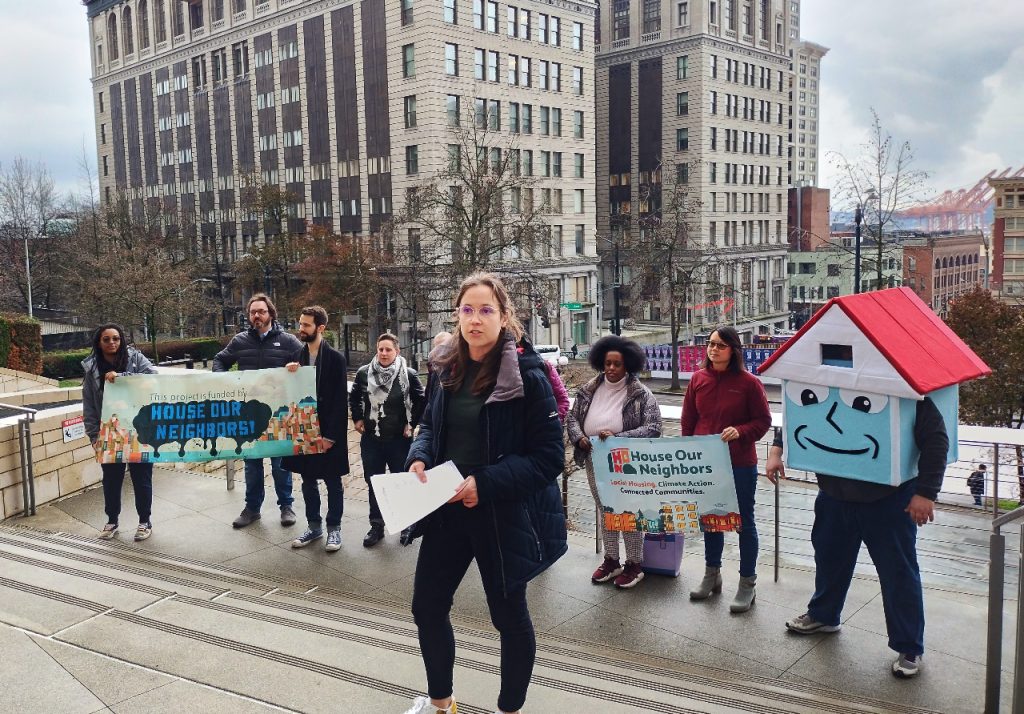
However, when the election was finally held this past February, the social housing initiative won with a 26% point margin. The House our Neighbors coalition included labor and progressive groups among them Katie Wilson and TRU. On the other side were Amazon, Microsoft, and Bruce Harrell.
This overwhelming vote for progressive taxation created the opening that Katie Wilson noted and needed. She would run a campaign based on community organizing. “This is your city” was a perfect theme for voters fed up with Trump, Harrell, and business as usual in city government, which didn’t seem to prioritize meeting their needs.
Strong slate of progressive candidates
Progressive fortunes grew further as Erika Evans (granddaughter of the great Black Power advocate and Olympic gold medalist Lee Evans) accelerated her campaign for city attorney. When Dionne Foster decided to take on the very conservative and unfriendly city council president, Sara Nelson, the alignment for progressive power solidified. Rinck put the icing on the cake for progressives, running for re-election.
These three women candidates, Evans, Foster, and Rinck, created the electoral context for Katie Wilson’s victory. They all won by huge margins, with Rinck gaining more than four out of five votes.
Wilson had a different contest, facing a powerful, not unliked, and well-funded opponent. The Seattle Times did its utmost to boost Harrell’s candidacy and badmouth Wilson for her “lack of experience.” Harrell had a ton of money to amplify attacks on his opponent. The “Bruce Harrell for Seattle’s Future” Committee, run by Harrell’s Senior Deputy Mayor Tim Burgess, raised $1.8 million in “independent expenditures” from Seattle’s rich and powerful.
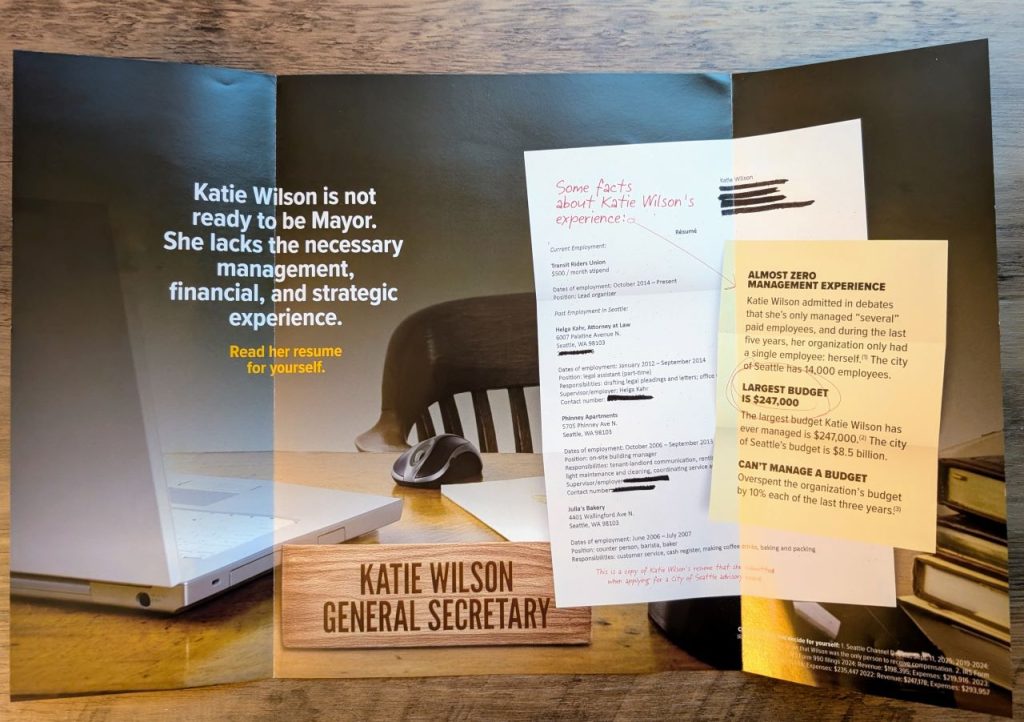
Fortunately, progressives had their own independent expenditure effort led by Ron Davis (who ran for city council in 2023 and came up 235 votes short). Dubbed “Katie Wilson for an Affordable Seattle,” the group raised their own warchest, albeit at a smaller scale, and put out effective mailers to help counteract the media blitz from the Harrell camp.
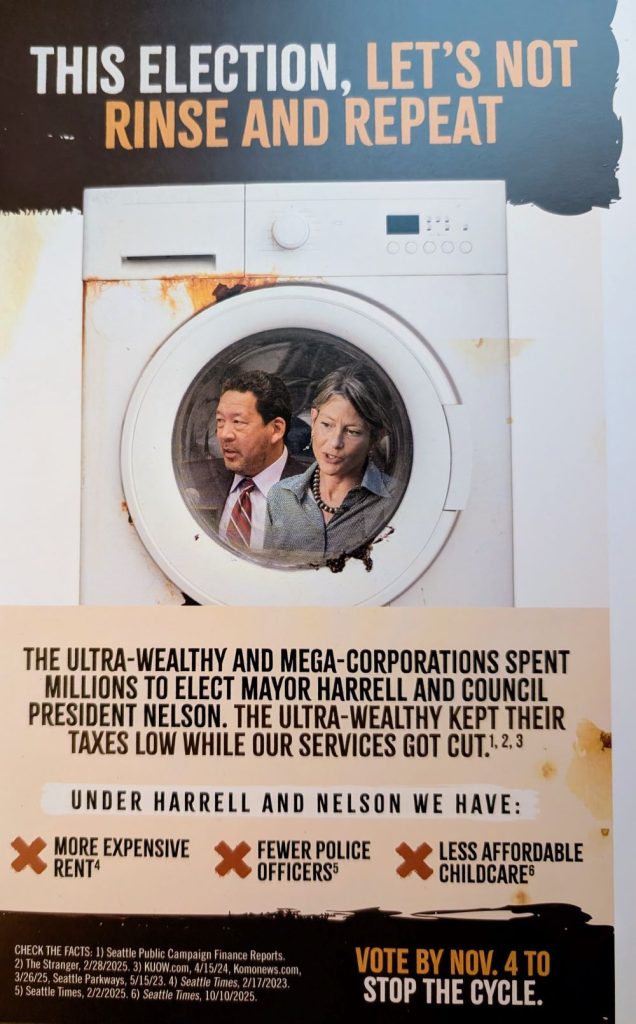
So what made the difference for Katie to gain a 2,000 plus vote margin? Grassroots organizing and campaigning, with thousands of volunteers helping out. It was the campaign equivalent of community organizing — the authentic Katie Wilson. Electoral momentum does not happen by itself. For Wilson, it was the product of at least a decade of economic, political and electoral organizing by tens of thousands of Seattle residents. These public organizers have proven that this is not just your city… it is our city for all of us!

John Burbank (Guest Contributor)
John Burbank founded the Seattle-based Economic Opportunity Institute in 1998 and led it until his retirement in 2021.