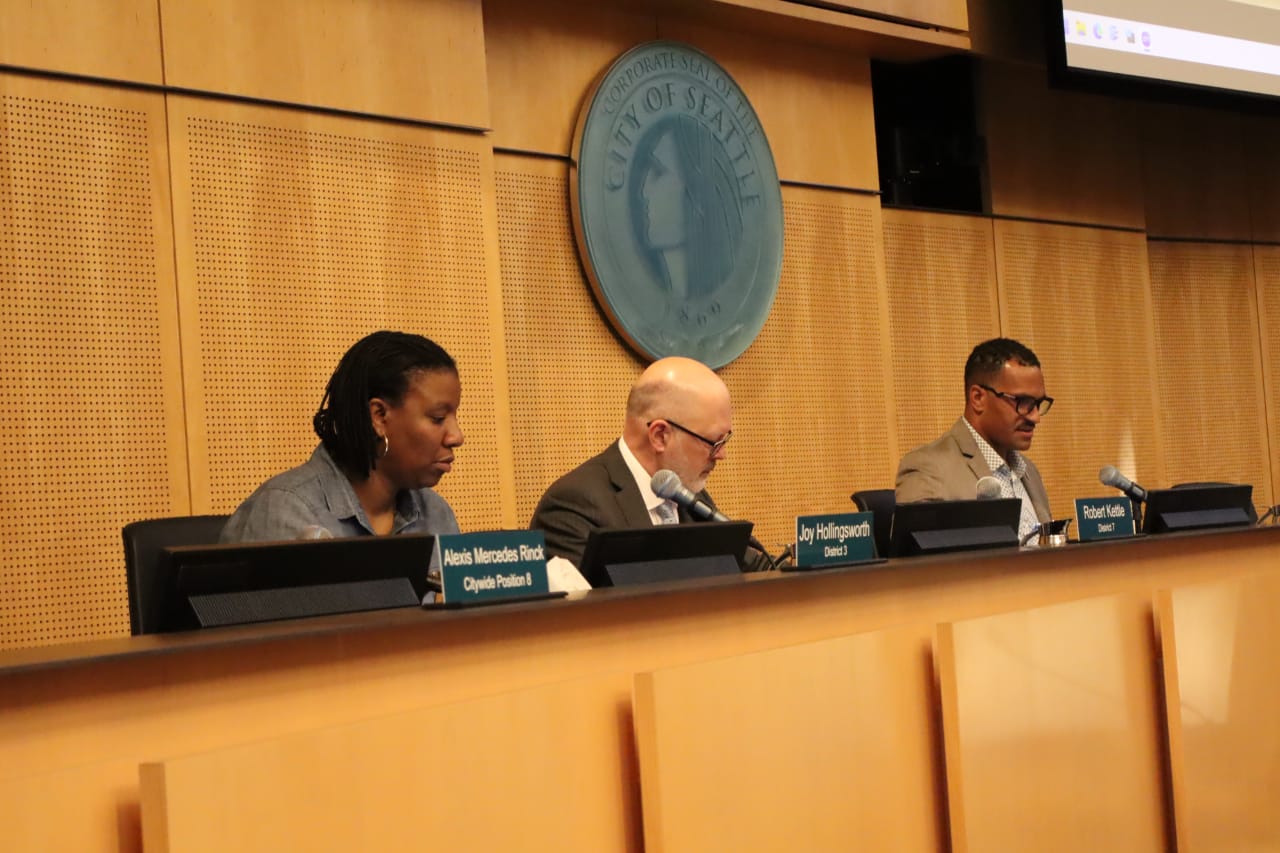
District 3 Councilmember Joy Hollingsworth will lead the Seattle City Council as its President for the next two years, following a unanimous vote at the first council meeting of 2026. Taking over the gavel from Sara Nelson, who left office at the end of last year after losing to progressive challenger Dionne Foster, Hollingsworth will inherit the power to assign legislation to committees, set full council agendas, and oversee the council’s independent central staff.
The role of Council President is usually an administrative one, without much fanfare involved. But Nelson wielded the role in a more heavy-handed way: making major staff changes that were seen as ideologically motivated, assigning legislation that she sponsored to the committee she chaired, and drawing a hard line against disruptions in council chambers that often ground council meetings to a halt.
With the Nelson era officially over, Hollingsworth starts her term as President on a council that is much more ideologically fractured than the one she was elected to serve on just over two years ago. The addition of Foster, and new District 2 Councilmember Eddie Lin, has significantly bolstered the council’s progressive wing, and the election of Katie Wilson as the city’s first progressive major in 16 years will also likely change council dynamics as well.
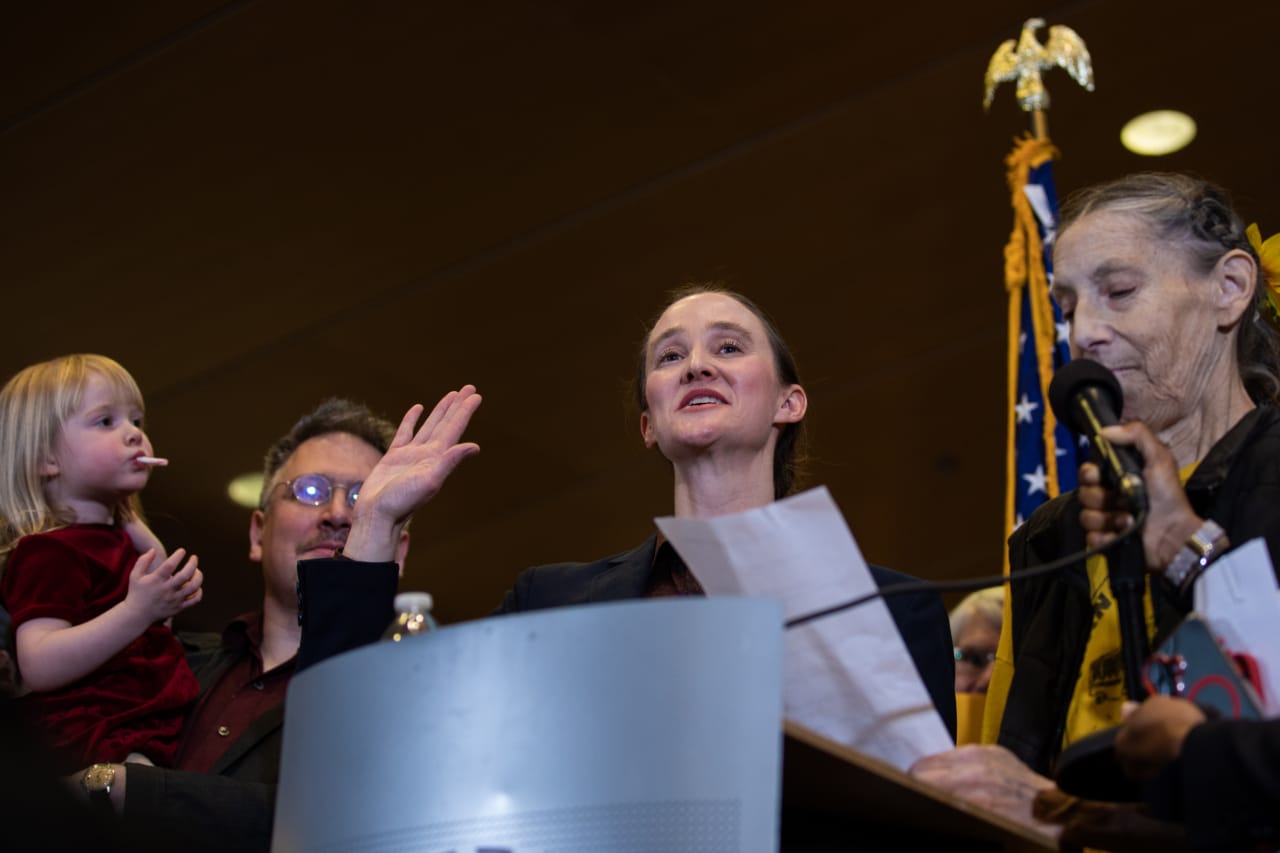
“This is my promise to you all and the residents of the city of Seattle: everyone who walks through these doors will be treated with respect and kindness, no matter how they show up, in their spirit, their attitude or their words,” Hollingsworth said following Tuesday’s vote. “We will always run a transparent and open process as a body. Our shared responsibility is simple: both basics, the fundamentals, measurable outcomes, accessibility to government and a hyper focus on local issues and transparency.”
Seattle politicos are predicting a closely split city council, arguably with a 3-3-3 composition, with two distinct factions of progressives and centrists, and three members — Dan Strauss, Debora Juarez, and Hollingsworth herself — who tend to swing between the two. Managing those coalitions will be a big part of Hollingsworth’s job, with a special election in District 5 this fall likely to further change the dynamic.
Though it took Tuesday’s vote to make the leadership switch official, Hollingsworth spent much of December acting as leader already, coordinating the complicated game of musical chairs that is the council’s committee assignments. In a move that prioritized comity among the councilmembers ahead of policy agendas, Hollingsworth kept many key committee assignments the same as they had been under Nelson.
Rob Saka will remain in place as chair of the powerful transportation committee, Bob Kettle will keep controlling the public safety committee, and Maritza Rivera will continue heading the education committee, which will be tasked with implementing the 2024 Families, Education, Preschool, and Promise Levy.
There are plenty of places for progressives to find a silver lining in the new assignment roster, however. Foster will chair the housing committee, overseeing issues like renter protections and appointments to the Seattle Social Housing PDA’s governing council.
"Our neighbors want to be able to raise their families here, and have access to good schools and safe neighborhoods. Our neighbors want the buses to come on time. Our neighbors want to build the damn trains. Our neighbors want to feel safe crossing the street." -Seattle CM Dionne Foster
— Ryan Packer (@typewriteralley.bsky.social) January 6, 2026 at 4:00 PM
[image or embed]
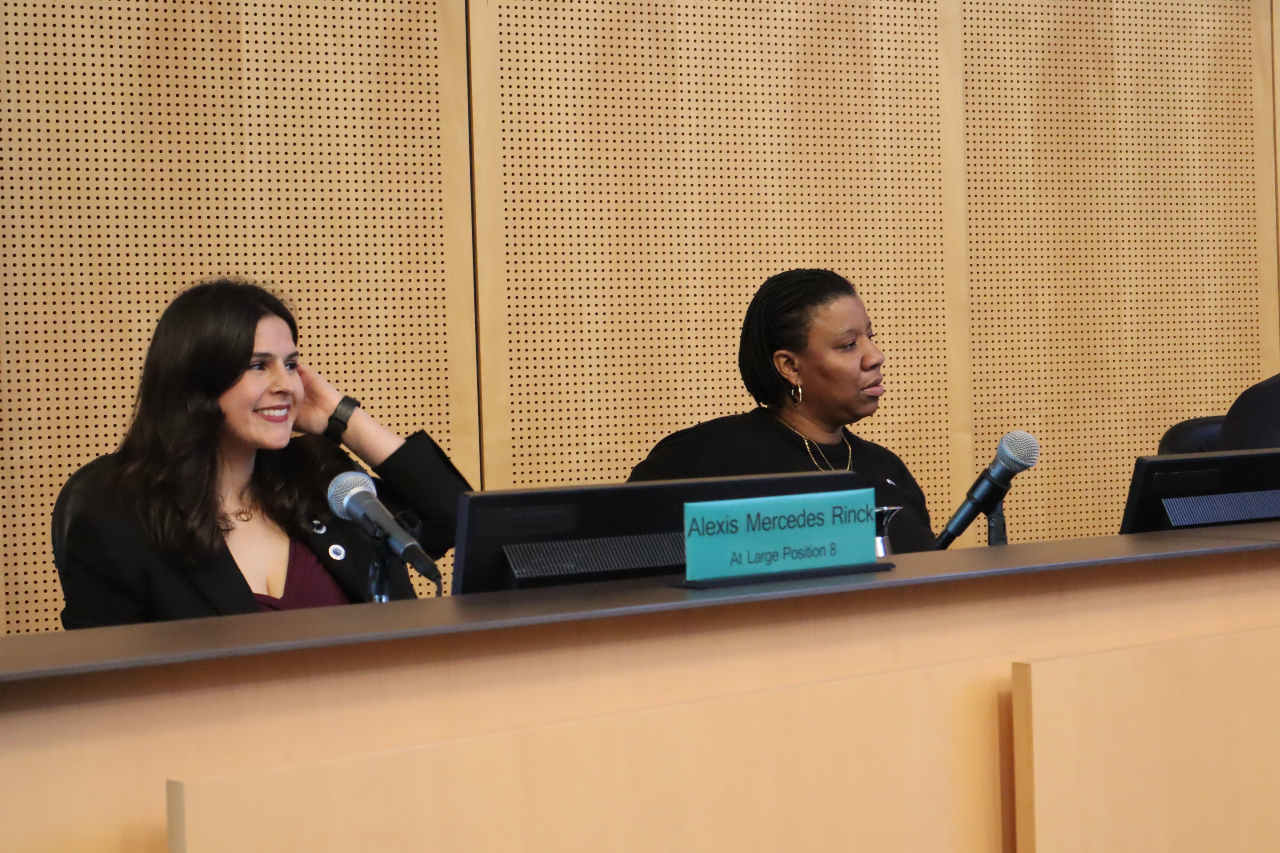
Alexis Mercedes Rinck, who secured a full four-year term in November, will helm the human services committee, a post she’d been eyeing for much of her tenure and which matches her background working at the King County Regional Homelessness Authority. Labor issues have been added to her committee as well, and she will vice-chair the transportation committee.

Lin, a former attorney in the City Attorney’s office who focused on housing issues, will stay on as chair of the wonky land use committee, after inheriting the post from interim D2 appointee Mark Solomon last month. Thaddaeus Gregory, who served as Solomon’s policy director and has extensive experience in land use issues, has been retained in Lin’s office.
The land use committee overall will likely be a major bright spot of urbanist policymaking this year, with positions for all three progressives along with Strauss and Hollingsworth. The housing committee will feature exactly the same members, but with Juarez swapped out for Strauss.
In contrast, Kettle’s public safety committee will feature Eddie Lin as the sole progressive voice, and Dan Strauss’s finance committee, which oversees supplemental budget updates that occur mid-year, won’t have any of the council’s three progressives on it at all. Strauss will also retain his influential role as budget chair.
But the biggest issues facing the council in 2026 will be handled with all nine councilmembers in standalone committees: the continued implementation of the Comprehensive Plan, the renewal of the 2019 Library Levy and the 2020 Seattle Transit Measure, and the city’s budget, which faces significant pressures after outgoing Mayor Bruce Harrell added significant spending that wasn’t supported by future year revenues.
Hollingsworth will likely represent a big change in leadership compared to Sara Nelson, but with such a fractured council, smooth sailing is far from assured.