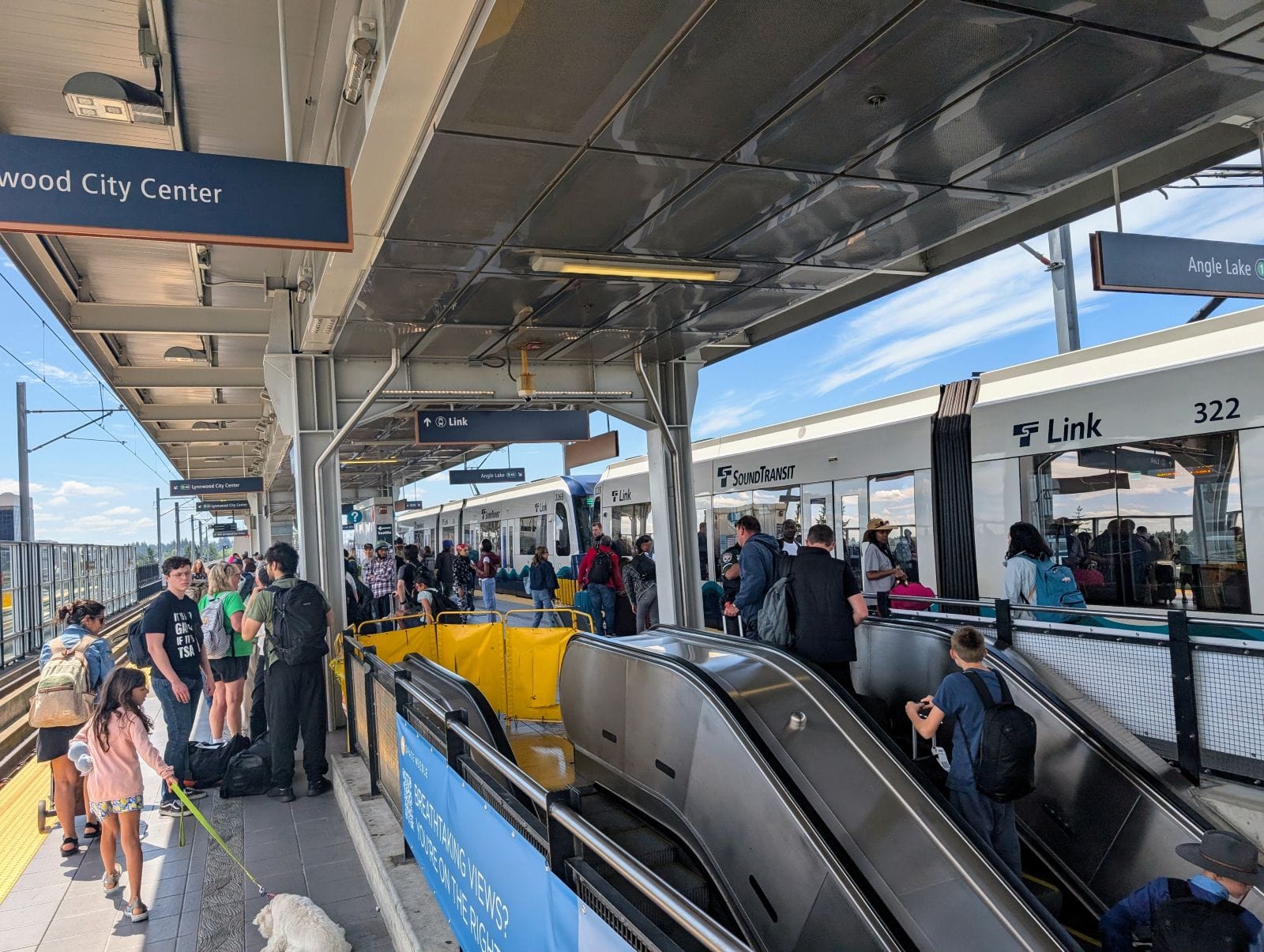
Getting to and from SEA Airport should not feel like an endurance test. Yet for travelers and for the more than 23,000 people who work at SEA every day, the commute remains a persistent challenge. Post-pandemic, the public’s travel habits snapped back, and the long-ago decision to place the light rail station a quarter mile from the terminal continues to act as a serious barrier for transit riders where at best it’s an inconvenience, and at worst it’s a mobility impossibility.
My fellow port commissioners and I have explored multiple solutions to this issue, including attaching a moving walkway to the parking garage or cutting a deep walkway into the concrete structure – though both proved technically and financially unworkable. We improved the existing path with wind blocking plexiglass and brightly colored walkways. And the passenger carts have been moderately successful, albeit inconsistent, carrying nearly 250,000 people per year to the terminal (even as staffing shortages and heavy mechanical wear have made the system difficult to sustain).
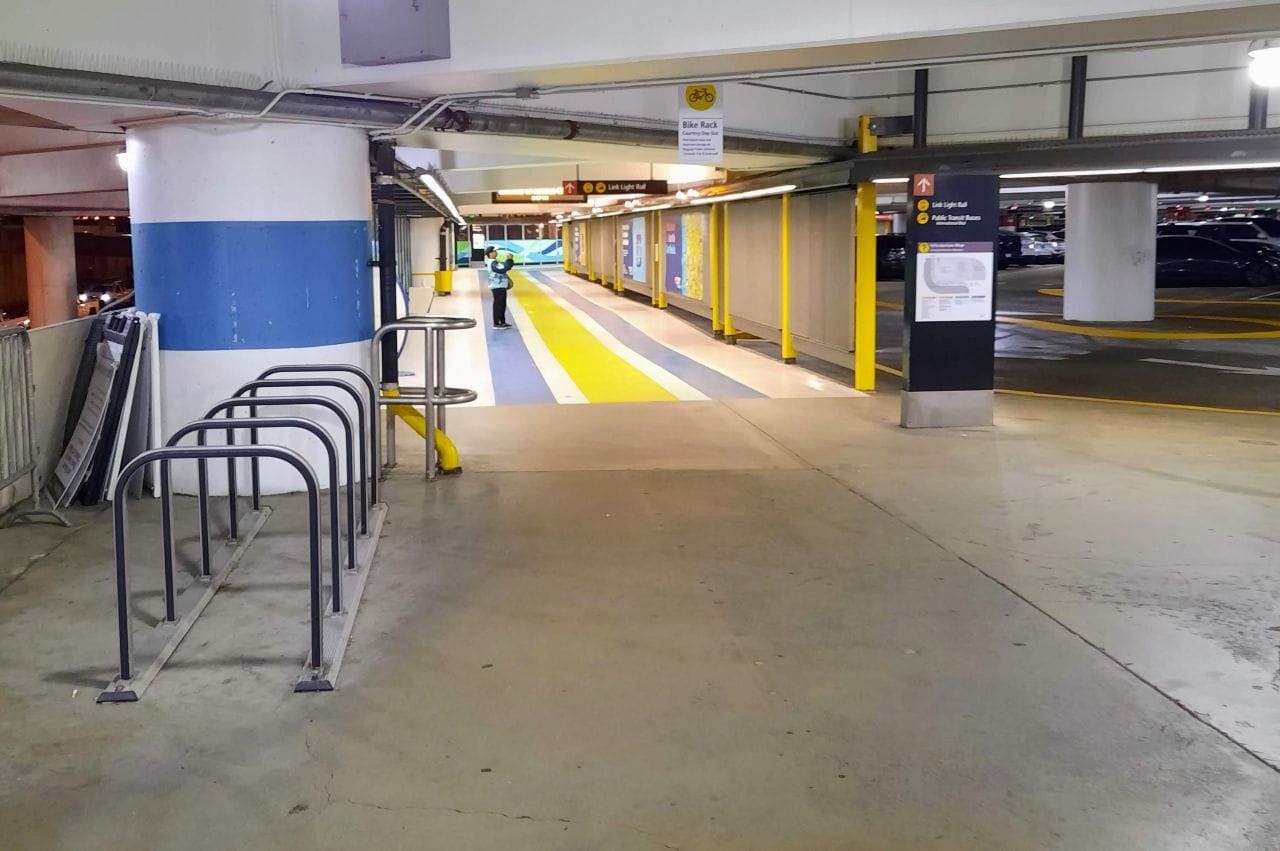
Coming up, the port has proposed a number of projects within its Sustainable Airport Master Plan, including a new space – heated and cooled for comfort – with a moving walkway between the light rail and skybridge. This will come up for a Commission vote as soon as 2027.
But the primary barrier to get people on the light rail isn’t the long walk from the station. A 2018 study demonstrated that commute time is the primary reason people choose to drive instead of ride. In fact, commute time is cited as six times more likely to be the barrier to using transit as compared to walking through the garage.
While encouraging folks to use public transit has been a regional effort, the Port Commission has set its sights on strategies that will center its workforce. Indeed, the greatest opportunity for meaningful change lies with the airport’s 23,000 employees. With three shifts spanning 24 hours, nearly 46,000 workers commute to the airport every day. It’s also an equity issue: reliable, affordable transportation is essential for the airport’s diverse workforce, many of whom work non-traditional hours and live far from the airport.
It is mission-critical to ensure that every employee, regardless of income, schedule, or home location, has a safe and reliable way to get to work.
Today, the Transportation Management Association (TMA) is beginning to deliver results of the commission-led ORCA-for-All program, which will ensure every SEA employee has a free transit pass. Additionally, they’re piloting and delivering an analysis of employee-only bus routes from high density cities – a strategy to meet employee’s unique transportation needs and meet our single-occupancy vehicle reduction goals. And they’re deploying carpool and parking incentives aiming to change employee behavior.
The Commission also passed the Port’s Roadway Improvements Project and is currently implementing Ground Transportation Center improvements that will include a dedicated southbound lane for shuttles, and prioritize shuttles to have dedicated access to the curbside areas. While the entrance of the Ground Transportation Center does not meet the state definition of an HOV or bus-only lane, it will function like one by design.
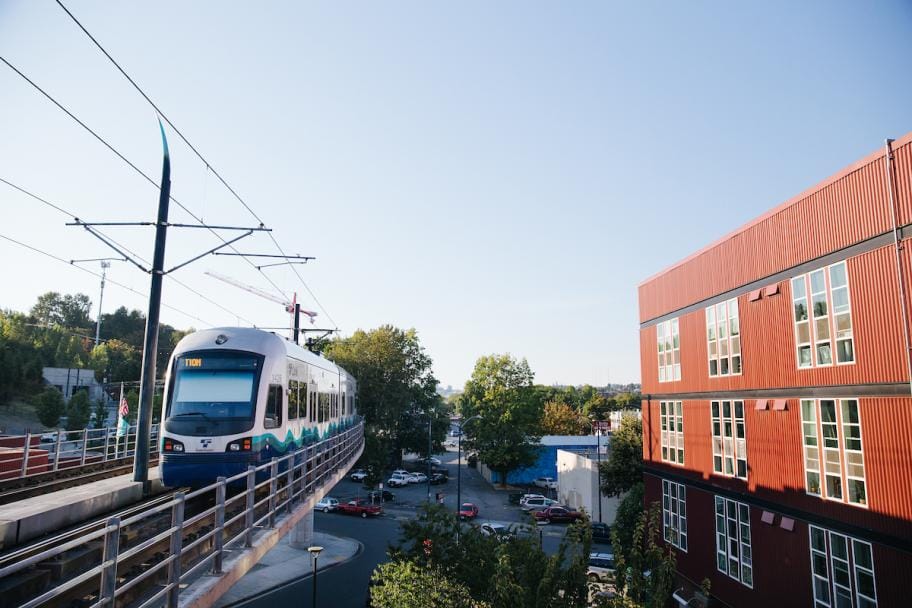
We are especially encouraged by the brand new Federal Way Link extension that serves an area where a large proportion of our airport workers live. However, light rail does not yet serve swing-shift workers. Many lower wage employees start or end their shifts around 5am, when transit options are limited. For these workers, affordable parking must remain available. Revenue from employee parking, potentially up to $20,000 per day, will help fund the TMA and expand commute-trip-reduction programs.
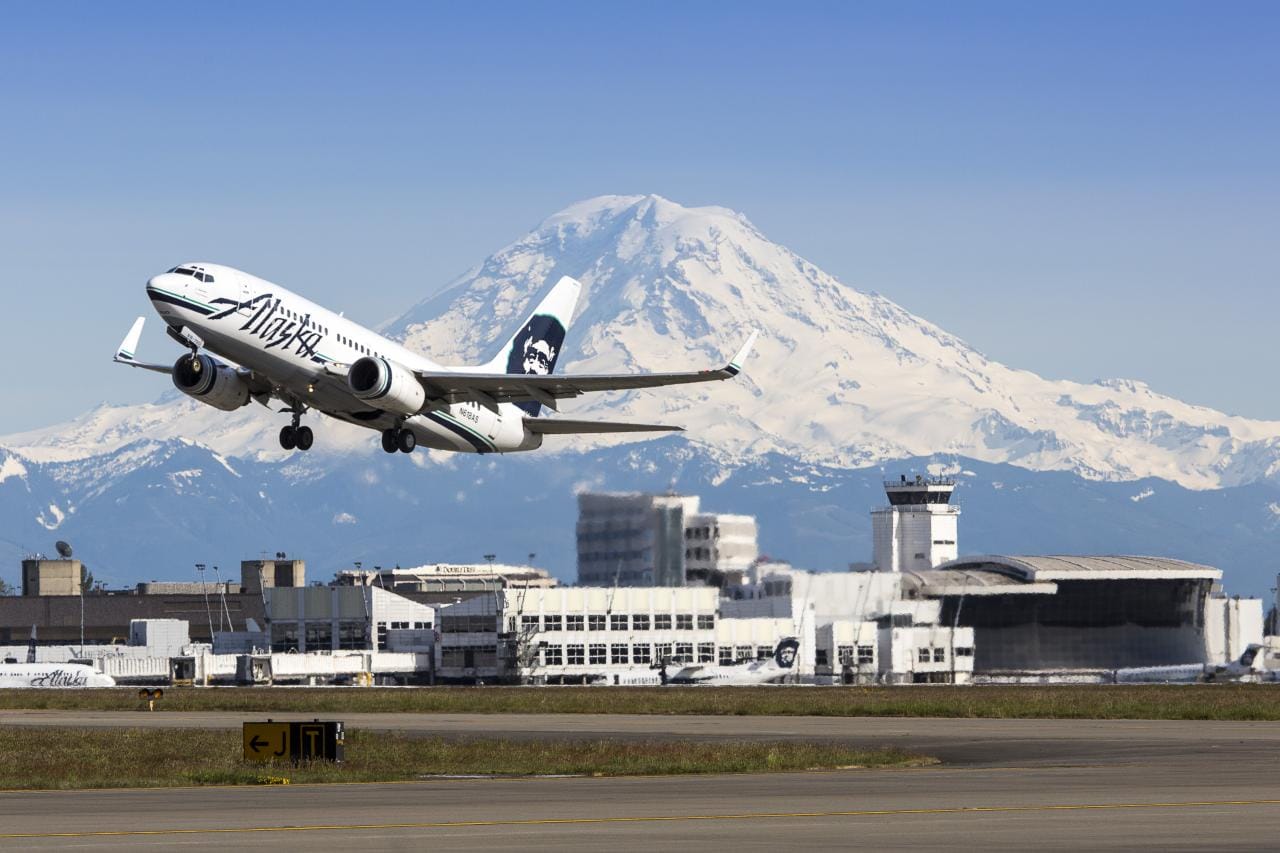
It is worth noting that most airport employers are not covered by state commute-trip-reduction requirements due to shift times and employer size. So while the airport hosts more than 23,000 workers, only a small number (primarily those employed by Alaska and Delta) are required to participate. This makes the Port’s leadership and investment even more critical.
Looking ahead, the Port will continue to champion light rail expansion and support high-speed rail. Any solution that eases pressure on our constrained airport footprint, protects surrounding communities, and delivers reliable, low-carbon access for the region has our full support. We are also partnering with local communities to build bike-friendly routes to SEA, along with charging and secure storage for electric bikes and scooters. These are practical, popular, and accessible options for both airport workers and passengers.
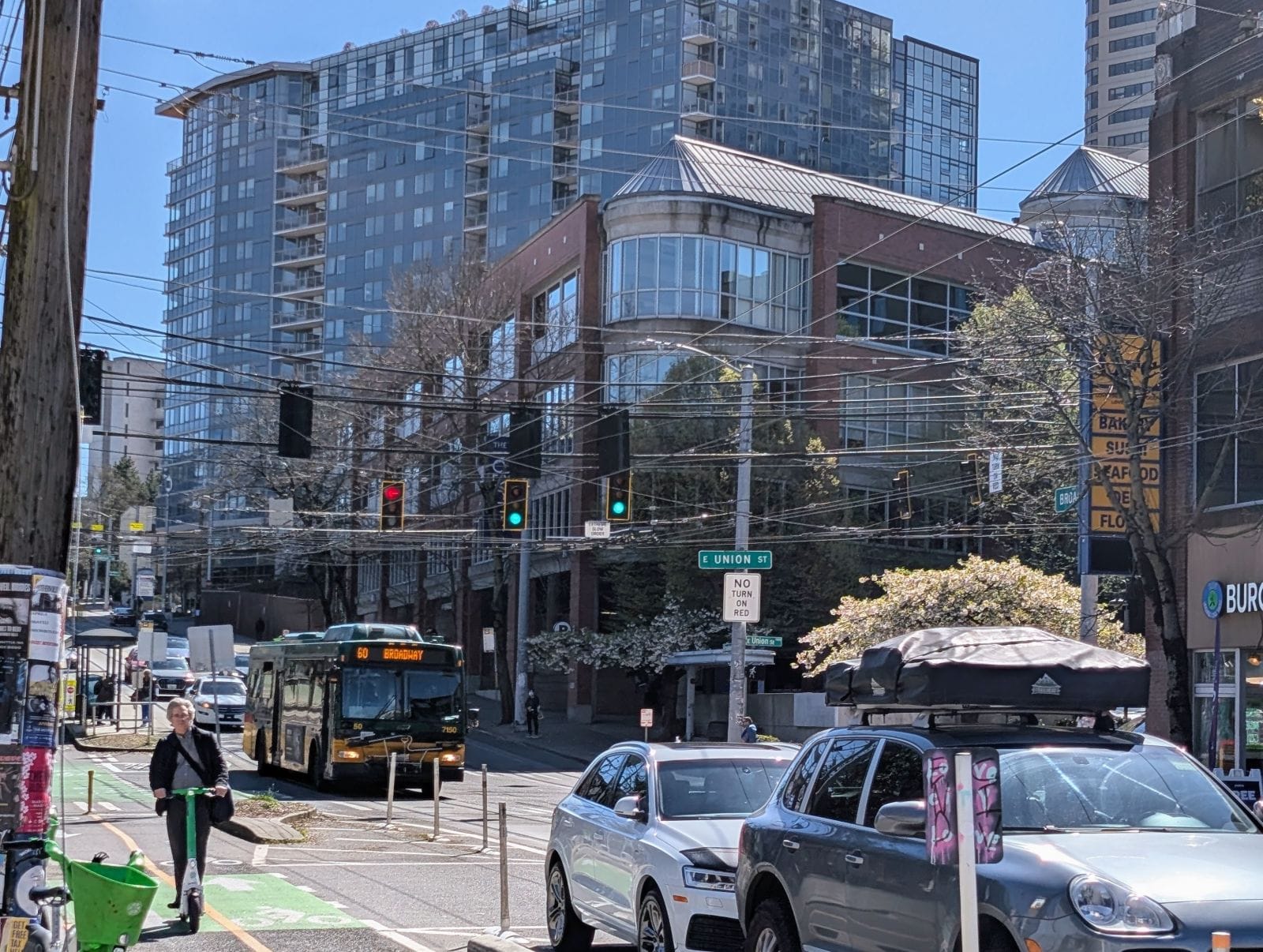
As one of the most land-constrained and densely developed airports in the country, our best path forward is clear: get people out of their cars and onto transit — for the climate, for efficiency, and for equity across the region. Achieving this will require strong partnerships with Sound Transit, King County Metro, the Washington State Department of Transportation, and our surrounding cities. We are committed to working together to build a transportation system that works for everyone.