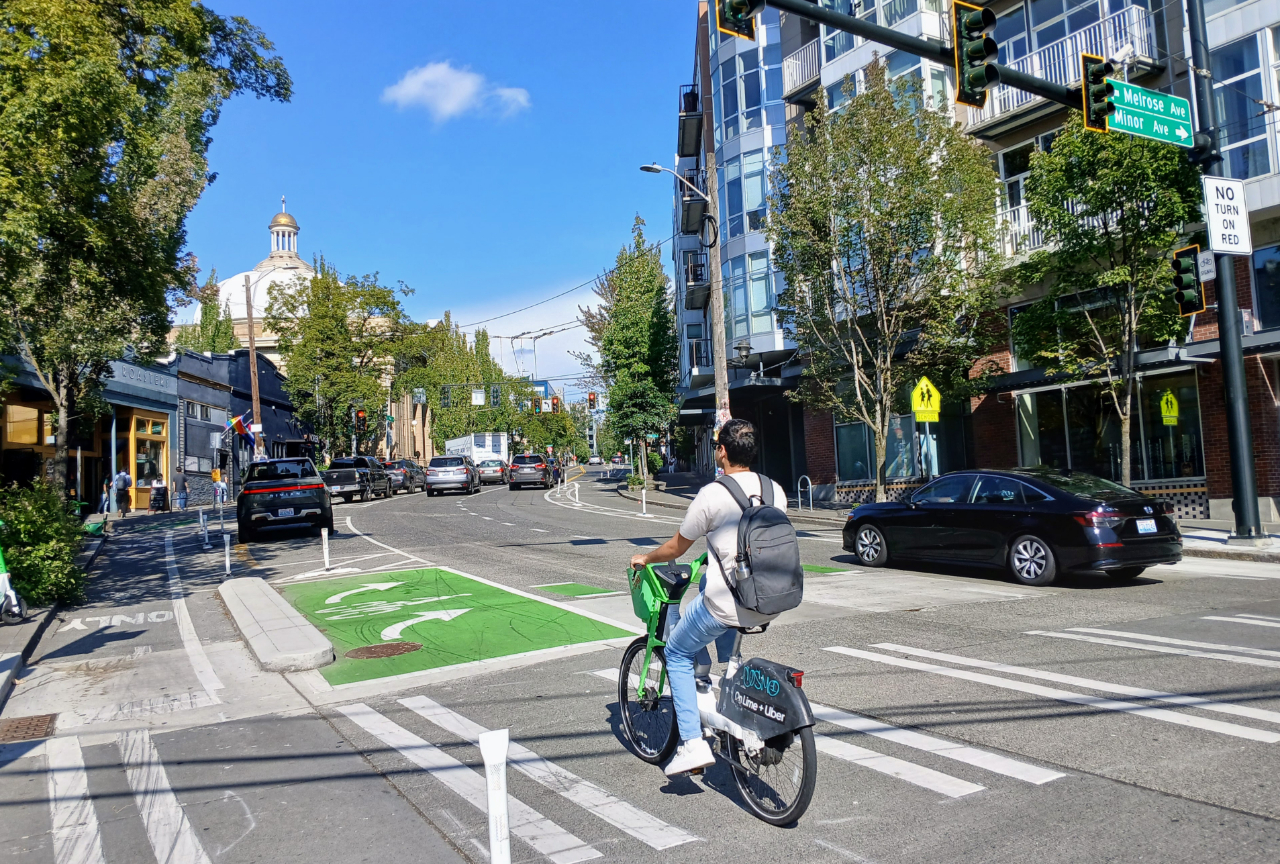
A new crosswalk at a bus stop. A new stretch of sidewalk along a school walk route. A set of traffic calming upgrades along a heavily used bike corridor. These are the types of transportation projects that Seattle residents expect to continue from one mayoral administration to the next. And yet they’re also the types of projects that, if executed well, can solidify a mayor’s reputation as a leader who takes transportation seriously, serving as the backbone of a transportation strategy.
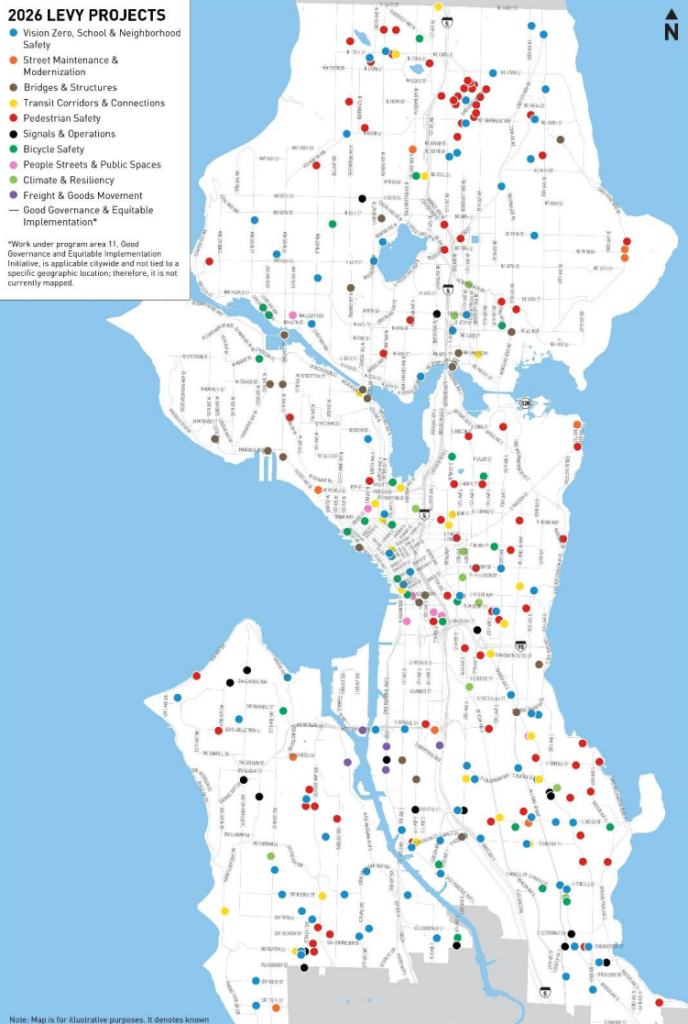
The 2026 transportation levy delivery plan just released by the Seattle Department of Transportation (SDOT) includes a broad constellation of such projects, detailing the work happening at the city thanks to the eight-year, $1.55 billion levy approved in late 2024. That plan was in the works for months before incoming Mayor Katie Wilson took office, limiting the ability of her office to significantly shape what it looks like for 2026.
However, levy spending plans will ultimately form the canvas for much of the transportation work that will occur over the coming four years of her administration. Meghan Shepard, SDOT’s Director of Policy & Planning, told The Urbanist it was a “very exciting time” during a briefing on the plan last week.
“We’re really excited to have a mayor who has transportation and transit at the forefront of her priorities,” Shepard said. “The way that the levy delivery plan comes together is that it was in progress months ago. Projects require early analysis. A lot of them were in planning last year, where that analysis was happening. Some of them are just jumping into the hopper now and so the levy delivery plan that you’re seeing now is a picture of what is planned for 2026, to begin what we are looking forward to this year is that engagement with the mayor’s office and their priorities.”
The 2024 Seattle Transportation Levy was one of the crowning achievements of Wilson’s successor, Bruce Harrell, though it was criticized by transportation advocates as falling short of the level of investment needed to keep pace with a growing city. As a direct follow-up to the 2015 Move Seattle levy, which fell short of its campaign promises in several areas but pushed the city ahead in others, the new levy sets its sights lower, with far fewer signature investments spelled out. The 2024 levy includes much more flexibility to pivot away from a prescribed list of projects, if circumstances change.
While criticized at the time, that flexibility cuts both ways and could allow Katie Wilson to significantly shape the direction of the levy during her term, pushing investments toward higher-impact safety projects.
The workplan’s biggest opportunities
The 430 individual investments in the delivery plan, which add up to more than $190 million in expenditures just this year, run the gamut from mechanical upgrades to Seattle’s bridges to repair work on sidewalk staircases. The biggest opportunities for an ambitious administration looking to maximize transportation dollars are the relatively small number of major corridor projects. Those include explicit Vision Zero corridor projects intended to maximize safety, and major repaving projects that will also come with multimodal upgrades under Seattle’s Complete Streets ordinance.
The 2015 levy included Vision Zero corridor projects as well, but without a mayor with a strong vision for what those projects could accomplish, many of those upgrades fell short of their full potential. In fact, many of the same corridors targeted for upgrades during that levy are on this levy’s long-term list of streets that will likely be tackled, illustrating the fact that the City didn’t finish the job. Recent repaving projects have also left improvements on the table, though community advocacy has been able to push SDOT to get more ambitious about these major opportunities.
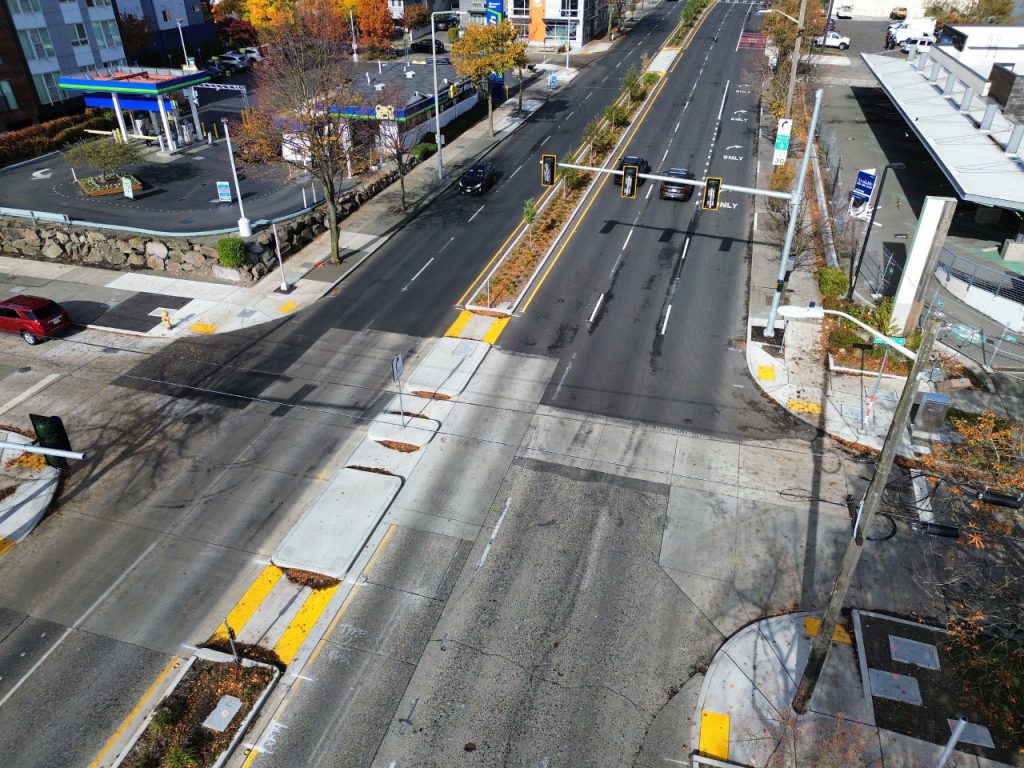
The Vision Zero corridor projects set to start construction this year would tackle Renton Avenue S in the Rainier Valley and Spring Street in First Hill, and are likely firmly baked. Beyond that, projects on S Othello Street/S Myrtle Street, Roosevelt Avenue NE/Pinehurst Way, Highland Park Way SW, and E Marginal Way in Georgetown will all advance further in design this year.
When it comes to paving work, Beacon Avenue, Western and Elliott Avenues in Belltown, S Henderson Street in Rainier Beach, and N 130th Street around Pinehurst Station present major opportunities. With those overhauls, the Wilson administration has the chance to support SDOT in redesigning these key corridors to align with the city’s broader transportation goals, something that hasn’t always been done in the past.
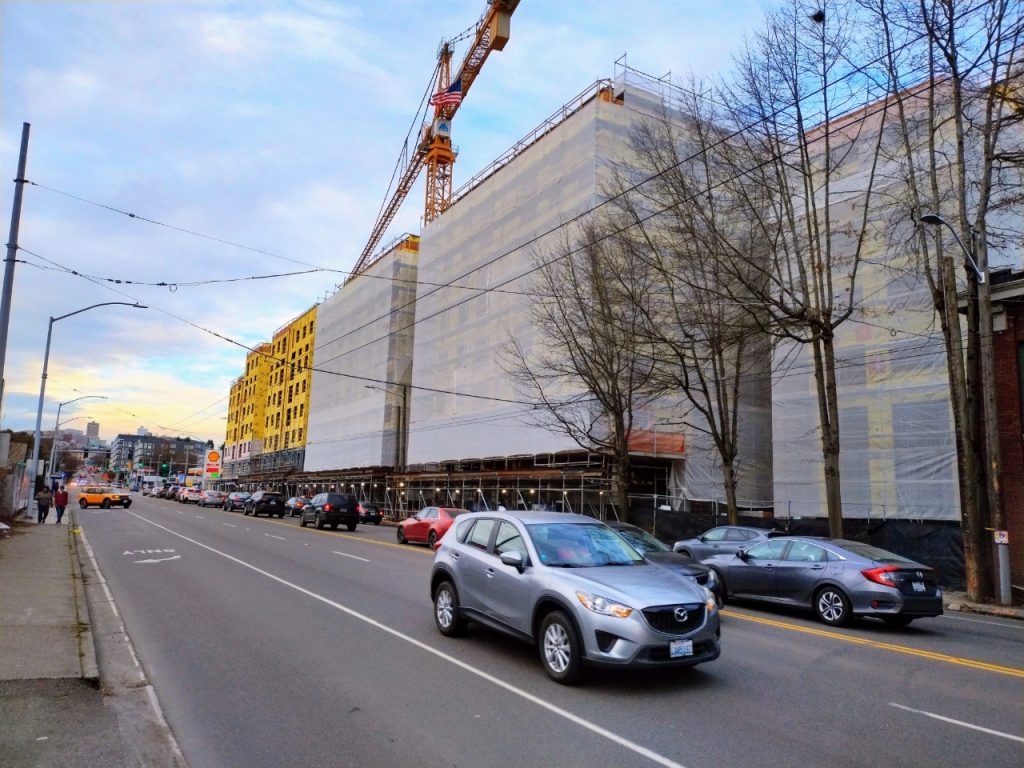
But few opportunities in the levy are greater than on Rainier Avenue, where repaving, safety work, and transit upgrades (to make way for the RapidRide R Line) all converge, especially around Judkins Park Station, where the road remains incredibly dangerous and deadly even as it welcomes thousands of additional neighbors via significant housing growth. If SDOT treated these projects as separate, the city would likely miss a once-in-a-generation opportunity to remake one of its most important corridors. Thankfully, early signs point to a coordinated strategy poised to gain backing from Wilson’s office.
“As a department, we’re very thoughtful about how we want to go out, engage with community, thinking about how we package those in a way to bring in these different elements, so that folks can have impactful engagement, and we don’t keep coming back to them time after time after time after time,” Serena Lehman, SDOT’s Levy Portfolio Manager, told The Urbanist. “So, we are working internally on that overall community communication strategy and how we want to engage.”
The delivery plan also provides the new administration with significant opportunities to move forward on another key campaign plank: transit improvements. Wilson’s top transit priority — advancing a bus only lane on Denny Way to get the Route 8 out of traffic — is on there, along with potential improvements on Olive Way that will help the same route. That project was already in the works before an Executive Order made expectations clear last month, a move that will certainly shoot it to the top of the priorities list and force SDOT to rethink some past assumptions.
Other transit upgrades on the list include a number of minor operational improvements across the city’s bus network, upgrades that likely fall short of full-on transit priority, but that will provide gains that can be reinvested back in King County Metro’s network. More exciting is the news that SDOT will advance work on a northbound bus lane for the Route 43 and 48 through Montlake, an improvement that was considered and rejected during a major corridor overhaul several years ago.
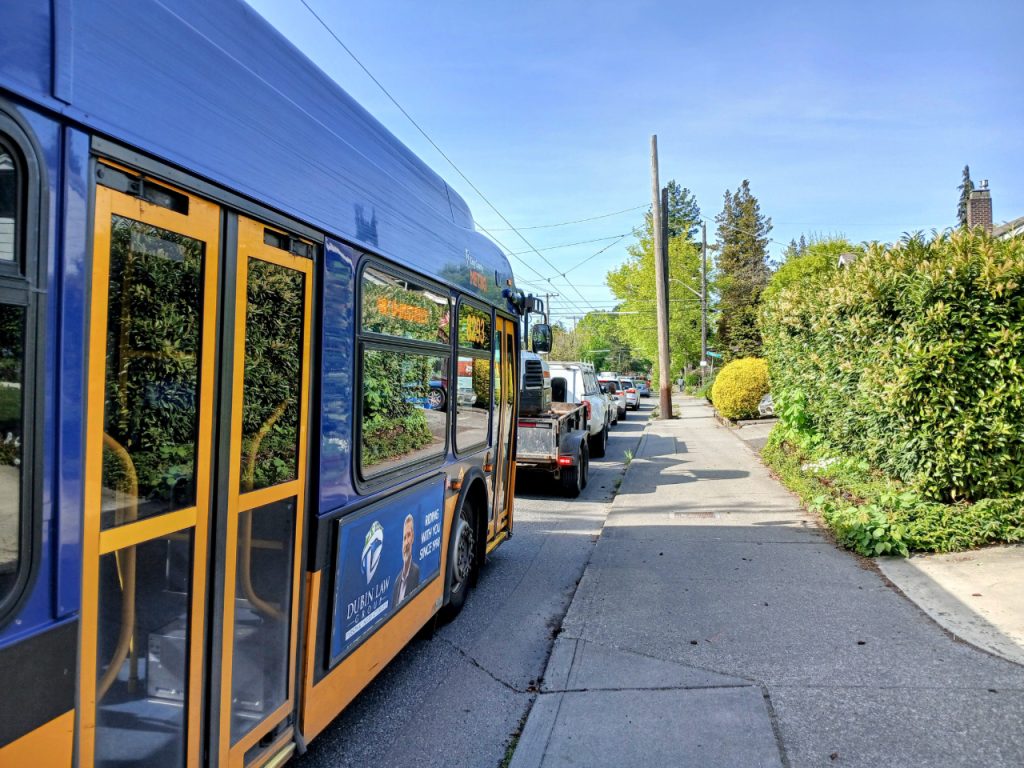
Even more notably, the delivery plan includes several as-yet-unidentified bus-only lane segments, a placeholder that leaves significant room for an administration looking to make big moves on transit.
“Transit, more transit lanes specifically, is really going to be a planning and design priority for us this year,” Shepard said. “That’s a really data-driven approach, where Metro’s travel time data really helps us pinpoint areas where we are seeing delay. So that’ll be an important criteria this year.”
The seeds of game-changing public realm improvements
The delivery plan also provides more detail than ever before on a brand new program created by this levy: “People Streets and Public Spaces.” Intended to create people streets that “activate business districts and community spaces” in line with neighborhood priorities, the program comes with nearly $70 million over the full eight years. While some of that funding is earmarked for specific projects that were handpicked by the Harrell Administration like the Occidental Promenade, many of the dollars will be able to unlocked in the name of grassroots urbanism throughout the city.
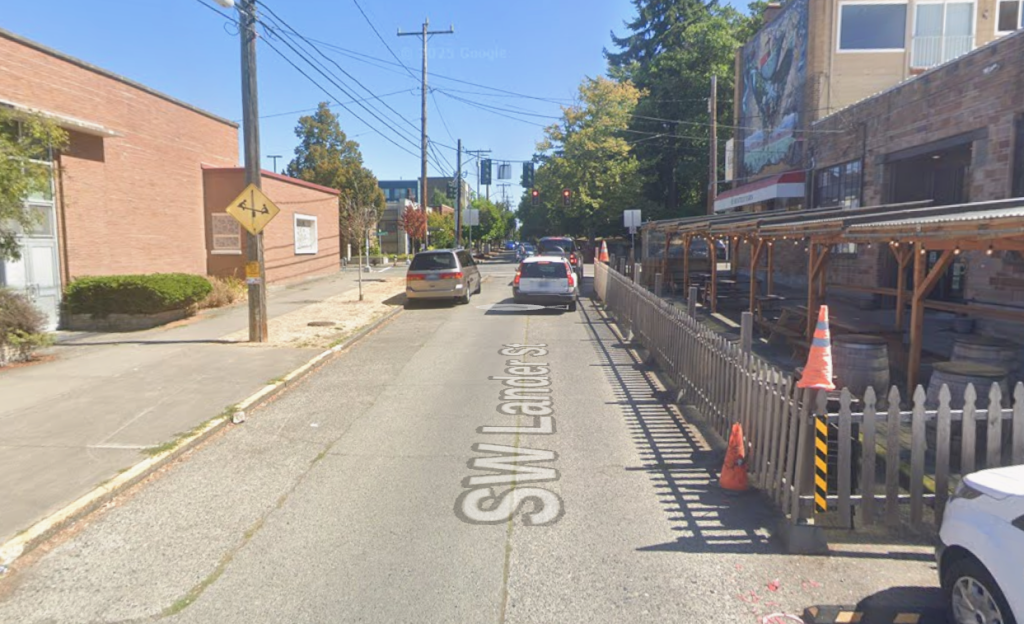
The delivery plan identifies several longstanding concepts that will enter the design phase: W Crockett Street in Queen Anne (the home of the Queen Anne Farmers Market), S Lander Street in West Seattle’s Admiral District, and 18th Avenue SW and SW Barton Street off Delridge Way. All three are prime candidates for pedestrianization in some form or another, finally creating a clear precedent for reallocating street space for community use in the heart of the city’s neighborhoods.
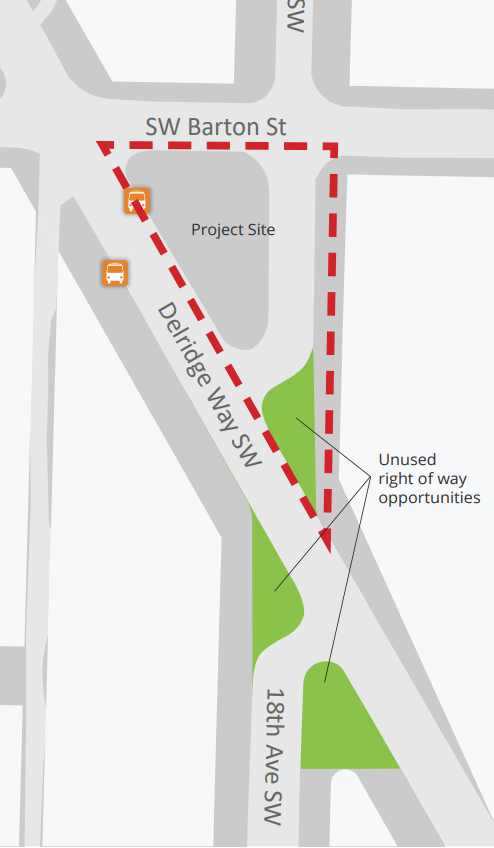
Shepard told The Urbanist that while these projects had been at the top of the list, the department is very cognizant of the need to look more broadly for opportunities for public realm improvements in neighborhoods that might not be battering down SDOT’s door.
“The thing that is really important to us is to ensure, through an equity lens, that it’s not just the communities who know about our programs or might know about [People Streets and Public Spaces] who get that opportunity,” Shepard said. “So, we’ll be doing the work and the touchpoints to sort of spread out to other neighborhoods and make sure they are aware of how they may be able to partner with us to try something out, or put in a small improvement. So what you’re seeing this year are some of the ones we know that there’s a lot of enthusiasm and action behind from community, so we’re able to get those in to motion this year.”
Another program that Wilson will get to influence is the Low-Pollution Neighborhood Pilot, has languished through several different administrations after starting life as a vague promise made by interim Mayor Tim Burgess in 2017. Last year, SDOT had identified an initial list of top candidate areas for neighborhood-scale investments intended to increase non-motorized travel and decrease emissions, but that list is still being refined in the light of the leadership transition happening now, The Urbanist has confirmed.
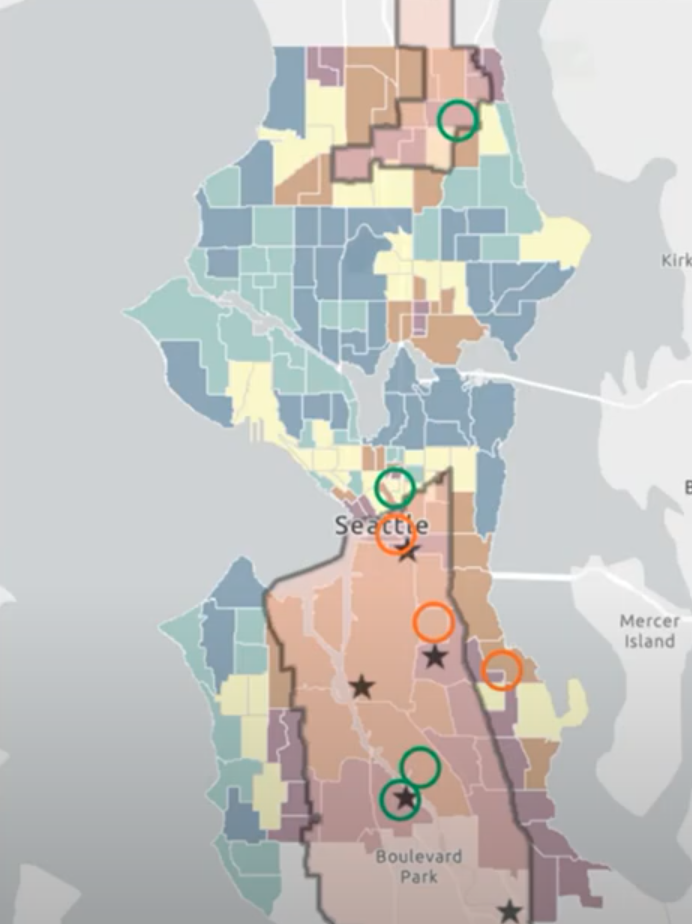
“This is a really good example of taking the opportunity to align with the priorities of the new Mayor’s office, so we do not have neighborhoods to share, and they’re coming soon,” Shepard said.
So far, Wilson’s biggest move on transportation has been to put a new interim SDOT Director in place, picking longtime Office of the Waterfront leader Angela Brady to replace Harrell’s pick, former SDOT Transportation Operations Division Director Adiam Emery. At a very brief appearance at the transportation levy’s oversight committee last week, Brady stressed her own experience with project delivery as a project manager on both the entire waterfront revamp and on SDOT’s overhaul of the Mercer Street corridor before that.
It remains to be seen whether Brady will put her stamp on the department in terms of policy, but she is poised to provide a steady hand until Wilson’s permanent pick to lead the department can be found.
The 2026 delivery plan may not be an illustration of Katie Wilson’s vision for Seattle’s transportation system, but it will provide her with a significant canvas to work with.

Ryan Packer has been writing for The Urbanist since 2015, and currently reports full-time as Contributing Editor. Their beats are transportation, land use, public space, traffic safety, and obscure community meetings. Packer has also reported for other regional outlets including BikePortland, Seattle Met, and PubliCola. They live in the Capitol Hill neighborhood of Seattle.