Mayor Wilson spoke at the ribbon-cutting, underscoring the need to reduce homelessness.
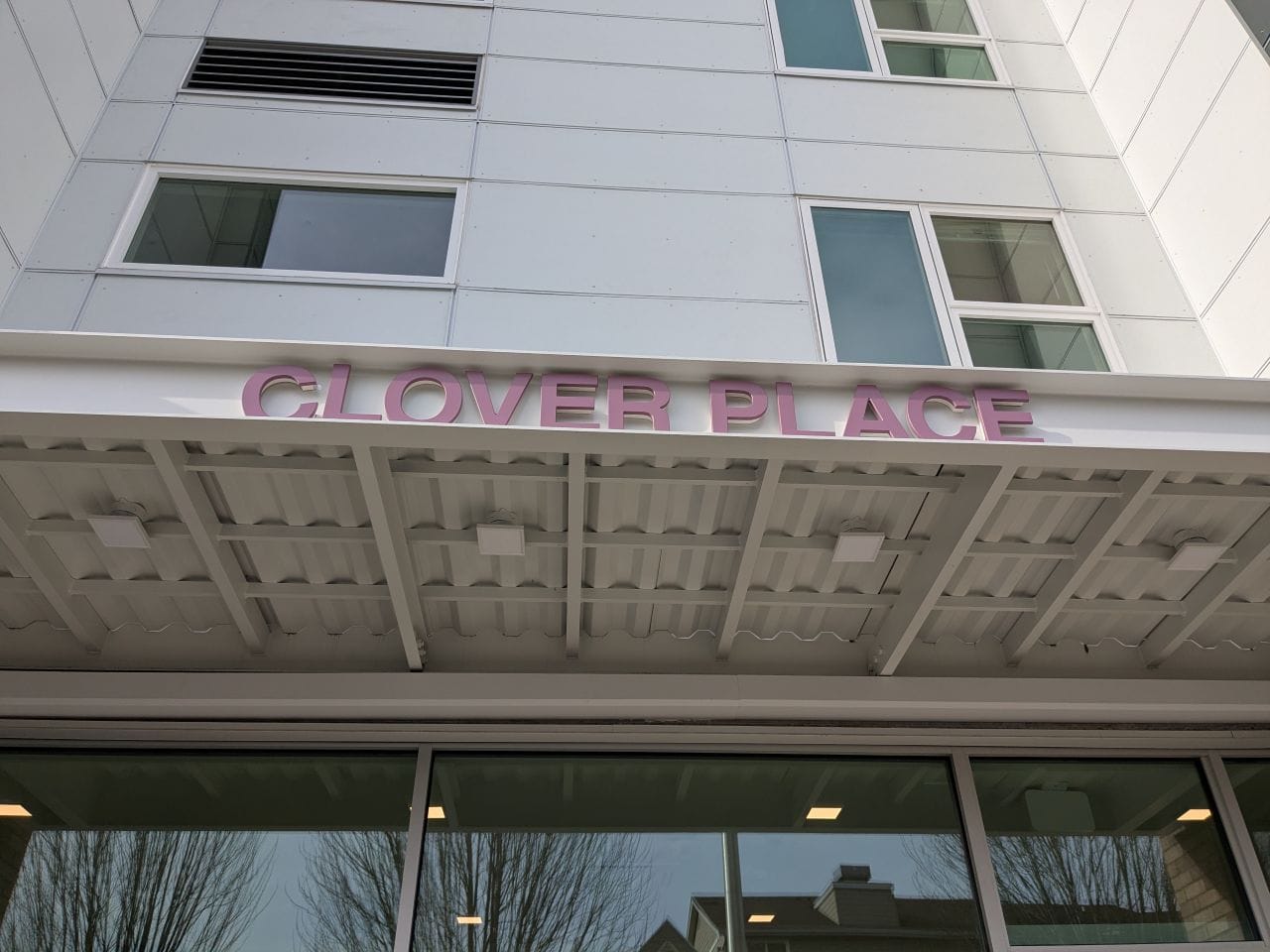
Last week, the Downtown Emergency Service Center (DESC) celebrated the grand opening of its most recent building, Clover Place, which is located on Aurora Avenue just south of Woodland Park.
Clover Place consists of 95 studio apartments that will house single adults who have severe mental health conditions and have been chronically homeless, what DESC’s Senior Director of Housing Programs Noah Fay called “the highest needs people in our community.”
In addition to housing, Clover Place will provide wraparound services, including behavioral health treatment, substance use disorder treatment, and connection to other services. Its community space will be used to host community-building activities and events for residents and their guests. The wraparound services at Clover Place help residents maintain their housing, manage their health needs, and build a sense of community all of which make Clover Place, what providers call, “permanent supportive housing” or PSH, a key ingredient in solving the homelessness crisis.
Seattle Mayor Katie Wilson attended the ribbon-cutting ceremony and spoke to its importance, especially in light of her pledge to ramp up the supply of emergency housing for homeless people over the course of her term.
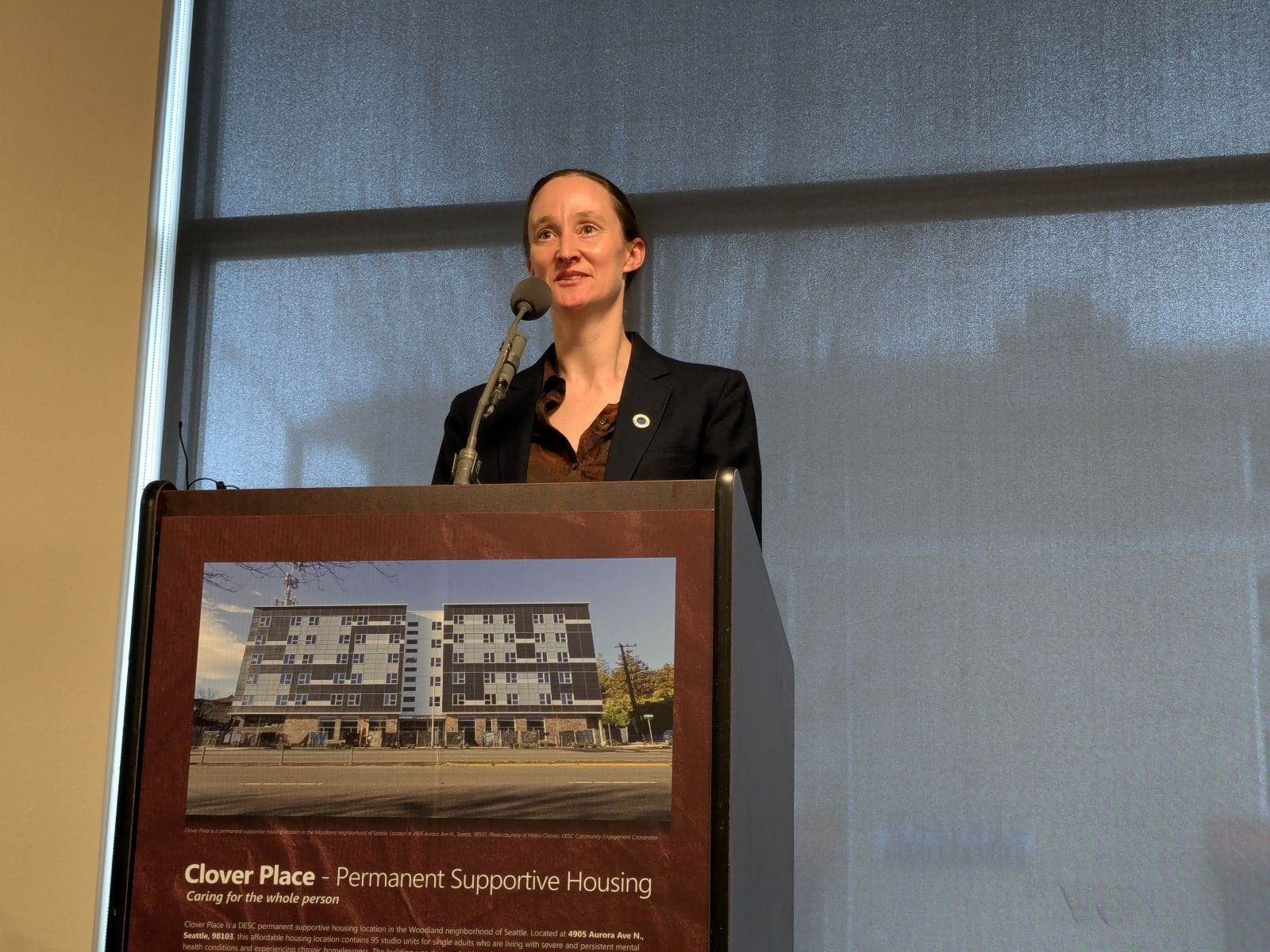
“In a moment when it often feels like we are playing defense and spending all of our time and energy and passion just trying to hold the line and not lose what we have, it’s really remarkable and heartening to be able to gather to celebrate progress, to celebrate opening new space for our neighbors and for our community,” Wilson said.
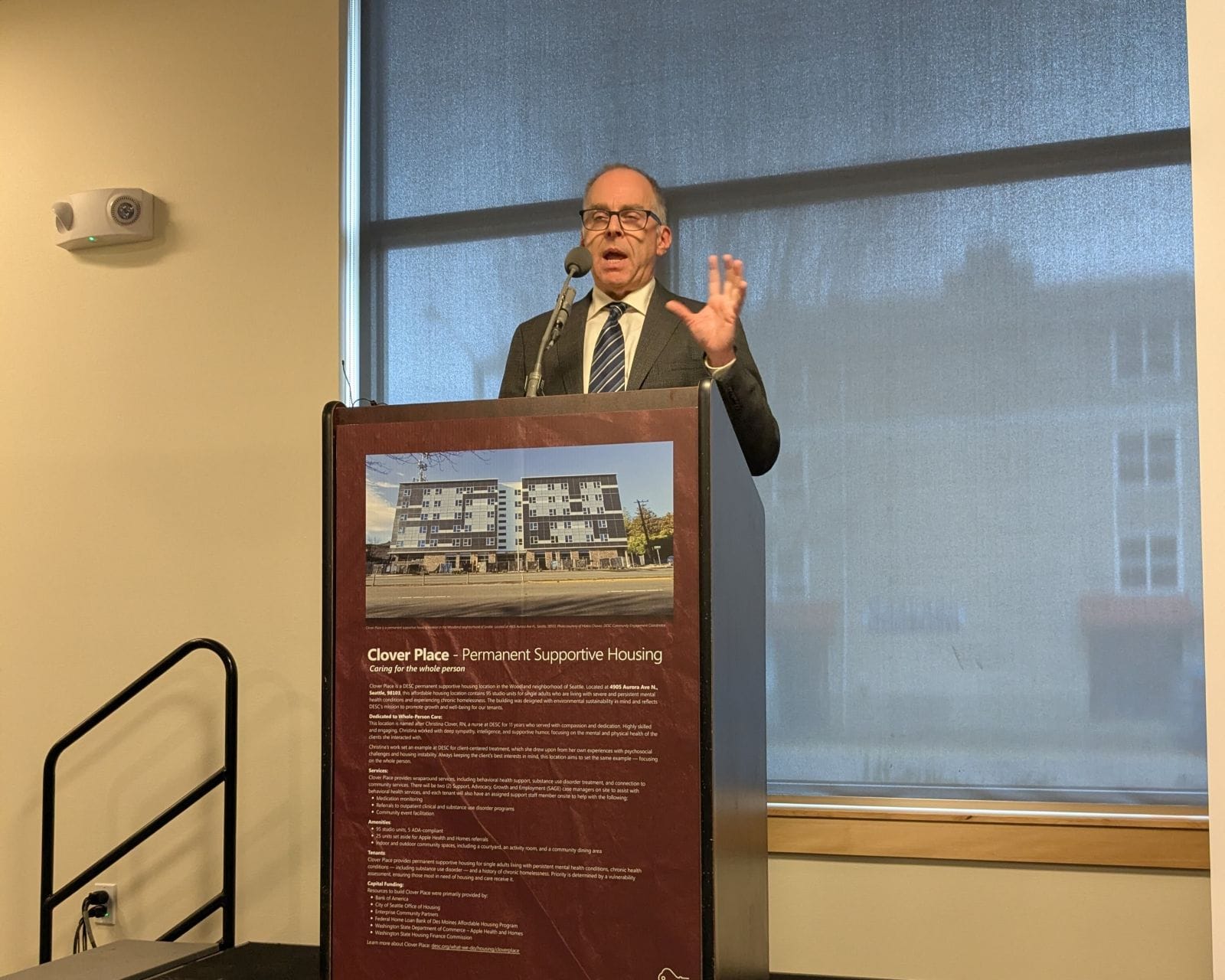
DESC executive director Daniel Malone said his organization is in a unique position to provide this kind of program, due to its expertise in both supportive housing and behavioral health.
“Supportive housing has become an essential but under-recognized part of a quality behavioral health system,” Malone said at the grand opening event. “Everybody – all of us – need a place to live, after all, and people with serious mental illness and years of traumatic experiences often need a place that is arranged to provide them the support they need to heal and to have a successful tenancy. If supportive housing didn’t exist to do all of those things, the behavioral health system would be even more overwhelmed, with thousands of people with profound health conditions unable to get better as their lives continue in chaos.”
Clover Place will be run somewhat differently than DESC’s previous PSH buildings. When a behavioral service team member is working with a resident, they won’t limit their service offerings to only those that can be billed. This change means each resident will receive the benefit of the full range of available services.
State and local money, including from the City of Seattle’s Office of Housing, paid for much of the acquisition and construction of Clover Place. Money from Seattle’s JumpStart payroll expense tax, as well as from the state, will be used to help fund its operating costs.
Malone called out Mayor Katie Wilson’s key involvement in making the JumpStart tax a reality, leading to the availability of some of those operating costs.
“DESC, as we know, is a national model for supporting people facing the most complex barriers: chronic homelessness, behavioral health needs, and long term instability,” Wilson said. “Their work shows what is possible when we meet people with dignity, evidence-based services, and consistency.”
Clover Place is DESC’s 19th PSH building. Its 20th building, Birch Grove in Lake City, is slated to open this summer, at which point DESC is planning a pause before starting any new projects in light of federal funding uncertainty.
DESC’s legacy continues
Clover Place is named after the organization’s first nursing supervisor, Christina Clover. Sommer Inman remembered her former colleague as a tenacious, witty, and trusted nurse.
“Christina didn’t just live DESC’s core values, but really personified them,” Inman said. “Meeting Christina helped to restore my hope that an agency could really want to live their mission statement.”
Clover was also remembered as occasionally being irritable, which Fay spoke of as a strength.
“I think that is kind of the beauty of this approach and this work, is that it’s based in principle and doing what’s right and being practical about it, and getting it done, and serving people the way we know how, and being pretty impatient with barriers that stand in our way,” Fay said.
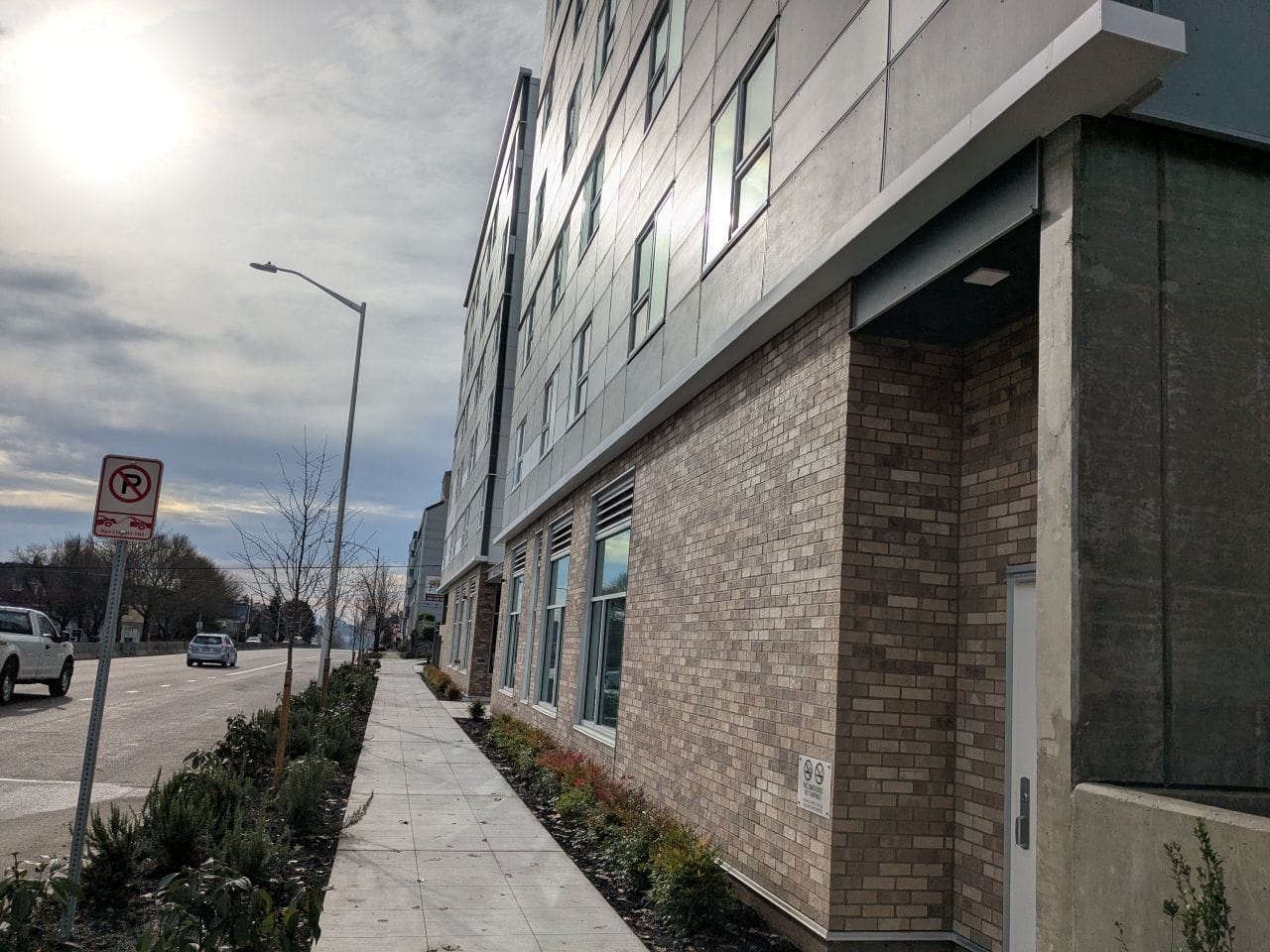
Clover Place was specifically designed as PSH, with several safeguards to protect residents and limit DESC’s liability. For example, each kitchen has its oven’s burners set on a timer that automatically shuts them off after 30 minutes. There is an automatic water shut-off triggered after a certain number of gallons of water are used, and each bathroom is equipped with a drain in the floor in case of overflow from the shower. Each apartment unit also has an intercom, which means residents can easily communicate with the building’s staff.
Five units are also ADA compliant and intended to serve people with disabilities.
At the grand opening, staff members shared a video of two clients served by SAGE, DESC’s outpatient mental health program.
“Once I was housed, everything changed, because I wasn’t living with the stress of everyday survival like that,” one participant shared in the video. “I had a place I could go and lock the door […] and just be left alone.”
DESC’s supportive housing is available to people who are dealing with substance use challenges, and DESC does not require its tenants to stay sober in order to keep their housing. DESC’s harm reduction approach attempts to mitigate the risks associated with drug use, while making substance use treatment readily available when a person feels ready to try making a change.
Data doesn’t support the use of involuntary drug treatment, which results in an increased risk of overdose and often relapse.
Critics, however, point out that this policy can make things difficult for those tenants who have become sober and might not want to be living near active drug use.
Malone stressed that people need different options based on their individual needs. In addition to supportive housing like Clover Place, DESC operates scattered sites, which support people living in regular apartment buildings with access to services. DESC tries to help people find the environment that is going to work best for them.
“An environment like this, where the residents of the apartment building all come from places of trauma and great difficulty, has real benefits and some drawbacks. And some of the drawbacks include things like people saying, you know, I’m trying to make these changes, and others aren’t. And so we’re not in the same place,” Malone said. “Some of the advantages of this kind of setup are that a lot of people express that they find a certain level of comfort and support by being around other people with similar experiences.”
Federal threats to ‘Housing First’ approaches
The future of permanent supportive housing in the region, and across the country, is threatened by the stance of the Trump administration.
King County receives significant federal funding for permanent housing through the United States Department of Housing and Urban Development’s (HUD’s) Continuum of Care grants. Last November, HUD announced major changes to the rules for these grants that would have gutted funding for permanent supportive housing in the region. After a lot of confusion and a lawsuit brought against HUD by a coalition of states, including Washington, a federal judge ordered HUD to halt the changes to the grant program.
In January, HUD told providers they were reinstating grant applications submitted under the former rules. However, depending on how the lawsuit is resolved, funding for 2027 may still be in jeopardy.
Work on Clover Place began in 2021, well before any federal funding threats.
Advocates for ‘Housing First’ emphasize that the approach is not only about providing housing. Rather, it’s acknowledging the reality that people often need a stable place to live before they can focus on getting better – whether that’s accessing psychiatric treatment, stopping the use of substances, or getting more involved with their communities. That’s why Clover Place offers its tenants both a place to live and the services they’ll need to stabilize.
Malone spoke to The Urbanist about the importance of the ‘Housing First’ model and supportive housing.
“Generally, supportive housing is far and away the [intervention] that is most effective at getting people out of homelessness and keeping them out of homelessness,” Malone said. “The real problem with all this stuff is that for every person who is out of homelessness and remains out, […] at the same time, there is actually more than one person falling into homelessness along the way.”
Malone said it’s important to pair homelessness interventions like supportive housing with strategies to stop people from becoming homeless in the first place.
Unfortunately, between potential cuts to Continuum of Care contracts that fund interventions like supportive housing, and cuts to federal services such as Medicaid and SNAP food assistance that help people meet their basic needs and remain housed, the problem of homelessness is likely to increase in scale in the United States, and the Puget Sound area, going forward.
Cuts to Medicaid laid out in the country’s “One Big Beautiful Bill,” H.R.1, will impact operation costs at Clover Place and DESC’s work in general.
“We won’t be able to serve people as many people or as deeply as we currently do,” Malone said.
Elected officials in King County have continued to express vocal support for supportive housing in the region.
“I want to acknowledge that as Housing First particularly is under ever more threats, and safety nets for the most vulnerable members of our community are eroding at the federal level at a rate that we’ve never seen in our community, I feel deeply privileged and honored to live and work in a community that is rooted in values about supporting the most vulnerable among us,” Fay said. “That includes community members. That includes our elected officials, who, in the face of difficult times, have doubled down on the investment on what works and have not shied away from programs that are evidence-based and supporting people in a way we know that will help people recover over the long haul.”
In 2024, Seattle’s Office of Housing estimated the city alone will need 28,572 new supportive housing units by 2044.
In addition to DESC’s two new buildings opening this year, King County’s Health Through Housing initiative opened Booker House, an 86-unit supportive housing building, in late January and plans to open the 100-unit Sheila Stanton Place in Kirkland later this year.
In spite of future threats, the atmosphere at the grand opening of Clover Place was celebratory, with new tenants expected to start moving in on Monday, February 9.