

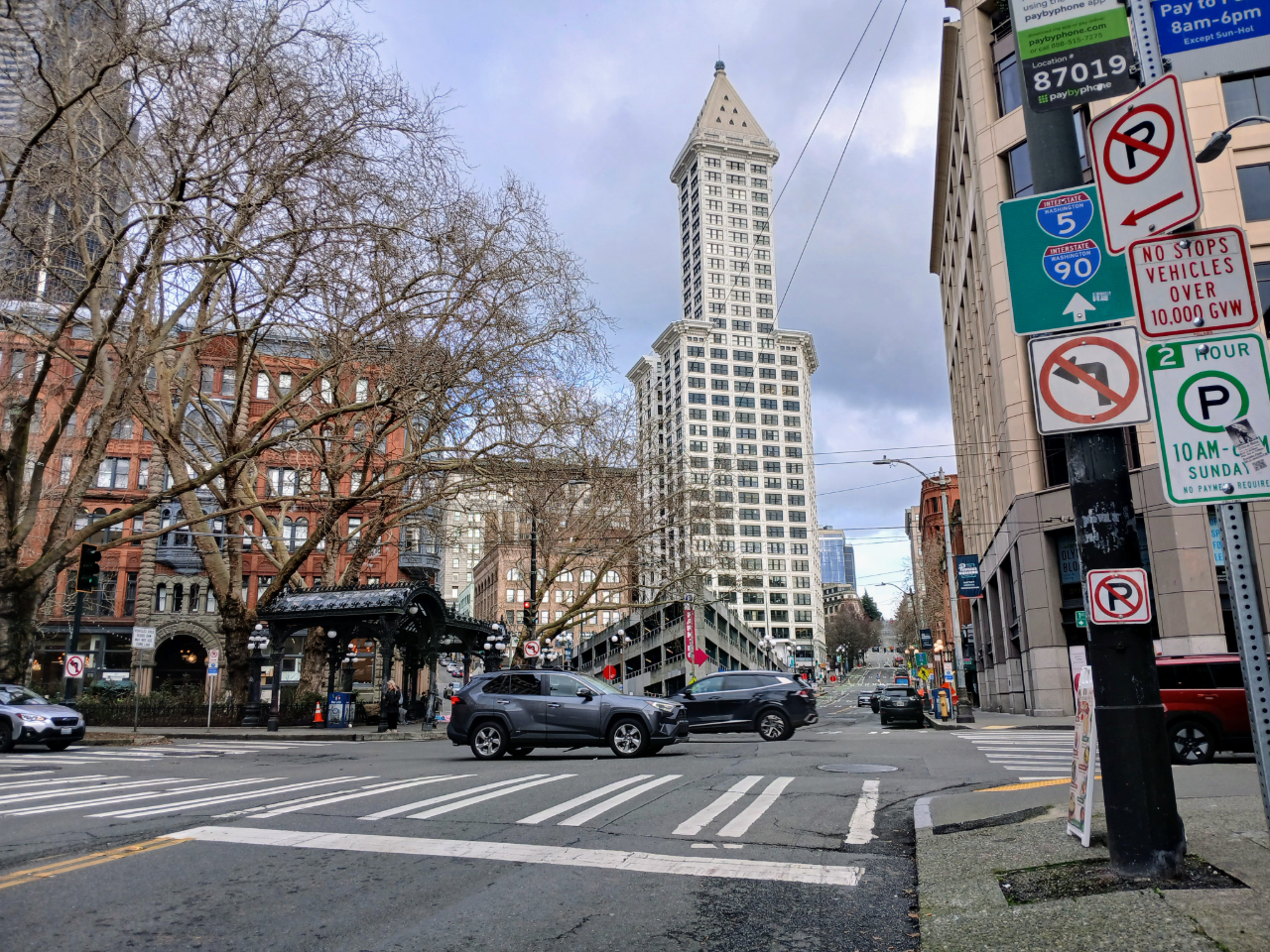
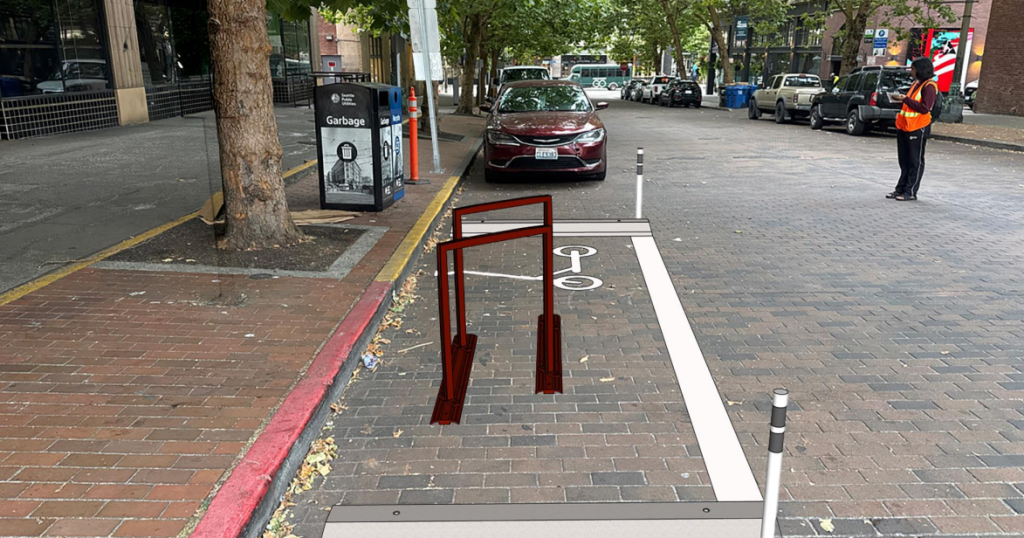
A plan to improve sightlines at busy intersections by installing bike and scooter corrals ahead of the FIFA World Cup should be an easy win. The goal is straightforward: keep scooters and bikes off sidewalks on busy game days, while preventing drivers from stopping in areas where they obscure sightlines, jeopardizing safety.
But a plan to do just that at 21 intersections across Pioneer Square is not going over well with some of the neighborhood’s most high-profile voices. The Pioneer Square Preservation Board is threatening to block the project or force a costly design overhaul.
The Seattle Department of Transportation (SDOT) has been rolling out on-street corrals around the city, utilizing space near intersections where drivers are prohibited from parking under state law. In practice, motorists often park within the 30-foot clear zone and risk parking tickets. SDOT’s micromobility and Vision Zero safety teams are collaborating to implement the quick-build projects as a proven safety countermeasure intended to reduce both the number of crashes that happen on city streets and their severity.
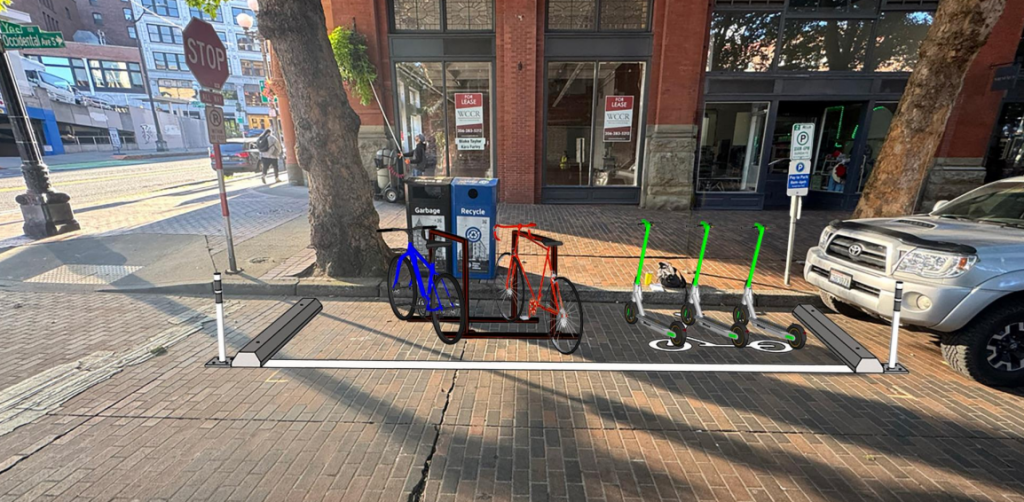
In Pioneer Square, street changes need buy-in from the neighborhood’s historic preservation board, which dates to the 1970s and gives local residents and business owners significant leverage to alter projects within the neighborhood or even hit the brakes.
Despite the fact that city code codifies that one purpose of Pioneer Square’s historic district is “to avoid a proliferation of vehicular parking and vehicular-oriented uses,” projects that reallocate street space away from cars in the neighborhood often meet opposition. One clear undercurrent of this discussion is the “removal” of parking spaces — spaces where it’s mostly not legal to park but where it still happens, thanks to lax enforcement.
Data collected from Seattle’s scootershare companies in 2025 showed around 750 trips per day ending in the Pioneer Square area, or around 275,000 trips across the entire year. Scooter usage in the city continues to increase, with a 96% jump in ridership between 2023 and 2025, according to SDOT. The proliferation of scooters and bikes on sidewalk edges have raised accessibility concerns, and the SDOT sees the on-street corrals as one element scooting riders toward better behavior.
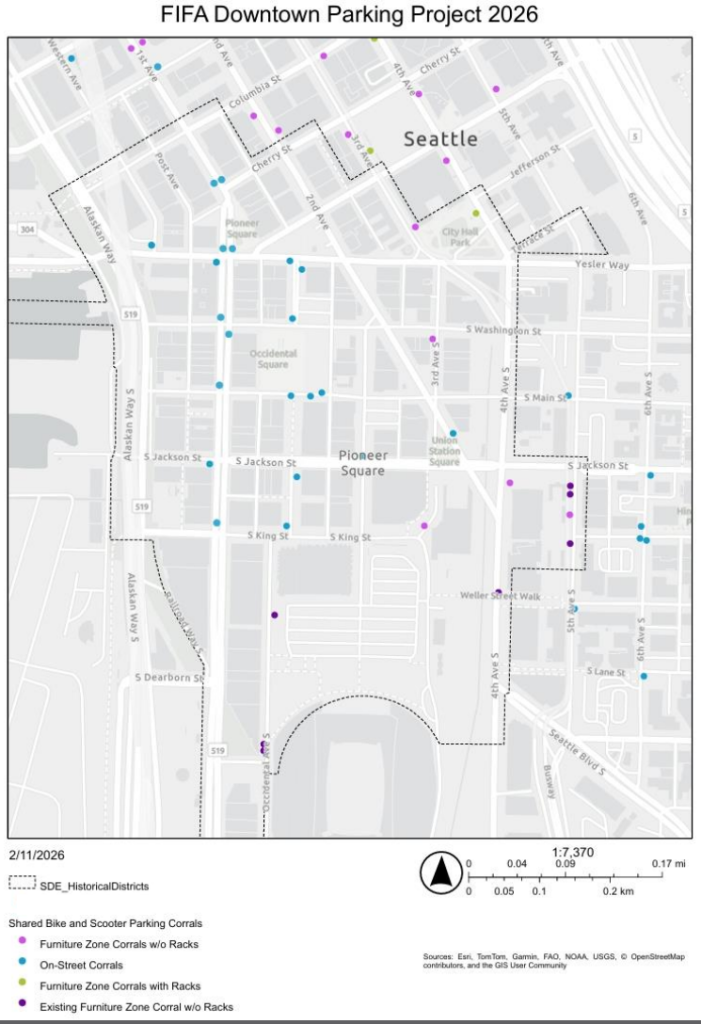
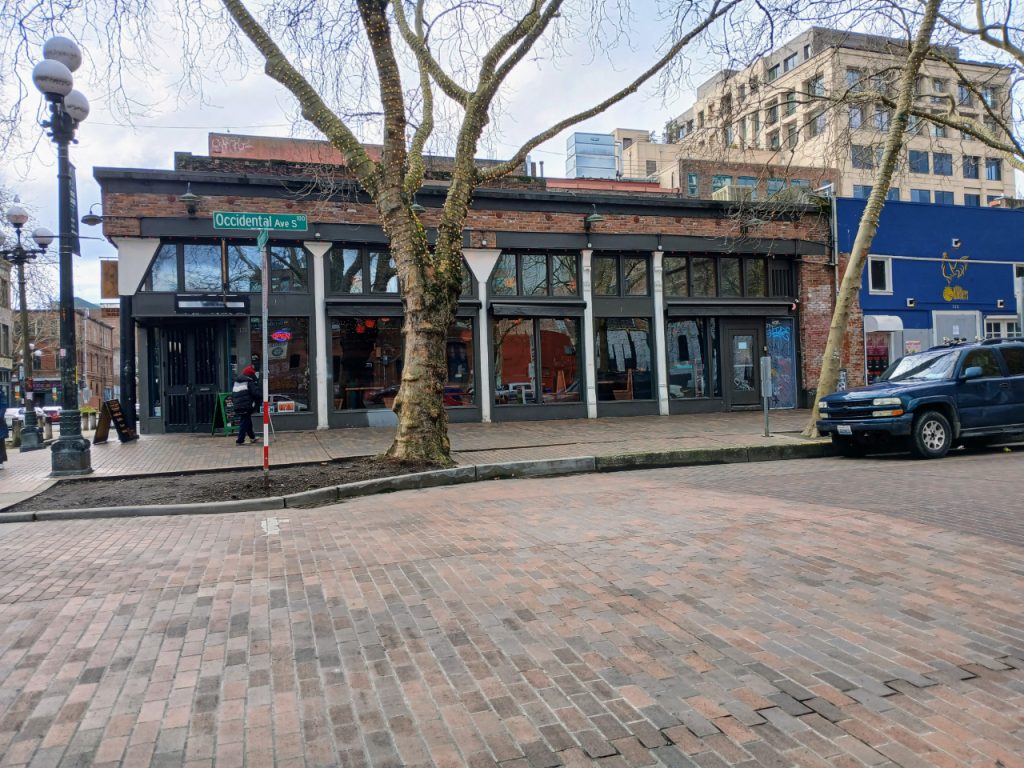
But an initial briefing this week on the proposal brought out a litany of concerns and criticisms of the design of corrals that the department intends to roll out ahead of Seattle’s first World Cup match in June, primarily along the busy First Avenue S and Occidental Avenue S corridors.
The neighborhood’s primary business advocacy group, the Alliance for Pioneer Square, came out strongly against the corrals as currently proposed, pressing for more unique designs that reflect Pioneer Square’s character. The neighborhood already has its own specially-designed bike racks, intended to blend in better with the 1890s architecture common in the area. But the group also questioned the need for additional bike parking in the neighborhood, asserting that existing racks are underutilized.
“We have consistently communicated to SDOT that the proposed signs and designs and locations, particularly those that focus on daylighting, are not appropriate interventions for Pioneer Square,” said Anahí Bendeck, the Alliance’s Design and Planning Manager. “The proposal relies heavily on utilizing the same treatments, materials, and design that is being deployed citywide, without sufficient modification to reflect the neighborhood’s historic context or the actual lived conditions. And we just believe that this one-size-fits-all approach is fundamentally misaligned with the character and the knowledge of the neighborhood.”
Comments in opposition were also read into the record from Pioneer Square business owners, including the co-owner of Magic Mouse Toys, and the co-owner of Friend Museum. Neither business returned a request for comment from The Urbanist on their specific concerns. SDOT plans three corrals at First and Yesler near Magic Mouse, with another planned across the street from Friend Museum at First and King.
Comments were not universally against the proposal, however. In addition to supportive comments by a representative from Lime, Cascade Bicycle Club testified in favor.
“We believe these corrals are a practical, safety focused use of curb space. The majority of proposed sites utilize existing furniture zones or daylight intersections. Daylighting improves visibility at corners, reduces turning conflicts, conflicts, and helps prevent crashes,” Cascade’s Rachel Schaeffer said.
Schaeffer referenced a fatal crash just this week in Capitol Hill, where a turning driver struck and killed a 27-year-old woman at Bellevue Avenue and E Pine Street. “These are small design changes that can have lifesaving impacts.”
While the board wasn’t asked to make a decision Wednesday, numerous board members signaled that they wanted to see the proposal revamped to respond to community concerns.
“We’ve received more comments on this project than I’ve ever seen come in. And there’s deep concerns in the community, and a lot of it was feeling like, there needs to be more robust outreach to stakeholders and communication,” board chair Maureen Elenga said. “Out in front of Pioneer Park […] having that cluster [of corrals] up from there, I think really changes the character. Concern with the materiality of it, these plastic Omega posts are not really compatible with the neighborhood. And I’m wondering, what is the need for bike racks in this situation? We have parking for 200 and some bikes already. So if this is for the rideshare, nobody locks those up and they’re freestanding.”
“I’m fully persuaded by the public comments from the Pioneer Square businesses and from the National Park Service through the Klondike Historic National Park that the proposal is contrary to the nature of the historic district,” board member Catherine Walker said via written comments read by the city employee administering the meeting.
This isn’t the first time that an SDOT project has faced a tough crowd at the Pioneer Square preservation board. A plan to reconfigure S Main Street to upgrade a heavily used bus stop was delayed and nearly fell by the wayside after concerns were raised by nearby business owners and fretted over at the preservation board. Purported impacts to drivers from a proposed bike connection between Occidental Avenue and Western Avenue is a one reason that project hasn’t yet been completed.
Elsewhere in downtown, SDOT is currently navigating the Pike Place Historical Commission’s approval to add vehicle barricades at that popular tourist destination ahead of FIFA. Many of the same aesthetic concerns raised in Pioneer Square are being echoed several blocks north when it comes to changes to the streetscape, which is very different than it was during the time periods that both historic districts were created to highlight. When aesthetic gripes are front-and-center, it’s often hard to suss out whether they stem from a genuine concern over “character” or a simple desire to maintain the status quo.
The proposal will likely see one more briefing before the board is asked to vote. Comments can be submitted to the Pioneer Square Preservation Board on its website.

Ryan Packer has been writing for The Urbanist since 2015, and currently reports full-time as Contributing Editor. Their beats are transportation, land use, public space, traffic safety, and obscure community meetings. Packer has also reported for other regional outlets including BikePortland, Seattle Met, and PubliCola. They live in the Capitol Hill neighborhood of Seattle.