

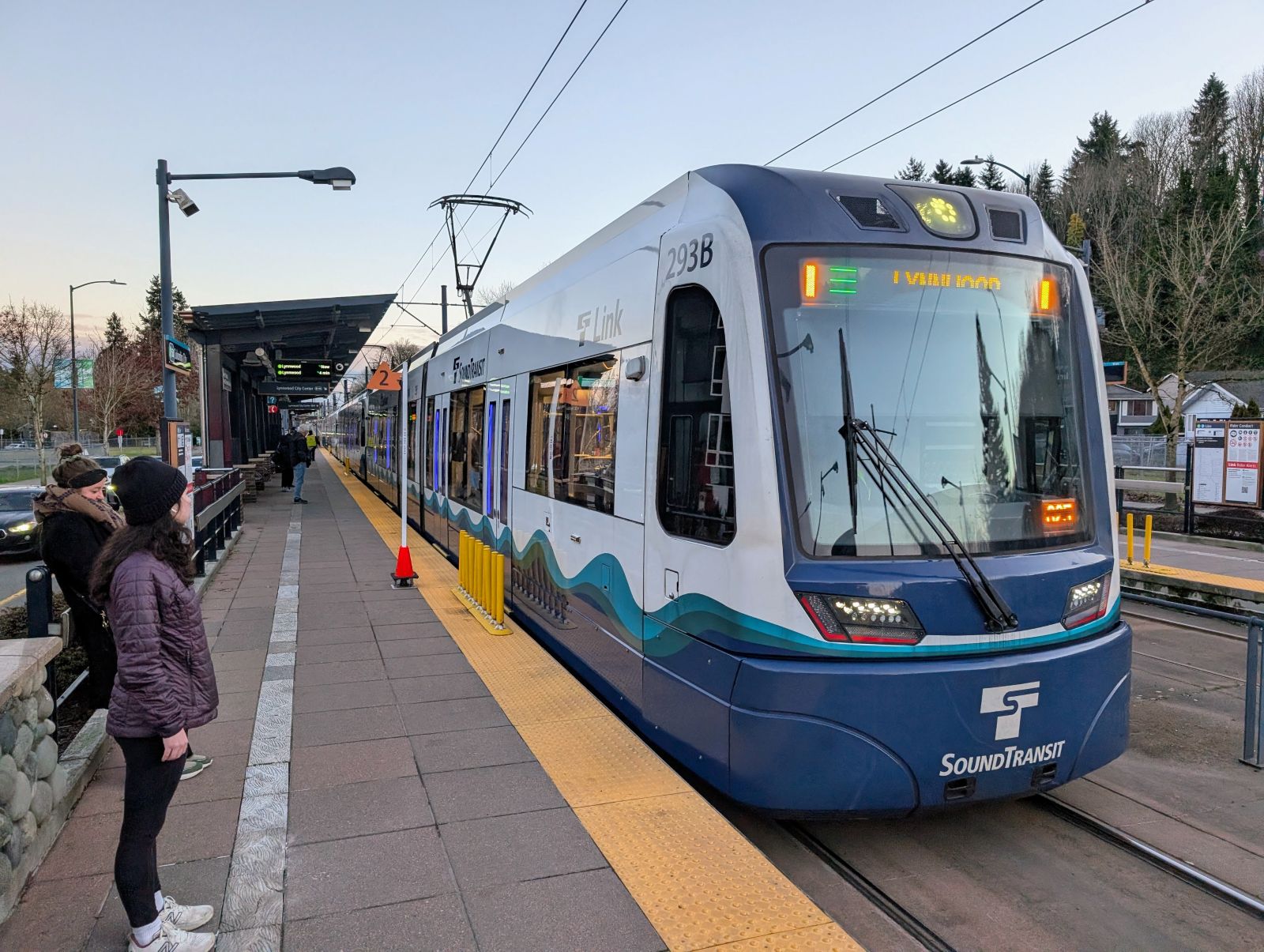
The massive turnout in support of Issaquah’s light rail extension last month is a sign that things have changed when it comes to public support for passenger rail in the Puget Sound region.
The House Transportation Committee’s decision to halt the bill to allow 75-year bonds to help Sound Transit cover the Sound Transit 3 (ST3) shortfall, without offering any alternative, shows how much work remains to be done to turn that public support into improved outcomes.
The gap between strong public support and ongoing political failure presents an important and urgent opportunity to transit advocates across the Puget Sound. Those advocates need to leverage widespread public support for more light rail to force local and state leaders to implement constructive solutions needed to build the ST3 plan that voters approved in 2016. Regional and state leaders will have to come up with more money, and they must help implement lasting reforms to bring down costs.
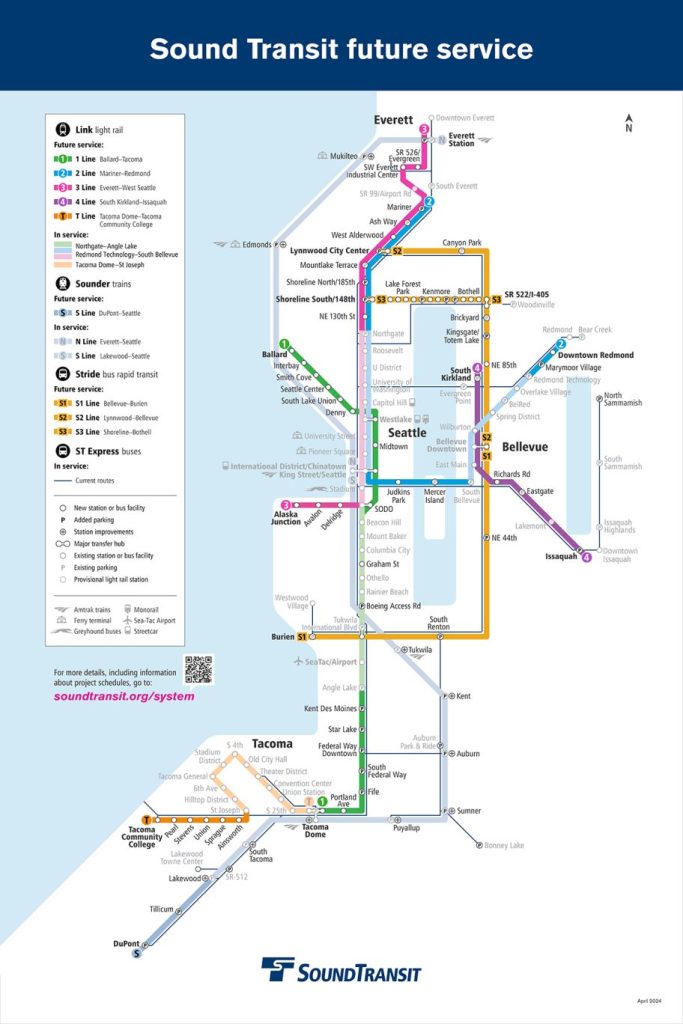
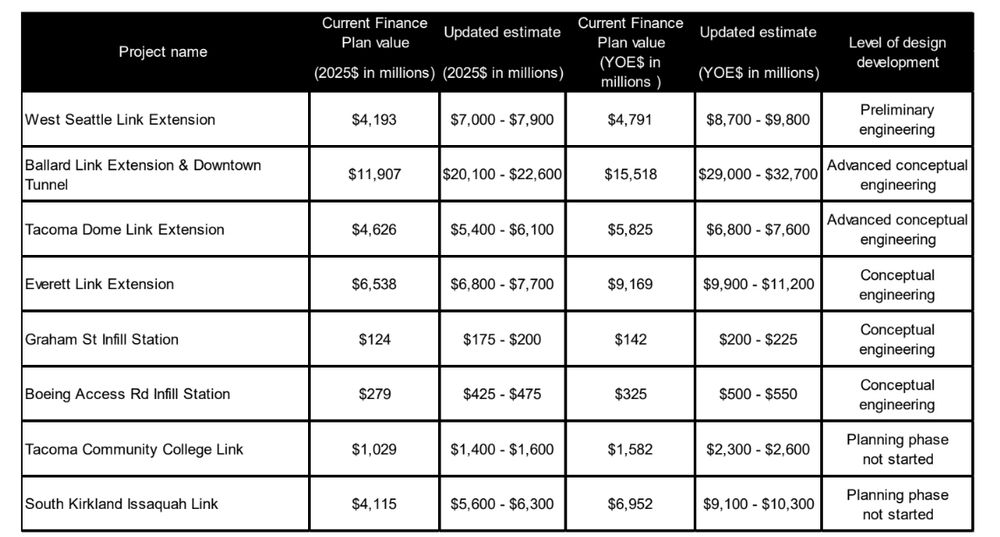
Sound Transit faces a deficit of nearly $35 billion in the ST3 program to build rail lines to connect our region. We have two ways to respond to this: abandon the plan to build the passenger rail our region urgently needs, or figure out how to raise the money and implement the planning reforms needed to build the system voters approved.
Scaling back the ST3 plan would be an unpopular, embarrassing admission of failure. Cities around the world are rapidly building out mass transit systems, often at a fraction of the cost of ST3. That includes big, dense European cities like Paris and Madrid, where unions are also strong and environmental laws and historic protections also make construction a challenge.
In particular, the Puget Sound region needs to learn from Europe how to build a lot more rail for a lot less money – without compromising on safety, worker pay, or the rider experience. And transit advocates can learn from other successful urbanist campaigns, particularly the Yes In My Backyard (YIMBY) movement, to craft new strategies to help Seattle lead on mass transit in North America.
It’s Not the 2000s Anymore
Twenty-five years ago, Sound Transit was in a fiscal crisis. Voters had approved creation of the system in the 1990s. But by 2001, it became clear Sound Transit was about $1 billion short of the funding it needed to build from Northgate to Sea-Tac Airport.
This set off a round of political attacks at the federal, state, and local levels that nearly destroyed Sound Transit. Sound Transit solved that crisis, and a similar one in 2009 caused by the Great Recession, by delaying projects. They believed there was no public support for finding more money to prevent those delays. Perhaps that was true in the 2000s. It’s not true any more.
Light rail expansion is now one of the most popular things in Seattle, even more popular than the return of the Sonics NBA franchise. Strong public support, especially in the Puget Sound region’s urban core, is a gamechanger for advocates, and we should adjust our strategies accordingly. No longer should we accept further project delays, and we certainly should not accept cuts to the voter-approved system. Instead, it’s time to find more money, and reform how Sound Transit plans and builds the system.
Transit advocates would do well to take a page from the successes of the YIMBY movement. For many years, housing advocates ran into huge barriers thrown up by Not In My Backyard activists or NIMBYs, particularly in the form of low-density zoning and onerous review processes. Those barriers eventually choked off the supply of new housing, causing housing costs to soar.
And that, in turn, created a political crisis.
Suddenly, the public demanded more housing, and turned against NIMBY obstruction. YIMBY success stems from recognition of this changed reality and clever, effective, persistent advocacy knowing that the wind was now at their back.
From my experience in the YIMBY movement in the last few years, the following keys to success are applicable to transit advocacy:
- This is primarily a political problem that requires a political solution. While it’s worth debating things like whether we should use elevated or tunneled tracks along a route, or automated versus human-operated trains, these alone do not solve the funding crisis. Effective solutions require different decisions to be made by elected officials.
- Leverage public support. When the public strongly wants something to happen, the onus is on elected officials to deliver. High levels of support for mass transit should force state legislators to feel immense pressure to solve ST3’s problems – but that requires public mobilization.
- Focus on mobilizing the broader public. Transit advocates need to focus on activating the broad base of Puget Sound residents who want ST3 projects built. That base is less interested in the technical details. They want to know who to call, which meetings to attend, and what to ask for.
- The technical details matter, but they don’t convince everyone. Every transit advocate is a wonk at heart who cares deeply about the technical details, and rightly so. Sound Transit staff, board members, and state legislators all want to know that what we ask for is technically sound, feasible, and will work. We have to be able to defend every point we make and every ask we have. But those details usually don’t inspire the public to show up. They care about the big picture: will this help get my train line built?
- Compromises are necessary, but they shouldn’t be bad ones. At some point, we have to accept decisions that are made so we can move on to construction. The ST3 route and project list is set. I’m not wild about freeway routes, but it’s not worth the delay to go back and pursue a different alignment. Similarly, a 75-year bond is not the ideal way to finance infrastructure. But it’s better than cutting or delaying ST3 projects.
In some ways, transit advocates in the Puget Sound region have it easier than housing advocates. Public support has been on our side for 30 years. But that support has not been as strong and deep as it is today.
The political threats to Sound Transit no longer stem from voters losing faith due to financial woes. The main threat is failing to deliver the projects promised to voters. That, in turn, creates a strong incentive for elected leaders at the local and state levels to step in and provide the money and the reforms needed to deliver what voters approved.
No Way Around the Need for More Money
The $35 billion deficit facing ST3 dwarfs the $1 billion deficit Sound Transit faced in 2001 and the $4 billion deficit it faced in 2009. A deficit of that size cannot be closed without adding some amount of new money, even if other reforms are adopted – unless we agree to chop off parts of the system voters approved.
Much of these rising costs are outside Sound Transit’s control. The Covid-19 pandemic caused years of delay, which meant added cost. So, too, did the inflation that followed the pandemic. That was before Donald Trump returned to power in 2025. His inflationary policies, including his tariffs and his targeting of a significant portion of the construction workforce, all exacerbate the cost problem.
Other causes of rising costs are within the control of Sound Transit and Washington State’s leaders, and we’ll discuss those below. But no credible analysis suggests there is any way to reduce project costs and also keep ST3 whole without more long delays.
Transit advocates should leverage strong public support for light rail expansion and push state legislators to approve some significant amount of new funding for ST3. Elected officials who oppose this would find themselves on the wrong side of public opinion, giving advocates a real opportunity.
The question is what form new funding would take. Sound Transit had been pushing legislators to allow it to float 75-year bonds. That bill failed to pass by Monday’s deadline, though it could be revived as part of the final transportation budget. Long-term bonds are controversial, and other advocates have pushed higher taxes on large vehicles, commercial parking taxes, or simply taxing wealthy individuals and large corporations.
Whatever the solution may be, elected officials need to understand that their failure to act puts them on the wrong side of strong public support for completing the ST3 project list.
Money Isn’t Enough – Reforms Are Needed Too
New funding, or even a scaled back ST3, does not solve the underlying problem of soaring costs. Even if Seattle voters somehow allowed Sound Transit to cancel their city’s new rail lines, the “spine” to Everett and Tacoma would still be many billions of dollars over budget. It would still face the same ongoing cost pressures, absent reforms.
It costs more to build mass transit in North America than in Europe. But it doesn’t have to be that way. Let’s take Madrid as an example. The Puget Sound region has a higher GDP than Madrid, yet Madrid tripled the size of its subway system for a fraction of the cost of ST3. One researcher estimated that the $185 billion total cost for ST3 could build nearly a thousand miles of subway if Seattle’s construction costs were the same as in Madrid.
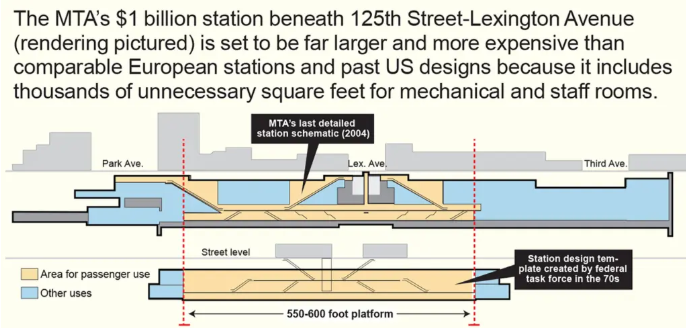
One cause of higher costs is endless delay. Voters approved ST3 in 2016. Nine years later, the core elements of that system, including rail to West Seattle and Ballard, still have not yet begun construction. Environmental reviews are incomplete and so is permitting work. Former Seattle Mayor Bruce Harrell caused nearly a year of delay on the Ballard line when he pushed Sound Transit to investigate a consolidated station in South Lake Union, at the behest of Amazon.
Recent cost estimates show that in 2025 dollars, rail to Ballard will cost between $20 billion and $22 billion, up from $12 billion. But construction isn’t slated to begin until the 2030s, when costs will be even higher. In “year of expenditure” dollars, when Sound Transit actually has to pay contractors to build the line, the cost estimate soars even higher, to $30 billion. In other words, every year of delay means higher and higher costs.
International experts have made a series of recommendations to Sound Transit to reduce its construction costs without scaling back projects, harming the environment, or compromising worker pay and safety. Sound Transit has adopted several of these proposals. But there is more it can do.
A revealing moment came earlier this year when, as The Urbanist’s Ryan Packer reported, Sound Transit staff revealed that changing the design of the proposed Seattle Center station (on the Ballard Line) would shave nearly $500 million off of the construction cost. That’s about the same amount of money saved by deleting the Avalon station on the West Seattle line.
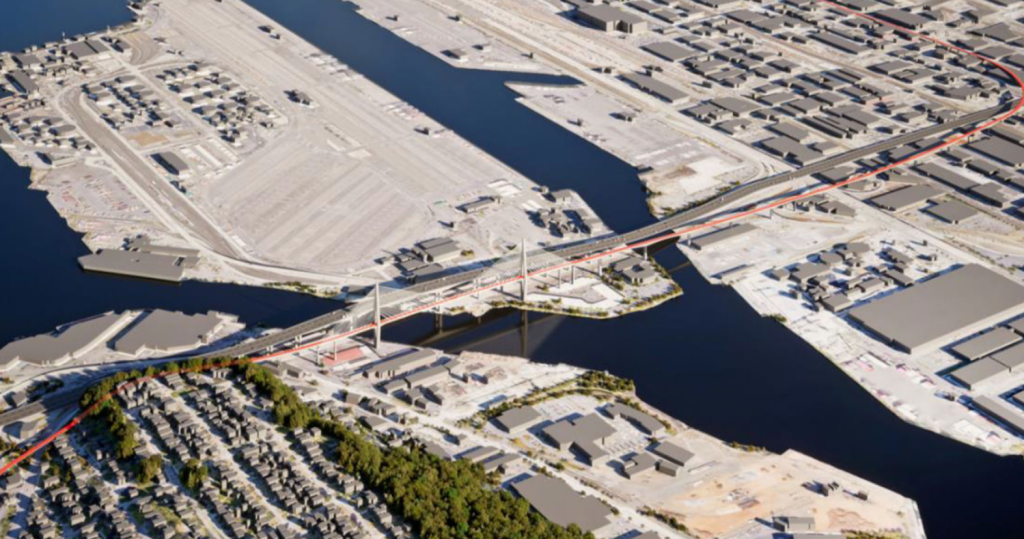
Sound Transit should do more of this kind of sensible redesign work. It’s time to standardize station designs, design shallower stations and tunnels, and preserve right of way well in advance of construction.
Sound Transit should have the ability to conduct its own permitting, rather than have to go through the permitting process of every city it serves.
These and other reforms can help bring down construction costs without giving up on the system voters approved. Without these reforms, costs will continue to soar, no matter how much we scale back or abandon parts of the ST3 plan.
Some transit advocates are calling for more substantial changes to ST3. Last year, Scott Kubly and Claudia Balducci each called for a study of deferring or eliminating the second downtown tunnel. The Sound Transit board threw cold water on that idea. But others persist.
Some advocates are exploring automated trains, or elevating the proposed routes rather than use tunnels. Those ideas are worth considering, as long they can be proven to work – and can be shown to achieve the core goal of delivering the voter-approved ST3 plan with a minimum of delay. That should be our guiding north star as transit advocates.
Abandoning pieces of ST3, or accepting years more of delay, would be an admission of failure. It would be giving up on our region’s ability to move people, address traffic, and reduce climate pollution. Instead, the Puget Sound region should step up and lead by obtaining more funding, as well as showing the country how to build excellent mass transit at European prices.
Robert Cruickshank is a Seattle resident who regularly rides Link light rail with his family.

Robert Cruickshank
Robert Cruickshank is a transit rider and progressive campaigner who lives in Seattle’s Greenwood neighborhood. From 2011 to 2013 he served as Senior Communications Advisor to Seattle Mayor Mike McGinn.