

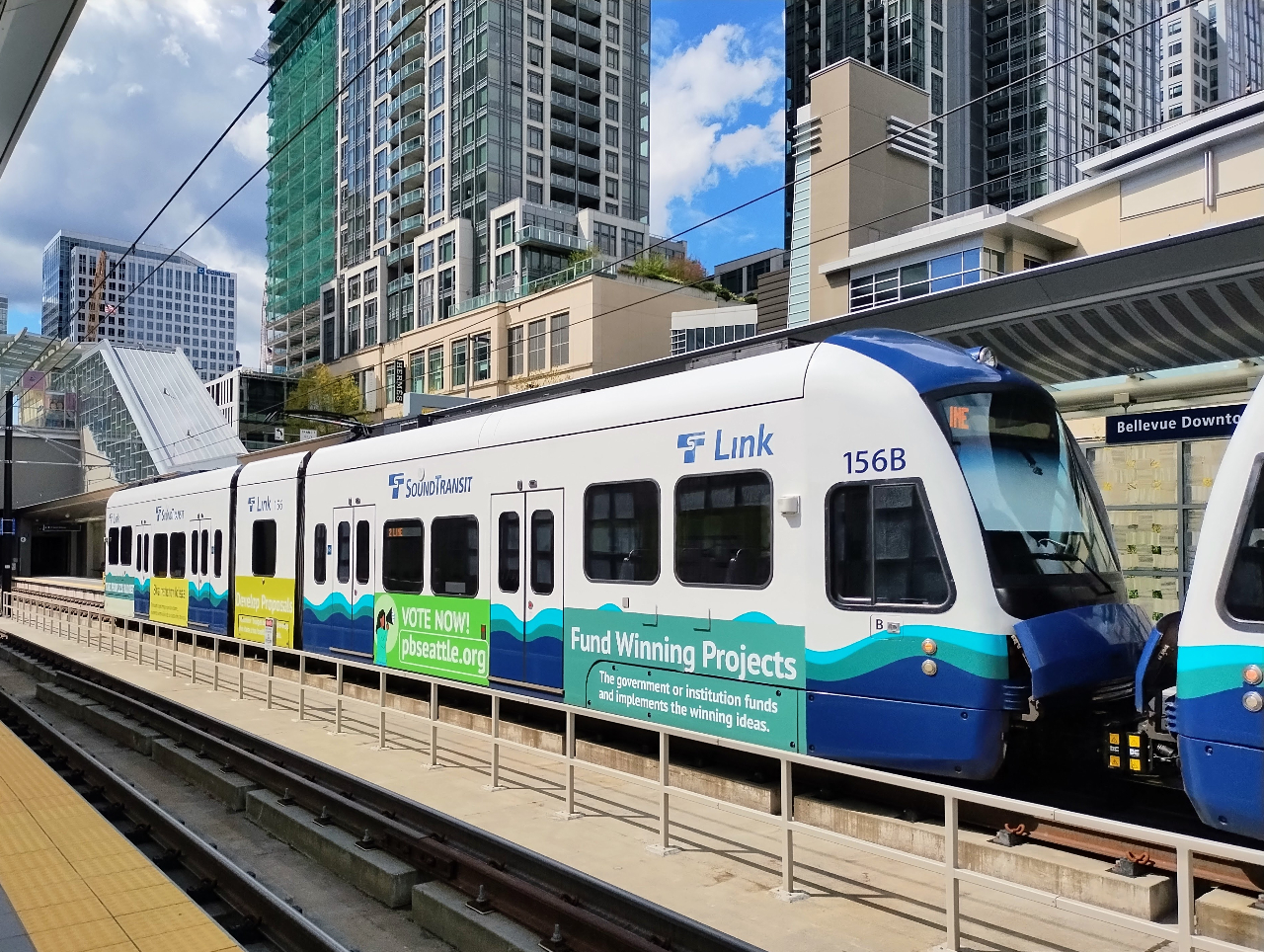
Earlier this week, Sound Transit’s attempt to convince state legislators in Olympia to unlock a tool that it sees as key to advancing its system expansion plans appeared to be on the rocks. Senate Bill 6148, sponsored by State Senator Marko Liias (D-21st, Edmonds), would have allowed the regional transit agency to utilize 75-year bonds, reducing individual bond payments in order to help with a financial squeeze that Sound Transit expects to encounter by the early 2030s.
The bill was one of Sound Transit’s biggest focuses this legislative session, one strategy to tackle the $34.5 billion financial shortfall the agency faces over the next two decades. Testifying in favor of the proposal were some of the agency’s biggest players, including CEO Dow Constantine, board chair Dave Somers, and board vice chair Ryan Mello.
But Monday’s final House transportation committee meeting came and went without a vote on SB 6148, in spite of officials intensely lobbying committee chair Jake Fey (D-27th, Tacoma) over the weekend to get the bill added to the docket and approved.
While the legislative calendar means SB 6148 is dead, the policy change is still very much alive. Wednesday morning, Liias successfully amended another bill that had been sent over from the House, HB 2711, to add the 75-year bond provisions. That omnibus bill tackles tweaks to transportation funding policies the legislature approved last year, making it a natural fit among the other provisions. Whether the gambit is able to pay off before the end of the 2026 legislative session on March 12 remains to be seen.
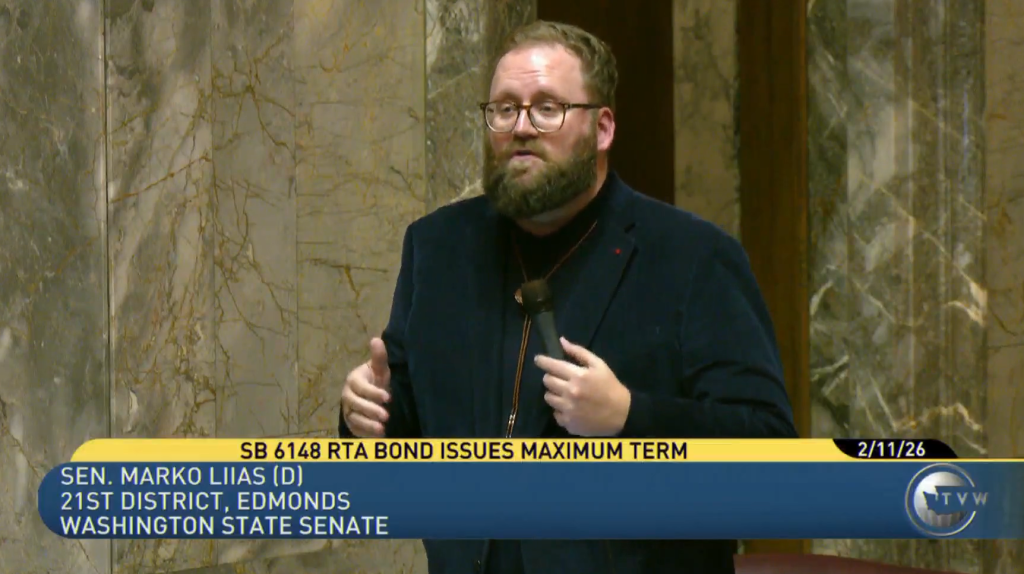
Allowing 75-year bonds would ultimately bring Washington law in line with a change to federal infrastructure loan programs, including the Transportation Infrastructure Finance and Innovation Act (TIFIA), included in 2021’s bipartisan infrastructure law. That change allowed bond terms for specific, long-lasting infrastructure projects to extend up to 75 years, while state law still prohibits bond terms beyond 40 years.
“By utilizing the TIFIA program that Congress recently extended, they can put more projects on the ground more quickly to help deal with the commute in the Puget Sound region, also to create jobs,” Liias said ahead of the Senate floor vote on SB 6148. “The estimate from Sound Transit’s finance staff is that the additional financing capacity they can achieve would help them put 40,000 jobs in our communities building infrastructure for us over the next decade. So we need jobs. We need this infrastructure. The sooner we build, the cheaper it is.”
Issuing bonds with such long term lengths isn’t seen as a slam dunk by all Puget Sound transit advocates, some of whom have raised concerns about asking future generations to pay off funding decisions being made today. Others have argued that pulling this financial lever will allow the agency to get out of asking tougher questions around how to reduce costs and build its infrastructure faster.
The budget-balancing “building blocks” that the Sound Transit board is set to put together in the coming months to bring down those costs are clearly going to involve a wide array of different tools. Constantine has said that the 75-year bonds would make sense for long-lasting infrastructure projects, such as the generational investment of building a second tunnel under Downtown Seattle as part of the Ballard Link Extension project, which is a big ticket item in a project that has seen its budget balloon past $20 billion.
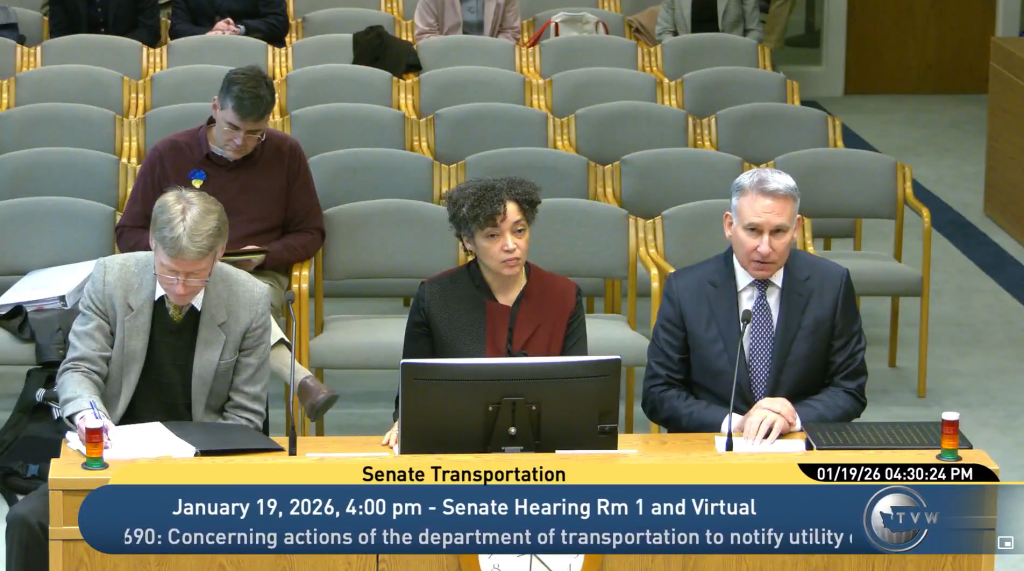
At last week’s Sound Transit board meeting, this issue was a hot topic, with board members discussing potential talking points to convince Rep. Fey to advance Liias’s bill. Board chair Somers spelled out the need to secure this authority now, ahead of the update to the agency’s long-range financial plan set to occur later this year. To legislators, a one-year delay in approving the change doesn’t mean much when it comes to light rail projects happening years down the line, but to Sound Transit that delay would be significant.
“The ‘why now?’ is, we’re doing the planning now,” Somers said. “We cannot make planning assumptions and move forward with a tool we don’t have. And so we are right in the middle of it. We do need it now, and if we don’t get it, we’re going to have to assume we don’t have it, and so that’s going to really affect our capacity to deliver projects in the future.
The ‘why now’, for me, [is] I heard Representative Fey say he was so excited to be seven minutes away from light rail when we opened Federal Way,” Seattle Councilmember Dan Strauss said. “The ‘why now’ is, I don’t know that we can get much closer to his house without the bill.”
Sound Transit’s other major legislative priority, a bill streamlining permit requirements and allowing the agency to submit permit requests before officially acquiring parcels where projects will be built, was approved by the House late Wednesday, with the full Democratic caucus on the House side in support. It still needs another Senate vote but is on track to head to Governor Ferguson’s desk.
Several hurdles still remain to be surmounted in a small number of days for the 75-year bond proposal to make it to the governor’s desk. The full Senate, which approved SB 6148 on a 29-20 vote, will need to sign off on HB 2711, sending it back to the House. There House members will be forced to concur with the changes made on the Senate side or reject them. Such a move would likely put the entire bill’s future in jeopardy.

Ryan Packer has been writing for The Urbanist since 2015, and currently reports full-time as Contributing Editor. Their beats are transportation, land use, public space, traffic safety, and obscure community meetings. Packer has also reported for other regional outlets including BikePortland, Seattle Met, and PubliCola. They live in the Capitol Hill neighborhood of Seattle.