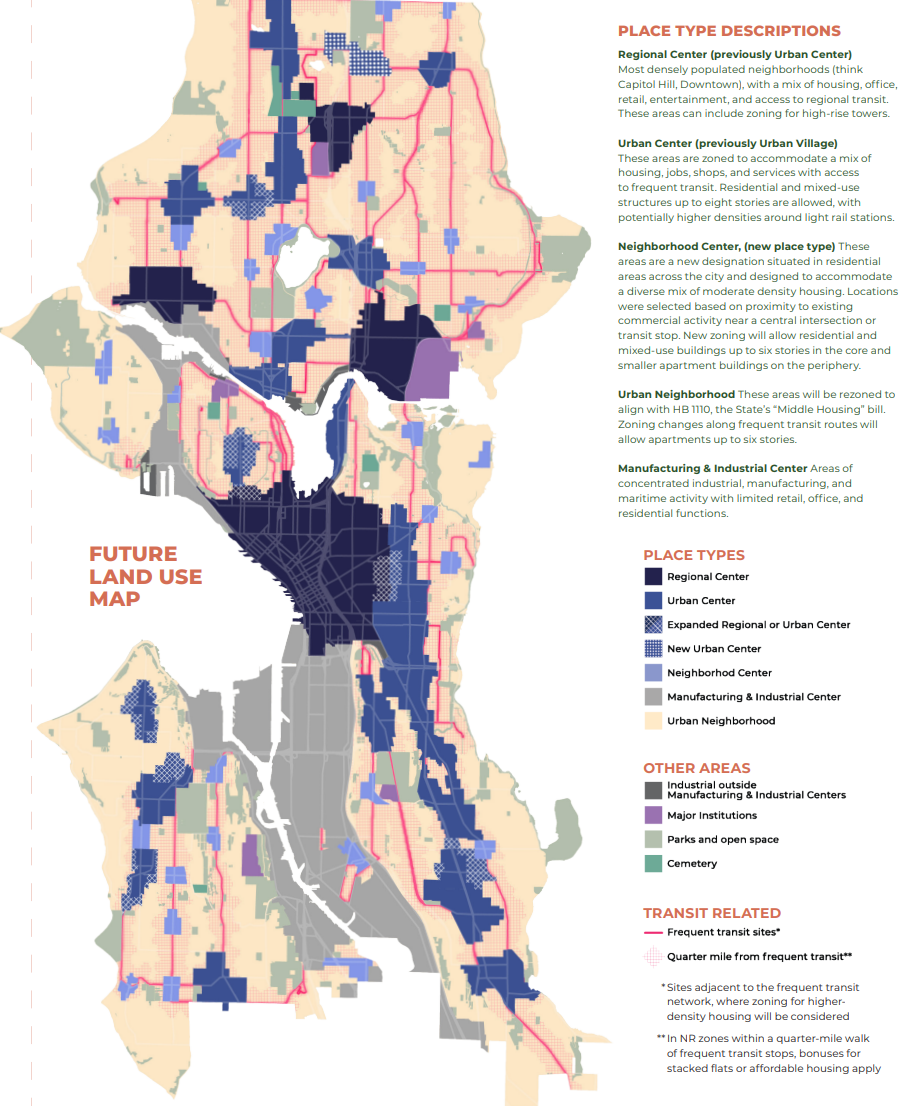
A pair of cases moving through the Washington Court of Appeals will represent a crucial test of recent statewide legislation intended to speed up the production of housing in urban areas.
The appeals target the environmental review of Seattle's updated Comprehensive Plan, which was approved in December. Two different groups have been pushing for more than a year to get the City of Seattle to go back to the drawing board, alleging that specific issues weren't adequately considered when a plan to increase capacity for up to 120,000 new units of housing across the city was advanced by former Mayor Bruce Harrell.
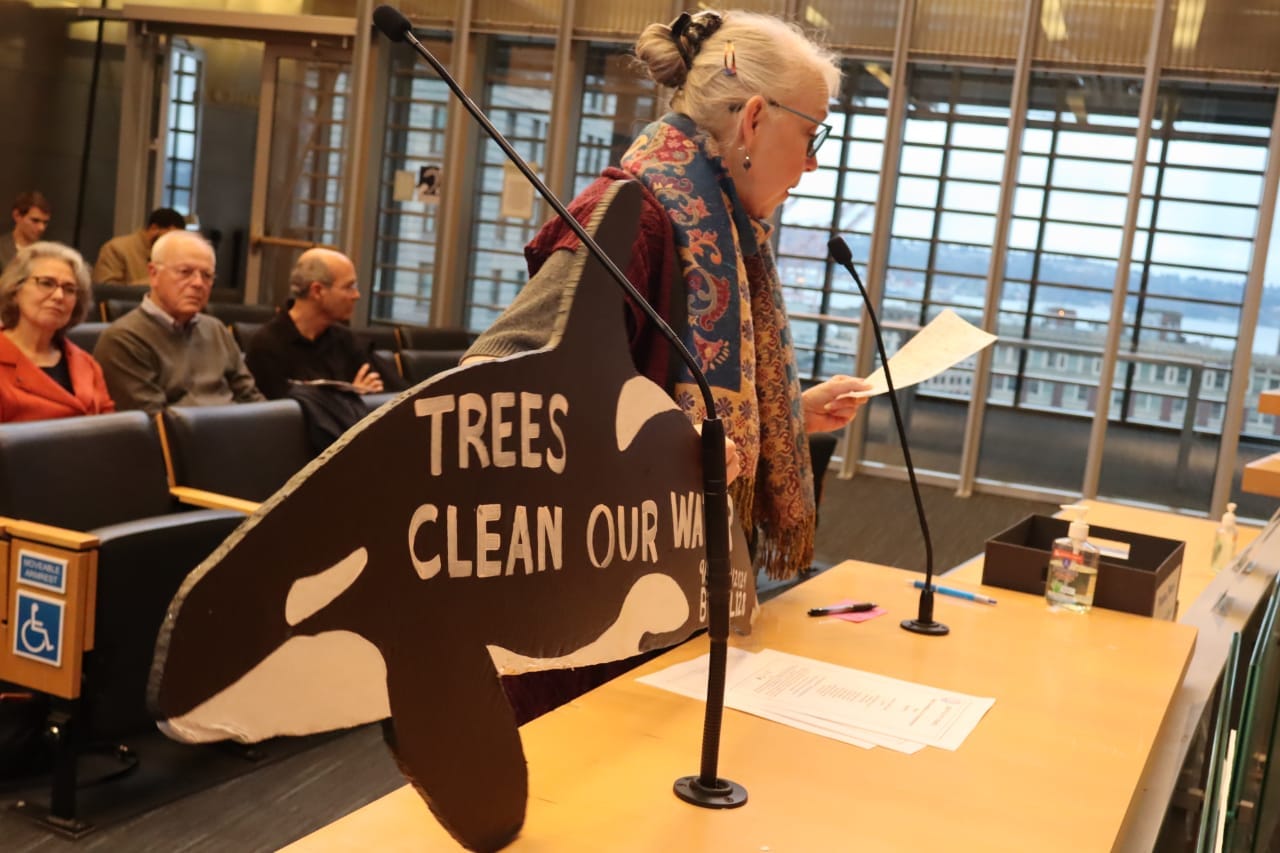
Environmental advocate Jennifer Godfrey's case, which has been dubbed the "orca appeal," focuses on the alleged environmental impact of increased housing production on Puget Sound's population of Southern Resident killer whales (SRKW). The appeal contends that the City didn't analyze the impact of increased water runoff and reduced tree canopy on the health of the region's most high-profile megafauna.
The legal challenge has the backing of a number of Seattle's most prominent conservation groups, including Birds Connect Seattle (formerly Seattle Audubon), the Orca Conservancy, and the Thornton Creek Alliance.
Godfrey has been represented by Toby Thaler, a legislative aide to former Councilmember Alex Pedersen who also led the legal fight against Seattle's last set of major upzones, implemented as part of the Mandatory Housing Affordability program in 2017.
Meanwhile Mount Baker lawyer Chris Youtz's appeal, filed on behalf of himself, fellow Mount Baker resident John M. Cary, and a group called Friends of Ravenna-Cowen, alleges the city did not conduct enough review of the impact of potential demolition of historic homes, among other issues.
But the contested facts aren't the issue in front of the Court of Appeals. Instead the question is whether Seattle's Hearing Examiner erred when he dismissed these two appeals without digging into them, citing recent state legislation exempting changes intended to increase housing production from appeals under the State Environmental Policy Act (SEPA).
Senate Bill 5818, approved by the legislature in 2022, exempted actions taken by cities planning under the state Growth Management Act intended to "increase housing capacity, increase housing affordability, and mitigate displacement" from being appealed under SEPA, either administratively or judicially. And it was that law, along with several others, that Hearing Examiner Ryan Vancil relied on to dismiss the appeals last year.
The Urbanist's Spring Member Drive is in full swing, now with a website redesign offering ad-free reading for donors! Take advantage of membership perks and support local journalism with a monthly donation.
Though the appellants argued that those exemptions only applied to final actions taken by a legislative body (like a city council) and not the environmental review that would inform those actions, Vancil rejected that argument, asserting that this logic would "require a conclusion that the legislature adopted statutes referencing an exemption that was meaningless."
But although these two cases were dismissed at King County Superior Court fairly expeditiously, the real possibility exists that the three-judge panel at the Court of Appeals will rule in favor of the appellants. That would affirm a fairly gaping loophole in state law when it comes to SEPA appeals, letting them advance if an ordinance making land use changes hasn't yet been adopted.
During last week's brief oral argument, assistant city attorney Max Burke, arguing on behalf of the City of Seattle, was put on his back foot by questions from the judges, particularly Judge David Mann. Burke was put in the unenviable position of trying to argue that state statutes around SEPA exemptions are unclear and yet unambiguous.
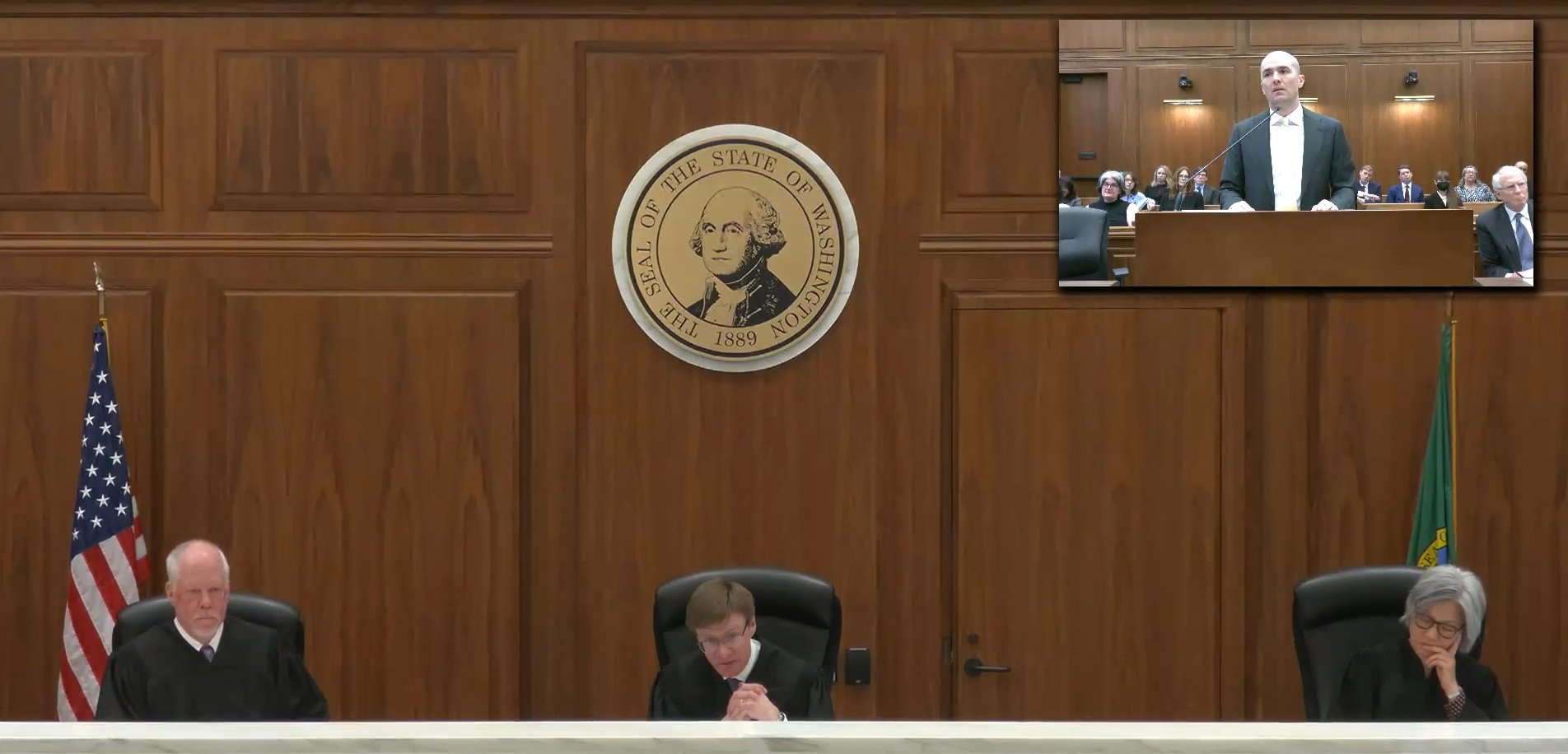
"I think the statutes, while not a model of clarity, are unambiguous that they intended to prevent all SEPA appeals, whether pre-decision or not," Burke said. "That intent is evident from express legislative intent, the title of the act, adopting the operative language in three of the statutes states, in relevant part, 'An act relating to promoting housing construction in cities through...limiting appeals under the State Environmental Policy Act and Growth Management Act.'"
"Terrible word for you, because it doesn't say eliminating," Judge Ian S. Birk replied.
Mann noted that the legislature did not amend the state statutes that deal with the way that cities handle SEPA appeals through their Hearing Examiners, suggesting that there was a path left open for appeals such as this one.
"The legislature knows how to amend a statute, right? I mean, they could have amended that provision of the statute if they'd intended to," Judge Mann said.
Last month, the two appellants filed a motion requesting that the court enjoin the City from moving forward with implementing Phase 2 of the Comprehensive Plan, which the City Council will start to discuss next week.
"Unless final action is delayed pending this Court's decision, Appellants and the public risk being left without any meaningful avenue to examine the FEIS through a discovery and hearing process that was already underway," their motion stated. They argue that once the council takes a final vote on Phase 2, the prohibitions on SEPA appeals laid out in state law will be more definitively in effect.
Meanwhile, the City of Seattle has been pushing to dismiss the two appeals entirely, under the argument that they're now moot given the Comprehensive Plan's adoption last year. The City argues that the avenue to pursue an appeal after that vote was the state Growth Management Hearings Board, but neither party filed an appeal there during the window to do so earlier this year.
What actually happens if the Court of Appeals finds in favor of the appellants remains unclear. Seattle's Hearing Examiner will likely take up the issue again, but the bar for a finding that the City's environmental review wasn't adequate remains very high – the most likely outcome is just more process.
The other upshot could be a loophole for state legislators to consider how to deal with in a future legislative session.
 Ryan Packer