

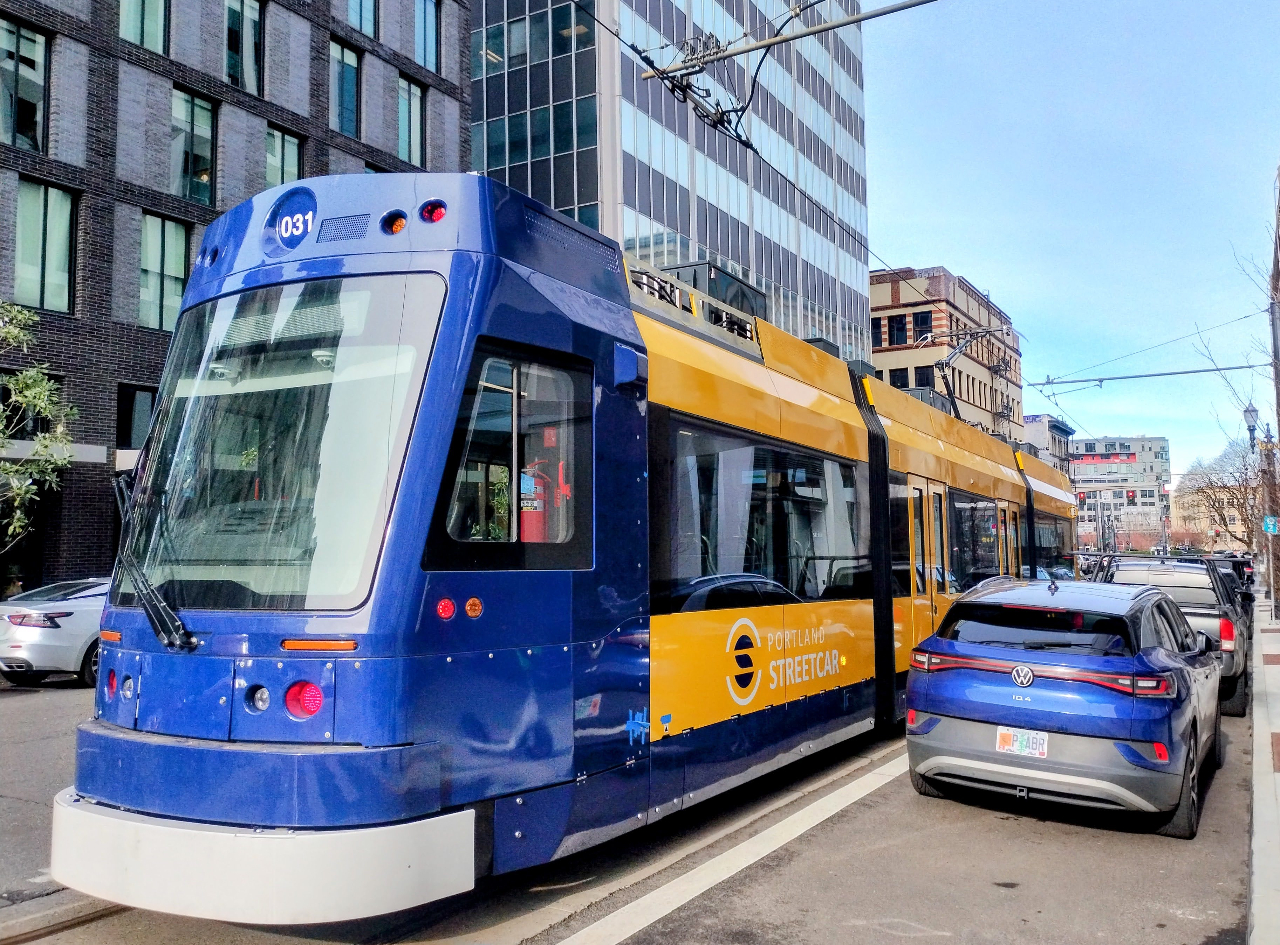
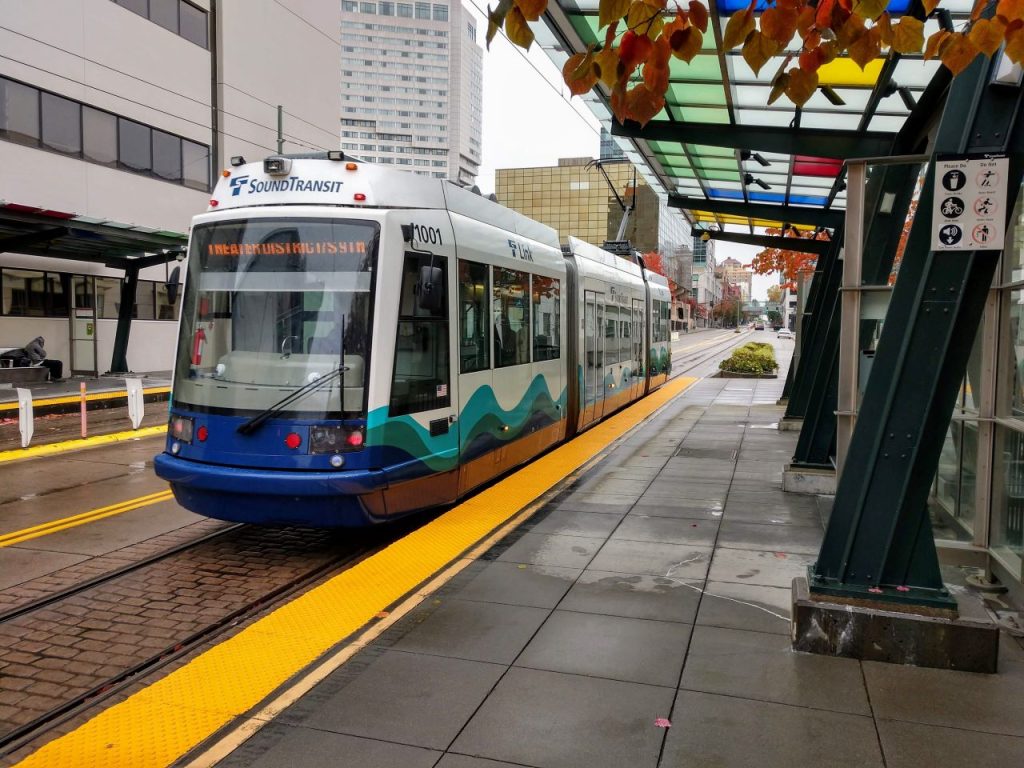
Three streetcars are set to swap states, under a purchase agreement that is on track to be approved by the Sound Transit board later this month. The City of Portland is looking to offload three Brookville streetcar vehicles that had been running along its 7.2 mile Portland Streetcar network, cars that are just two years old. And Sound Transit could use some additional Brookville cars to match the rest of its fleet used for Tacoma’s T Line streetcar, in place of aging Skoda cars that have been in use since 2003.
The move will help to standardize the fleets within the two cities, giving Sound Transit just one type of streetcar to maintain in Tacoma and the larger Portland Streetcar system two types of cars rather than three.
“Our preventive maintenance schedule will be reduced to only one type vehicle, which doesn’t sound like much on the start of it, but it will be a major reduction and simplification of our vehicle maintenance program,” T Line Light Rail Director Robert Blackburn told the Sound Transit board’s rider experience committee last week. “Vehicle systems will also be one type of maintenance for our maintenance department to troubleshoot and repair operations and maintenance staff will only have one vehicle to be trained on, which will substantially reduce operator and maintenance training. Also safety and emergency procedures will be simplified down to one vehicle.”
On its face, the deal is a great opportunity for Sound Transit, which will be able to receive virtually brand new streetcars at a 30-40% discount, and offload aging cars that only have a few years of life left in them. Sound Transit will pay $6.6 million for each Brookville. In exchange Portland will pay $500,000 for each Skoda, deduct the cost of retrofitting the Skodas for the Portland Streetcar network from its overall payment from Sound Transit, and split transport costs. All told, Sound Transit is expecting to fork over $16.6 million in addition to its three Skoda cars.
But the issue at the heart of the deal appears to be a raft of problems that Portland has experienced getting the Brookville cars to operate reliably on their system, a fact that is being downplayed by both the City of Portland and Sound Transit. Those issues that seem to be driving the entire proposal, and make a deal that at first glance appears much more beneficial to Sound Transit more easily understood.
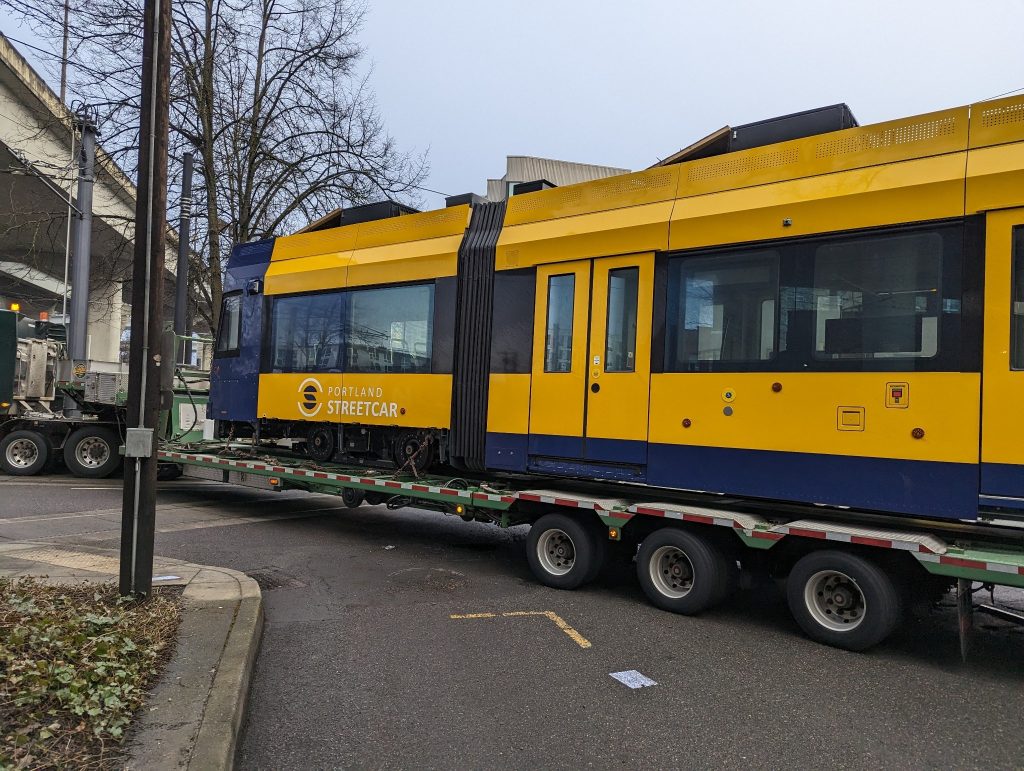
Portland initially received the three Brookville Liberty NXTs by piggybacking off of a 2017 Sound Transit order procuring vehicles for the planned Hilltop T Line extension, which more than doubled the length of Tacoma’s streetcar line when it opened in 2022. Since Tacoma’s vehicles were needed first, Portland’s first car didn’t arrive until spring of 2023.
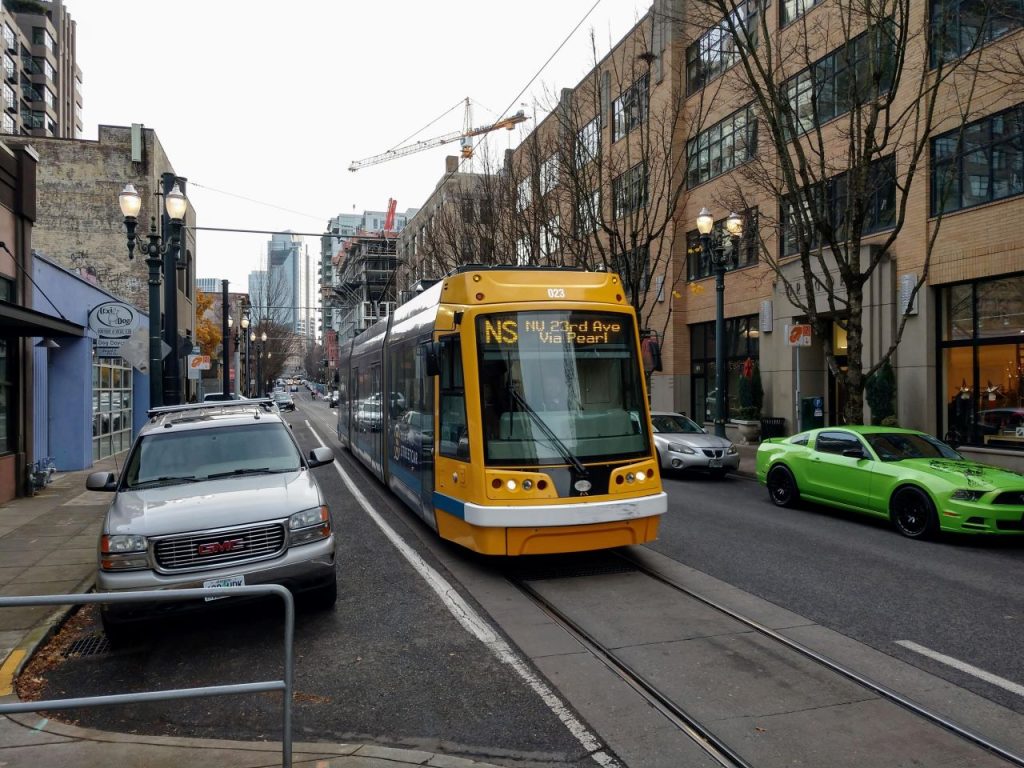
The extra cars would have allowed Portland to return to 15-minute service on the Eastside portion of its network, but they weren’t ready for prime time. They entered a “burn in” phase — a set of final test runs before being able to carry riders — a year after they were delivered. However, Portland’s Brookvilles didn’t actually enter revenue service until March 2025, another year after burn-in testing.
Stephen Weber, the chair of the advocacy group Friends of Portland Streetcar and a former member of Portland’s now disbanded Streetcar Citizens Advisory Committee, has called the Brookville purchase a “$12 million mistake.” He’s cataloged myriad issues that the new vehicles have experienced since first hitting the streets, including recurring problems deploying the ramp for passengers with disabilities, issues displaying correct signage, randomly pulsing lights, the car’s decorative trim around the windows falling off.
“To call Brookville a ‘nightmare’ would be a gross understatement, and I regret Brookville being the recommended manufacturer for the 030-series back when PBOT [Portland Bureau of Transportation] still had the Portland Streetcar Citizens Advisory Committee,” Weber told The Urbanist.
Issues with the cars, including the mechanical problems that prevented them from entering service sooner, have been cataloged in meeting minutes recorded by Friends of Portland Streetcar, including some directly reported by Portland Streetcar executive director Dan Bower.
“While Brookville looked immensely promising in 2017, Portland was not delivered the train that was ordered in 2018. Instead, we were delivered a fleet that is widely loathed by operators and one that a replacement for is already being sought after,” Weber wrote in a blog post written this summer, before the deal with Sound Transit was announced.
Officials from both Sound Transit and the Portland Streetcar have pointed to the fact that the cars were initially designed to run in Tacoma, suggesting that issues with the Brookville cars won’t necessarily follow them from Oregon into Washington, and that the Sound Transit maintenance teams are much better equipped to handle issues that do come up.
“We’ve worked closely with Sound Transit throughout the procurement of the Brookville vehicles, since we ordered as an option on their contract. In that process the streetcars were engineered for Tacoma’s system, which doesn’t necessarily present problems using them in Portland, but they’re definitely more optimally suited to Tacoma,” Andrew Plambeck, public affairs manager for the Portland Streetcar, told The Urbanist.
At the same time, Plambeck downplayed Portland’s long road to getting the Brookvilles to work.
“We’ve had minor issues implementing a new vehicle type on our system, but no more than you’d expect with any new vehicle type. Just things requiring a new or different preventive maintenance plan, etc.,” Plambeck said.
“Our vehicle engineering group has evaluated the Portland Brookville vehicles for us over a couple trips to Portland,” Sound Transit spokesperson David Jackson told The Urbanist. “Their engineers and ours are developing a scope of work to put out for a contract to perform the work. Also, the Portland purchased their Brookville vehicles using our vehicle contract options we had in the Hilltop extension. So, the vehicles were built using ST vehicle specifications with minor changes for the Portland Streetcar alignment.”
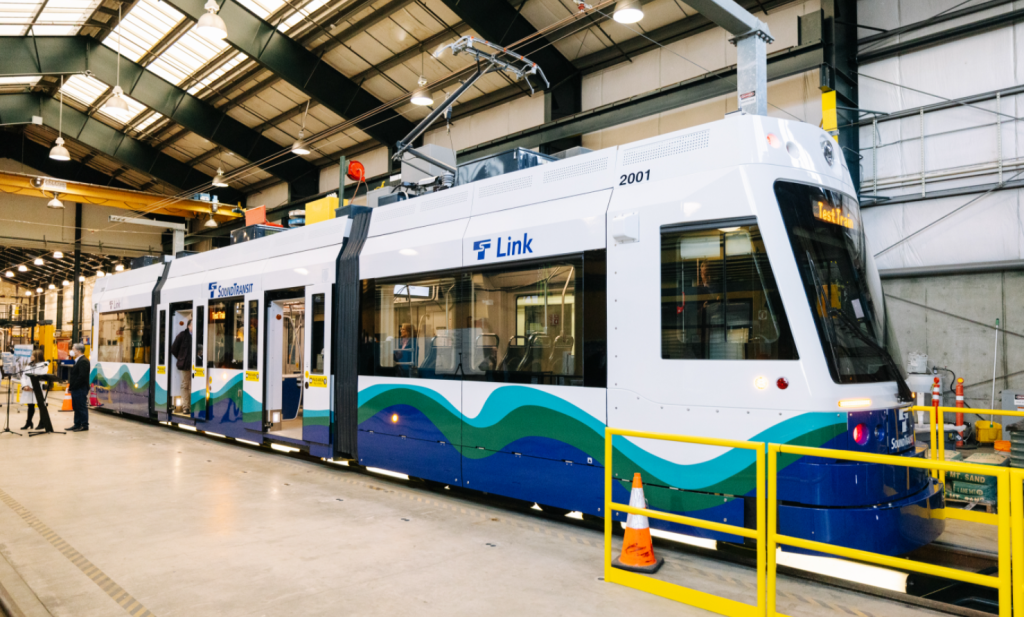
Despite all of the issues Portland has experienced, Weber doesn’t necessarily think Sound Transit will fare the same.
“While Tacoma will be getting vehicles that are not service proven, I do think they have the better resources to make them work, and they will no longer need to carry spare parts for just three aging vehicles,” Weber told The Urbanist, noting that the scarce market for streetcar procurement in the U.S. is one of the main reasons agencies would be reluctant to go on the record about problems. The scarce market also makes alternatives to the car swap much more costly.
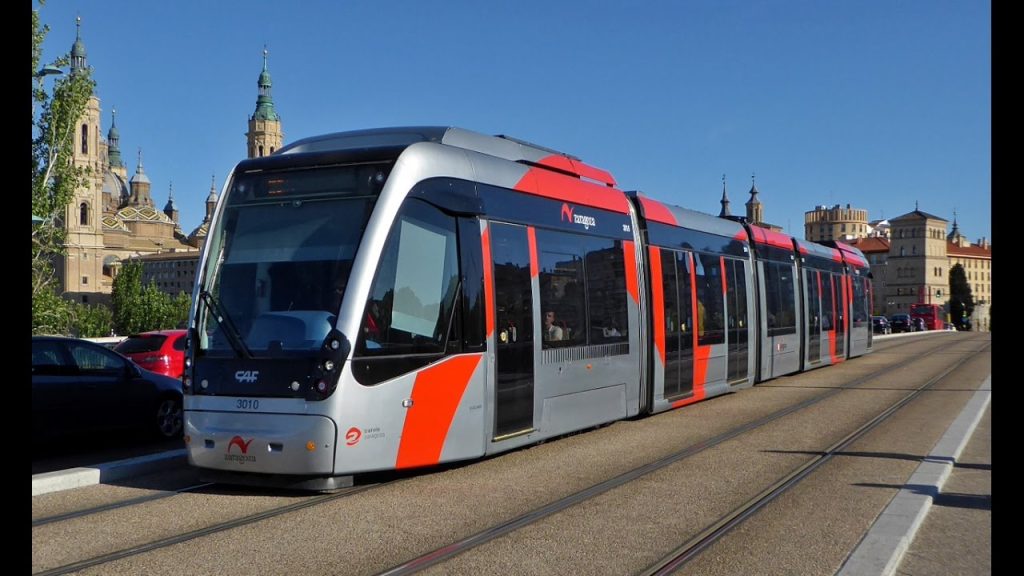
“Considering that Brookville is the only option I am aware of in the U.S. for if you have a system that isn’t built to accommodate a longer vehicle offering from CAF and their Urbos rolling stock, I think you’re going to have a difficult time finding an agency willing to go on record detailing issues with Brookville,” Weber said.
While the purchase agreement was already approved by a unanimous vote of the Sound Transit board’s rider experience committee last week, the budget amendment enabling the deal to go through still needs to be approved by the full board on December 18.

Ryan Packer has been writing for The Urbanist since 2015, and currently reports full-time as Contributing Editor. Their beats are transportation, land use, public space, traffic safety, and obscure community meetings. Packer has also reported for other regional outlets including BikePortland, Seattle Met, and PubliCola. They live in the Capitol Hill neighborhood of Seattle.