

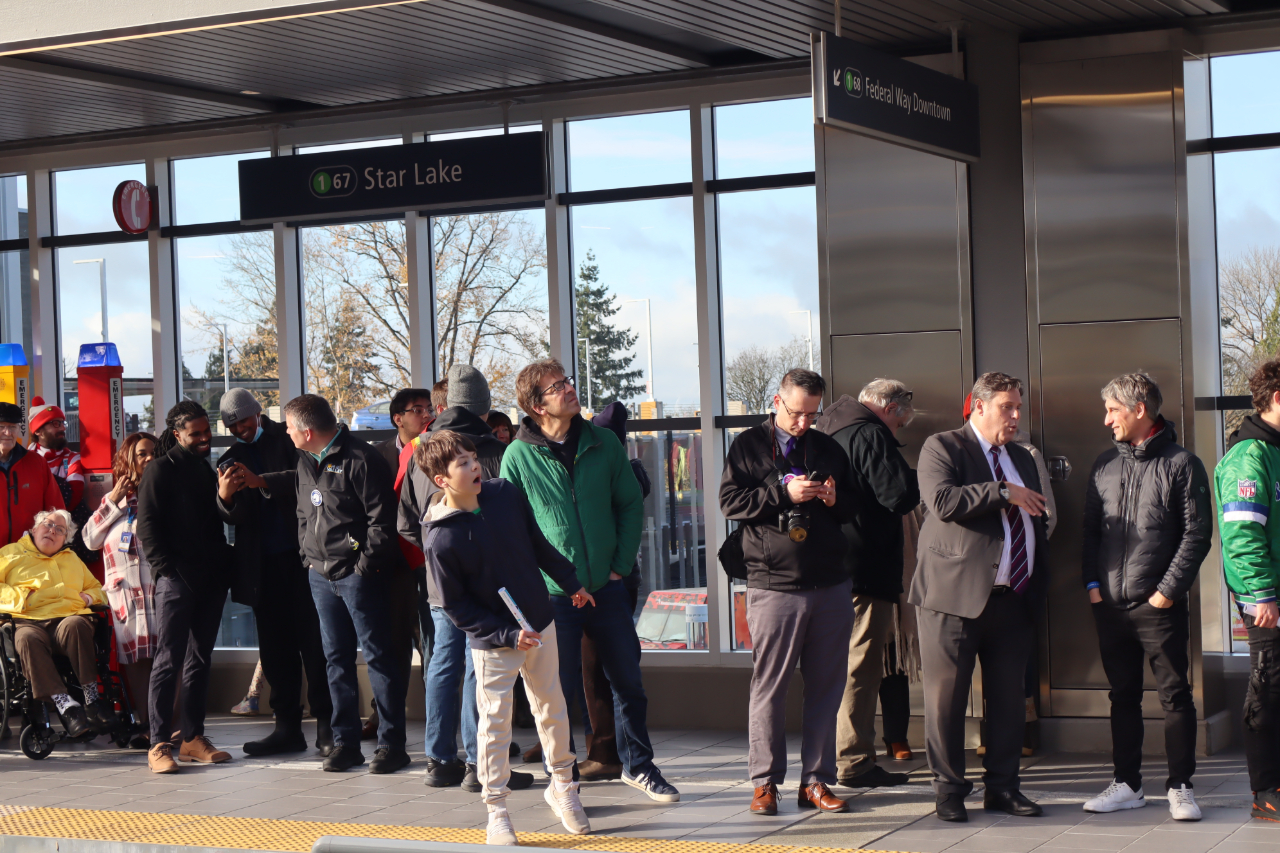
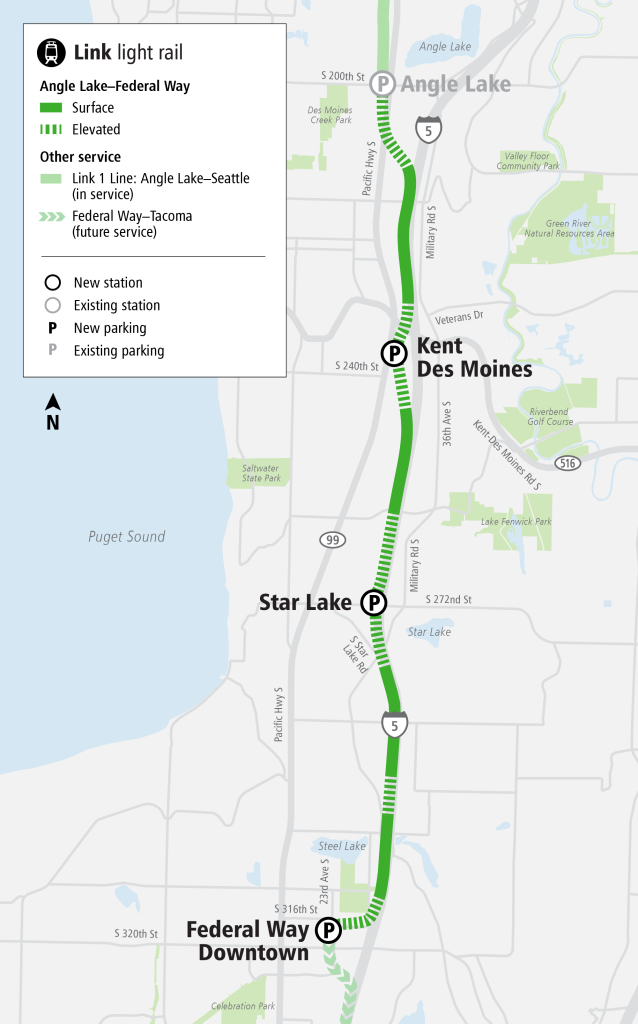
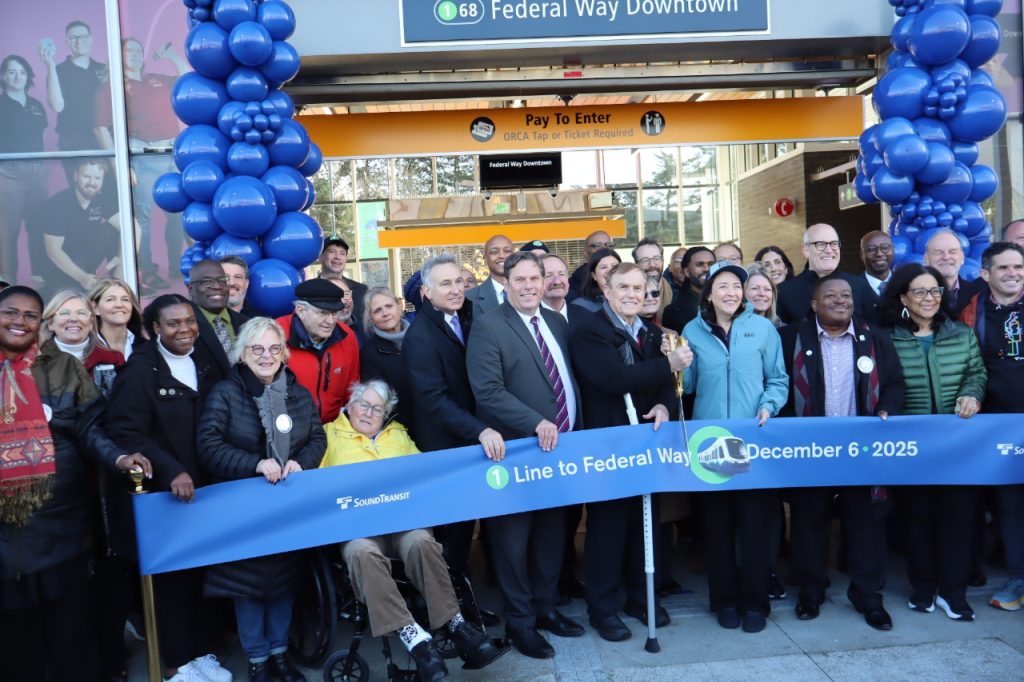
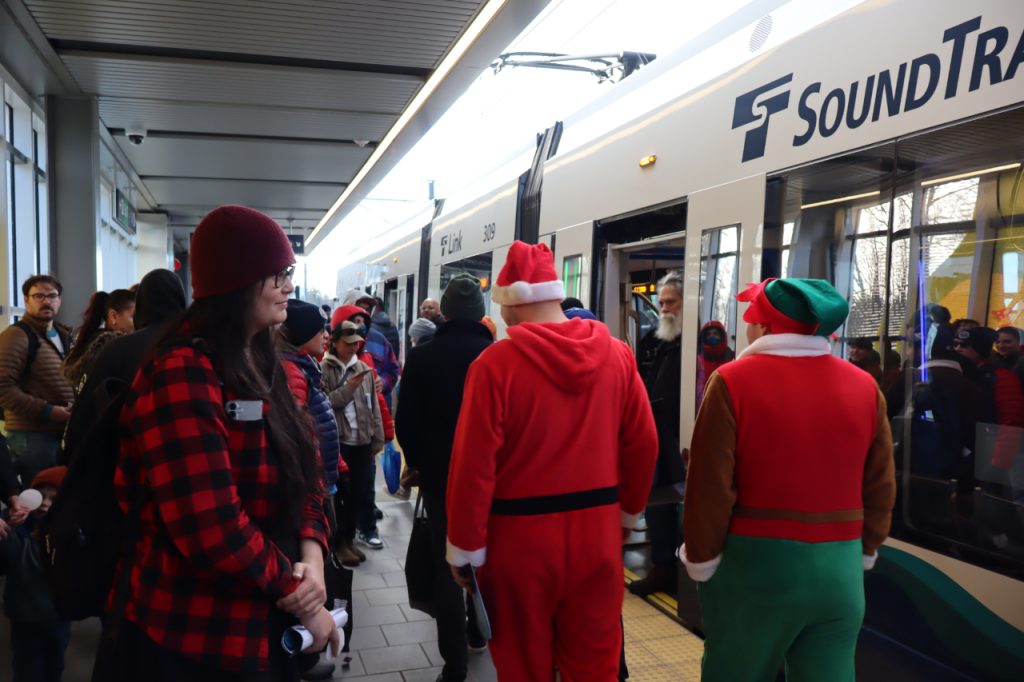
Three brand new light rail stations, christened officially as Federal Way Downtown, Star Lake, and Kent Des Moines, came alive on Saturday, as scores of riders came out to celebrate Sound Transit’s latest system expansion. The opening day celebrations, which featured family-friendly activities, live music, and food at all three stations on the newly opened Federal Way Link Extension project, capped off a long road to bring light rail service deeper into South King County.
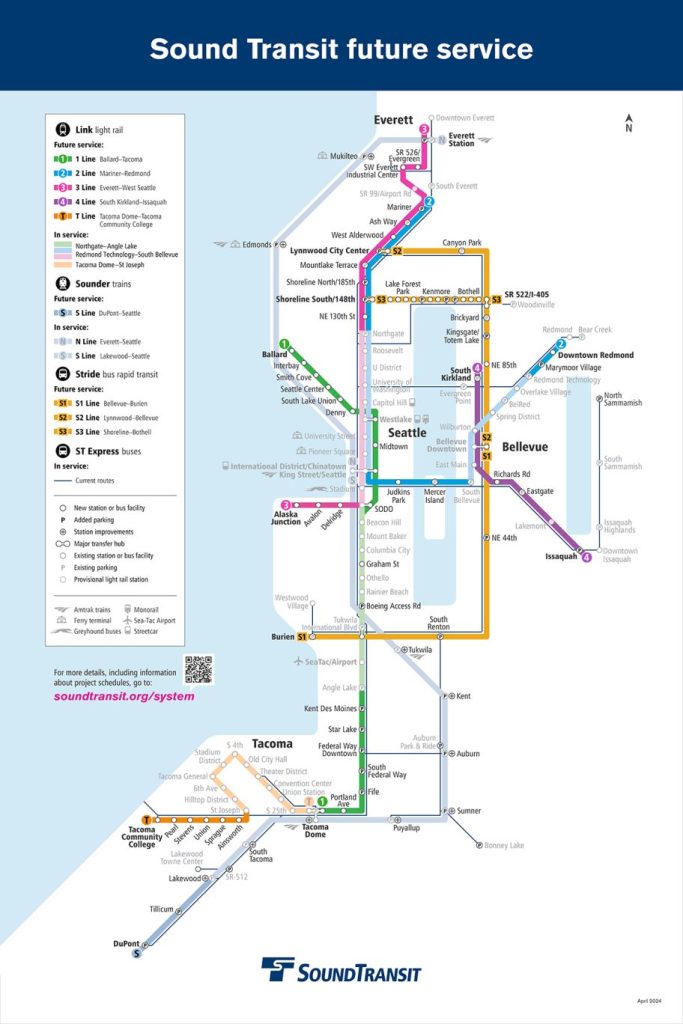
With trains running all the way south to Federal Way as of 11am Saturday, the 1 Line is now the second longest light rail line in the U.S. at 41 miles long, trailing only the A Line in Los Angeles. The 7.8-mile Federal Way extension came on the heels of the 8.5-mile Lynnwood Link extension, which opened on August 30, 2024.
Sound Transit had been working on the extension since 2008, when voters signed off on the Sound Transit 2 (ST2) ballot measure pledging to get to S 272nd Street, where the Star Lake Station sits today. Thanks to the 2009 Great Recession, Sound Transit needed to scale back plans and seek additional funding to get south of Angle Lake. The successful 2016 Sound Transit 3 (ST3) ballot measure was able to fund the extension all the way to Federal Way’s fledgling downtown.
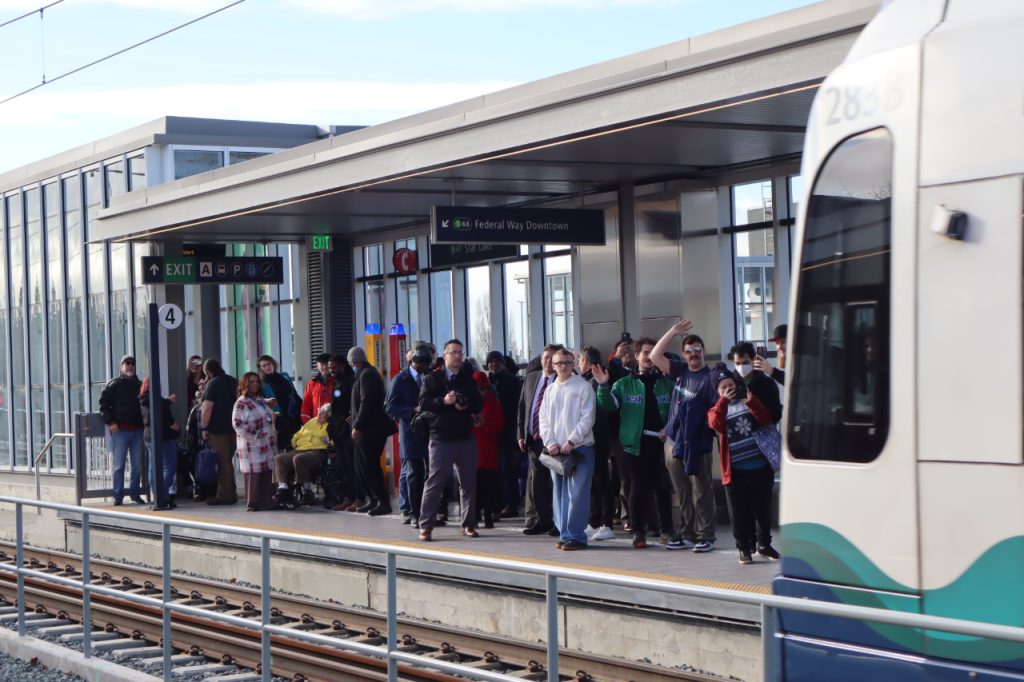
If you weren’t able to make it down this weekend, check out The Urbanist‘s photo tour of the new stations.
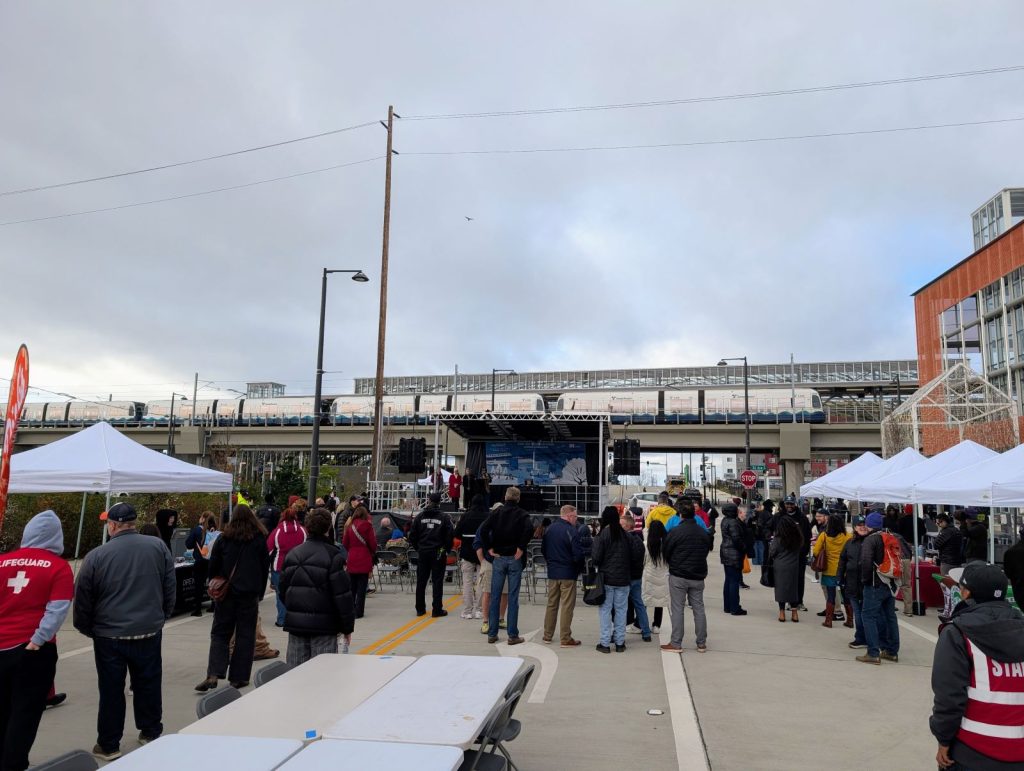
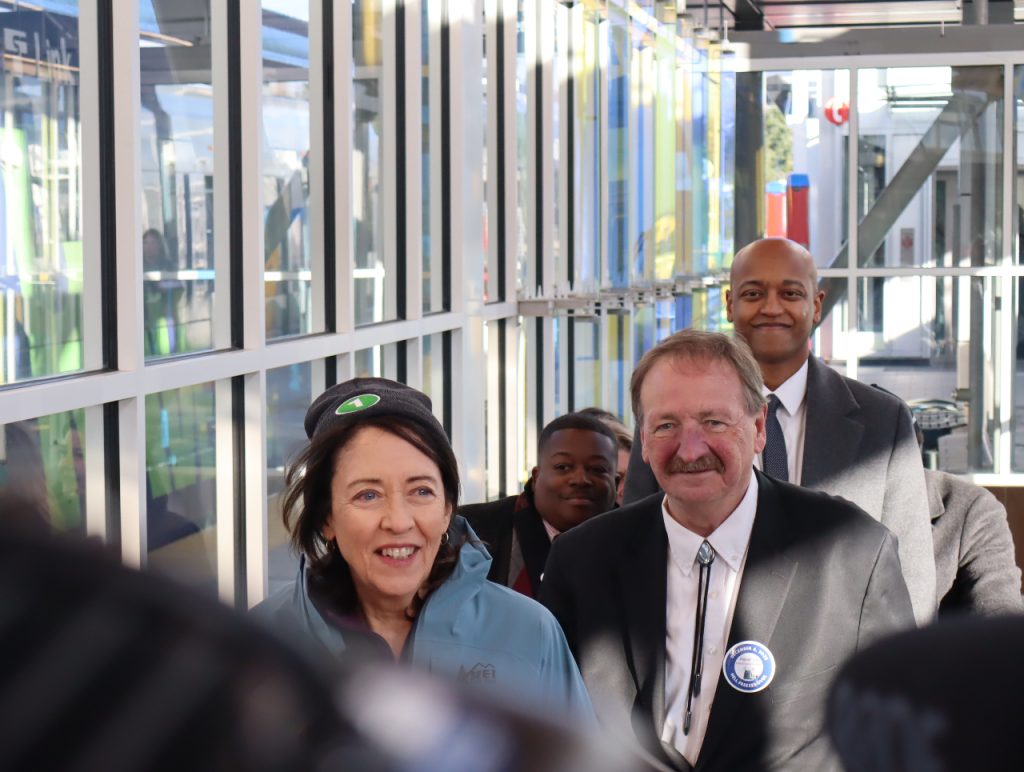
The day was a notable moment in the sun — both figuratively and literally, despite the rain in the forecast — for South King County, an area where residents often complain of being shortchanged when it comes to transportation investments. Elected officials attending the ribbon-cutting were given pins referencing a comment made by longtime King County Councilmember Pete von Reichbauer in 2004 that light rail won’t arrive in the area until after “hell freezes over.”
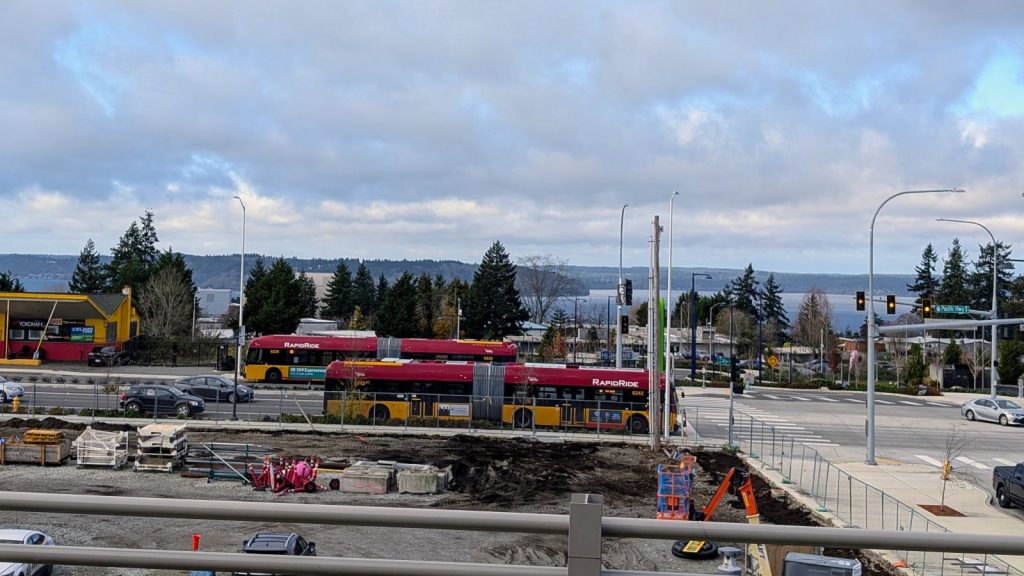
Thanks to advocacy from the cities of Federal Way, Des Moines, and Kent, the light rail alignment mostly follows the I-5 freeway south of SeaTac, a fact that will continue to grate on transit advocates who pushed for it to follow State Route 99 a decade ago. They argued that the redevelopment opportunities that would come from siting the line directly on a major north-south business corridor would be much greater than the alternative.
Advocates for the SR 99 alignment have mostly been proven right by the scarce opportunity for redevelopment near Star Lake Station, at the extension’s midpoint, and limited activity elsewhere. Unlike a number of other areas in the growing Sound Transit network, there hasn’t been much of a housing boom around the Federal Way Link stations, with only about 3,000 homes in the development pipeline.
“For decades, we’ve talked about how important this is. This is really going to be something that really connects up the entire region, and it’s billions of dollars of investment and connection where people are going to be able to get on the light rail and go to points north,” Federal Way Mayor Jim Ferrell said. “But it’s more than that. It’s about economic opportunity. It’s about the economic development and growth of this community.”
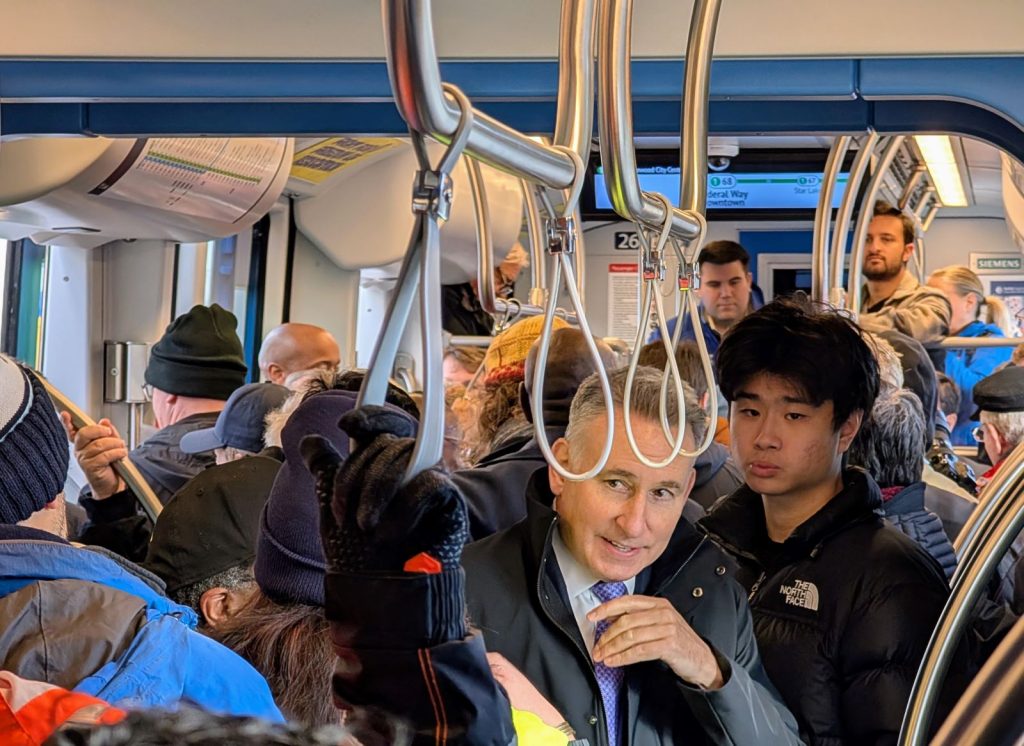
Beyond economic stimulus, the extension should attract more riders to the system. Sound Transit projects that the Federal Way Extension will carry 18,000 to 23,000 daily passengers by 2028, adding to booming light rail ridership. The 1 Line has been averaging more than 110,000 daily riders since June 2025.
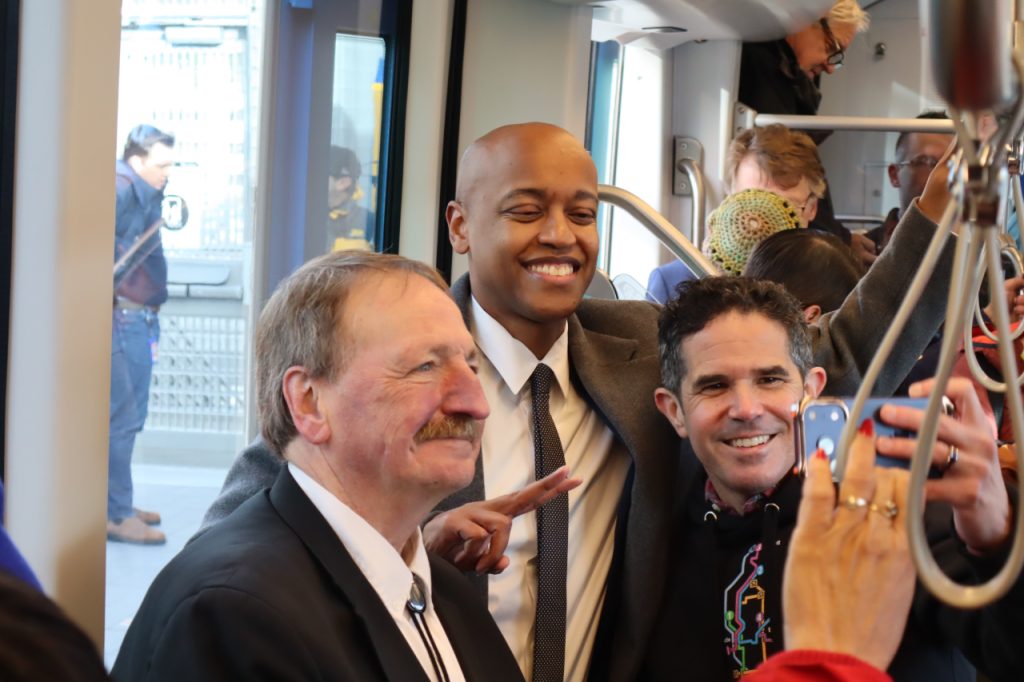
“These new stations will mean a student in Federal Way can step on a train and go all the way to UW for school, passing by traffic. It’s really exciting. It means a worker in Kent can find jobs all along the 1 Line — very exciting for our economy. It means families will have a reliable, affordable way to get to the airport, to healthcare, to school, to opportunity,” King County Executive Girmay Zahilay told the crowd who gathered for the ribbon-cutting, less than two weeks after being sworn in.
Washington State’s federal delegation, also took credit for pushing the Federal Way light rail project forward Saturday, along with other planned extensions including last year’s Lynnwood Link Extension that had their federal funding threatened during Donald Trump’s first term in the White House. So far during Trump’s second term, federal transit funding has been broadly threatened, but major Sound Transit project have not yet come under the microscope — in part because several projects are behind schedule and not yet at the construction grant phase.
“This $1 billion did not come easy. During the first Trump administration, the Department of Transportation was obstructing $790 [million] of capital investment for the project, and we had to make it clear to then-Secretary Elaine Chao that this was the top priority for the Washington delegation. And we got that grant free. The next year, we had to push against opposition for the American Rescue Plan, which provided $150 million for the project. And we got that done,” Senator Maria Cantwell said. “And obviously we’re here to celebrate that this fast, traffic-free, affordable transportation infrastructure is going to pay dividends for generations to come.”
Sound Transit’s next expansion is tentatively tabbed for spring 2026 with the 2 Line light rail extension across Lake Washington, bringing stations in Judkins Park and Mercer Island online. The project will need to clear testing hurdles before an opening date is locked in. Once extended, the 2 Line will run from Redmond to Lynnwood, doubling service frequencies in Downtown Seattle and points north along the way.
Federal Way is slated to remain the southern terminus of the 1 Line for a decade. In 2035, the Tacoma Dome Link Extension is set to connect King and Pierce Counties, making Tacoma the new southern terminus. While Sound Transit is facing a 30- to 40-billion-dollar shortfall that could impact projects like the one getting to Tacoma, a sizable board contingent is laser-focused on completing the “spine” of the network, which also includes getting to Everett in the north.

“This is a tremendously big deal, and yet, what we are celebrating today as brand new, as a revelation, will very shortly, be so ingrained into our lives that we will give it the highest compliment that you can give a work of infrastructure: We will take it for granted,” Sound Transit CEO Dow Constantine said. “We are going to build our daily lives around it. We’re going to complain bitterly when even the slightest thing goes wrong, and we are going to forget what life was like before we had it.”
Ryan Packer has been writing for The Urbanist since 2015, and currently reports full-time as Contributing Editor. Their beats are transportation, land use, public space, traffic safety, and obscure community meetings. Packer has also reported for other regional outlets including BikePortland, Seattle Met, and PubliCola. They live in the Capitol Hill neighborhood of Seattle.