The Pierce County Council recently greenlit a set of awards for affordable housing projects using a relatively new funding source: the Maureen Howard Affordable Housing Act. The projects largely aim to serve households with very-low and extremely-low income levels. Passed in March 2023, the act aims to ramp up affordable housing production in Pierce County, which has lagged behind existing and projected needs.
Council’s newly passed biennial budget also allows the County to use the tax to backfill federal support it expects to lose at existing facilities, following funding cuts. Though the County has not lost any federal funding aside from a FEMA grant, County Executive Ryan Mello told The Urbanist they want to be prepared, given the “signals coming out of Washington, D.C.”
Named for long-time housing advocate and Tacoma resident Maureen Howard, who died following a battle with cancer in 2023, the act set a one-tenth of 1% tax on sales within Pierce County to generate revenue for affordable housing. That works out to 1 cent for every $10.
The tax is the County’s primary source of affordable housing dollars. Mello said it’s “a meaningful stream of revenue,” but “does not come close to meeting the scale of need in Pierce County. We have families, seniors, and workers who are being priced out of the market, and federal uncertainty only heightens that challenge.”
On the whole, Pierce County — the second-largest county in the state, behind only King — lags woefully behind in its affordable housing needs, and it takes many years for housing projects to come to fruition. As part of its 2022 Housing Action Strategy, the County estimated that it would need to produce an average of 2,300 units per year through 2044 to meet its housing goals. More than half of these are needed for extremely-low income households. The County is exploring new options—some of which the Housing Action Strategy outlined—to try to meet the need.
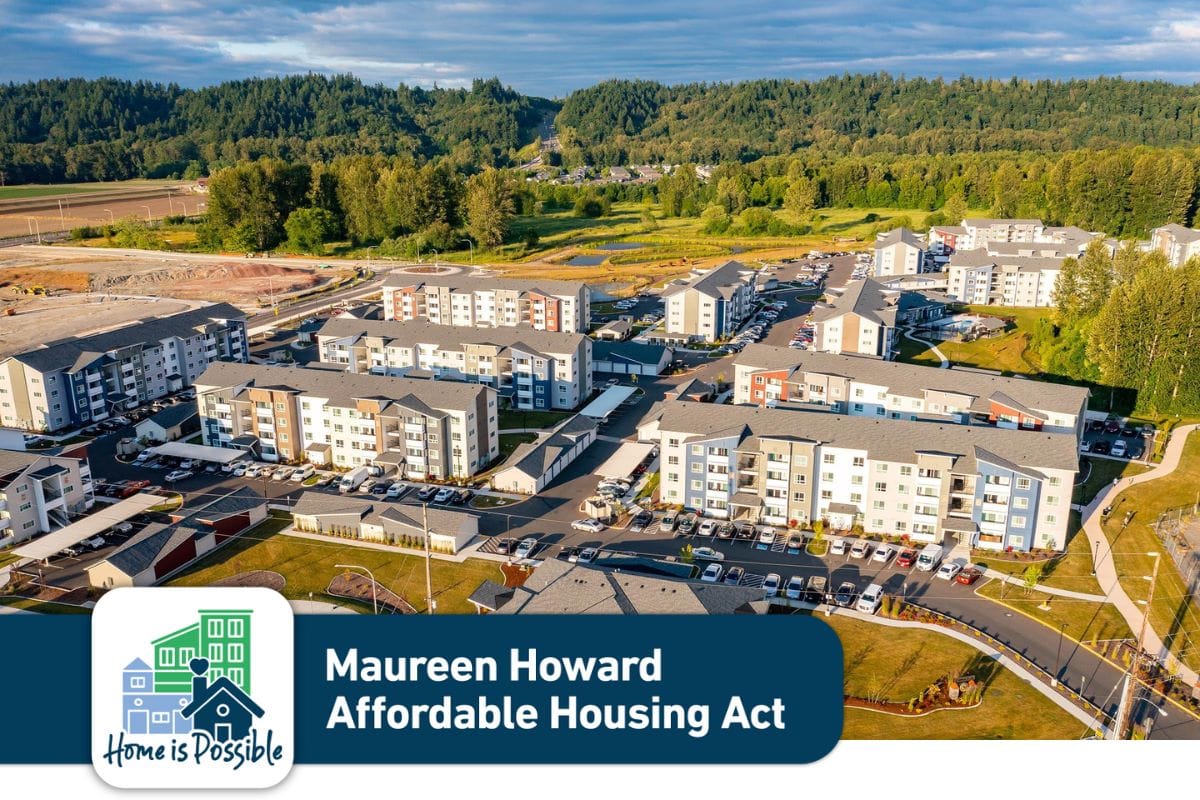
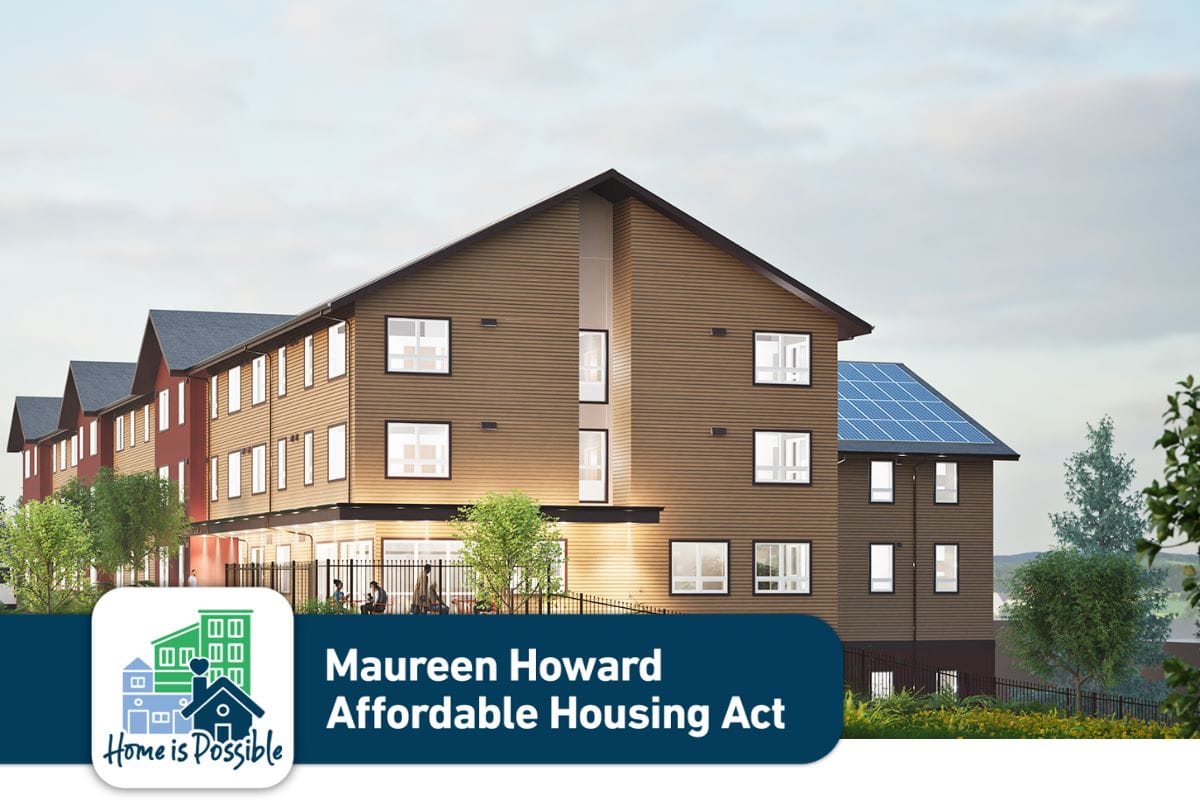
Maureen Howard Affordable Housing Act
The county started collecting revenue from the tax created by the Maureen Howard Act in July 2023. The County had anticipated the tax to generate a little more than $18 million for affordable housing over the first year. By November 2025, the County had brought in more than $31 million from the tax.
In total, the County has estimated that the tax will contribute to the creation of 1,700 affordable units over a period of six years, based on an historical estimate of needing to provide about $50,000 in County funding per low-income housing unit built. That’s a fraction of overall building costs; so developers braid County funding with outside funding, such as state grants, philanthropic funds or low-interest loans, and federal tax credits.
The six-year plan for the tax specifies that 30% of revenues will go towards developing and preserving housing for those households at extremely-low income levels (30% AMI). This includes permanent supportive housing. An additional 20% of the revenue will be used for housing-related services, including wraparound services for people living in permanent supportive housing.
The Maureen Howard fund has already contributed to the creation of more than 1,300 affordable units, alongside other funding streams.
“The increase in the number of units is reflective of the awarded projects having more outside funding and a lower amount of County dollars per unit,” Mello said, noting that local public funding is important for developers to attract outside funding. “We’ve been able to get more new units than estimated due to strategic investments in projects that leverage a large amount of outside funding. This has allowed the County to stretch its dollars further and exceed the original estimate.”
The four housing projects funded this year
At its Sept. 2 meeting, the county council approved $12.2 million from the tax revenue to go towards four more housing projects in unincorporated Pierce County: Cedar Flats in South Hill/Frederickson, Chateau Rainier in Fife, FFC Homes XIV in Buckley, and Fairway at Dupont in Dupont. The County based its awards on funding criteria, awarding the first three projects all requested funding, and partially funding the fourth. The County denied six other projects from some of the same applicants that won awards.
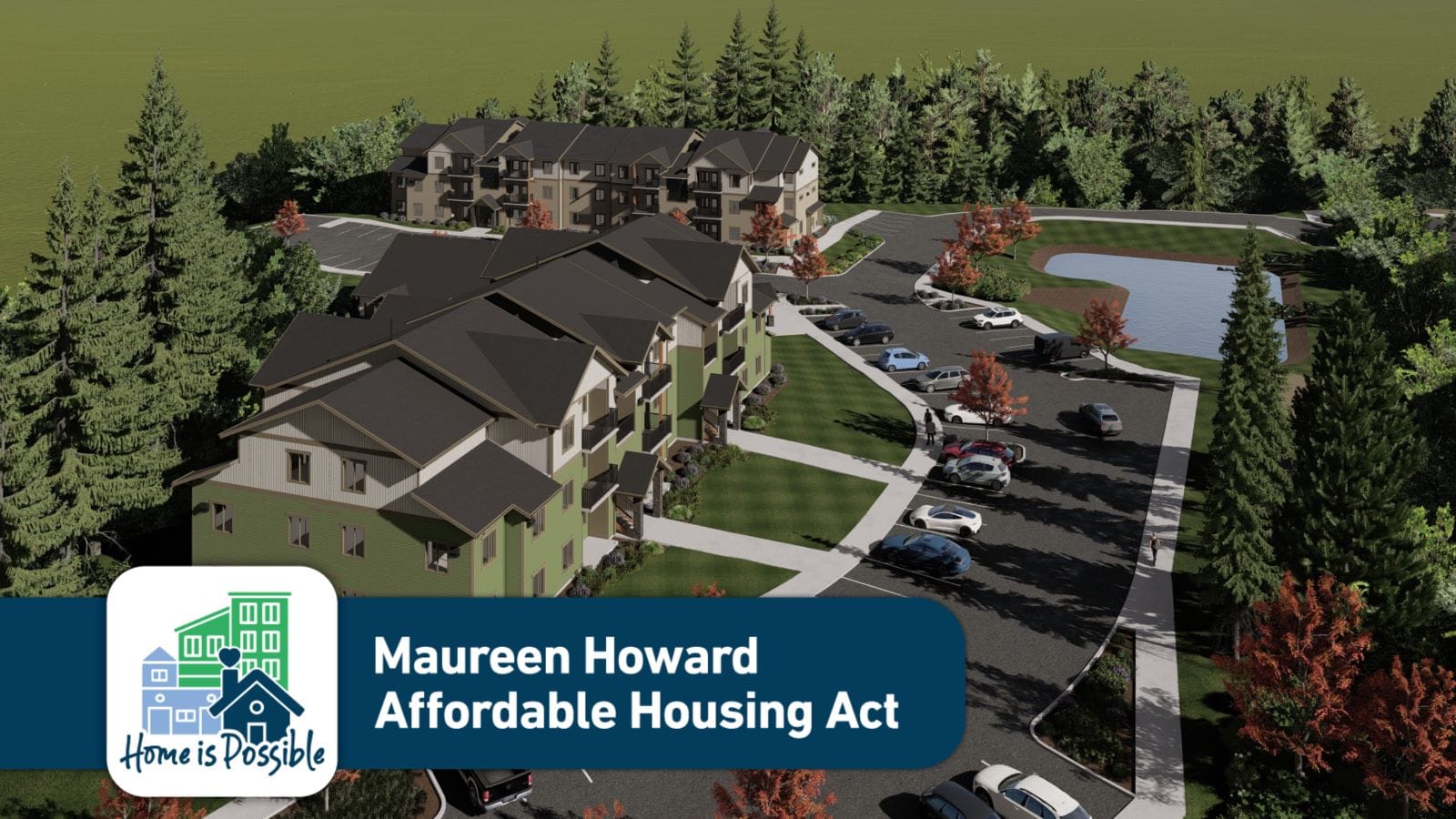
The tax will fund about 650 affordable homes split among the four projects, with different developers handling the projects.
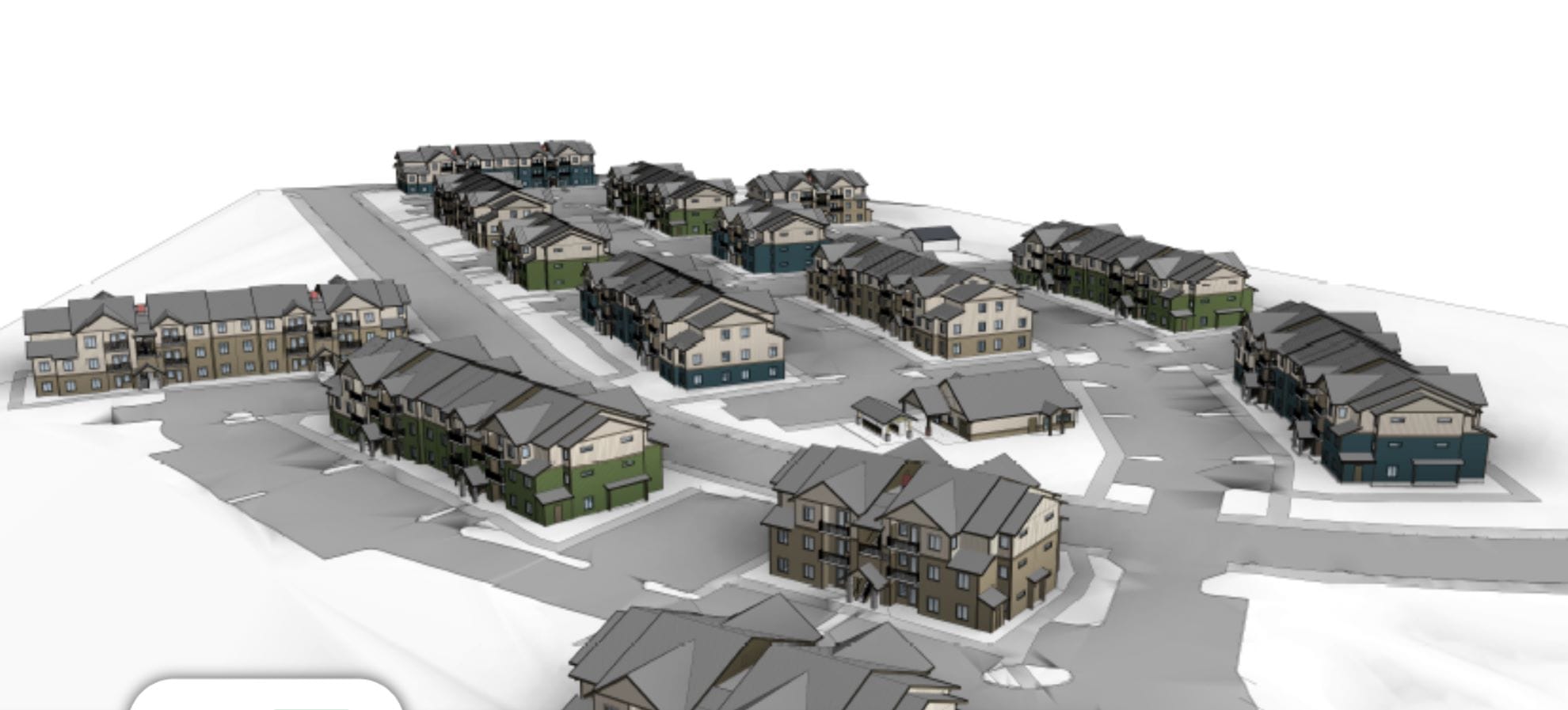
Macdonald Ladd Development, LLC, is leading the Cedar Flats development and the Fairway at Dupont developments. The 276-unit development at Cedar Flats development is projected to cost nearly $109 million, while Fairway at Dupont’s estimated cost for 113 new homes stands at just over $52 million. The County will contribute $7 million towards the Cedar Flats project and $69,752 to the Fairway at Dupont project.
The Pierce County Housing Authority (PCHA) will helm the rehabilitation of Chateau Rainier in Fife. The PCHA already owns the 248-unit building—but while it has been kept “naturally affordable,” it is not deed-restricted, and requires “significant capital repairs,” including new roofs, interiors, and windows, all of which will require tenants to relocate.
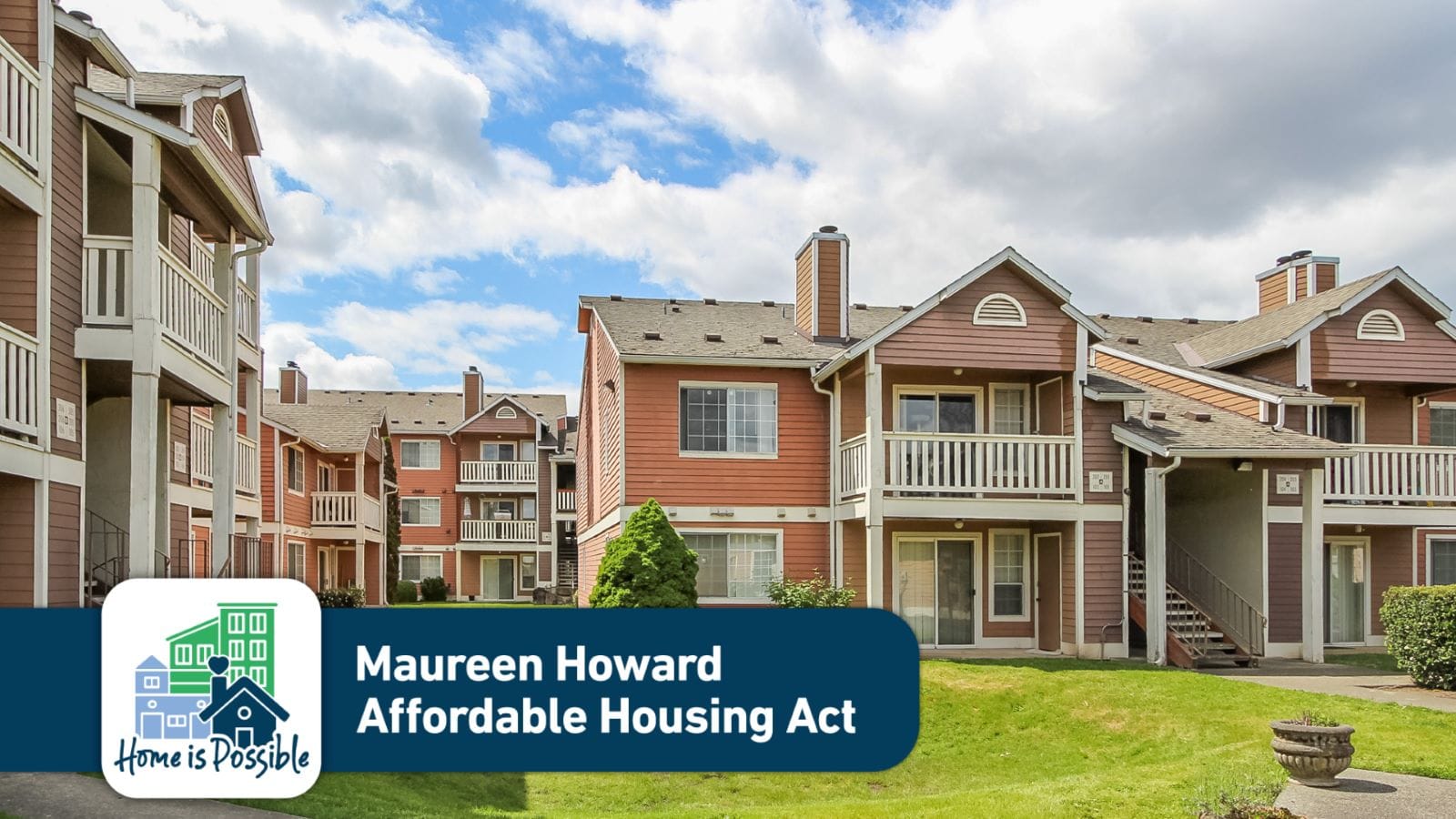
The PCHA stated that it plans to add 76 project-based vouchers to the building, in order to make it more affordable. Of the 248 units, 96 will be for extremely-low income households, who are families or individuals earning 30% or less of the area median income (AMI).
Foundation for the Challenged, a nonprofit that supports people with disabilities, received $166,800 to buy three different 3-bedroom, single-family homes in the Buckley area, with the aim of rehabilitating and converting them into group homes for people with intellectual and developmental disabilities living at 30% AMI.
The Washington State Housing Trust fund will finance the full project, which will cost a little more than $3 million, the Tacoma News Tribune reported, while the other three projects will be funded through combining their Maureen Howard Act awards with low-income housing tax credits, tax-exempt bond financing, and private sources.
More flexible tax revenue use
Council Chair Jani Hitchen said that the County sees stable housing as a way to reduce the number of people in crisis or caught in crisis cycles. In order to get to a place where people experience homelessness once, instead of repeatedly, she said, the County needs to “build capacity.” This also helps service providers by reducing the burden of need, which allows them to work more quickly with those experiencing homelessness for the first time.
“Some of the most challenging to serve require the most services from the county and community when they are not receiving services,” Hitchen said of the Council’s decision to prioritize tax dollars for vulnerable populations.
Because the County is working on increasing density along its transit corridors, the Council also added language to the budget to prioritize funding affordable housing developments along SR 7, the main highway that runs through Pierce County and Pierce Transit’s busiest bus route. The Council additionally added a specific proviso that allows the County to prioritize using the affordable housing tax funds for development and preservation projects located in urban growth areas. Within those areas, the County will “especially prioritize projects located within ½ mile of State Route 7 south of South 38th St.”
Backfilling federal funding loss
For the last 10 years, the County has received nearly $200 million in federal support, and about 50 of its programs rely on federal funding for at least 75% of their budgets, the County said. These programs include transportation, healthcare, and affordable housing. Handling significant federal funding cuts will be a serious challenge for Pierce County.
While the County has yet to lose federal grants save for a Federal Emergency Management Agency (FEMA) grant for its Department of Emergency Management, Mello said that “the signals coming out of Washington, D.C., make it clear that we need to be prepared. We can’t wait until cuts occur to start planning; our responsibility is to safeguard critical programs before disruptions reach our communities.”
This is why, Hitchen said, the County opted to add a proviso to the Maureen Howard Act that makes an exception for the County to use tax revenue to backfill lost federal funding.
“At the end of the day it is about keeping people housed,” Hitchen said. “I do not want to foot the bill for the federal government, for a service that should be paid for through programs from [Housing and Urban Development] or other agencies. But, if we find that the federal government is going to harm our residents by cutting programs, especially if we are seeing the potential for people who are stably housed to end [up] out on the street, we have left some flexibility in our budget to respond.”
Urgent need for more affordable housing
The affordable housing tax is currently the County’s only source of affordable housing revenue, but it’s clear there need to be additional revenue sources and strategies. The County has produced less than half of the affordable housing needed, according to its Housing Action Strategy (HAS).
The HAS, developed by Seattle-based consulting firm BERK, contains some bleak statistics. At the time of the strategy’s release, more than a third of the County’s residents were cost-burdened, which is defined as spending more than 30% of household income on housing. Of those, a little less than half spent more than half their income on housing. In order to meet this need, the County must produce more than 2,300 new affordable housing units through 2044, according to the study, adding “addressing this challenge will require significant resources.”
“Pierce County has access to funding tools for raising another $44 million in annual revenue for affordable housing production. This additional investment would make an important and meaningful impact,” the HAS states. “However much more funding will be needed. BERK estimates a remaining funding gap of $624 million to fully address the needs of households at or below 50% AMI.”
The study recommended the County utilize both the Maureen Howard Act and add an Affordable Housing Property Tax Levy to generate needed funds, as well as dedicate dollars from the General Fund to affordable housing. The County does not currently have an affordable housing levy, which would need to go before voters and earn majority approval.
The study also advised attempts to attract private investments in affordable housing through tax credit programs and outreach, and establish a regional, coordinated housing effort, which it suggested an existing intergovernmental roundtable, the South Sound Housing Affordability Partners, could oversee.
Additionally, the study suggested the County expand its Multi-Family Housing Tax Exemption (MFTE), lower overall costs for developers to create affordable housing by making it easier to use surplus public land and assisting builders on “challenging” sites, and encourage “middle housing” development.
“At the Council level, we have been working with intentionality around focusing the various tools that we have, and potentially new tools like MFTE (Multi Family Tax Exemption) programs that the county has only used once,” Hitchen said. “In 2026, the Health and Human Services will be looking at establishing some MFTE zones in unincorporated Pierce county, and hope that this will be an additional incentive to get more housing in our urban/suburban areas, especially along our transit lines.”
Mello told The Urbanist that, in addition to its affordable housing tax, the County is considering other tools and revenue streams to bolster its housing strategy.
“The County is working with partner organizations, and governments on identifying public land for affordable housing development,” Mello said.
He said that the County has secured two public properties for affordable housing—Frederickson South in Frederickson, and a forested, undeveloped land in East Tacoma, both of which are owned by the Department of Natural Resources. The Frederickson development can hold 28 new homes, and will be geared towards households earning 80% area median income, while the undeveloped land will hold 24 new affordable units.
The County said it is coordinating three transfers of public property for affordable development and looking to acquire “additional” pieces of land in 2026 for affordable housing purposes.
Mello said a newer initiative aims to provide technical support for smaller developers and faith-based organizations interested in creating affordable housing. The County will host a developer open house or forum this coming spring, as well as technical workshops for prospective affordable housing developers.
The County is also working to help affordable housing builders acquire private property for affordable development via loans through the Pierce County Community Development Corporation (PCCDC). The PCCDC has already approved two loans for organizations to acquire land in Lakewood and Puyallup for future development, the County noted. Both properties will support units for elders, multifamily workforce housing, and people with disabilities.
The PCCDC already loaned the Olga Dor Cooperative mobile home park $750,000 to preserve 48 affordable units for elders in Parkland.
On the whole, Pierce County’s housing needs currently far outstrip its existing supply and planned stock of affordable housing. Mello did not say whether the County would pursue an affordable housing tax levy, but the County’s revamped Comprehensive Plan has begun pursuing some elements that the Housing Action Strategy suggested, including zoning updates to allow multifamily development in more places.
Pierce County includes a large number of urban incorporated areas, which the County council oversees and controls zoning policy. Nearly half of Pierce County’s roughly 960,000 residents live in unincorporated areas, and the County’s Comprehensive Plan update aims to continue growing in these areas, particularly in transit corridors, with 32,000 net new homes targeted by 2044. The County also aims to spur affordable housing creation, but has not set a specific target for affordable homes.
“We continue to look at working smarter and with broader partnerships,” Hitchen said of the County’s efforts to create more affordable housing. “The needs for affordable housing in our county far outpace what this one source [the tax] can do, but without it, we would be even further behind. If we truly want a thriving Pierce County, where everyone has a place to call home, we have to have a large and diverse inventory of homes.”