
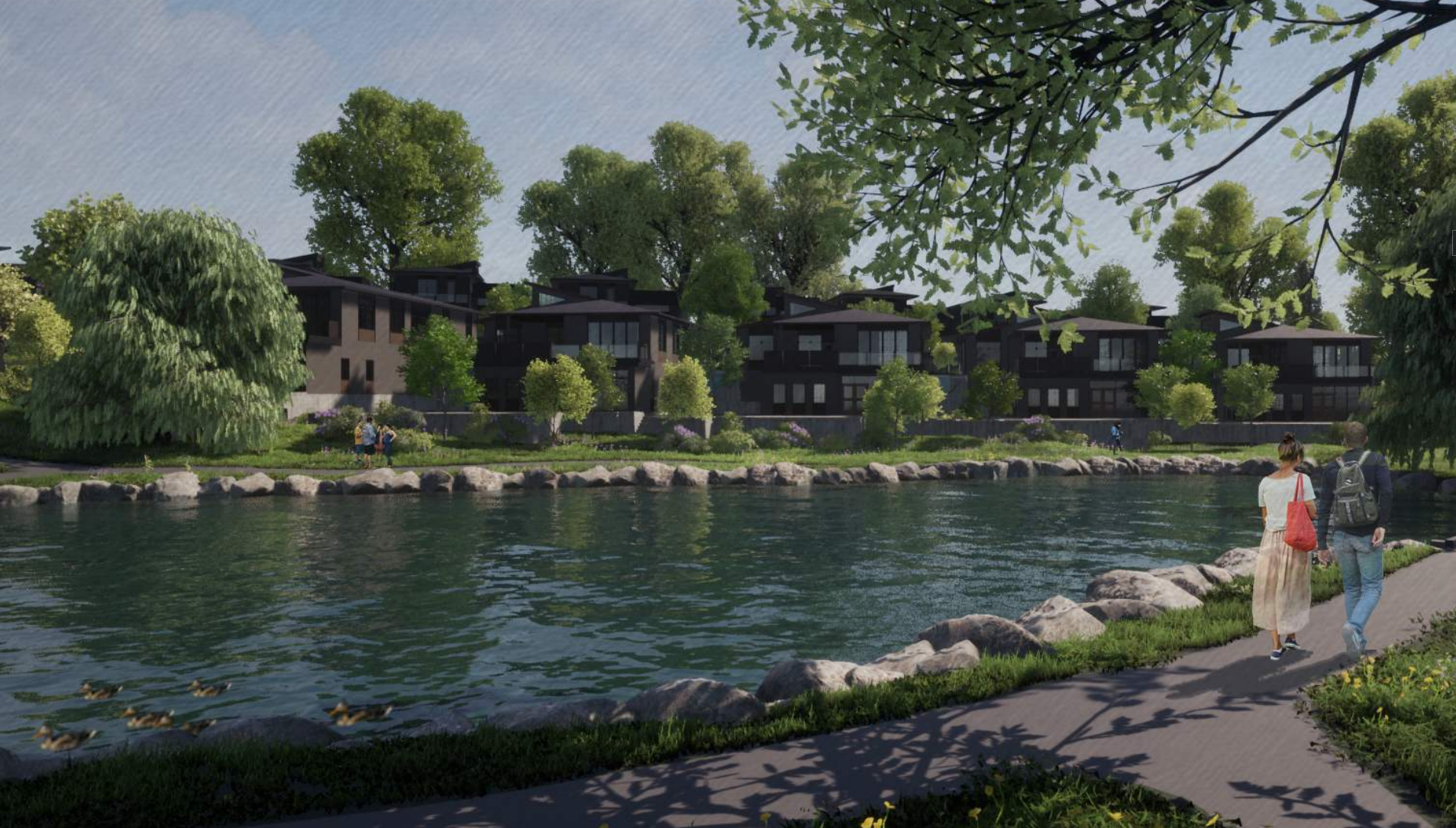
Seattle urbanists scored a quiet victory last week with a unanimous council vote authorizing the purchase of a contentious 18-acre parcel in Laurelhurst, the former research institute-turned-conference center known as Talaris. The City advanced the property acquisition with the intention of ensuring future fish passage along the mostly undergrounded Yesler Creek.
The move will grind to a halt plans for 48 single family homes sprawling across the site. Critics had lambasted the proposal as creating a lavish suburban enclave within a stone’s throw of the University of Washington, a campus with more than 52,000 students sandwiched between two light rail stations.
The authorization for the $64 million purchase using Seattle Public Utilities (SPU) funds was first reported by the Seattle Times and took many housing advocates by surprise. For years, Affordable Talaris and other advocates had pushed the City to pursue a more forward-thinking urban vision for the site.
Affordable Talaris, a Share The Cities working group, has been demanding change at the Talaris parcel in Laurelhurst to build different & more affordable housing alongside trees, wetland, and a future daylit creek. We are heartened by the news that this parcel may have a different future!
— Affordable Talaris (@affordabletalaris.org) December 16, 2025 at 11:49 AM
[image or embed]
Rather than urban design scruples, the driving force for SPU’s acquisition is a state law that would ban the City of Seattle from simply replacing the pipe carrying Yesler Creek under the Talaris site if it were to fail. The issue was long known. For example, Ray Dubicki noted in a 2020 Urbanist article that Yesler Creek has an easement and represented a significant obstacle to development, flagging the opportunity to daylight the creek.
“The Washington Department of Fish and Wildlife will not allow SPU to repair or replace the pipe unless it is made fish passable. The private property owners have plans for a major new development which, if completed, would make it dramatically more difficult and costly for SPU to make the drainage pipe fish passable,” a City staff report on the sale noted. “The utility determined the property is also suitable for stormwater control facilities because the area needs additional stormwater drainage facilities to manage increased flows.”
After SPU is able to complete a plan to make Yesler Creek fish passable through the site, the City could repurpose any portion of the site that is deemed surplus, a potential path to building housing. However, any plan would need to contend with neighborhood opposition.
The prospect of wholesale redevelopment on the Talaris site has been deeply controversial within Laurelhurst, one of the city’s wealthiest and most exclusive neighborhoods, and faces significant barriers. The site was declared a city landmark in 2013, and a settlement agreement dating to 1991 between the Laurelhurst Community Club (now known as Laurelhurst Community Council) and a former property owner is still attached to the parcel and could hinder future plans for redevelopment.
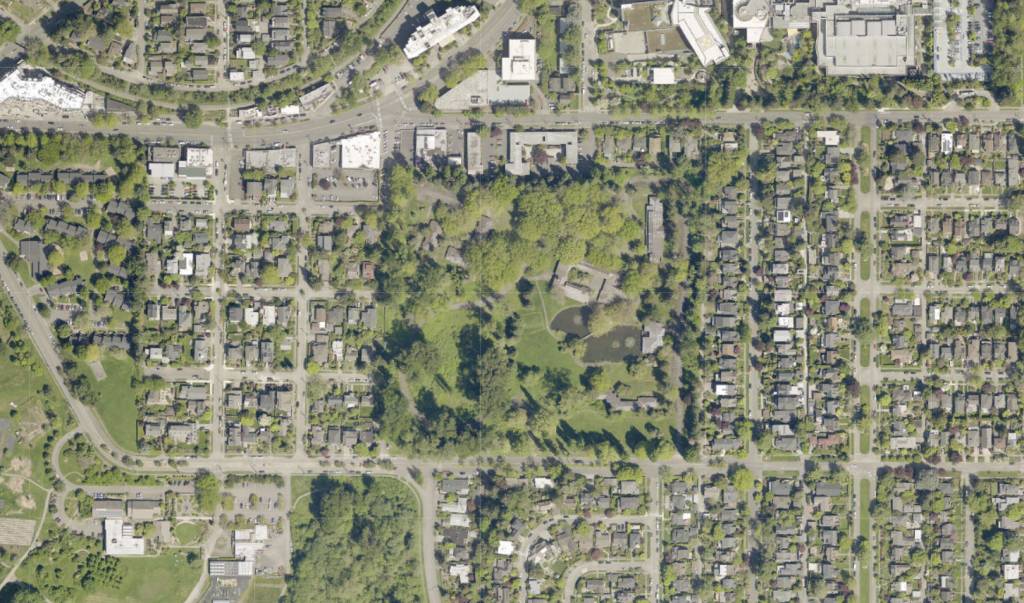
The Talaris property has been owned by 4000 Property LLC, a company with ties to businessman Bruce McCaw, since 2000. Several redevelopment plans have been put forward since then, including a proposal to build a 300,000-square-foot institute for advanced study that would have entailed the demolition of most of the existing buildings and trees on the site.
After that plan fell through, the company shifted gears, and applied for a contract rezone in 2012 that would have allowed them to build multifamily housing, preserving much of the site’s open space. But that would have required a council-approved rezone, which the Laurelhurst Community Club opposed, leading the city council to take a contract rezone off the table in 2013.
That same year, the site was nominated for landmark status without the consent of the property owner, but the exact controls that would be placed on the site still haven’t been determined. (By 2026, that move will be illegal under state law, thanks to a newly approved House Bill 1576, which requires owner consent to landmark a property younger than 125 years old.)
In 2020, a deal to sell the site to Quadrant Homes for a 62-home redevelopment plan fell through and 4000 Property LLC went back to square one. For the past five years, Bassetti Architects has been working on a plan that could pass muster with the Landmarks Preservation Board (LPB), holding 14 individual meetings between 2021 and 2023 to come up with a plan that retains five of the seven structures on the site that have been designated as landmarks.
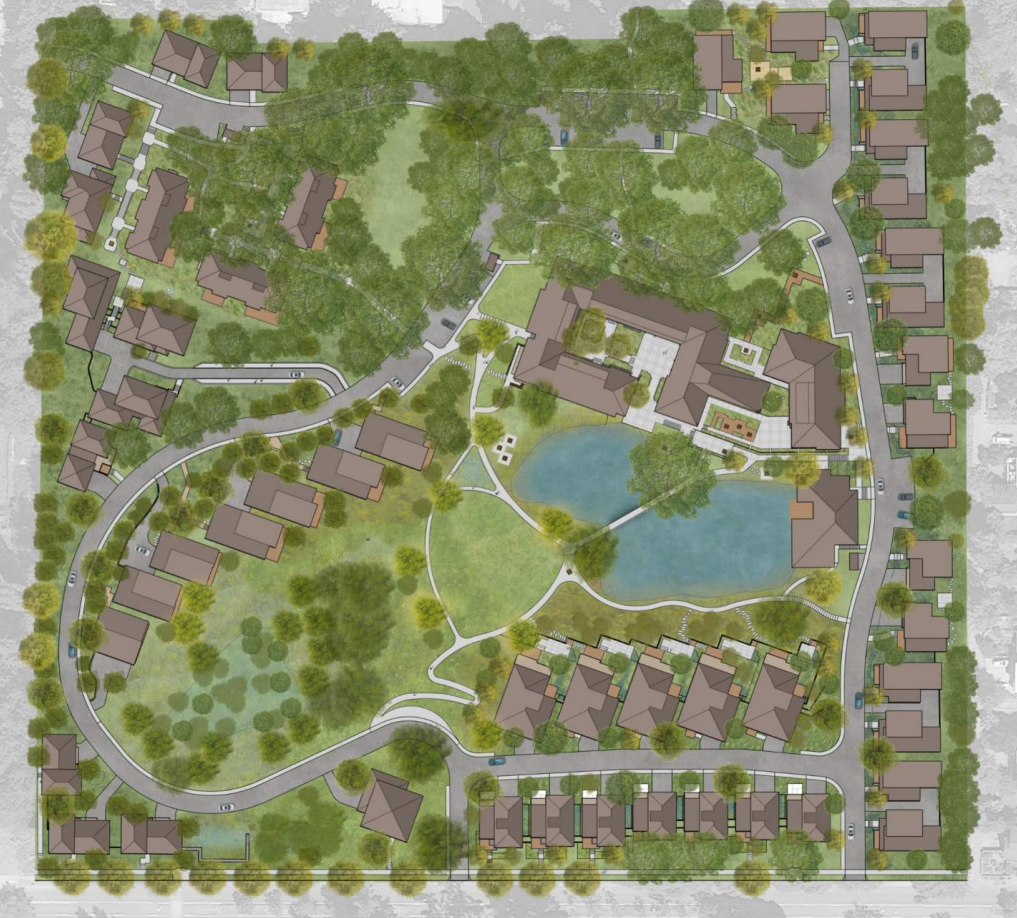
But as those plans to build tract homes advanced, Seattle housing advocates have not been quiet about such a clear missed opportunity for a largely undeveloped parcel of this size. In 2017, state legislator and mayoral candidate Jessyn Farrell brought up the idea of pushing for affordable housing on the parcel while on the campaign trail. A few months later, advocates founded the group Affordable Talaris to push the city to think more broadly about Talaris’s future.
“This is an insult to the teachers, nurses, baristas, working musicians and UW staff who cannot afford to live in the city where they work,” Affordable Talaris founders Laura Loe and Myra Lara wrote of the plan for single-family homes in an op-ed in The Stranger in 2018. “Affordable Talaris organizers believe development should provide many more people with the opportunity to live near sought-after schools, abundant open space, grocery stores, a Bus Rapid Transit (BRT) line, two major regional hospitals, the most useful bike trail in the city, and a major state employer, the University of Washington. During a global climate crisis we want many more people to be able to walk, bike, or bus to the Husky Stadium Link light rail station. Building much more housing on or near Talaris is a chance to do development right.”
Despite those years of advocacy, none of Seattle’s elected officials stepped up to change Talaris’s zoning, which would be the first step toward allowing uses beyond single family homes. Yet urbanists continued to push: in The Urbanist, the South Seattle Emerald, and elsewhere. When the issue appeared to be fully settled, last week’s council vote opened the door.
Ahead of the council vote, District 4 Councilmember Maritza Rivera referenced other instances of where the City of Seattle has successfully daylighted creeks that had been formerly undergrounded, including Northgate’s Thornton Creek.
“I really appreciate the state law that necessitates when you are replacing the pipe, to actually do the fish passage and the daylighting of the creek,” Rivera said. “We’ve done it in various places across the city, including Mapes Creek and also Thornton Creek, and I think this is another example.”
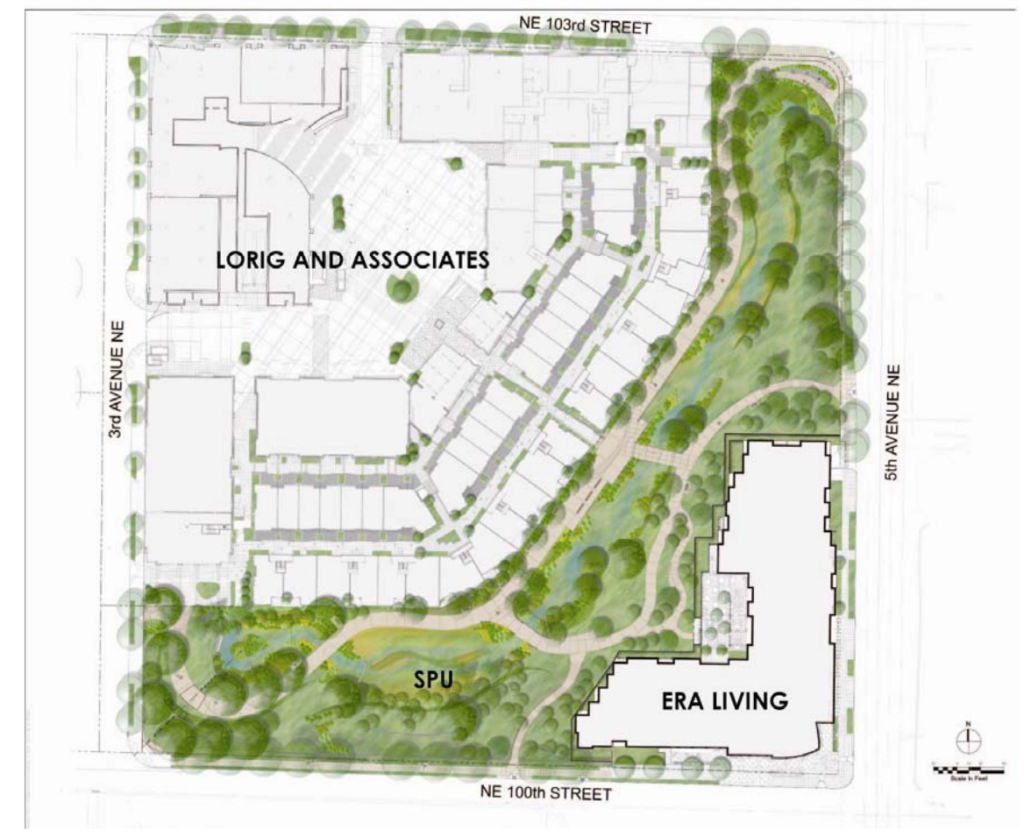
The 2009 Thornton Place development, which daylighted the creek in addition to building more than 500 apartments, retail space, and a 14-screen movie theater, is a clear model for redevelopment at Talaris — but such a proposal in Laurelhurst would be a significantly bigger battle.
The 1991 settlement agreement that purports to bind future use of the Talaris property, updated to include 4000 Property LLC in 2005, requires “permanent landscape buffering” along the edge of the site, and includes stipulations on building height and the number of potential parking stalls. The City of Seattle, originally a party to the agreement, was dropped in 2005 and any future property owner will be likely to challenge the legality of the document as impacting their ability to take full advantage of any underlying zoning.
What’s next for Talaris’s future remains incredibly up in the air. Seattle Public Utilities is likely to spend a significant amount of time assessing how the site could be used to address stormwater runoff along with fish passage. But with the parcel in public ownership, plans that squander the site’s potential and turn it into a luxury homeowner playground are off the table, at least for now, and a bolder urban vision could be back in play.

Ryan Packer has been writing for The Urbanist since 2015, and currently reports full-time as Contributing Editor. Their beats are transportation, land use, public space, traffic safety, and obscure community meetings. Packer has also reported for other regional outlets including BikePortland, Seattle Met, and PubliCola. They live in the Capitol Hill neighborhood of Seattle.