The state is forcing Kitsap to re-do its Comprehensive Plan to account for low-income housing, wildfire risk, and more mobility options.
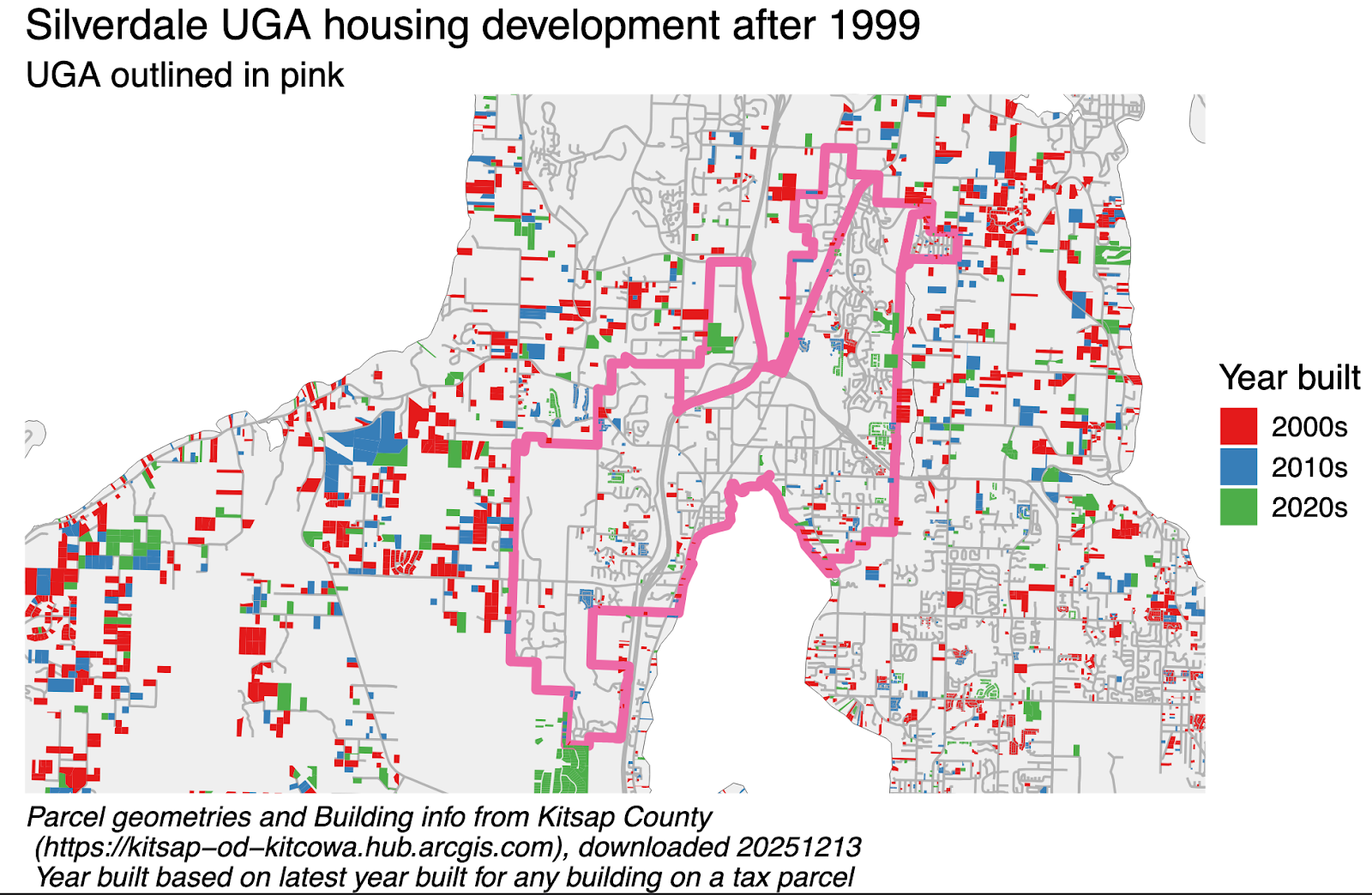
For decades, Kitsap County has been trying – and mostly failing – to concentrate growth into compact areas that can be best served by schools and ambulances, sewers and sidewalks. Kitsap’s state-mandated solution, the so-called “Urban Growth Areas” (UGAs) have failed to attract growth. Since 2000, the vast majority of new housing has been built in rural Kitsap.
Kitsap County’s proposed ‘Housing Element’ of the 2024 Comprehensive Plan has been declared ‘noncompliant under the Growth Management Act (GMA) by the Growth Management Hearing Board for overstating available housing, preventing infill housing and ignoring wildfire risks. This was the fourth time Kitsap County had its Comp Plan remanded, it also occurred in 2012 for oversizing UGA for the population, 2006 for allowing too much density in rural areas and 1998 for encouraging growth outside of cities. Kitsap County has been inviting sprawl for a long time.
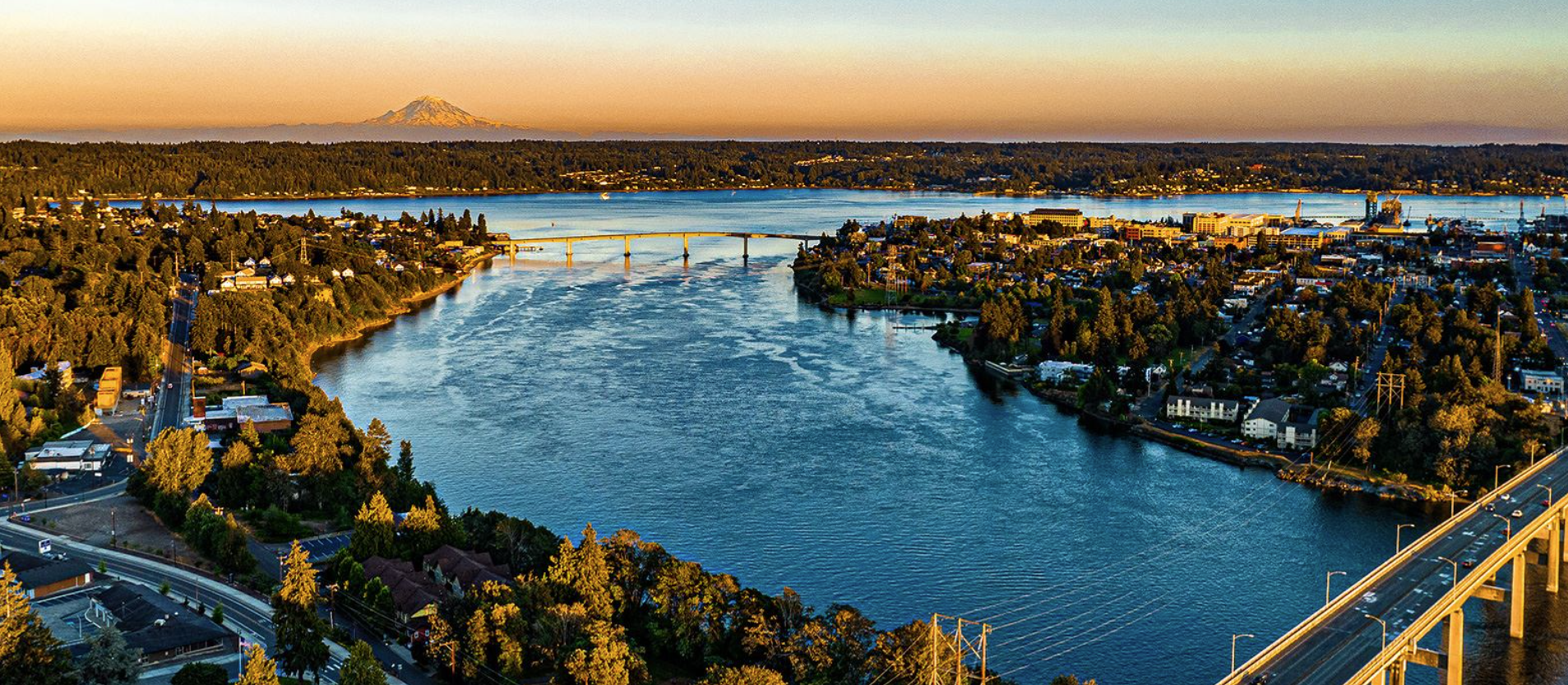
Kitsap is Washington State’s third densest county, following King and Vancouver. And two thirds of those people — 190,000 — live in the area known as Greater Bremerton. Over the last 20 years, growth in Greater Bremerton has primarily sprouted outward, in mushrooming subdevelopments in the forests and farms around Bremerton, Port Orchard and Silverdale, as opposed to infill development within the existing urban footprint, as required by the GMA.
Kitsap’s UGA: flawed from birth
Kitsap’s first attempt to define Urban Growth Areas (UGAs) in the 1996 Comprehensive Plan fell short of state requirements. The Central Puget Sound Growth Management Hearings Board (GMHB) invalidated the plan, ruling that the UGAs were too large and lacked density, while rural areas permitted inappropriate urban densities. This problem of sprawl persists today.
Despite placing strict limits on rural housing (e.g., 1 home per 5–20 acres), Kitsap County continually expands the boundaries of Urban Growth Areas to accommodate sprawl. The largest expansion occurred in 2006, when the Silverdale Urban Growth area doubled in size, from 3,456 acres to its current 7,400 acres, enclosing thousands of acres of prime greenfield for suburban sprawl. Kitsap County has expanded the area of its UGAs in every Comp Plan since 2006, except the most recent one.
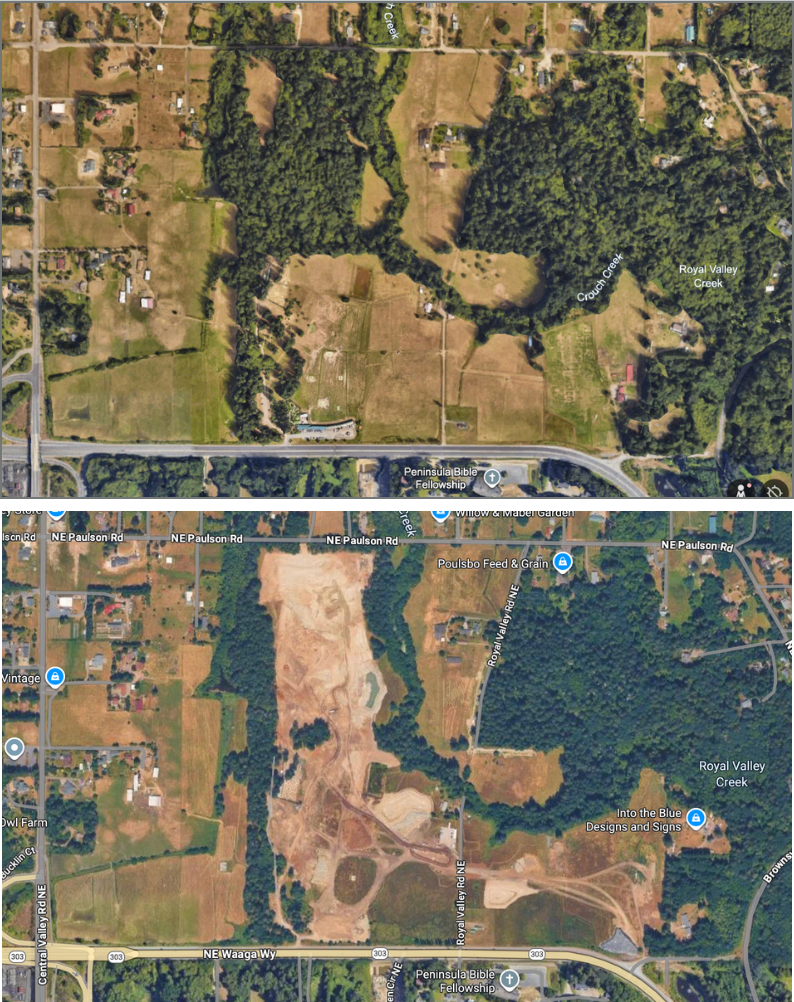
Kitsap’s newest sprawling development is Royal Valley, a bucolic 165-acre farm that was previously zoned for one home per 5 acres. Royal Valley was outside of the original UGA boundaries, which were stretched in 2012 to accommodate housing. The land was upzoned to 10 per acre in 2016. And thus, the Royal Valley became ‘urban’ and ready for sprawl.
Despite stretching boundaries, the vast majority of housing development has sprouted up outside of Kitsap’s UGAs over the past 25 years. Kitsap County has added homes in the least sustainable way possible, creating high rural density, without sidewalks, buses or new schools.
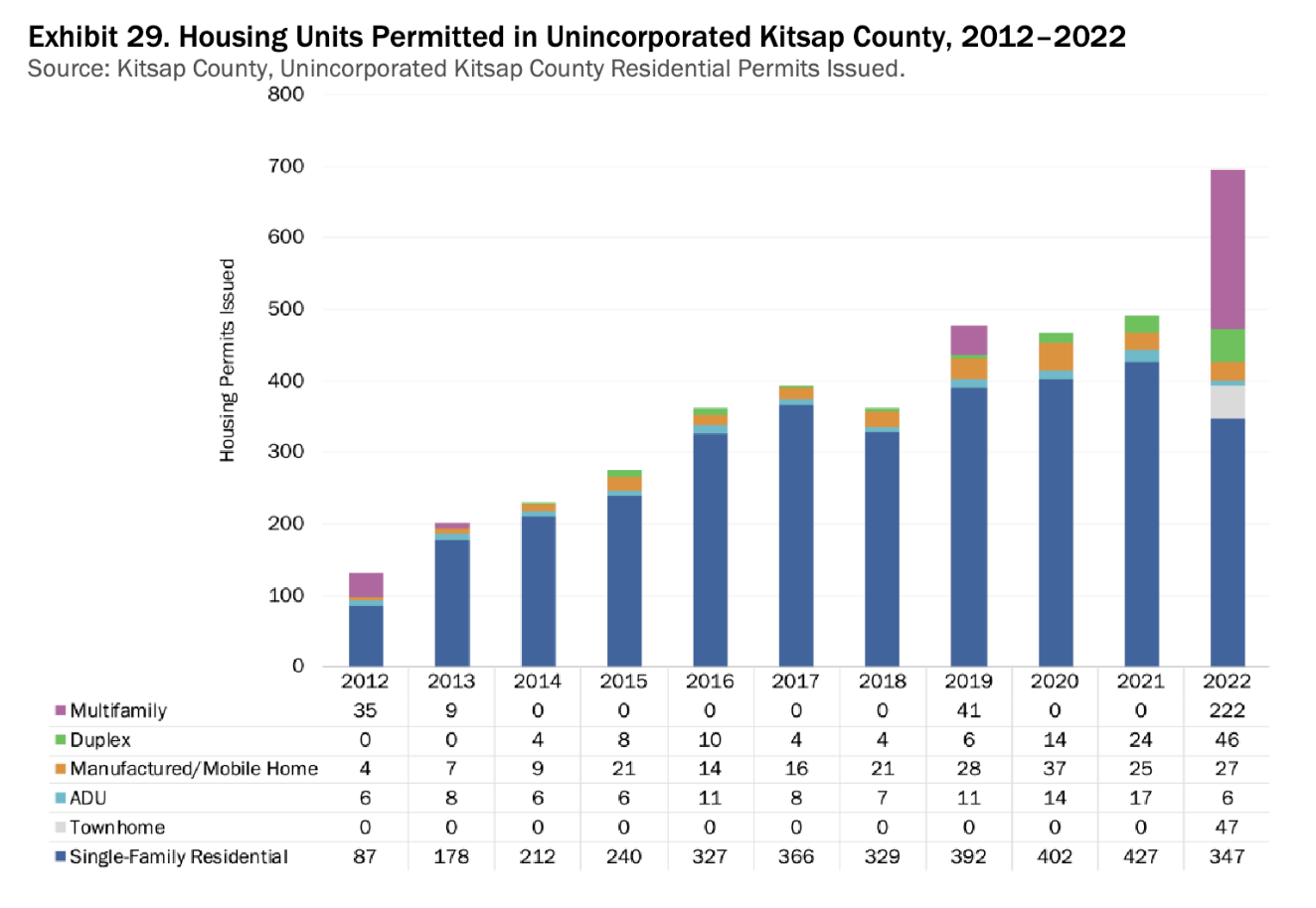
In August 2025, Kitsap’s 2024 Comprehensive Plan was remanded (aka, sent back for a do-over) by the Growth Management Hearing Board. In particular, Kitsap County “failed to identify sufficient capacity of land for housing for all income groups… in particular for the low, very low, extremely low, and moderate-income levels…” Additionally, the County was cited for thumbing its nose at wildfire risk, because it did “not include multimodal emergency and evacuation routes… nor does it direct growth away from the wildland urban interface… as required by the GMA.” The remand was the result of a lawsuit from the nonprofit advocacy group Futurewise, which specializes in sustainable land use policy.
A new plan for Silverdale’s Regional Growth Center
In 2006, a portion of Silverdale’s UGA was designated a “Regional Growth Center” (RGC) by the new Puget Sound Regional Council. The ‘primary goal’ of RGCs is to “concentrate the region’s future population and job growth into dense, walkable, and transit-connected urban hubs’.
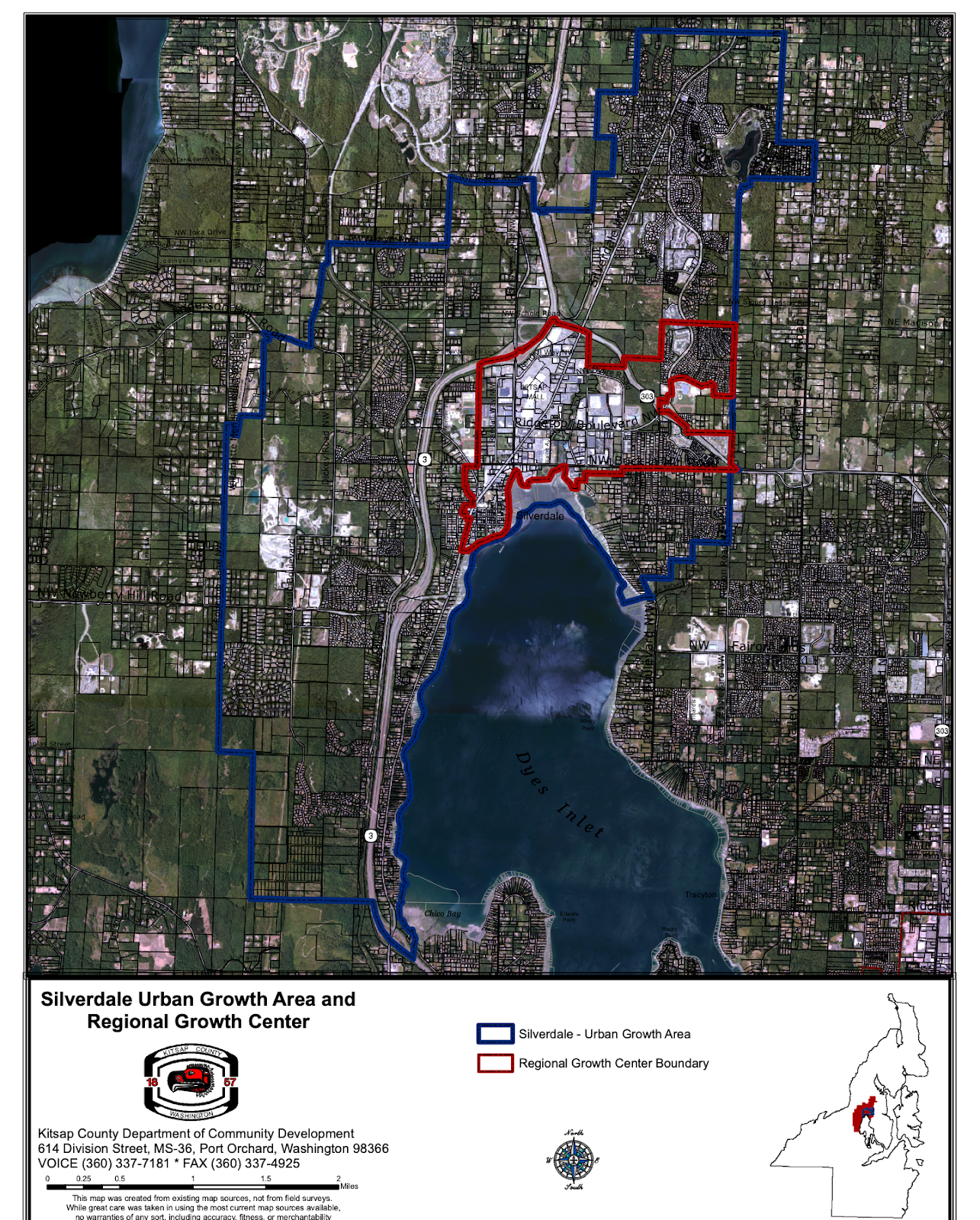
The UGA has been expanded multiple times, but not in 2024. To understand why, it’s helpful to know that Silverdale’s UGA and its growth center have very different boundaries. Silverdale’s 7,400-acre UGA is nearly nine times larger than the Silverdale Regional Growth Center, with just 848 acres. Housing is affected, as developers have preferred to build single family housing in the UGA’s vast unbuilt farms and forests, rather than concentrate multifamily units in the little designated center.
But the County’s reliance on exurban sprawl has left the Silverdale RGC dangerously close to losing federal transportation funds, due to falling below minimum ‘activity units’ (1 job + 1 housing unit = 2 activity units). Silverdale is required to have 18 activity units per acre but only had 17.3 units in a recent update. And the requirement will grow to 44 activity units per acre in 2044, a tall order for an area that’s added virtually zero new housing in 25 years.
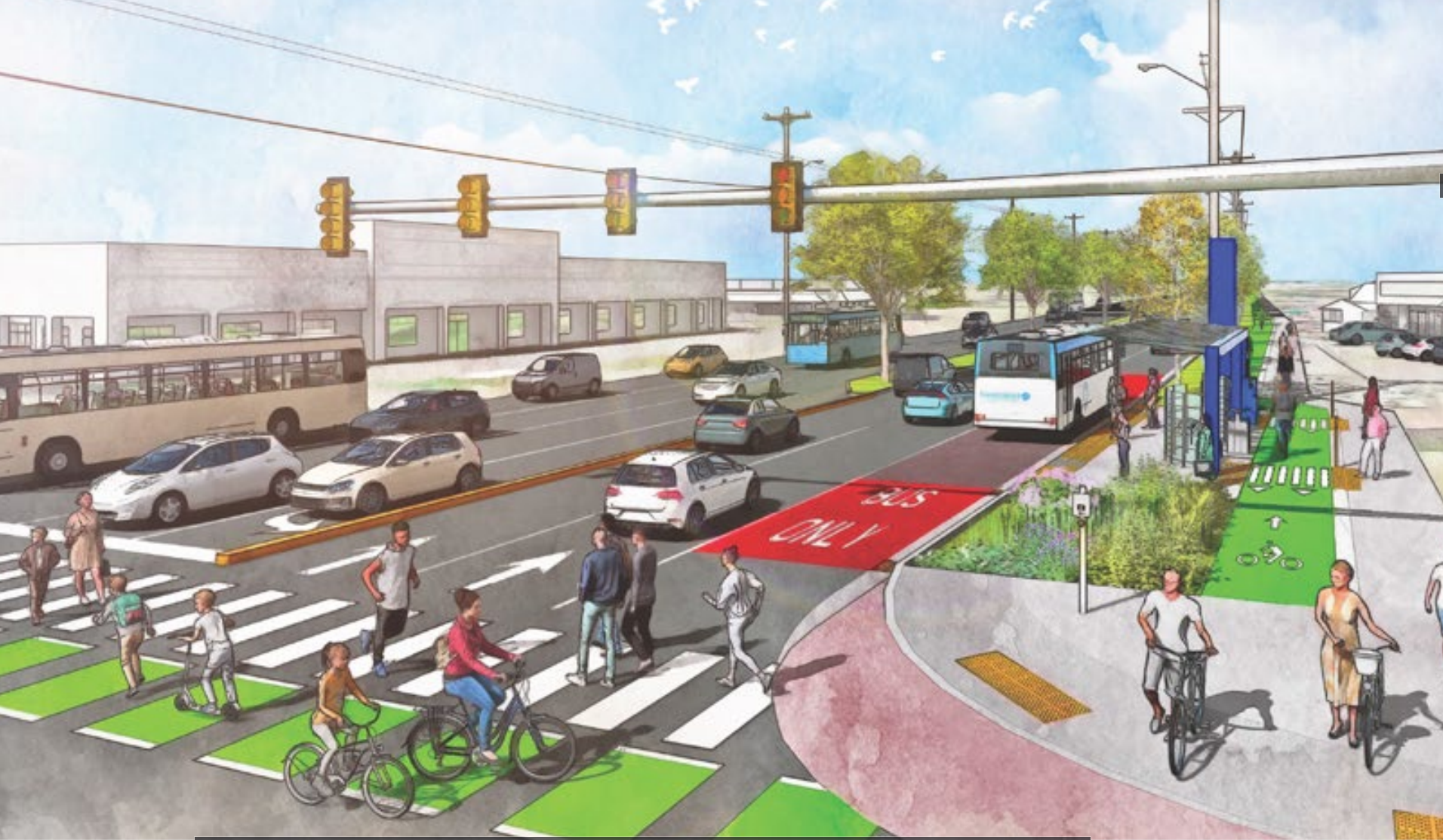
Kitsap County is scrambling to rewrite the Silverdale Center Plan to create more dense housing and encourage multimodal travel. The Plan’s December 2025 update, envisions “trail-oriented development” to create “a contiguous fabric of walkable, mixed-use neighborhoods” and “diverse, affordable, and higher-density housing choices” and a “low-stress network” of enhanced sidewalks and multiuse trails to connect the waterfront, shopping, medical and cultural facilities. It introduces the worthy idea of ‘park once and walk’ to complete errands in the Center.
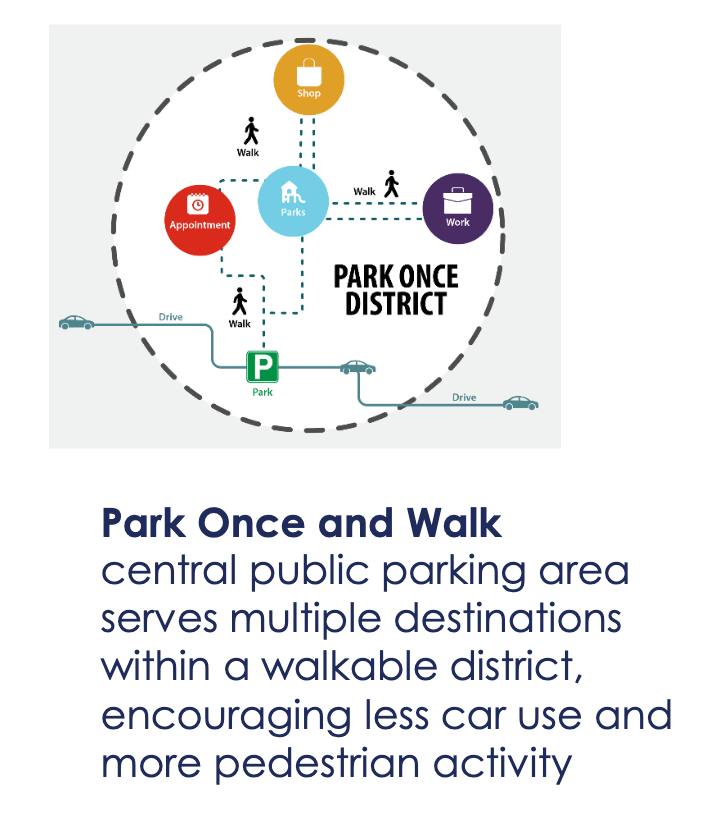
The RGC Plan envisions dense, multi-use developments on parking infill. That sounds fabulous – exactly what Silverdale plans and residents have been wanting for years. To date, no infill projects have been filed in Silverdale. Kitsap’s Director of Community Development points out that “much of the land within Regional Center has […] limited near-term redevelopment feasibility. Redevelopment in these areas often requires parcel assembly, utility upgrades, environmental review, and higher upfront costs.”
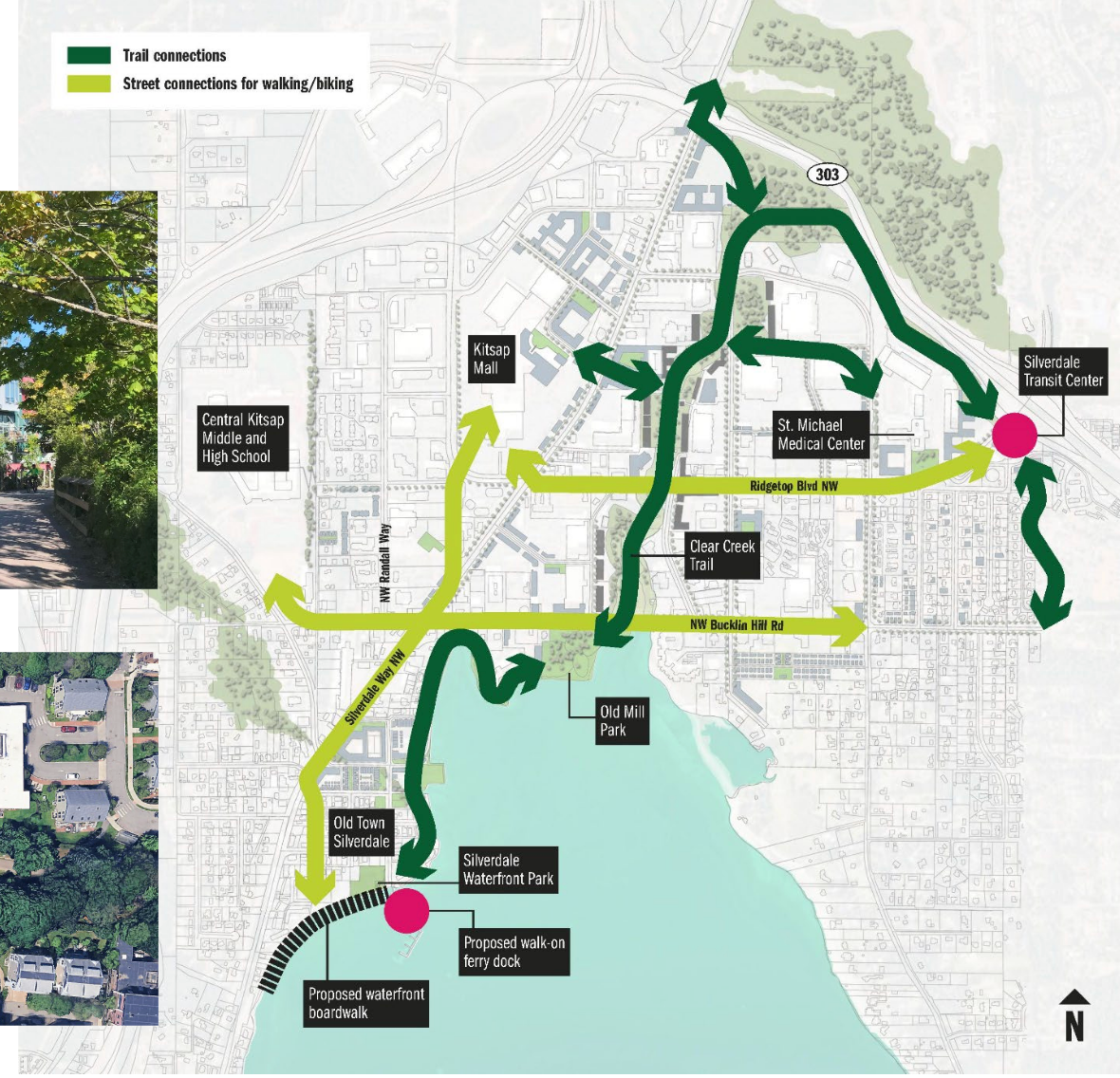
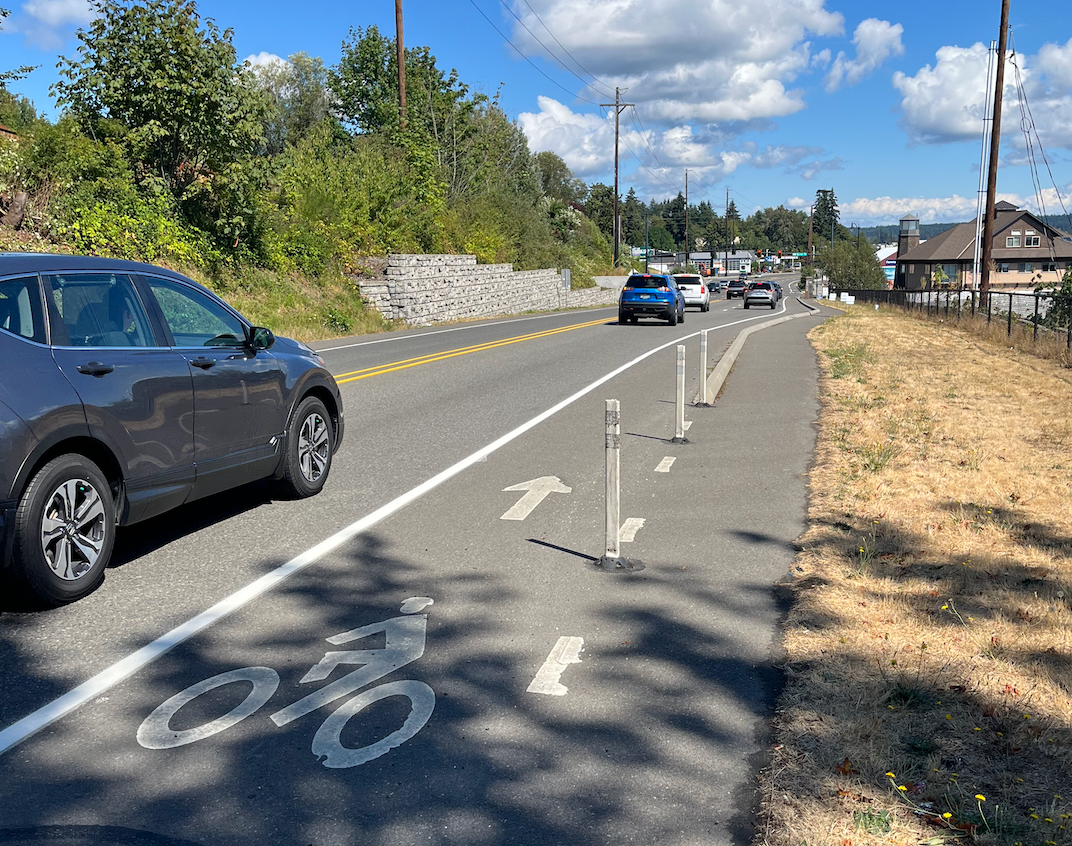
The Silverdale Center Plan transportation elements are quite good, but unfunded. The Plan proposes interconnected trails and ‘low-stress’ bike lanes. But the RGC trails have no logical connection either to the rest of Silverdale UGA, nor north or south to the cities of Bremerton and Poulsbo. And every bike lane that’s ever been built in Silverdale is unsafe, stressful and unprotected. Further, Silverdale RGC Plan multimodal paths have no funding, unlike Kitsap’s unrelenting street widening program.
More sprawl, more roads… repeat forever
Kitsap County has several major “traffic capacity” projects planned. Massive street expansions within the Silverdale Regional Growth Center are already complete: Silverdale Way, Bucklin Hill Road and upper Ridgetop Boulevard. While these projects, outlined in the Silverdale Transportation Improvement Plan, include multimodal fig leaves, the finished projects fall well short of goals because they build narrow sidewalks and lowest common denominator bike lanes, which are neither low stress nor “Complete Streets.”
The next self-destructive project is Phase 2 of the Ridgetop Boulevard Corridor Widening project, which will expand a short stretch of street from three to five lanes for a massive price tag of $13.7 million for just 0.24-miles. At $57 million per mile, it’s probably the most expensive Kitsap County streets projects ever, owing to the need to buy private property from the likes of Dairy Queen and Wells Fargo.
Ridgetop’s widening violates every element of the Silverdale Center Plan. As currently planned, it does not contribute to a low-stress multimodal network. The new five-lane street will increase crashes and car speeds, and restrict pedestrians from crossing the giant stroad. It does include a crappy, unprotected bike lane, but it will fall far short of plans for Complete Streets.
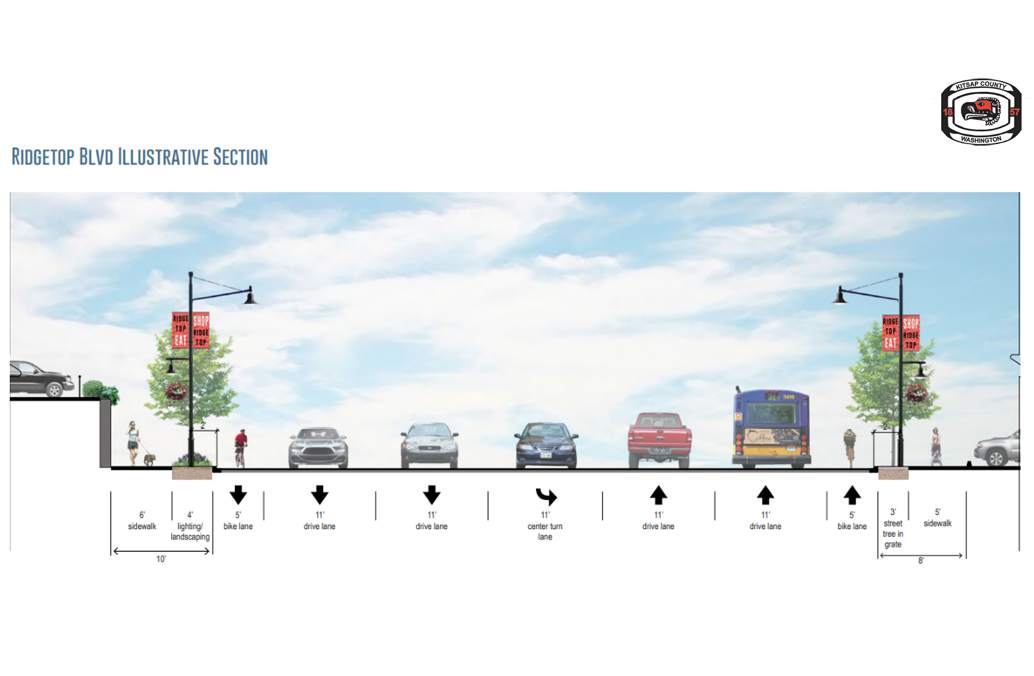
A much better Ridgetop would pull the useless paint-only bike lanes off the street and use the same space for a multi-use trail. Two five-foot bike lanes plus a five-foot sidewalk would make a wonderful 15-foot-wide trail, a first step towards the trail network envisioned in the Silverdale Regional Center plan. Better yet, cancel the street widening entirely and dedicate that $13.7 million to building out the multi-use trail network.
The Puget Sound Regional Council, which oversees the Ridgetop funding could be helpful here – pointing out that Kitsap continues to cash checks for projects that fail to meet PSRC goals. But they probably won’t. PSRC policy enforcement tends to be toothless. Indeed, PSRC is all too willing to fund road expansion projects with the barest minimum of multimodal infrastructure.
Kitsap: the status quo is broken
For nearly 30 years, Kitsap County has passed strategic plans which claim to concentrate growth into UGAs, decrease vehicle traffic and support multimodal transportation. Kitsap County has expanded the area of its various UGAs during every single comp plan, since the first – with the notable exception of the most recent, 2024 Plan, which keeps boundaries the same for the first time. The repeated expansions of the UGAs designates new farms and forests for sprawl.
It’s not too late for Kitsap County to bend the curve on forest destruction, traffic growth and sprawl, and build the walkable communities that 30 years of Comprehensive Plans have called for. But it must break with the status quo of prioritizing rural subdivisions above concentrated development. The future will be decided by three county commissioners this spring.
To change the status quo, Kitsap County should consider three policy changes:
- Downzone (allow less housing) and restrict subdivision of all large farm and forest parcels, whether inside or outside of UGAs.
- Offer tax incentives for infill development across all Kitsap County UGAs.
- Halt road widening road projects that invite additional traffic congestion and instead focus new transportation spending on multimodal corridors that encourage walking, rolling, biking, and transit use.
Commissioners will meet to discuss the Kitsap Comprehensive Plan remand on January 7, 2026 at 10am. Written comments should be addressed to ddaniels@kitsap.gov. Or attend the meetingin person or via Zoom video conference.