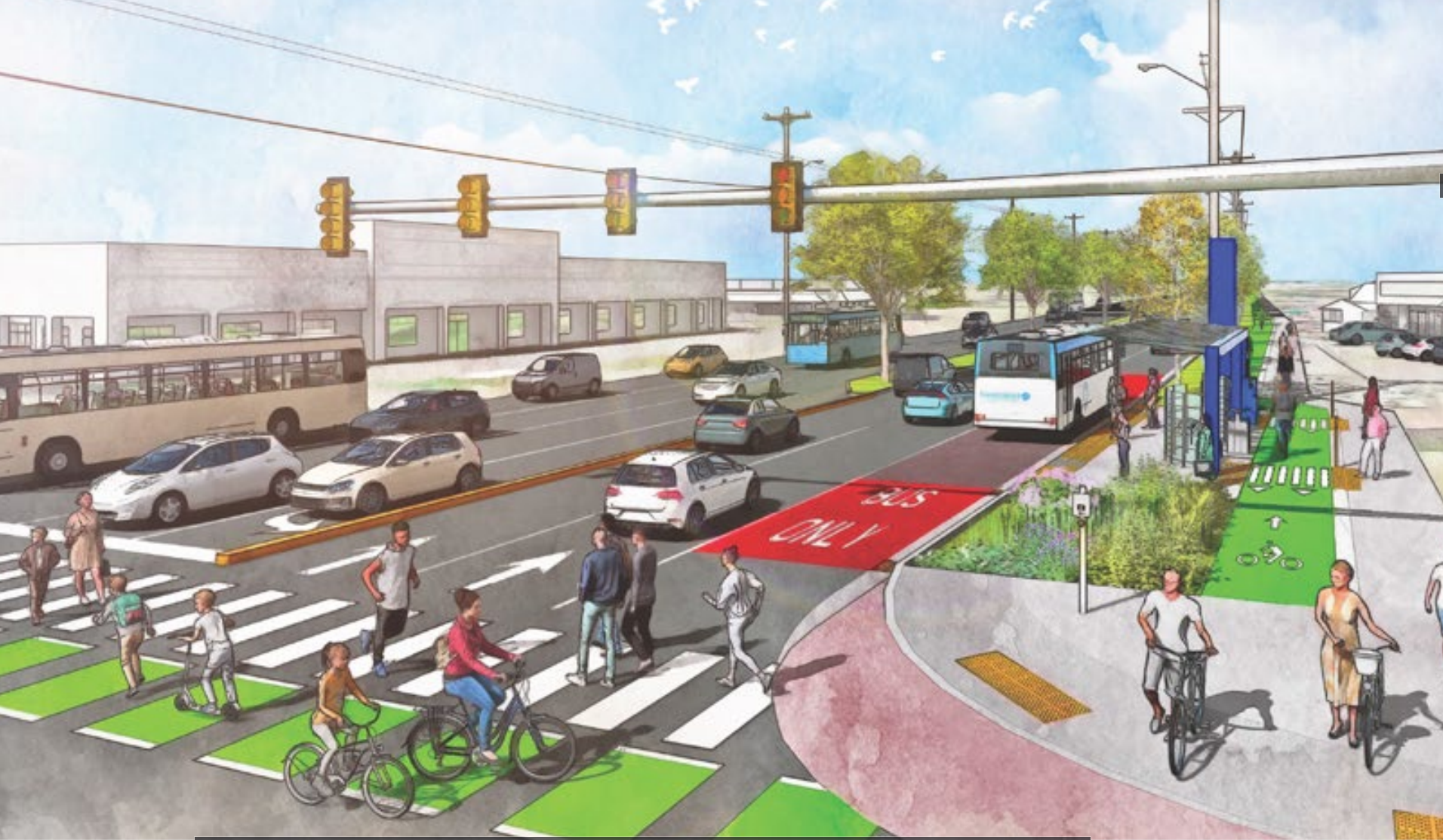
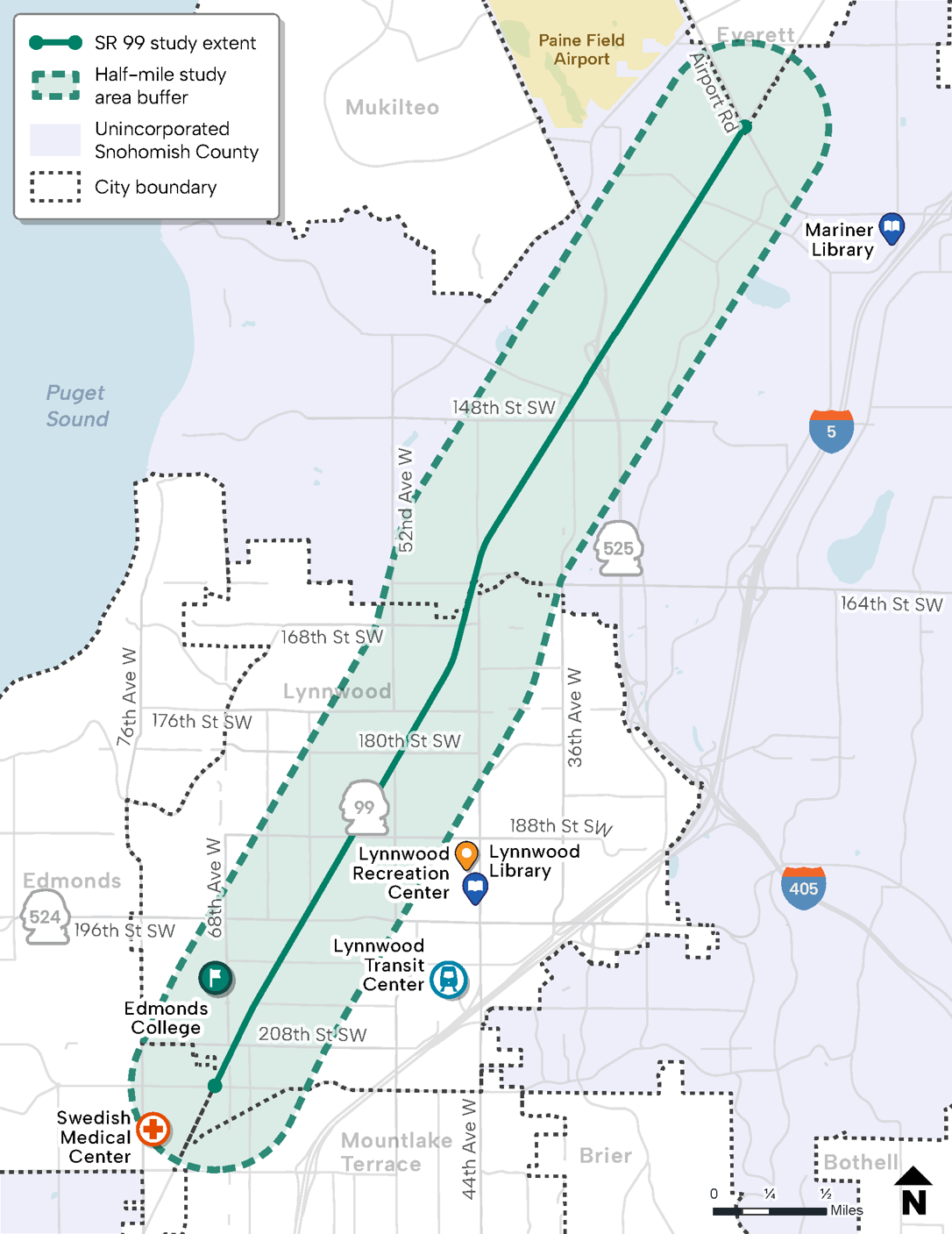
After months of study, the Washington State Department of Transportation (WSDOT) is recommending that a large swath of State Route 99 through Lynnwood and unincorporated Snohomish County be revamped to include dedicated bike facilities and transit priority lanes. Envisioned as a transformation of one of the state’s most dangerous highway corridors, changes would happen in phases and take years to fully materialize.
But once in place, it would represent one of the most ambitious traffic safety projects to move forward across central Puget Sound in recent years.
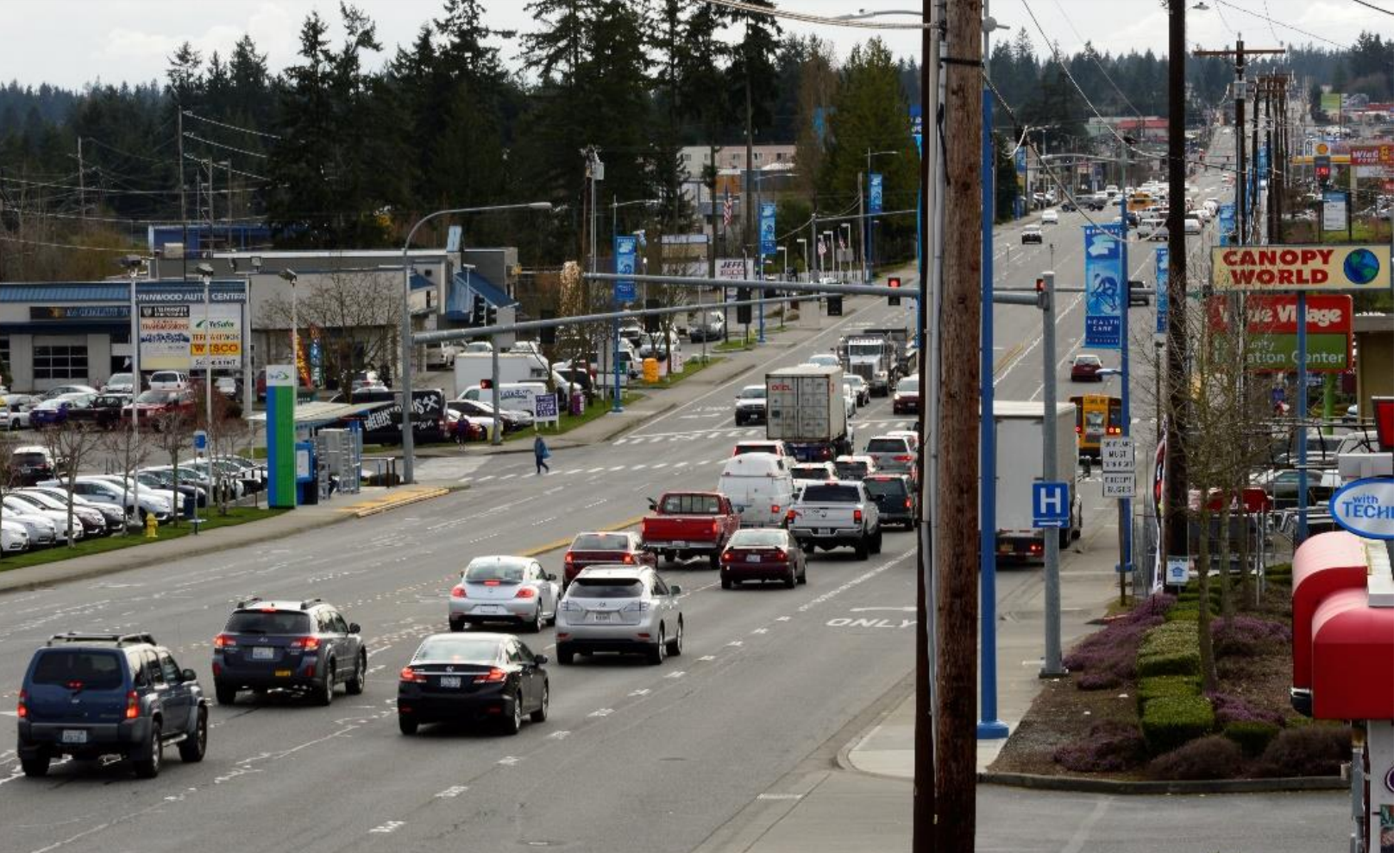
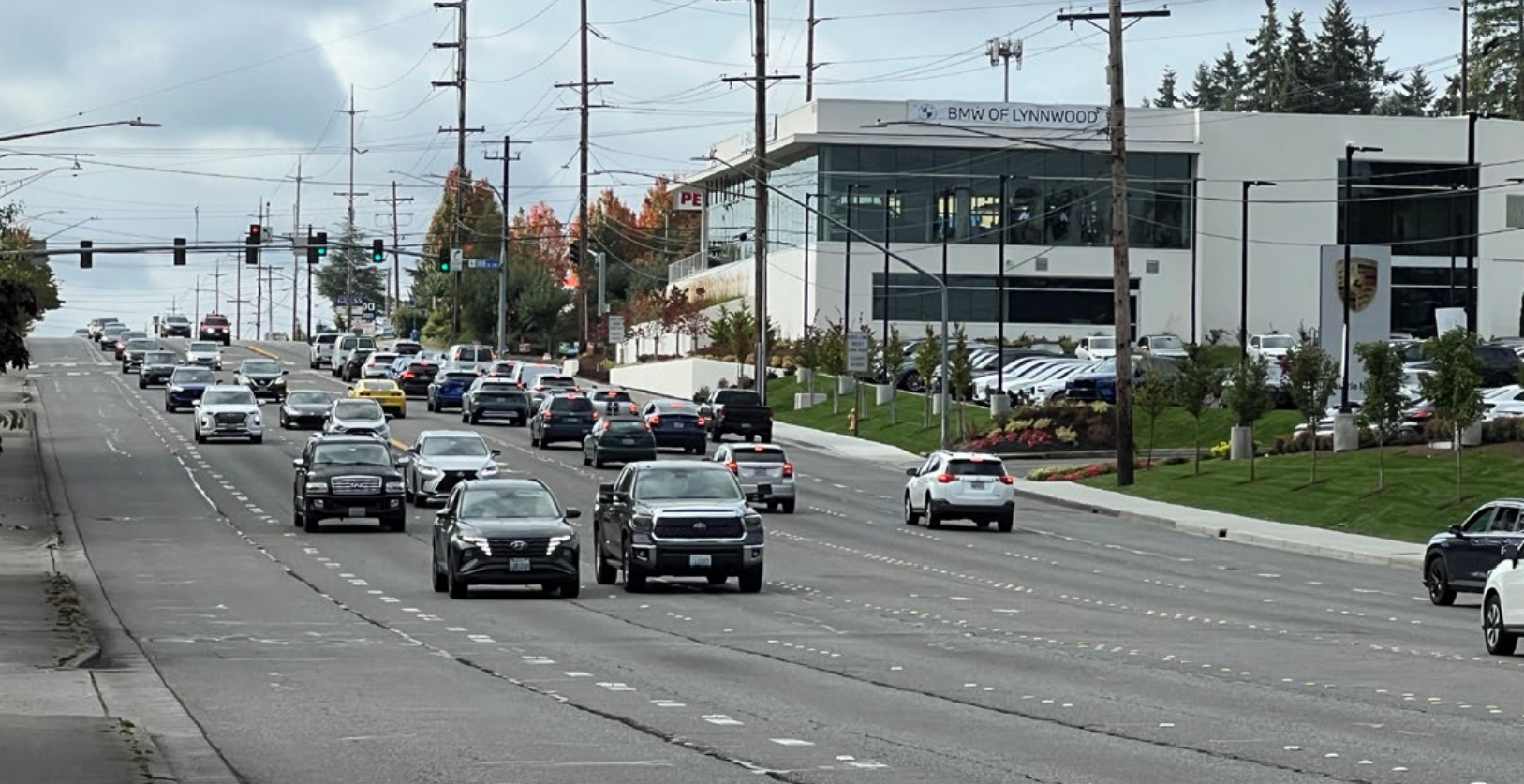
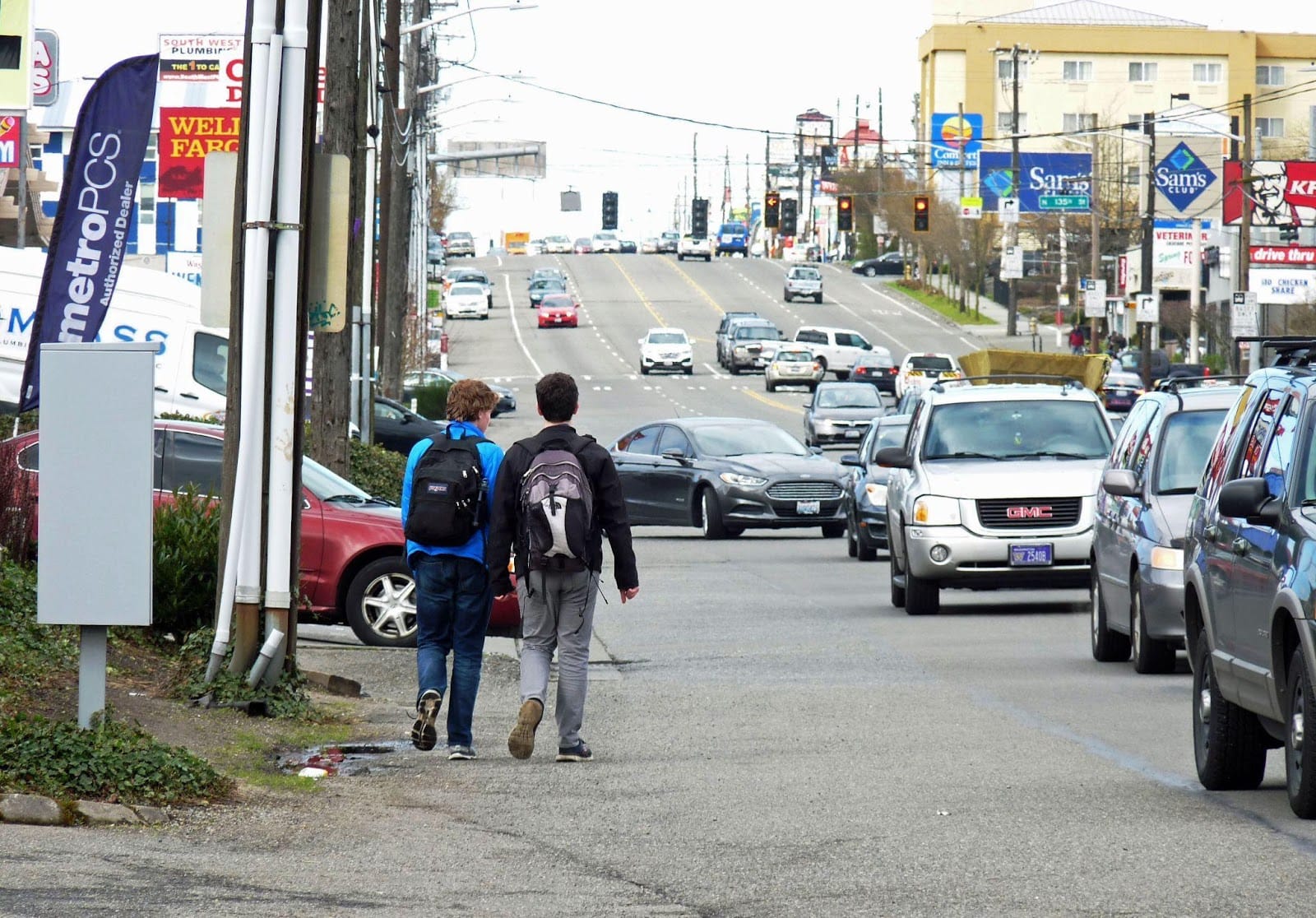
As Pacific Highway, this 6.6-mile stretch of SR 99 widens out to seven lanes at major intersections, with narrow sidewalks and infrequent signalized crossings for pedestrians. The speed limit is 45 mph but drivers frequently exceed the posted speed by double digits. Between 2019 and 2023, there were 63 different traffic collisions that resulted in a death or serious injury — more than one devastating crash happening every single month, on average. During that time, more than 60 people who were walking or biking were hit by drivers, including eight people who lost their lives.
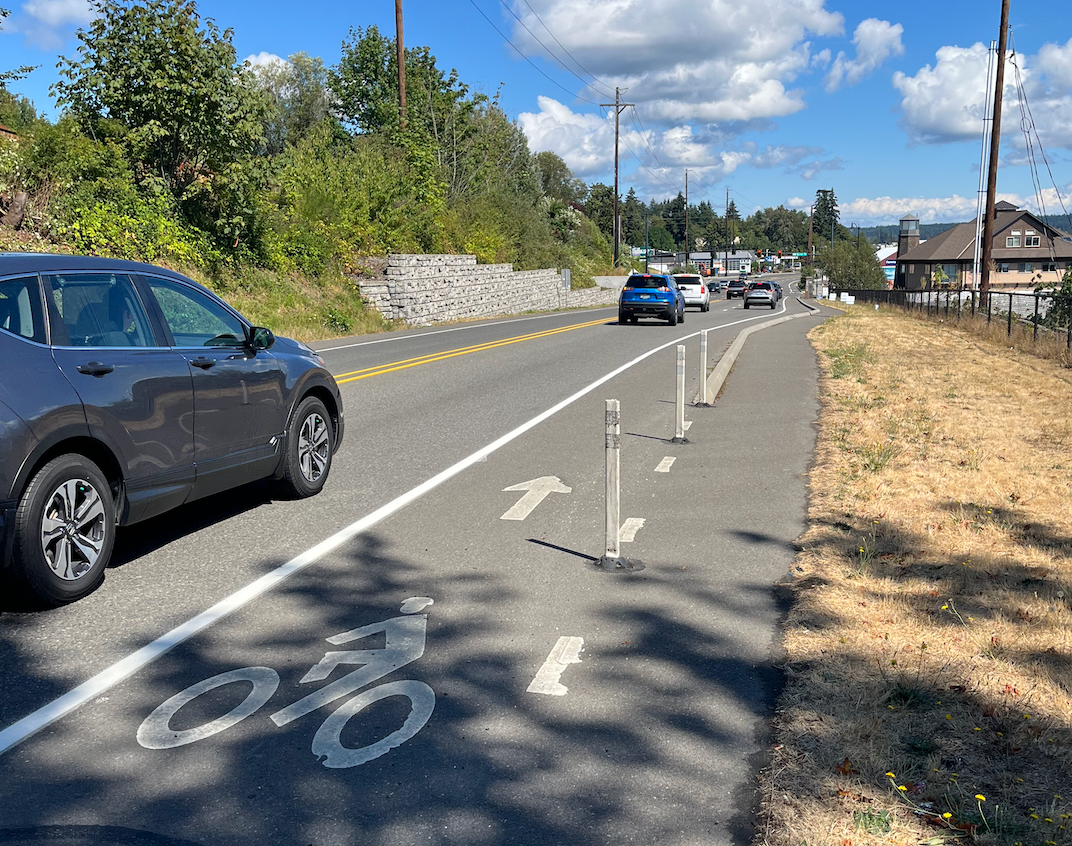
These upgrades will build on multimodal upgrades advancing further south along SR 99 in Edmonds, but they are much more comprehensive and wide ranging than the ones being designed there.
While changes along the corridor have been eyed for more than a decade, Washington’s 2021 Complete Streets mandate now requires an analysis of potential multimodal upgrades whenever a state highway like SR 99 gets major maintenance work. Because designing those upgrades takes time, the department is spending time now determining what the vision for the corridor will be, so that future maintenance work can more easily incorporate those changes without adding years of additional time.
“The intent is for this study to very easily translate and push into pre-design so [the project team] won’t need to go back to the public to figure out, what do they want,” WSDOT Planning Manager April Delchamps told The Urbanist last fall, before the study’s release. “When we get design funding, we’re able to immediately transition to designing what we heard from the community, and we established this kind of listening approach for the community. And so if things change, for example we find a constraint, we go back out to the community, explain the constraint, and start understanding if there’s particular priorities around how we address that constraint.”
A survey open through January 20 presents the recommended concept, featuring corridor-wide changes along with spot improvements at specific locations.
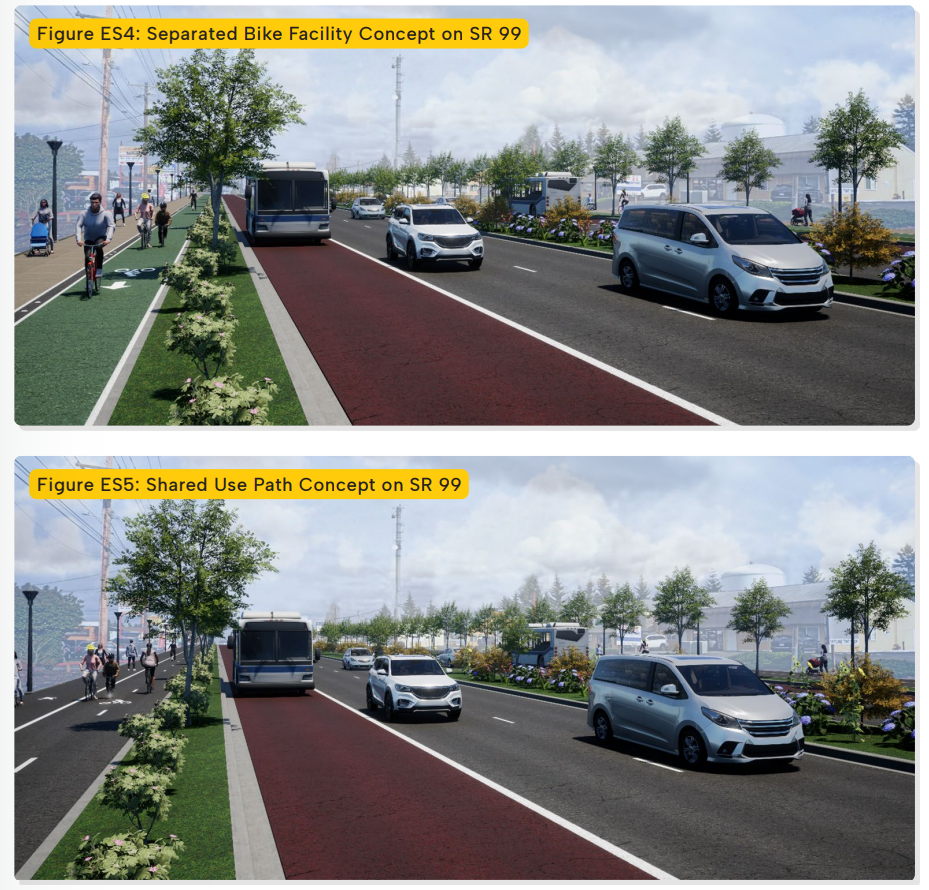
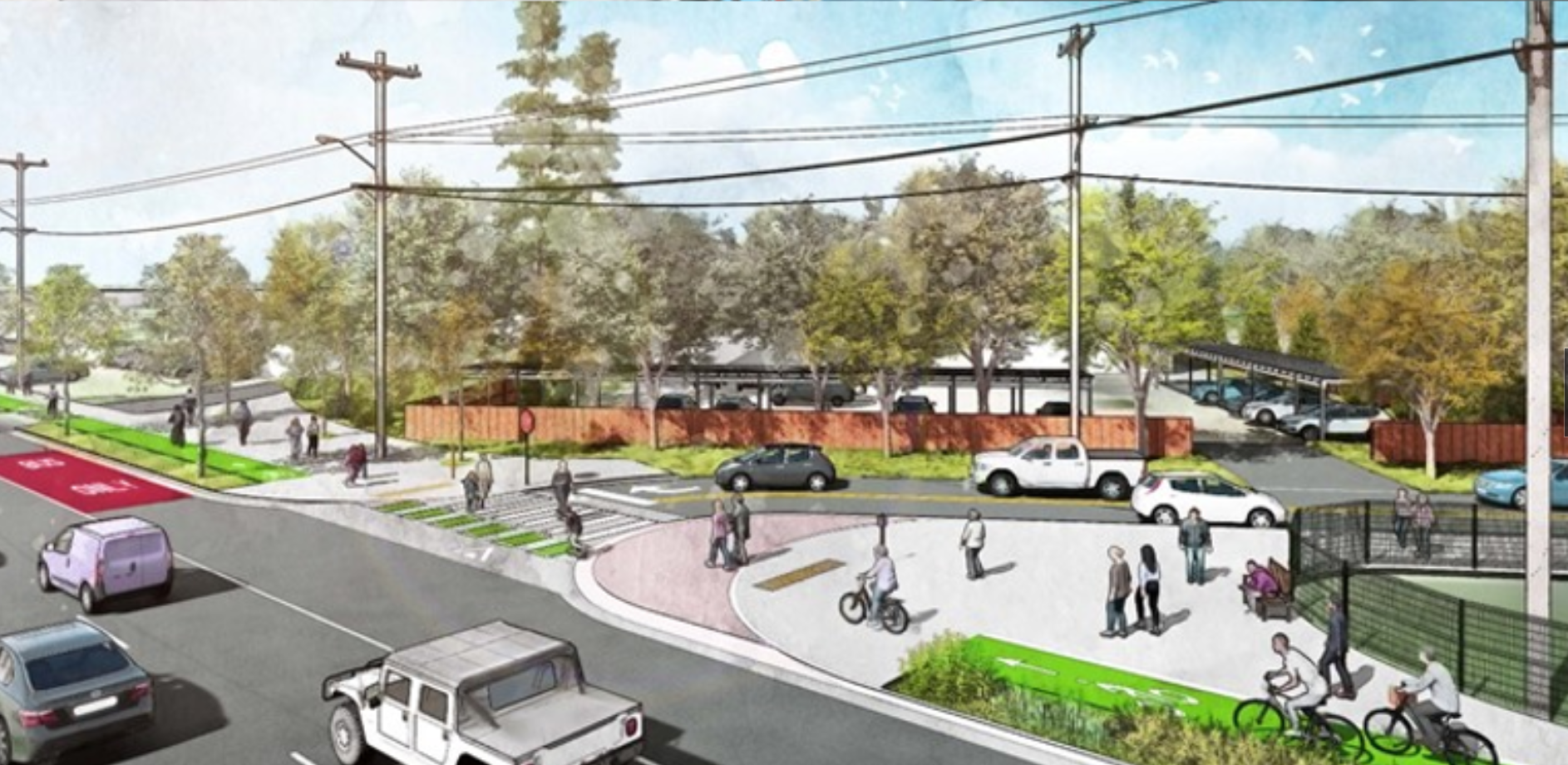
WSDOT is proposing two different concepts that would provide full bicycle and pedestrian connectivity along the entire corridor: separated bike lanes next to sidewalks, and recreating the entire walking and biking area as a shared-use path. Those two proposals would give pedestrians and cyclists a similar amount of space and aren’t dramatically different from one another. But with maintaining two general purpose travel lanes, curbside business access and transit (BAT) lanes and planter strips including in the median, they would both require around 25 feet in additional right-of-way, despite the existing road’s significant width.
WSDOT is also recommending a slate of spot improvements at different points along the corridor that would make the highway function more like a local street, including 12 midblock crossings “either near bus stops, major destinations or where there is a large distance between intersections.” Awkward intersections with large crossing distances would be redesigned to better accommodate people walking or biking and improve safety. Slip lanes would be removed.
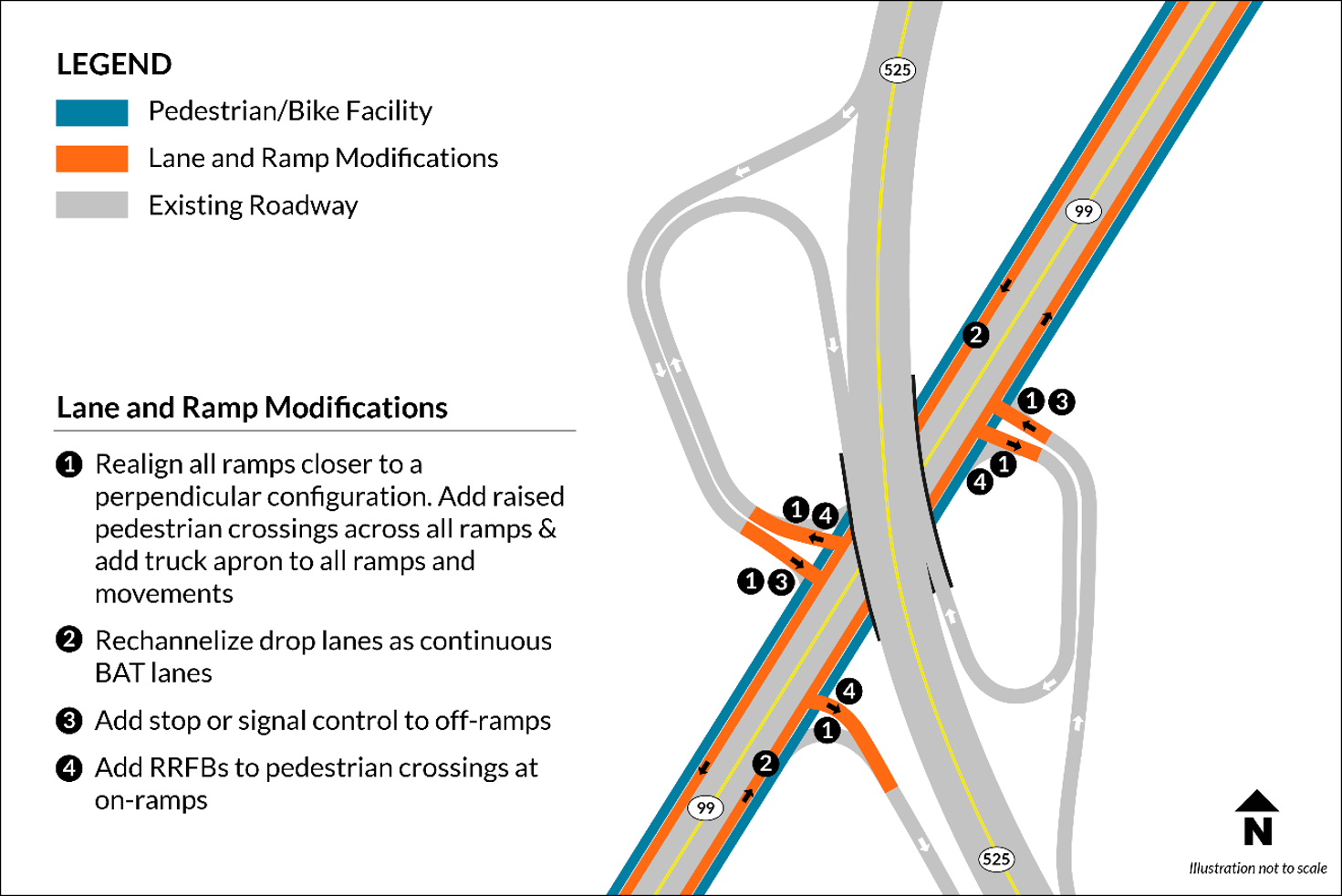
Major changes are also being proposed for the interchange between SR 99 and SR 525, which connects I-5 with Paine Field. Ramps would be realigned to create perpendicular angles and slow speeds, and all ramps would be either signalized or have stop control. Pedestrian crossings would be raised and include rectangular rapid flashing beacons (RRFBs) to increase visibility.
A full rebuild of the entire 6.6 miles is likely to cost the state $660 million to $780 million in today’s dollars, with another $310 to $370 million for the right-of-way acquisition needed to fully accommodate all of the anticipated project elements. Future projects, including one that is already on deck to tackle bus priority between Airport Road and 148th, will be leveraged to achieve the full vision. And while that vision will likely take years if not decades to fully materialize, the transformation seemed totally impossible just a few short years ago.
This isn’t the only revamp of SR 99 being considered right now. Further south in Seattle, changes are being considered for the crash-prone Aurora Avenue N, but advocates have been expressing early disappointment in the ideas that have been put on the table so. In contrast with the Snohomish County proposal, dedicated bike facilities are far from guaranteed, with people on bikes likely to be directed to use side streets.
While the state’s Complete Streets mandate has been in place since 2021, major transformations like this one have been getting put on deck less slowly than they might have otherwise, with the legislature prioritizing new highway projects over the maintenance work that would come with required multimodal upgrades.
Recently, Governor Bob Ferguson proposed around $2 billion in funding for bridge and highway upkeep as part of the 2026 supplemental budget, but that funding would be unlocked via new state transportation bonds that come with a price tag for future budget writers. Plus, bonding would require a 60% vote in both the state House and Senate — a tall order.
Although the exact timeline for making these urgent upgrades is still very opaque, establishing a clear baseline for what will ultimately take shape is certain to pay dividends.