

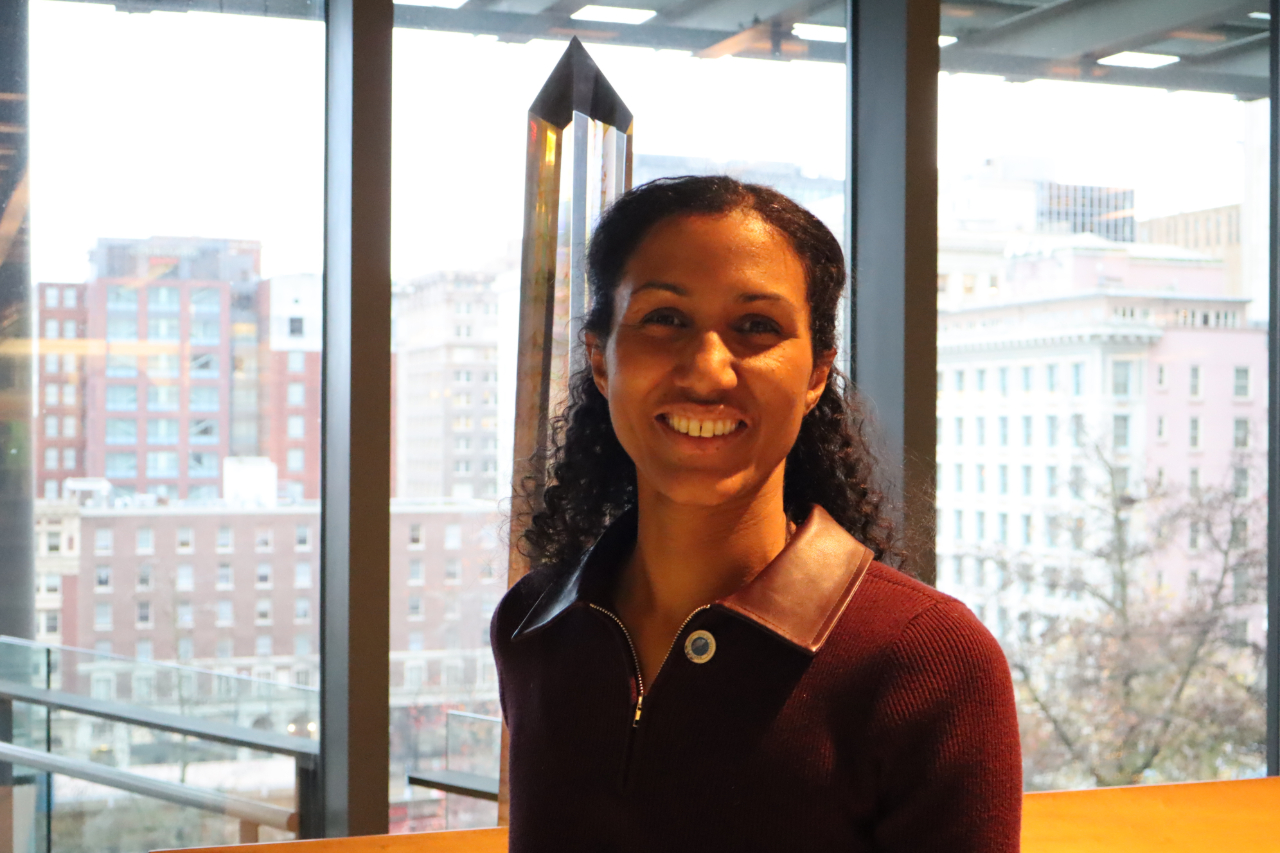
On Tuesday, Dionne Foster took her oath of office, becoming the newest member of the Seattle City Council. A nonprofit leader, Foster was elected in a citywide race, taking down former Seattle Council President Sara Nelson by a staggering margin of 26 points.
The ideological differences between Foster and Nelson were stark, with Foster joining the Council’s resurgent progressive wing. Meanwhile, Nelson anchored a centrist majority and recruited a slate of more conservative candidates who swept into office in 2023 and controlled the Council for two years, before voters appeared to tire of that approach.
While centrists had focused on austerity and appeasing business interests, Foster has echoed Mayor Katie Wilson in wanting to broaden the focus to everyday Seattleites struggling to get by and carve out a cultural space in the city.
“Listening to Mayor Wilson talk about, not only do people deserve bread, but they deserve roses, and rest, and space to live their lives,” Foster told The Urbanist, referencing the incoming mayor’s inauguration speech last week. “There’s a lot that we agree on, right? I think we agree on the need for new revenue. I think we agree on focusing the agenda on housing. I’m so excited to collaborate with the new mayor on expanding the shelter capacity.”
Wilson has set an ambitious goal of creating 4,000 units of emergency housing in her first term. Both Wilson and Foster have also set the goal of increasing housing capacity and production at all income levels via improvements to Seattle’s growth plan. The zoning component of that plan is still being ironed out, after the state-mandated plan fell woefully behind schedule under Mayor Bruce Harrell’s watch. With these strong housing stances, Foster earned the endorsement of The Urbanist Elections Committee (on which we serve).
Foster underscored the need to improve housing outcomes and affordability in a speech following her swearing-in ceremony.
“Our neighbors want to be able to raise their families here and have access to good schools and safe neighborhoods,” Foster said. “Our neighbors want the busses to come on time. Our neighbors want us to build the damn trains. Our neighbors want to feel safe crossing the street. Our neighbors want safe places to sleep at night. They want more housing and more places around the city, and they want thriving third places to spend their day, whether that be a park, a library, or a neighborhood business, and they all want to be able to afford to stay in the city that we all love so much.”
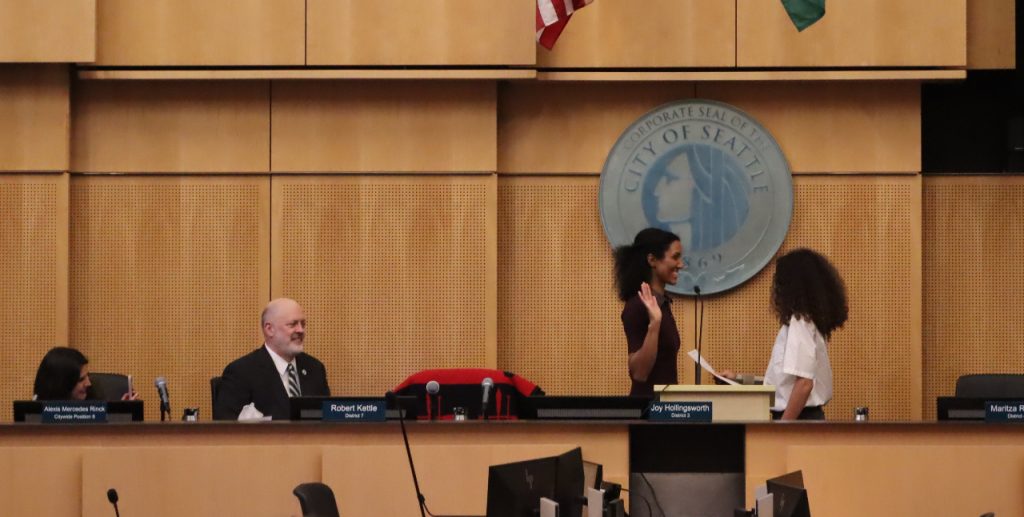
While laying out a firm foundation in progressive values, Foster also pledged collaboration across ideological divisions.
“My commitment to you as your newest city council member,” Foster said, “is to work, to negotiate, to collaborate, and sometimes to fight every day to help build this city alongside anyone who wants to push in the same direction, so that we together can make life better for everyone who makes Seattle the city that we love.”
A focus area for Foster looks to be easing displacement pressure, which is weighing heavily on working class Seattleites, especially communities of color and families struggling with child care costs.
“I am really excited to start to work on policies that are going to help make it easier to build more housing and also to protect our neighbors who are getting displaced,” Foster told The Urbanist. “I think we want to be able to talk more about the displacement that’s happening in the city for folks, and look at what we can do to continue moving the ball forward and keep people in the city.”
Foster will chair the housing committee, overseeing issues like renter protections, Seattle Office of Housing investments, and appointments to the Seattle Social Housing public development authority’s governing council.
Foster expressed excitement to be sitting on the land use committee, which will be chaired by fellow newly elected councilmember Eddie Lin, who handily won a special election in District 2. Since Lin was taking over for an appointee, he took office at the end of November, getting a head start on the rest of the 2025 class.
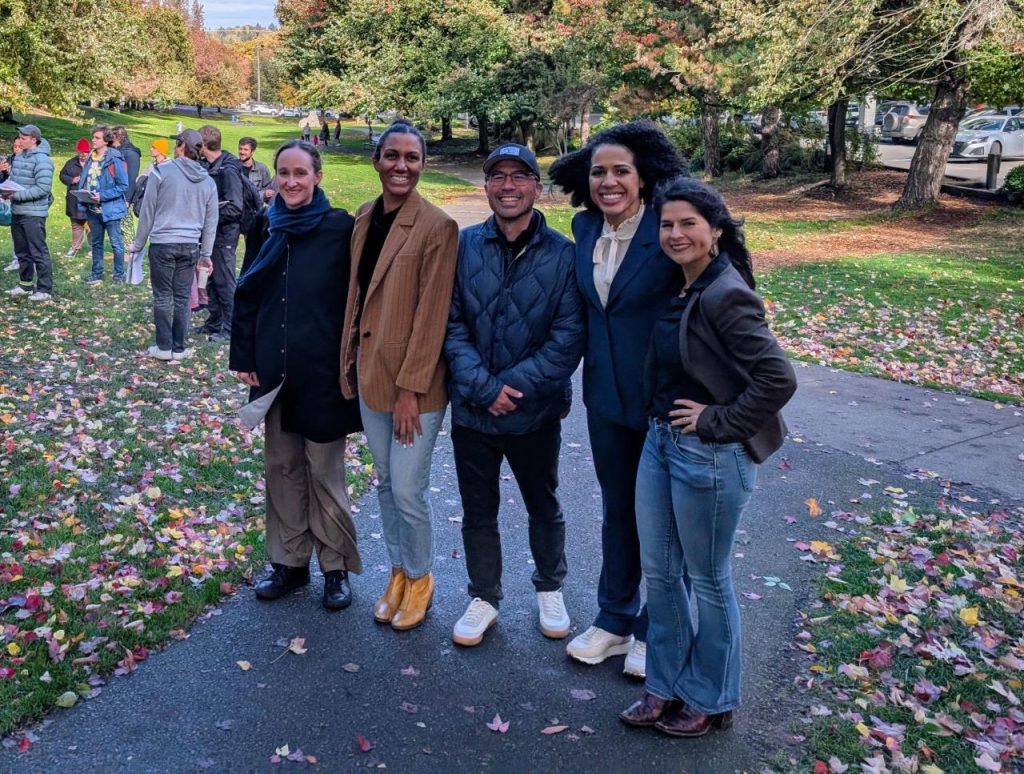
Like Foster, Lin will bolster the progressive wing, which had been getting a little lonely for Alexis Mercedes Rinck until reinforcements arrived. Rinck also took a new oath of office Tuesday, after coasting to reelection with 81% of the vote.
While mostly snubbed from the public safety committee, progressives are heavily represented in the land use committee, with features Lin, Rinck, and Foster, along with Dan Strauss and Joy Hollingsworth. The housing committee will feature the same members, but with Debora Juarez swapped in for Strauss.
Foster’s victory forced Council to elect a new president of the body, and councilmembers unanimously elevated District 3’s Joy Hollingsworth. Hollingsworth is to the left of Nelson and likely to act as a swing vote between the solidly progressive camp and the ardent centrist camp. Neither side has a rock-solid majority, which brings the risk of legislative gridlock as well as the opportunity for creative politics to forge new coalitions and a way forward.

Doug Trumm is publisher of The Urbanist. An Urbanist writer since 2015, he dreams of pedestrian streets, bus lanes, and a mass-timber building spree to end our housing crisis. He graduated from the Evans School of Public Policy and Governance at the University of Washington in 2019. He lives in Seattle's Fremont neighborhood and loves to explore the city by foot and by bike.

Ryan Packer has been writing for The Urbanist since 2015, and currently reports full-time as Contributing Editor. Their beats are transportation, land use, public space, traffic safety, and obscure community meetings. Packer has also reported for other regional outlets including BikePortland, Seattle Met, and PubliCola. They live in the Capitol Hill neighborhood of Seattle.