

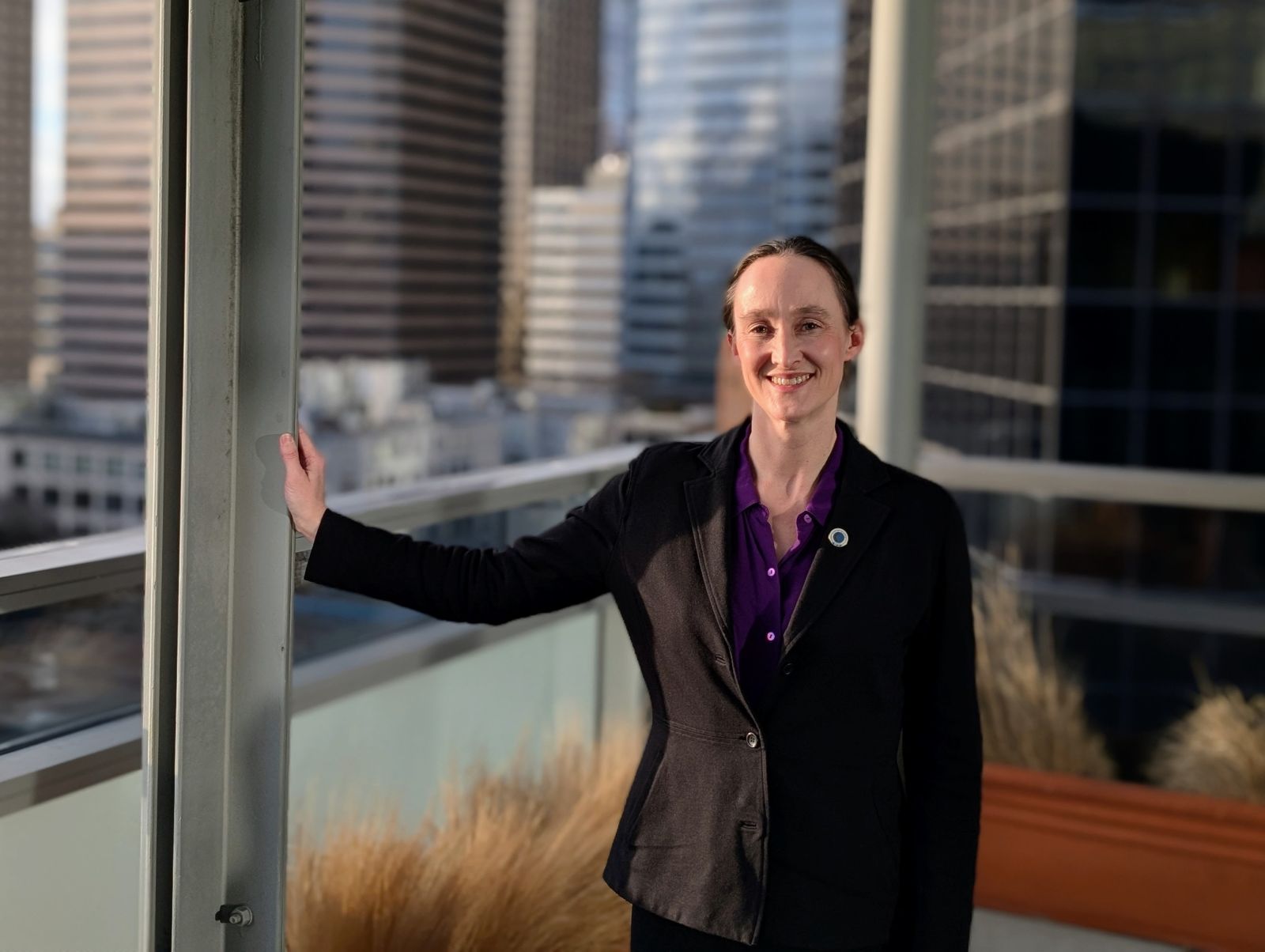
The Urbanist recently sat down with Seattle Mayor Katie Wilson to get the latest on the initiatives she has cooking now that she is inaugurated and in office. Wilson’s top priority has been ramping up delivery of emergency housing for people experiencing homelessness, and she shared early steps her team is taking.
The Seattle Transit Measure is up for renewal this fall, and expanding bus service could be a greater focus in that package, based on our conversation. Wilson hinted that more bus lanes could be on the way, noting that she campaigned for Denny Way bus lanes for the perpetually late Route 8 — a bus lane the previous administration sought to rule out.
In her role on the Sound Transit Board, Wilson also pledged to bring a collaborative approach focused on delivering results for riders regionwide and looking at the system holistically. She shared skepticism of the idea of dropping the second downtown tunnel from the Ballard Link project (in hopes of addressing its ballooning budget). Bolstering transit capacity and system reliability is key and the second tunnel brings that, she said.
FIFA World Cup preparations are another topic we dove into, with transportation and public space improvements in the works to accommodate the throngs of fans that will be in Seattle for the matches that the city is hosting. It sounds like some improvements have a chance to become permanent.
Note: We also asked Wilson about Seattle’s growth plan — as it has played out through the never-ending Comprehensive Plan process — but we opted to pull that question out and turn it into a separate article. Watch for that piece later this week!
This interview has been edited lightly for clarity and brevity.
Transportation department
Doug Trumm: What changes would you like to see at the Seattle Department of Transportation (SDOT) and what direction did you give Angela Brady when it comes to running the department?
Katie Wilson: Yeah, there’s a lot. This year is very front-loaded with big decisions, big important things happening at the City regarding transportation. And I felt that it was very important to have someone at the helm who had really strong operational experience, and who was going to be able to just hit the ground running as we make some of these big decisions. And so I’m excited to work with Angela Brady on that.
Obviously, Sound Transit is a big part of what decisions need to be made about early this year, and I’m looking forward to taking up my seat at the board. Part of this is just wanting to make sure that we’re making the best decisions possible for Seattle and for our whole region in a difficult funding environment. So, we’re going to be working on that.
The Seattle Transit Measure renewal coming up, obviously, is another thing that’s very much on my mind. Our transit service is worse now than it was in 2020 when that measure was last passed. And that’s a problem. And so I really think we need to chart a course to getting back to 2019 service levels and better. So, that’s a very high priority for me.
As we think about levy implementation, we want to hit the ground running on delivering promised levy projects… because there’s so much there, right? And part of this is about just like doing the projects, delivering results, but I think really doing that through a lens of: what are the outcomes that we’re looking for? And we’re trying to improve mobility for people. So, as we look at the prioritizing on the levy projects, really making sure that we’re paying attention to what people are going to feel as they move around the city, and especially, of course, to the more vulnerable road users, and trying to improve improve safety, since we’re so far away from our vision zero goals.
So, that’s all fairly high-level things that are coming up early this year. But, those are some of the conversations that that I’ve been having with Angela.
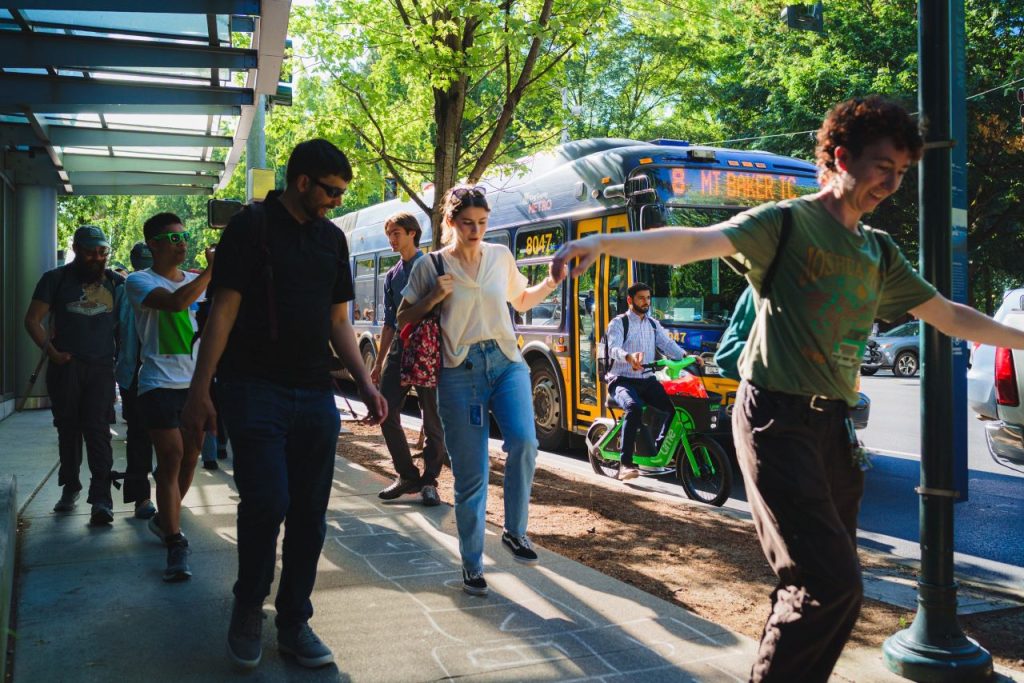
Obviously, I’m also a big fan of bus lanes, and campaigned on bus lanes on Denny [Way]. And so I think another thing that we’ve been talking about is, what’s the low-hanging fruit in terms of improving the experience of transit riders in Seattle, making transit more reliable and more comfortable? And so that’s another thing that that’s going to be important.
Seattle Transit Measure renewal
Doug Trumm: You managed to answer our second question with your first answer, but I’ll just see if you had anything else to add. We wanted to see what you were thinking about the Seattle Transit Measure renewal measure. You mentioned getting service levels back up. Anything else that you wanted to add?
Katie Wilson: In my mind, the Seattle Transit Measure is about funding transit service. And so I know there’s a tendency to want to put a bunch of other stuff in there. I really do want to make sure that we are prioritizing getting our service levels and reliability back up.
I also have many, many memories from 2014 when we had a county-wide measure that failed, right? I care not just about Seattle’s bus service, but about our whole region’s bus service. And so I think having conversations with the county about how we get back to a regional measure and with advocates is also something that’s important to me. So, as we think about Seattle’s measure, we’re going to be having those conversations as well.
Obviously, affordable transit programs, transit access programs, which have been folded into that measure, also. I’m strongly supportive, and so we want to continue those. If there’s an opportunity to to expand on those, for example, by making transit passes available to more people who live in subsidized housing. I think that would be a great direction to move in as well.
Doug Trumm: Yeah, and I was curious, if wanting to partner with the county, is that something that’s still feasible in the 2026 timeline, or is that a future?
Katie Wilson: I don’t know. I had been assuming it wasn’t. If there’s a pathway, I won’t have that decision. [If not and] we’re just doing Seattle, then that’s a future conversation.
Seattle Library Levy
Amy Sundberg: I want to talk about the library levy, because that’s also a big one coming up. Of course, the libraries have suffered a lot because of the pandemic, and there are a lot of related library services that people don’t necessarily think about when they think about libraries that either are already funded by the levy or could be funded by the levy. So what is your broad thinking about that?
Katie Wilson: I love libraries. That’s probably going to be like the depth of my answer right now. So yeah, we haven’t really had a detailed conversation yet about what’s anticipated to be in the levy. I mean, I know there’s also some issues floating around about a levy lid, because there’s a several levies coming up, so it’s kind of that conversation. But yeah, we can maybe talk later in a more detailed way, once I’ve had more thorough briefing. But, yeah, I love libraries. Very supportive of libraries.
Sound Transit decisions
Doug Trumm: You’re taking the helm at a really sensitive time for Sound Transit. What are your top priorities heading into your first board meeting there? And how are you approaching the decisions made by your predecessors regarding the alignments, whether North and South of Chinatown-International District (CID), or others?
Katie Wilson: Yeah, high level, I think it’s really important that we are delivering what voters are expecting, and also funding problems are real, right? And so I’m going to be coming in, I’m looking forward to meeting with the other North King subarea folks, and just with all the board members. And I also think it’s really important to remember that we are building a regional system, and the whole system only works if the whole system works.
Seattle is the biggest in terms of people voting for the funding, right? So it is very important that we’re making the best decisions possible for Seattle residents and Seattle riders, but at the same time, again, the system only works if the whole system works. And so I don’t want to set up an antagonism between Seattle and the rest of the system. And so I’m looking forward to those conversations with all the board members, so that we can navigate these challenges together.
I’m very committed to building out the lines that we promised to voters. And we’ll be working with the other board members on the specifics of how we get there in terms of CID. My understanding of where things are at now is that we are still waiting for some analysis back from the agency around the North and South option, is that correct? And maybe the [4th Avenue] Shallow [option] as well. I’m looking forward to receiving that.
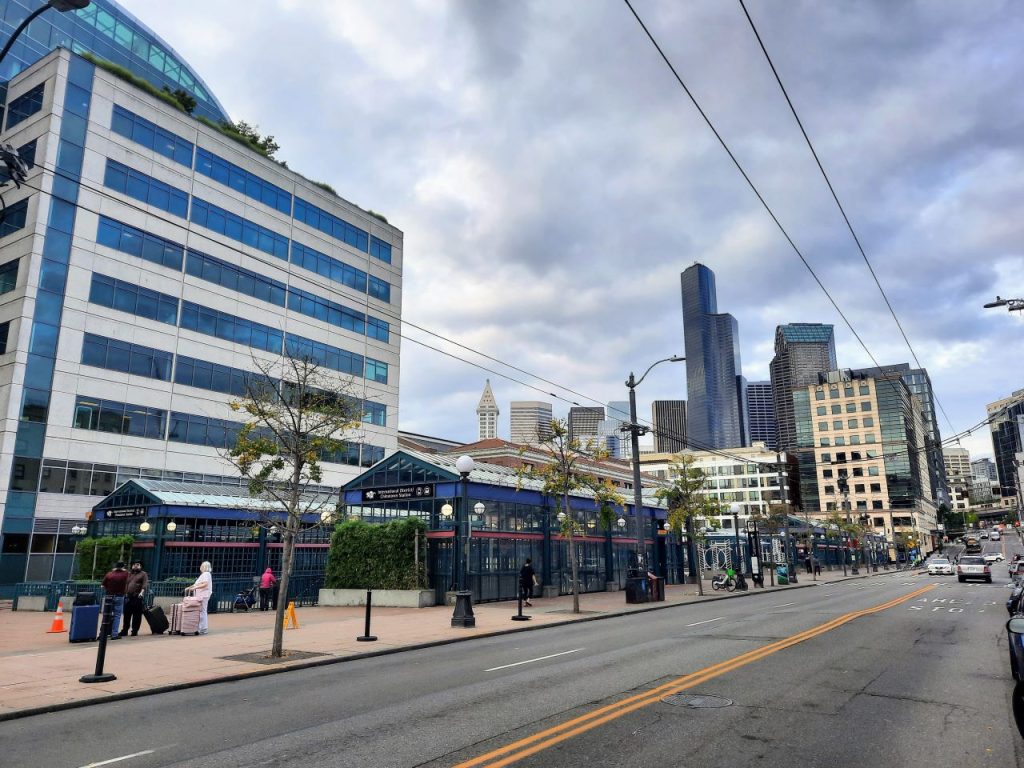
My position hasn’t changed from what it was during the campaign, which is basically, I want the best outcome for our transit system and transit riders in terms of connectivity, and also care about the impacts on the neighborhood and want to make sure that we’re developing stations in a way that’s minimizing the disruption and displacement. So, we’re going to be working with folks in the CID and paying attention to what Sound Transit comes back with making these decisions.
Doug Trumm: Lately some of the action has been around the single tunnel option, dropping the second tunnel in Downtown Seattle, and it seemed like the board chair and a few of his allies were like: let’s just not even think about that. But, there were other members who were interested in it. So it’s in limbo. Are you hoping that that is going to be at least an option for you going forward?
Katie Wilson: We need a reliable system, and I think it’s pretty clear that with the single tunnel, we don’t have a reliable system. And so as we’re building it out, we need that capacity, that a second tunnel seems to be the only way that we’re going to get that. I’m happy to have things looked at, but to me, it’s pretty clear that that’s the direction we need to go.
Homelessness and emergency housing plans
Amy Sundberg: Can we talk a little bit about emergency housing? I know one of your big commitments was 4,000 units by the end of four years, but I also had the understanding that you wanted to get moving quickly because of the World Cup. What can we expect that to look like? And what can we expect to see in the next three to six months?
Katie Wilson: Yeah, this is very, very top priority for me, something that my team is working on now. And, yeah, this is going to look like a few things. So, just on the defensive side, we need to not lose permanent supportive housing and shelter that we already have. And so we’re very engaged right now in the in the strategy and conversation around contingent care funds, and trying to make sure that we’re fortifying our permanent supportive housing against potential cuts so that we’re not adding to our homelessness problem.
I talked a lot on the campaign about tiny house villages, micro modular housing, being part of the solution. And so we’re going to be working on identifying sites, and that will mean looking at land that city departments potentially have at their disposal, and also working with partners, including the county, including the port, including the state, to try to identify sites that would be appropriate for tiny house villages or other kinds of micro, modular housing. And then, working with service providers that can operate that housing.
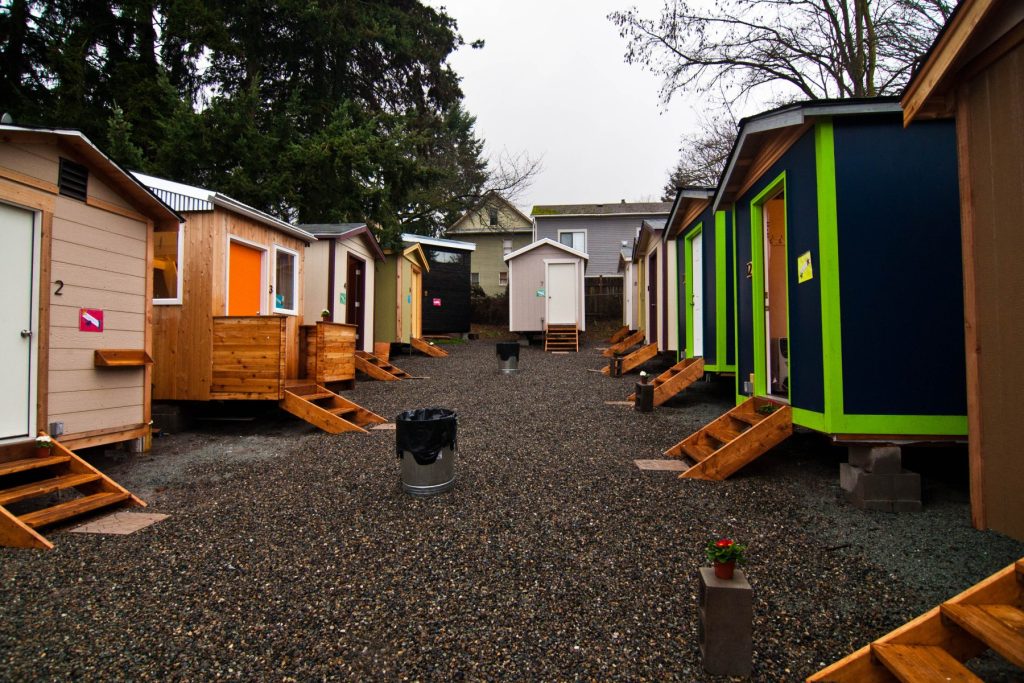
We’re also looking, right now, at the City budget, and figuring out what flexibility we have to funnel some money toward that. So that’s something that we will certainly have some announcements, more specific plans to share in the coming weeks. But yes, you’re right that there is urgency for us around the timeline of the World Cup and trying to make sure that we are opening up really significant numbers of new units before June, so that we can really help some of the folks who are unsheltered inside in the downtown core and adjacent neighborhoods, and neighborhoods around the city, but with a focus there, because of World Cup, and get folks the support that they need. So that’s part of it, and then there’s others.
I know that the Downtown Seattle Association and the PDA have a project in Pioneer Square around some new shelters. So we’re also trying to move forward and look for opportunities to open up other kinds of new shelter, not just tiny house villages. And this is really going to be a team effort, right? We’re starting the process of reaching out to potential partners, churches, faith communities, the business community, and we’re going to all have to pull together and identify space, identify operators, identify funding, and so, yeah, this is going to be one of the big things that we’re working on over the coming six months.
Amy Sundberg: Yeah, it’s a big effort. I always say it’s not an intractable problem, but it seems like it has felt that way.
Katie Wilson: It has felt like that for a very long time. We’re going to try to break that logjam.
World Cup preparations
Doug Trumm: Zooming out a little bit, we’re curious about not just homelessness and emergency housing, but what you’re looking at for your first six months as key things to get moving, whether that’s World Cup related or just in general and whether transportation-related, public space, or amenities.
Katie Wilson: I probably won’t have as specific an answer to this yet as you want, but very much aware that we need to make sure that our transportation system is ready for the World Cup, and I think there’s some opportunities around public space to make improvements that will last beyond the World Cup — don’t have specific announcements yet.
Public bathrooms is something that I talked a lot about on the campaign, and I think it would be great if we could start to actually do something about that pre-World Cup. I think we’re gonna have a lot of people in our city walking around enjoying the city, and it would be nice if they had a place to pee.
Doug Trumm: That isn’t just a porta-potty.
Amy Sundberg: Or even just the porta-potty. [Laughter]
Katie Wilson: I mean, there’s a lot of different ways to think about the World Cup, right? There’s the emergency mentality of like: oh, this big thing is happening, we have to be prepared and make sure it’s not a disaster, right? So there’s that lens, which obviously is important from the City’s point of view, but then there’s also the economic opportunity lens where there’s going to be all this money flowing into the city, and we want to make sure that that is benefiting small businesses around the city and residents. And so there’s that kind of lens, which is something that we’re also thinking about, how do we get all the visitors, not just kind of huddled around the stadiums, but out into neighborhoods and experiencing our culture and history of the neighborhoods, and also patronizing small businesses.
And then there’s the games themselves, right? And wanting to make sure that Seattle residents are have the opportunity to be excited about the games and to watch them and get kind of swept up in the World Cup moment. And so that’s another thing that we’re thinking about: how do we make sure that there are watch parties that are accessible to people and that you don’t just need to pay an exorbitant amount of money for a ticket in order to feel like this is an event that you’re part of as well.
Yeah, I also have an idea about getting people playing soccer, and we’ll see, we’ll hopefully be able to do something along those lines, too.
Surveillance and federal overreach
Amy Sundberg: Related to the World Cup, surveillance is hot topic. With what’s happening federally, of course, it’s become an even greater concern than it was before. I know that at least one or two groups have already sent you letters saying what they would like to see and asking for you to act fairly quickly on matters of surveillance. So I was wondering how you’re approaching that topic, and what you’re thinking now that you’re actually mayor.
Katie Wilson: Yeah. My position from the campaign has not changed. I’m very, very concerned about the the risks to immigrant communities and other vulnerable folks from expanding surveillance, and also from some of the surveillance that already exists in our city. And so, you know, it’s my third day on the job here, so… I take this very seriously.
And so as we’re standing up our team in the mayor’s office and starting to get all the wheels rolling in terms of our policy shop and our work with departments, we’re going to be reviewing all the surveillance policies and programs that are in place, and talking to the folks who have written in with concerns and others, and coming up with a plan. And so I don’t have the details of exactly what that looks like, but it’s very important to me that we’re protecting people’s privacy and not unnecessarily handing tools to the federal government that could be used to target people.
Media Strategy
Amy Sundberg: One of the things that I’ve been interested in that I think is going to be really important for your office, is having a direct line of communication with Seattleites. We saw the first right-wing media attack [of your administration] a couple days ago. So it started right away. I expect that will continue. Mayor Zohran Mamdani has just announced the Office of Mass Engagement as part of his strategy to deal with similar issues in New York. And so I wanted to know what your administration’s approach to that was going to be.
Katie Wilson: Yeah. I mean, there’s a number of pieces to this, right? There’s how are we getting accurate information about what we’re doing and why out to the public, and that is a challenge in our media environment, right? And we just saw that this week with the kerfuffle, if you want to call it that, around SPD and drug arrests. And I think it’s an all-of-the-above strategy. So we have to use traditional media as much as we can set the record straight, put out the statement that says: No, this is actually what happened, and hope that that filters out as much as possible.
And I think also there’s a very important social media side to this. A lot of people, that’s where they’re getting their news anyway. So if we can really build the mayor’s office’s and the city’s social media presence so that people are hearing from us directly in the videos that we make, or in the statements that we put out, and they can trust that, yes, this is actually from the mayor’s office, they’re talking to me, this is what they’re doing: that’s another important piece of that. And then also working through trusted community organizations and folks out in the community that have networks where they are also spreading news and information.
And yeah, we haven’t started an Office of Mass Engagement. Yeah, I’m just gonna be constantly compared to Mamdani, aren’t I?
Amy Sundberg: It was interesting idea. It’s a really big problem, right?
Katie Wilson: I think it’s very important that the city is working through ethnic media and non-English language media to make sure that we’re reaching communities that are not going to be like easily reached through traditional media as well. Again, getting out accurate information about what the city is up to and things that people need to be aware of. In this very challenging media environment, it’s going to be a multi-pronged strategy.
Also, I have this idea around public funding for local news outlets. And if we can get that going, that longer term, deeper project is strengthening our local news ecosystem so that news organizations actually have the funding that they need to do investigative reporting, to produce high-quality local news, then that also will help.
Police department, CARE, and culture change
Amy Sundberg: I wanted to ask about Seattle Police Department (SPD) Chief Shon Barnes. I know you decided to retain him for now, and he’s had kind of a rocky first year, and I’m sure you’re aware of all the reasons why that is. So I was wondering what expectations you’ve expressed to him in terms of what you’re looking for in his leadership of SPD?
Katie Wilson: Yeah, I guess I’ll say I’m really looking forward to working closely with him to move the department and to move the city’s public safety response in a good direction. And I retained him because I think we can do that. There have been some challenges, some stumbles over the last year, but really I think that there’s also responsibility for that to be put on the previous administration.
It’s very important that, as the mayor, I have a very close and trusting working relationship with my police chief. And this is a team effort, and I’m not sure that was really the case before. So, in terms of expectations, or the direction that that I think that I’m hoping that we can move, we’re going to continue hiring officers, right? And I think we’re also going to need to be really creative and intentional about how we’re using the force that we have to address the problems that people are experiencing in their neighborhoods and on the ground. So I’m really eager to be working with SPD and with stakeholders in different neighborhoods where there are persistent public safety issues to really get to a better place.
And we have some good models for how to start doing that, really in the work that’s going on in the U District and Downtown and several other neighborhoods. So I really want to build on that and make sure that we have a really good working relationship between SPD and the CARE [Community Assisted Response and Engagement] department.
Amy Sundberg: Yeah, that was going to be my follow up, because I feel like it’s not there right now.
Katie Wilson: Correct. And again, I think that it’s really not useful to try to assign blame in this case, and it’s really the responsibility of The Mayor’s Office to develop that partnership and to oversee that partnership and to make sure that those two departments have what they need, including strong direction from the Mayor’s Office to work together and make sure that the appropriate responder is coming to a given call. Obviously, we are somewhat constrained in that by the recently approved police contract. But within those boundaries, we’re going to do everything we can to make the best use we can of our alternative response and then also collaboration with the service providers that do similar work in terms of outreach and alternative response.
Amy Sundberg: My understanding is if SPD wanted to cooperate more, the contract wouldn’t be quite as crippling as it might otherwise be, because they still have a choice [as to when to refer calls to the CARE team].
Katie Wilson: Right, and so I think that part of the work ahead is really working with Chief Barnes to make sure that SPD and all of our officers are on the same page around our goals and making good judgments in the moment. So that’s very high priority for me. In general, I think within SPD that we want being an officer to be a good job, not just in terms of the pay that you’re getting, but that officers are there feeling that they’re providing a public service, feeling that they have a relationship with the public, with the neighborhoods that they’re working in, and also that within the force, they’re respected, they’re, you know, not sexually harassed, right?
I think it’s important that SPD be a place that women, that minority officers have a good experience working in. And this is so important if we’re trying to create a situation where our force reflects the communities that it’s serving and feels that they have that relationship. And so there’s some work to do there.
Amy Sundberg: Yeah, the culture there is another seemingly intractable problem. I guess we’ll find out.

Doug Trumm is publisher of The Urbanist. An Urbanist writer since 2015, he dreams of pedestrian streets, bus lanes, and a mass-timber building spree to end our housing crisis. He graduated from the Evans School of Public Policy and Governance at the University of Washington in 2019. He lives in Seattle's Fremont neighborhood and loves to explore the city by foot and by bike.
Amy Sundberg is the publisher of Notes from the Emerald City, a weekly newsletter on Seattle politics and policy with a particular focus on public safety, police accountability, and the criminal legal system. She also writes science fiction, fantasy, and horror novels. She is particularly fond of Seattle’s parks, where she can often be found walking her little dog.