

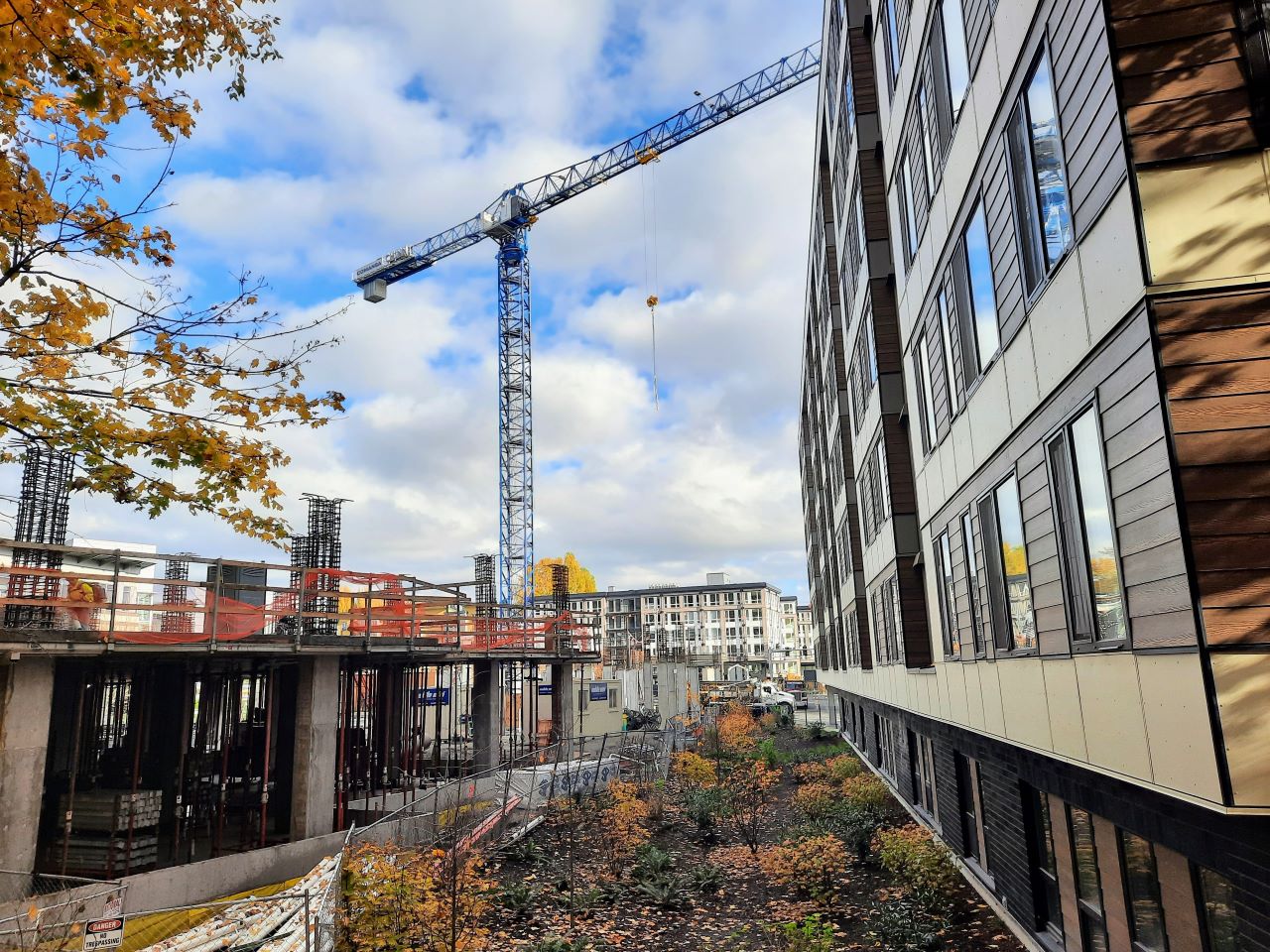
As Seattle Mayor Katie Wilson settles into office, the city is waiting to see her administration’s first big moves, especially those directly related to the core campaign issue of addressing the city’s affordability crisis. When it comes to Seattle’s long-term housing growth plan, Wilson is signaling she will build upon work underway during the term of her predecessor, Bruce Harrell.
Early indications are the City will largely stay the course on Harrell’s growth plan in 2026, while queueing up additional neighborhood growth centers and broader transit corridor upzones to enact in 2027, once the City has conducted additional environmental review, which is intended to thwart legal appeals.
When Wilson took office at the beginning of the year, Seattle was right in the middle of a major update to its growth framework, which the state requires once per decade. Harrell signed a revamped Comprehensive Plan a few days before leaving office, and approved a major rezone of the city’s lower-density areas, intended to encourage smaller multifamily development.
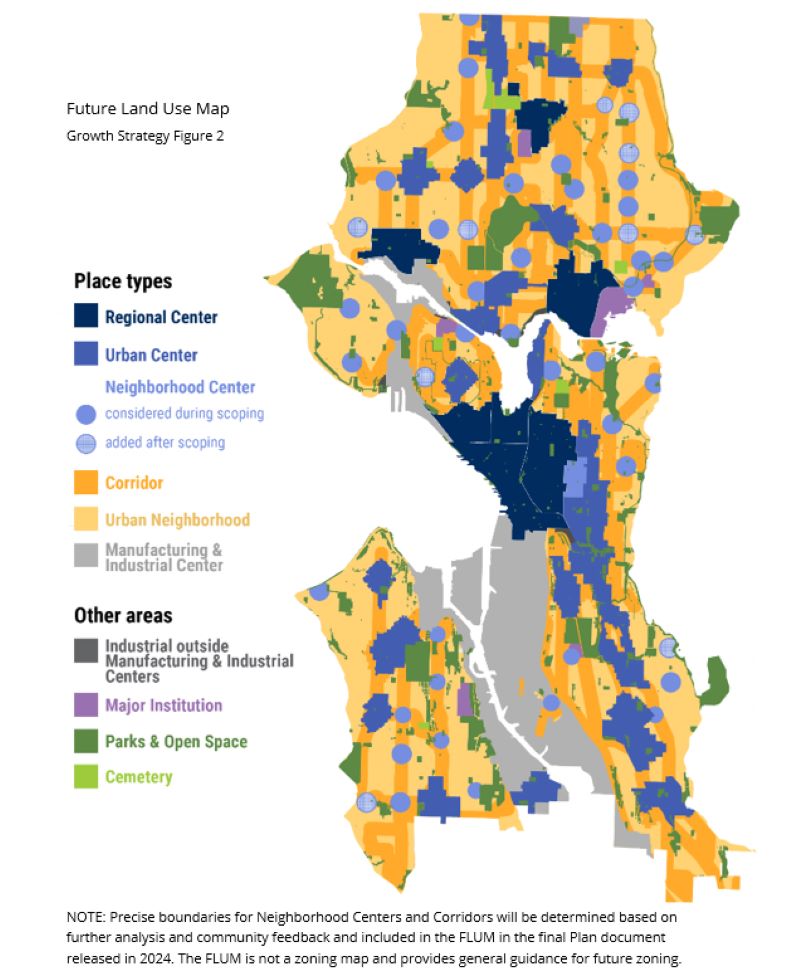
Additional zoning changes were set to be transmitted over the coming weeks, including those allowing additional density in 30 new “neighborhood centers” that are clustered around existing business districts like Madrona, Tangletown, and Fauntleroy. Harrell’s plan also would upzone in the immediate half-block vicinity of frequent bus routes, which housing advocates (including the Seattle Planning Commission) criticized for being too limited and focusing new apartments along busy, polluted major roads.
The incoming administration faced a choice around whether to keep those plans moving forward, or to revamp them — and so far all signs point to keeping them moving and building on them at the first opportunity.
In an conversation with The Urbanist last week, Wilson described how she’s approaching changes to a growth plan that she had criticized as not going far enough in providing opportunities for housing growth throughout the city. She pointed to additional environmental review that the City’s Office of Planning and Community Development (OPCD) plans to conduct later this year a major chance hance to go further than the Harrell administration had decided to go.
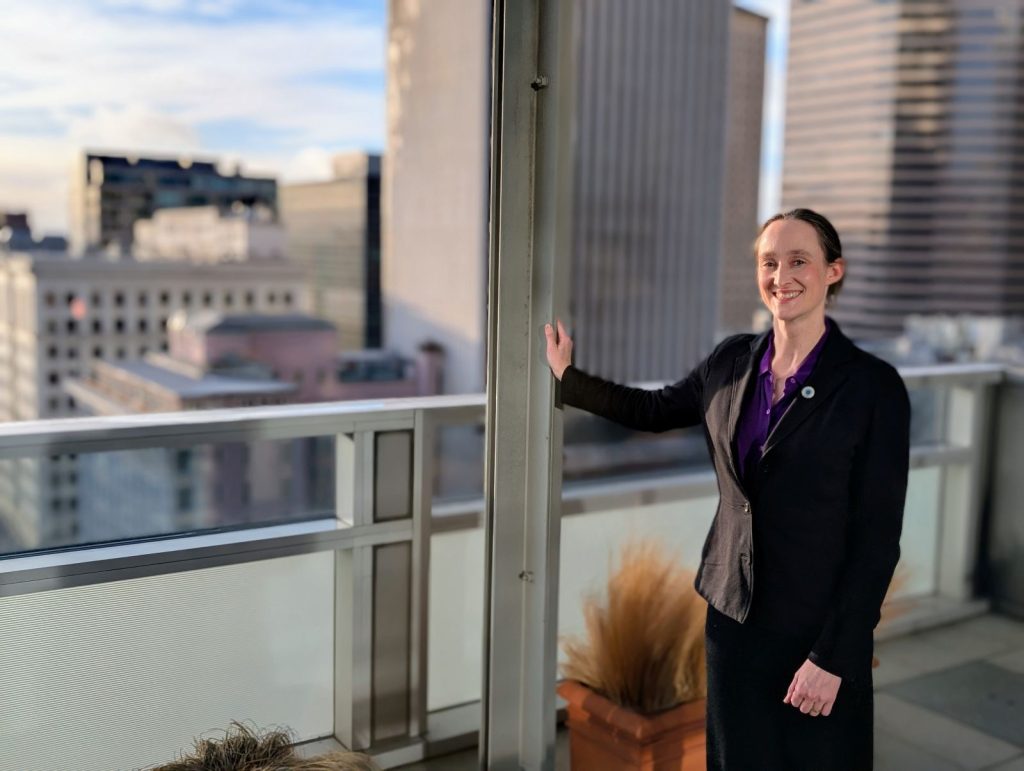
“I think we’re going to have some exciting opportunities coming up later this year to potentially go further with opening up space for new housing,” Wilson said. “The supplemental EIS process is going to play out, and we’ll have the opportunity to look at additional neighborhood centers, potentially upzones within a larger distance from transit corridors. And I’m looking forward to having those conversations. And I think, in general, what’s passed already is a big milestone in terms of opening the way for new housing, and we also need to make sure that it actually results in new housing. And so that means paying attention to the details of how it’s playing out. We’re in a moment where there’s a downturn in terms of permit applications and the housing market generally.”
It will fall to Rico Quirindongo to oversee the work ahead. Harrell tapped Quirindongo to lead OPCD, Seattle’s long-range planning department, in 2023. So far, Wilson has given no signals she is planning an immediate leadership change. Reporting by The Urbanist and other outlets have shown how it was Quirindongo’s OPCD that was stifled by Harrell’s office itself, watering down a much more ambitious growth framework in late 2023, which delayed a long overdue draft of the plan.
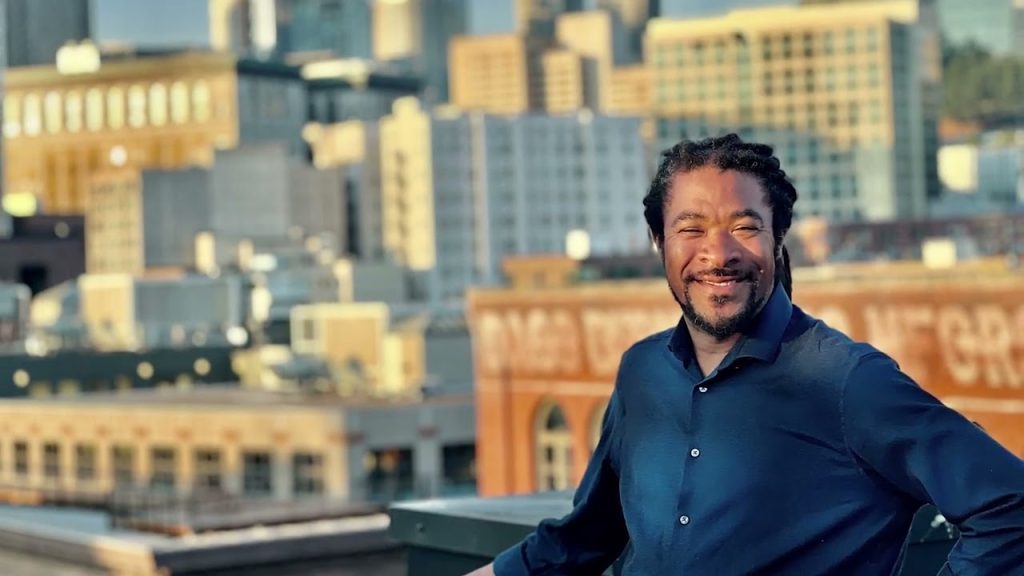
Earlier this month at a meeting of the Seattle Planning Commission, Quirindongo was forthcoming about how things had progressed during the first few days of the Wilson administration, explicitly referencing opportunities that had been missed during the Harrell Administration.
“We have had a couple of great conversations with the new administration about where the Comp Plan is today, what’s been adopted, what were missed opportunities, and then what are the activities that we need to be leaning into in ‘26,” Quirindongo said, noting that the centers and corridors legislation the council is set to consider soon is required to keep Seattle in compliance with the state’s growth management act.
On the horizon, Seattle will need to make additional zoning changes around major transit stops to be in compliance with House Bill 1491, Washington’s transit-oriented development (TOD) bill, by 2029.
“Our message to the administration has been: we know there’s some new stuff that we want to do now that you guys are here, but we need to, rather than open up the box on the legislation that’s already complete, let’s get it sent down – there’s going to be lots of opinions about what’s in that package,” Quirindongo said. “Let’s get through that process, and then let’s explore through the supplemental EIS and the HB 1491 TOD compliance work that we need to do in ‘27, let’s go back and look at transit corridors again, look at the opportunities that we weren’t able to build into this round of [the] Comp Plan.”
OPCD also has its hands full with a full round of subarea plans, growth and transportation frameworks for individual neighborhoods that provide more detail than the larger Comprehensive Plan. After the Downtown Regional Center plan — which is open for public comment through early February — Northgate, First Hill Capitol Hill and Seattle’s two Manufacturing and Industrial Centers (MICs) in Ballard/Interbay and the Duwamish Valley are all set to come in quick succession, followed by South Lake Union, Uptown, University District and Ballard next year.
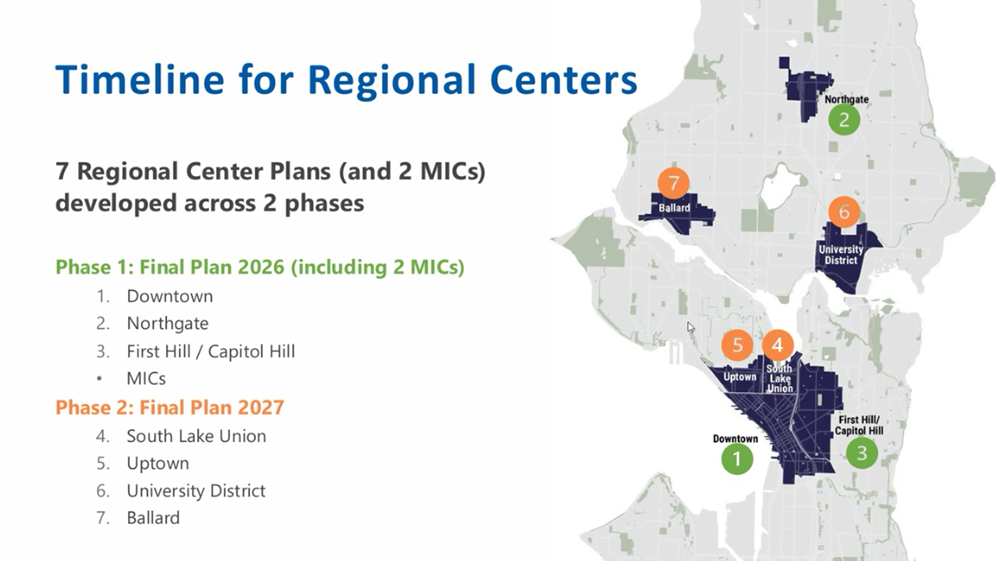
All of those plans were in the works well before Katie Wilson took office, but given enough time, they will clearly evolve to reflect the new administration. The Mayor said she’s confident that will be reflected in a growth framework that allows for more housing.
“I think that with the supplemental EIS, we’ll have some good opportunities to go further,” Wilson said. “And obviously that’s dependent on the will of the Council and building public support, but I remain committed to affordable and abundant housing, and I think that we’ve made some progress with what’s been done so far, but I think we can go a lot further.”
Doug Trumm contributed reporting to this story.

Ryan Packer has been writing for The Urbanist since 2015, and currently reports full-time as Contributing Editor. Their beats are transportation, land use, public space, traffic safety, and obscure community meetings. Packer has also reported for other regional outlets including BikePortland, Seattle Met, and PubliCola. They live in the Capitol Hill neighborhood of Seattle.