Several months after the expiration of a two-year environmental review holiday for residential and mixed-use projects under the State Environmental Policy Act (SEPA), the Seattle City Council has advanced legislation to make those exemptions permanent and significantly limit SEPA for commercial development. The legislation passed out of the council’s Land Use and Sustainability Committee with a “do pass” recommendation on Wednesday, and heads to the full council meeting on Tuesday, February 10.
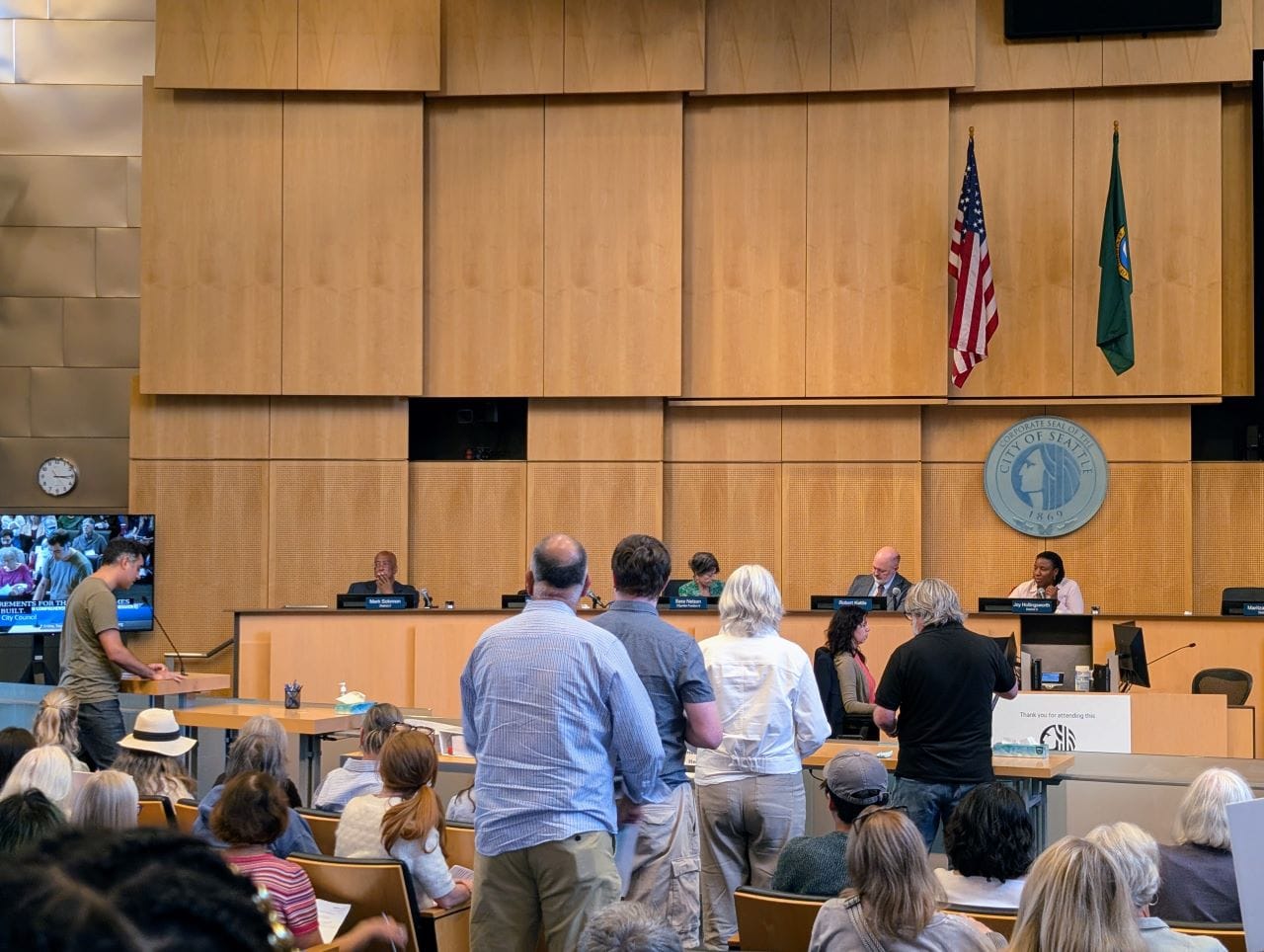
At the meeting on Wednesday, a handful of builders and housing advocates spoke in favor of the reform, including Logan Schmidt speaking on behalf of the Master Builders Association of King and Snohomish Counties.
“This ordinance provides a clear, predictable framework to advance housing production while still meeting Seattle’s long standing growth and environmental goals,” Schmidt said. “Streamlining SEPA is not a rollback of environmental standards. It’s an acknowledgement that those standards are already embedded throughout the city’s planning and regulatory framework.”
Ryan Makinster, Advocacy and Policy Manager for Habitat for Humanity of Seattle-King & Kittitas County, echoed that sentiment and highlighted the human cost of slowing down housing production.
“For families like the Cornejos, who waited years to close their Habitat home in Seattle, every month of delay means another month of housing instability. Redundant reviews slow housing production without improving environmental outcomes,” Makinster said. “Our pipeline includes 204 permanently affordable homes, 75% of those in Seattle. Streamlining permits means we serve more families sooner with the same limited public resources for your unit.”
The proposal drew criticism from some tree advocates and growth skeptics. While most from this contingent opposed the underlying legislation, some did speak in favor of an amendment from Councilmember Alexis Mercedes Rinck that targeted parking garages and paid parking lots.
“The reason I’m bringing this amendment forward is to ensure our environmental goals aren’t being put aside to promote more parking without proper review,” Rinck said ahead of the committee vote. “Our city’s biggest source of emissions comes from transportation, and single occupancy vehicles are a large share of that — they’re the culprit. And I want to be clear that I support this legislation holistically, because exempting housing from SEPA just simply makes sense. That’s because we know when we build more housing — and we’re building in Seattle — the environment is better off because we’re reducing sprawl and reliance on cars, but I don’t believe we should be clearing the way for more parking, especially flexible use parking, to exempt from environmental review.”
Rinck’s amendment passed on a 4-0 vote, lowering the threshold for the SEPA exemption in all non-industrial areas of city from 40 stalls down to 20 stalls of “flexible use” parking, which is the City’s term for paid parking that is open to the public, rather than resident-only parking which wouldn’t trigger SEPA review. The amendment, however, allows the SEPA exemption to rise to 90 or fewer stalls in industrial areas, in keeping with the original version of the legislation.
Land Use and Sustainability Chair Eddie Lin shared a similar sentiment, noting that encouraging housing in Seattle was a climate-friendly action that was good for the environment, given the heavy environmental impact and carbon footprint of sprawl on the suburban fringe. He argued that cities have better tools than SEPA to improve environmental outcomes.
“I do think there are important places where we need to address these [environmental] issues, whether it’s in our zoning, as we think about our built environment and our Comprehensive Plan. Whether it’s in our storm water codes, whether it’s in our building standards, these are critical areas where we can make real improvements,” Lin said. “Thinking about our right-of-way, and whether we can increase tree canopy and public spaces… how we fund our transportation system and our buses and light rail so that people can get around in ways other than single occupancy vehicles. I think about the toxic chemicals and tires that are harming our salmon, and whether we can take action at the state level to transition to ban those harmful chemicals.”
In fact, Lin alluded to the way SEPA can encourage inertia and status quo outcomes instead of climate action.
“As we are already well on our way towards climate crisis, if we don’t do anything, we basically sit on our laurels and take zero action — just big picture — SEPA doesn’t even ever do anything, because there would be no action for us,” Lin said.
Recent history of SEPA exemptions
The legislation is set to build upon past SEPA reforms by the City and a two-year mandated holiday by the Washington State Legislature.
In 2017 and 2019, the Seattle City Council adopted legislation to significantly adjust categorical exemptions for residential and non-residential development within urban centers and urban villages, so long as certain planned growth levels weren’t exceeded. In mid-2023, the Council approved higher SEPA categorical exemption levels for Downtown zones in an effort to spur more activity and interest in the urban core following the pandemic.
Also in 2023, the state legislature passed Senate Bill 5412 to specifically alter SEPA exemptions in Seattle. The text of the bill was broad, granting outright categorical exemptions from SEPA environmental review for “all project actions that propose to develop one or more residential housing or middle housing units” in the city during the period from July 23, 2023 through September 30, 2025.
The Seattle Department of Construction and Inspections (SDCI) accordingly interpreted the statutory language broadly when applying it to projects. Applicants with projects already under review at the time of the statute’s implementation were allowed to terminate environmental review under SEPA and move forward with other Master Use Permit components or construction permits.
An SDCI departmental rule detailed that the categorical exemption applied to both residential-only developments and mixed-used developments, and that the exemption extended to such developments even when on lands covered by water — a situation which typically nullifies categorical exemptions under SEPA, though codified shoreline and environmental regulations were still applicable in such cases. The new legislation, however, restores application of SEPA for projects occurring on lands covered by water.
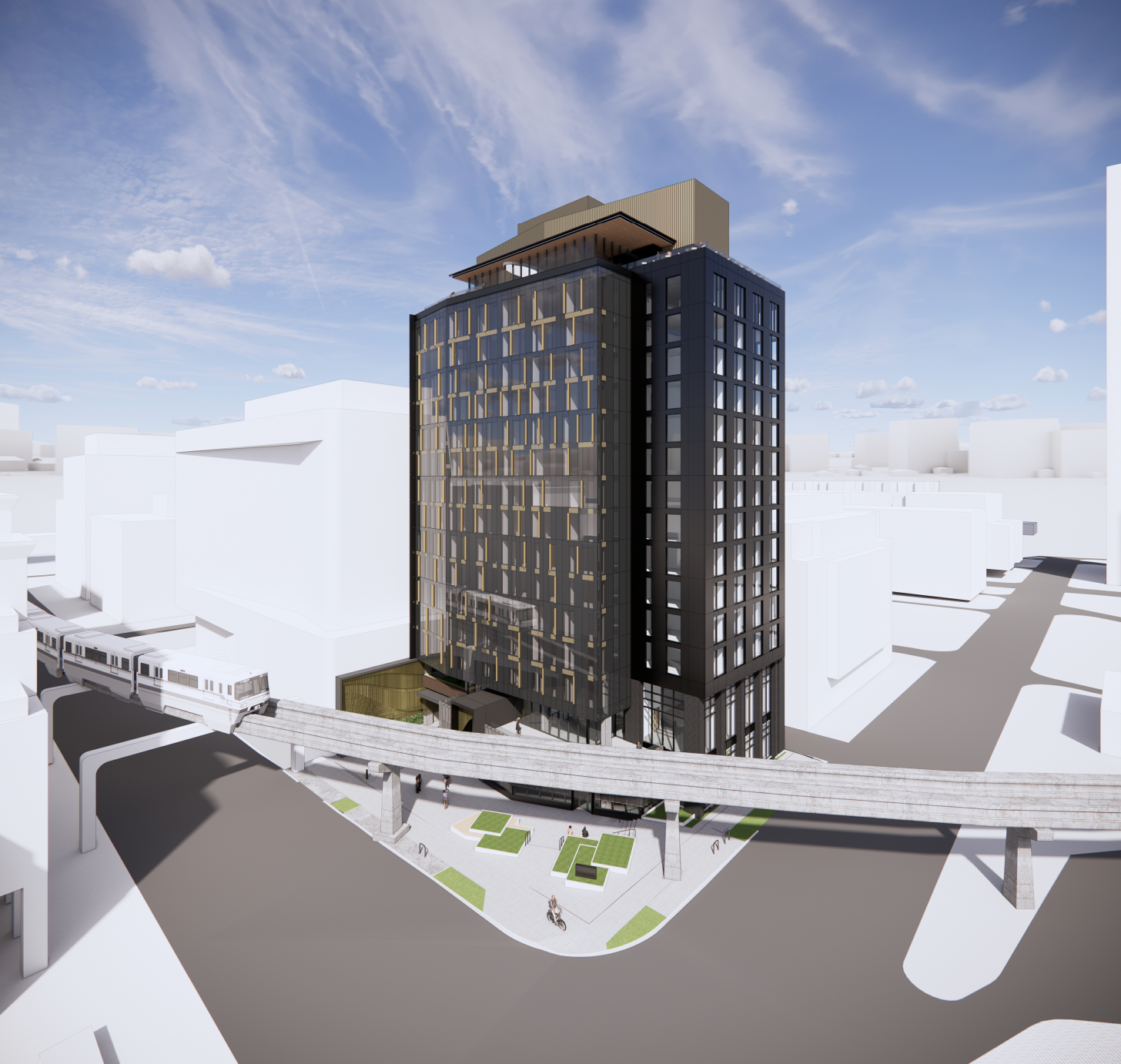
Demonstrating the power of the exemption is a 15-story hotel project in Uptown. Because the applicant proposed one apartment unit in the structure, the entire project was able to use the SEPA exemption as a mixed-use building, in addition to temporary design review exemptions. That allowed the project to obtain Master Use Permit and early site construction approvals in just over a year — which is significantly faster than Seattle’s norm.
How SEPA reform would work
The council’s proposed reform streamlines the SEPA categorical exemptions by eliminating complex tables for residential and non-residential development and replacing them with standard exemptions regardless of zone and other geography criteria, relying on a combination of state statutory provisions to raise infill exemptions.
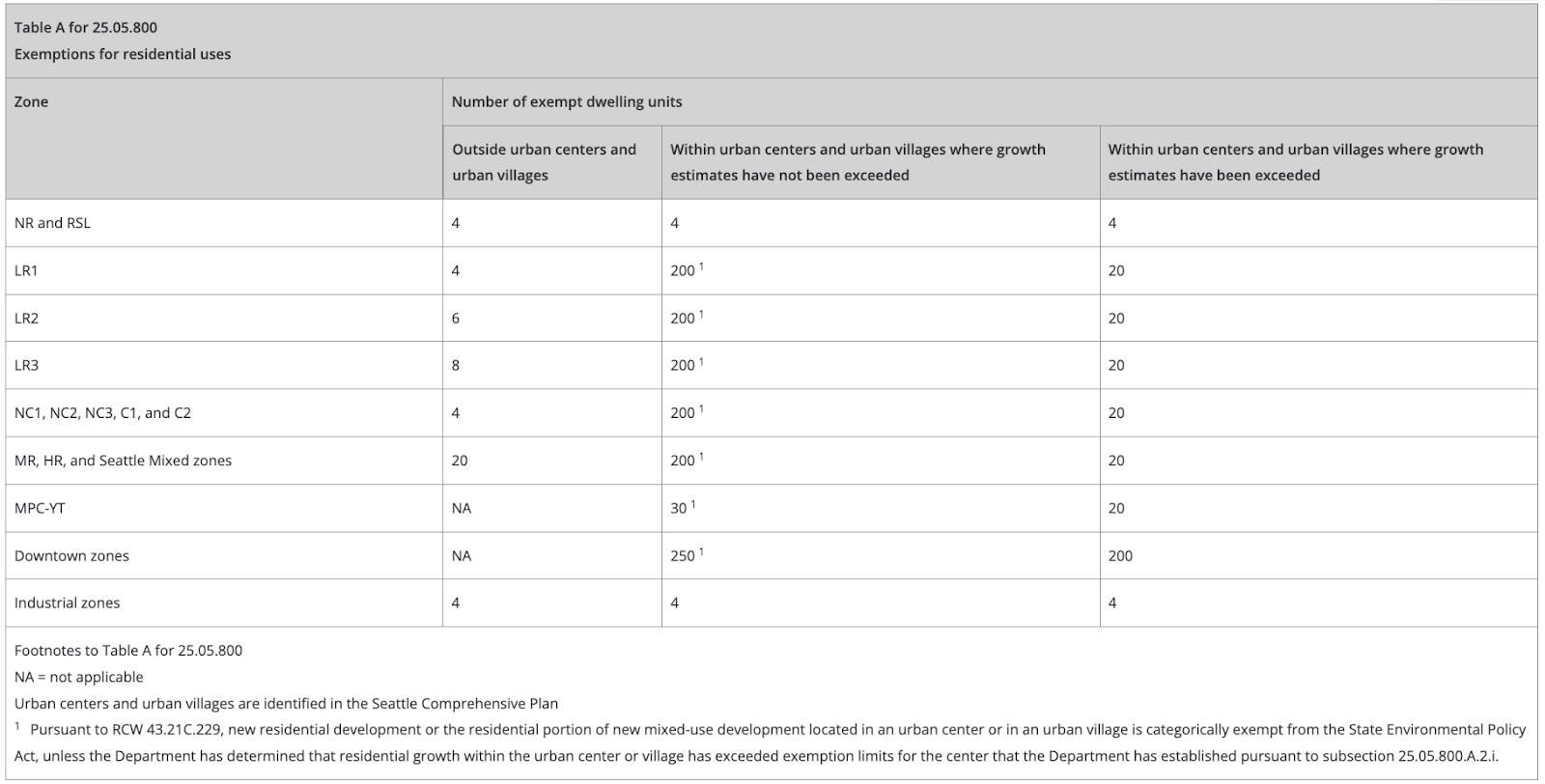
Generally speaking, residential and mixed-use development would be exempt from SEPA going forward, unless citywide residential growth exceeds 99.5% of the planned levels in the 20-year Comprehensive Plan update. In the unlikely event that this happens, only residential and mixed-use projects with more than 200 dwelling units would be subject to SEPA, while projects that don’t exceed that number of dwelling units would remain categorically exempt.
For non-residential-only developments, the citywide categorical exemptions would be 30,000 square feet or less of retail commercial uses and 65,000 square feet or less of non-retail non-residential uses, with a similar caveat to residential and mixed-use development. If citywide non-residential employment growth exceeds 99.5% of the planned levels in the 20-year Comprehensive Plan update, only projects with 30,000 square feet or less of non-residential development would remain categorically exempt from SEPA.
Along with these changes, the legislation increases the cumulative limit on excavation and fill projects to 1,000 cubic yards, from the current limit of 500 cubic yards. This mostly serves as a benefit for modest remedial site activities on larger commercial and industrial lands, since excavation and fill activities are typically exempt from SEPA when in connection with otherwise SEPA-exempt construction activities like new townhomes or mixed-use buildings.
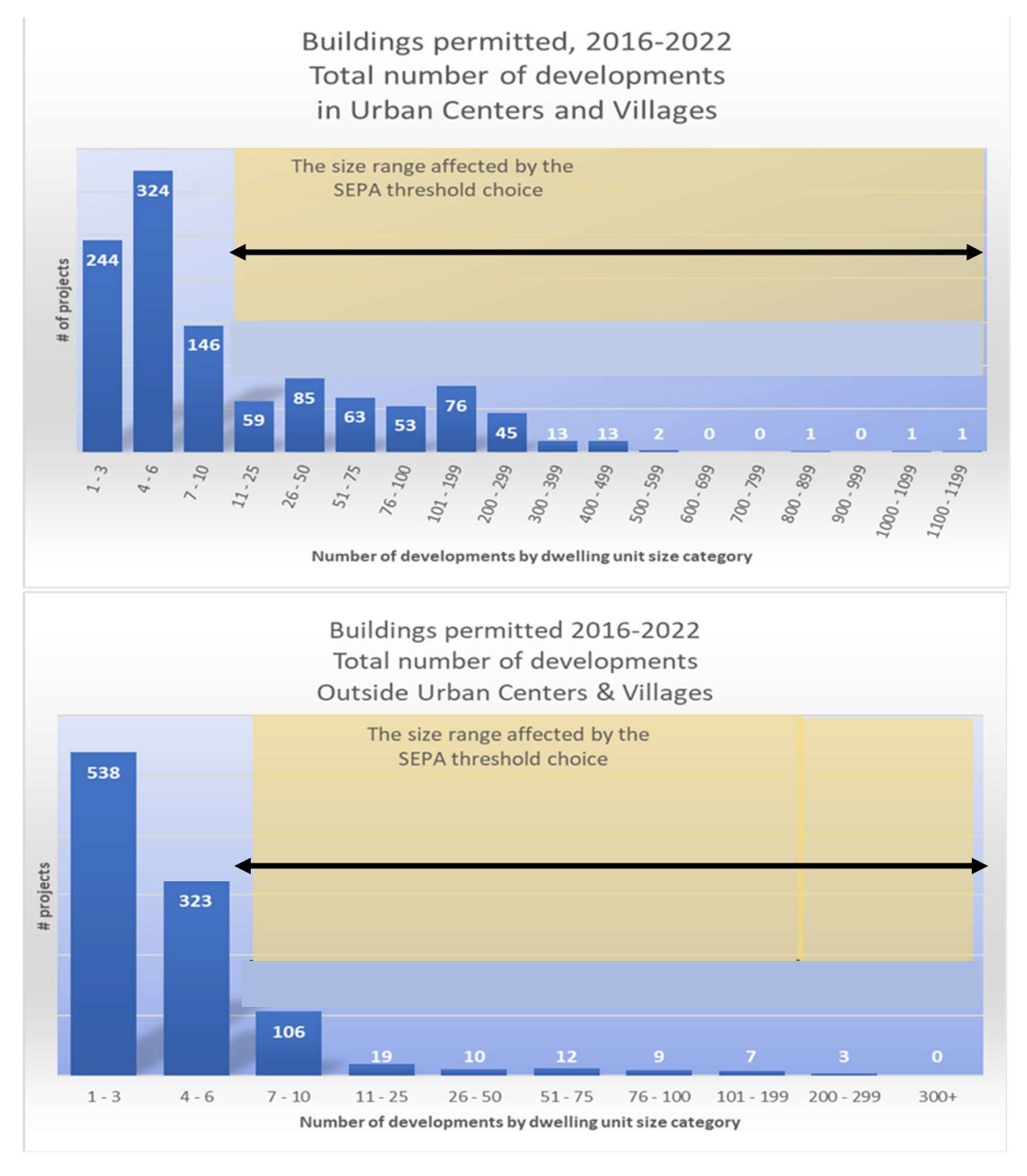
In building a case for the changes, SDCI provided a report explaining why additional SEPA categorical exemptions are warranted.
“The main purpose of the City’s SEPA reviews is to identify situations where a permit should be conditioned in order to avoid significant adverse environmental impacts. However, due to the effectiveness of the City’s codes, fewer and fewer SEPA reviews are resulting in individualized SEPA-based conditions of approval in Seattle’s land use permit decisions,” the report stated. “This illustrates that the current City codes mitigate the majority of impacts of new development on elements of the environment.”
The report provided concrete data on the limited number of SEPA projects resulting in actual permit conditioning.
“It is rare that any development, even in the range of 100-500 dwelling units in size, receives SEPA mitigation measures tied to unique environmental impact findings. Available data from the 2010s shows that only 16% (about 1 in 7) of SEPA reviewed residential developments led to SEPA-based mitigation conditions, among approximately 250 development decisions,” the report stated. “For a smaller sample of non-residential developments, only about 30% of the projects had outcomes that included any SEPA-based mitigation for specific site impacts.”
In concluding discussion on the proposal, the report pointedly stated: “SEPA reviews for nearly all developments are not adding value, and should not be required going forward due to the body or regulations that will still continue to apply to new development proposals.”
Nevertheless, categorical exemptions will still be nullified in certain cases, such as projects seeking modification or demolition of existing structures that may warrant landmarking or exceeding allowed use, density, or intensity limits specified in City codes.
As a backstop to protect cultural resources, the legislation modifies grading requirements. Projects with proposed grading activities within 200 feet of navigable waterbodies or state-designated shoreline districts would need to incorporate protective measures into plans for potential archaeological and cultural resources on-site and implement them during construction. SEPA has traditionally been used as a method for addressing and conditioning protection of archeological and cultural resources as part of project permitting, but codification of protection requirements should more directly cover many more projects.
The SEPA reform had appeared poised to pass in late 2025, but councilmembers pulled it off their calendar. The delay seems to have been in response to concerns raised by local Tribes. City staff outlined new procedures that would be put into place for greater notification to and information-sharing with Tribal governments for broader types of projects, potentially easing those concerns.
Given the four votes in favor Wednesday, the legislation appears likely to pass on February 10, although District 4 Councilmember Maritza Rivera (who doesn’t sit on Land Use) did attend the meeting and share a variety of concerns.
Correction: Ryan Makinster’s name was misspelled in the original version of the article.