Plans to strengthen one of Seattle’s most pedestrian-oriented spaces ahead of the FIFA Men’s World Cup are quickly coming together.
This week the Seattle Department of Transportation (SDOT) presented early designs for an access management pilot at Pike Place Market, a project intended to increase safety and security as Seattle opens itself up to the world stage this summer. Proposed in former Mayor Bruce Harrell’s final budget, the new infrastructure is set to be paired with bollard upgrades at Seattle Center and Westlake Park, and comes in the wake of vehicle ramming attacks in New Orleans and elsewhere.
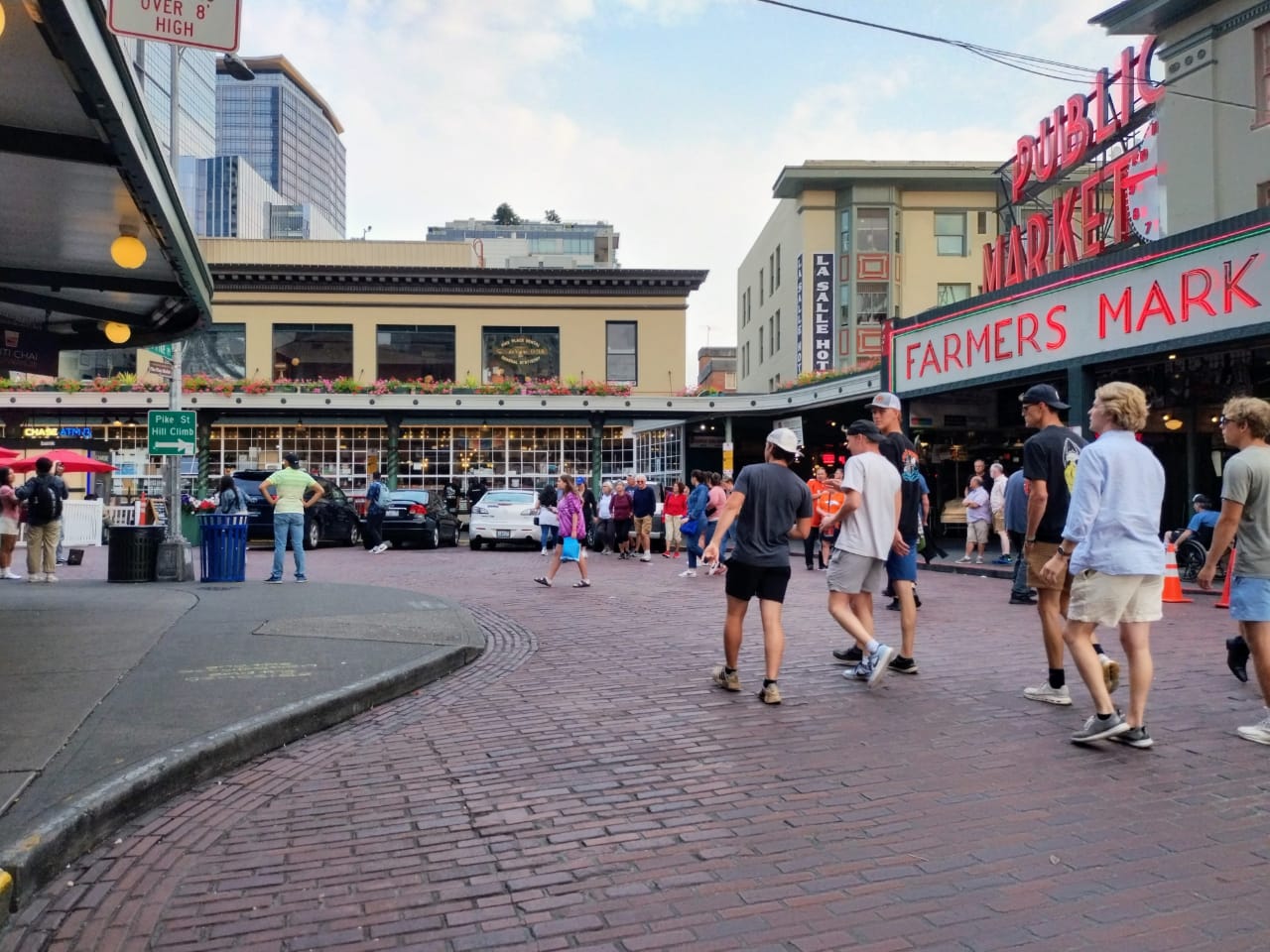
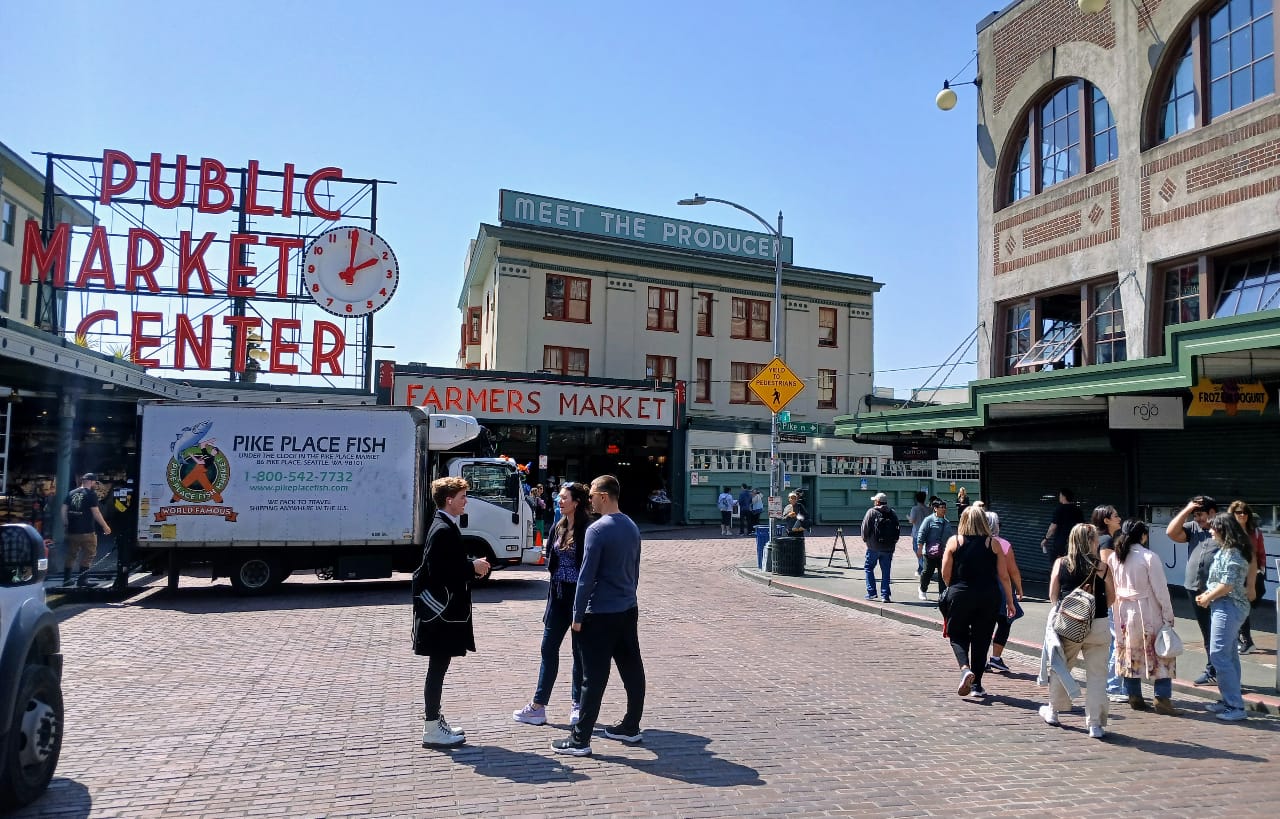
What should be a straightforward conversation about how to protect pedestrians at one of Seattle’s biggest tourist attractions is actually highly charged, happening against the backdrop of Pike Place’s current pedestrianization pilot. A chance to “test and learn” put in place last spring by former Mayor Bruce Harrell and incoming Pike Place Public Development Authority head Rachel Ligtenberg, the pilot is expected to last at least a year, and made access points to Pike Place limited to delivery vehicles and other authorized visitors during the busiest times of the day.
A no-brainer change for many city residents that has opened up the Market to people who walk, the change has not been received as equally well across the Market community, with many of the groups that make up the Market’s bureaucratic ecosystem voicing ongoing concerns around those changes and their impact on sales and access.
Whether that pilot continues and in what form remains up-in-the-air, but SDOT is preparing for the World Cup by looking at strategies to protect pedestrians on the Market’s busiest days that can be implemented quickly. These quick-and-dirty strategies may ultimately form a template for future permanent infrastructure, but will likely be significantly refined after this summer, with much more attention given to infrastructure that is proposed to be permanent.
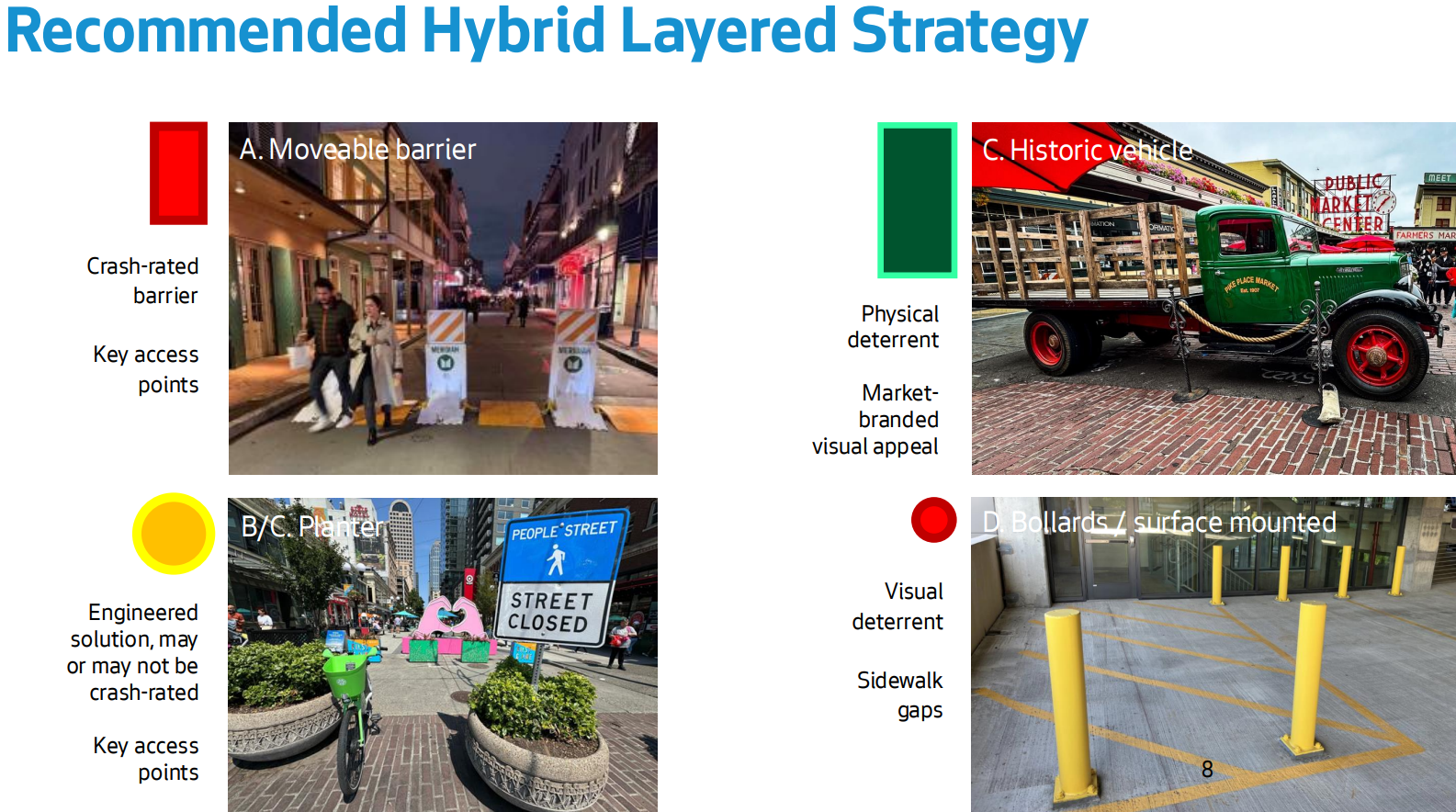
“This is really just specific to getting ourselves ready for the World Cup. I want to be clear that this is not the full permanent [strategy], this is the interim barrier strategy for the World Cup,” SDOT’s Radcliffe Dacanay told the Market Historical Commission this week during a briefing. Next month, the department is hoping to win over that commission and get permission to start installing infrastructure as soon as April.
“We’ve been given this charge of, how do we protect Pike Place to mitigate against vehicles coming into and running into a lot of folks,” Dacanay said.
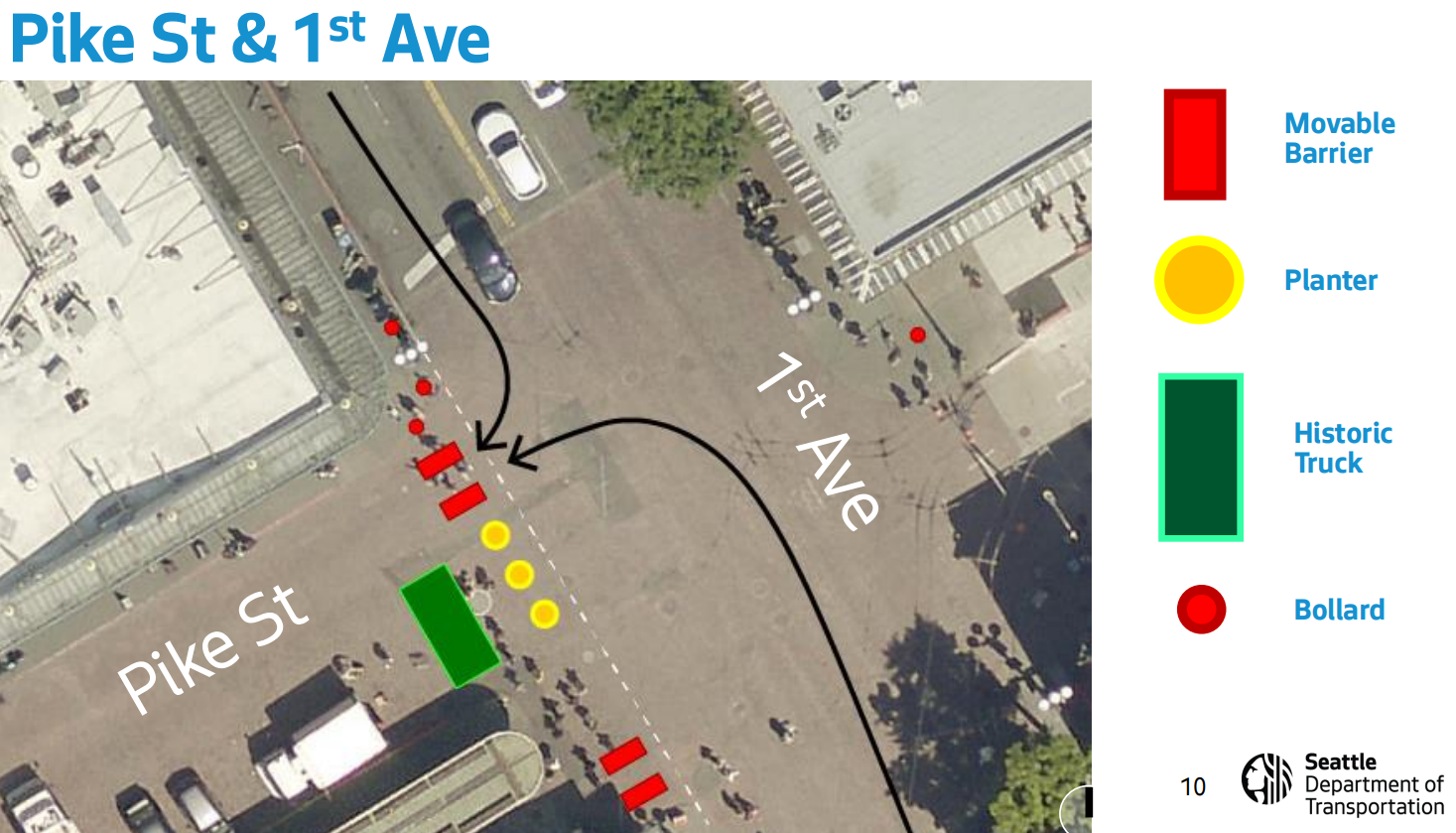
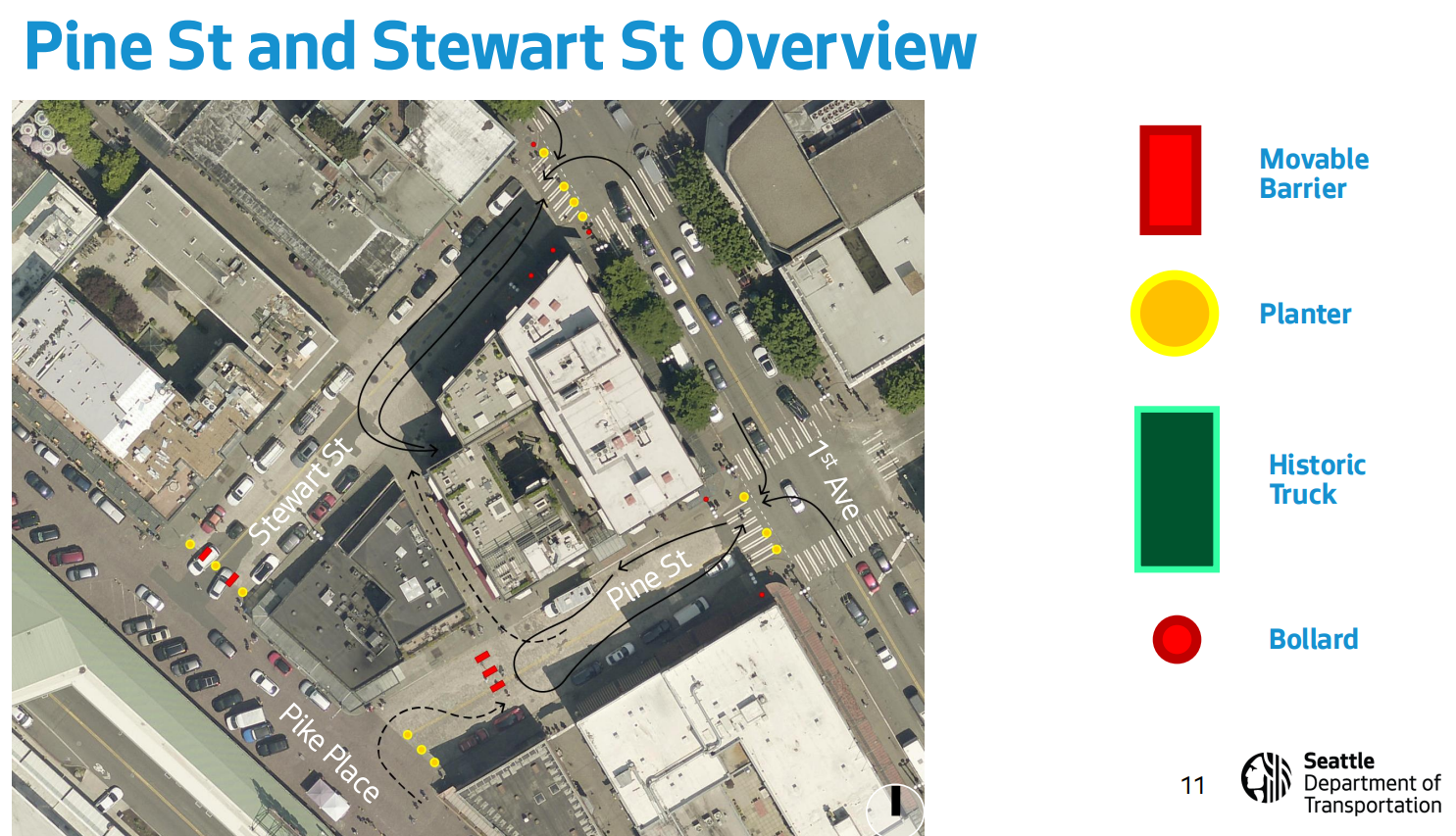
The plan presented Wednesday leans heavily on planters to block off non-essential vehicle access points, fitting in well with the Market atmosphere. Fire and delivery access lanes would be blocked off with barricades that could be more quickly removed: crash rated vehicle barriers like the type that were used to cordon off streets for this week’s Seahawks Super Bowl parade.
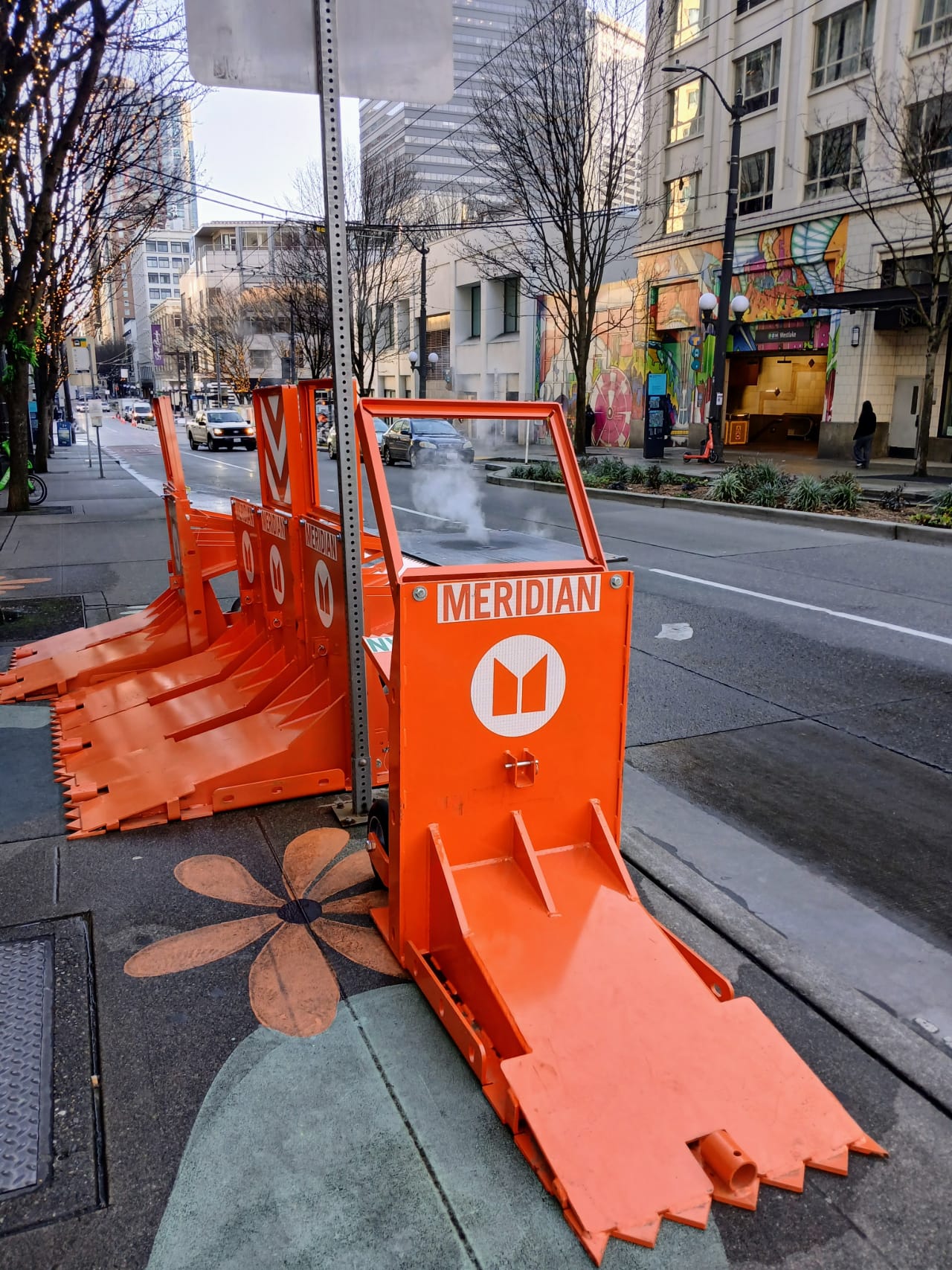
Surface-mounted bollards would be added at the periphery of intersections, at the edge of the sidewalk, to prevent drivers from jumping up onto the sidewalk to avoid those other barricades. Those bollards may end up being the most contentious part of the proposal at the Historical Commission.
“The rest of the Market gets extremely busy. [The sidewalk] is, or it should be, in my mind, a pure pedestrian zone, not for vehicles, not for scooters, and the bollards will impact that,” Commissioner Grace Leong said, in remarks that were echoed by Commissioner Tom Graff. “I still want to get rid of them because they block pedestrian access,” Graff said.
SDOT may be able to achieve its sidewalk protection goals without impacting that sacred space with bollards that are further into the street, but that could impact parking or travel lanes. No one on the Historical Commission, which controls half of First Avenue out into the middle of the street, brought up this potential option.
Many folks who hold differing opinions on vehicle access would love to see retractable bollards that can rise and lower for delivery vehicles — in place elsewhere at places like Seattle Center — allowing much greater flexibility around who can be let in at any given time. But those aren’t on the table…yet.
“Part of that is the dance between what is a long term solution and what we could accomplish this year,” SDOT’s Matt Beaulieu told the Commission. “In preparation for World Cup, we can’t physically construct retractable bollards in time for World Cup. When our time period moves out, they become feasible.”
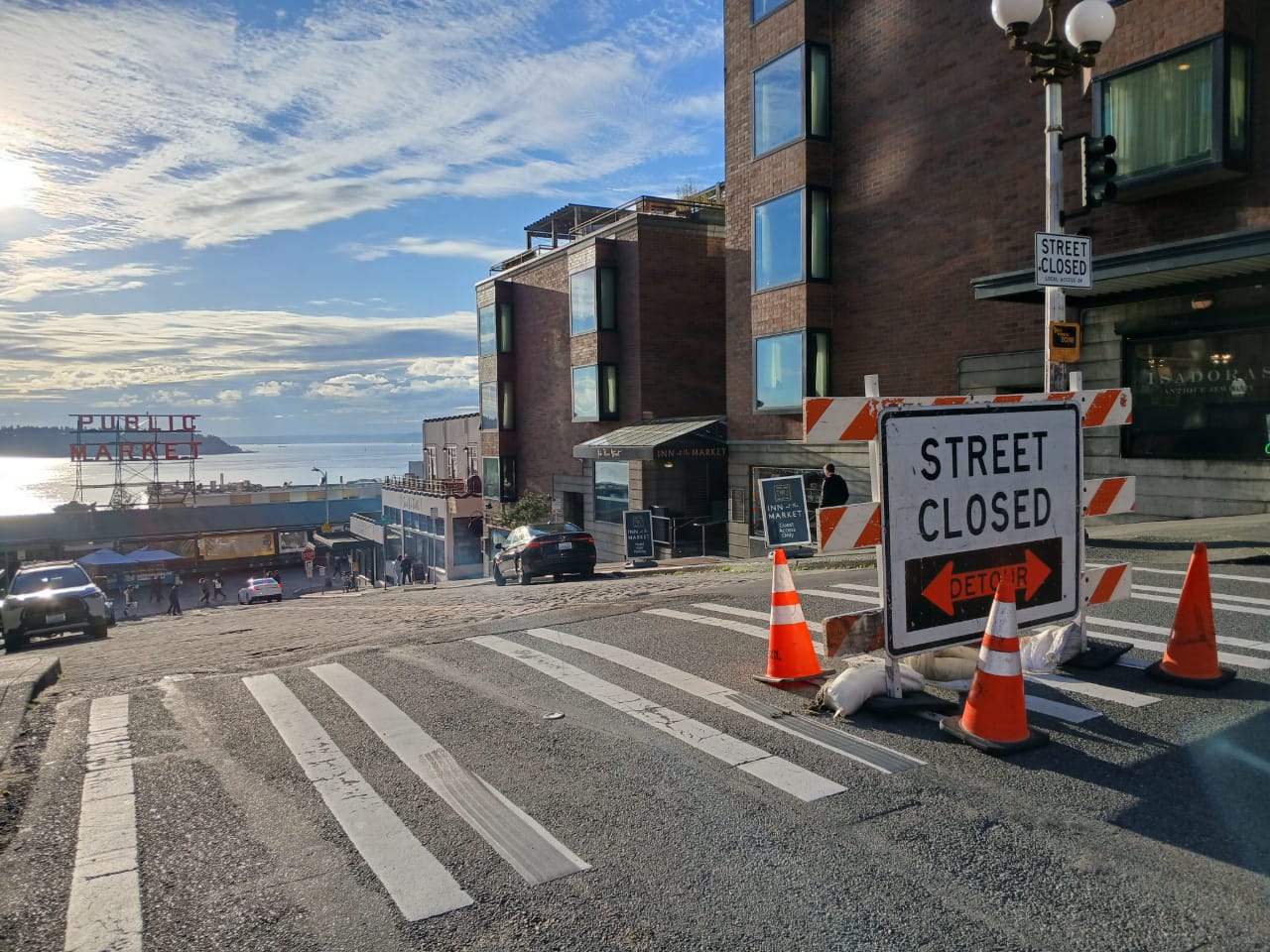
Another point of contention Wednesday was the signage SDOT plans to install at Market entrances, specifically the need to add “street closed” language to prohibit general purpose vehicles from entering. Despite the fact that Pike Place is one of the few places in Seattle where city code explicitly allows pedestrians to cross anywhere without falling under “jaywalking statutes”, that fact remains in conflict with state law, hence this proposed signage that allows the street to open for broader uses.
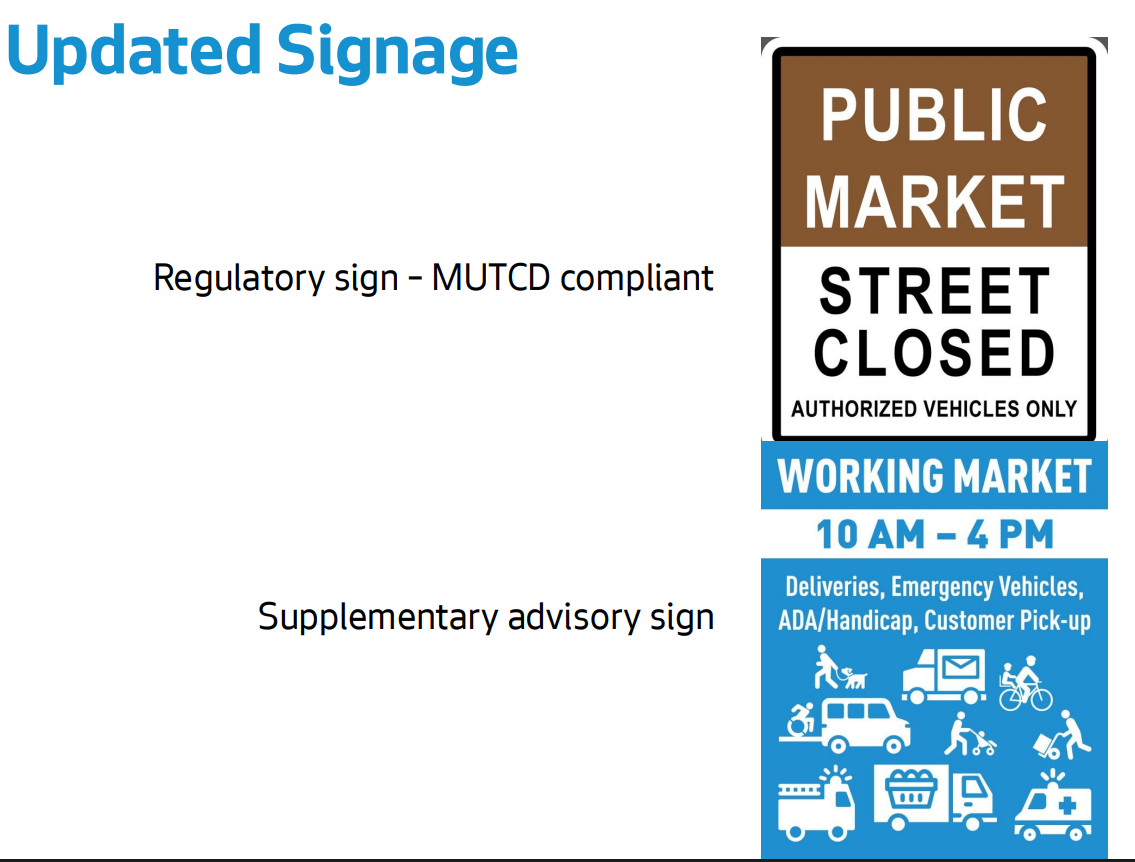
That will likely change when Seattle takes advantage of a new state law, SB 5595, allowing cities to designate “shared streets” with lower speed limits where pedestrians have priority over other road users. Pike Place is a natural fit for such a designation, but authorizing legislation is held up within SDOT despite a budget amendment advanced last year by Councilmember Dan Strauss.
“We’re actively working to bring that proposal back to Council. We are not scheduled to go in front of Council yet, and based on what we’ve heard from Council, they are very excited to have that about two months ago,” Beaulieu said. “We’re really working towards it, and we’d like to be able to say, ‘Oh, we’re going to have it before World Cup.’ I can’t promise that.”
With such a quick timeline for implementation, some elements of this spring’s barricade installation look to fall short of what many people would love to see at Pike Place. But trying out something — with the ultimate goal of ensuring that a catastrophic incident doesn’t take place as Seattle prepares to host one of its biggest events ever — will ultimately represent a big step forward for the Market.