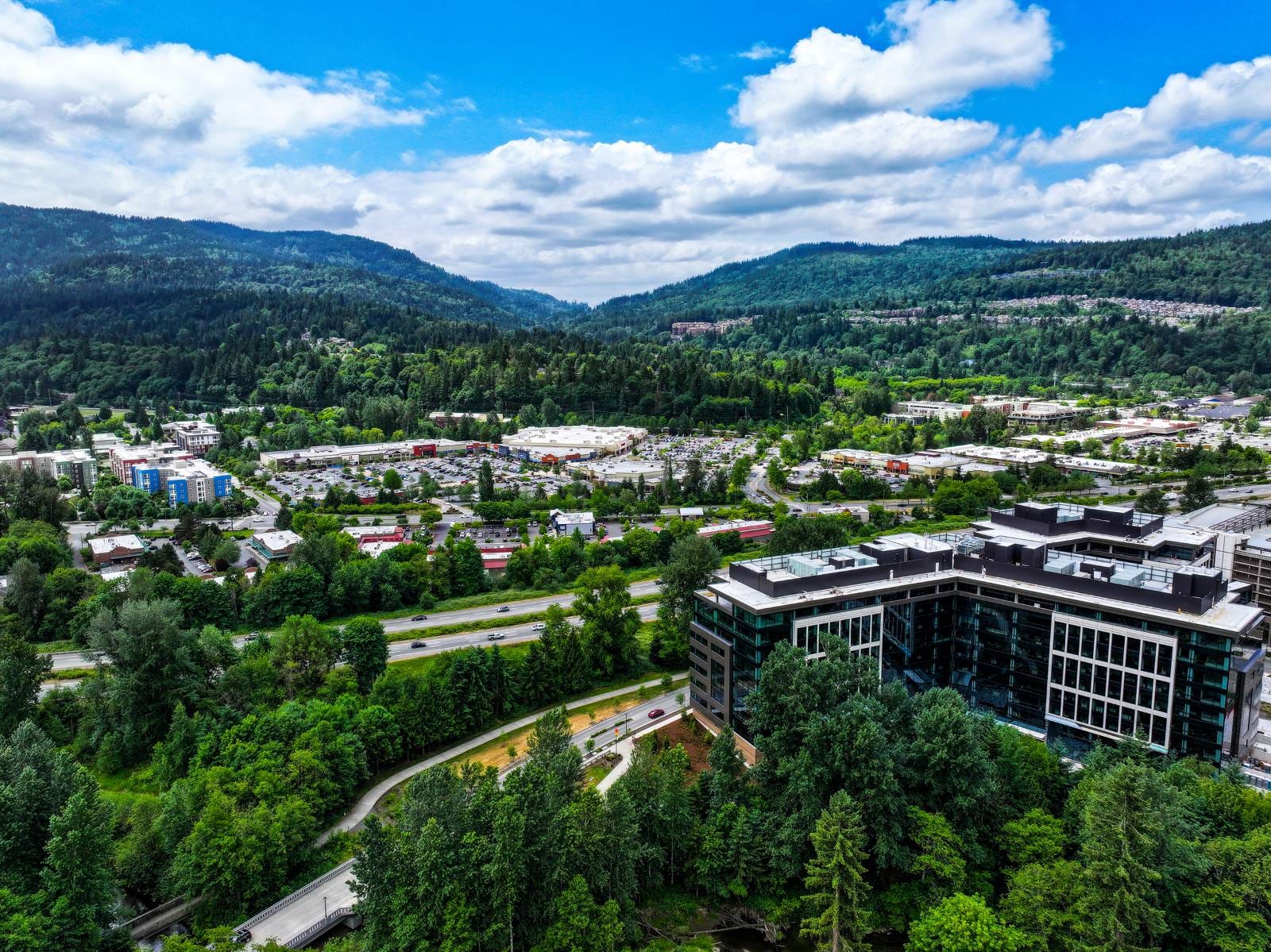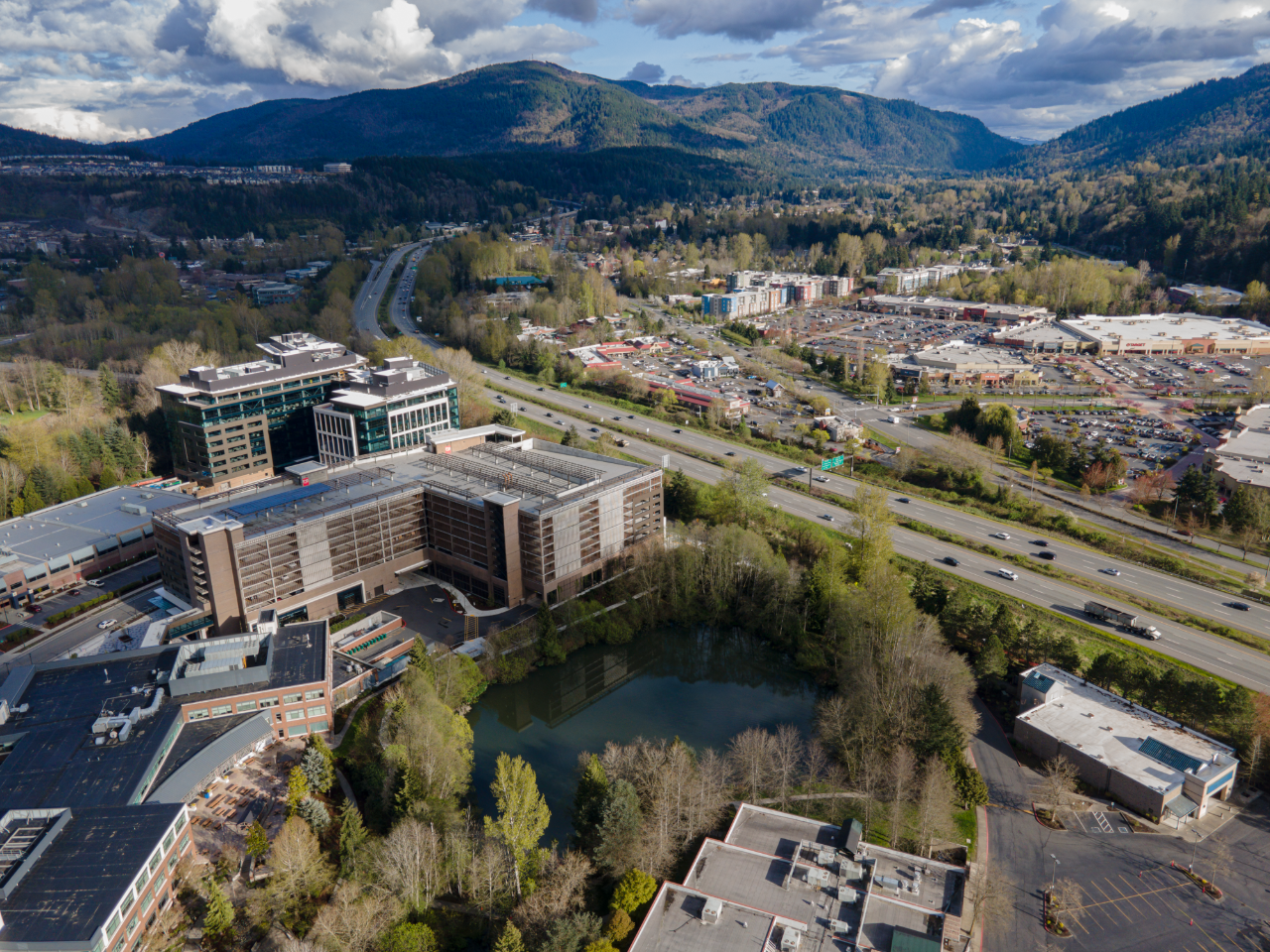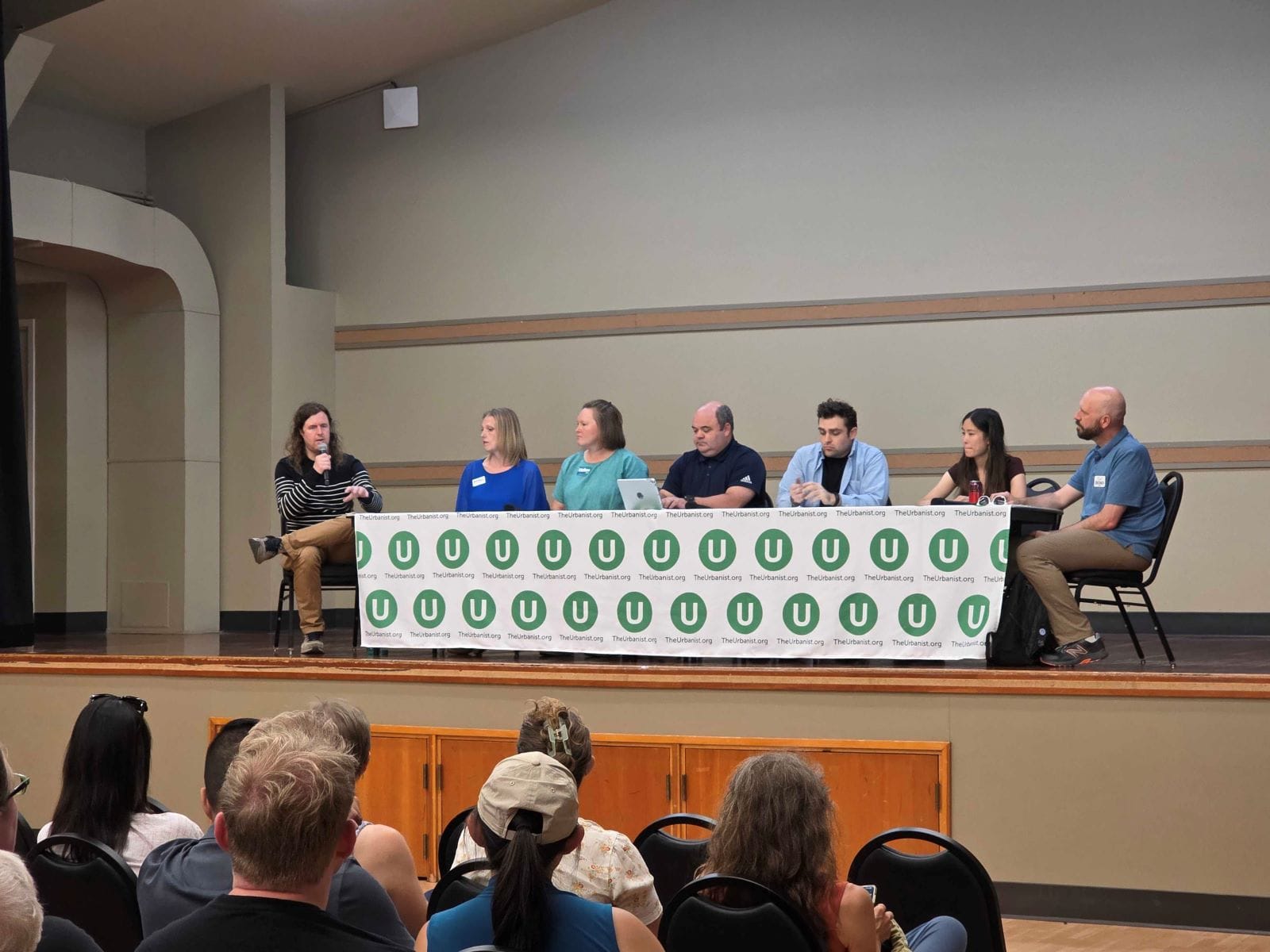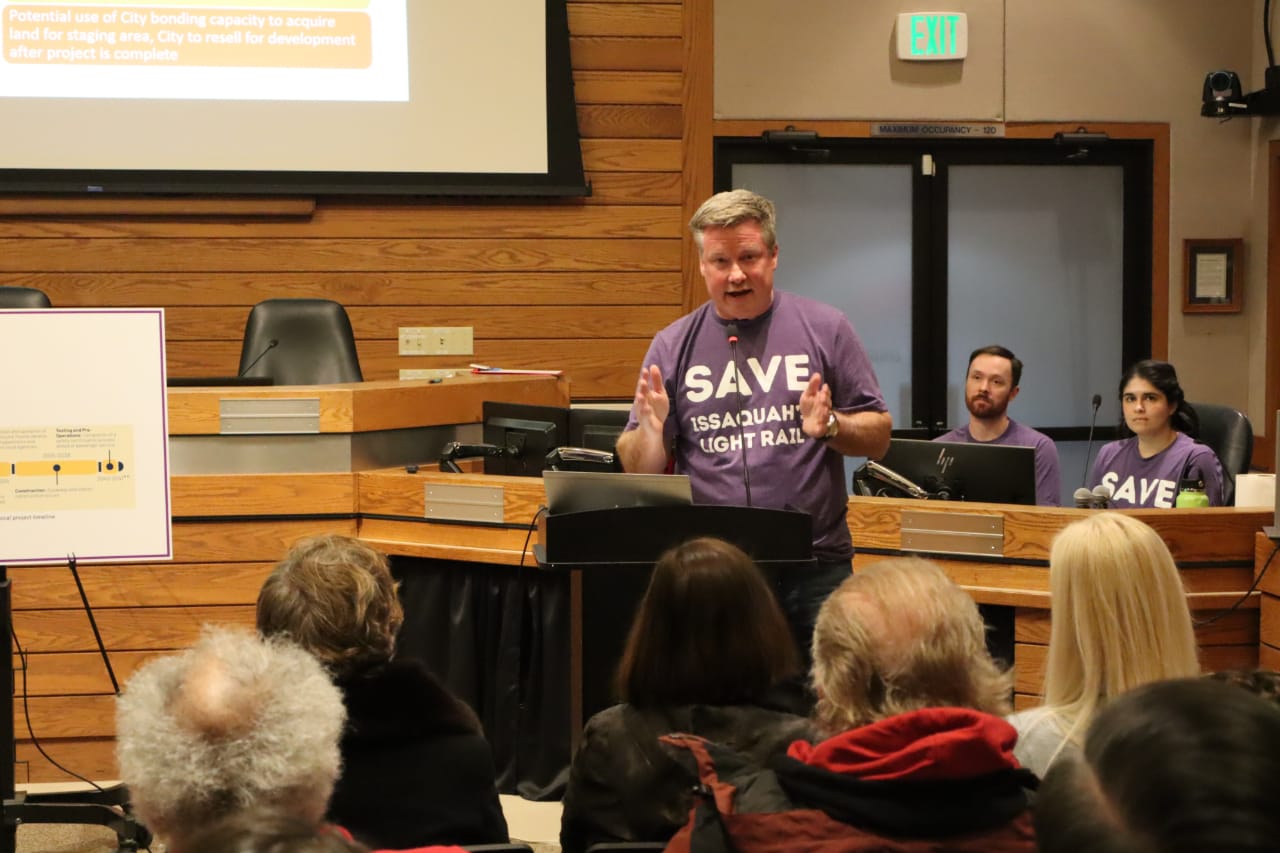
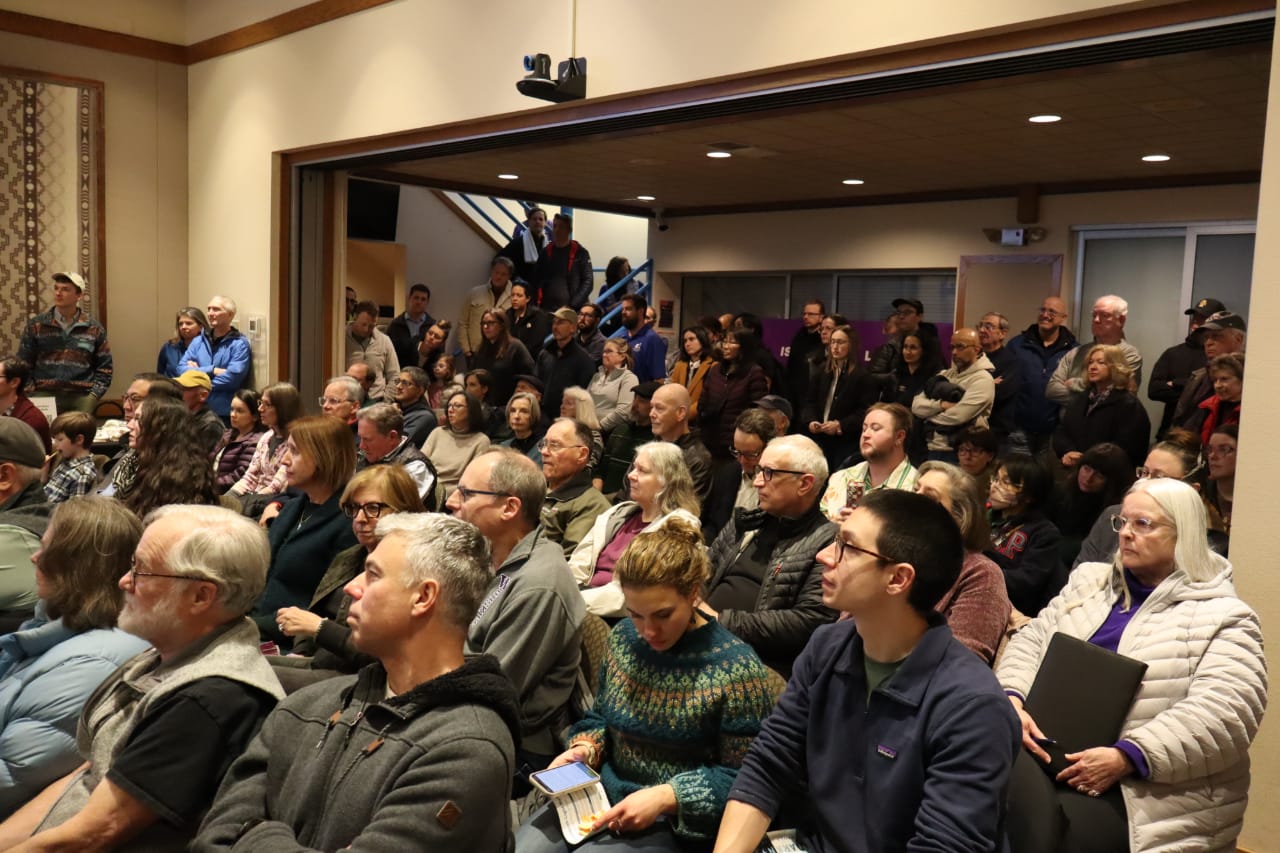
More than 100 people jammed into Issaquah City Council chambers Tuesday night to show support for building the city’s connection to the regional light rail network, in the face of potential budget cuts at Sound Transit this spring. The crowd attending the “Save Issaquah Light Rail” community meeting, hosted by incoming Mayor Mark Mullet, spilled into the reception area and up a stairwell, nearly reaching full capacity.
Issaquah’s light rail station, the last stop on the future 4 Line extending to South Kirkland on its other end, was approved by voters in 2016 as part of the Sound Transit 3 (ST3) ballot measure. Originally slated to be completed by 2041, that timeline has since slipped to 2044. City officials are now voicing concerns about additional delays or even potential changes to the scope of the project, as Sound Transit tries to grapple with a $34 billion budget shortfall within its long-range financial plan.
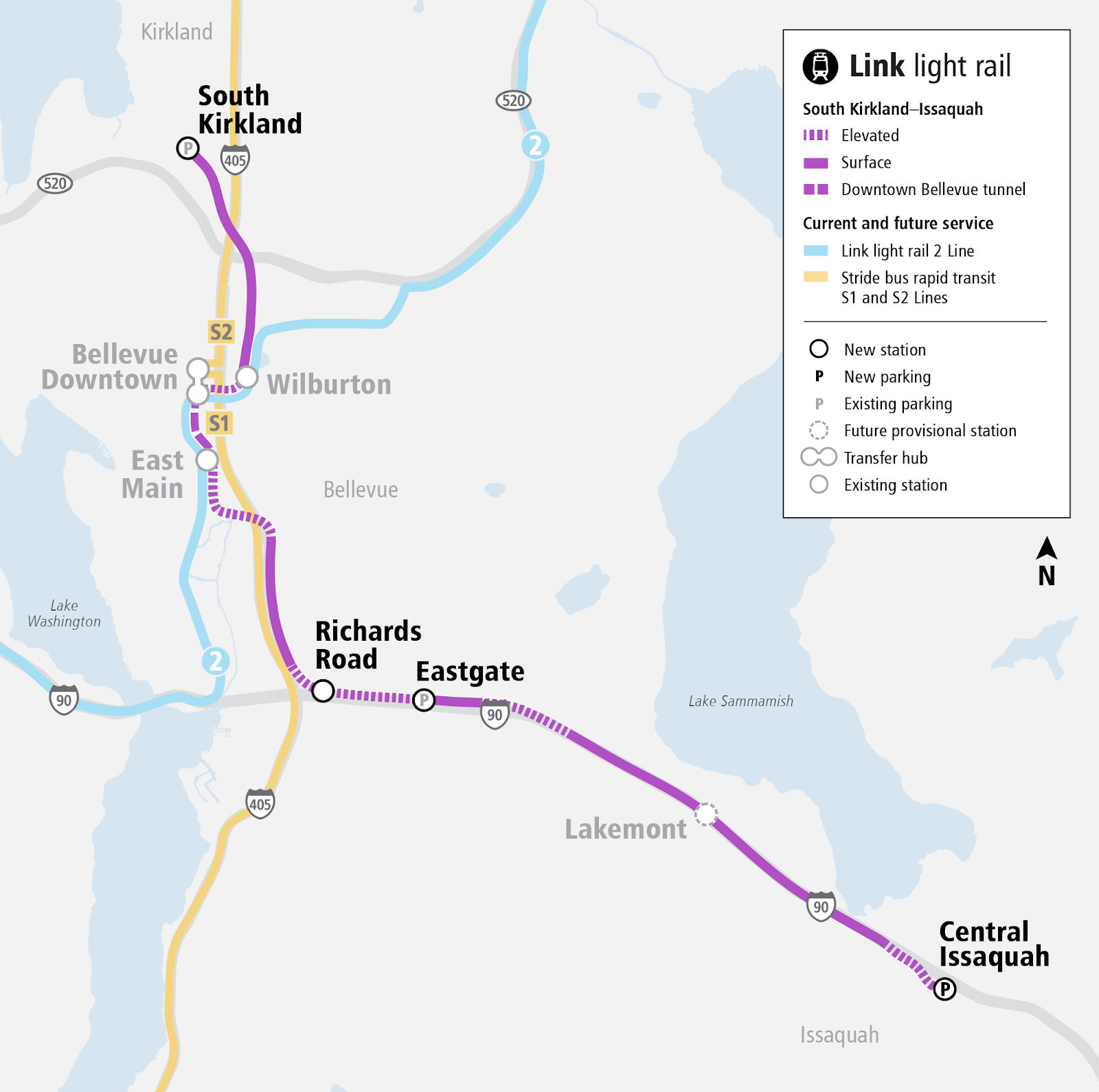
Wearing a custom purple t-shirt — the color designating the 4 Line on current plan maps — Mullet tried to galvanize the support of the crowd, framing light rail as an opportunity that the entire Eastside can’t let fall by the wayside.
“I know for a lot of people who live in the Seattle area, we might be an afterthought, but this is the best chance we will have in our lifetimes to end the transit desert in East King County,” Mullet said. “I worked in London for five years, in New York City for five years. Transit gives you the opportunity to create really vibrant, walkable retail villages. And this is the opportunity we have right now, in this I-90 corridor, both north and south, to create something magical in Issaquah.”
A former State Senator, Mullet won a race to become Issaquah’s Mayor after an unsuccessful gubernatorial run in 2024, trying to carve out a moderate lane statewide and garnering just over 6% of the vote. It was a return to local government for Mullet, who has served on the Issaquah City Council from 2009 to 2012. Since taking office last month, he has turned a focus on light rail into a top priority.
In an op-ed this week in The Urbanist, Councilmembers Kelly Jiang and Kevin Nichols joined Mullet to lay out a path that they think could lead to Issaquah’s light rail line being built more cheaply and efficiently, by ditching planned parking garages, utilizing public right-of-way along I-90, and connecting more directly to the existing 2 Line at South Bellevue. And they made the case that Sound Transit’s ridership forecasts, very modest in comparison to other ST3 lines, aren’t taking into account Issaquah’s full potential.
“Ridership projections for the corridor are based on moderate extrapolations from today’s land use and ridership areas: the big-box stores, the parking lots, the office parks,” the three elected officials wrote. “However, infrastructure is generational. The question is not what Central Issaquah alone looks like now. It is what the Eastside overall looks like in 50 to 100 years with this connection versus without it.”
Advocacy is not stopping at Tuesday’s meeting. Direct visits to Sound Transit board meetings from area residents via a city-funded shuttle are planned next over the coming weeks, with free T-shirts handed out to any resident planning to testify. The board’s March 18 retreat was noted as a red-letter date, though public comment likely won’t be accepted at that all-day strategy session, where board members are expected to truly start to grapple with the “building blocks” that will determine the future of light rail in the region.
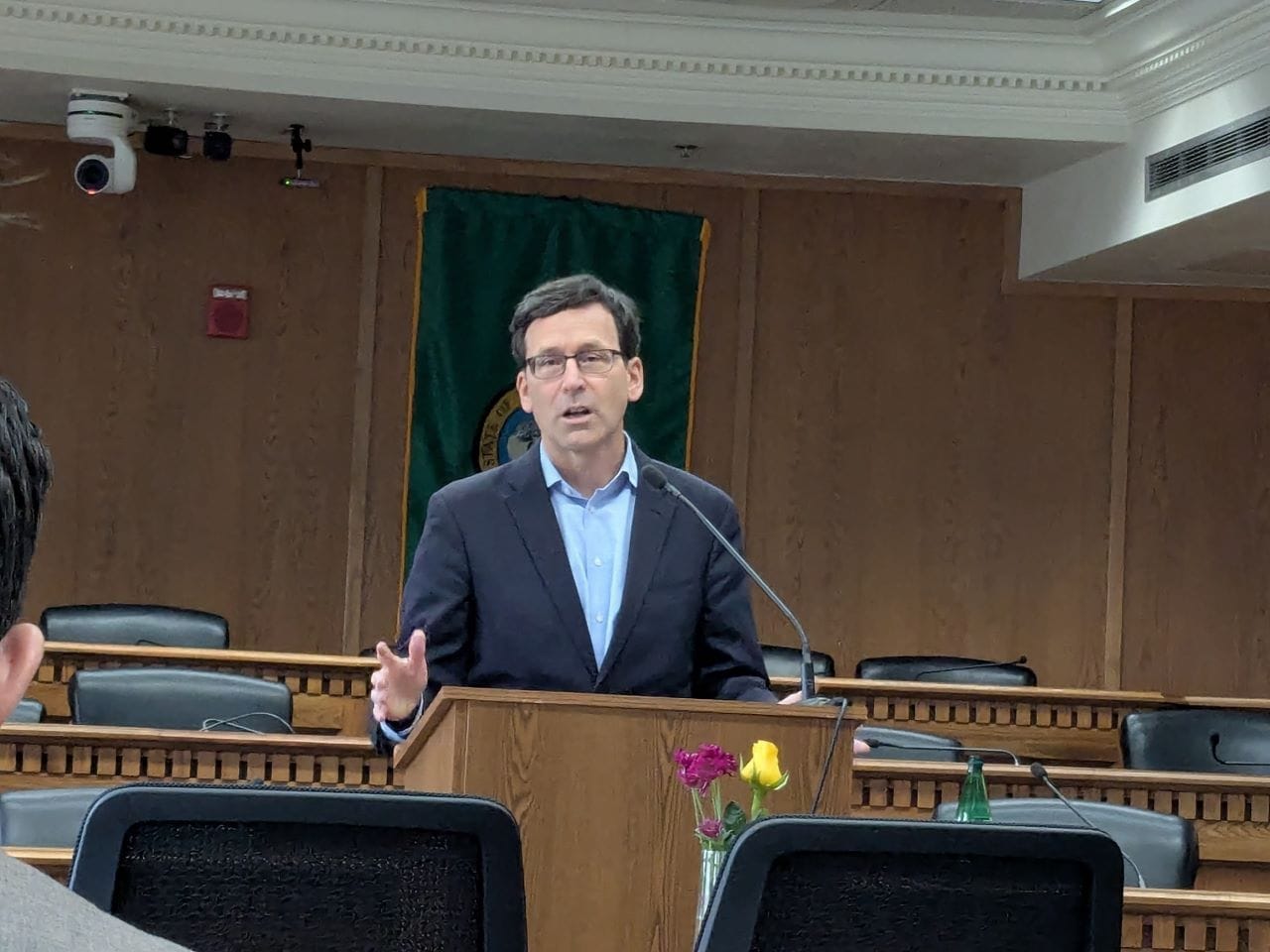
Tuesday’s event was kicked off by Fred Butler, Issaquah’s former Mayor and a member of the Sound Transit board from 2003 to 2017. As chair of the board’s Capital Committee, the predecessor of today’s System Expansion Committee, Butler is credited with securing Issaquah’s place in the ST3 plan. Today, Issaquah has no direct representation on the Sound Transit board, with Renton Councilmember Ed Prince and Redmond Mayor Angela Birney representing Eastside cities, alongside County Councilmember Claudia Balducci.
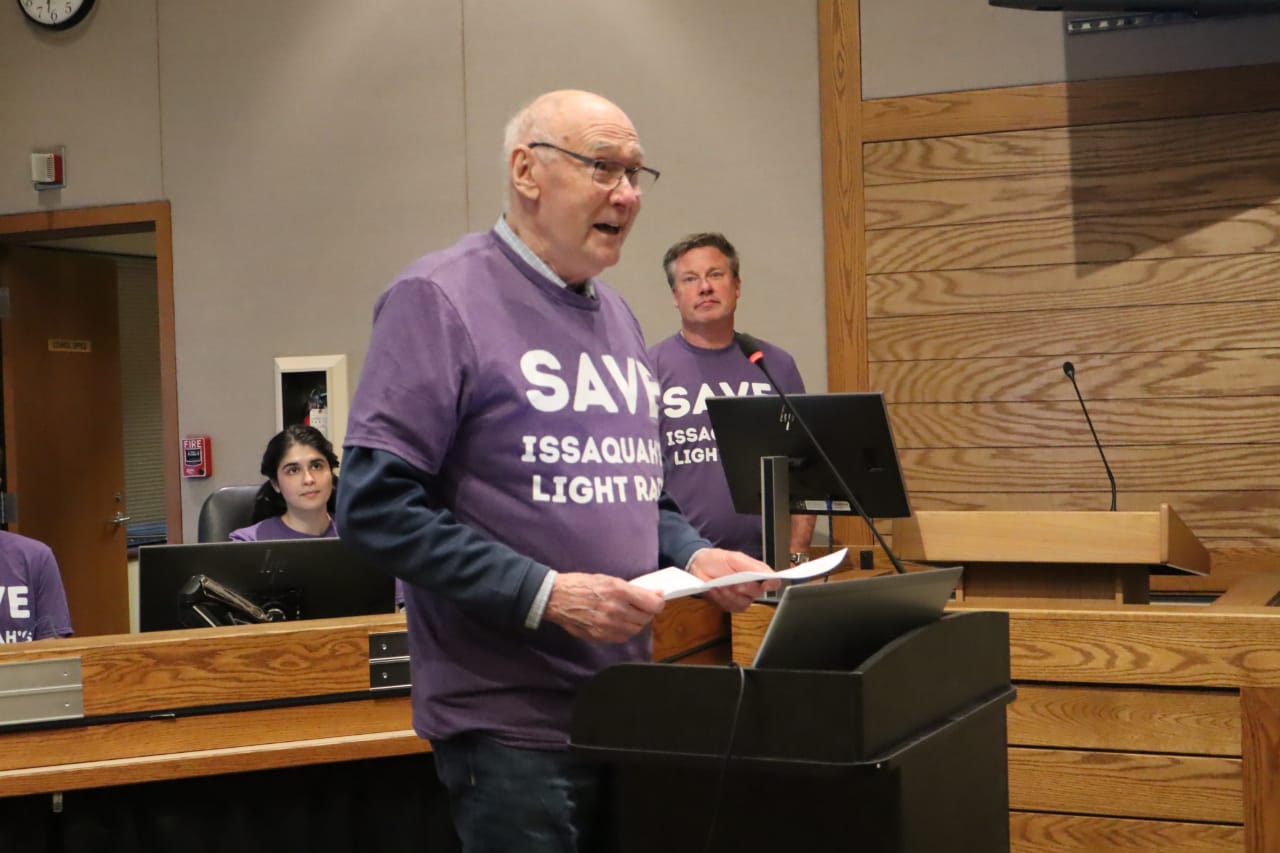
“A light rail station in Issaquah, where our growth is projected to be, will serve as a transit hub for our neighbors east, south, north and west, east for North Bend and Snoqualmie, south to Maple Valley and those communities — certainly to Issaquah, where Costco international headquarters is located, and to Bellevue College, where a lot of our residents and students go for Running Start and other programs,” Butler told the crowd. “Many of those communities that I mentioned are really transit deserts, but light rail would provide the opportunity to provide transit to those communities and to bring them to the transit hub located in the central part of our city. Light rail to Issaquah will really connect all of us to the regional light rail system.”
Mullet has stated that he remains neutral on the issue of the 4 Line’s other end, an independent spur between Wilburton Station in Bellevue and South Kirkland. But his advocacy is drawing notice on the shores of Lake Washington, with Mayor Kelli Curtis writing Mullet on February 17 to express “strong concerns.”
“[A]ny discussion about altering project scopes should be grounded in a process that genuinely reflects broad regional priorities and maintains the integrity of system connectivity approved by voters. If Sound Transit must evaluate project changes, the region should work collaboratively to ensure such changes still meet the collective needs of the region,” Curtis wrote. “To that end, Kirkland cannot support a proposal that would terminate the 4 Line in South Bellevue and eliminate direct connections to Downtown Bellevue and South Kirkland. Truncating the line in that manner would materially diminish network performance and diverge from what voters approved.”
Curtis’s letter demonstrates how quickly local advocacy can turn into negotiations with nearby cities who are also eager to see light rail brought to their communities. Ten years ago, Kirkland residents fought against the idea of a direct transit connection to Kirkland’s growth centers being included in the ST3 plan, as city officials pushed for a bus rapid transit plan instead of light rail. The result was a light rail station that barely enters into the city, with Kirkland’s growth plans relying much more on the planned Stride line along I-405 with stops at NE 85th Street, Totem Lake, and Brickyard Park and Ride.
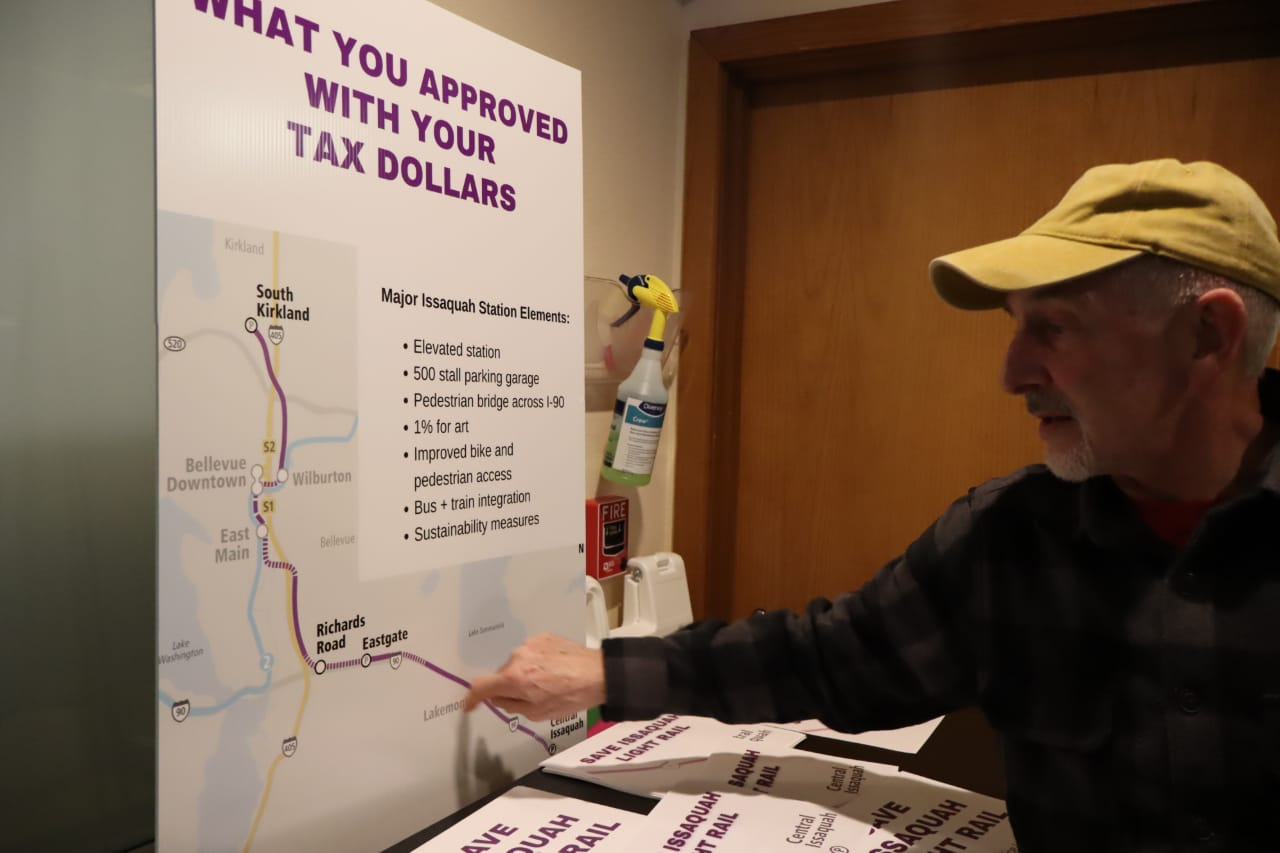
“No part of our proposal is suggesting we don’t connect Kirkland to the Bellevue line. We are simply speaking for what we can control – which is how Issaquah can connect to Bellevue at the most efficient point and route – which we think is I-90 right of way and South Bellevue. Nothing in our proposal would impact Kirkland,” Mullet told The Urbanist via a statement. “It would be up to Kirkland to see if they also have ideas on how to lower costs on their leg of the line to connect to Bellevue – we don’t feel comfortable making those suggestions for them. We look forward to working with Kirkland and Bellevue together with Sound Transit in the coming months to develop cost savings ideas and ensure the future alignment addresses the needs of the Eastside.”
While Issaquah’s advocacy may or may not ultimately be enough to push against the significant financial pressures that Sound Transit is facing, it’s clear that the purple shirts will not be going away any time soon.