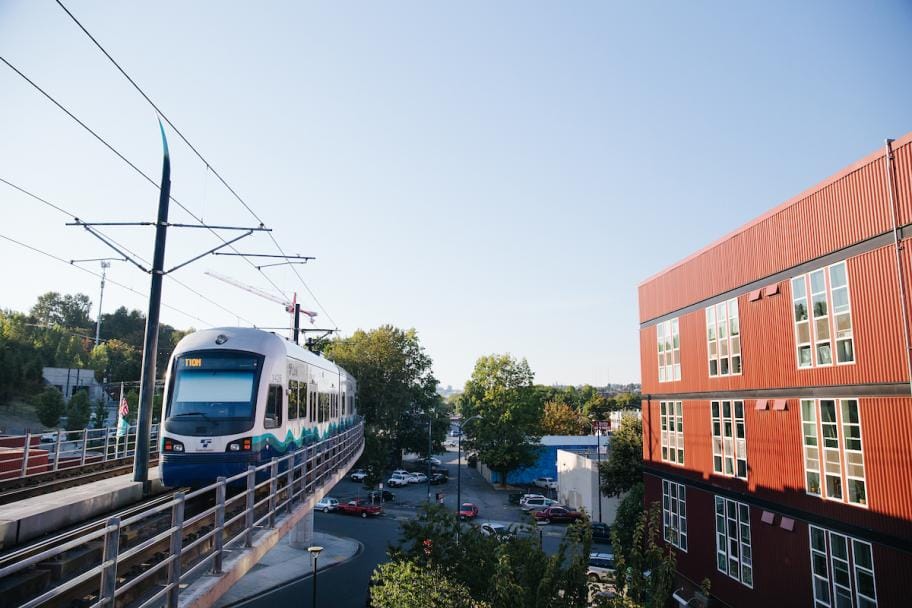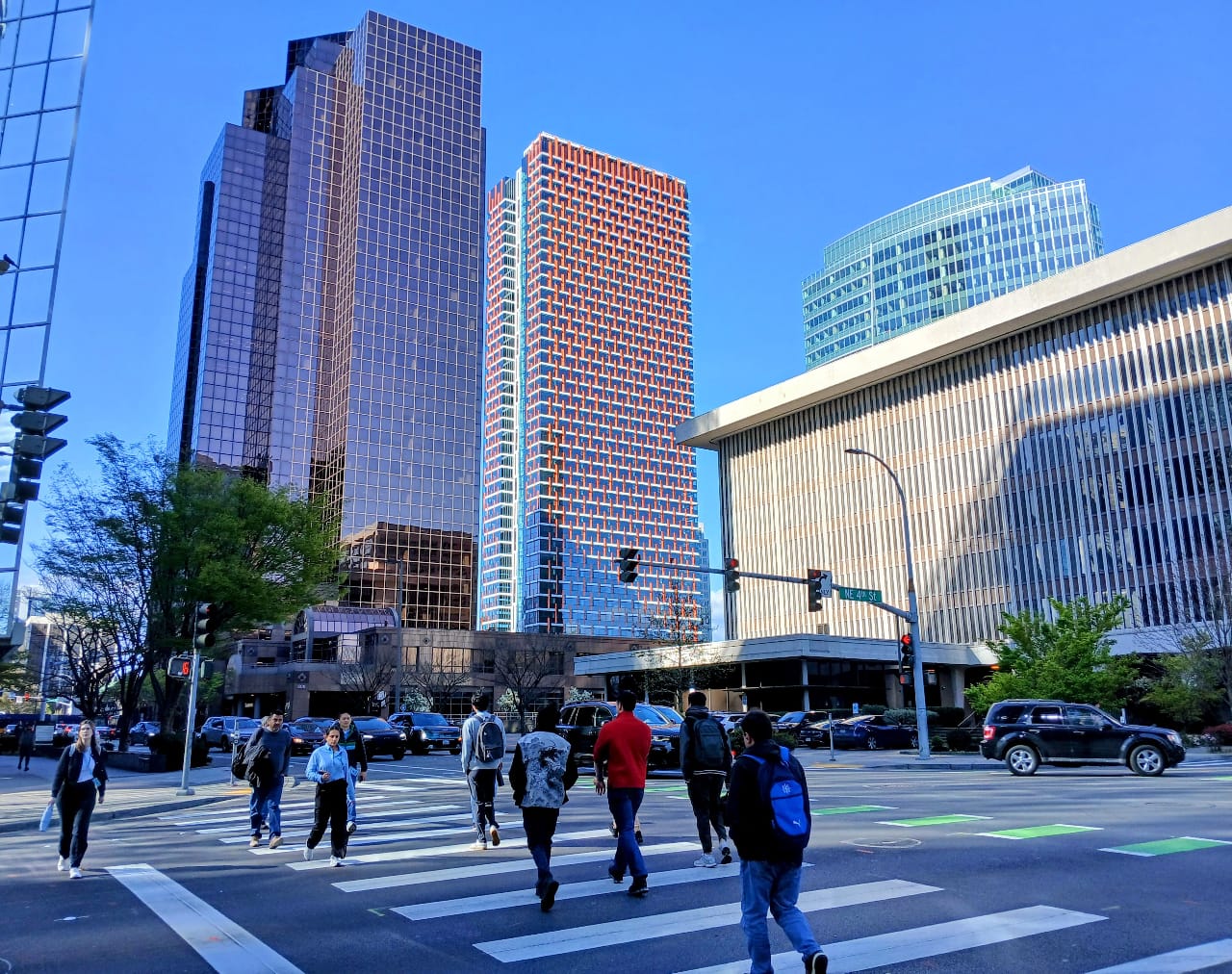
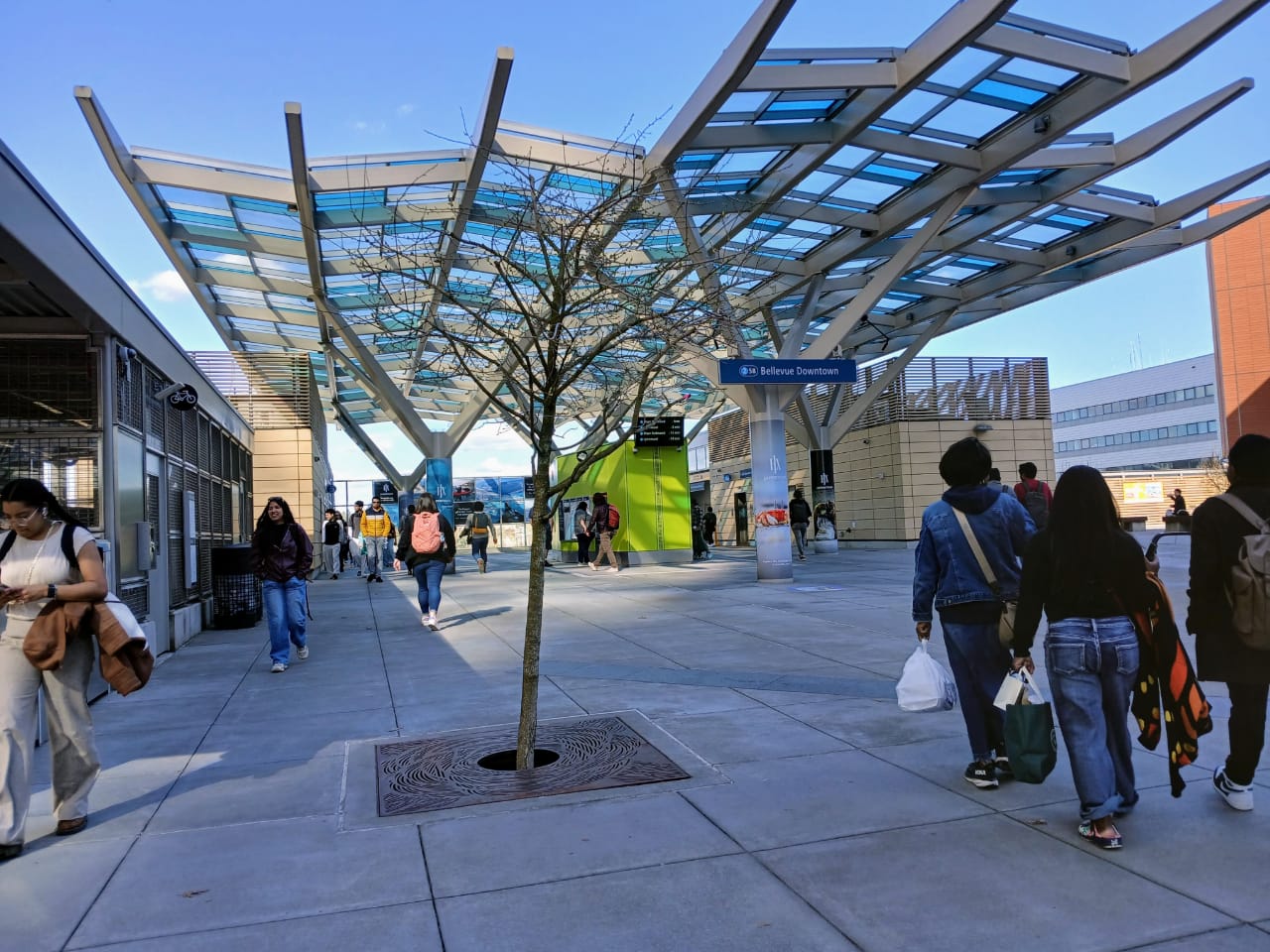
It's been just over two weeks since Sound Transit cut the ribbon on the Crosslake Connection, finally bridging its light rail network across the I-90 floating bridge. But visiting Downtown Bellevue Station at rush hour, you'd be fooled into thinking that a direct light rail connection between Seattle and the Eastside has existed for years.
Unlike with other light rail extensions, where ridership has needed to build over time, 2 Line trains are already packed with folks taking advantage of a 25-minute trip between Bellevue City Hall and Pioneer Square, or a 13-minute trip to Microsoft's Redmond campus.
Fifteen years ago, when the Bellevue City Council was in the throes of fighting with Sound Transit over downtown routing decision and Kemper Freeman was trying to keep light rail off I-90 entirely, it was hard to imagine light rail ever arriving in Bellevue. Now, it's impossible to imagine Bellevue without it.
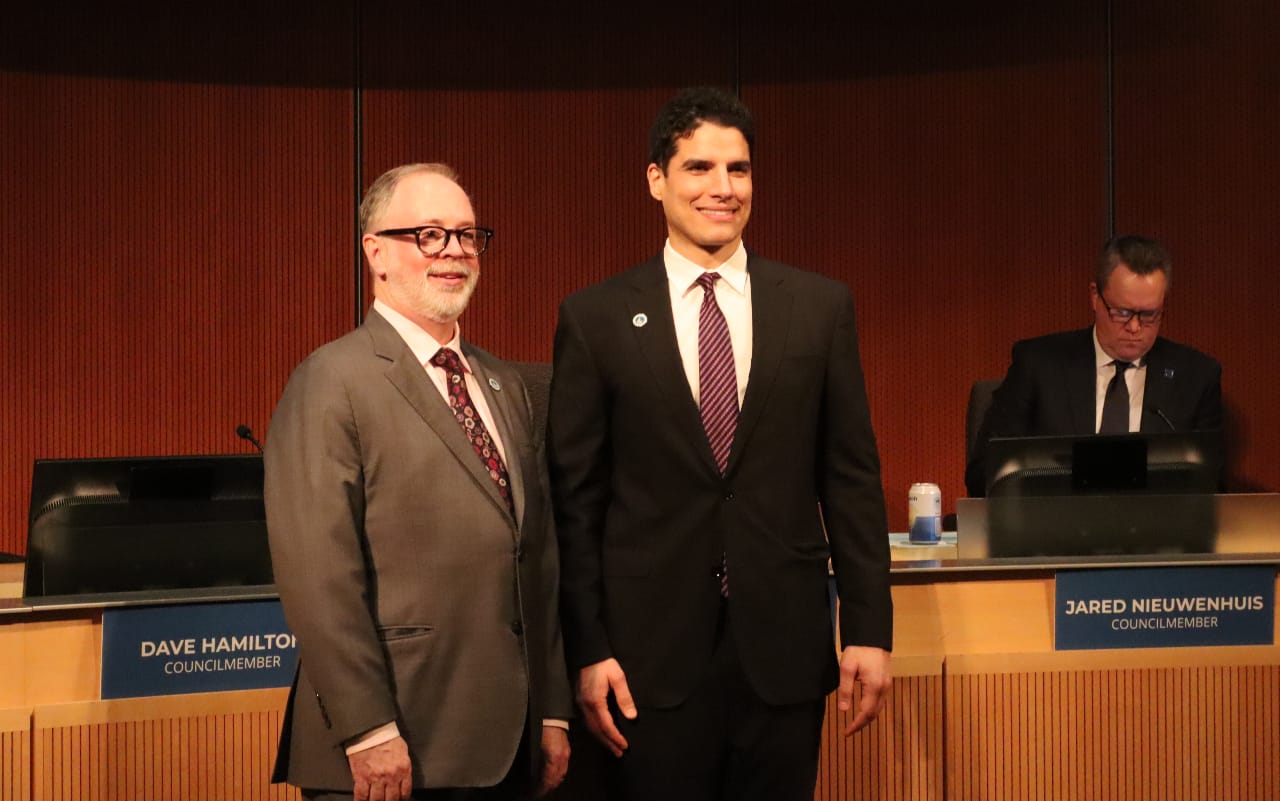
The long-awaited completion of the 2 Line comes as an inflection point for Washington's fifth largest city, a moment of generational transition for a place that has long sat in Seattle's shadow. The Bellevue City Council has seen a wholesale transformation in the span of a few short years, with five out of seven council seats turning over since 2023 through a mix of resignations and contested elections.
Today, a majority of Bellevue's Councilmembers are first or second-generation immigrants, a fact that aligns with the fact that close to half (43.5%) of Bellevue's population is foreign born, according to U.S. Census Department data. In 1990, that number was 13%.
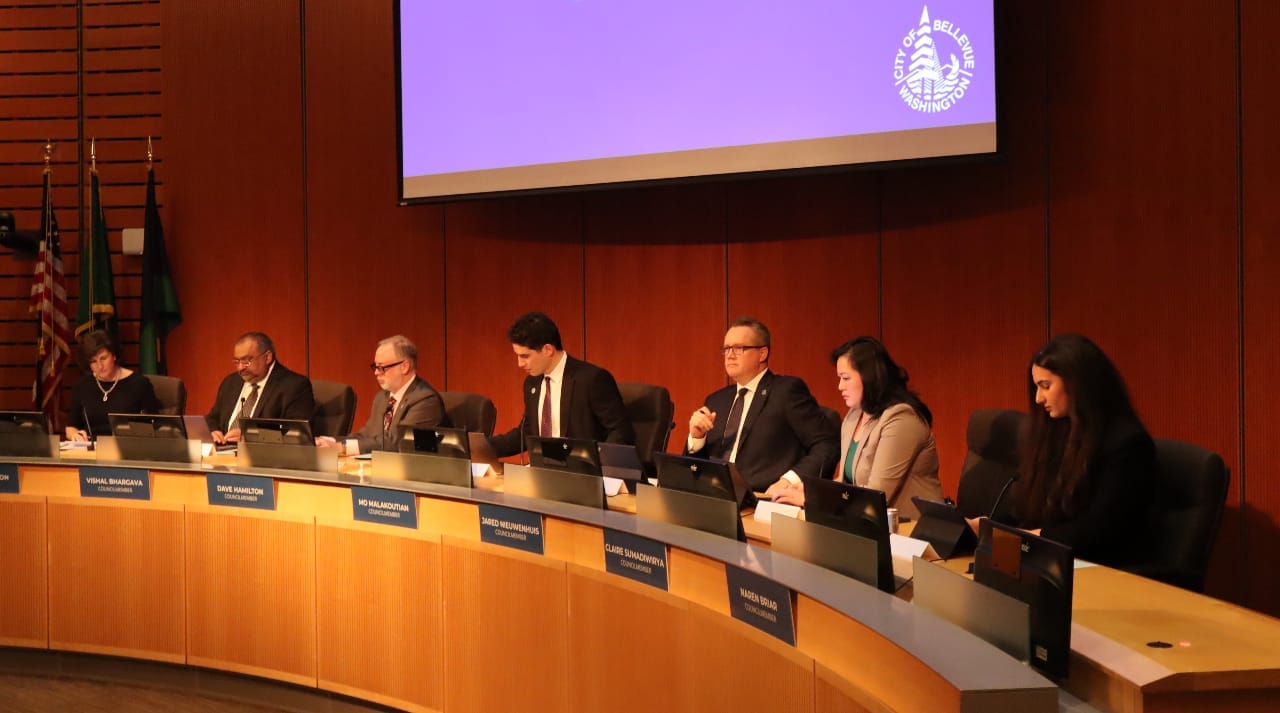
"I think people still think Bellevue is a suburb. Bellevue doesn't even have a downtown. Bellevue doesn't care about density. Bellevue is very wealthy people, old, majority White, and that's not the case," Bellevue Mayor Mo Malakoutian told The Urbanist.
Malakoutian is an associate professor at the University of Washington's Department of Civil & Environmental Engineering who immigrated from Iran in 2008. He joined the council in 2024 and was immediately tapped for the role of Deputy Mayor.
Unlike in cities like Seattle, where the Mayor heads the city's bureaucracy, in Bellevue that work falls to City Manager Diane Carlson, with the Mayor acting as the head of the council. But the passing of the baton from former Mayor Lynne Robinson to Malakoutian earlier this year was a powerful symbol of transition. And the new majority has been putting the topics of walking, biking, and transit at the forefront of civic debate in Bellevue in ways that have never been seen before in a place with a decidedly car-oriented reputation.
"I look at this new council and I feel consciously hopeful," Chris Randels, the Founder and Director of Complete Streets Bellevue (and a former Urbanist contributor) told The Urbanist. "There are still larger forces in Bellevue that have influence, and a kind of organizational culture that continues to guide the city in that direction, but having new people on council does materially change what questions get asked and what topics get discussed as a result. And I look at the new people on council, and in their own varying ways, I see people who bring decent perspectives."
Even before the new wave of elected officials took office in Bellevue, the city had been preparing for significant growth, overhauling its Comprehensive Plan in late 2024 while Seattle was still grinding its gears on the same task. With that plan adopted, the City moved forward with overhauling zoning in areas that are ripe for redevelopment, targeting the Wilburton neighborhood, currently dominated by car dealerships and parking lots, for an urban revitalization.
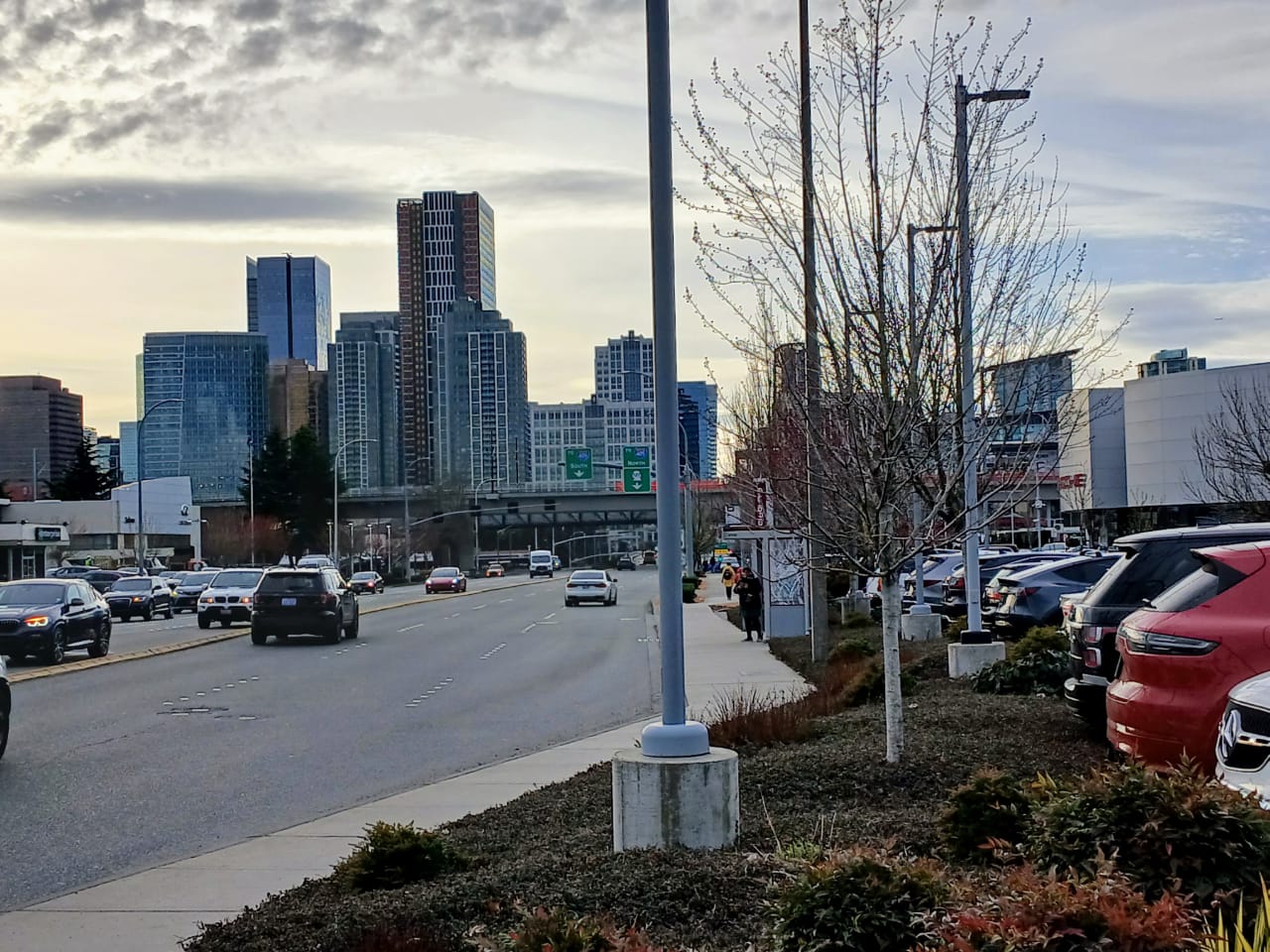
So far, that work appears to be paying dividends. Permit applications have been trickling in that will start to transform Wilburton's large blocks into apartment buildings, including a massive proposal by KG Investment Properties to build a set of twin high-rise towers steps from the Wilburton light rail station. If fully built out, that project would add 3.6 million square feet of commercial and residential space, with a front-loaded food hall in the works to open this summer backed by major players in Seattle's restaurant scene.
Earlier this year, the Council adopted new development standards and height limits that are intended to spur redevelopment of Bellevue's long-underdeveloped commercial centers, places like the Newport Hill and Kelsey Creek shopping centers. Next up: a zoning overhaul in BelRed. Even ahead of that rezone, more than 3,500 new homes have been built or permitted in BelRed since 2017.
"We are doing more housing near transit because we cannot have this many cars with this growth. That's not sustainable," Malakoutian said. "I always say we need to do two things, make all of these cars move more efficiently, but also bring different multimodal transportation, move people out of their cars, on their feet, on their bike, on public transportation, and of course, more housing near transit is the key to that. More mixed-use neighborhood centers. We don't want people to get to their car and drive even three miles for a grocery store."
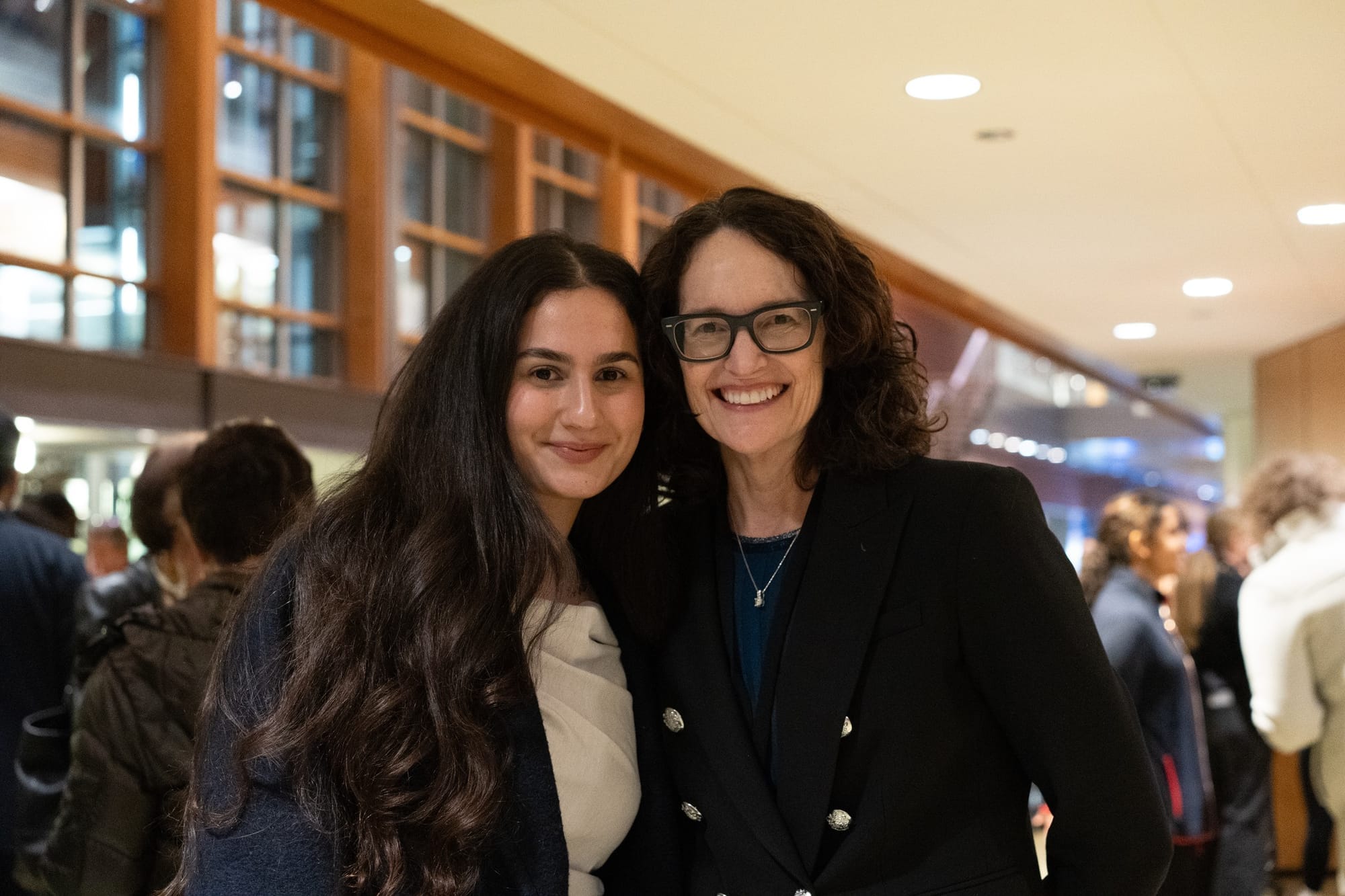
When she defeated eight-term incumbent Conrad Lee last fall, Naren Briar became both the youngest person ever elected to the Bellevue City Council and the first Kurdish-American elected to local office nationwide. Like Malakoutian. she sees her city as being on the cusp of becoming more multimodal, aided by light rail's full arrival.
"When I started my campaign, I believed, and I still believe, that Bellevue is at an inflection point, especially as we're seeing the Crosslake Connection happen. The city dedicated itself to long-range planning. This has been in the works for decades now, so setting this like infrastructure up, I think, is going to make Bellevue finally, more accessible, walkable, competitive. It really sets us up for just a successful future."
Despite the lofty ambitions expressed by its new leaders, Bellevue still has one foot firmly planted in a suburban mindset. This was most evident last year, when the council approved new zoning allowing some forms of "middle housing" within formerly single-family areas, taking an ambitious proposal that had already been watered down by Bellevue's planning commission and watering it down even more.
"From my point of view, nothing is really changing in Bellevue," Bellevue resident Valentina Vaneeva told The Urbanist. Vaneeva is a regular council commenter in favor of added bike infrastructure and broader housing options, and a fixture at meetings at City Hall. "We have new councilmembers, and I hope there will be some change coming, but I don't see it yet, and I hope that this is because the councilmembers are pretty new."
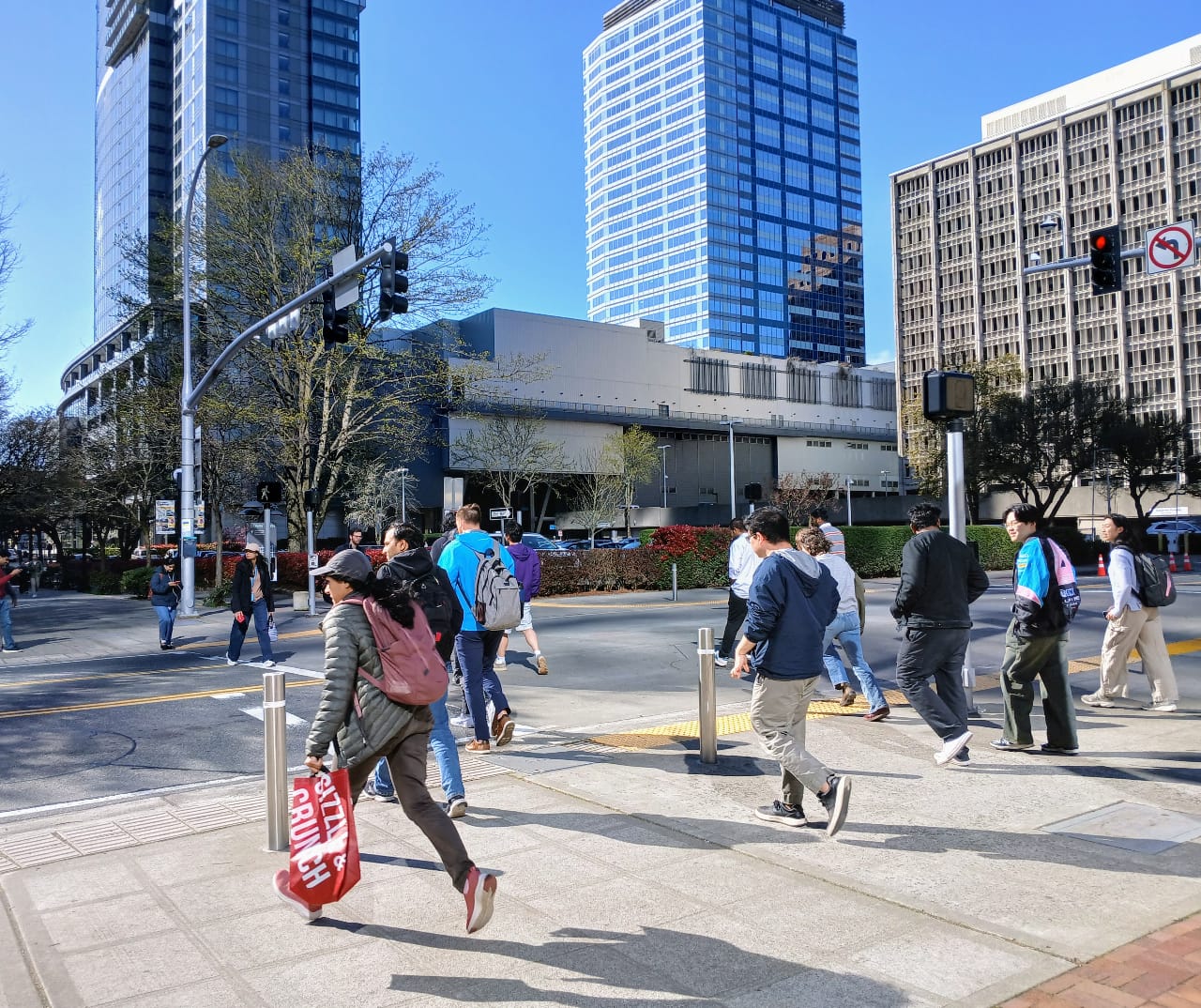
Vaneeva acknowledges a rapid pace of change within areas close to downtown, but notes that the rest of the city has mostly been locked in amber.
"I think why some people say that Bellevue is changing and changing quickly is because they live in a part of Bellevue that is actually changing. If you go to downtown, you will see, definitely in the last like three or four years, it has changed very much," Vaneeva said. "This is not true, absolutely not true, of anywhere else in Bellevue. The largest piece of Bellevue is still where it was 20 years ago. The future is coming, It's just not evenly distributed."
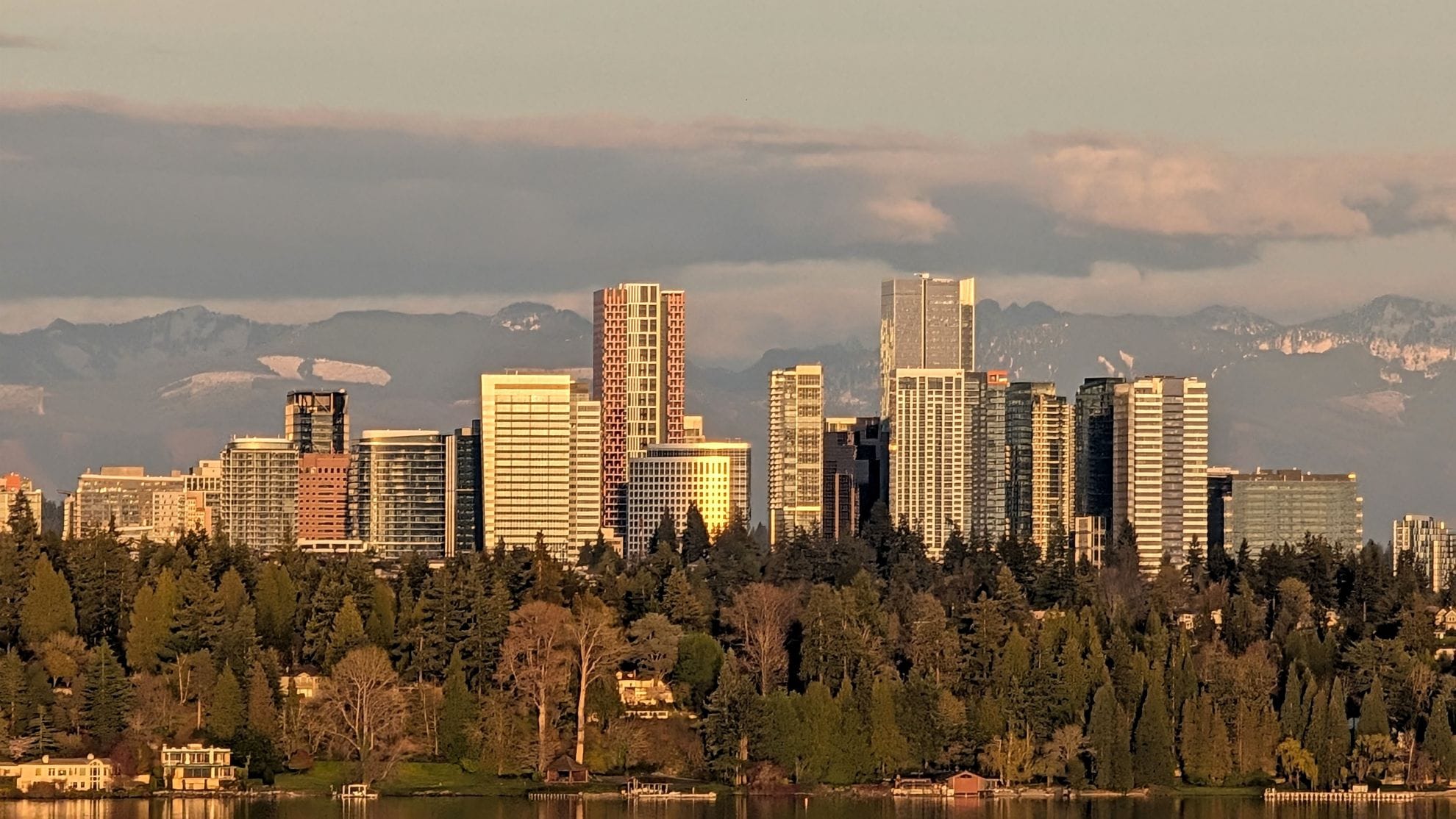
At The Urbanist's last count, Downtown Bellevue had 14,000 homes either recently built or in the development pipeline, with an increasing focus on residential towers. Meanwhile, the Spring District (also next door to a 2 Line station) has 2,000 homes and four million square feet of office space added or in the pipeline.
Significant work remains to make it easier to get around Bellevue without a car. Randels, who had a front-row seat to the slow dismantling of the ambitious Bike Bellevue plan under a prior city council, sees an opportunity to chart a better path, but acknowledges that it will hinge in large part on Bellevue's unelected leaders, including City Manager Diane Carlson.
"I think, honestly, with this new council, this will be an opportunity for her to showcase what type of leader she is going to be – if she is going to embody the Bellevue organizational culture of that drip, drip of city progress and not rocking the boat too much, no boldness," Randels said. "Or whether she might be willing to take what Council gives her in terms of leading the city in a better direction."
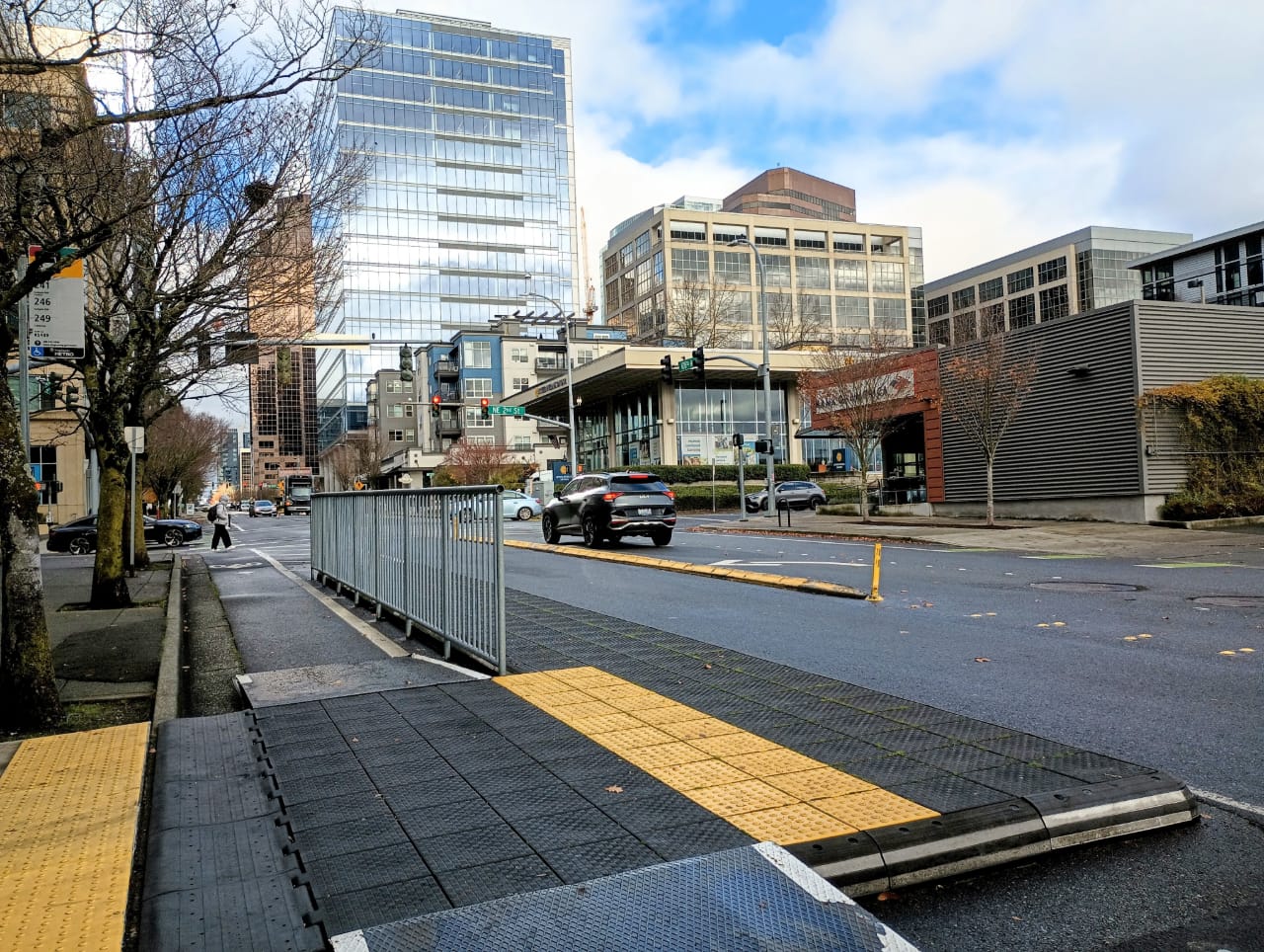
The so-called "Bellevue Way" – a shorthand for a need to find a consensus that doesn't stray too far from the status quo – will remain a barrier for even the most progressive Bellevue Council. But for Briar, the transition of decision-making toward the next generation of Bellevue residents and workers can't be discounted.
"You propose something today and it might be implemented in the next 10, 15, years," Briar said. "So to have someone on the dais that's helping crafting policies, alongside my colleagues... I get to represent a generation that's excited about transit and walkability and safety. It's an immense privilege to be able to do this work."
One thing everyone can agree on: light rail will take center stage in Bellevue's future.
"You have these neighborhoods that are connected with the whole region, it's a net boon for everybody," Randels said. "I think having those nexuses of opportunity and housing connected with Seattle on a one-seat ride is huge in a way that I don't think people have fully grokked yet."
 Cosmos Darwin (Guest Contributor)
 Ryan Packer