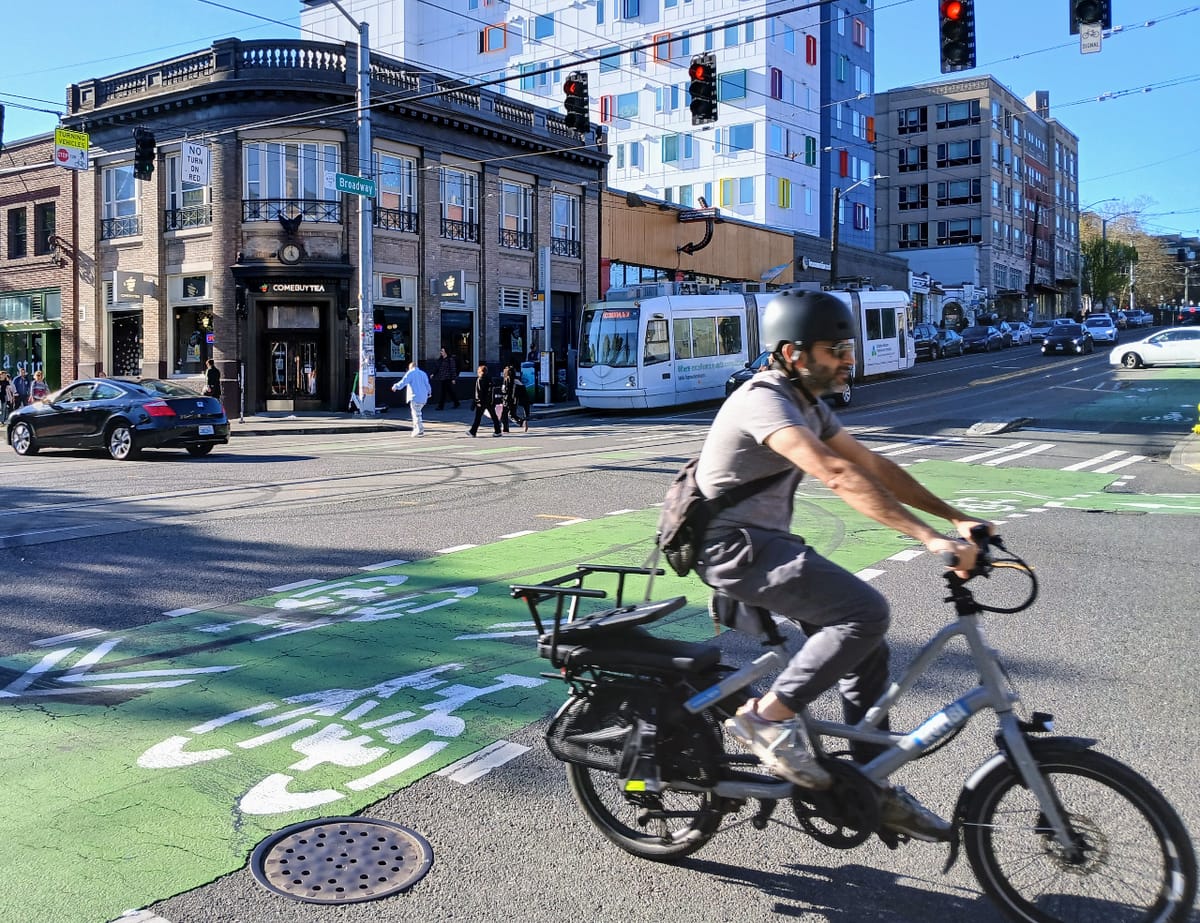
Washington residents still hoping to snag a discounted e-bike after last year's initial rebate lottery will have another chance starting March 30. This time, the WE-Bike program will award rebates on a rolling basis every single month through spring of 2027, offering multiple opportunities for hopeful e-bike purchasers to score one.
When applications open, state residents aged 16 and older can apply for a $300 rebate available to the general public, or qualify for a $1,200 rebate if providing proof of income eligibility. That eligibility varies by county, targeted at residents earning up to 80% of the median income in their area.
Funded by the legislature using proceeds from carbon auctions under the Climate Commitment Act, the Washington State Department of Transportation (WSDOT) has $7 million on hand for e-bike rebates through next year, more dollars than were available last year.
Rebate hopefuls will be able to apply anytime over the next year, with the first set of random lottery winners selected on Monday April 13th and the second Monday of each month thereafter.
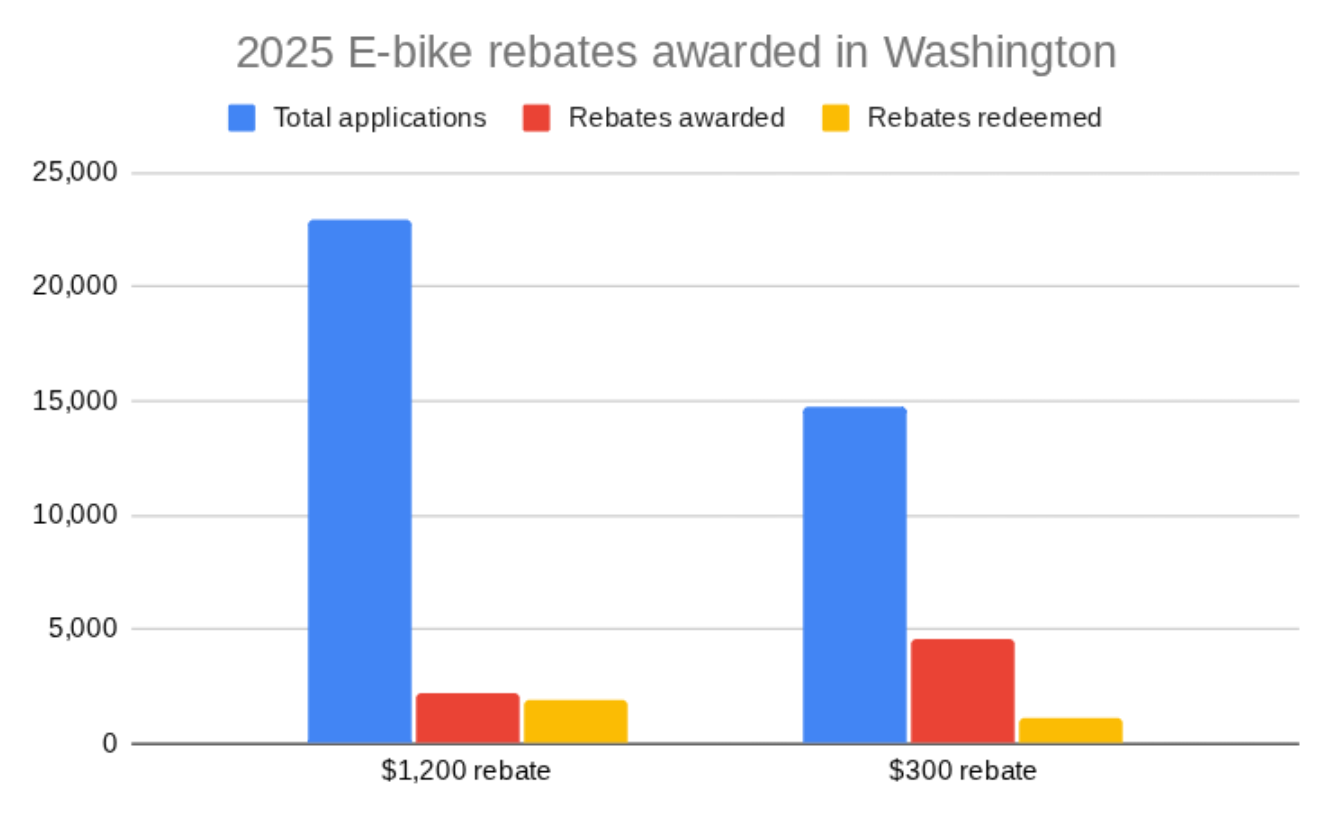
WSDOT has learned from its initial e-bike rebate roll out last spring, where hopeful e-bike riders got just one chance to snag a rebate. Redemption rates for the $1,200 rebates, not surprisingly, were much higher than for the $300 rebates, with only around one out of every four of the smaller rebates awarded actually getting redeemed. In the end, the program offered rebates to 6,861 out of 37,751 total applicants, signalling a significant demand for a rebate program.
Last year, WSDOT had only a few months to utilize funds before the end of the fiscal year. A year-long rolling lottery will turn unredeemed vouchers over to the next recipient much more quickly, and should allow the dollars to go further.
During the initial round, there were clearly signals that the rebates had a significant impact on e-bike purchases, providing thousands of Washingtonians with a new mobility option that could potentially even replace the need for a car. A third-party study of the 2025 rebate awards conducted by the University of Washington found that a large majority of purchases made with vouchers would not have happened without the incentive.
"92 percent of purchases in the income-qualified group and 70 percent in the non-income-qualified group were induced by the rebate, leading to an estimated 2,490 induced purchases overall," WSDOT noted in a final report on the program released late last year. "The rebate recipients in the UW study who purchased e-bikes reported meaningful improvements in mobility and access after purchasing an e-bike. Nearly half said they used their e-bike to reach destinations they previously did not travel to. Convenience, the ability to travel longer distances, and physical and mental health benefits were frequently cited as key motivations for participation."
Those results broadly track the impact of e-bike rebates elsewhere in North America.
"[R]esearchers found that reductions in automobile use were greater for those with higher household income and those living in suburban areas that are relatively dense but with poorer access to destinations by walking, cycling, or public transit," Bike Portland wrote of a 2025 study conducted by University of British Columbia researchers on e-bike rebates. "Increases in e-bike use were also greater for those with lower household income and those living in hillier areas."
The U.S. e-bike market has been in flux in recent years, most notably with the collapse of Seattle-based manufacturer Rad Power Bikes last year. A company that just a few years earlier had appeared to corner the budget e-bike market, Rad's bankruptcy ultimately illustrated that a mid or high-end e-bike may ultimately prove a better long-term value for customers, with incentives like the state rebates doing a lot to put those models within reach of more people.
"We’re proud to deliver the WE-Bike program and excited for communities statewide to benefit from it,” said WSDOT assistant secretary for Multimodal Development and Delivery Kerri Woehler said in a statement announcing the new funding round. “WSDOT is building a transportation system that works just as well for people driving as it does for people walking, biking and rolling. As we expand Washington’s network of bike routes, WE-Bike makes it possible for more neighbors to take advantage of a convenient, healthy form of transportation.”
With gas prices still on an upward trajectory thanks to the Trump administration's war with Iran, interest in snagging an e-bike rebate is likely to increase, with the new application format certain to prove more accessible to users.
 Ryan Packer