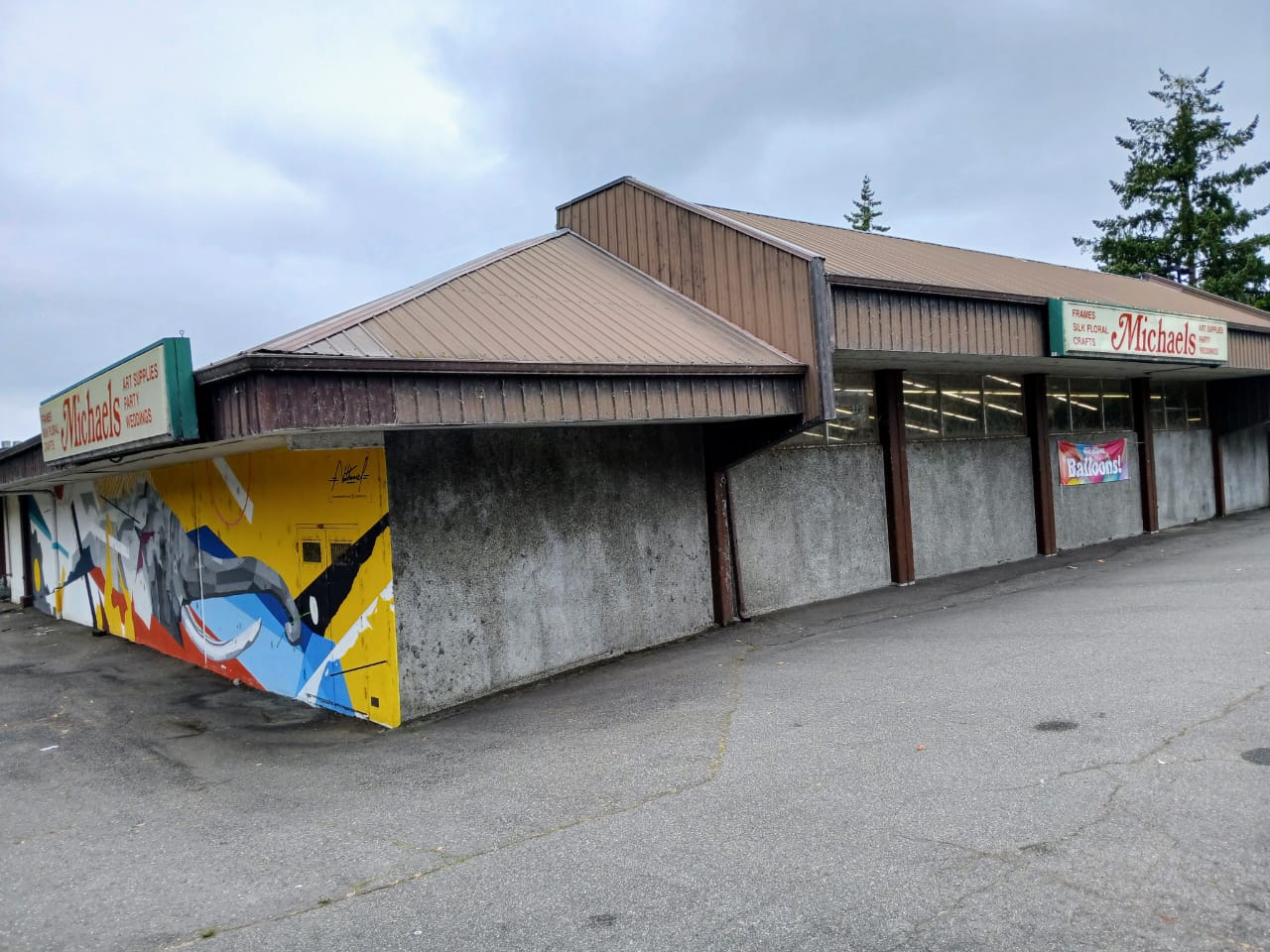
Last week, the Kirkland City Council rezoned two underdeveloped commercial properties in north Kirkland, concluding a long process to unlock significant redevelopment opportunities in the face of some community opposition. The two sites, currently home to a Michael’s arts and craft store and a Goodwill in the Juanita neighborhood, could bring hundreds of new homes to one of the Eastside’s most in-demand cities and add more amenities within walking distance of existing residents’ homes.
Supporters see rezoning the two parcels as advancing a key element of Kirkland’s growth strategy, which seeks to foster “neighborhood centers” outside of downtown and enable more Kirkland residents to live within a 10-minute walk of their daily needs.
Despite that policy alignment, it took nearly two years of process to get to this point. Last month when a final vote was in sight, the developers hired to find a path to maximizing the sites’ development potential nearly had to go back to square one.
The 6-1 vote to increase the height limit in both locations to 75 feet comes on the heels of a closely watched election in Kirkland focused around growth issues. The sole “no” vote came from Jon Pascal, the only candidate on the ballot this November to win his race after being promoted by Kirkland’s slow growth advocates.
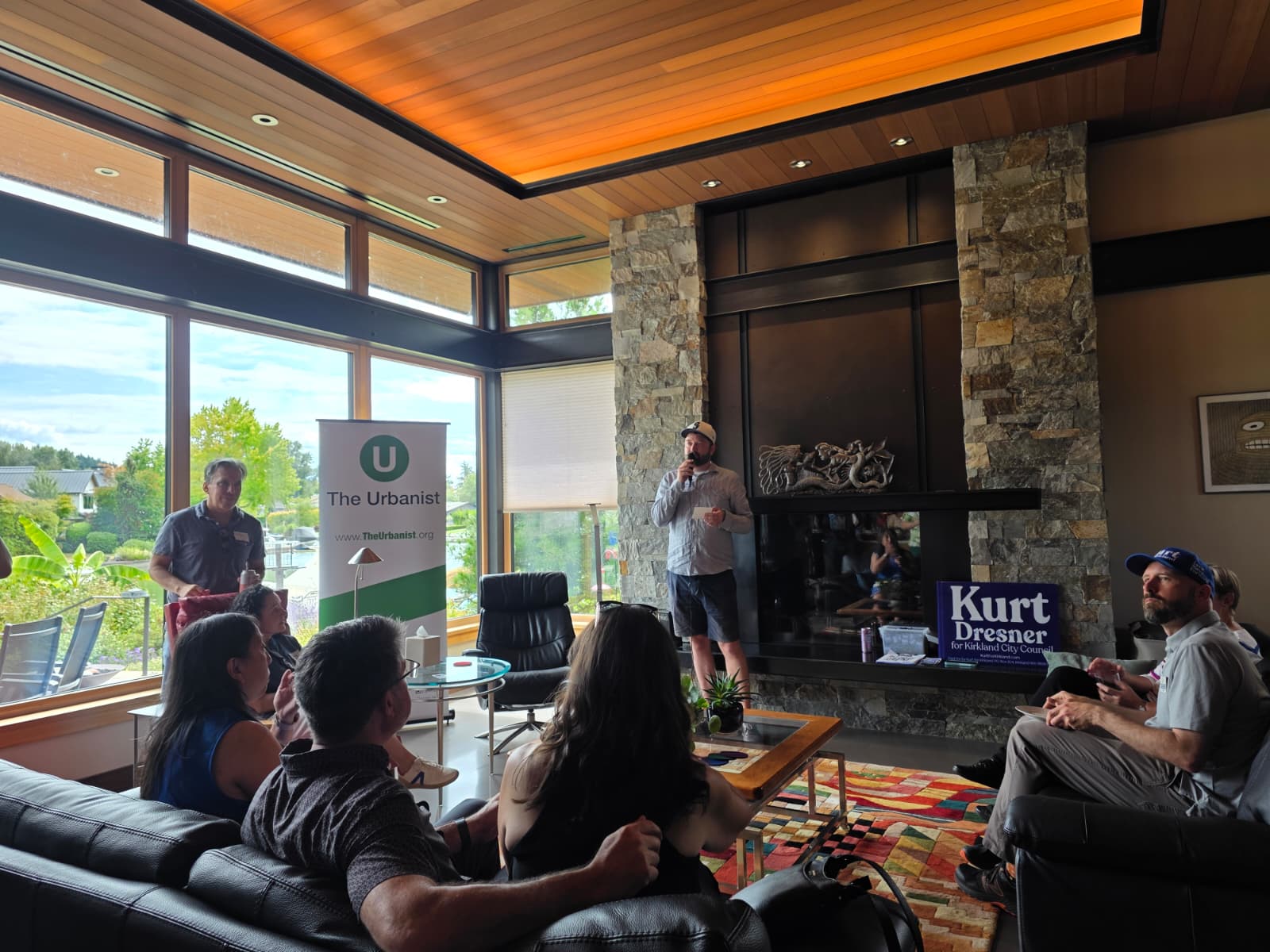
Members of Cherish Kirkland, a group that touts itself as being focused on “responsible growth with adequate infrastructure,” supported Pascal and he went on to win by just over 1,000 votes against urbanist candidate Kurt Dresner. But the three other candidates who were part of the same Cherish slate were all defeated.
If those three races had gone differently, Tuesday’s zoning discussion would likely have taken on a very different tenor.
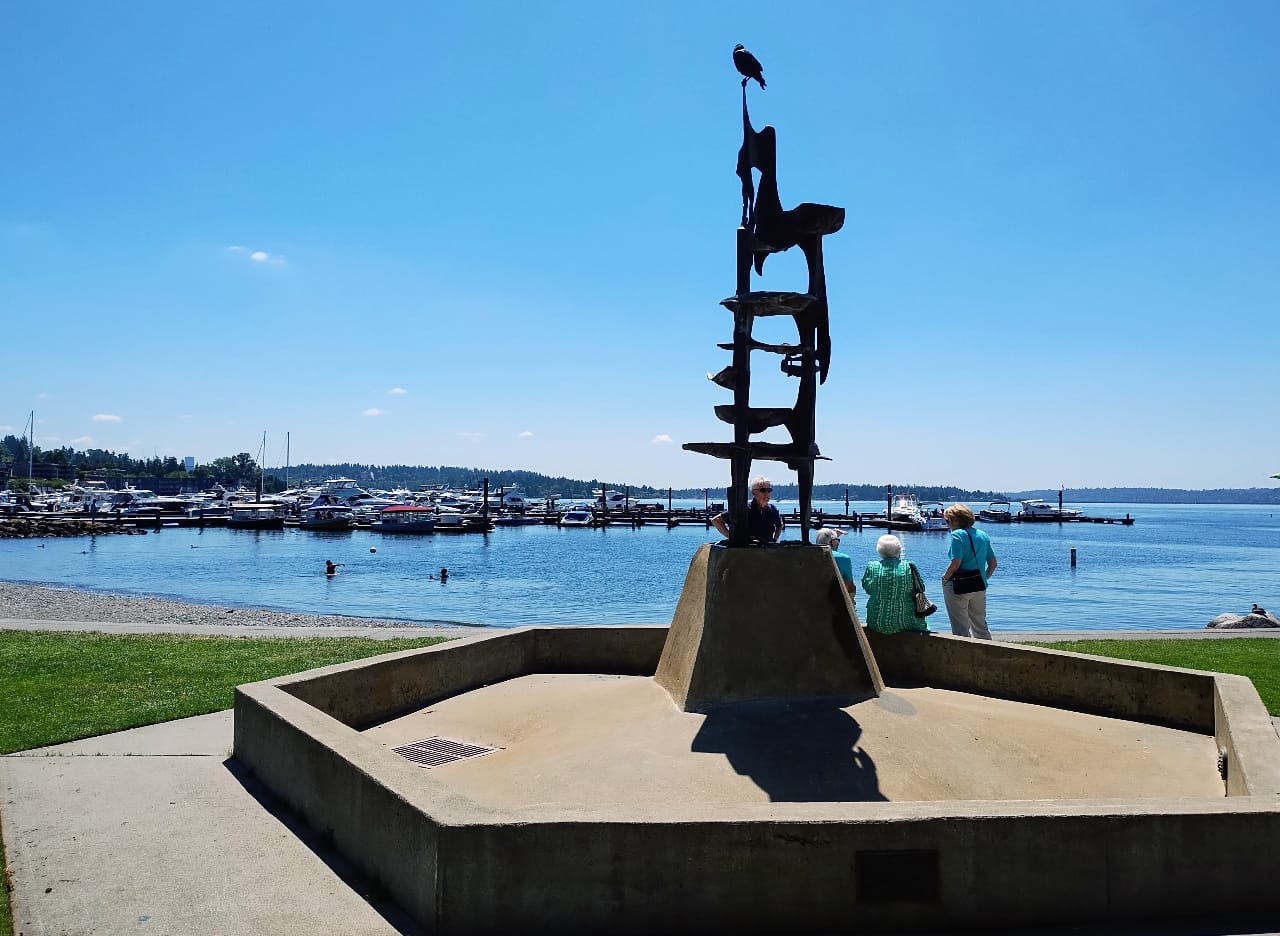
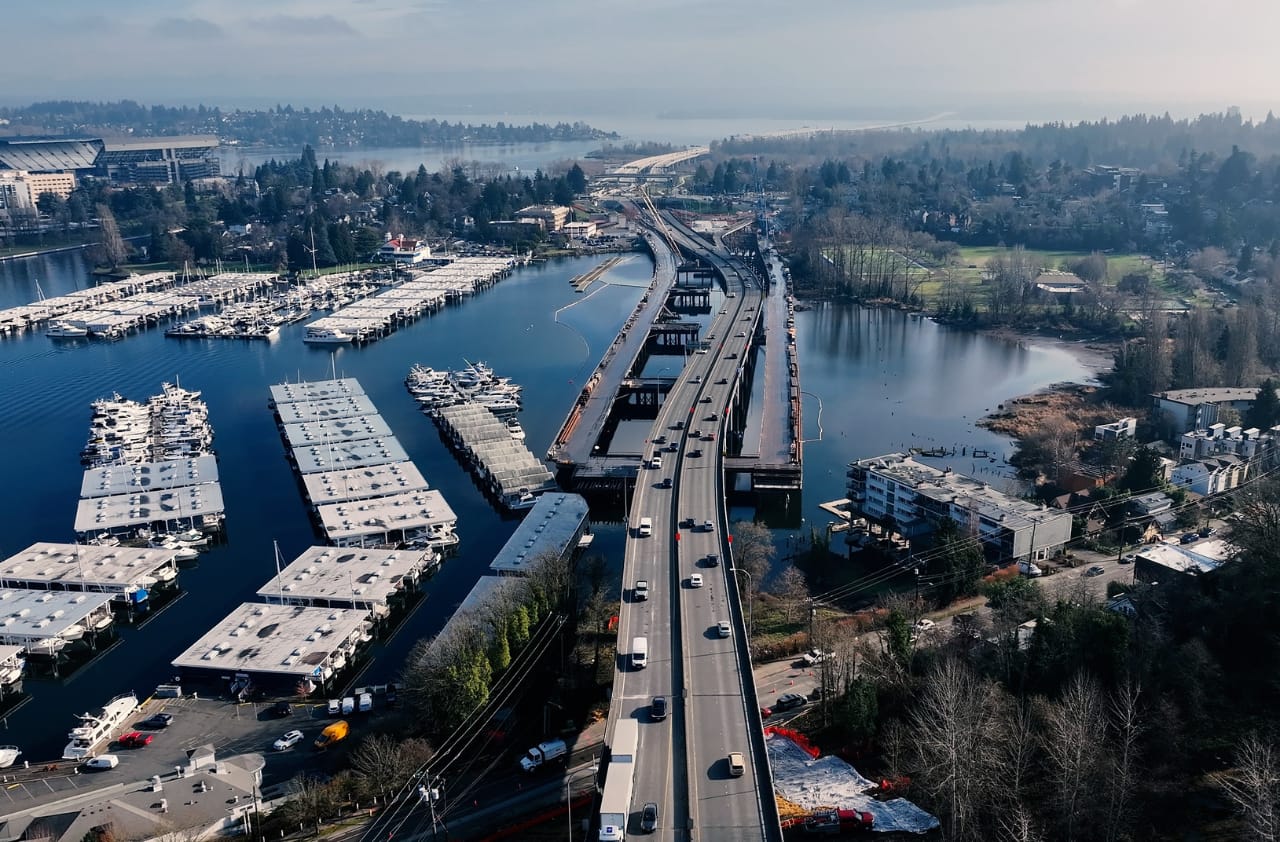
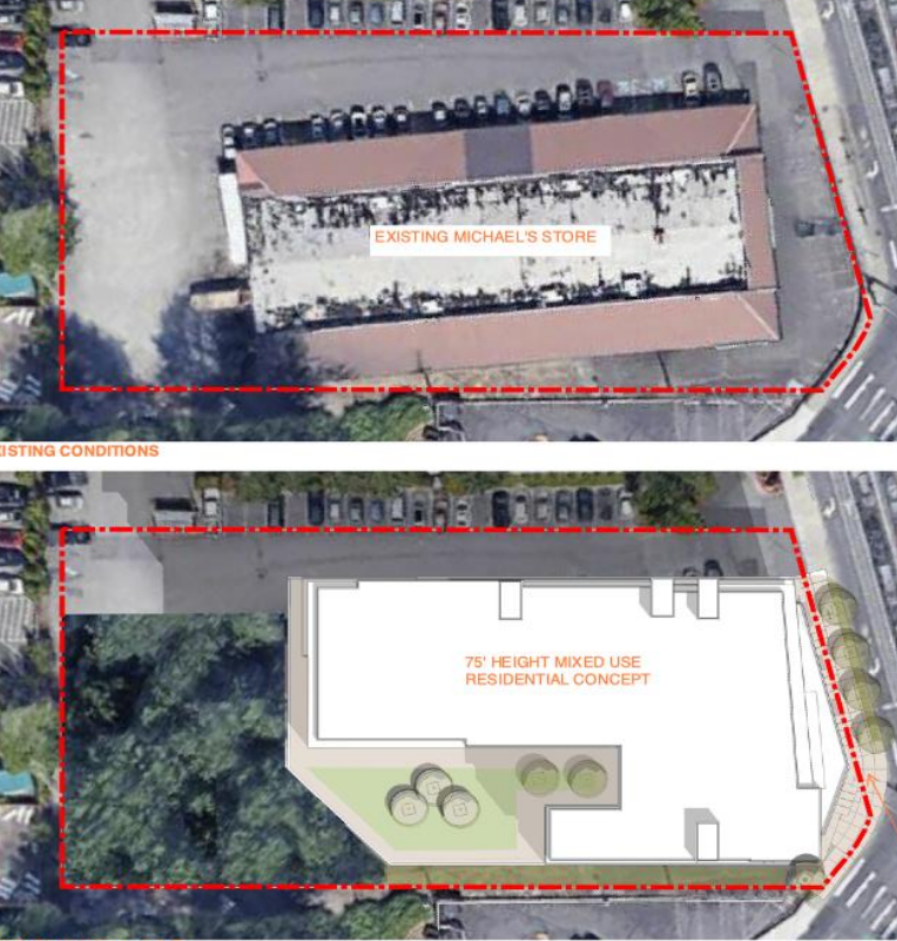
The idea of allowing dense multifamily development on these parcels has faced opposition from within Kirkland, particularly when it comes to the Michael’s site, which is close to the Lake Washington shoreline and within a stone’s throw of two popular city parks. With a wetland buffer precluding development on over a third of the site, the developers eyeing redevelopment of the dilapidated craft store emphasized that a seven-story height limit would be necessary to allow the proposed apartment building to pencil out as feasible. With the rezone completed, 250 to 300 units can now advance.
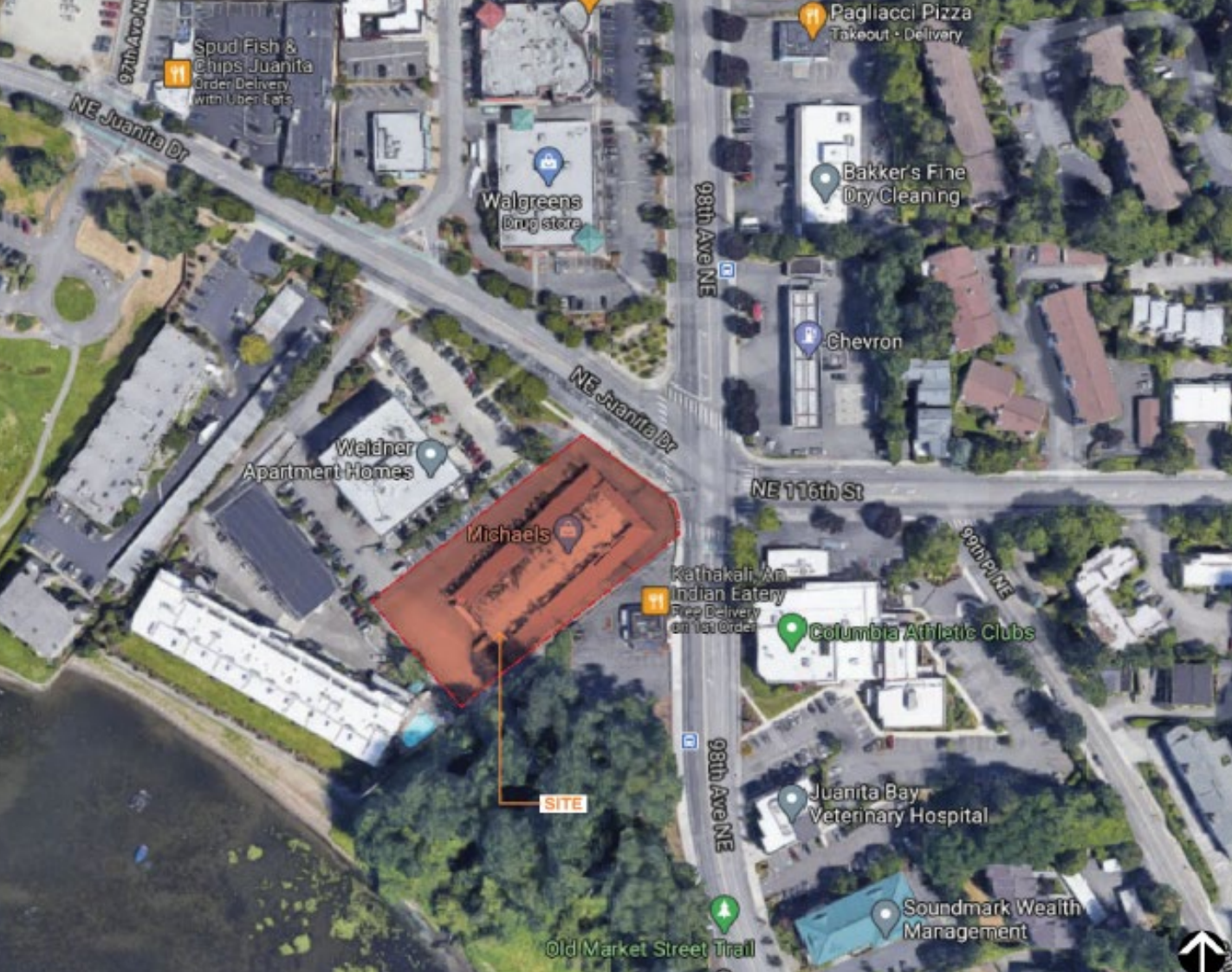
“There has been so much pushback by the athletic club, by the Indian restaurant, by the Weidner apartment [building], by the citizens of Kirkland. We do not want the Michael’s site to be developed — period,” Kirkland resident Lisa Berenson said ahead of the vote. “Setbacks must be held. Heights must be held. We have to preserve the sky. And that corner there is already a traffic nightmare, I don’t care how much traffic mitigation you do, it’s going to get worse — worse, worse, worse.”
A 2024 petition asking the city council to halt development on the Michael’s site attracted over 700 signatures, citing “[n]egative impact to the various components of the wetlands environment, including decreased flood mitigation, potential runoff and pollution of the wildlife water source, and further endangering the delicate wildlife habitat.” In the end, those arguments didn’t seem to hold sway with most councilmembers, and both projects will have to undergo standard environmental review as part of permitting.
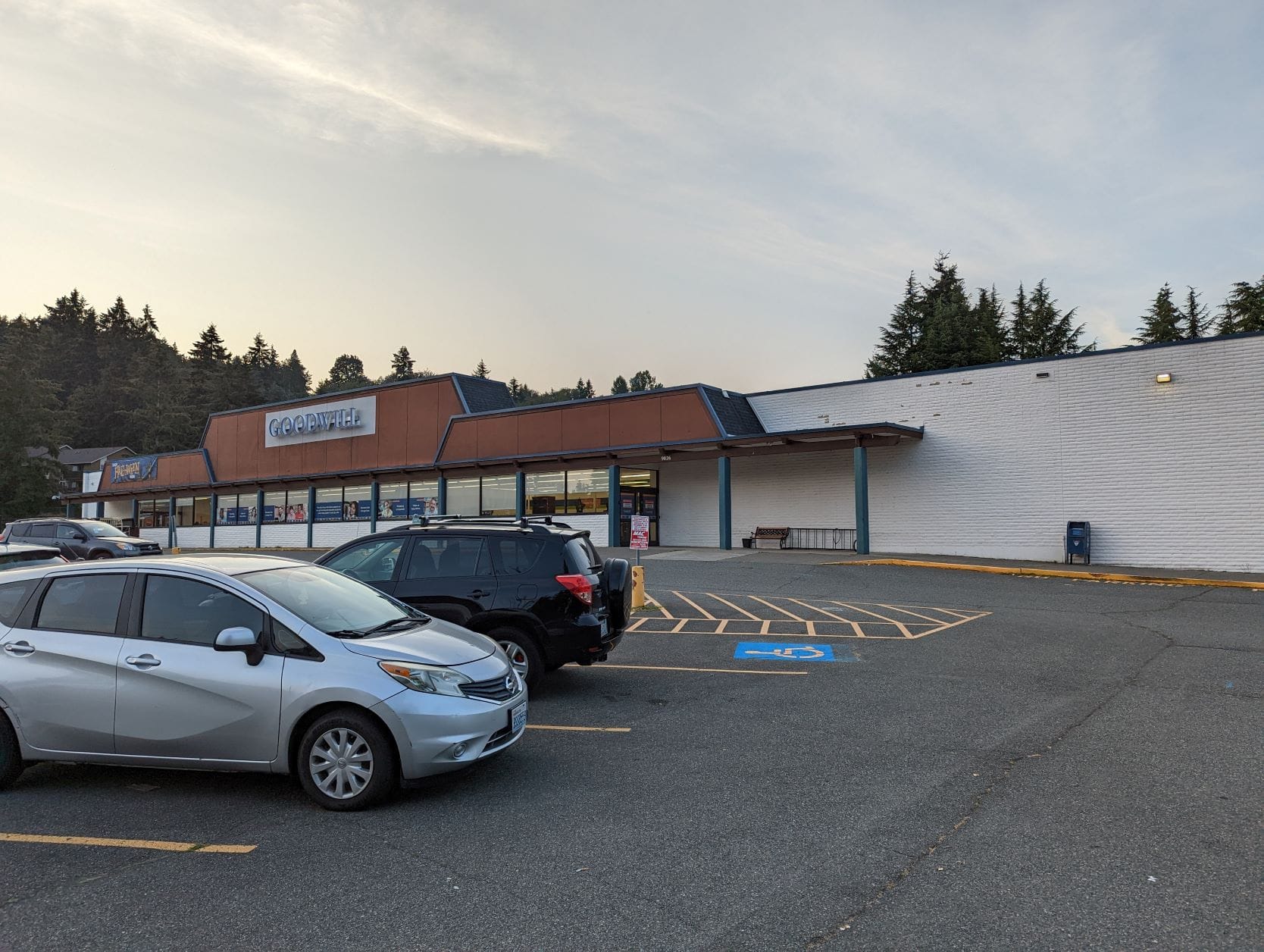
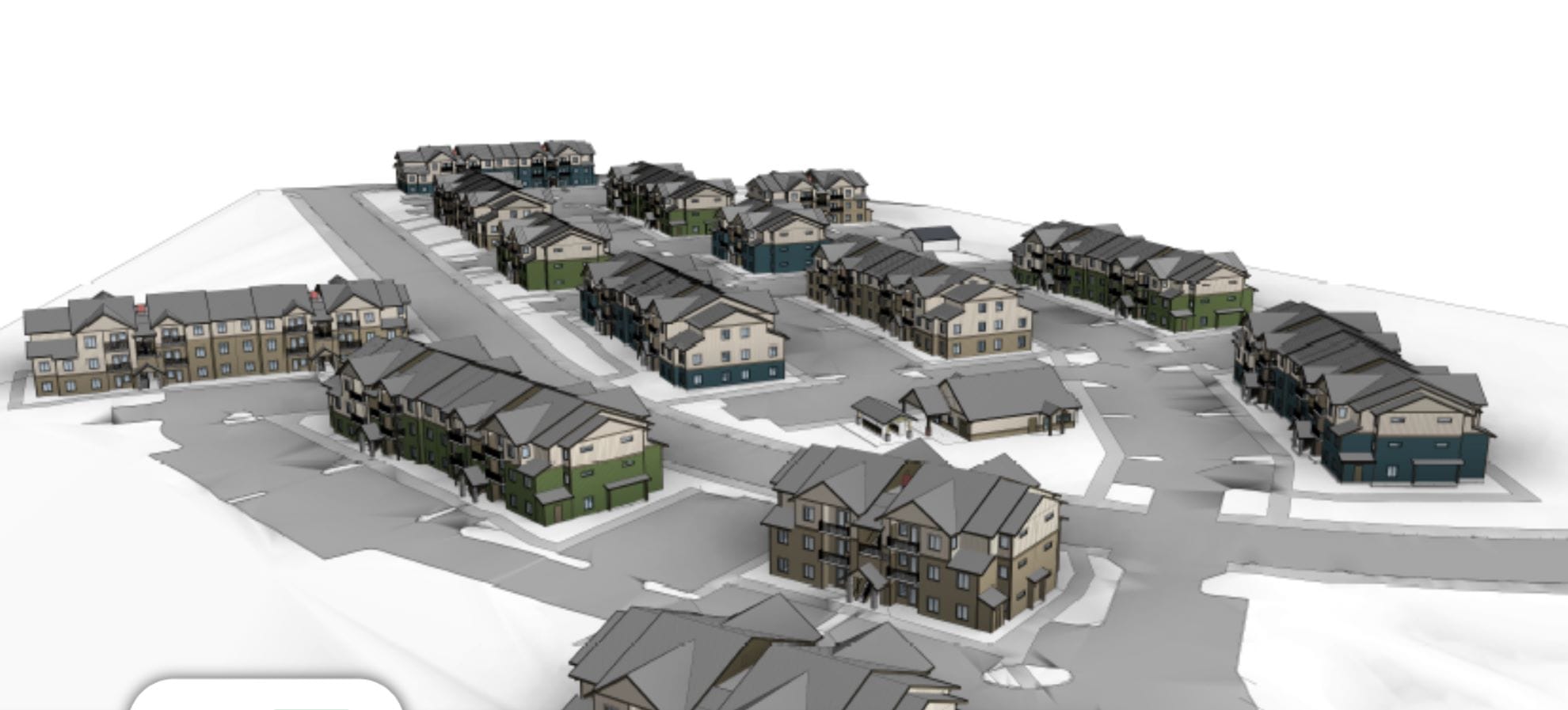
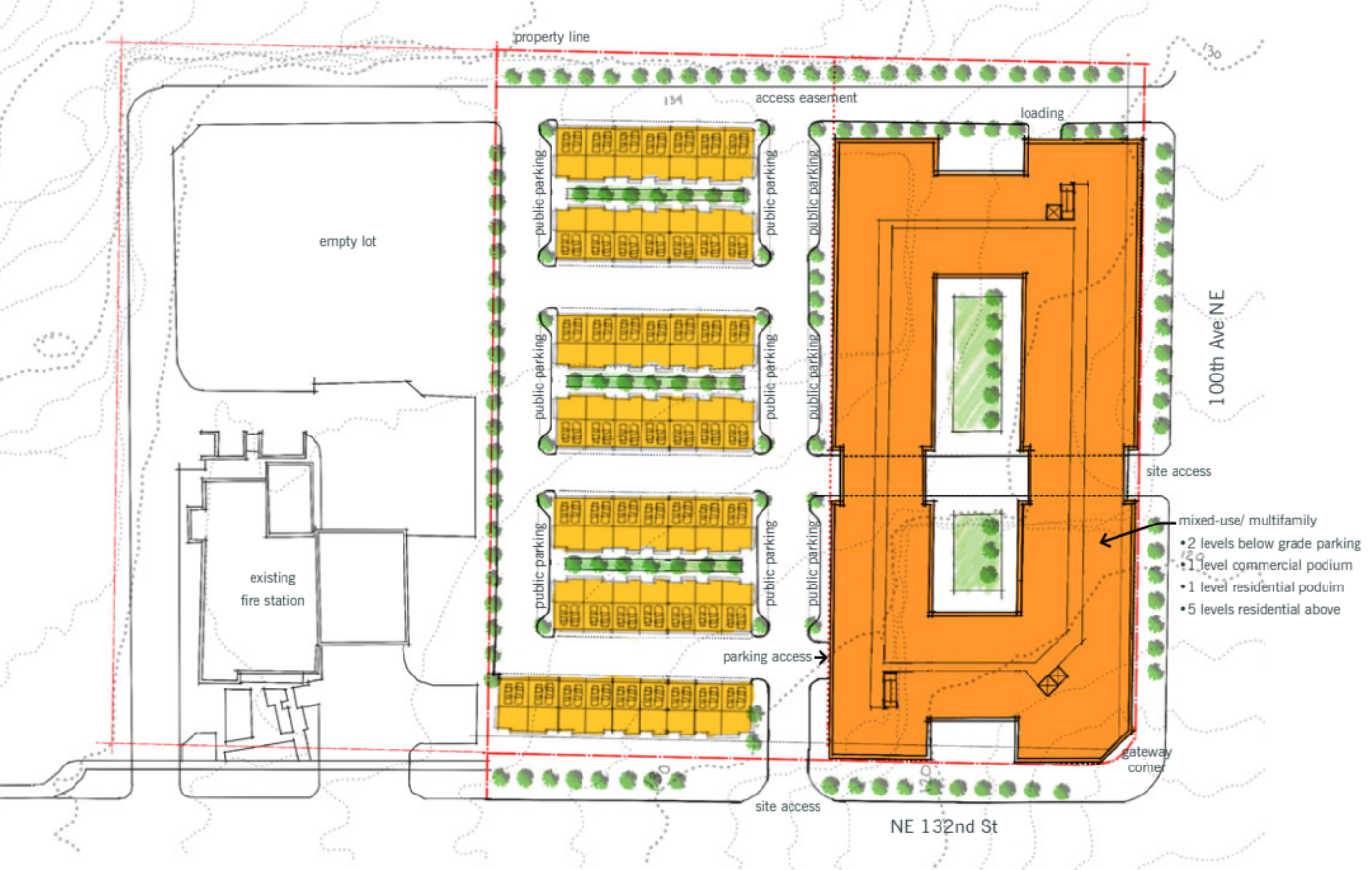
The Goodwill site is less constrained, with up to 500 homes planned close to numerous bus lines. Half of the property is set to be built out as townhomes, but a condition added Tuesday requires the developer — Balboa Retail Partners — to start construction on the multifamily portion of the project within three years of the first townhome being occupied.
On top of accelerating housing construction, the hope is for retail space to be added to the neighborhood more quickly. If the deadline isn’t met, Balboa would be required to pay a sizable fee to fund affordable housing elsewhere in the city.
Despite the Kirkland planning commission giving the green light on a 75-foot height limit for both sites earlier this year, a proposal advanced at the end of October looked to scuttle the past two years of deliberations. On the eve of the council elections, Kirkland city staff put forward the idea of switching the parcels over to a standard “base” mixed-use neighborhood center zoning, capped at 60 feet. To rise higher, the developers would have to go through the process of receiving a development agreement specific to their project, something that would have likely added a few more years of process and erased much of the work that had occurred up to that point.
The move, which took both the developers and housing advocates in Kirkland by surprise, seemed to be a reaction to competing requests from councilmembers around what they’d like to see come out of the zoning amendment process. But it can’t also be removed from the broader context of a highly contentious set of races that had been poised to tilt the Kirkland council in a more reactionary direction.
Ultimately, a council majority declined to sign onto that proposal, and instead pushed to advance the recommendation of the planning commission, with potential tweaks. Ahead of Tuesday’s meeting, 27 different amendments were put forward, though several were withdrawn before a vote.
Many of the amendments to scale back the proposed zoning came from Pascal, including amendments to reduce the height limits back to 60 feet and to require upper-level step backs to scale back the potential bulkiness of buildings. The only Pascal amendment to pass was one increasing requirements for street-level commercial uses along the frontages along both 98th Avenue NE and Juanita Drive when it comes to the Michael’s site.
“I have heard loud and clear from from most people I talked to in the community that height and scale are big concerns, mainly because these buildings would stand out as outliers, not just today or four years or five years after they’re built, but perhaps for decades,” Pascal said in framing his amendments. “Coherence is not anti-growth. Coherence is how we grow well, and those are things that we should be thinking about.”
Pascal defended his proposal to require upper-level step backs by pointing to similar regulations elsewhere in the city, in the Bridle Trails neighborhood. That prompted Councilmember Amy Falcone to push back.
“Having these upper-story stepbacks, the reality is, the implications are: that means less housing, right? And so that concerns me. That’s smaller apartments, fewer apartments, and that’s just the reality of the situation,” Falcone said. “And so I feel like if we’re going to stick with our approach, with trying to absorb the growth that’s needed in these types of centers, what we’ve been doing in other areas is not sufficient. It is not working. We are significantly behind on our housing production in the city of Kirkland, and so I feel like applying what we do in other areas is not going to work here, because we know that that’s not working, not getting us to where we need to go.”
After nearly two full years of process, most councilmembers expressed satisfaction with being able to move forward before the end of 2025, while not being 100% comfortable with the process taken to get there, which was heavily tailored to meet the needs for two specific developments. Pascal raised those process concerns when explaining his no vote.
“I support growth in neighborhood centers. I support added housing where it strengthens our long term goals. However, because the [Community-Initiated Amendment Requests] set a president of parcel-specific zoning inconsistent with citywide commercial centers regulations, they also result in a mismatch in building height and scale, and they also result in a continued loss of commercial land, I’m going to have to be voting no tonight.”
Councilmember John Tymczyszyn seemed to speak for the council’s majority when it came time for a final vote.
“Are there ways to improve this process? There absolutely are, and I’m sure we can do that in the future together,” Tymczyszyn said. “But I will be supporting this, because I think it will add housing in our commercial centers, density in our commercial centers, as we talked about. And the process can be improved in the future, but today, we’ve done our job.”