


Builders Continue Pivot to Housing in Downtown Bellevue
In shift away from office and toward housing growth, Downtown Bellevue's development pipeline has seen nearly 4,000 additional homes proposed and more than two million square feet of office space abandoned in just the last couple of years. Once built, the pipeline of 14,000 homes would more than double the population of downtown.
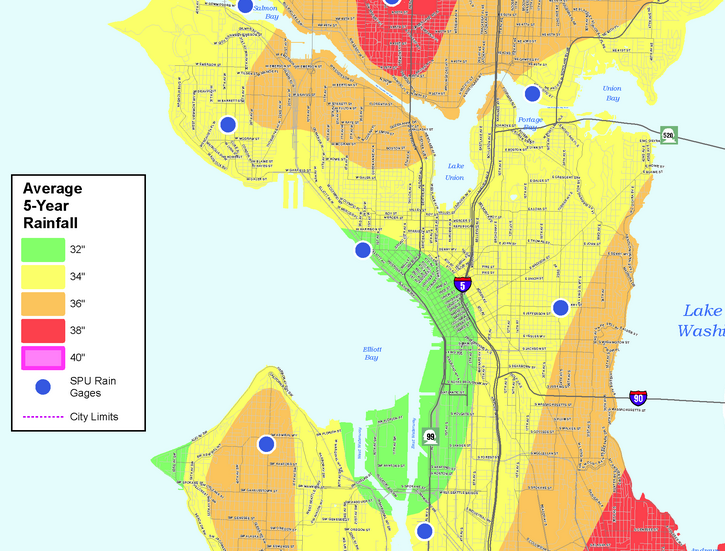
Map of the Week: Rainfall Across Seattle Neighborhoods
Some places in Seattle are wetter than others, according to new data from Seattle Public Utilities. SPU recently released a map showing variations in...

Rapid Buildup Fuels Downtown Bellevue Skyline
Since 2018, a deluge of construction projects in Downtown Bellevue has been completed and begun to form Bellevue's adolescent skyline. This spree has been...

Nearly Six Million Residents in Central Puget Sound By 2050, PSRC Says
On Thursday, the Puget Sound Regional Council (PSRC) unveiled new growth projections through 2050. The metropolitan planning organization is projecting 1.8 million more residents...

Debunking Carbrains’ Dumb Groceries Argument
The distance to carry a bag of food is only argued against cities, never getting them to your car in the first place.
Enter any...

Top Apps Emerge from Seattle’s Commute Hackathon
At the end of Seattle's Hack the Commute on Sunday night the judges selected three potentially game-changing software applications for further development. Over the...

2019 Population Estimates Have Seattle Pushing 750,000 with Steady Growth
Seattle, King County, and Washington State growth rates all stabilized for the last year of this long decade.
The Office of Financial Management's (OFM) April...
Where Did King County Metro’s Ridership Go?
A third of King County Metro's pre-pandemic transit ridership has yet to return, and many agencies are seeing stronger rebounds. Where did the bus riders go?