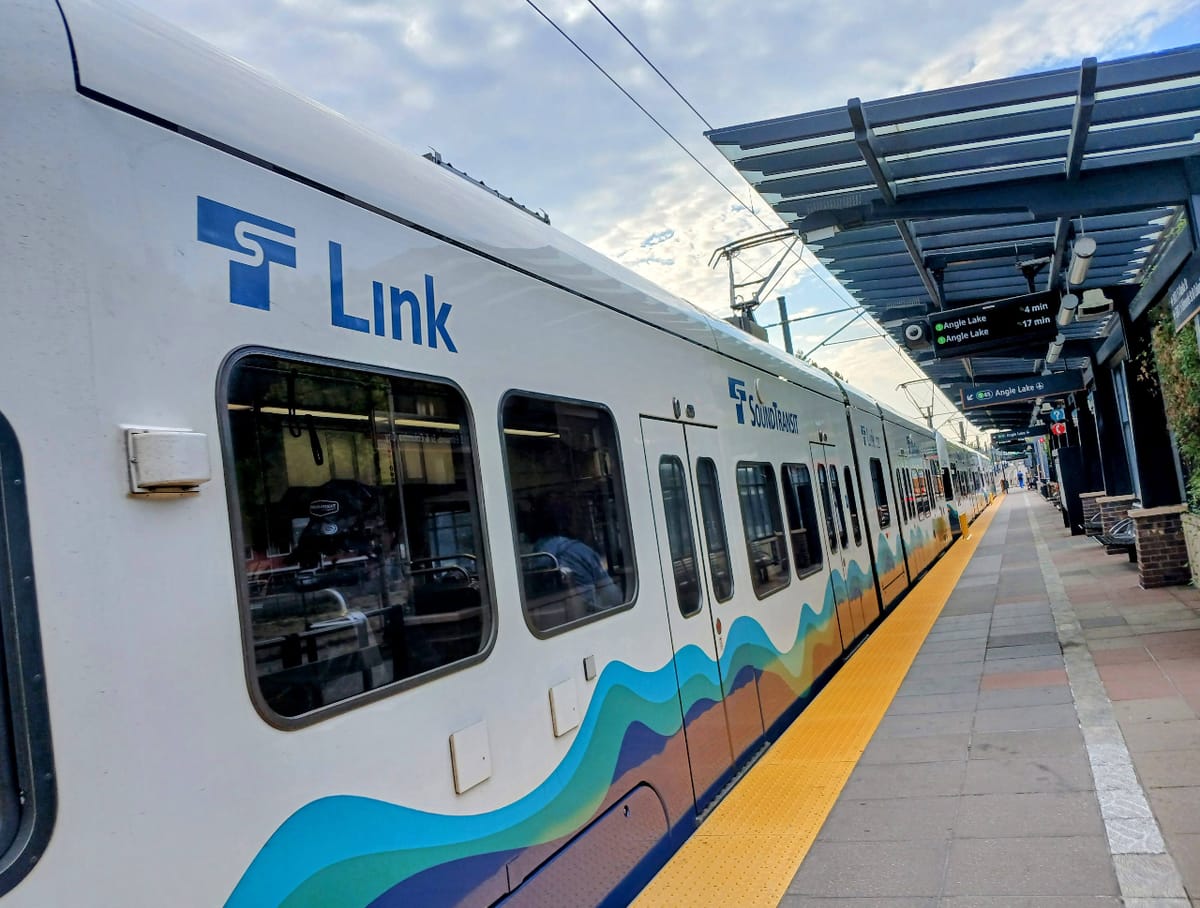
Light rail extensions to Ballard, West Seattle, Tacoma, and Issaquah have been front and center in the debate around reconfiguring Sound Transit's system expansion plans. But several smaller-scale projects have been getting attention from Sound Transit board members recently, in what looks to be good news for advocates wary of seeing them fall through the cracks.
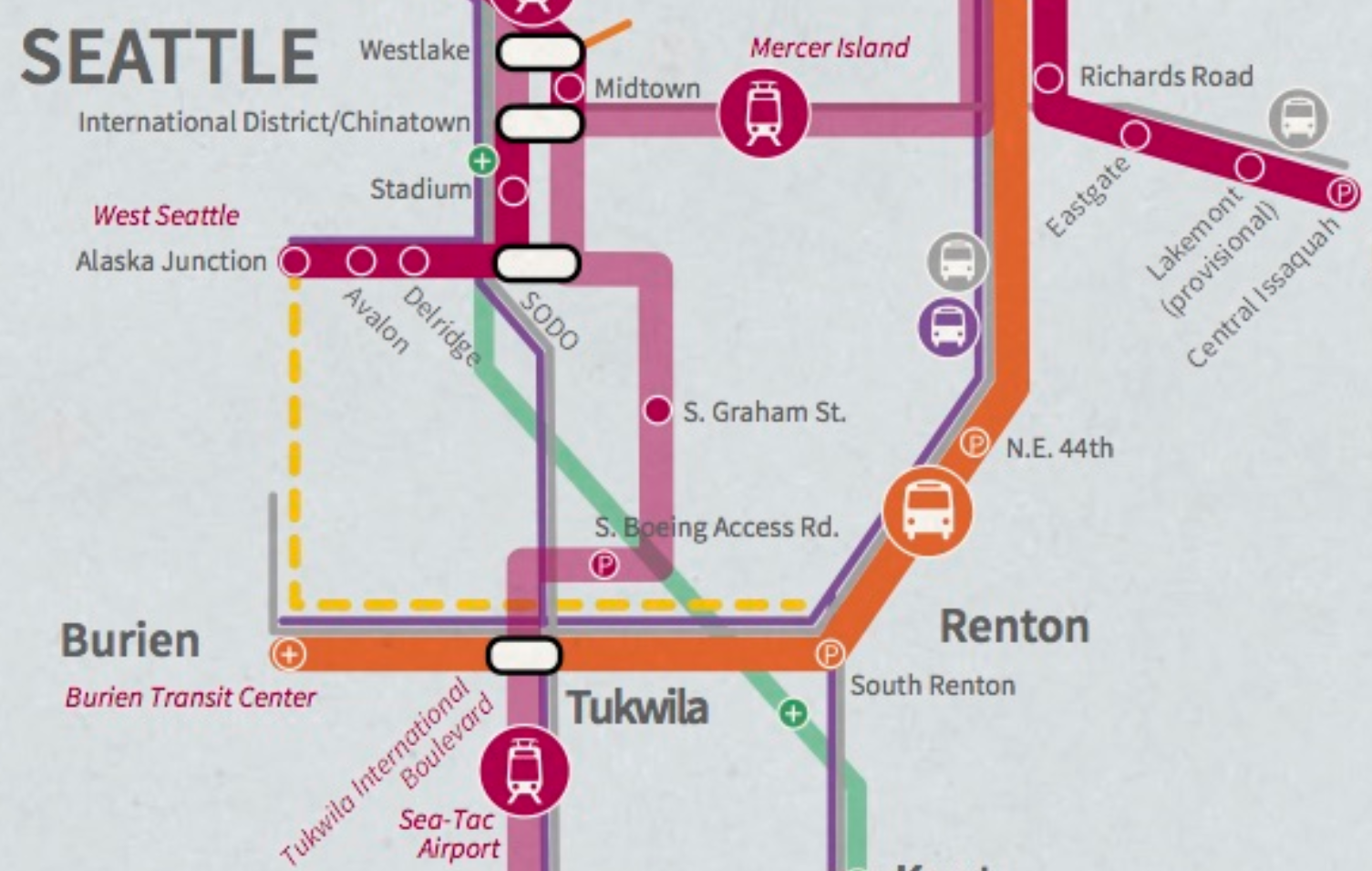
Two infill stations along the 1 Line – at Graham Street in Seattle and near Boeing Access Road in Tukwila – could be on the table for deferral as Sound Transit looks to fill a long-term $34.5 billion budget shortfall over the next two decades.
Tukwila's infill station was included in Sound Transit's very first ballot measure, 1996's Sound Move. It was originally envisioned as being integrated with a Sounder S Line station, but that's no longer planned.
Graham Street was looked at during that measure's planning phase, but ultimately not included. But both did end up in the 2016 Sound Transit 3 (ST3) package at the heart of the realignment work happening now, getting buy-in from voters.
Sound Transit's current timeline would see both stations open in 2031, but that's up in the air until the agency can update its long-range system plan to match the current financial reality.
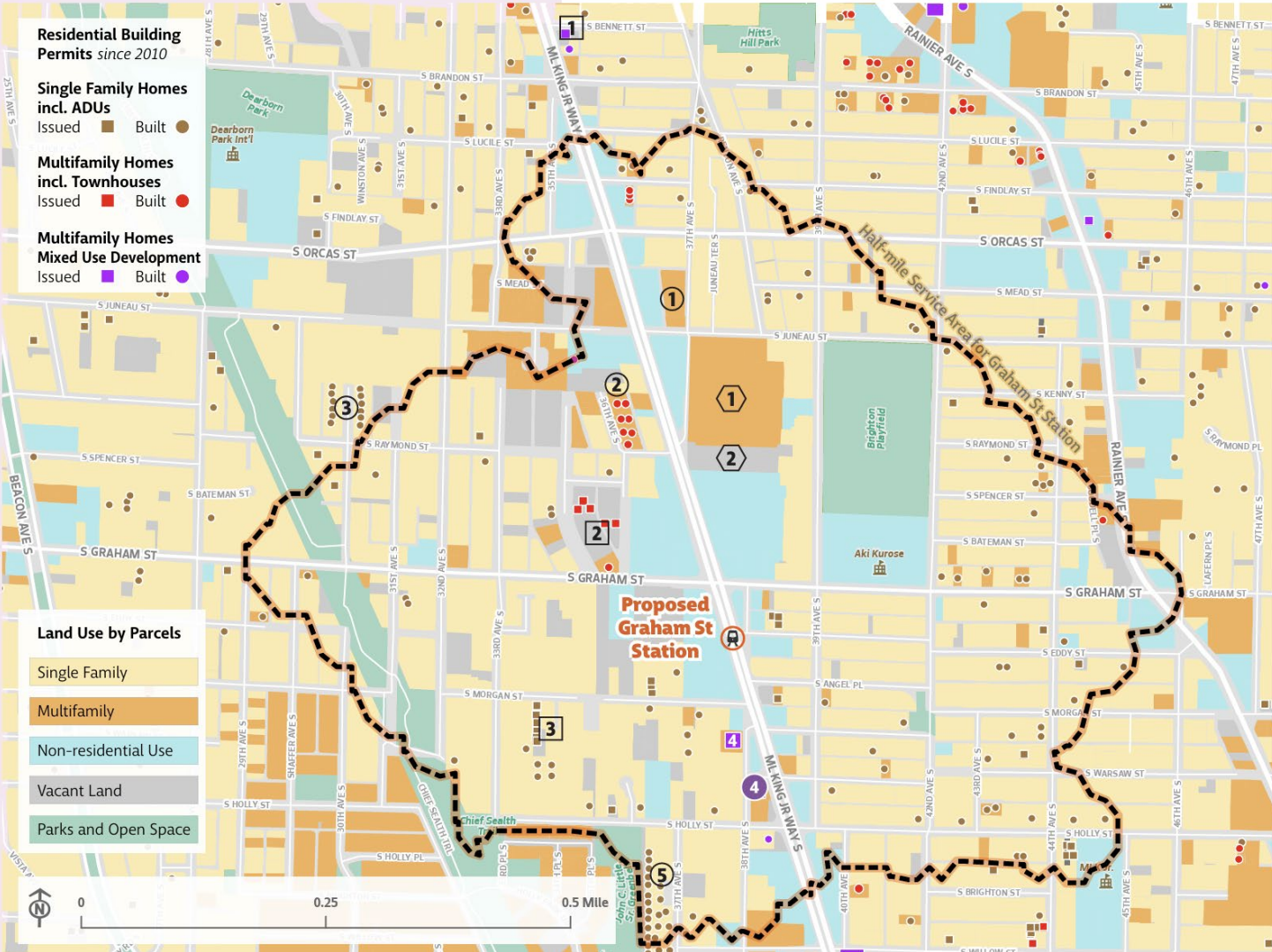
The two stations are very different. Graham Street would be built at-grade, like the rest of the stations in the Rainier Valley, and is expected to cost $175 to $200 million. A light rail station is central to current City of Seattle plans for the area, with zoning changes on deck now at the Seattle City Council that would pave the way for additional density close to Graham Street.
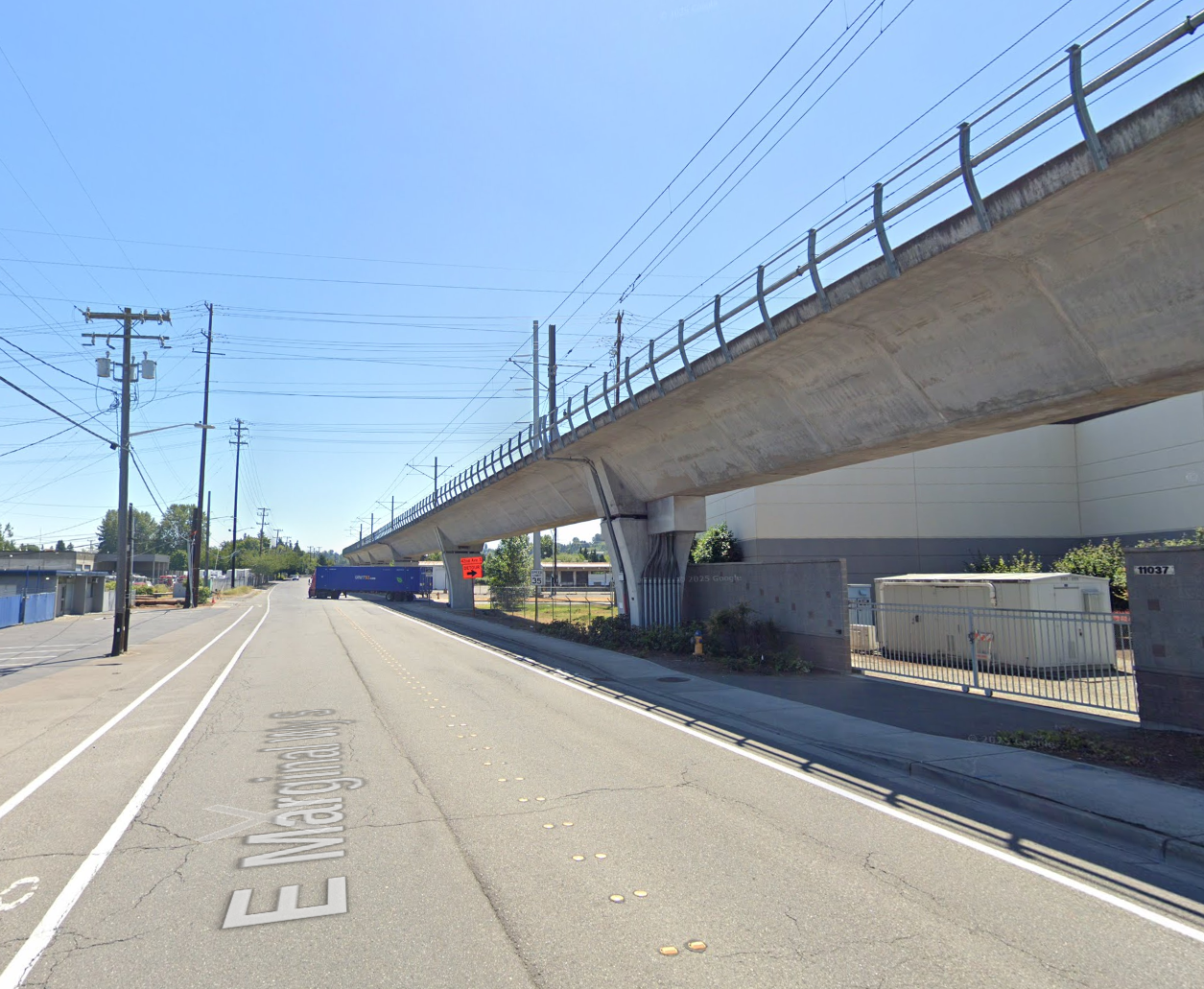
Boeing Access Road, which would actually be built along E Marginal Way just north of S 112th Street, would be an elevated station, and is expected to cost more than twice as much as Graham Street – $425 to $475 million. The zoning around the station is industrial, and most of the station's riders are expected to connect via buses rather than walk.
While Sound Transit's modeling predicts 4,100 daily riders at Graham Street, Boeing Access Road is only expected to see around 2,100 daily riders.
Advocates for Graham Street have launched an action alert, seeking to keep their project on Sound Transit board members' radar.
"As an area that has suffered from historical underinvestments in our community and one with many low-income residents and households with limited car access, we need affordable, reliable, and convenient transit. The Hillman City/Brighton communities have waited too long already," the action alert noted.
The Urbanist is a nonprofit newsroom powered by reader support. Become a member, get perks, and support local journalism.
At last month's board retreat, where Sound Transit staff presented three different approaches to rebalance the agency's long-range financial plan, Graham Street and Boeing Access Road only made it onto one of those approaches, despite a relatively low price tag compared to full corridor extensions.
But Seattle Mayor Katie Wilson, for one, doesn't look to be ready to let Graham Street fall by the wayside, reiterating her support for moving the project forward at last week's Executive Committee meeting.
"Making it clear that we are not done building out our world-class light rail system is very, very important. I'm also personally very committed to finding a way to build the Graham Street infill station," Wilson said. "I think that community has been waiting for this station for a very, very long time, and in the context of ST3, it's a pretty modest investment. So I'm very committed to finding creative ways that we can make sure that that is included."
Also speaking out for Graham Street was Tukwila Mayor Thomas McLeod, who joined the board with Wilson at the beginning of this year after being tapped by King County Executive Girmay Zahilay. Unsurprisingly, McLeod has been an advocate for keeping Boeing Access Road on track, and called the advancement of the two infill stations a quick win for the ST3 program, building on the momentum of March 28's grand opening of the Crosslake Connection between Seattle and the Eastside.

"Saturday was an amazing day. That was a huge deliverable to the entire region. I don't know when the next deliverable will be. Maybe it's a few years out. I think there's a tremendous value in working with our regional community that says we've got a couple, maybe smaller short-term wins we could get, referencing again the Graham Street station, that would say we are fulfilling these promises from be it Sound Move or ST3," McLeod said. "And I think if we can grab these short-term wins, and not at the expense of anything [else], but noticing that the next big ribbon cutting that we will do is probably quite a few years out, and I think it would be a tremendous value, just in working with our regional community."
McLeod has the backing of the Tukwila City Council. On April 1, they unanimously signed onto a letter making their case for retaining Boeing Access Road.
"Deferring one or both stations would have minimal impact on Sound Transit's overall capital shortfall. The combined cost of these projects does not materially advance the timelines for major expansions to West Seattle, Ballard, Issaquah, Everett, or Tacoma," the Council wrote. "From an equity perspective, the Boeing Access Road station area exceeds Sound Transit's equity targets. Approximately 67% of residents are people of color, 40% are foreign-born, more than 47% speak a language other than English at home, 23% have limited English proficiency, and 28% of households are low-income. The area also ranks 10 out of 10 in environmental health disparities according to the Washington State Department of Health. Expanding access to reliable transit here is both an equity and environmental imperative."
While racially diverse, the population near the Tukwila infill station is quite small. In 2016, Sound Transit reported 1,600 residents lived within a half mile of the planned station, with a projected population of 1,900 by the year 2040. Meanwhile, the agency reported in 2015 that 8,200 residents lived within a half mile of potential Graham Street station areas, with a projected 2040 population of 10,200 – more than five times the Tukwila station.
A City of Seattle study noted 949 housing units are in the development pipeline near Graham Street, even before the City's planned rezone went into effect. Near Boeing Access Road, residential development activity is minimal.
For their part, Sound Transit staff are looking at tools that could enable some of these smaller projects to move forward. Alex Krieg, Deputy Executive Director for Enterprise Planning, told board members on the Executive Committee that strategies the agency is considering to increase its financial capacity could make the difference for Graham Street and Boeing Access Road. Those include adjustments to Sound Transit's policies around debt coverage, an increase in regional rental car tax rate, and the implementation of public-private partnerships (P3s).
"We will also be exploring partnership opportunities, as well as how any additional financial capacity created may enable delivery of smaller cost projects – smaller costs relative to those light rail extension projects – like the infill stations or parking investments," Krieg said.
The City of Seattle had set aside $10 million to get Graham Street across the finish line in the 2015 Move Seattle transportation levy, funding that was ultimately allocated to other projects when the timeline for station construction was pushed out. But it may ultimately fall back on the City to help get Graham Street fully funded again.
As the board starts to grapple with the choices that have been put in front of them, the issue of getting Graham Street and Boeing Access Road across the finish line is poised to remain top of mind, along with getting to Ballard, Tacoma, and Everett.
 Doug Trumm
 Ryan Packer