The convention center is doing its job. The question is whether that's the right job.
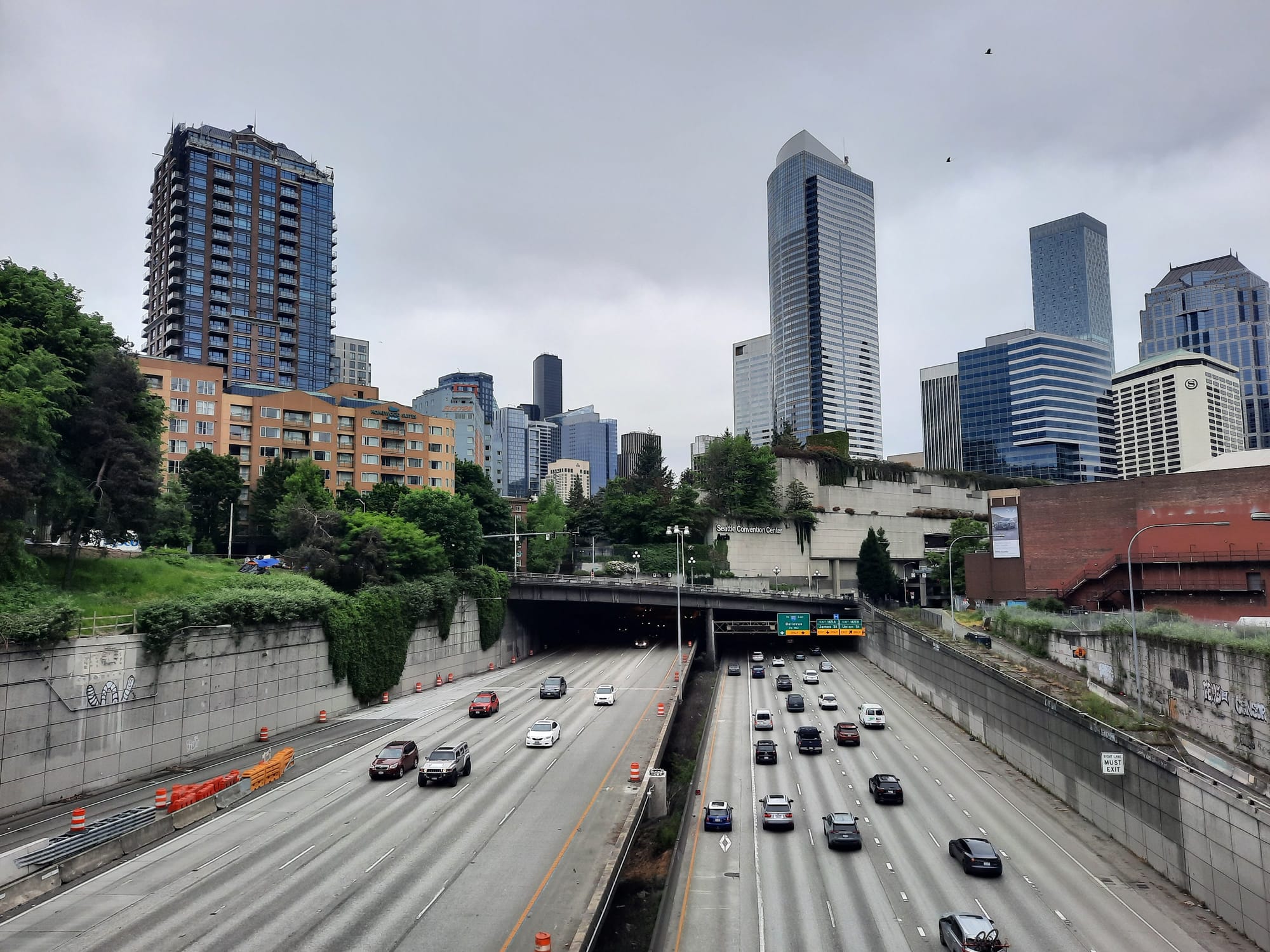
During the pandemic, in early 2021, my wife and I bought a condo in First Hill near the Seattle Convention Center. People were leaving the city for the outskirts, so we figured we'd go the opposite direction. That’s why we moved from sleepy Queen Anne to the geographic center of Seattle.
We bought because our rent more than doubled in 10 years but our incomes didn't. We bought downtown because bus schedules to our neighborhood were being cut (RIP #29 express from Ballard and Queen Anne) while light rail was expanding. We bought near the deluxe new convention center building – called the “Summit” – because we saw it as a benefit.
We just had to wait it out. In five years, we’d have a new convention center, streetscape improvements along Pike and Pine, expanded light rail, and the inevitable end of the remote work experiment leading to a concentration of economic activity that would provide the impetus for creating a highway lid envisioned by Lid I-5.
The urbanist thesis was that density plus investment plus transit equals vitality. We bought into that story.
And right now, our estimated property value is down nearly 20%, and the neighborhood isn’t as vibrant as we thought it would be.
We knew we were moving into a neighborhood with a shiny new convention center two blocks away. What we didn't consider was that the old one right next door would be dark most of the year. At least it made for an excellent commute.
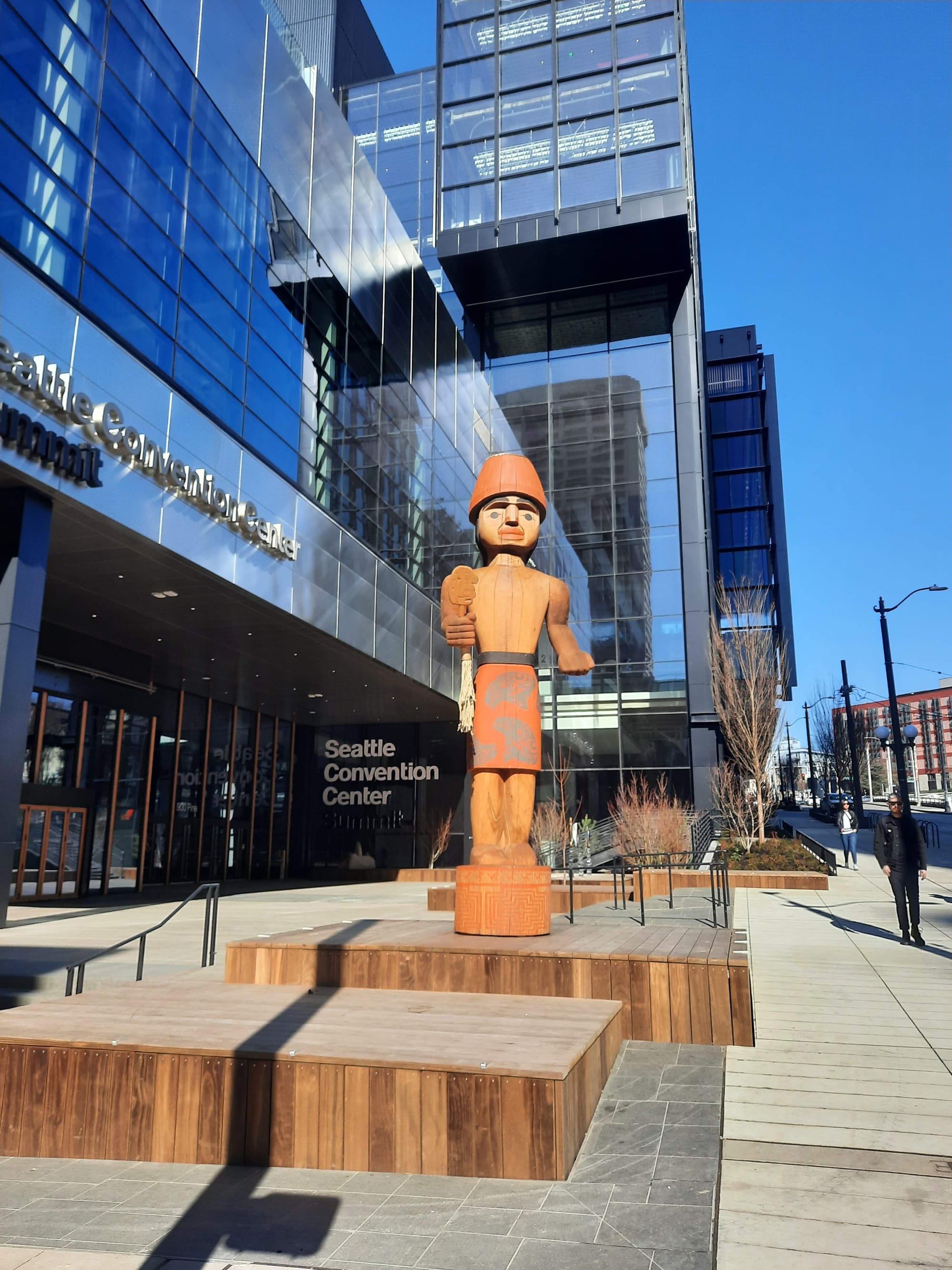
I went to the Summit for the public opening in February 2023, and the next thing you know, I'm wearing a vest as an Admission Attendant, on-call. First time I'd ever done a job like that.
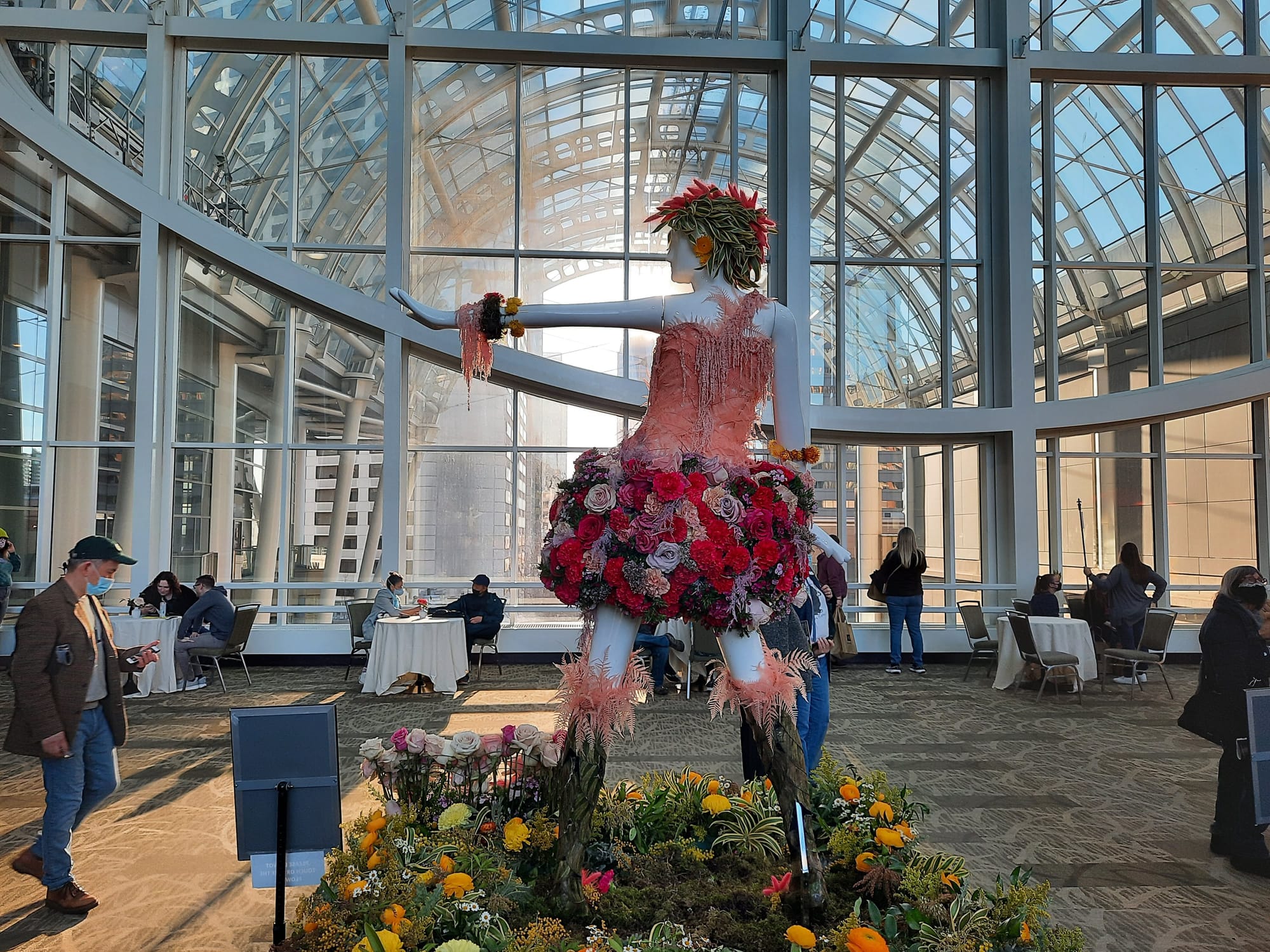
We were off to a quick start with a few big events — Flower and Garden Show at the Arch, Comic Con at the Summit, Sneaker Con. The pace was good. They liked me. And then they asked if I wanted to go full time, and so in August 2023, I became guest services lead, 6am to 2:30, Wednesday through Sunday.
Full-time is much different. You're standing around on days when nothing much is happening — load in, load out, a tiny event. I spent days figuring out how to optimize coat check setup.
After a few months, my wife said: “This isn't good for you. I'll take care of us.” She's been carrying us since.
I came up with an idea for an app. Convention visitors always want to know where to go. Where's a good coffee shop? Where’s lunch within walking distance? You hand them a card, they scan it, it shows them the neighborhood. No app to download, no contact information required.
I spent a year building it. Then, when I learned how to vibe code last year, I made it bigger and better.
But it was never going to work for the convention business.
The convention center is a captive operation
The convention center is a food and beverage enterprise wrapped in a tax-exempt government structure called a Public Facilities District (PFD). It's basically a giant restaurant.
The PFD borrows money at tax-exempt rates, uses it to build a facility, and hires a contractor — in this case Aramark — to run all food and beverage inside. It's a captive operation. Every dollar a convention attendee spends on lunch inside the building is a dollar that doesn't go to the restaurant two blocks away.
You don't walk into a McDonald's and expect recommendations for other burger joints. So why did I expect a convention center to point visitors away from the lunch carts?
That was the fatal flaw of my app. It's also the fatal flaw of the convention center's relationship with the surrounding neighborhoods.
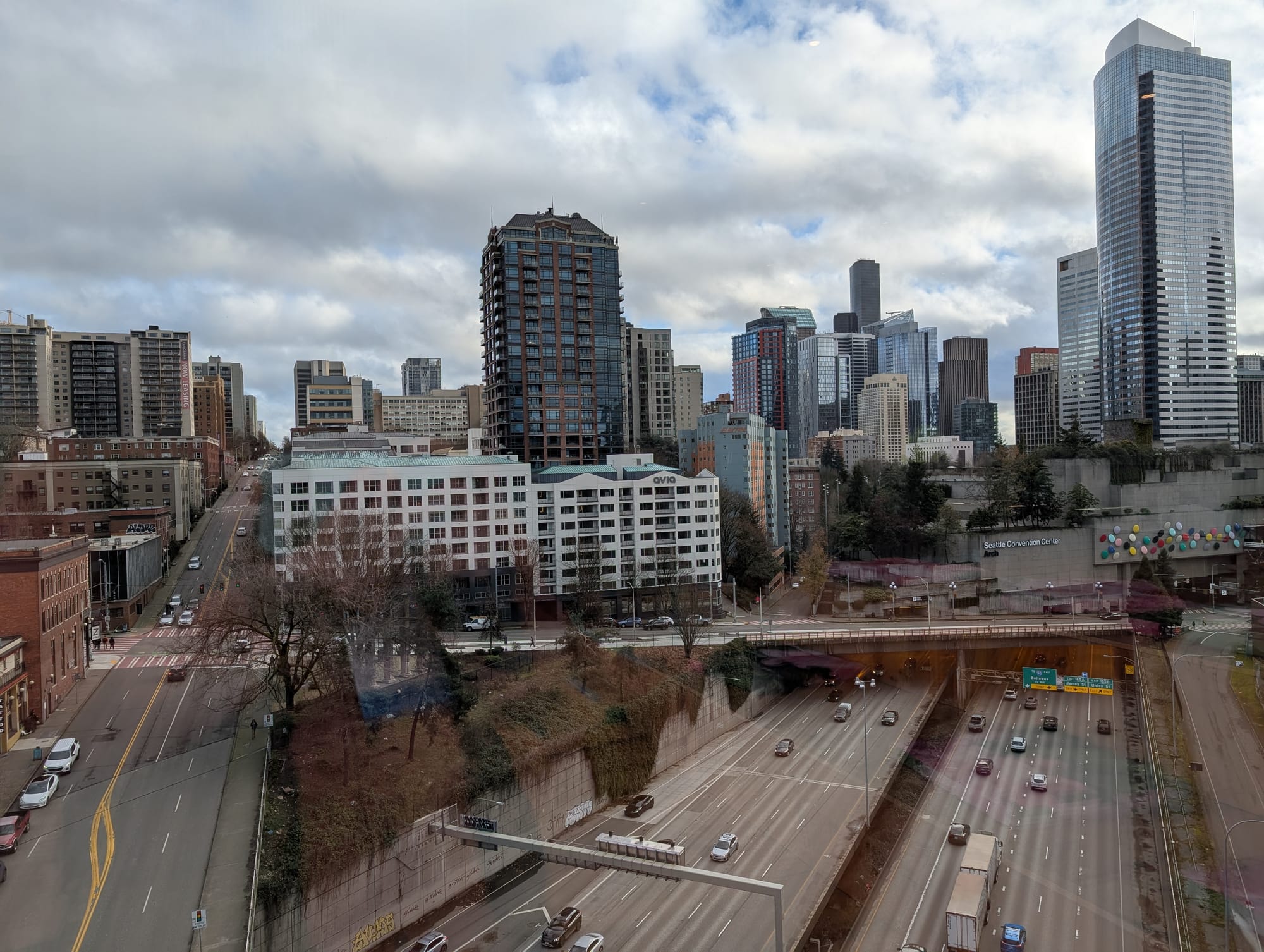
There's a giant arch over Pike Street. You've seen it — it changes color depending on the occasion. Pink for breast cancer awareness. Green for St. Patrick's Day. Whatever the color of the day is.
You rarely see people in it, unless it's registration for something in the exhibit halls, or a plated dinner for a political fundraiser.
And 800 Pike, the building across from the main complex — that's only open for maybe a half-dozen public events a year.
The rest of the time it's dark.
The Urbanist is a nonprofit newsroom powered by reader support. Become a member, get perks, and support local journalism.
In the center of the city, we have not one, but two convention centers, two blocks apart. And what does it take to host an event there? Just fill out the event inquiry form (sections 1 through 6) and include an optional RFP. While you wait, review the food & beverage options for 2026 (continental breakfast $31.25, box lunches $35.75; and up – plus 22% administrative charges, state and local retail sales tax, and labor fee); and provide full payment 14 days in advance. It’s all first-class service.
If you’re looking for economy or coach, you’ll probably look elsewhere.
The large “retail” events such as Comic-Con 2026 (tickets $184, four days) and PAX West 2025 ($260, four days) attract crowds.
Or if you have a large army of volunteers, you can plan big events like Sakura-Con ($120 membership for entry to a three-day event); or smaller events like GeekGirlCon ($40 for the weekend), one of the few held at 800 Pike.
Between the big events, it’s awful quiet in Convention City.
The convention business is episodic by nature — big events, then nothing, then big events again. That rhythm works fine in a dedicated district somewhere outside the urban core. You shut it down like a carnival in the off-season, and nobody expects otherwise. But when you put it in the middle of a neighborhood, the neighborhood lives with the absence. Businesses run on a schedule set by someone else's event calendar.
And that wasn’t enough to keep the Cheesecake Factory in business.
In early February, the Seattle Times published an article about Seattle Convention Center’s “fragile” finances and what CEO Jennifer LeMaster called “a pressing need to recapitalize Arch.”
The Seattle Convention Center was profitable before the pandemic. Before the new Summit building went online, in 2019, they earned $9 million.
It’s less profitable now, just barely profitable, at $1.4 million according to unaudited statements, and only then by ignoring depreciation, which is like saying that the “new convention center smell” never goes away.
In other words, the Seattle Convention Center spent $1.9 billion to build the Summit expansion and net less income than they did before the project.
The problem with the Arch isn’t the building.
It’s that you need to fill out a six-part form to put an event on the calendar. It’s the $40-per-person for a sandwich, an apple, and a bag of chips. It’s the added fees for Wi-Fi and setting up a monitor for a presentation.
Recapitalize Arch? How about we use the Arch?
I had a vision – to see the Arch brought to life with a constantly changing array of different activities, everything from a food hall to dance nights, from fringe festivals to makerspaces, temporary art installations and civic lectures.
Based on that vision, me and my AI enabler came up with a wildly ambitious idea to hand the building over to Seattle Center, which also manages operations at the Waterfront. I was under the mistaken impression that the Aramark contracts were soon up for renewal. That impression was entirely incorrect. With a five-year contract starting at 2025 with options to renew in 2030 and 2032, Aramark will remain at the perch it has occupied since the very inception of the building in 1988. They’re not going anywhere.
I’m sure we’ll hear a pitch for Arch II. And if we’re in a bad enough economic environment, it might even be good policy. After all, those are high-paying jobs and tax revenues sloshing around in Keynesian ditches. The Summit gave us construction jobs during the pandemic. Perhaps Arch II will support some of us through whichever of the Four Horsemen arrive next.
And that’s the real story of Convention City. Everyone’s happy, all layers of government, when we’re building something – more money flows to the state, some of it stays in Seattle, good-paying jobs throughout the region.
And when the project is wrapped up, we end up with a first-class building.
The question is whether it must be first-class only.
It costs as much to build a convention center as it does a dozen libraries, and we don’t need to sell expensive box lunches there.
Participation Trophy
Participation drives consumption, not the other way around.
That’s the idea, anyway. By making it easy for people with similar interests to assemble at low or no cost, we can create positive outcomes. More friendships, more families, larger friend groups, more start-ups, more reasons to be downtown, more parties, more restaurant reservations, more energy.
And if we can’t take over the Arch in the short term, we should at least know how Seattle stacks up against peer cities.
I designed a scoring system – CommonScore – which measures whether a city provides space for residents to participate — not watch, not consume, but do. Make art. Rehearse. Run organized play. Operate a food stall. Hold a forum for 200 people at an affordable rate.
Seattle scores 27 out of 100. Tied at number 18 out of the 32 cities I ranked. The city has real participation infrastructure — at Pike Place you can become a vendor, not just a tourist. At Phoenix Comics you can sit down and play, not just buy. At the Capitol Hill Tool Library you can use a table saw, not just watch someone else build.
And even Seattle Convention Center does its part. People do meet there and they learn things from each other. They put on costumes and play volleyball and run trade shows and do the things that conventions do. For what it believes its job to be, it does it well.
The question is what we're optimizing for.
If the answer is PFD revenues, we get box lunches.
If the answer is participation, we measure success by how easy it is for someone to find a spot to do their thing, whatever it is.
That’s what gets people colliding with each other in new and unusual ways, building skills, joining things, coming back — and deciding to put down roots here.
CommonScore is a proxy for that. And by that measure, Seattle has room to grow, Arch or no.
But if my calculations are correct, all it would take to put Seattle into the top tier worldwide would be to turn the Arch into the Commons. But I guess that’s off the table. Unless … it’s not?
Check out the Convention City Almanac to see which cities have models that we might learn from. Pick one to visit, take pictures, and come back with a full report – the site is now online and ready for your pull requests.
Update: Seattle Convention Center's internal booking records show the Arch had 194 event days in 2025 — more than the 115 days on the public calendar this piece relied on. The building is not dark most of the year.