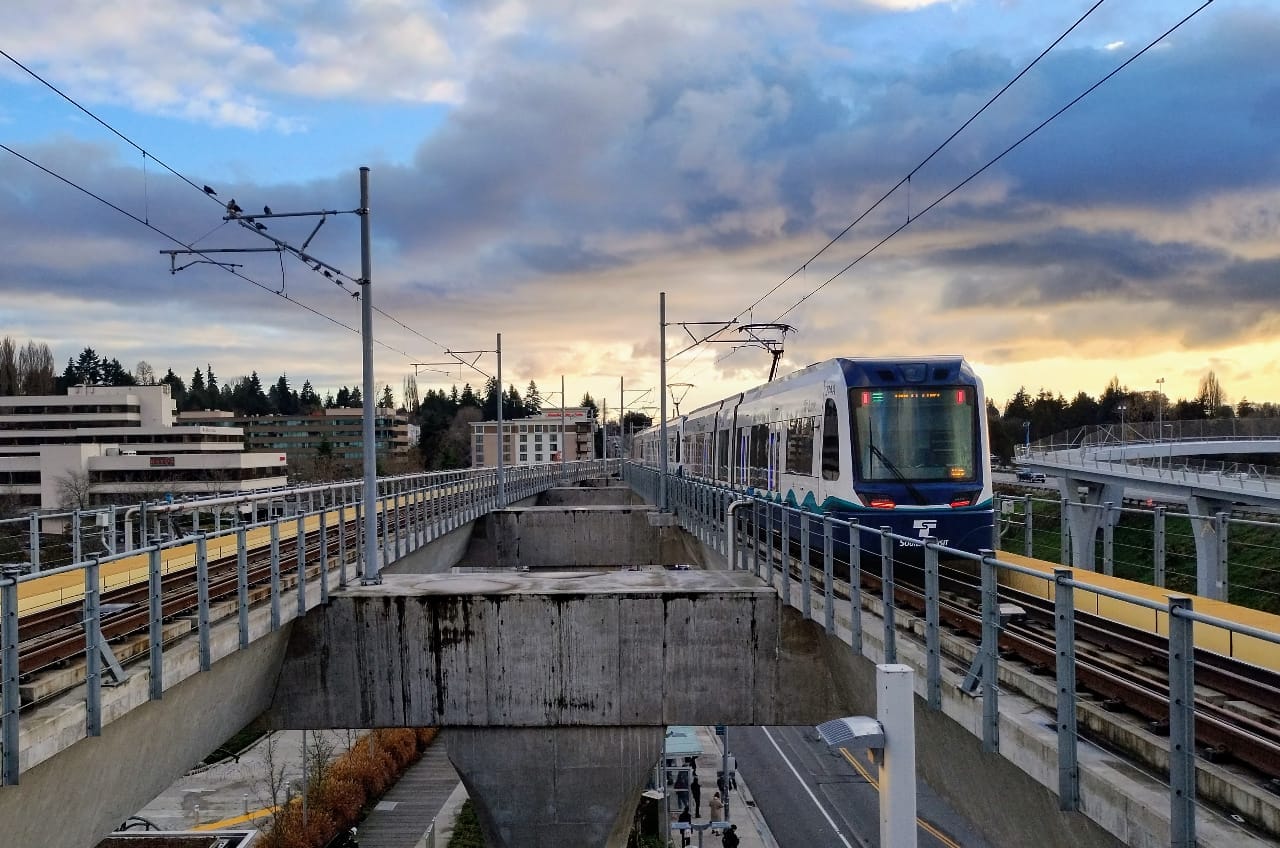
One of Sound Transit's biggest planned light rail projects continues to suffer delays as the Federal Transit Administration (FTA) hems and haws over approval of a key environmental document, reflecting a nationwide hostility to transit projects coming from the Trump administration. The delays are adding costs and keeping communities across multiple Seattle neighborhoods in limbo.
The Ballard Link Extension's Draft Environmental Impact Statement (DEIS) is currently months overdue, and last week Sound Transit confirmed that they will again miss the most recent deadline of publication at the end of May thanks to delays at FTA. With this document unpublished, Sound Transit can't confirm a preferred alternative and move the project forward into final design.
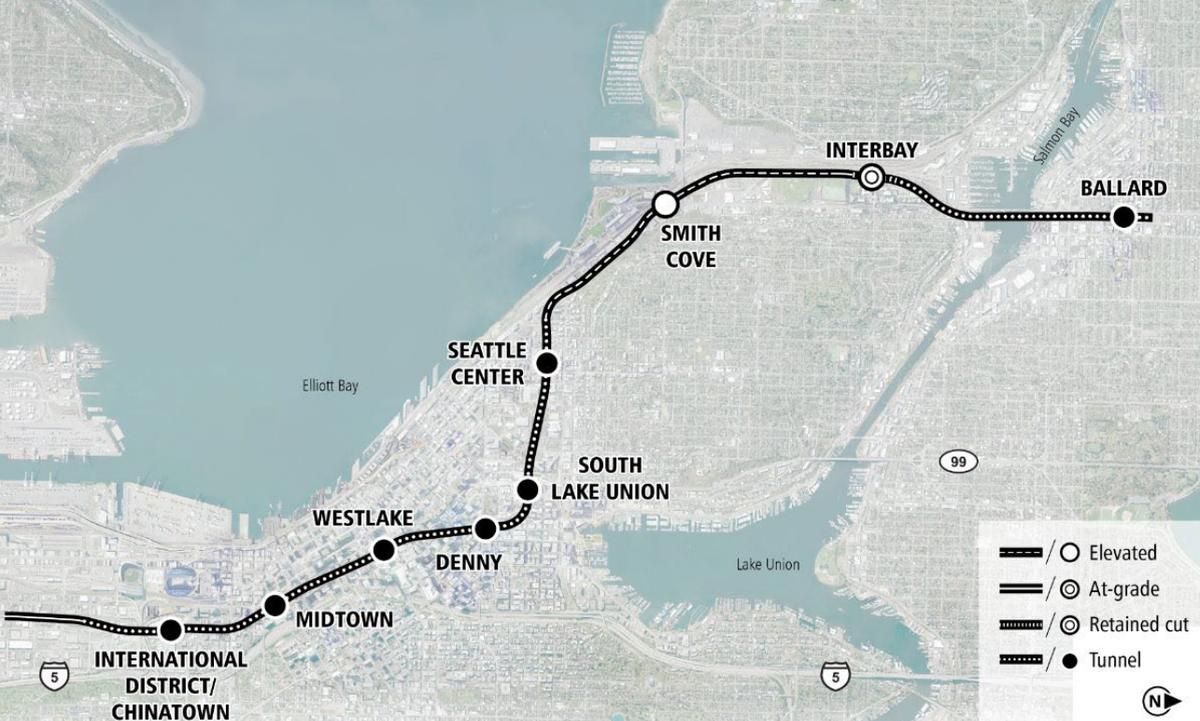
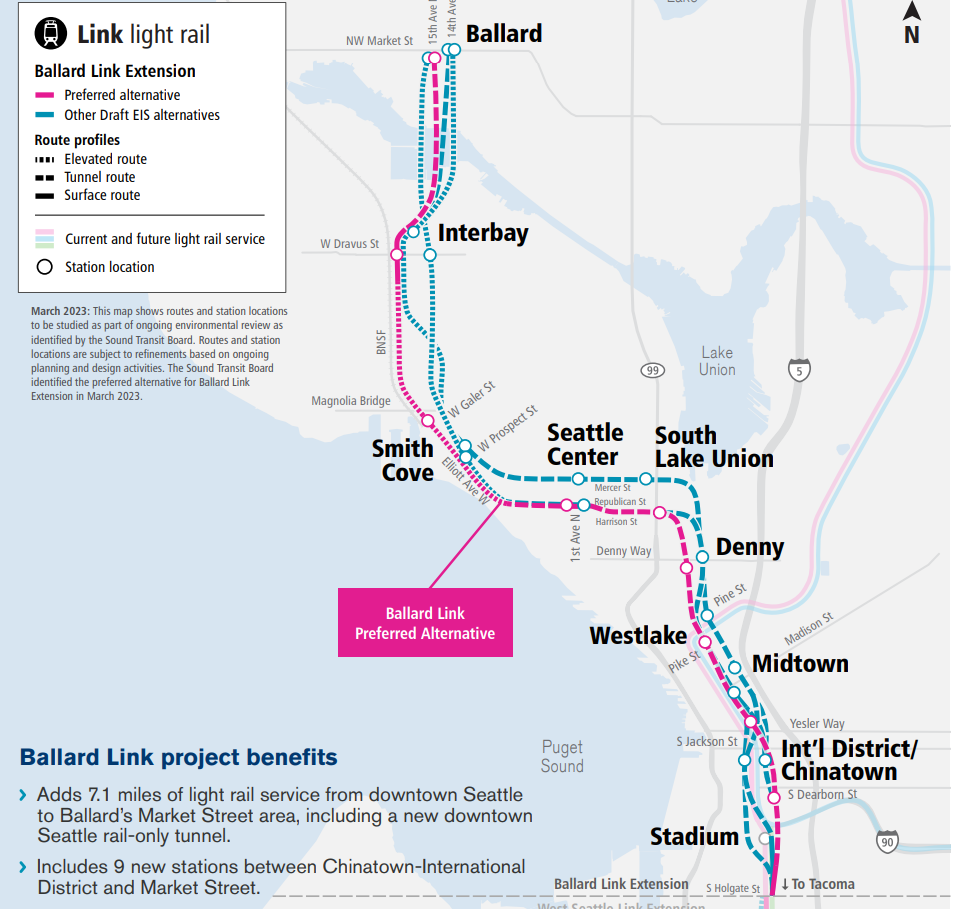
Those delays are happening against a backdrop of major decisions at the Sound Transit Board of Directors, with the Ballard Line potentially set to be truncated into phases, stopping at either Seattle Center or Smith Cove until the agency can either find additional revenue or shave off costs. The idea of giving up on a firm timeline to get to 15th Avenue NW and NW Market Street in Ballard a full decade after it was approved by voters has drawn considerable pushback from Seattle residents.
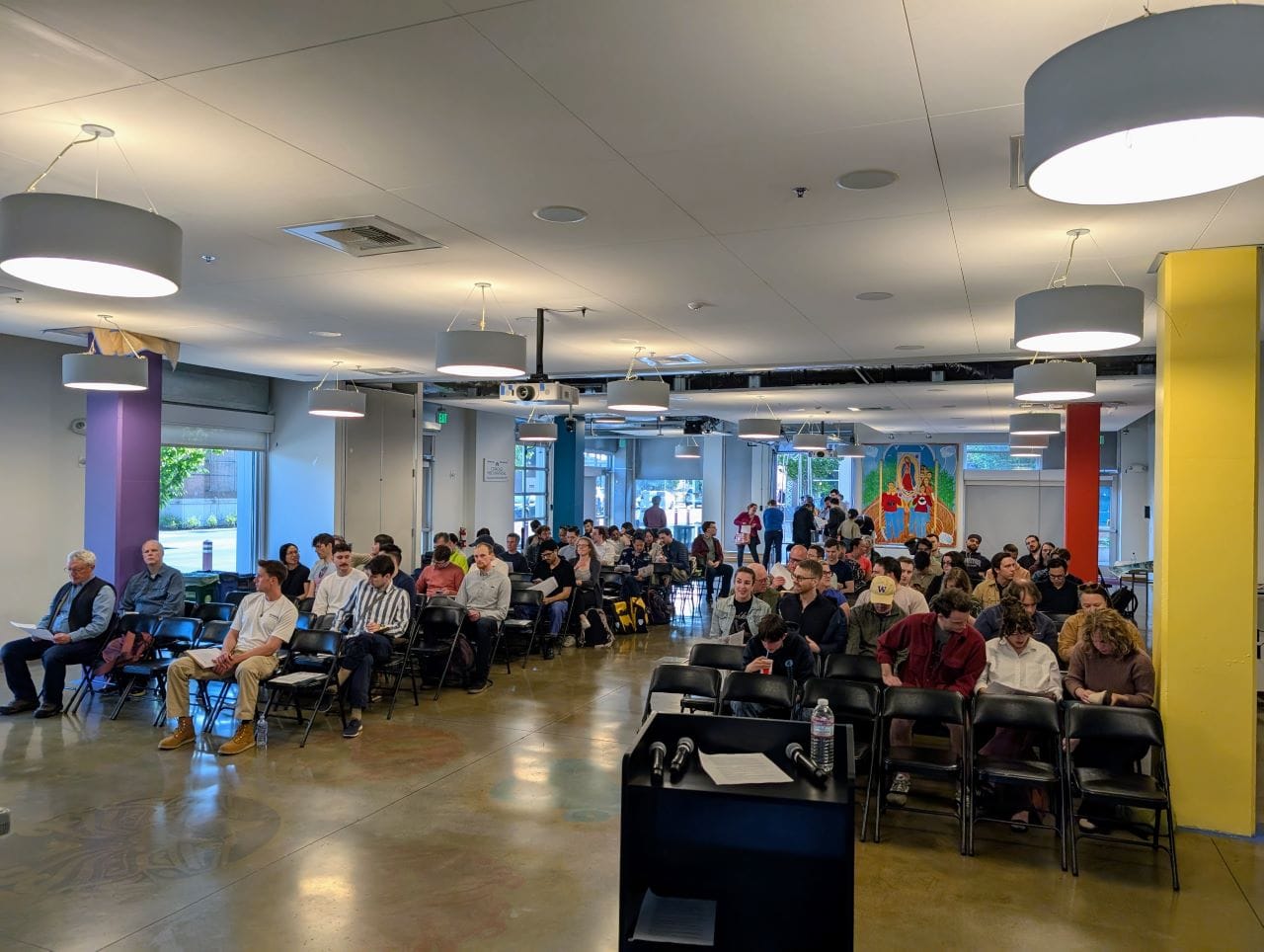
At a Sound Transit board System Expansion Committee meeting earlier this month, Brad Owen, executive director of the delivery team handling the Ballard and West Seattle Link Extensions, told committee members the timeline for DEIS remained up in the air – a fact that has been made official in the days since.
"Publication of the Ballard Link Extension Draft EIS has been held up by delays at the Federal Transit Administration (FTA). Since the System Expansion Committee, FTA informed us that we will not have approval to release the Draft EIS in May, but we hope to be able to publish this summer," Sound Transit spokesperson Rachelle Cunningham told The Urbanist.
Details about what exactly is holding up the DEIS are scarce. For months Sound Transit's monthly status reports on system expansion have referenced "pending final FTA guidance regarding executive orders," an apparent reference to several orders targeting "diversity equity, and inclusion" (DEI) initiatives issued in 2025. Despite Sound Transit going into active battle in the courts against the FTA's enforcement of those orders in a way that could lead to the pull back of federal funds, they do still remain in effect and look to be a primary driver behind additional review time for Ballard Link's environmental documentation.
Despite also subjecting the West Seattle Link project to similar delays early last year, the FTA did ultimately issue a Record of Decision for that project, wrapping up the National Environmental Policy Act (NEPA) process and allowing Sound Transit to advance toward construction. That approval is a major point in the project's favor when it comes to potential proposals at the board to realign the agency's system plan to deal with an approximately $34.5 billion budget shortfall through 2046.
The Urbanist is a nonprofit newsroom powered by reader support. Become a member, get perks, and support local journalism.
Sound Transit is far from alone in being subjected to additional scrutiny and delays under former reality TV star Sean Duffy's U.S. Department of Transportation. In addition to not awarding a single major transit grant since taking office, the administration has held previously awarded transit funding hostage, only handing over dollars for the MTA's Second Avenue subway project in New York City after a lawsuit. Chicago's CTA is hoping to follow in the MTA's footsteps.
Delays in advancing Ballard Link through the NEPA process can't entirely be blamed on FTA. A Sound Transit status report from early 2024 actually eyed publication of a DEIS later that year, during the Biden administration. But the report noted that additional station alternatives that were added into the mix in 2023 were creating a significant risk of additional delays. That was also the first time the board officially selected a preferred alignment – seven years after voters approved the Sound Transit 3 (ST3) package in 2016.
Those additional options up and down the 7.7-mile corridor included adjustments at Interbay, Seattle Center, Denny as well as the high-profile decision to pivot away from a new Chinatown-International District (CID) station at the existing Jackson Street transit hub. Instead, in a move proposed by former Mayor Bruce Harrell and former King County Executive Dow Constantine (now overseeing the project as Sound Transit CEO), the board selected a new "north-south" alternative that would include stations near S Dearborn Street and close to the existing Pioneer Square Station next door to King County's sizable property holdings in the area.
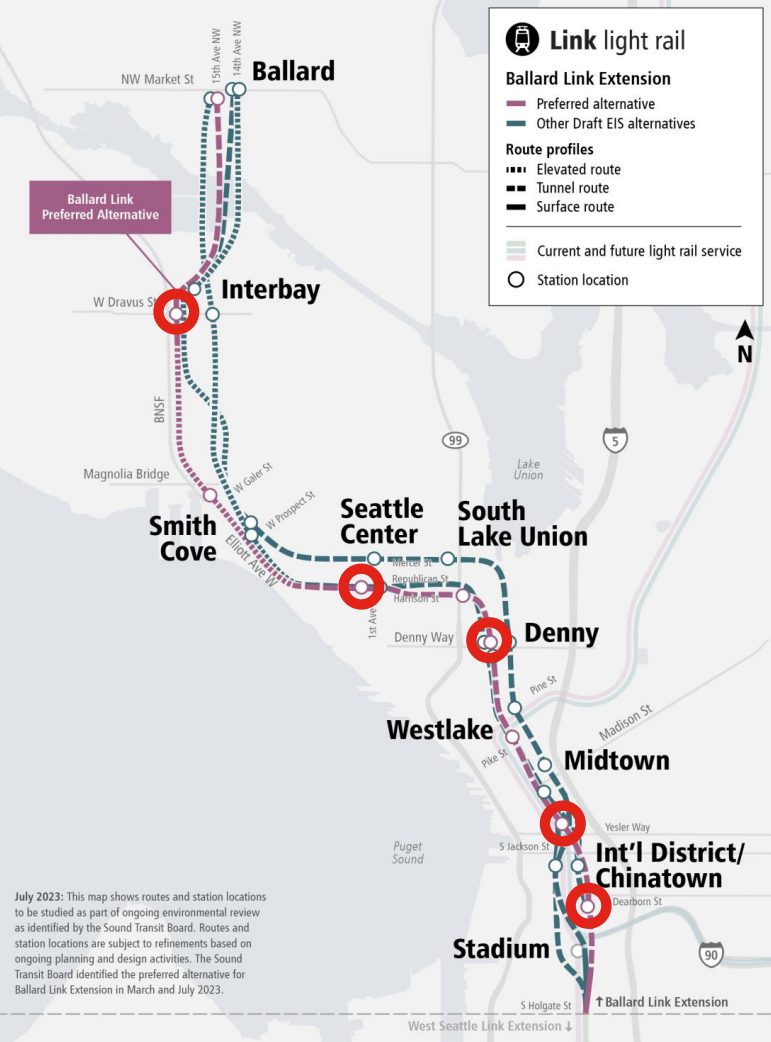
"The delay in identification of the Preferred Alternative and the associated Board requested further studies, as well as the need for additional environmental review associated with the Board’s March 2023 action, necessitated adjustments to the environmental process and schedule, which has affected the Select Project to be Built milestone as well as subsequent milestones including the revenue service date," the status report noted at the time.
Design costs continue to rack up as Ballard Link is subject to these delays. Last week, the Sound Transit board approved an updated contract with its consultant, HNTB, allocating another $19.5 million to get the project through a final EIS as well as preliminary engineering. According to a staff report on the budgetary motion, the additional funds stem from the fact that wider scope changes – and the need for contractors to look for cost savings as part of the agency-wide Enterprise Initiative – were "not anticipated" when the contract was initially awarded.
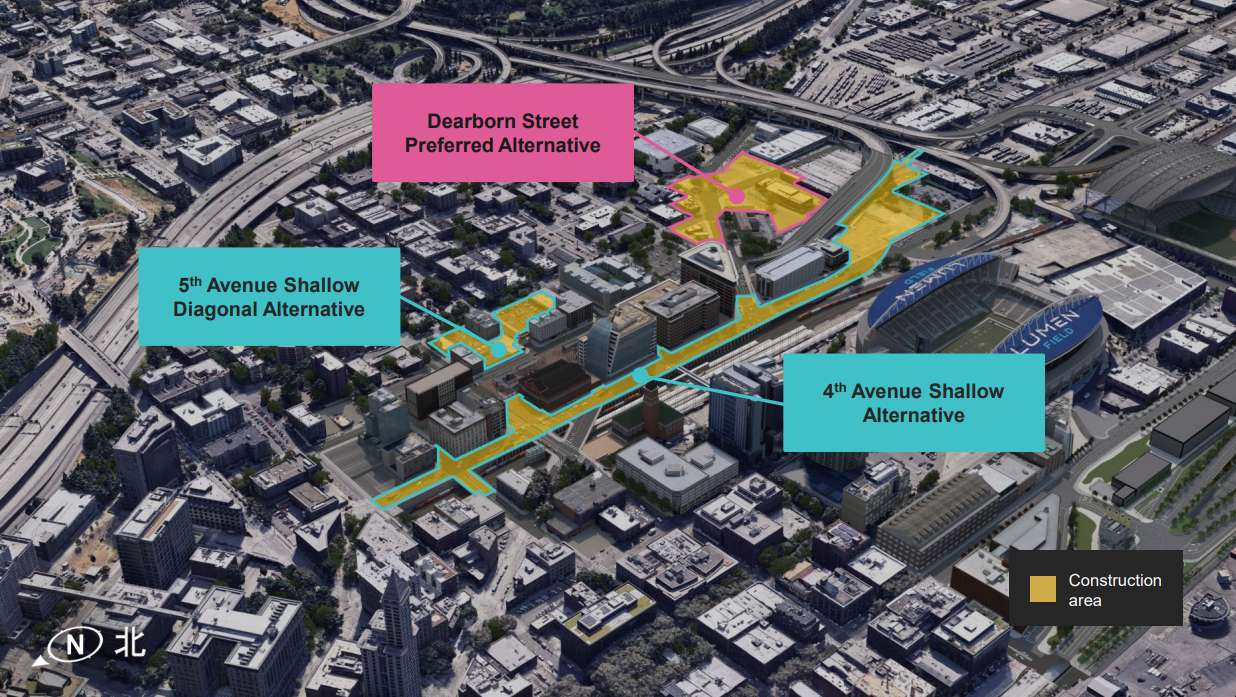
Once the DEIS is published, the board will have an opportunity to reassess the preferred alternative that was selected in 2023. While a Dearborn Street station near CID's Uwajimaya grocery store remains that preferred alternative now, the upcoming vote will ultimately be the last major opportunity to change course to another alternative studied in the DEIS. While the agency deemed its 4th Avenue option technically infeasible in late 2024, a 5th Avenue station option could theoretically get a second look.
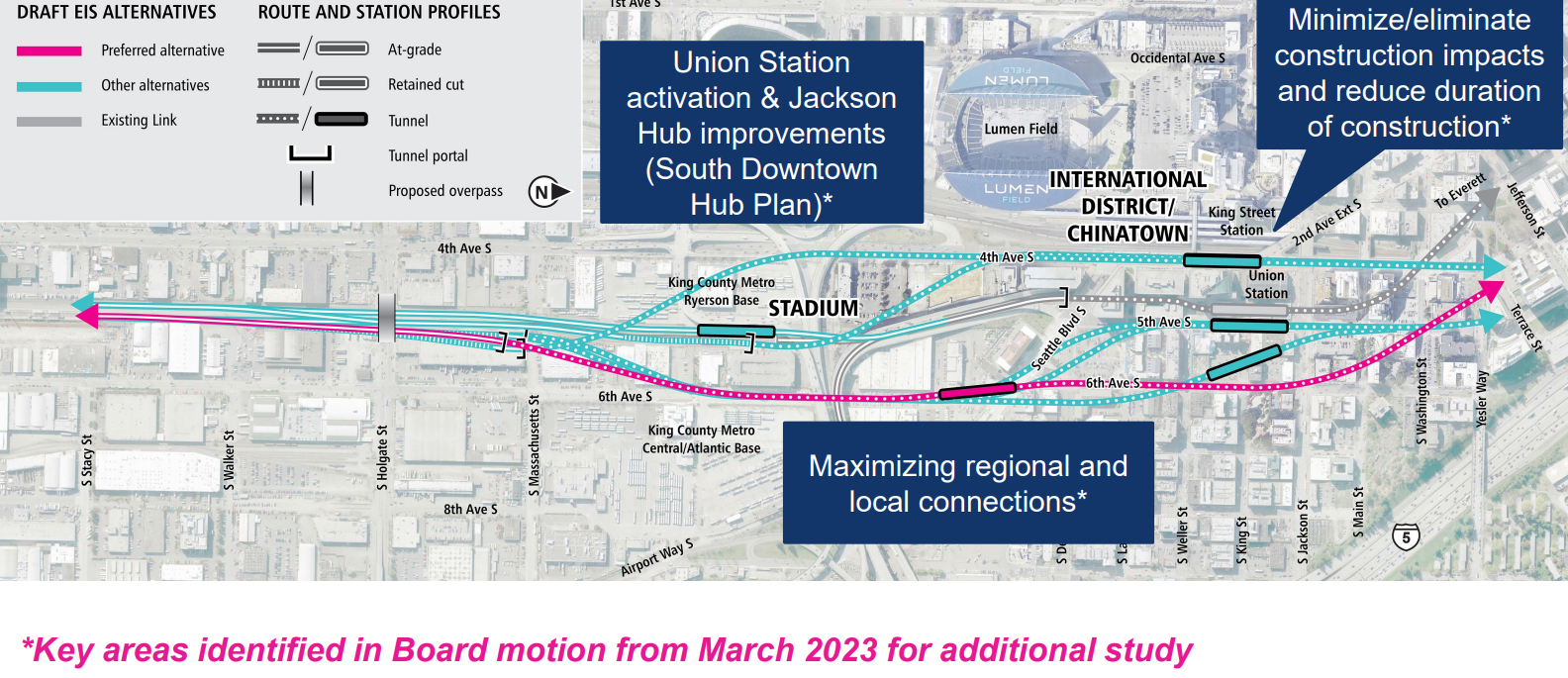
In addition to providing riders with a quick transfer between lines in comparison to Dearborn, the 5th Avenue Diagonal option would actually be the cheapest option to implement, and save an entire year of construction. While cutting costs is likely to be a much more central part of the equation compared to 2023, the 5th Avenue option is likely to resurface concerns around negative impacts on the broader historic neighborhood, which led to the late addition of the north and south of CID alternative in the first place.
That said, the refinements that resulted in the diagonal option improving upon the more disruptive "deep" 5th Avenue station do look poised to reduce impacts, limiting the construction footprint.
The board is also set to consider whether to consolidate two planned stations in South Lake Union into one, near Denny Way and Westlake Avenue. A move that would save hundreds of millions of dollars and reduce traffic impacts that had raised the ire of the neighborhood's biggest power players, the elimination of a Harrison Street station would kill a planned transfer point between Link and the state's busiest bus, the RapidRide E Line.
Community advocates along the route have long been raising concerns about the amount of time that it has taken to release Ballard Link's DEIS. With so much detail included in the document about potential impacts stemming from different alignment choices, the idea of making major decisions impacting the future of the region's biggest transit project before it's even released is fairly counterintuitive, despite Sound Transit's need to adopt a new financial plan this year.
"We're worried about timing. We're asking you not to foreclose any options for Ballard Link Extension or Everett Link Extension until we've seen the draft environmental impact statements for those lines. Please don't remove stations, truncate lines, or do so much design and engineering work that it influences your decisions because we've gone too far down this road and we can't go back," MaryKate Ryan of Historic South Downtown, a state-created entity tasked with overseeing historic resources in Pioneer Square and Chinatown-International District, told the board's system expansion committee this month. "We're not ready to give up the stations in South Lake Union, to making it to Ballard, to making it to Everett. We're not ready to give up on those yet, we haven't seen the data."
Though it's clear that the board will be making many of those big decisions without the benefit of the public seeing the DEIS, every additional month that the FTA adds to its review ultimately adds costs to a transit system that the vast majority of Puget Sound residents agree should be completed as soon as possible.
 Doug Trumm
 Ryan Packer